-
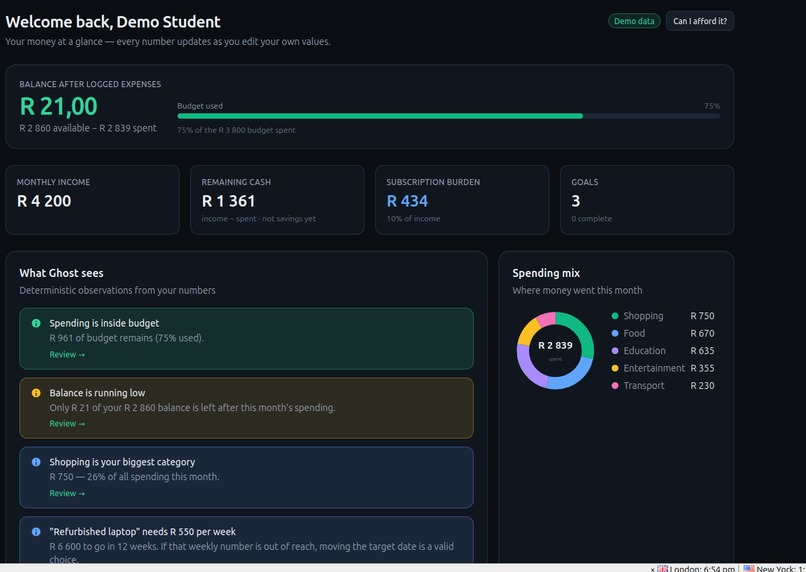
dashboard
-
-
-
-
-
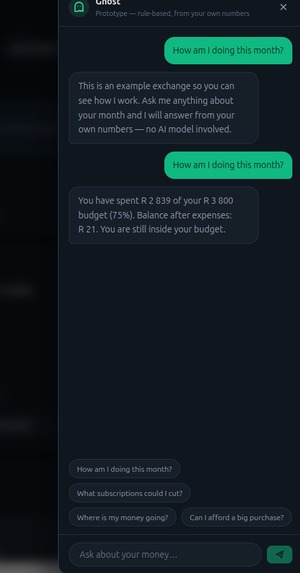
our inbuilt ghost ai
-
-
- What it does
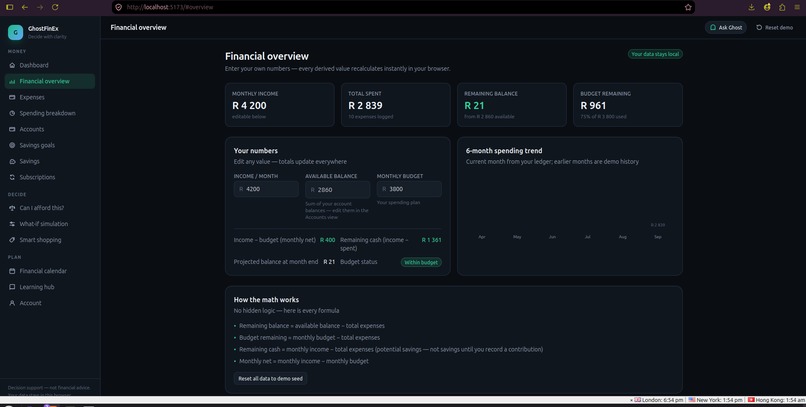
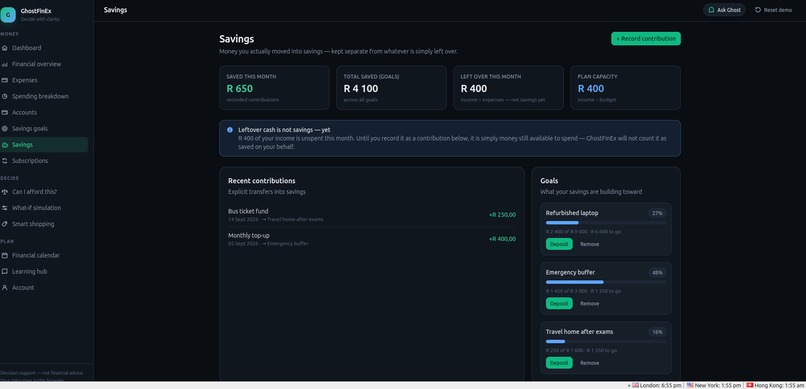
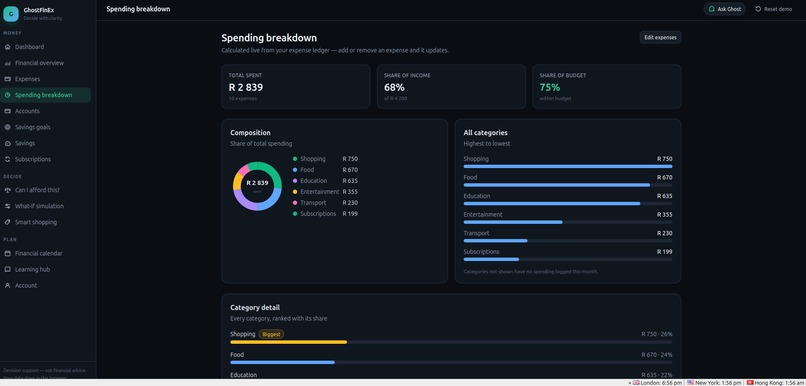
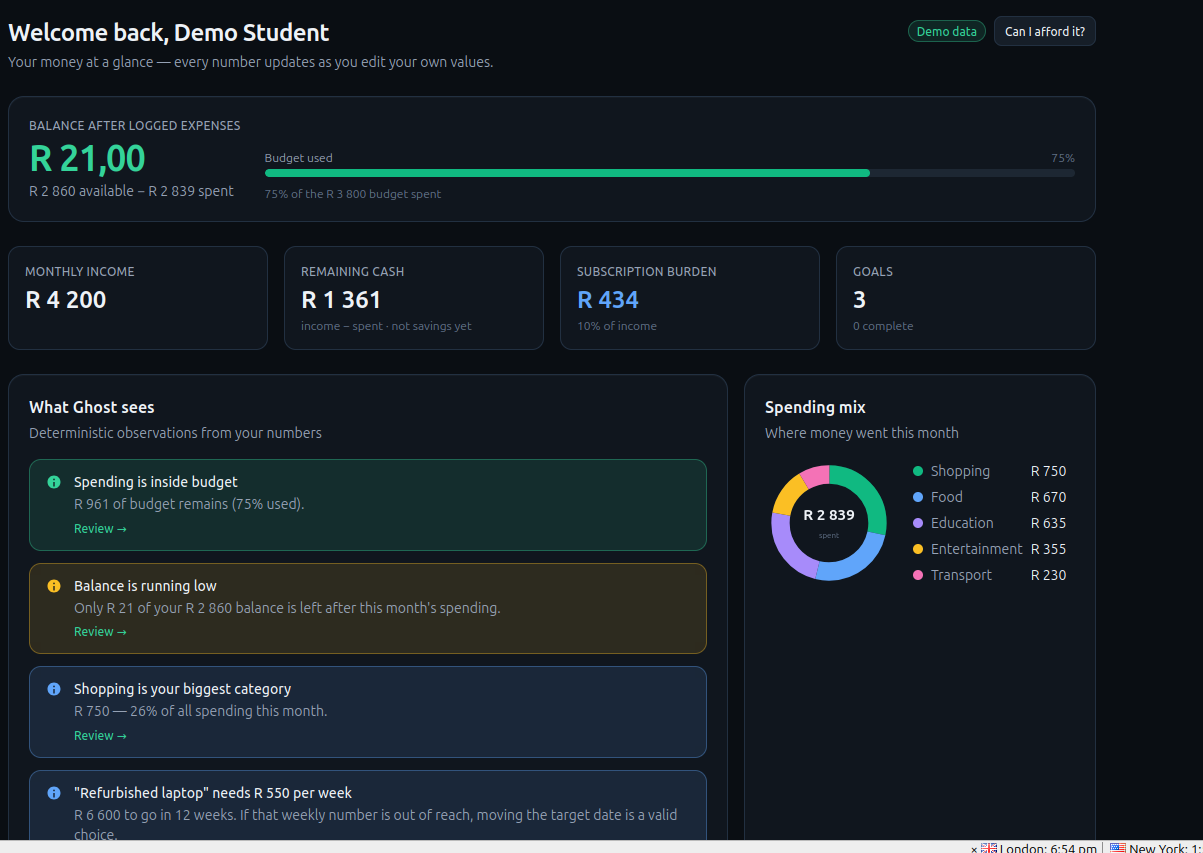
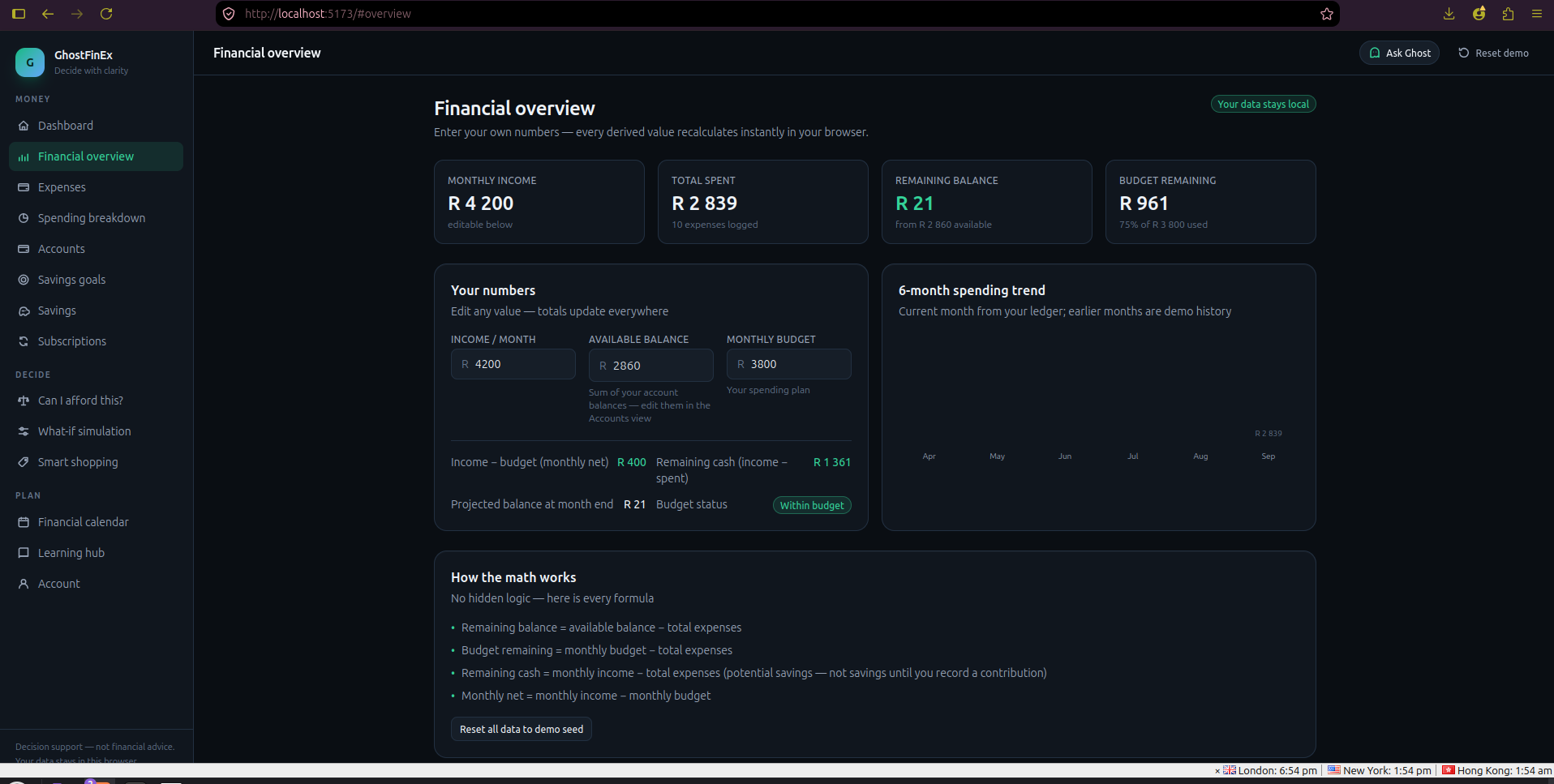
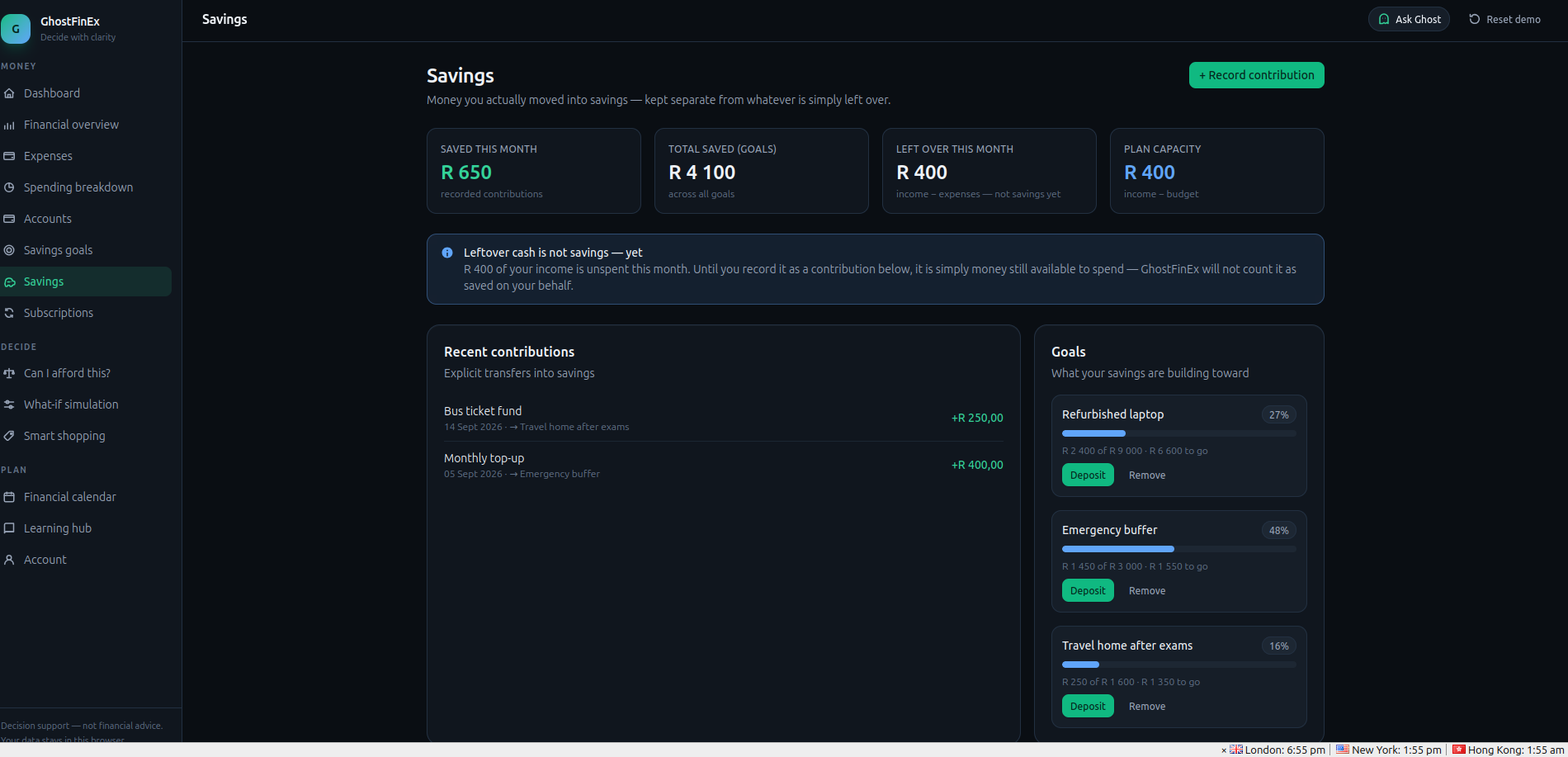
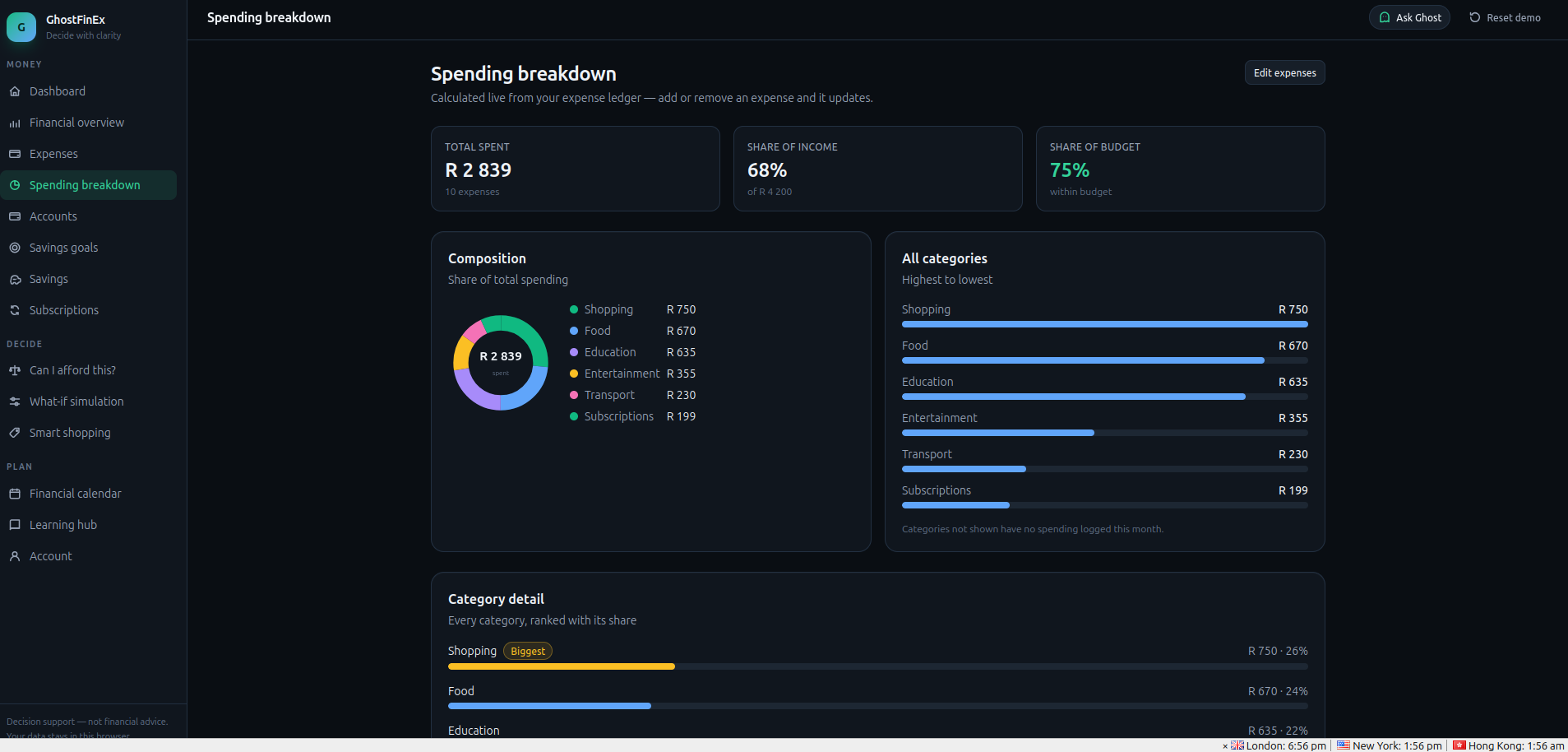
GhostFinEx is a student-focused financial decision assistant that brings budgeting, expense tracking, savings goals, subscriptions, planned expenses, affordability checks, and smart shopping together.
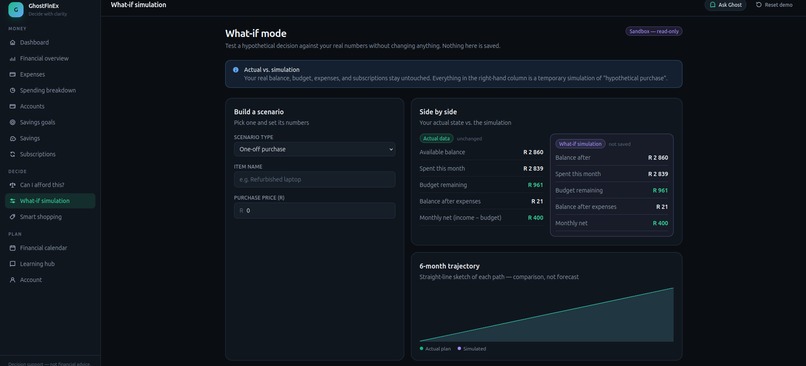
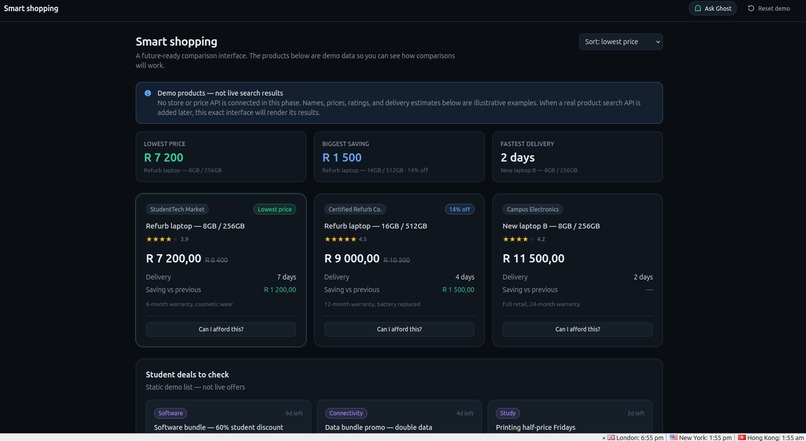
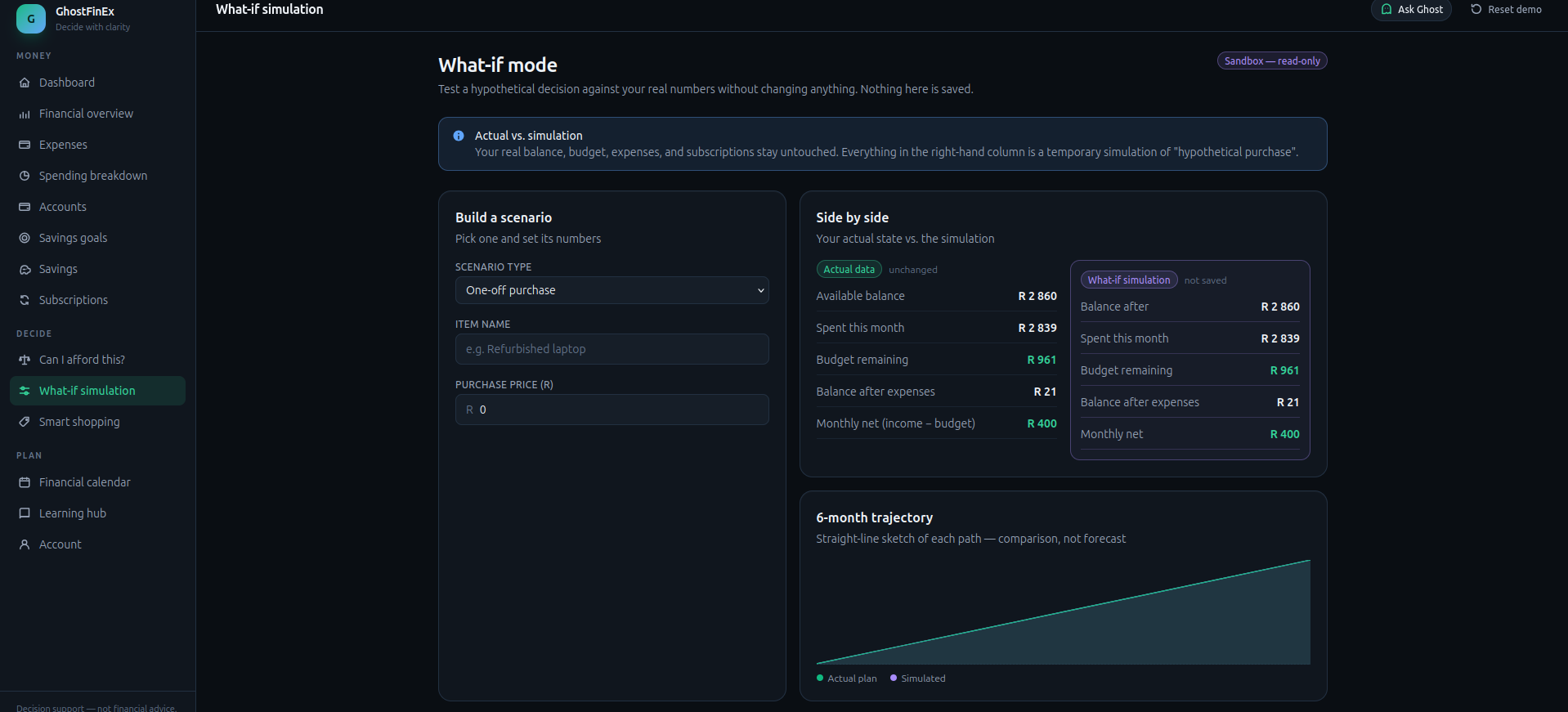
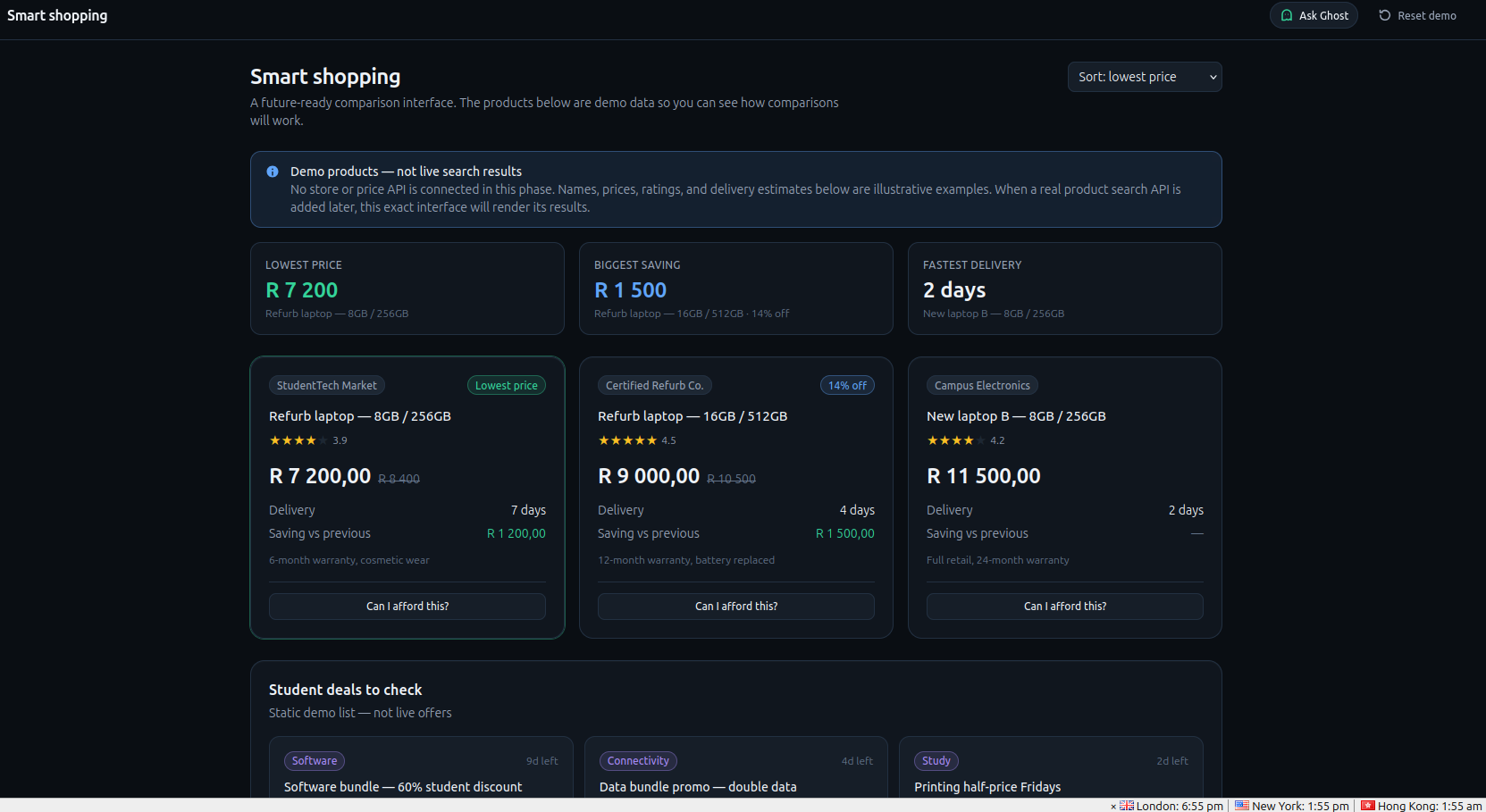
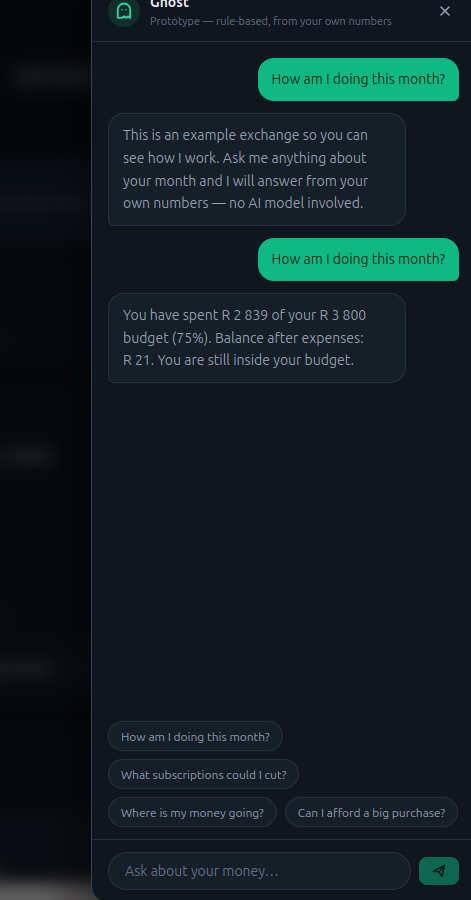
Students can see their financial situation, understand their spending, simulate purchases with What-If, compare shopping options, and use Ghost Assistant to understand their choices.
The app doesn't make financial decisions for the user. It follows our core principle:
Educate → Explain → Compare → Recommend options → Let the user decide.
*How we built it
We built GhostFinEx as a modern web application using React, Vite, JavaScript, Tailwind CSS, and Supabase/PostgreSQL.
We kept financial calculations deterministic inside the application so that important numbers such as balances, spending, budgets, and savings aren't invented by AI.
For intelligent features, we integrated RAG and web search capabilities so Ghost can provide contextual explanations and current shopping information.
We also used GitHub for version control and Vercel for deployment.
- Challenges we ran into
One of our biggest challenges was making sure the financial calculations stayed consistent across the entire application.
For example, current account balance, monthly spending, savings contributions, planned expenses, and affordability are different concepts. At one point, treating them too similarly could produce misleading results.
We also had to make sure AI stayed within the right boundaries. We didn't want an AI assistant randomly calculating financial numbers or pretending to be a financial expert.
Another challenge was building and integrating multiple features while working under a hackathon deadline.
*Accomplishments we're proud of
We're proud that GhostFinEx became more than just an expense tracker.
We built a connected system where users can move from tracking → understanding → simulating → making a decision.
We're especially proud of the Affordability and What-If features because they represent the main idea behind the project.
We're also proud of building the project as Team Ghost Pact, taking an idea from concept to a working application while learning and adapting throughout the hackathon.
*What we learned
This project taught us that building a useful application isn't just about adding more features.
We learned the importance of having a clear source of truth, especially when dealing with financial data. We also learned that AI should support an application's logic rather than blindly control it.
Along the way, we gained practical experience with React, Supabase, SQL, authentication, RAG, web search integration, Git/GitHub, deployment, debugging, and testing.
Most importantly, we learned how quickly an idea can evolve when you actually build it, break it, test it, and rebuild it.
*What's next for GhostFinEx
We're not planning to stop at the current version.
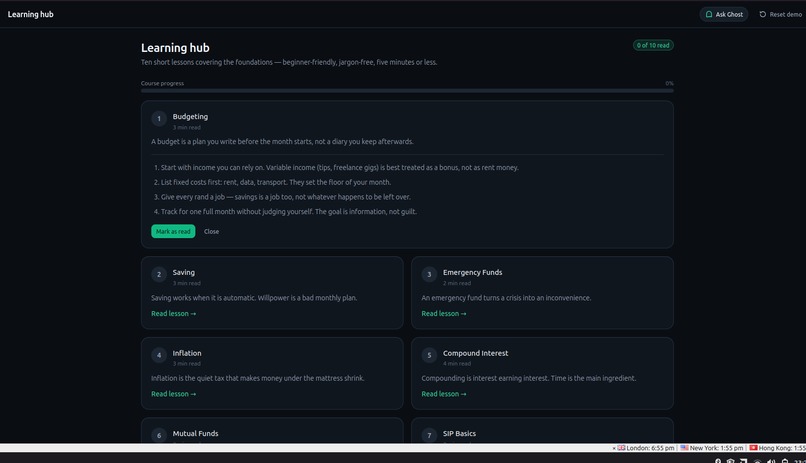
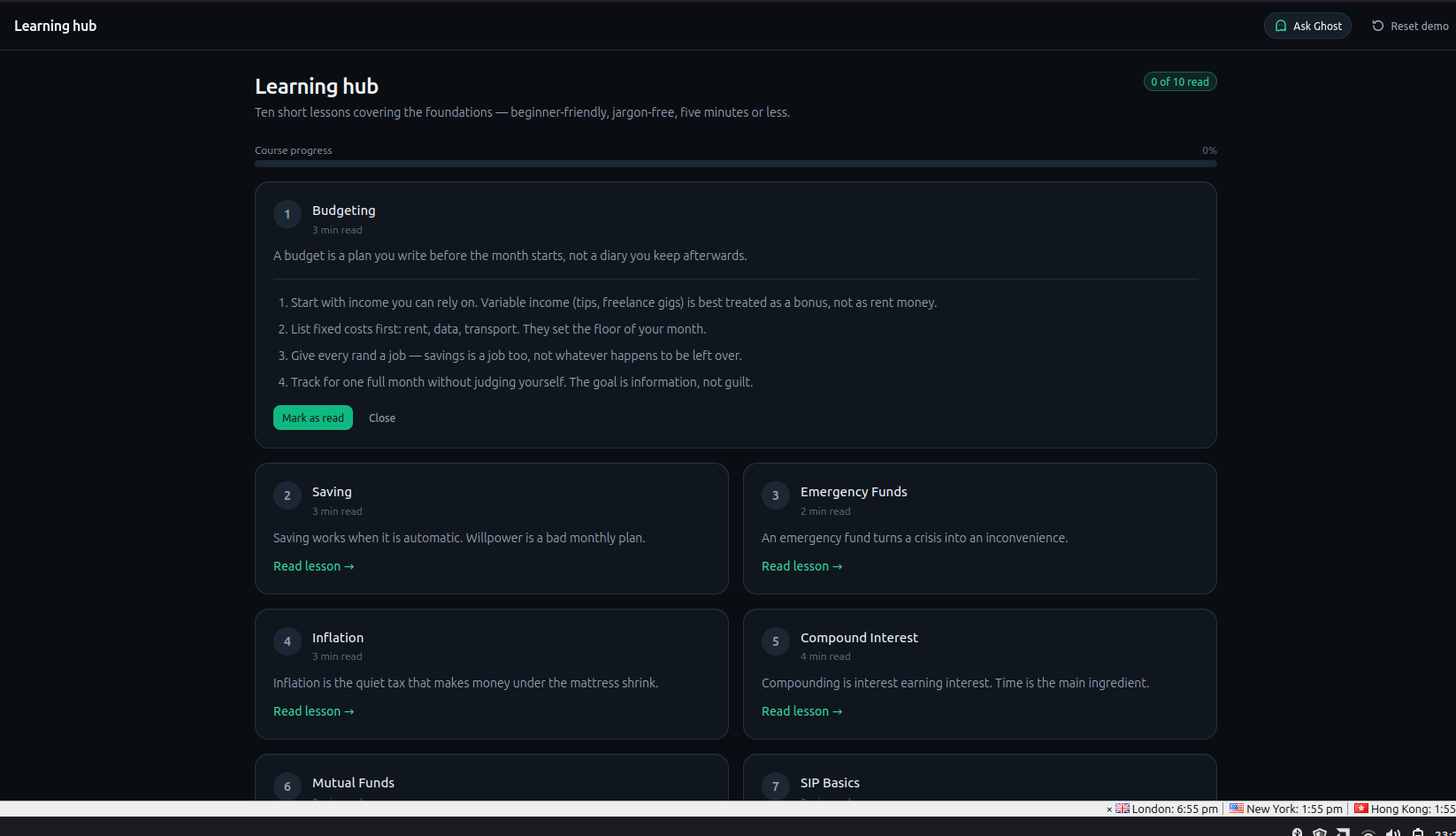
Next, we want to improve GhostFinEx with more personalized financial insights, stronger AI assistance, better financial education, improved shopping comparisons, and more automation.
We also want to make the experience even more useful for students by understanding their goals and recurring financial patterns while keeping the user in control.
*Our long-term vision is simple:
Make GhostFinEx a practical financial companion that helps students understand their money before their money becomes a problem.
Built With
- css
- javascript
- postgresql
- rag
- react
- supabase
- tailwind
- tavily
- vercel
- vite

Log in or sign up for Devpost to join the conversation.