-
-
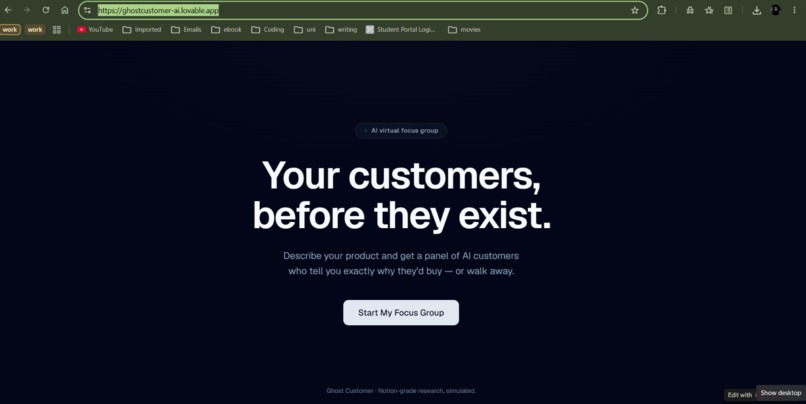
App Dashboard
-

Panel Pulse summary
-
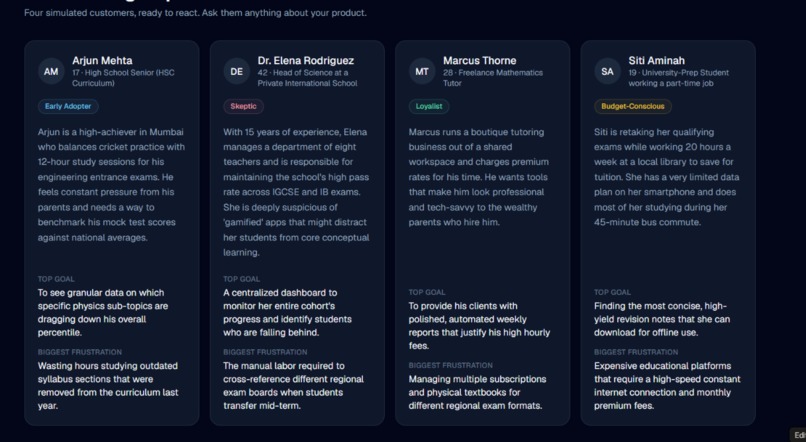
Panel
-
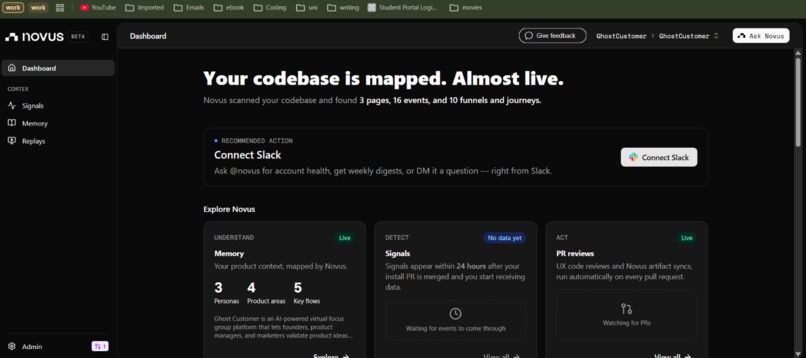
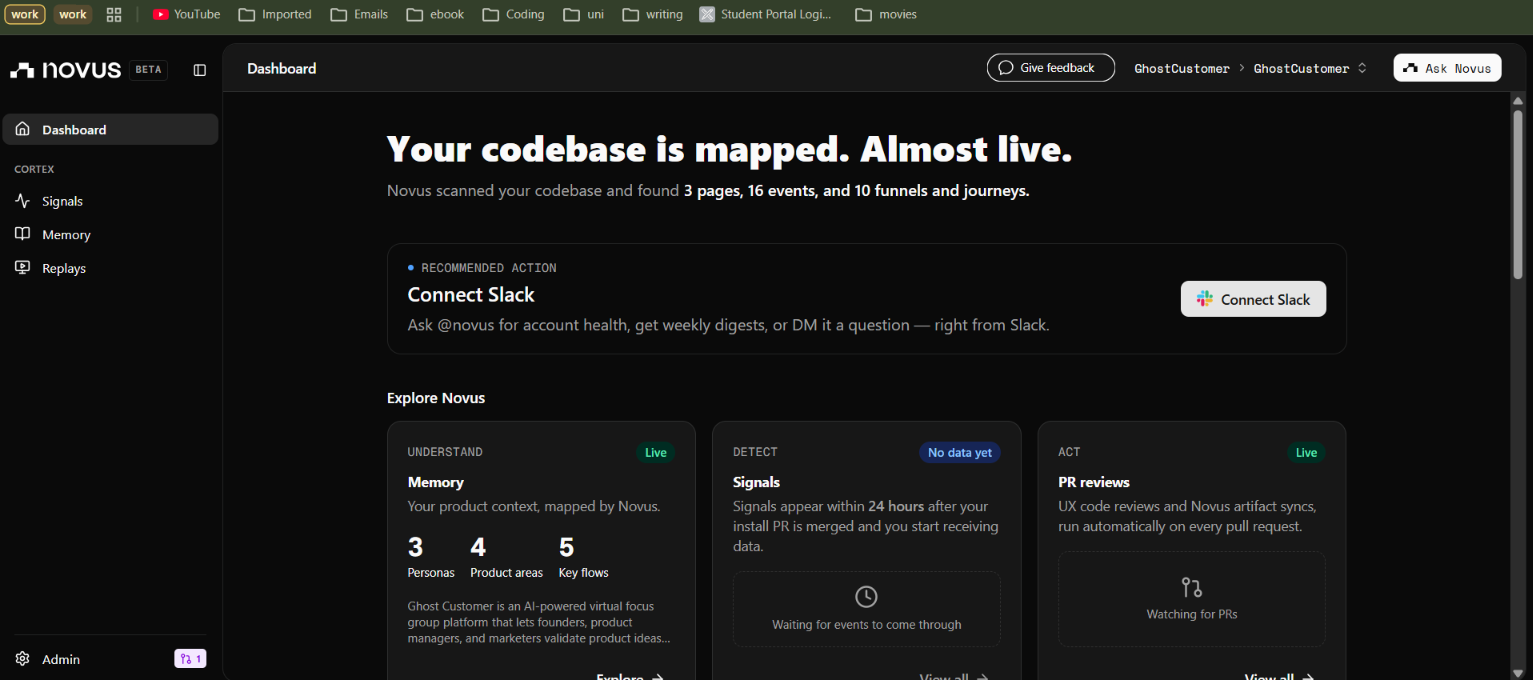
Novus Install Dashboard
-
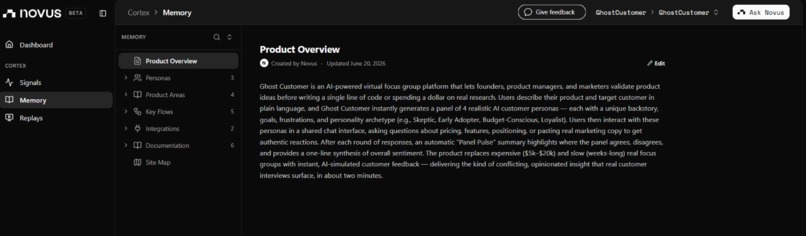
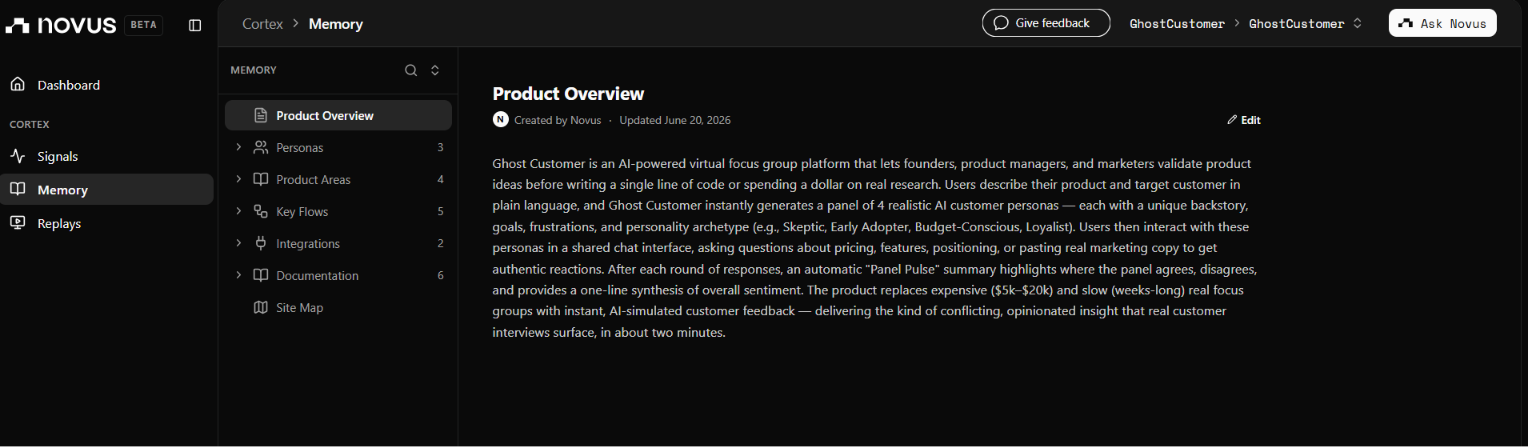
Novus Product Overview
-
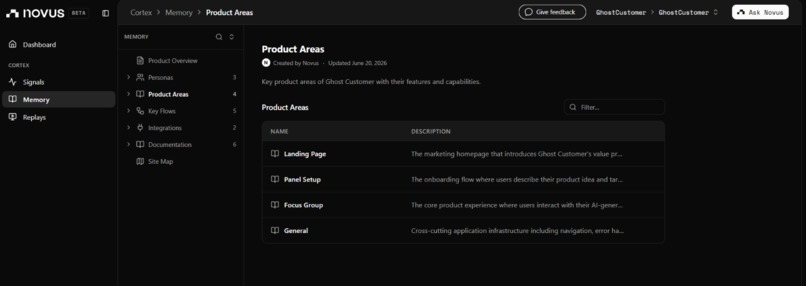
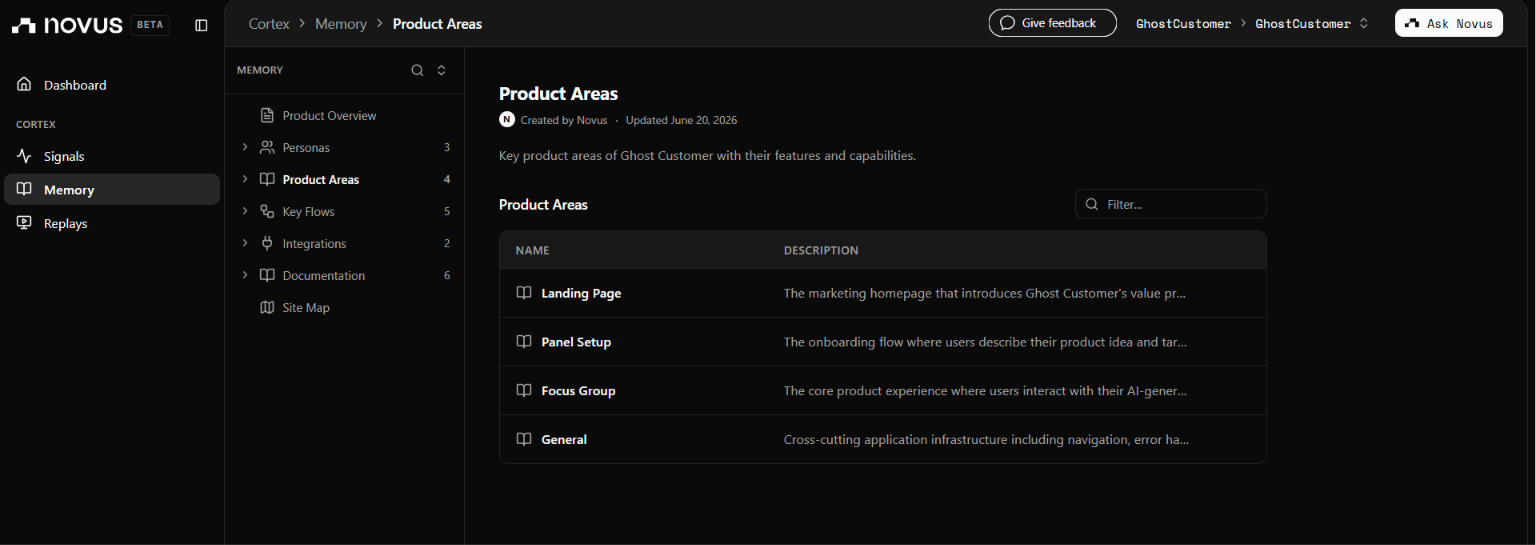
Novus Product Areas
-
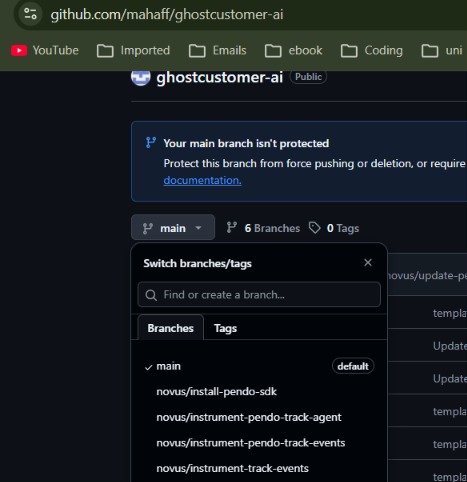
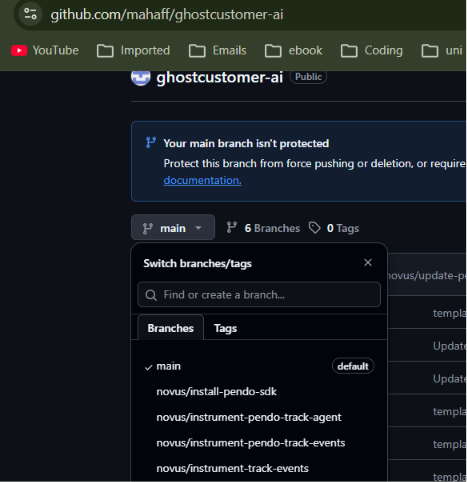
github repo showing novus installed and connected with project

Inspiration
Most founders skip customer validation entirely. Real focus groups cost $5,000–$20,000, take weeks to recruit and run, and are completely inaccessible at the early stage — exactly when decisions matter most.
I kept watching founders (including myself) build things in the dark, then wonder why nobody showed up. The insight that should have come before the build was always missing.
Ghost Customer was built on one belief: every founder deserves to talk to their customer before they commit — not after they've already shipped the wrong thing.
The "focus group" framing is deliberate. This isn't a chatbot you ask one question. It's a room full of people who disagree with each other. And that friction? That's where the real insight lives.
What it does
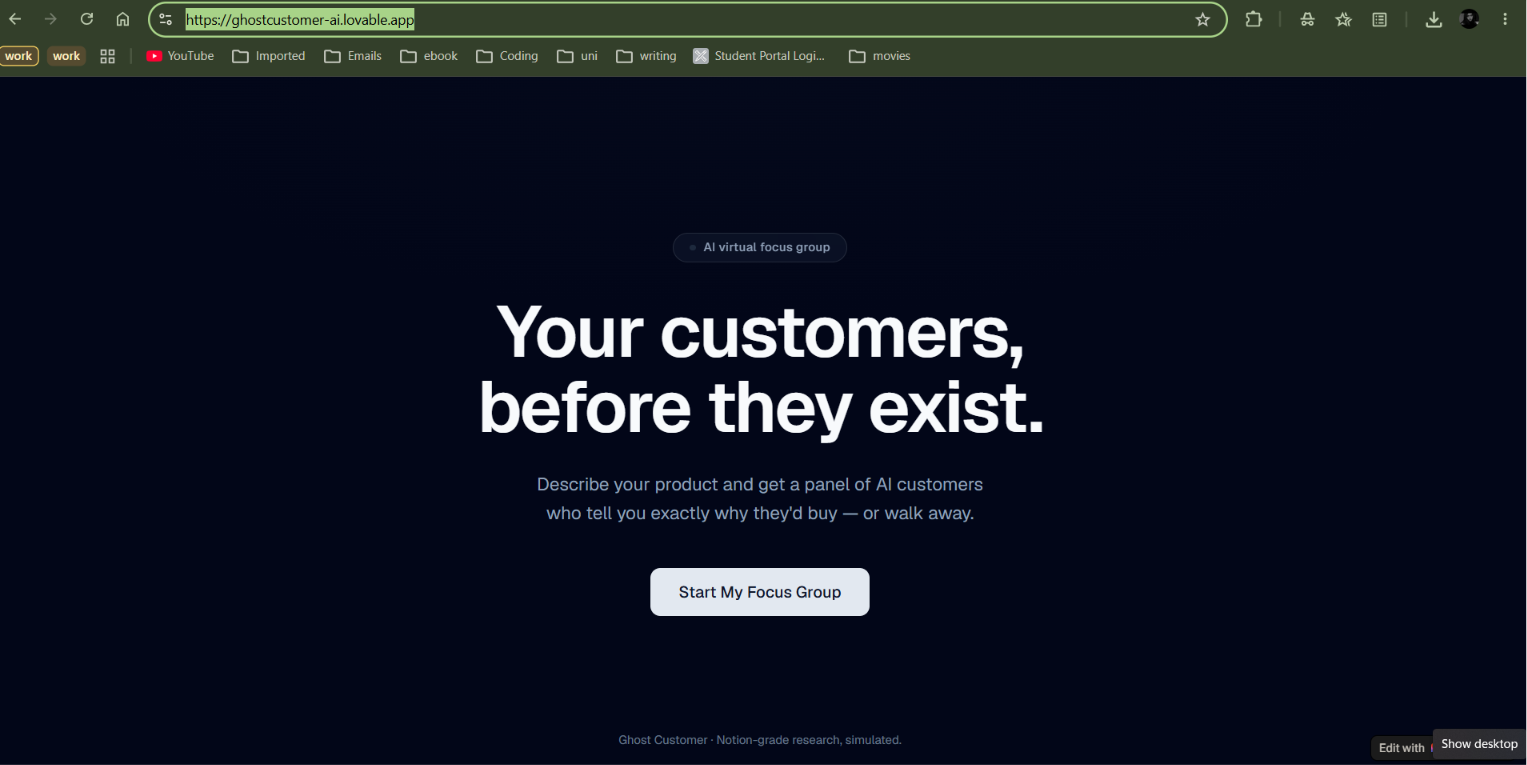
Ghost Customer is an AI-powered virtual focus group for founders and product teams.
Here's the flow:
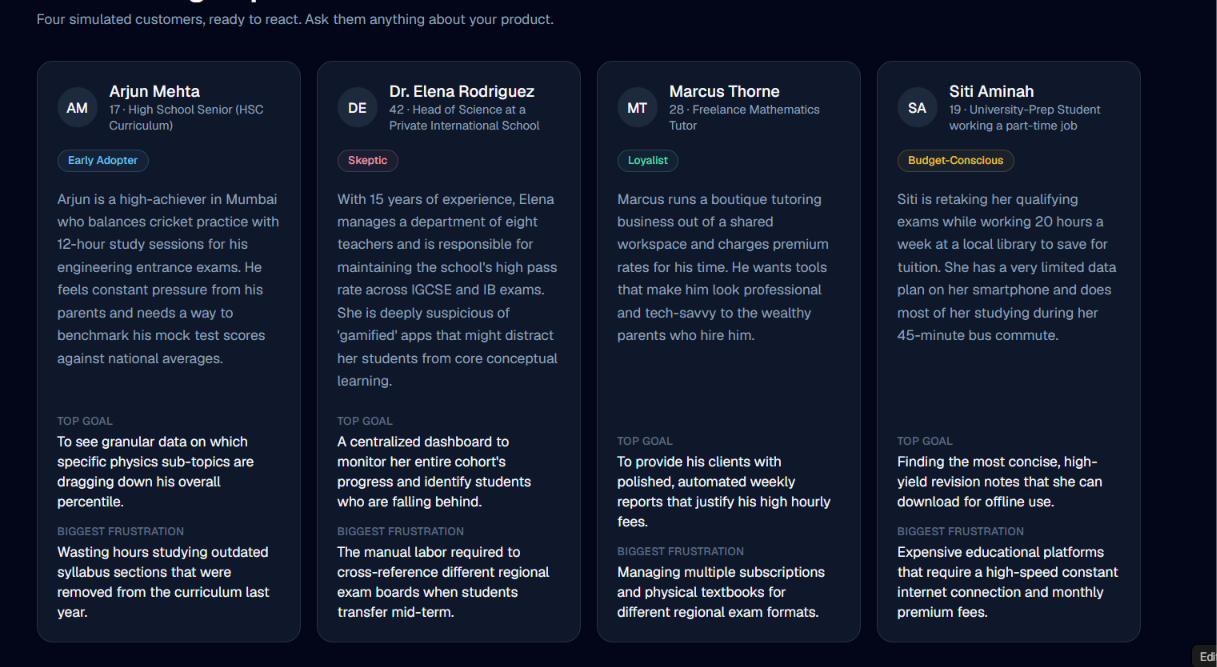
Describe your product — tell Ghost Customer what you're building, who it's for, and what problem it solves Generate your panel — 4 distinct AI customer personas are created, each with a name, backstory, goals, frustrations, and a personality archetype (Skeptic, Early Adopter, Budget-Conscious, Loyalist) Ask them anything — type a question into the shared focus group chat and all 4 personas respond in their own voice, from their own perspective Panel Pulse — after every round of responses, a conflict summary appears automatically showing where the panel agrees, where they disagree, and a one-line synthesis of overall sentiment React to My Copy — toggle to a second mode and paste your actual landing page headline, pricing table, or feature description. The panel reacts to the real text — not an abstraction
This gives founders fast, affordable customer insight before investing time and money building the wrong thing.
How I built it
ToolPurposeLovableFull-stack app builder and hostingNovus by PendoProduct analytics and user behavior tracking
Built entirely with Lovable — an AI-powered no-code builder — in 3 days. No backend setup, no deployment pipeline, no DevOps. Just product thinking and prompting.
The AI persona engine runs through Lovable's built-in AI capabilities. Persona data is stored in app state and injected as context into every subsequent call so each persona stays consistent and in-character across the entire session.
Novus was connected via GitHub integration for automatic product analytics instrumentation — tracking how real users move through the focus group flow from day one.
Challenges I ran into
Keeping personas distinct and in-character. The biggest risk with an AI focus group is generic output — demographic clichés that all sound the same. The solution was forcing specificity at the generation layer: personas need life contexts, strong opinions, and quirks — not just age brackets and job titles.
The conflict is the feature. Early versions surfaced individual persona responses but buried the disagreement. The Panel Pulse conflict summary was the design breakthrough — showing where the panel splits is more valuable than any single response.
React to My Copy mode. Getting personas to react to pasted artifacts (real copy, pricing tables, feature lists) rather than abstract questions required a different prompting approach — the panel had to treat the pasted text as something they were experiencing, not just discussing.
Accomplishments that I'm proud of
Shipped a working product in 3 days — from idea to live URL, fully deployed Panel Pulse — the conflict summary feature that makes Ghost Customer feel like a real research tool, not just a chatbot React to My Copy mode — the ability to paste real artifacts and get direct reactions is something no other tool does quite like this Personas that surprise you — when a persona says something you didn't expect, that's the product working
What I learned
Shipping fast forces the right prioritization. With 3 days, you can't build everything — you build what actually matters. Every feature had to earn its place.
AI builders have collapsed the build barrier. The hard part of Ghost Customer wasn't the code — it was the product thinking. What makes a persona feel real? What does a useful conflict summary look like? Those are product questions, not engineering ones.
The friction between personas is more valuable than consensus. When all 4 personas agree, that's reassuring. When they split 2–2, that's the insight. Designing for disagreement was the most important product decision made.
Novus from day one changes how you think about what you built. Seeing real user paths through your product — immediately after launch — is a fundamentally different experience than shipping into the void.
What's next for GhostCustomer
Call the Vote — a hire/pass voting round where each persona answers "Would you pay for this?" with a Yes / No / Maybe verdict and a one-line reason, displayed as a visual tally Session export — download the full focus group transcript as a PDF "Research Report" that looks like something you'd pay a consultancy for Persistent panels — save your panel and return to them across multiple sessions as your product evolves Pricing sensitivity testing — a dedicated mode where you input price points and the panel reacts to each one, surfacing willingness-to-pay signals Monetization — a freemium model: 1 free focus group session, then $9/month for unlimited sessions and export
Built With
- api
- css
- java
- javascript
- lovable
- novus
- pendo
- typescript

Log in or sign up for Devpost to join the conversation.