-
-
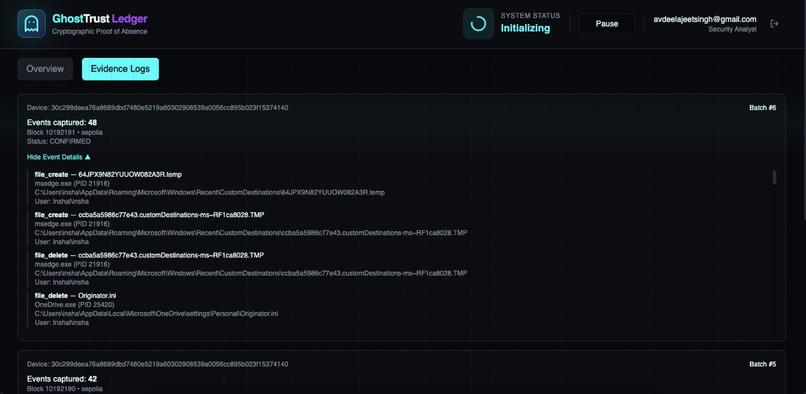
Log Audits on Web application
-
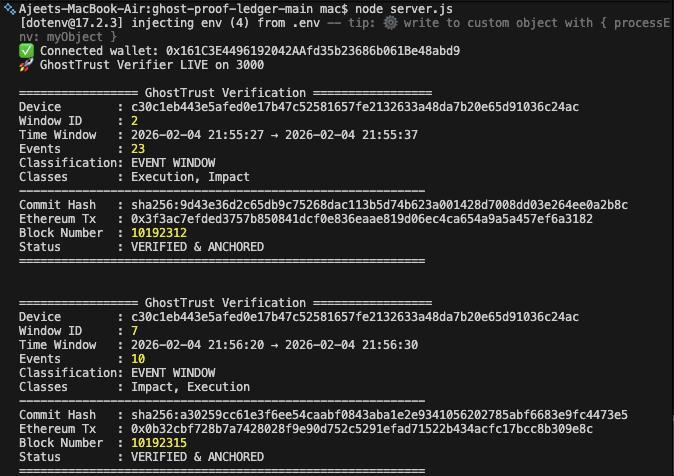
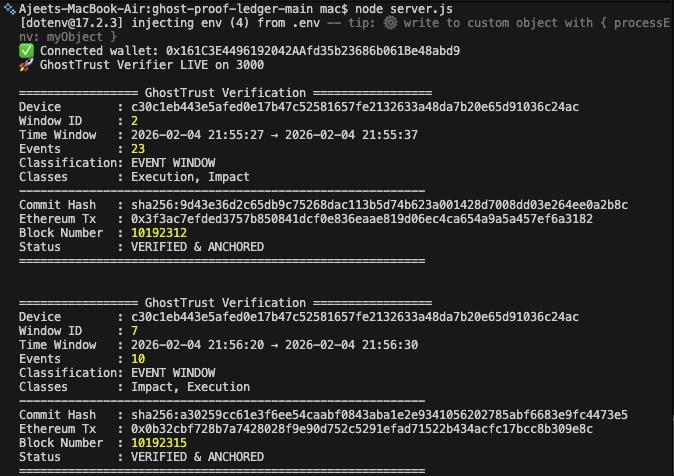
Backend API Logs
-
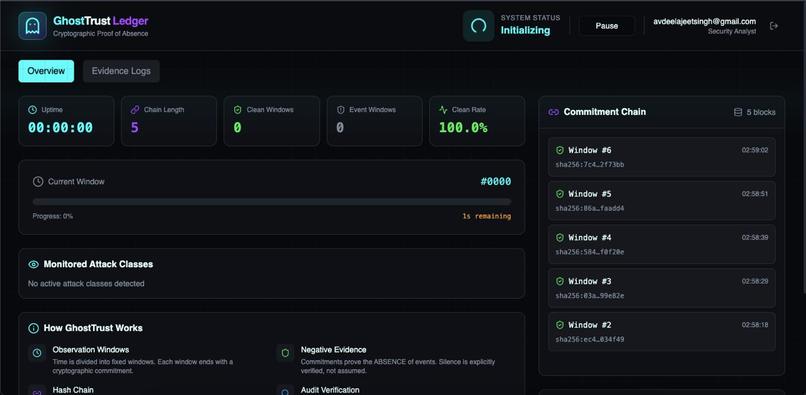
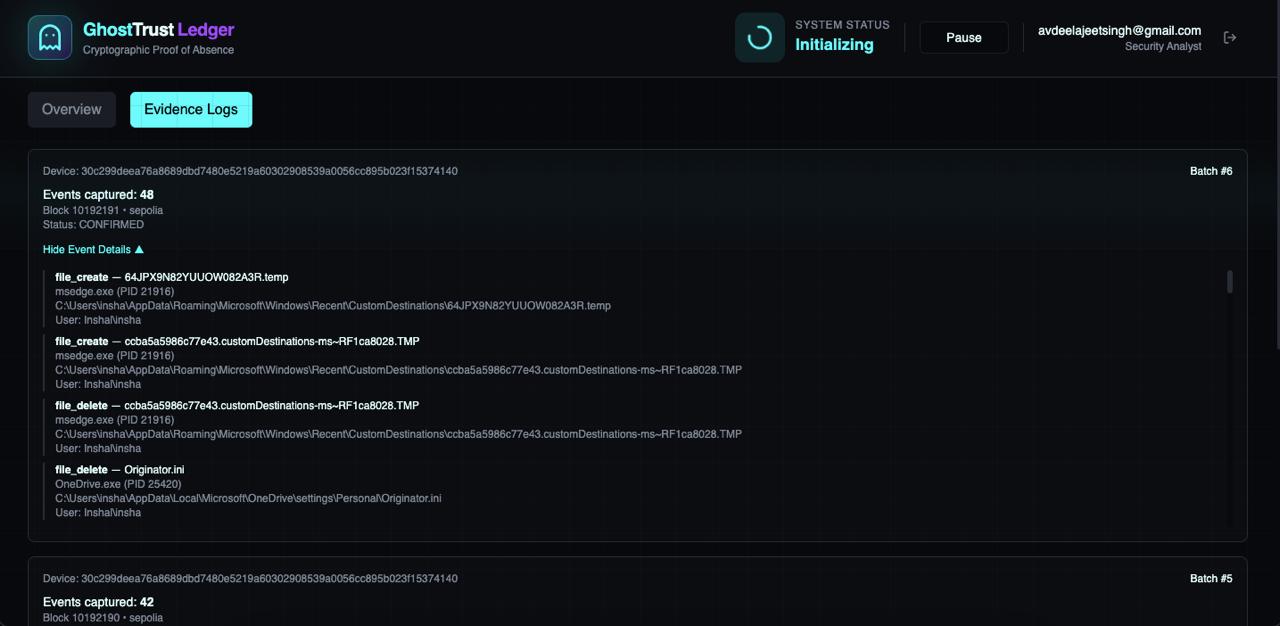
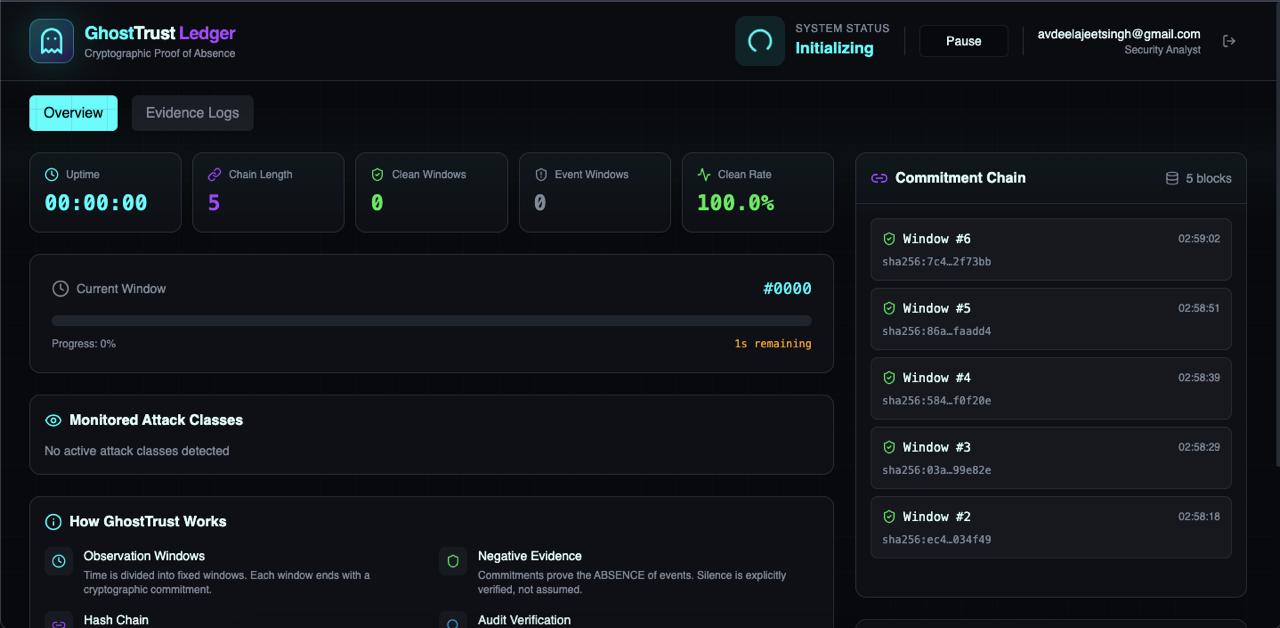
Webapp Dashboard
-
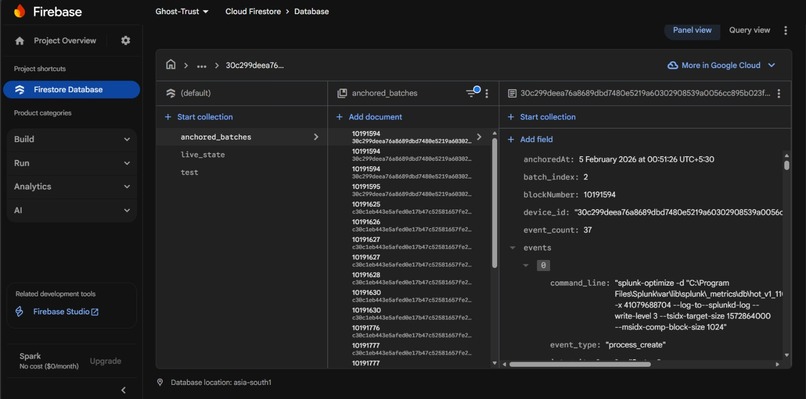
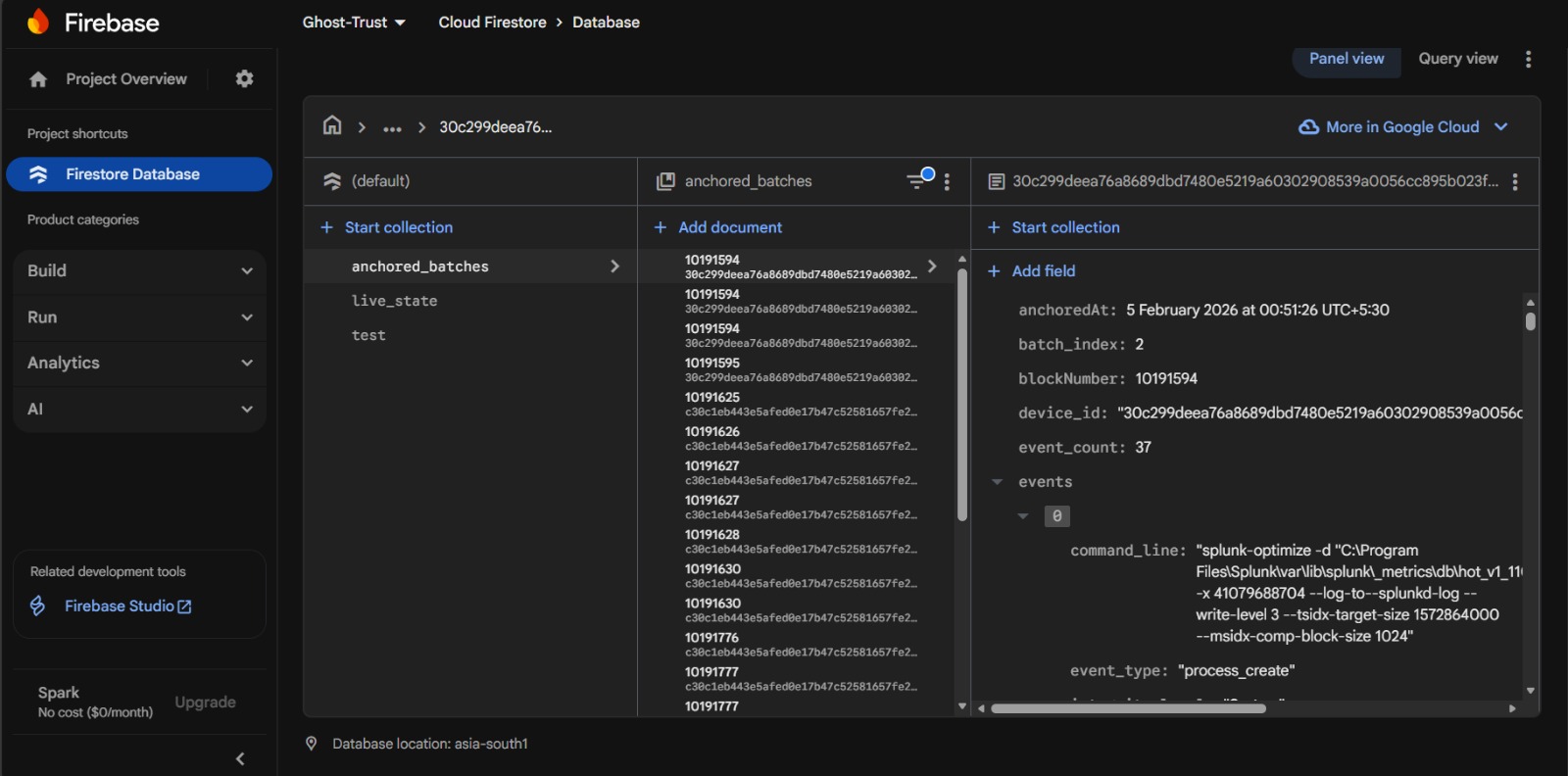
Firebase
About the Project – Ghost Trust Ledger
Inspiration
Ghost Trust Ledger was inspired by real-world cybersecurity and red-teaming scenarios where logs, system events, and digital evidence can be altered or erased after an incident. During vulnerability assessments and security labs, we noticed that even well-secured systems often rely on centralized log storage, which creates a single point of failure.
This motivated us to build a tamper-proof trust layer using blockchain—where once data is recorded, it becomes immutable and verifiable.
What it does
Ghost Trust Ledger is a blockchain-backed digital evidence and verification system that:
- Collects system or event data from a secure agent (EXE)
- Hashes and timestamps the data
- Stores cryptographic proofs on the blockchain
- Enables anyone with permission to verify data integrity later
In simple terms, it ensures:
“If the data was changed, it will be detected.”
How we built it
The project uses a hybrid off-chain + on-chain architecture:
Client Agent (EXE)
- Captures system or event data
- Sends data securely to the backend
Backend Server (Node.js + Express)
- Validates incoming payloads
- Generates cryptographic hashes
- Handles secure communication and transaction logic
Blockchain Layer (Ethereum Testnet – Sepolia)
- Stores hashes, timestamps, and device identifiers
- Provides immutability and public verifiability
Data integrity is ensured using cryptographic hashing: [ H = \text{SHA-256}(D) ] where (D) is the original data and (H) is the immutable proof stored on-chain.
Challenges we ran into
- Gas and storage limitations on blockchain
- Private key management and wallet security
- Handling failed or delayed blockchain transactions
- Designing a secure bridge between off-chain systems and on-chain storage
- Ensuring data authenticity while preventing replay or spoofing attacks
Each challenge required careful architectural and security-focused decisions.
Accomplishments that we're proud of
- Successfully built a working end-to-end pipeline from EXE → Backend → Blockchain
- Achieved tamper-proof logging and verification
- Implemented secure hashing and timestamping
- Designed a scalable and modular architecture
- Applied real cybersecurity and blockchain concepts to a practical problem
What we learned
- How to integrate blockchain with real-world systems
- Trade-offs between decentralization, performance, and cost
- Secure API and backend design principles
- Importance of threat modeling in system architecture
- How immutability strengthens digital trust
What's next for Ghost Trust Ledger
- Role-based access control (RBAC) for log verification
- Off-chain encrypted storage (IPFS / cloud) with on-chain hash anchoring
- Smart contract–based verification dashboards
- Integration with SIEM and SOC tools
- Transition from testnet to production-ready private or consortium blockchain
Ghost Trust Ledger aims to become a foundational trust layer for digital forensics, cybersecurity auditing, and compliance-driven environments.
Built With
- ether.js
- express.js
- firebase
- git
- https
- javascript
- sha256
- solidity

Log in or sign up for Devpost to join the conversation.