-
-
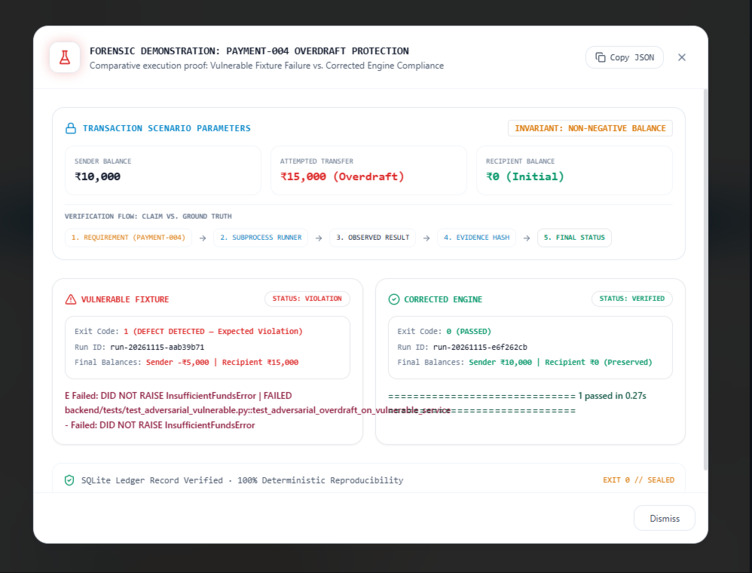
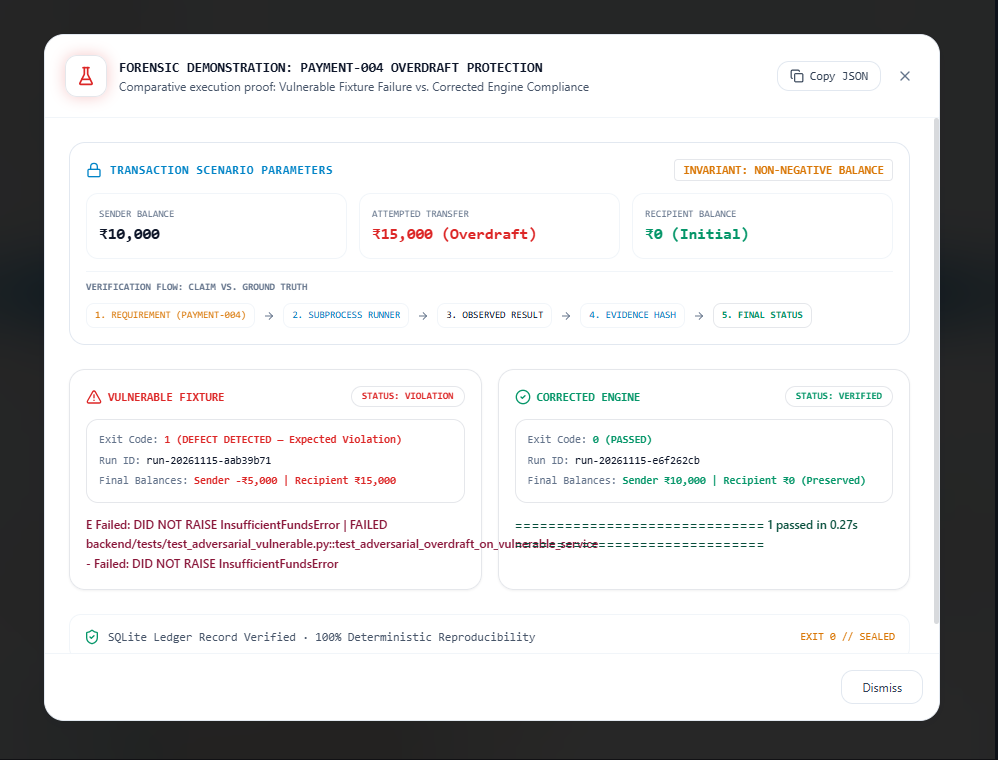
PAYMENT-004 Result: Vulnerability vs. Verified Fix
-
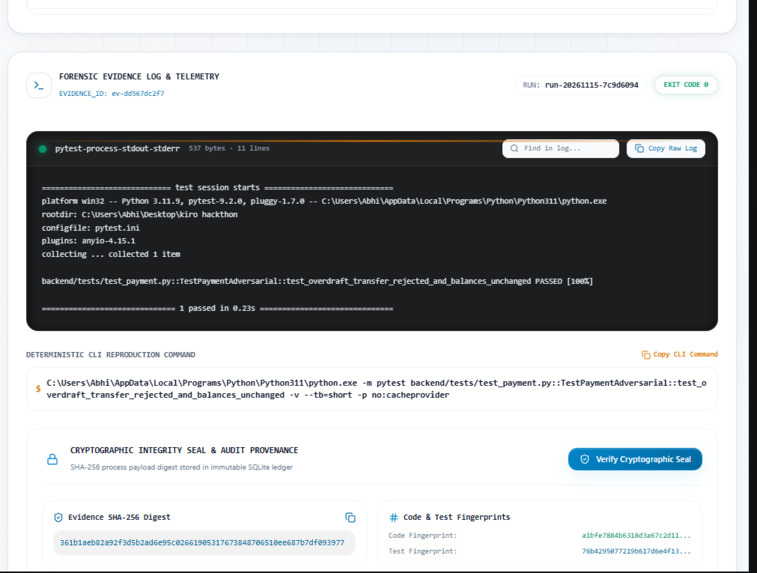
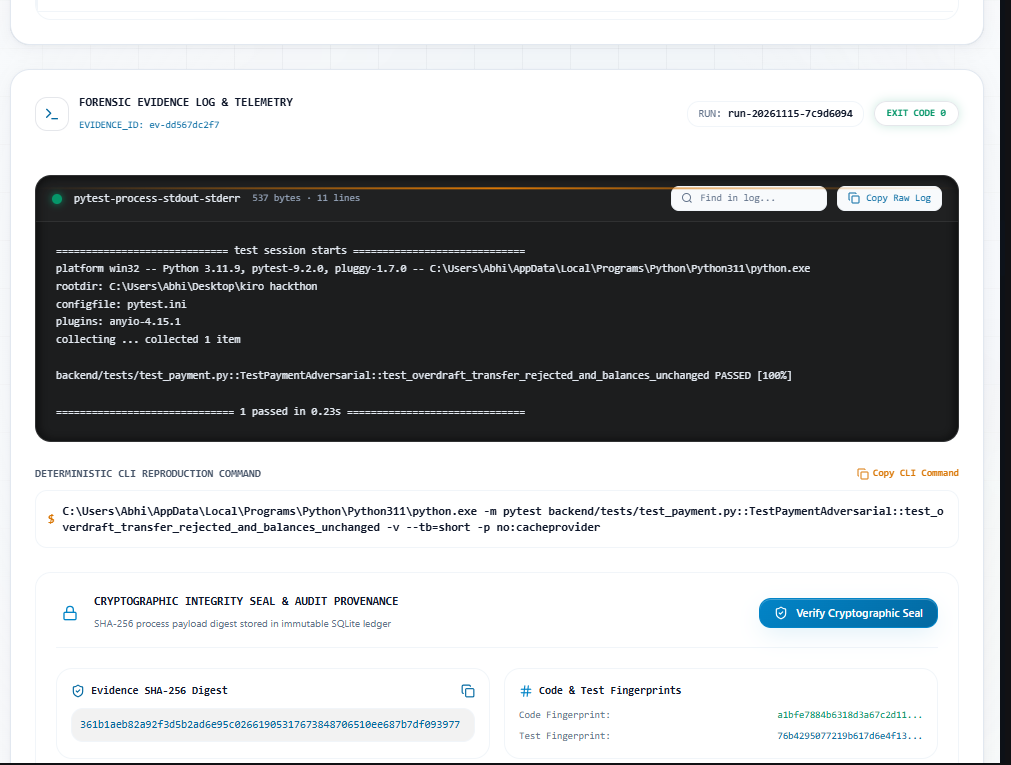
Evidence Ledger: Cryptographic Evidence
-
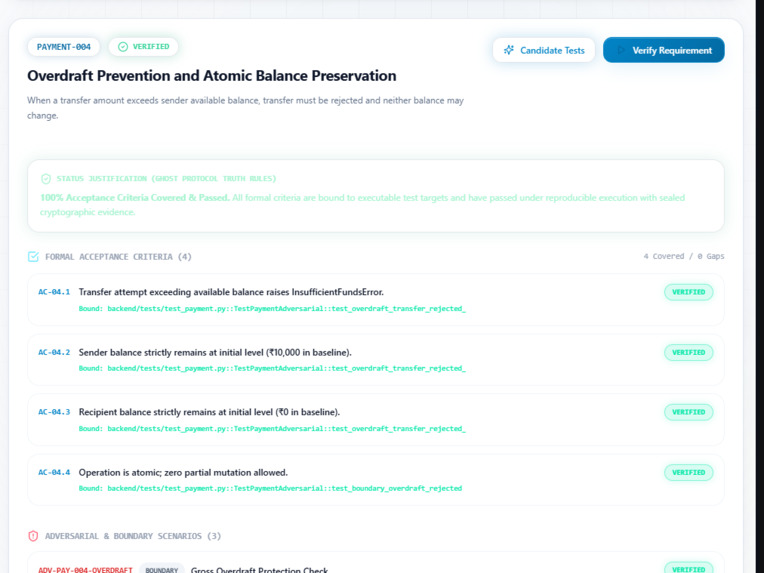
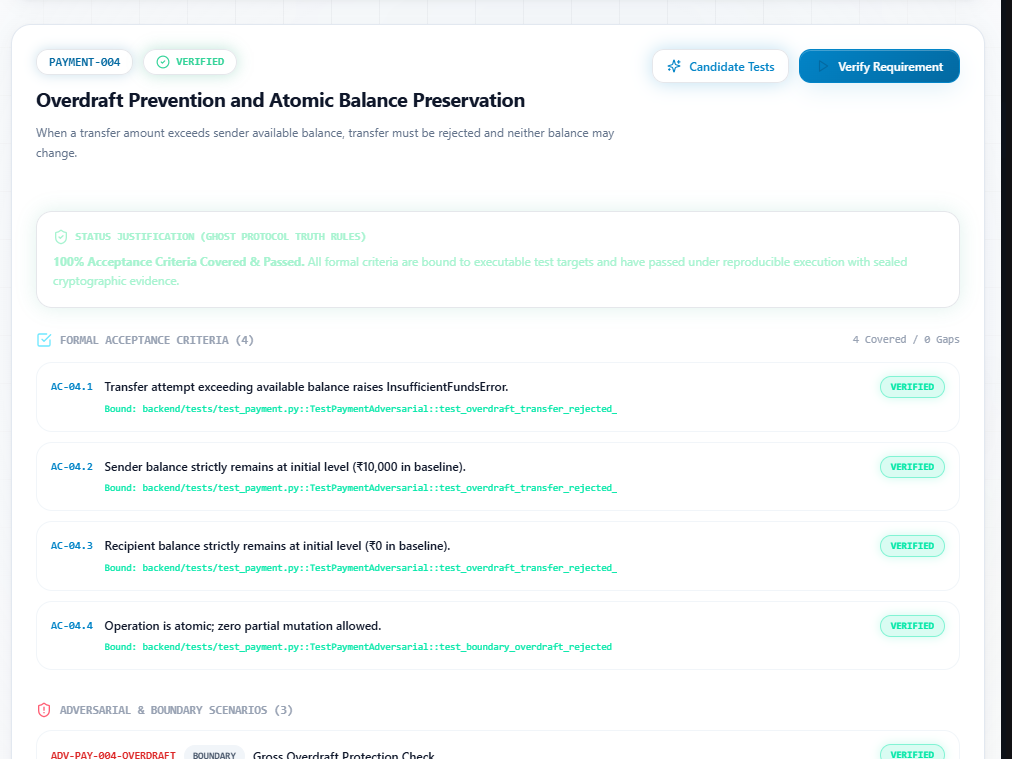
Acceptance Criteria: Overdraft Prevention
-

Requirements Catalog: Payment Requirements
-

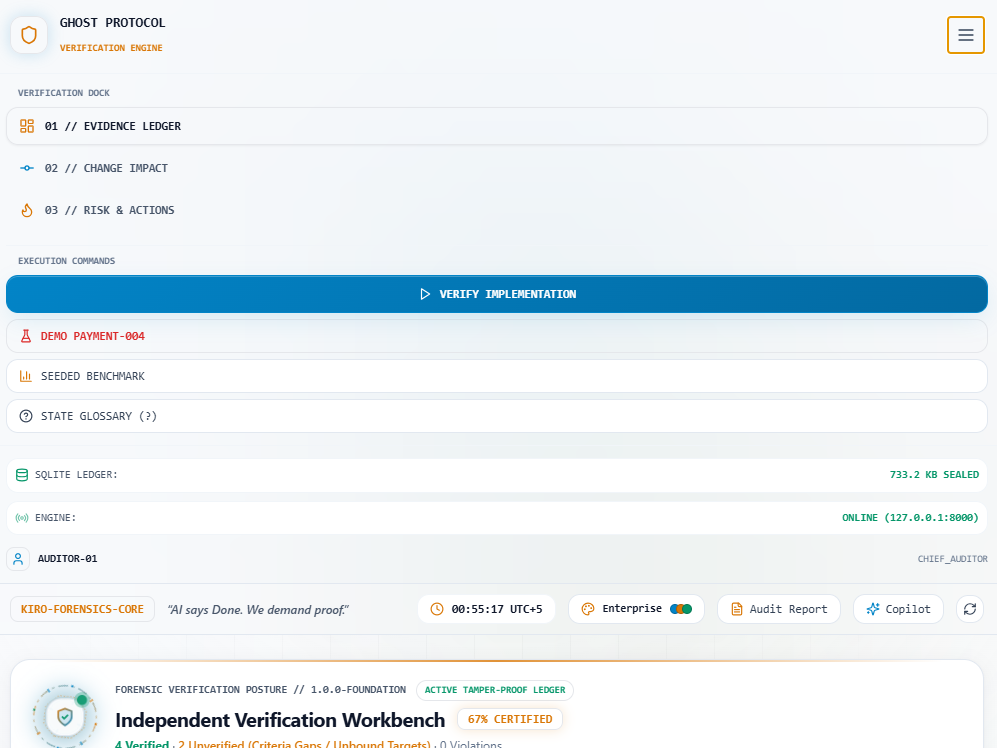
Workbench: Verification Controls
-
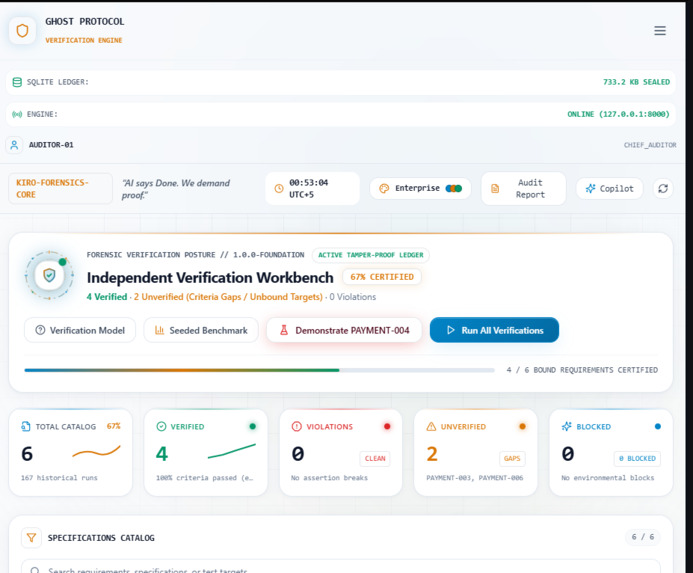
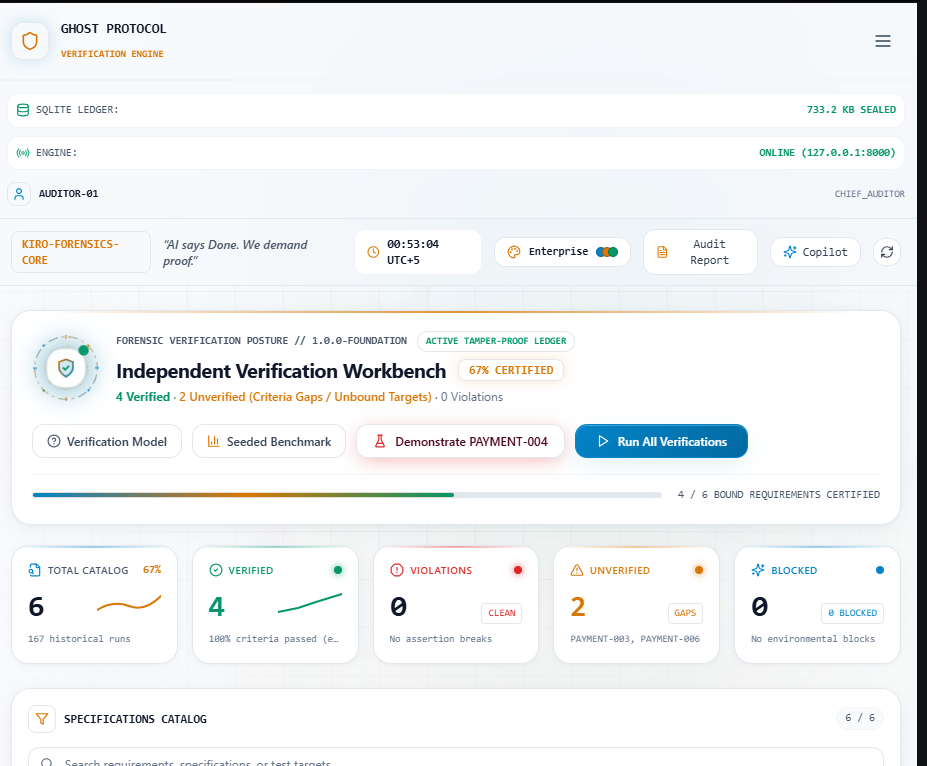
Dashboard: Verification Dashboard
-
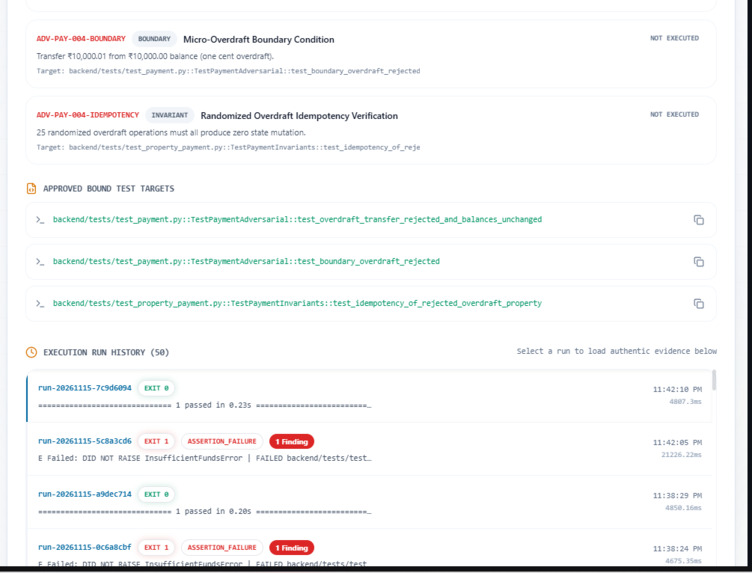
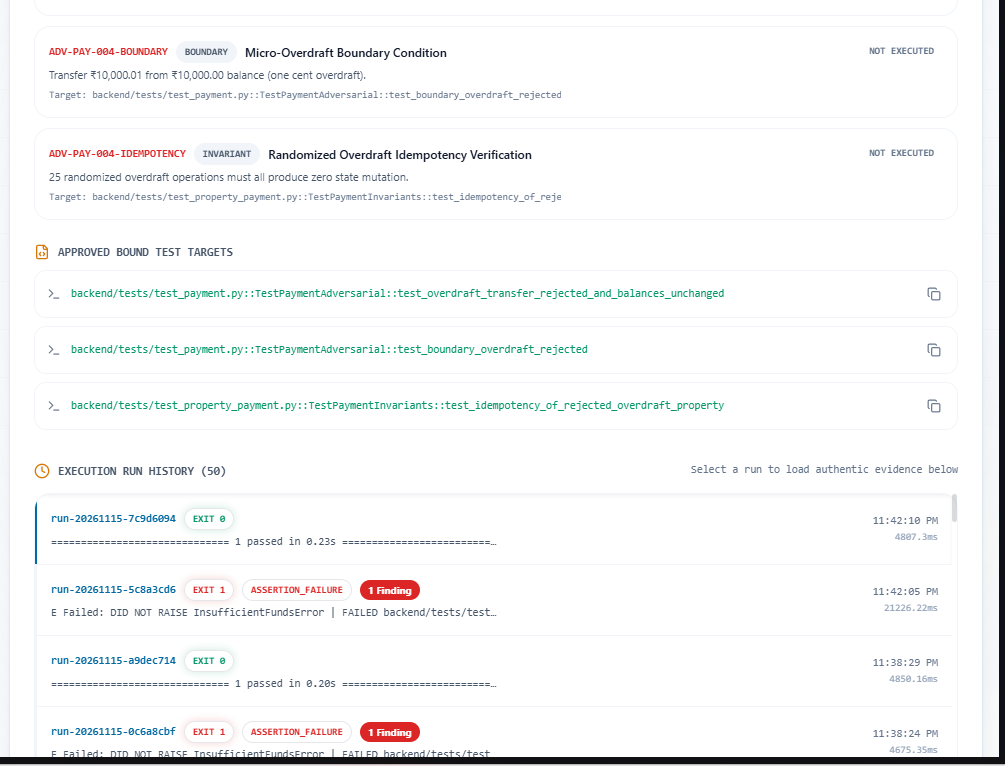
Execution History: Test Run Results
-
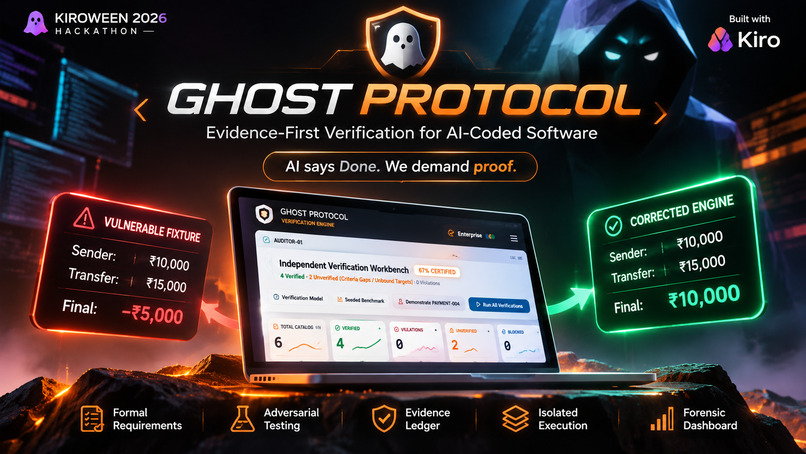
Thumbnail: Evidence-First Verification

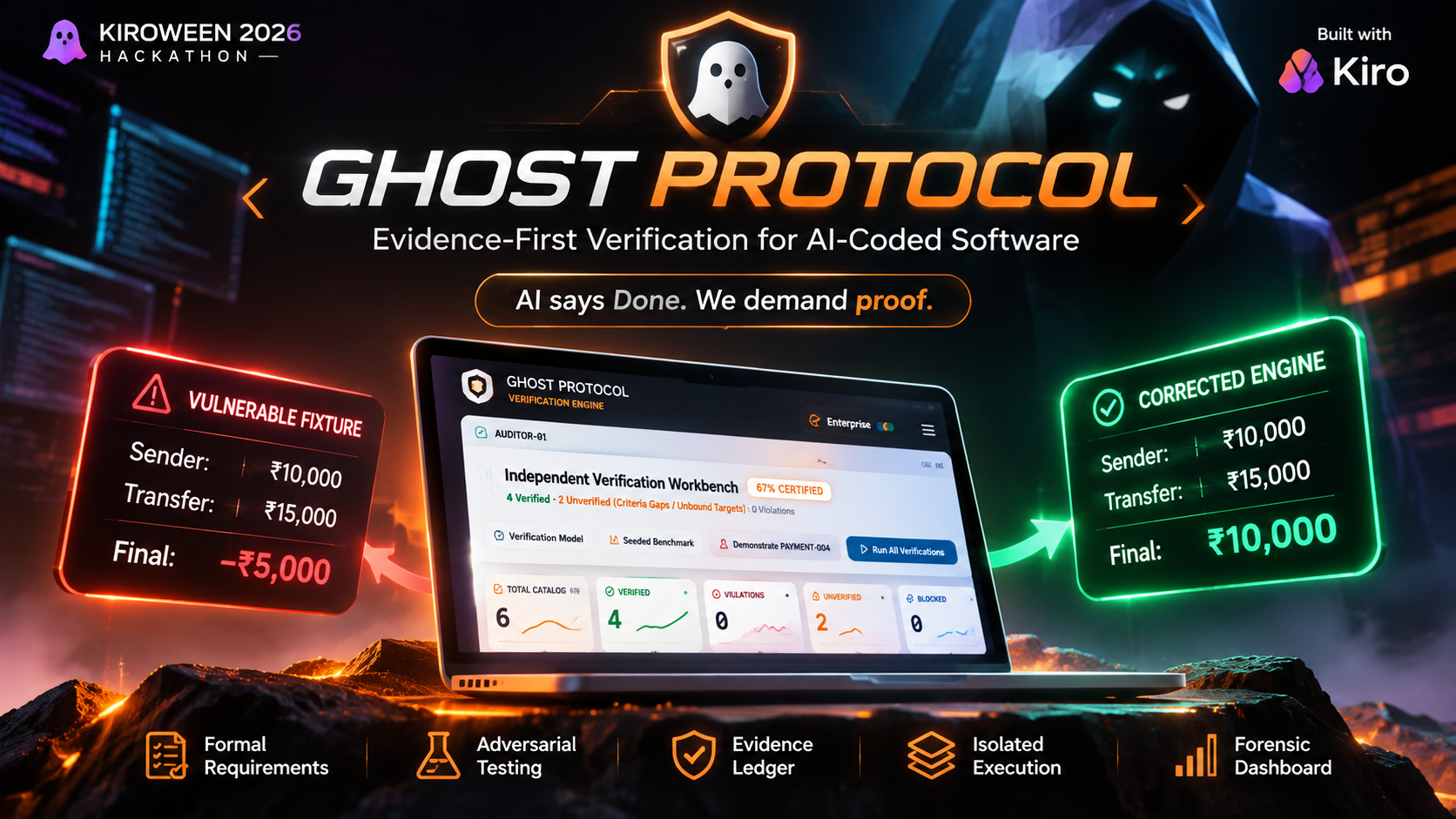
GHOST PROTOCOL
AI says Done. We demand proof.
Inspiration
AI coding agents can confidently announce that a task is complete even when important requirements remain untested. A green status or convincing explanation is not enough when software must preserve financial balances, enforce security rules, and handle adversarial inputs.
Ghost Protocol was built around one question: What if software had to prove its completion claim through executable evidence?
What It Does
GHOST PROTOCOL is an evidence-first software verification workbench that evaluates implementations against explicit requirements and executable tests. Rather than trusting natural-language completion claims, it examines observed execution outcomes and associates them with traceable evidence.
The project brings together:
- A formal requirements catalog with acceptance criteria linked to test targets.
- Adversarial testing for boundary conditions and security invariants.
- Isolated test execution with recorded output and exit codes.
- A four-state verification model: VERIFIED, VIOLATION, BLOCKED, and UNVERIFIED.
- A SQLite evidence ledger with SHA-256 integrity verification.
- A forensic dashboard for inspecting requirements, execution history, findings, and evidence.
The PAYMENT-004 Demonstration
The central demonstration tests an overdraft-prevention requirement.
A sender starts with ₹10,000 and attempts to transfer ₹15,000. The intentionally vulnerable fixture permits the transfer, leaving the sender at −₹5,000 and the recipient at ₹15,000. Ghost Protocol identifies this as a violation.
The corrected payment implementation rejects the transfer, preserving the sender's ₹10,000 balance and the recipient's ₹0 balance. The supplied execution results show the corrected engine as VERIFIED.
This comparison demonstrates why an expected failure in a deliberately vulnerable implementation must be distinguished from a successful verification of the corrected implementation.
How We Built It
The frontend uses React, TypeScript, Vite, and Tailwind CSS. The backend uses Python and FastAPI, with pytest-based verification targets executed through isolated subprocesses. SQLite stores evidence records, while SHA-256 digests support integrity checks.
The workflow connects requirements, executable tests, observed results, and evidence so reviewers can investigate how a verification decision was reached.
How Kiro Was Used
Kiro's agent-assisted workflow was used during the project's security-fix phase. The repository retains Kiro session and settings metadata. The development process focused on inspecting the implementation, addressing payment-safety issues, and checking changes against actual test and execution output.
A key lesson was that a deliberately failing vulnerability demonstration is not the same as a failure of the corrected implementation. Similarly, a timeout or blocked execution must not be reported as a successful verification.
Challenges and What We Learned
A central challenge was distinguishing an intentionally detected defect from an infrastructure or subprocess failure. Another was maintaining a clear chain between formal acceptance criteria, the test that executes them, the observed result, and the recorded evidence.
Ghost Protocol reinforces a simple principle: completion claims should be supported by reproducible results, and insufficient evidence should remain insufficient evidence.
AI says Done. We demand proof.
Built With
- ai
- css
- cybersecurity
- developer
- fastapi
- hypothesis
- kiro
- pytest
- python
- react
- safety
- sha-256
- software
- sqlite
- tailwind
- testing
- tools
- typescript
- verification
- vite
