-
-
-
-
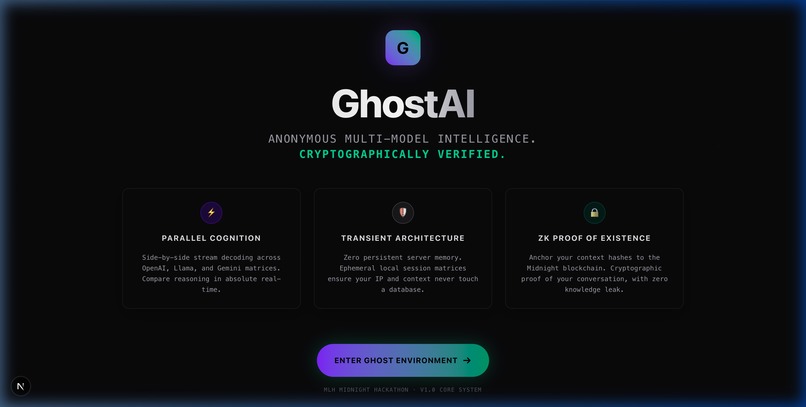
landing page
-
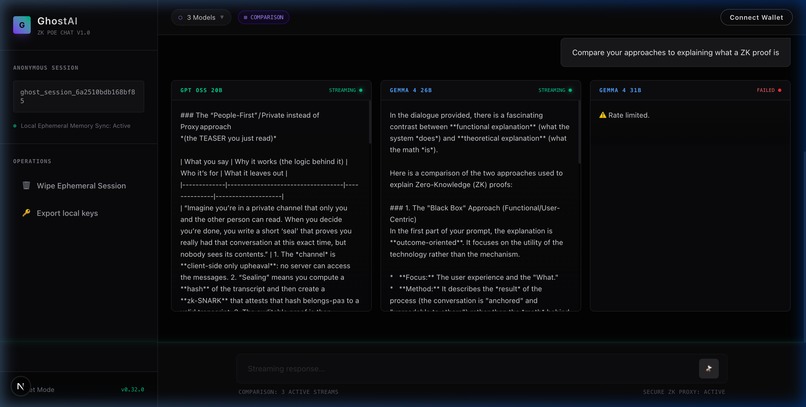
comparison mode
-
Inspiration
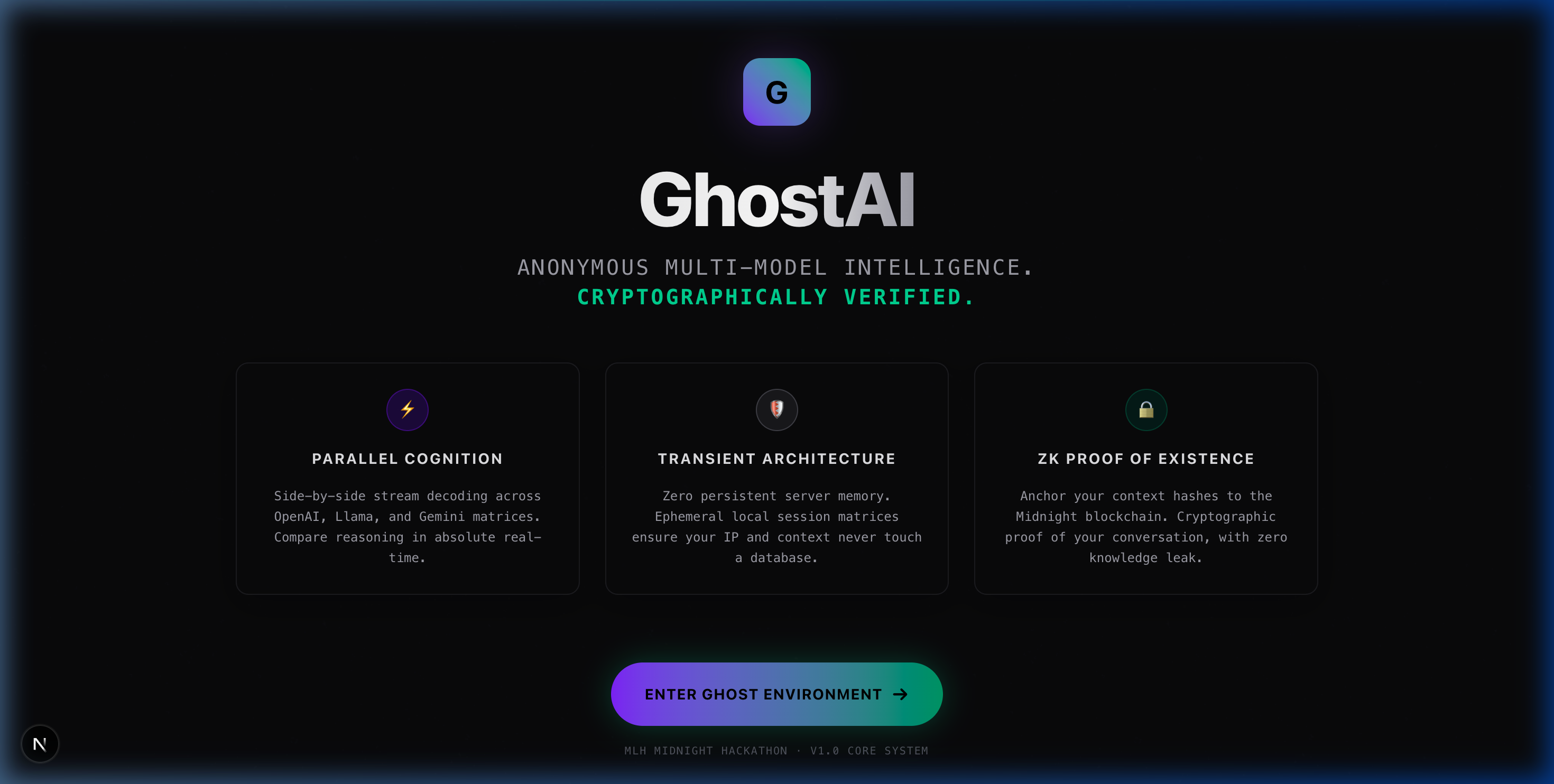
Every conversation we have with mainstream AI models leaves a permanent digital footprint. Developers, founders, and enterprises are forced to sacrifice their intellectual property and data privacy just to leverage modern LLMs. We wanted to build a paradigm where cutting-edge AI utility completely decouples from data surveillance. GhostAI was born to prove that total user anonymity and absolute machine intelligence can coexist through cryptographic verification.
What it does
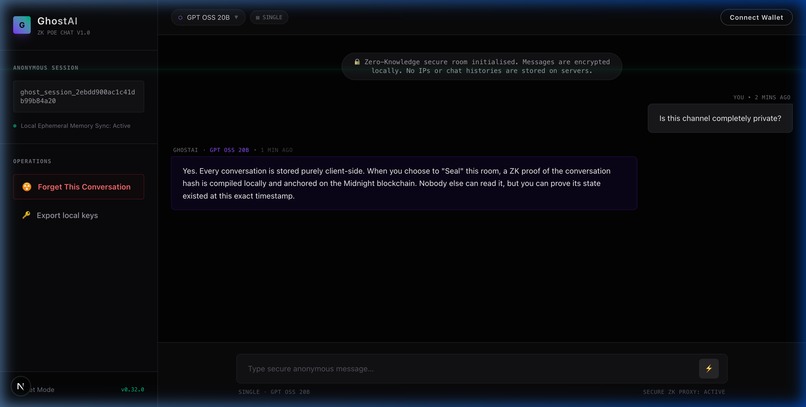
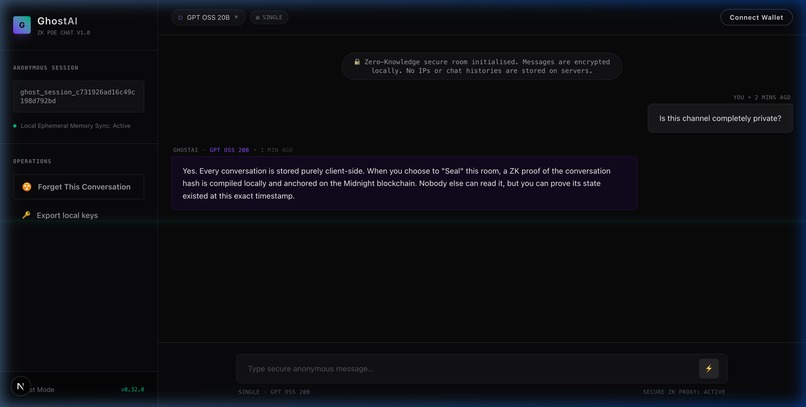
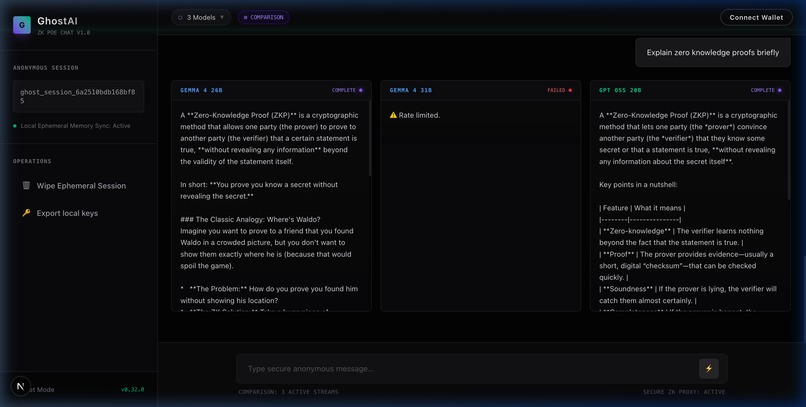
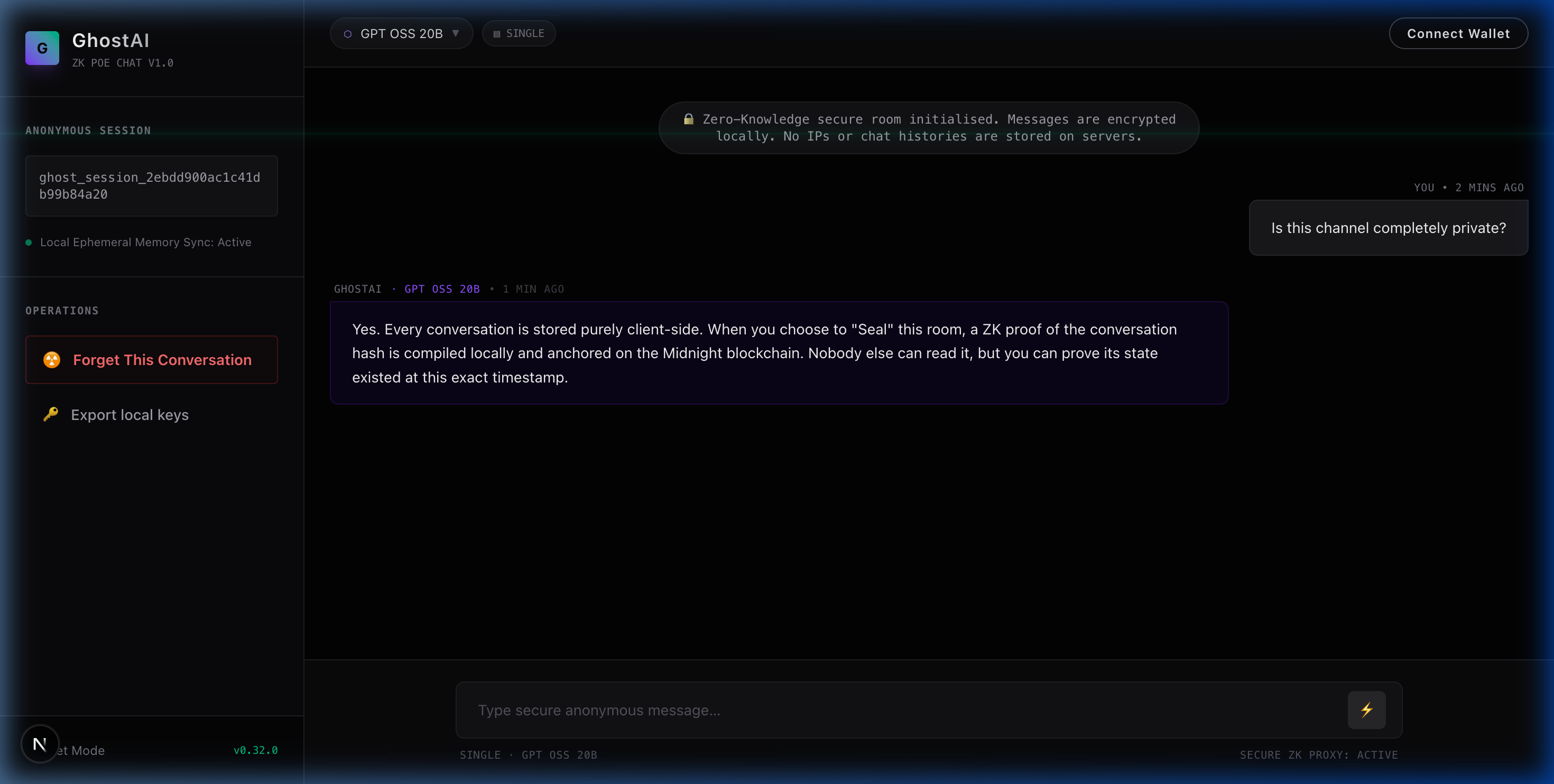
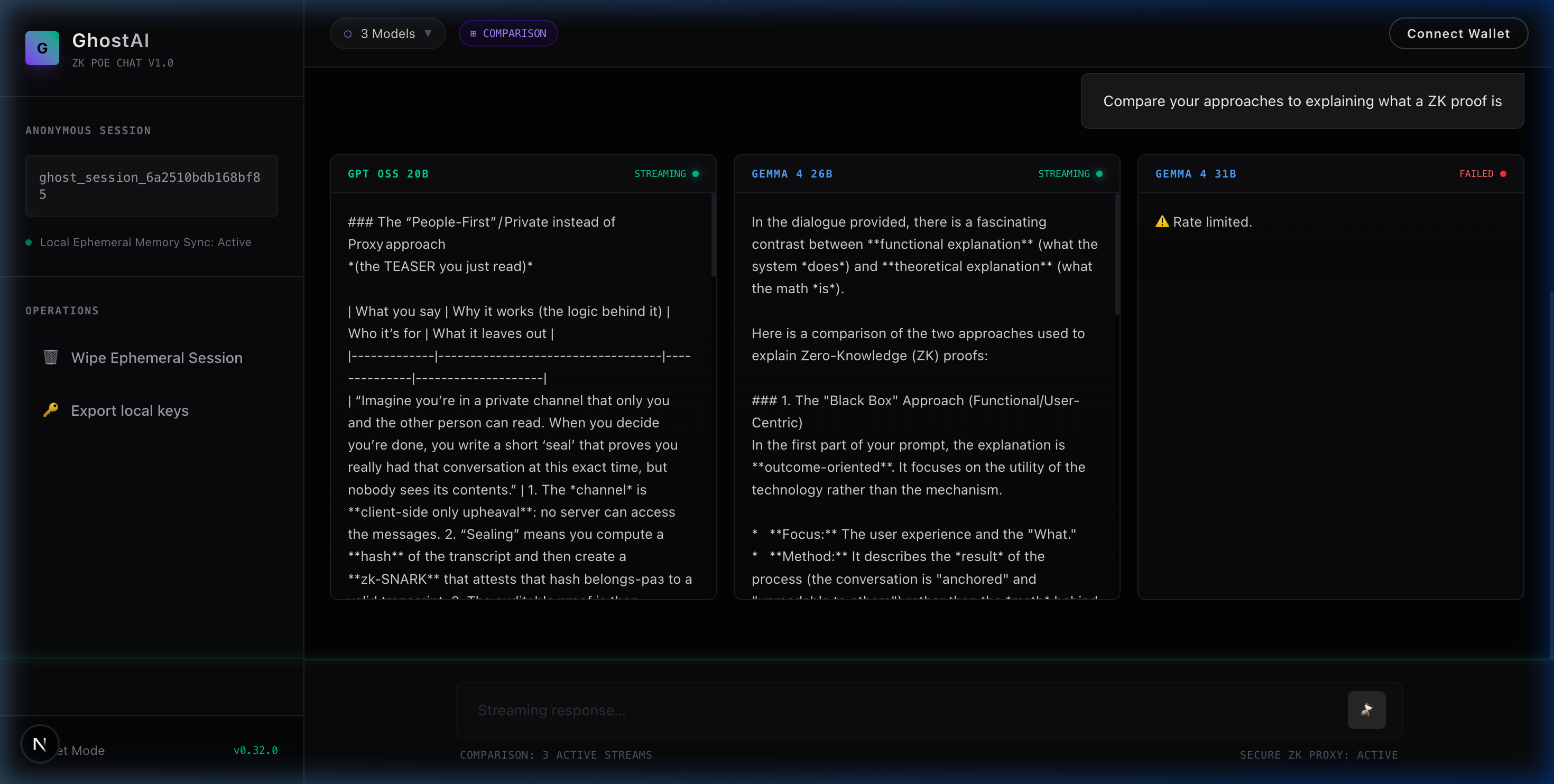
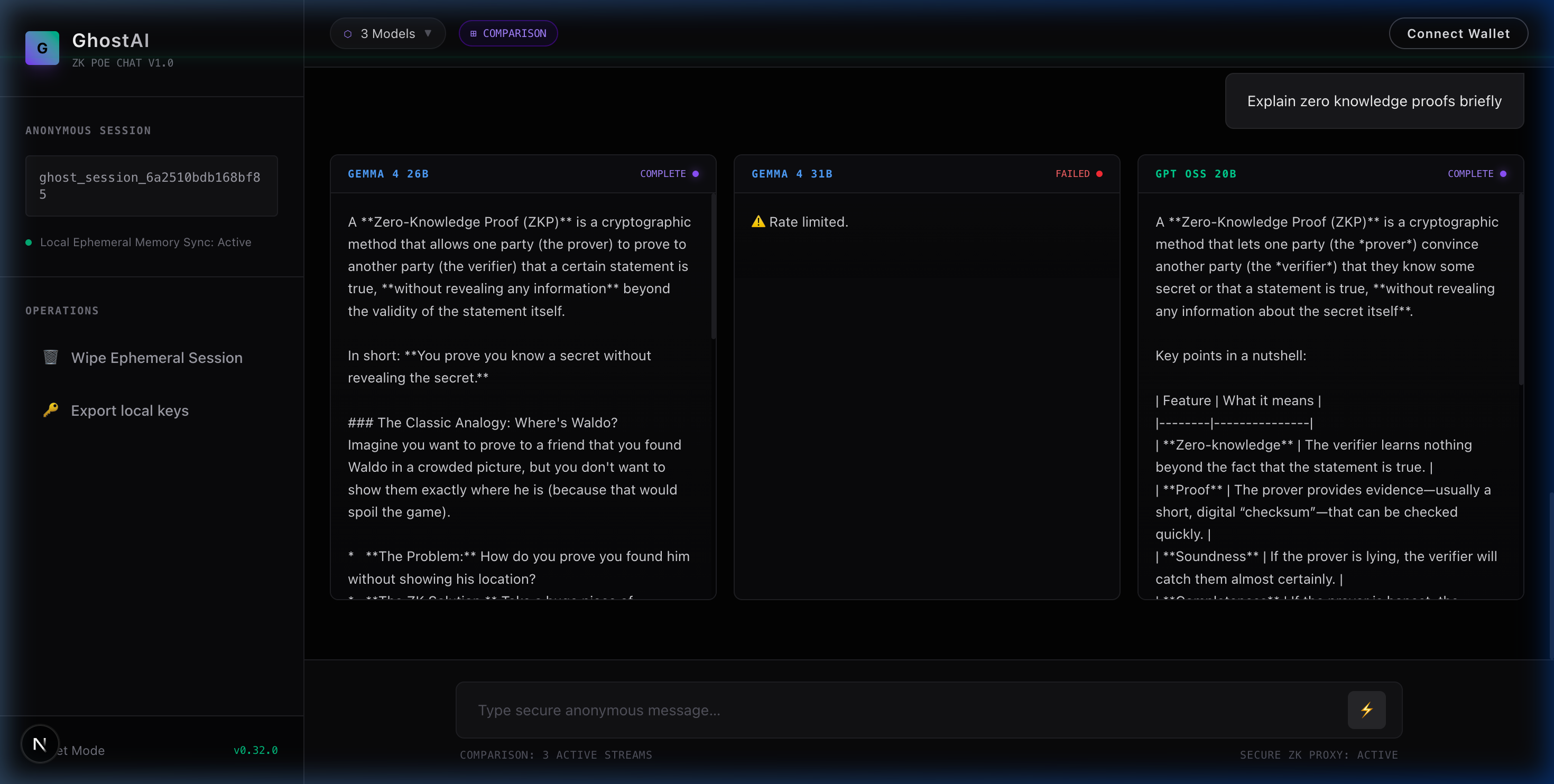
GhostAI is a cryptographically verified, multi-model anonymous intelligence workspace. It allows users to run side-by-side parallel reasoning streams across different LLM architectures (like GPT and Gemma variants) simultaneously in absolute privacy. The system operates on a zero-persistent-server-memory topology. Conversations are encrypted purely client-side, and users can explicitly anchor a Zero-Knowledge (ZK) proof of a conversation hash to the Midnight blockchain layer to verify its existence at an exact timestamp without leaking a single character of text.
How i built it
I engineered GhostAI utilizing a modern web stack optimized for streaming performance and cryptographic state handling:
Frontend Framework: Built entirely with Next.js and TypeScript for smooth, modular, type-safe client-side execution.
Styling & UI: Tailwind CSS paired with PostCSS for a sleek, responsive, dark-mode terminal aesthetic.
Concurreny Processing: Implemented a robust multi-key streaming multiplexer client-side to handle active JSON inference streams simultaneously without UI blocking.
State & Memory Lifecycle: Designed atomic session purging routes (/api/chat/purge) that overwrite active memory states and force local client-side key eviction instantly upon request.
Challenges i ran into
Handling high-throughput streaming concurrency across multiple models simultaneously presented massive state synchronization synchronization bottlenecks. If one model hit a rate limit or failed, it originally risked freezing the UI execution tree. I had to build advanced stream diagnostics and mock stream testers to elegantly isolate connection drops, handling unexpected network payloads or edge cases gracefully while maintaining an uninterrupted workspace layout.
Accomplishments that I am proud of
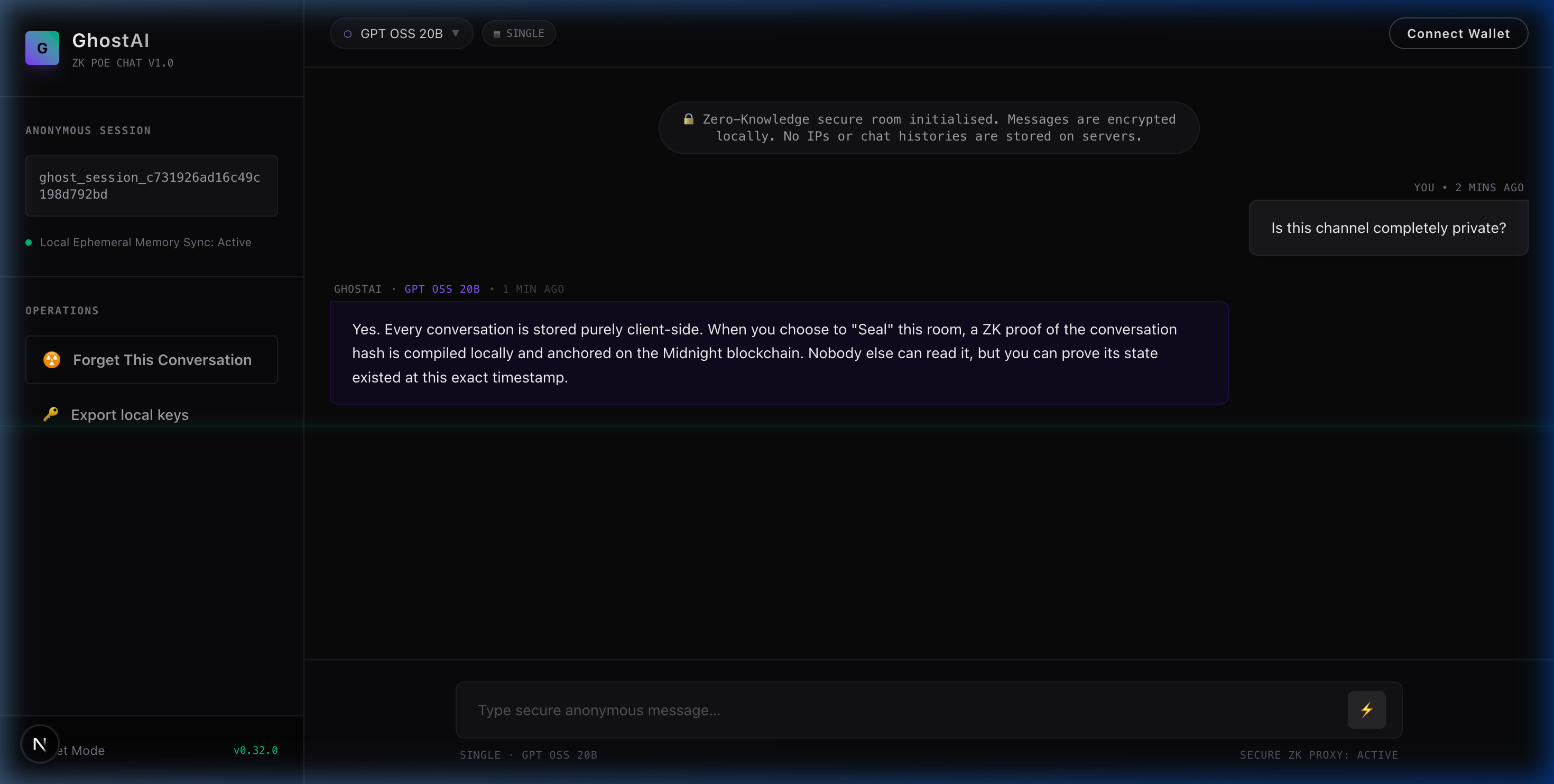
I successfully achieved true architectural data decoupling. I am incredibly proud of our local ephemeral memory sync mechanism that keeps conversation states localized strictly in client memory registers. Building a reliable "Forget Button" that securely resets data state tracks cleanly—combined with cross-model parallel execution—makes absolute privacy feel seamless rather than rigid.
What I learned
I learned deep intricacies of managing async server-sent event (SSE) streams under tight security constraints. Designing a transient architecture taught us how to minimize data retention windows down to the millisecond, forcing us to rethink traditional state management by treating the backend as a stateless, blind cryptographic pass-through conduit rather than a persistent database ledger.
What's next for ghost.ai
I aim to deepen the integration with the Midnight blockchain ecosystem to make local session key management even more seamless directly inside native Web3 wallet environments. I plan to introduce multi-agent orchestration frameworks where autonomous agents can collaborate on complex development tasks privately in parallel. Finally, I want to roll out audit-privacy matrices to help enterprises continuously track down and prevent zero-knowledge telemetry leakages across their standard workspace tools.

Log in or sign up for Devpost to join the conversation.