-
-
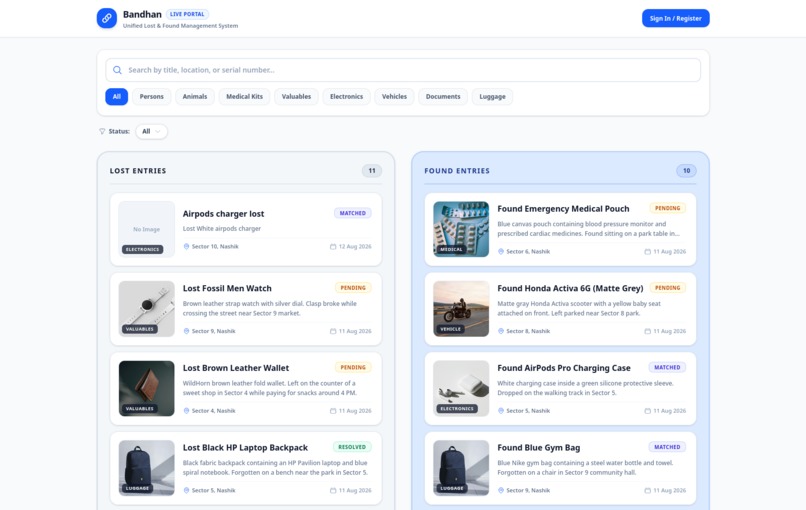
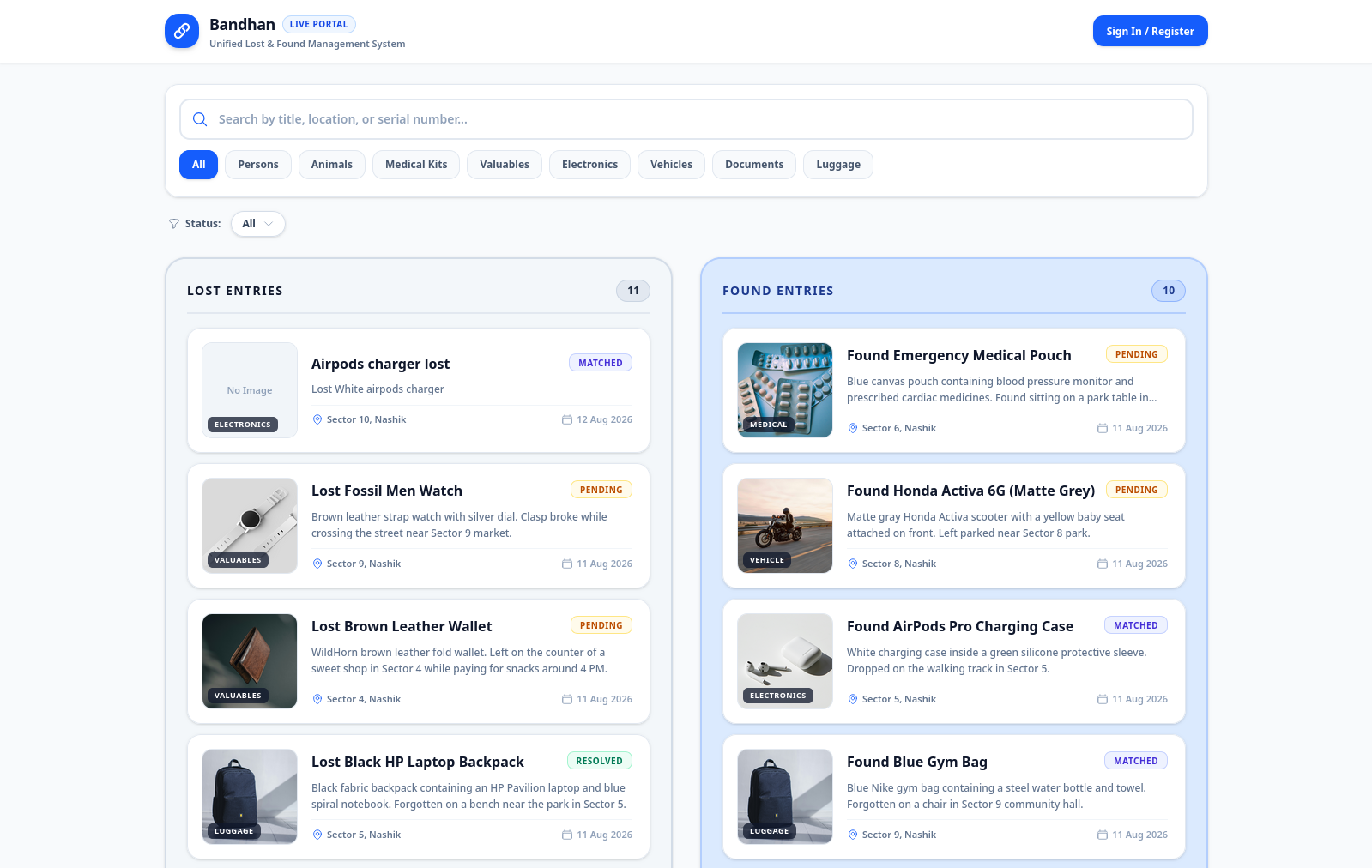
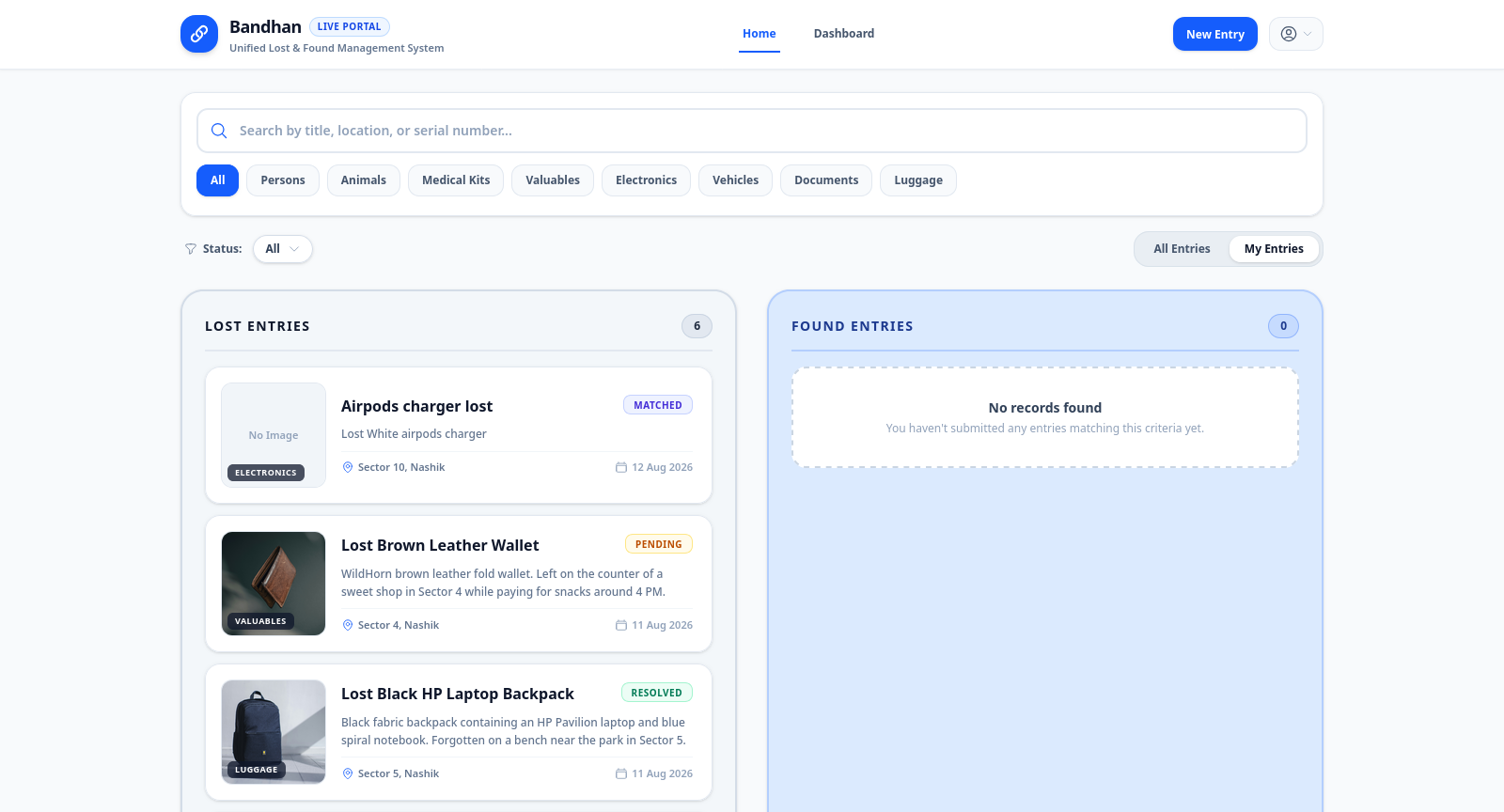
Home page
-
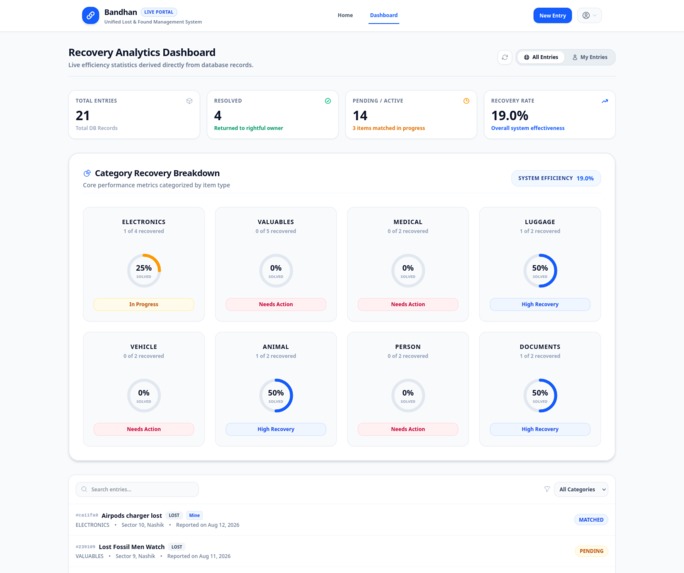
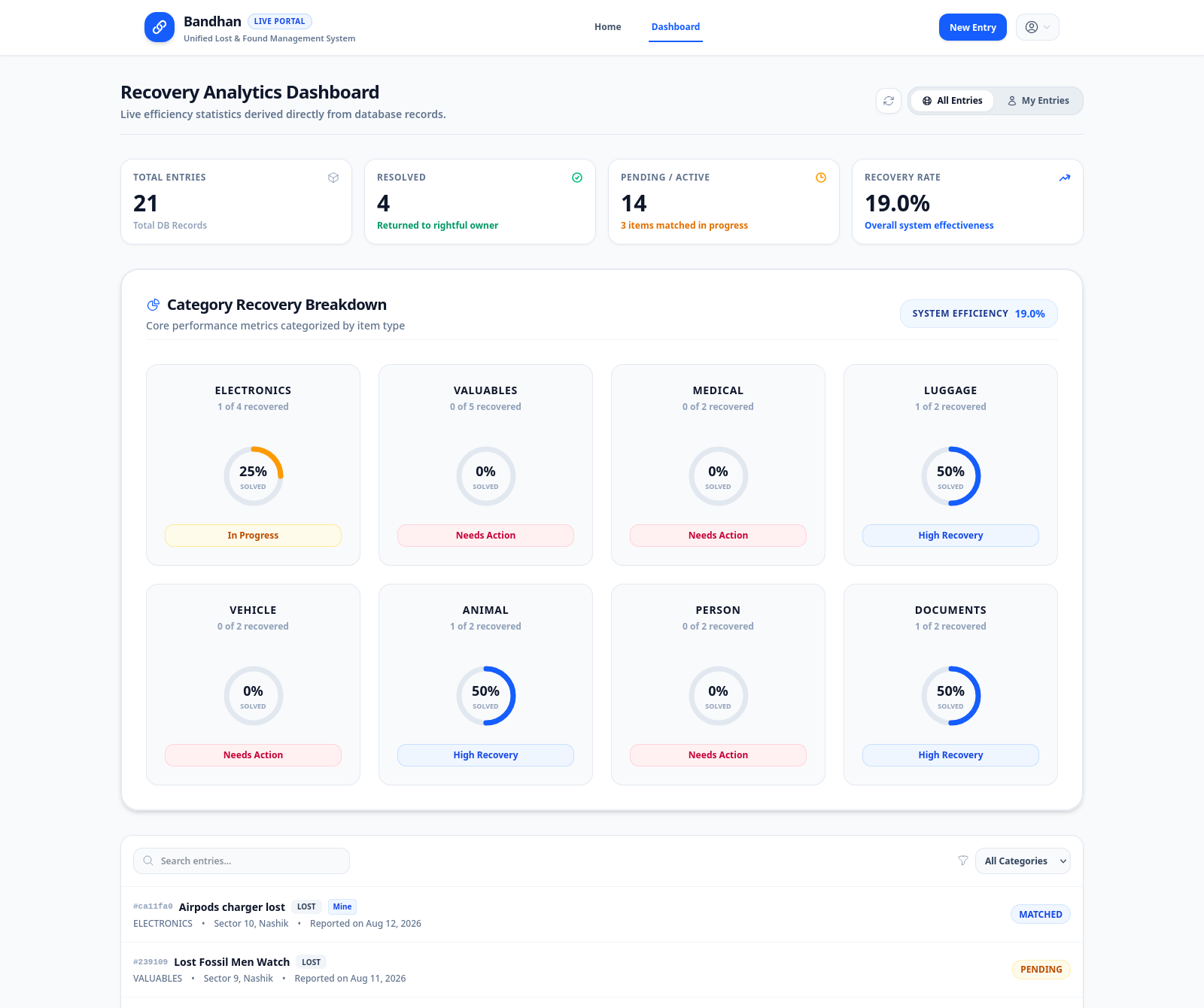
Dashboard
-
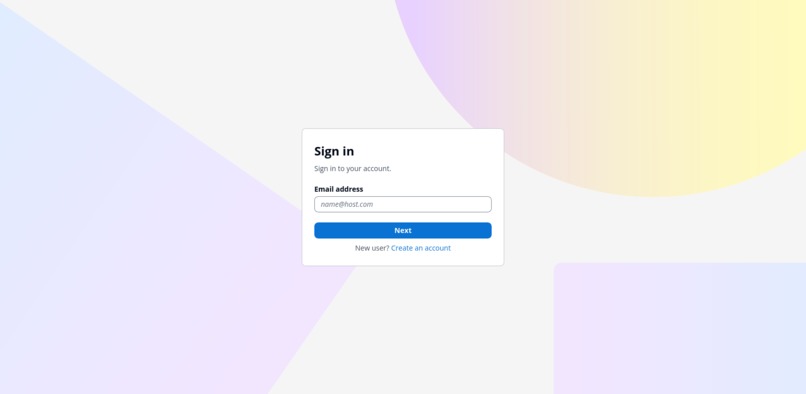
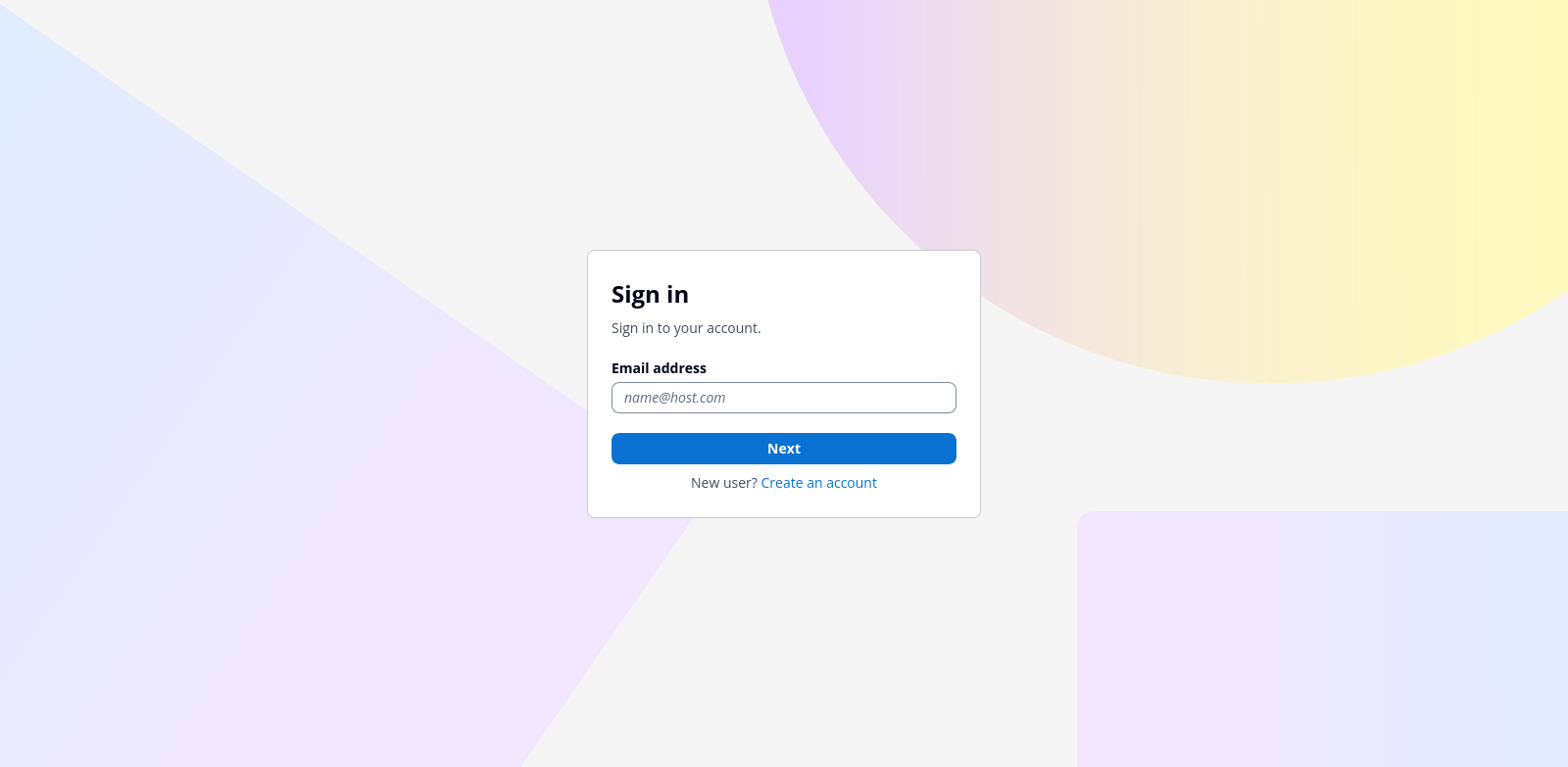
AWS cognito Login
-
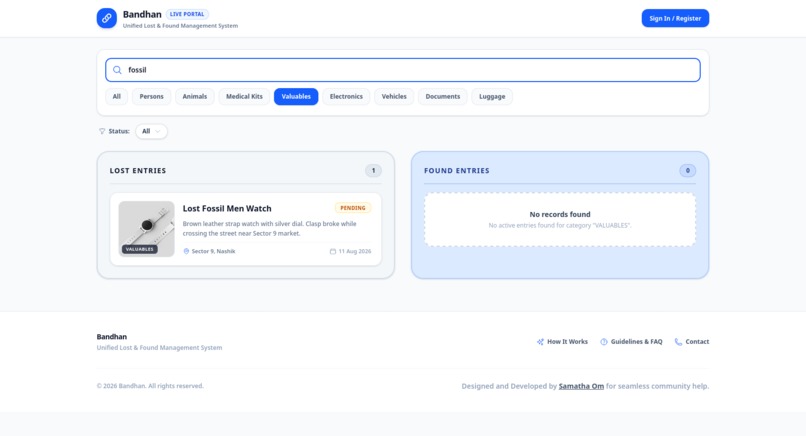
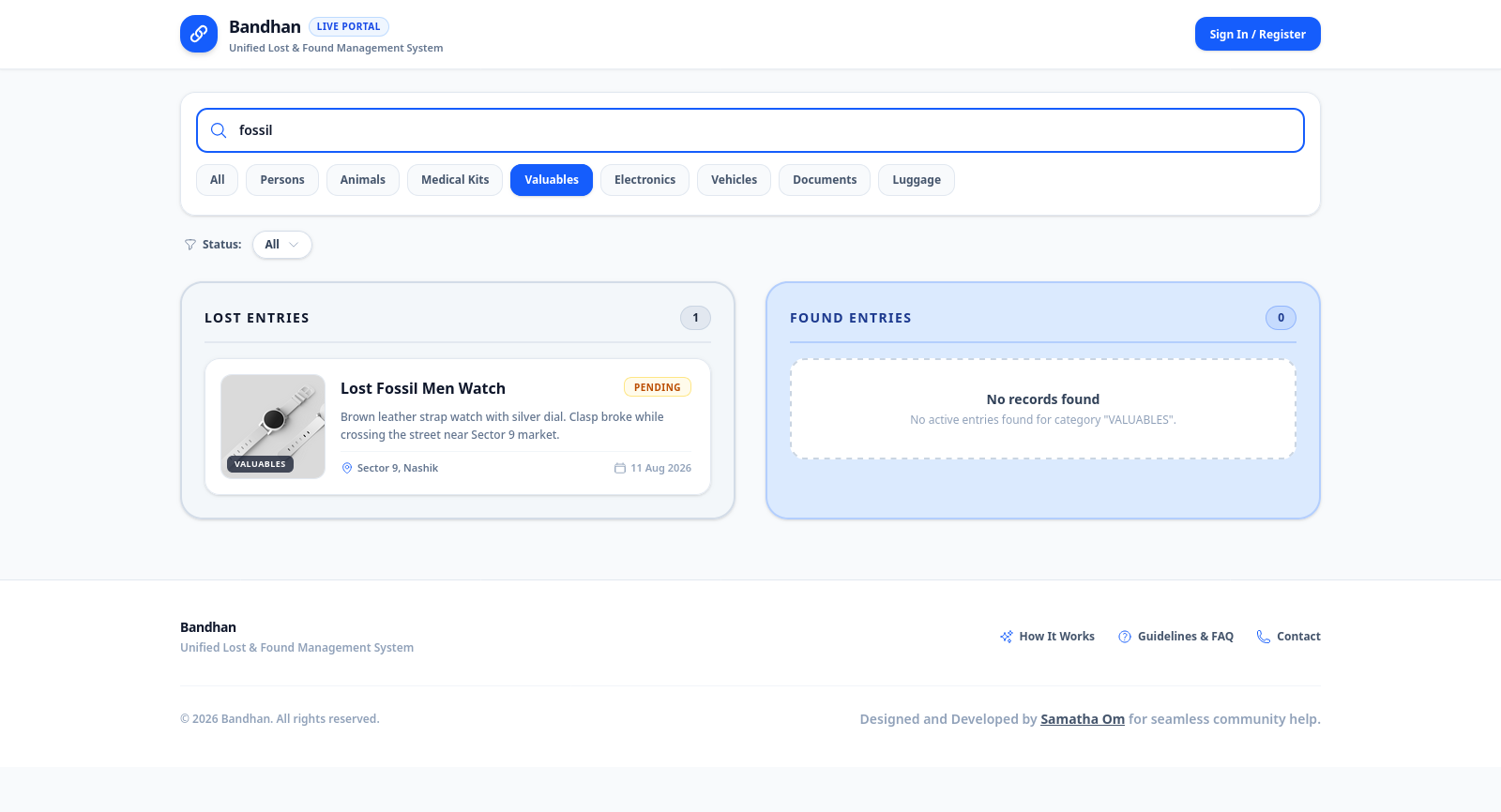
Filtering
-
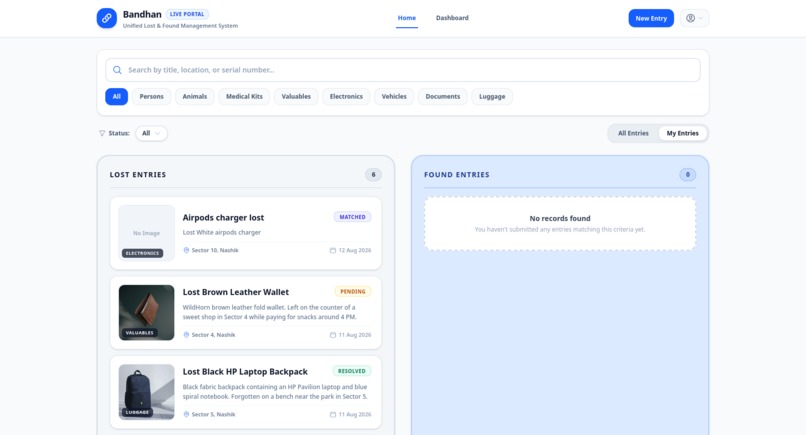
My entries filterijg
-
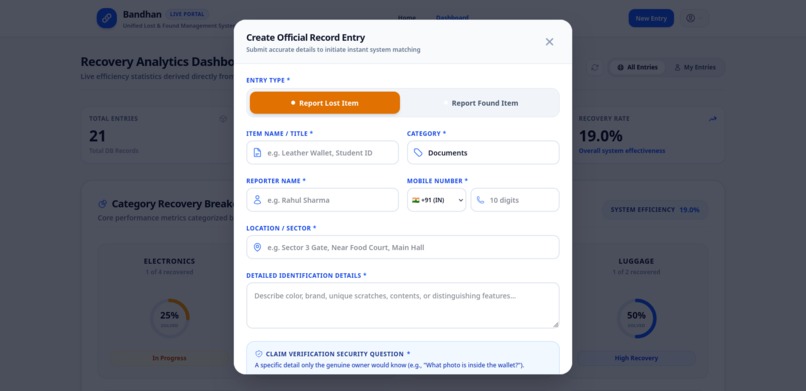
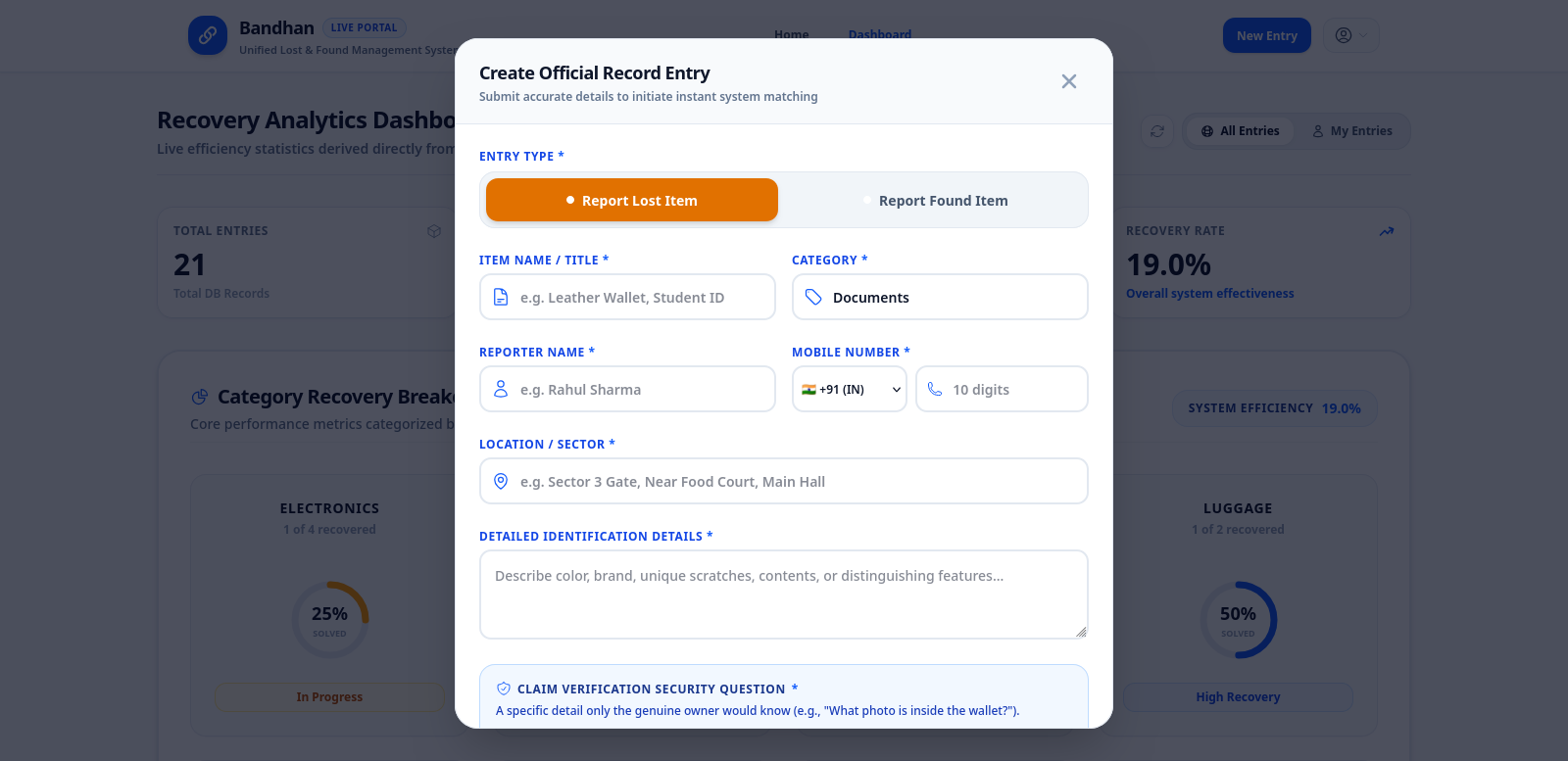
Entry Creation
-
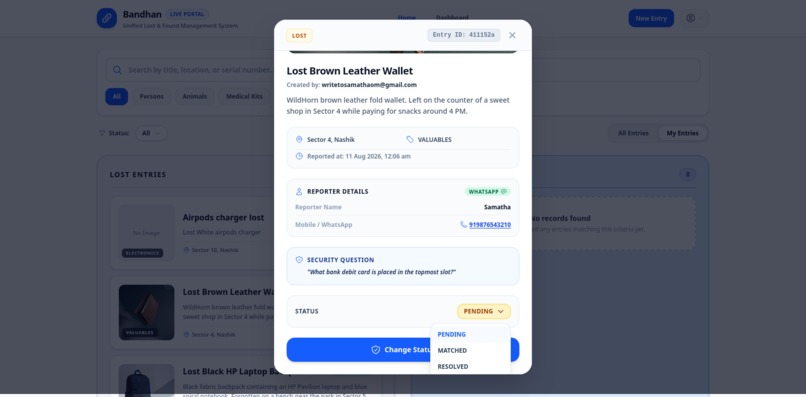
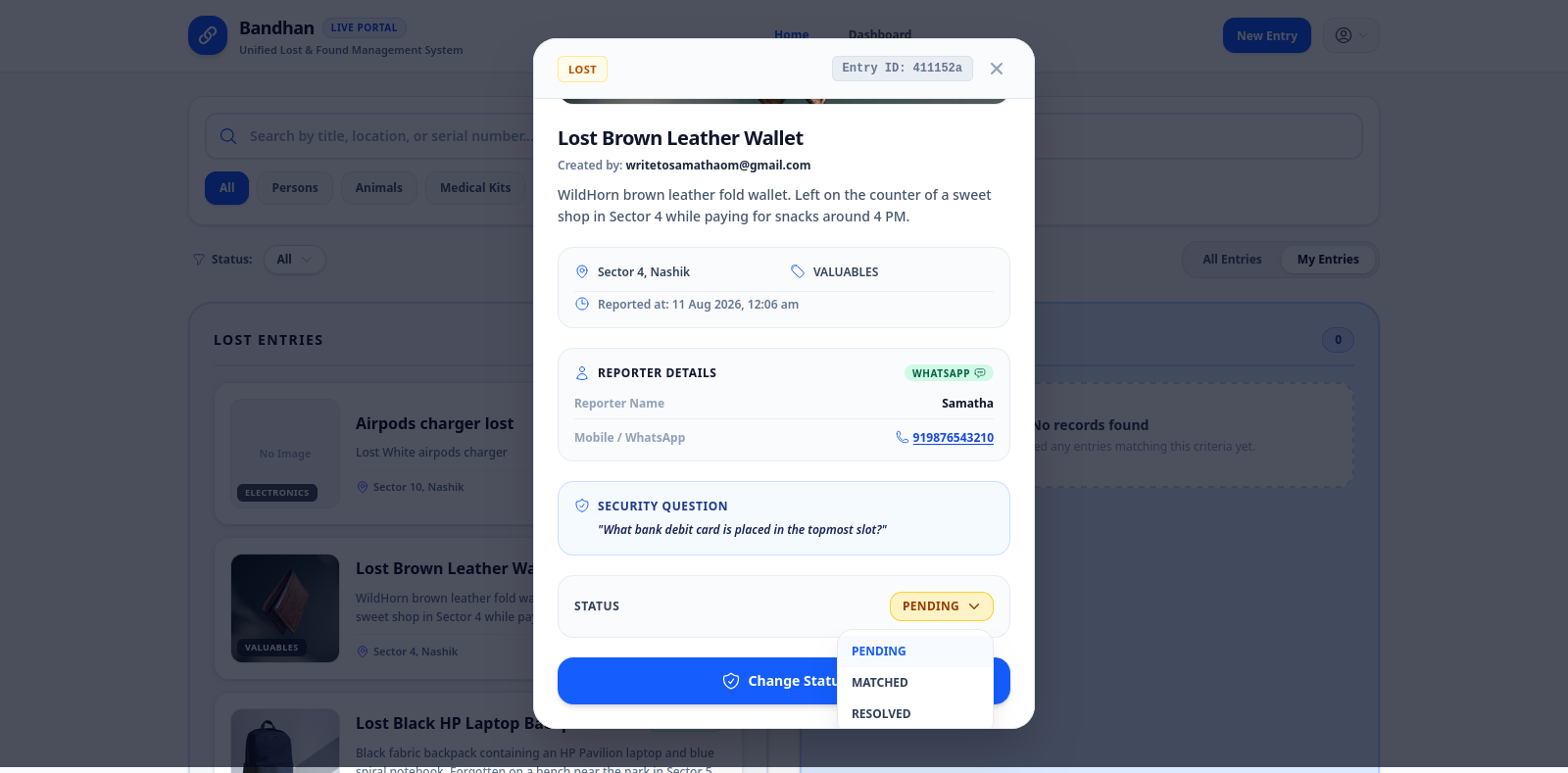
Status Change
-
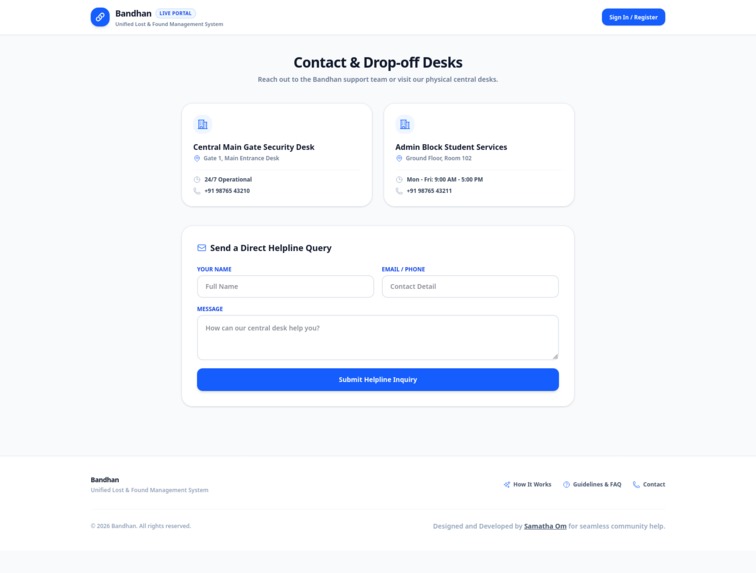
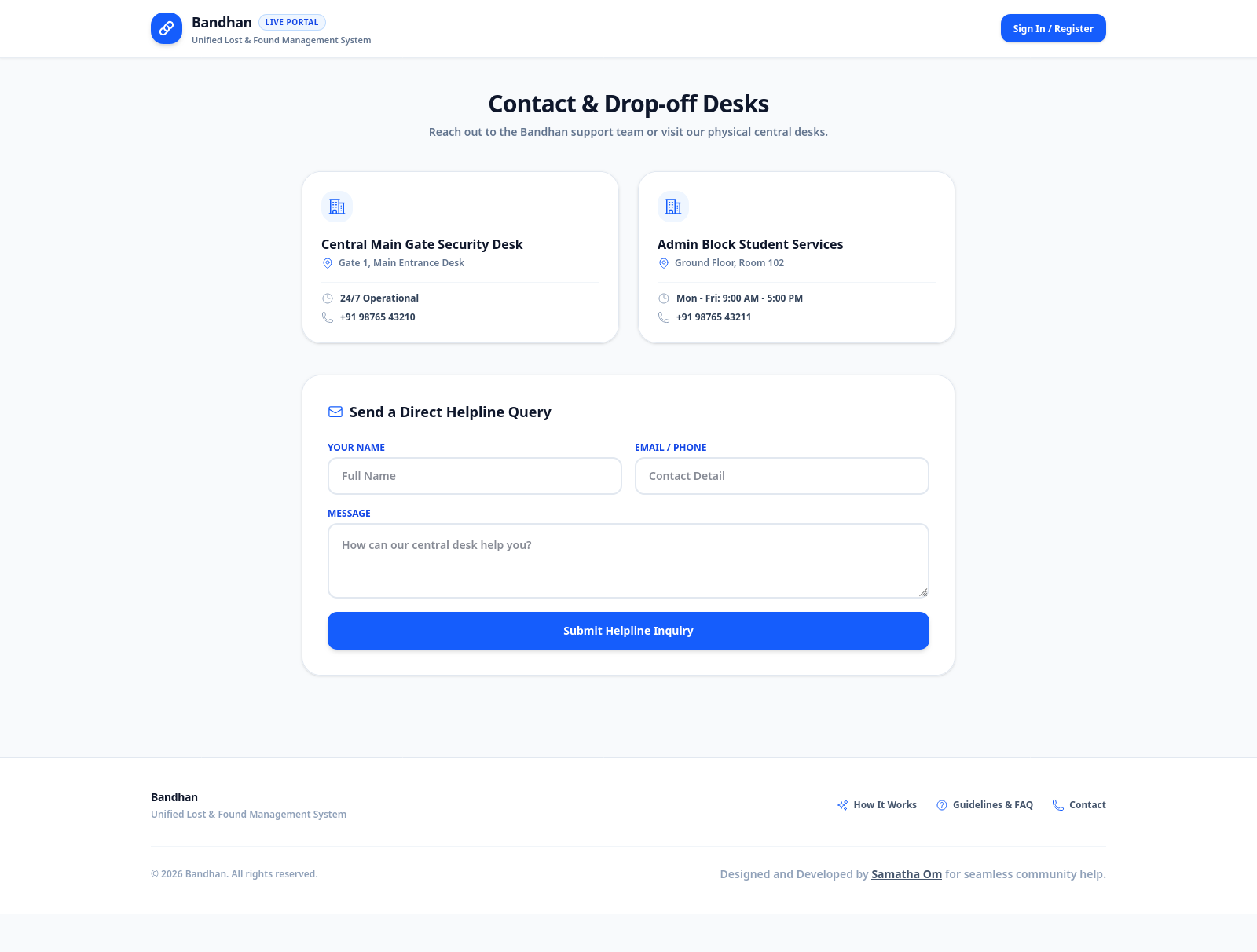
Contact Section
-
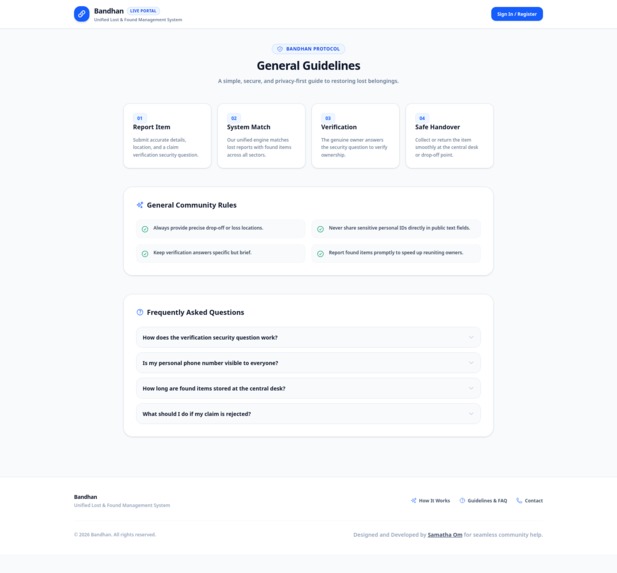
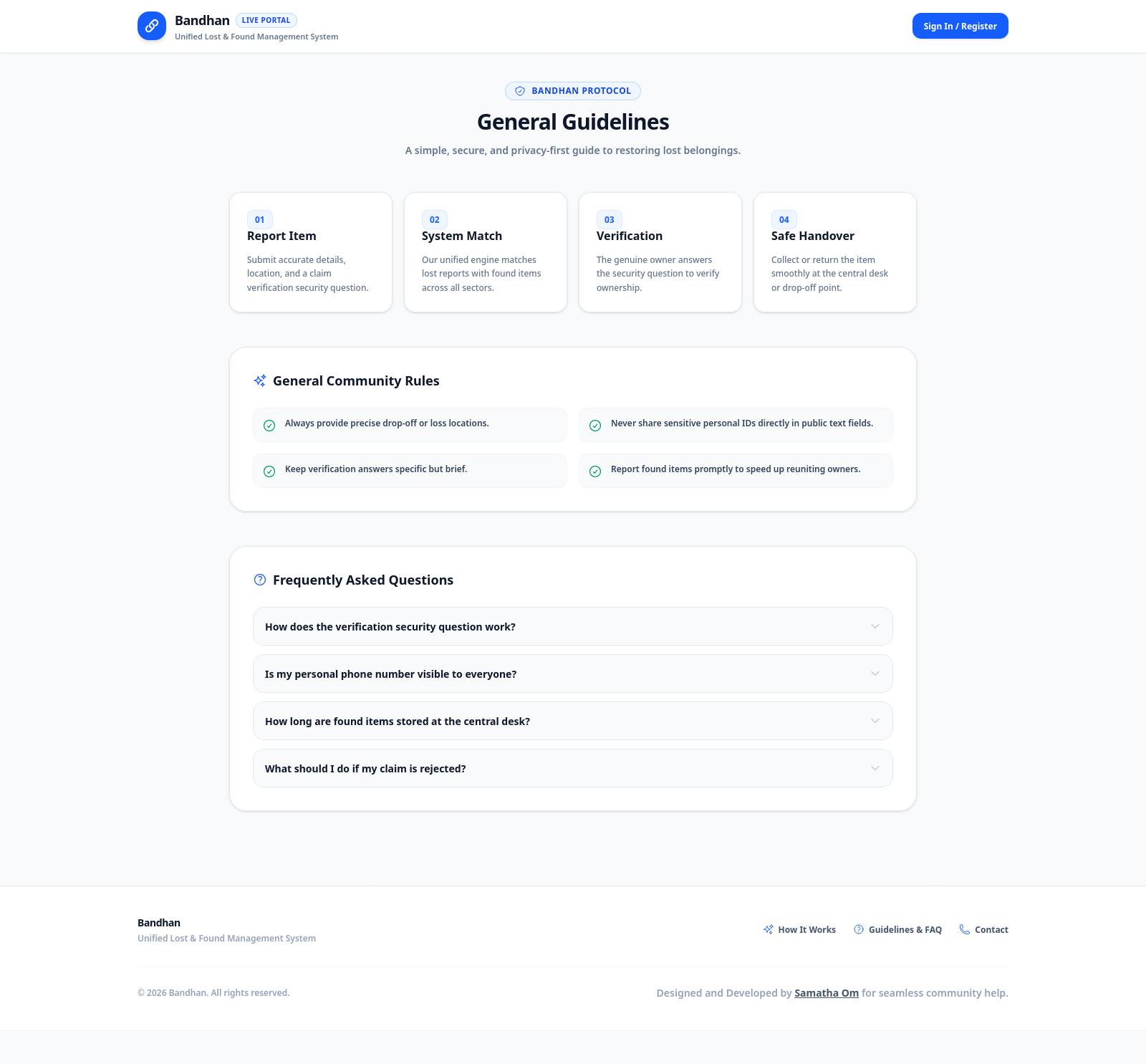
Guidelines
-
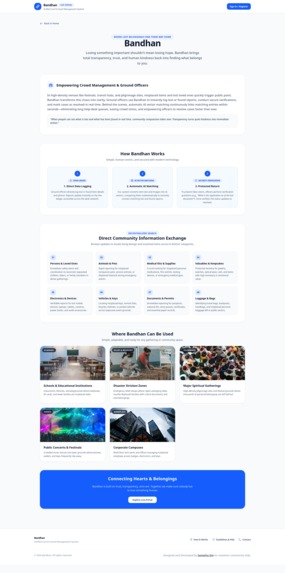
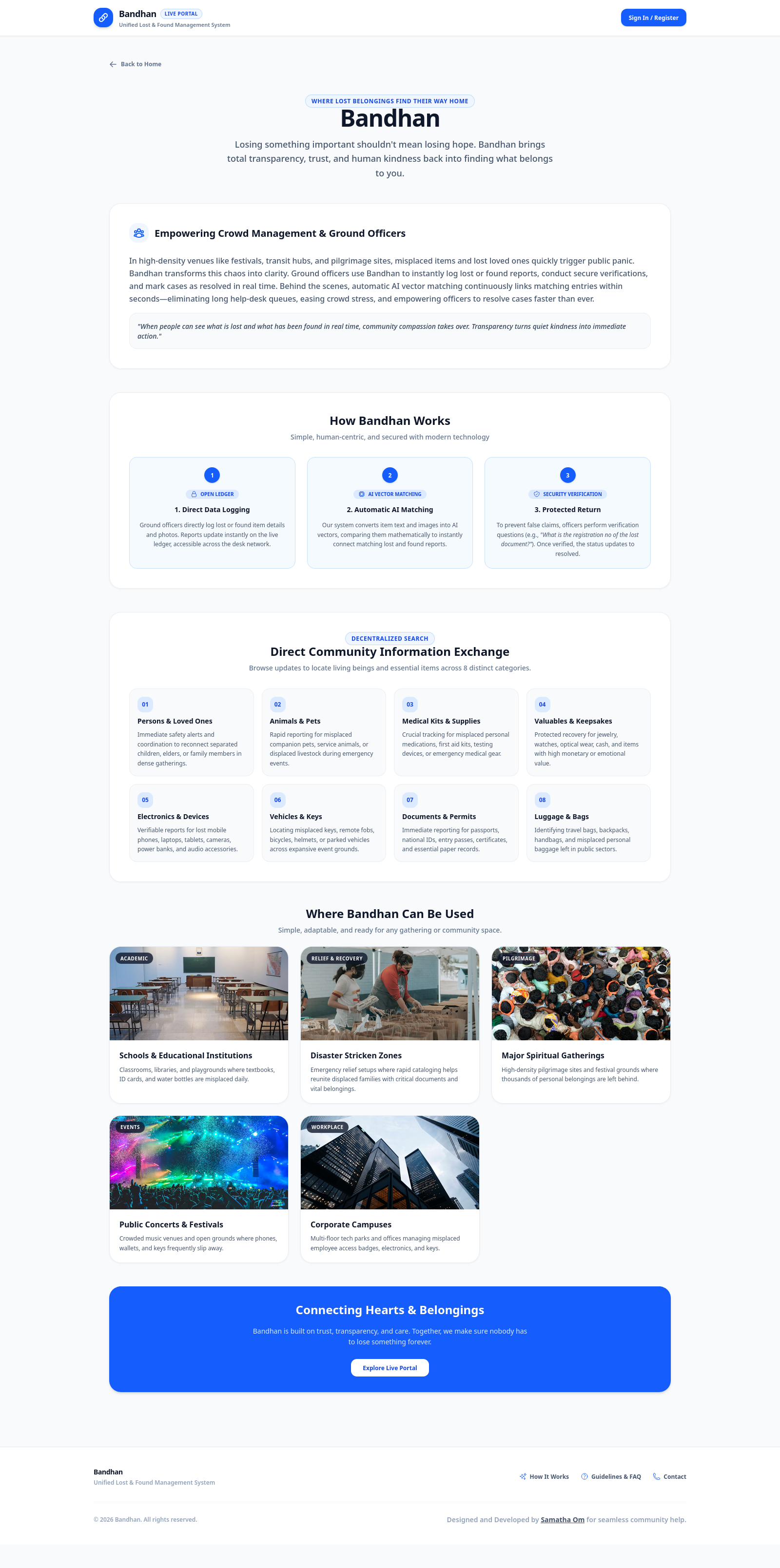
How it works
-
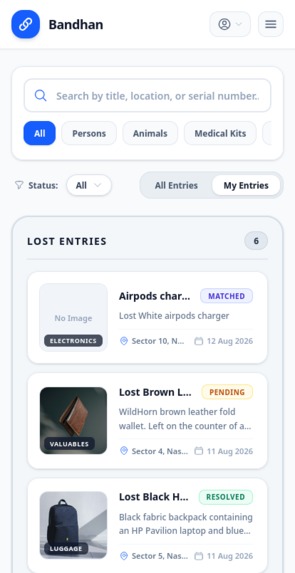
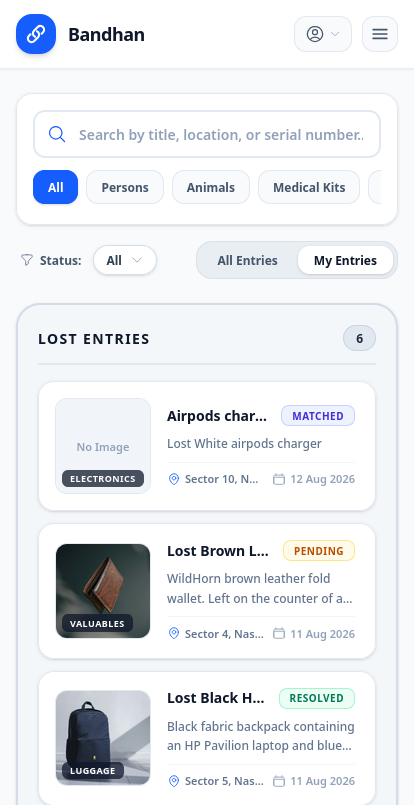
Mobile - Home page
-
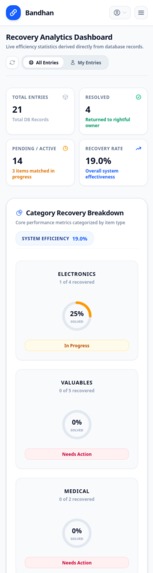
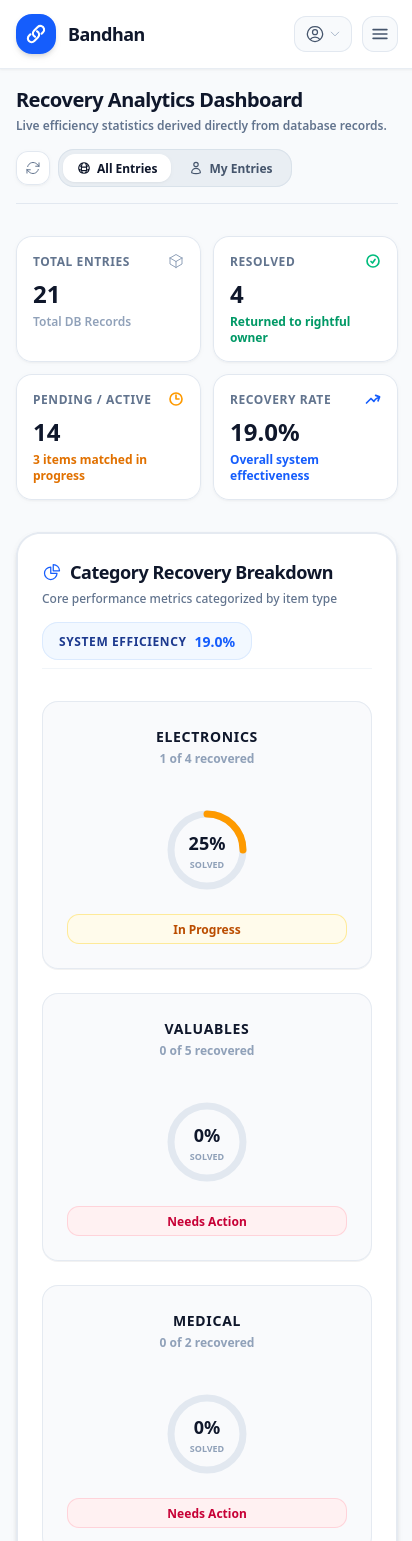
Mobile - Dashboard
Inspiration
In high-density environments like spiritual gatherings, pilgrimages, transit hubs, and emergency relief zones, losing a valuable belonging or getting separated from a family member creates immediate panic. Traditional help desks lead to painful data tracking, fragmented paper records.
Bandhan (meaning "Connection" or "Bond") was born from a simple desire: to bring transparency, trust, and human kindness back into finding what belongs to you. We wanted to eliminate the chaos and replace it with real-time clarity, giving distressed people instant peace of mind.
What it does
Bandhan is a compassionate, transparent open-ledger platform that reconnects people with their lost belongings, medical kits, and separated loved ones across 8 core categories: Persons, Animals, Medical Kits, Valuables, Electronics, Vehicles, Documents, and Luggage.
Key Functionality
- Direct Data Logging: Ground officers and community members quickly log lost or found items with photos and descriptions onto a live, accessible ledger.
- Automatic AI Matching: Powered by high-dimensional vector embeddings, our engine instantly links matching lost and found reports in seconds.
- Protected Return Workflow: Verification questions (e.g., verifying serial numbers or unique traits) ensure items are safely returned before marking cases as Resolved.
- Empowered Ground Teams: Gives event management, security, and volunteers a simple tool to manage claims, track analytics, and restore order.
How we built it
We built Bandhan as a resilient, cloud-native web application centered around CockroachDB’s distributed data layer:
- Database & Distributed Vector Search (Core Engine): We leveraged CockroachDB with native
VECTORcolumn types as our primary storage and search engine. Descriptions are converted into 1536-dimensional embeddings and indexed directly inside CockroachDB. We execute native vector distance queries (ORDER BY embedding <=> query_vector LIMIT 5) to deliver sub-second, highly accurate lost-and-found matches across massive datasets. - Agentic AI Workflow via CockroachDB MCP Server: We connected our development environment directly to the CockroachDB Cloud Managed MCP Server. This enabled our AI agent to inspect live table schemas, verify vector index health, and debug complex zero-match query scenarios safely during development without risking production data.
- Frontend: Built with React, Next.js, and Tailwind CSS for a clean, responsive interface designed for fast use on mobile and desktop.
- Authentication & Security: Integrated AWS Cognito to manage user identities, providing secure, role-based access control for ground officers and citizens.
- Local Embedding Pipeline: Used
@xenova/transformersas a lightweight, client-side utility to format raw text descriptions into vector arrays before passing them to CockroachDB.
Challenges we ran into
- Fine-Tuning CockroachDB Vector Similarity: Balancing similarity thresholds on CockroachDB vector queries so that natural language variations (e.g., "blue backpack" vs. "navy bag") consistently triggered accurate matches without surfacing false positives.
- Real-time UI Synchronization: Ensuring instant UI updates across dashboard filters (Pending, Matched, Resolved) as soon as an entry or status change occurred in CockroachDB.
- AWS Cognito Router Wrapping: Resolving authentication state redirection and
useNavigaterouting wrapping issues during early OIDC integration.
Accomplishments that we're proud of
- Sub-second Vector Search at Scale: Achieving near-instant match calculations natively inside CockroachDB across thousands of open entries without needing an extra standalone vector database.
- Agentic Database Maintenance: Using the CockroachDB MCP Server to let our AI agent inspect database structures and optimize vector index performance during active building.
- Compassionate UX: Designing a simple, reassuring verification process that protects victims from false claims while minimizing waiting stress by adding security questions and answers directly into the entry creation workflow.
What we learned
- The Power of CockroachDB Native Vectors: Storing and querying vector embeddings directly inside CockroachDB drastically simplified our architectural setup, giving us high availability, ACID guarantees, and fast similarity search in a single database.
- Agentic Database Workflows: Model Context Protocol (MCP) servers transform how developers interact with CockroachDB, allowing AI assistants to inspect schemas and tune queries in real time.
- Human-Centric Design: Simple visual clarity and transparent data ledgers directly reduce anxiety in high-stress lost-and-found situations.
What's next for Bandhan
- Instant Multi-Channel Notifications: Automatically sending real-time Email, SMS, or WhatsApp alerts to item owners the instant a potential match is identified or any status change occurs through AI.
- Location & Sector-Based Approver IDs: Generating automated ID codes for ground officers based on specific sectors/locations to streamline high-volume on-site verification.
- Multilingual & Voice Interface: Adding regional language support and voice logging to empower non-tech-savvy users and ground volunteers at rural pilgrimage sites.
- Offline-First Capabilities: Enabling offline data entry for relief workers in low-connectivity disaster zones, auto-syncing with CockroachDB once connectivity is restored.
Built With
- agent
- ai
- amazon-web-services
- cognito
- indexing
- matching
- mcp
- nextjs
- postgresql
- react
- tailwindcss
- vector

Log in or sign up for Devpost to join the conversation.