Inspiration
GharSehat was inspired by a real post-discharge burn recovery gap. Once patients leave the hospital, families often become the first line of monitoring. A caregiver may look at the wound every day, but because changes happen slowly, subtle worsening can be missed until the next hospital visit.
We discussed this idea with doctors from AIIMS Burns & Plastic Surgery, and their feedback reinforced that the problem is real, especially for patients who live far from specialist centers. One insight stayed with us: families may travel long distances for concerns that could have been triaged earlier if there were a structured way to share wound photos and symptoms.
That led us to one core principle:
Triage, not diagnosis.
GharSehat does not replace doctors. It helps caregivers stop guessing and helps doctors review the right patients first.
What it does
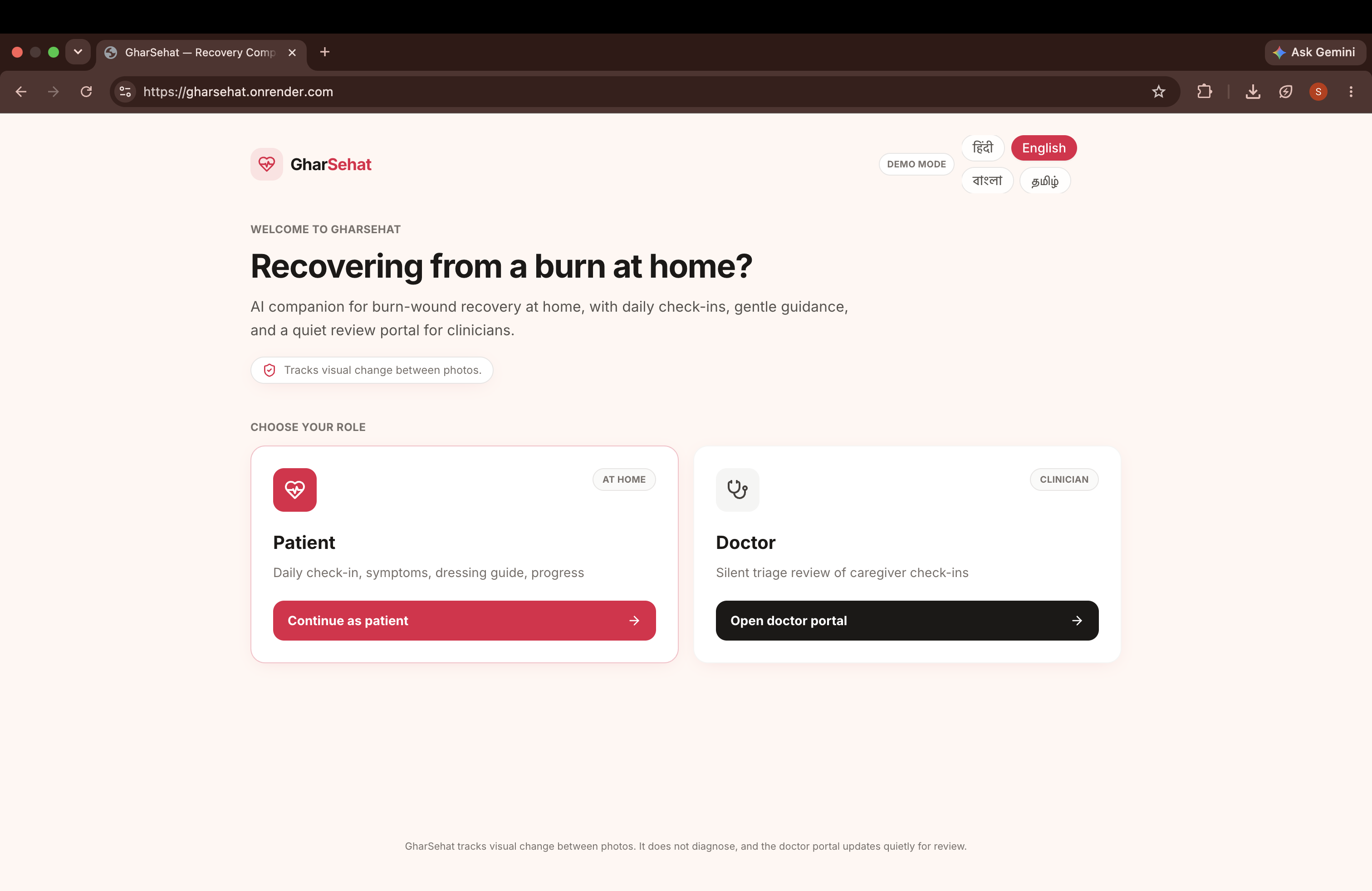
GharSehat is a burn wound recovery companion for home caregivers and clinicians.
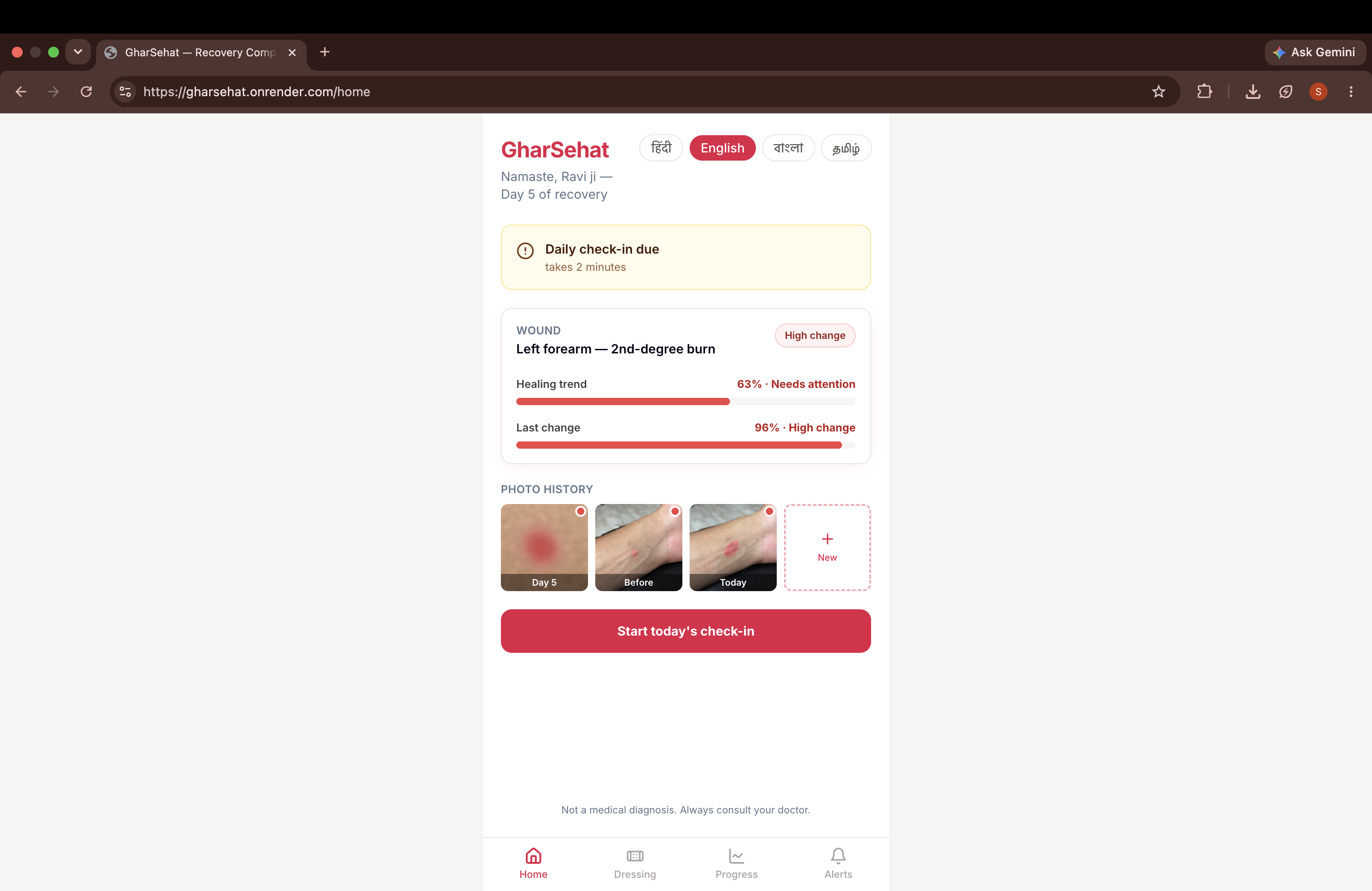
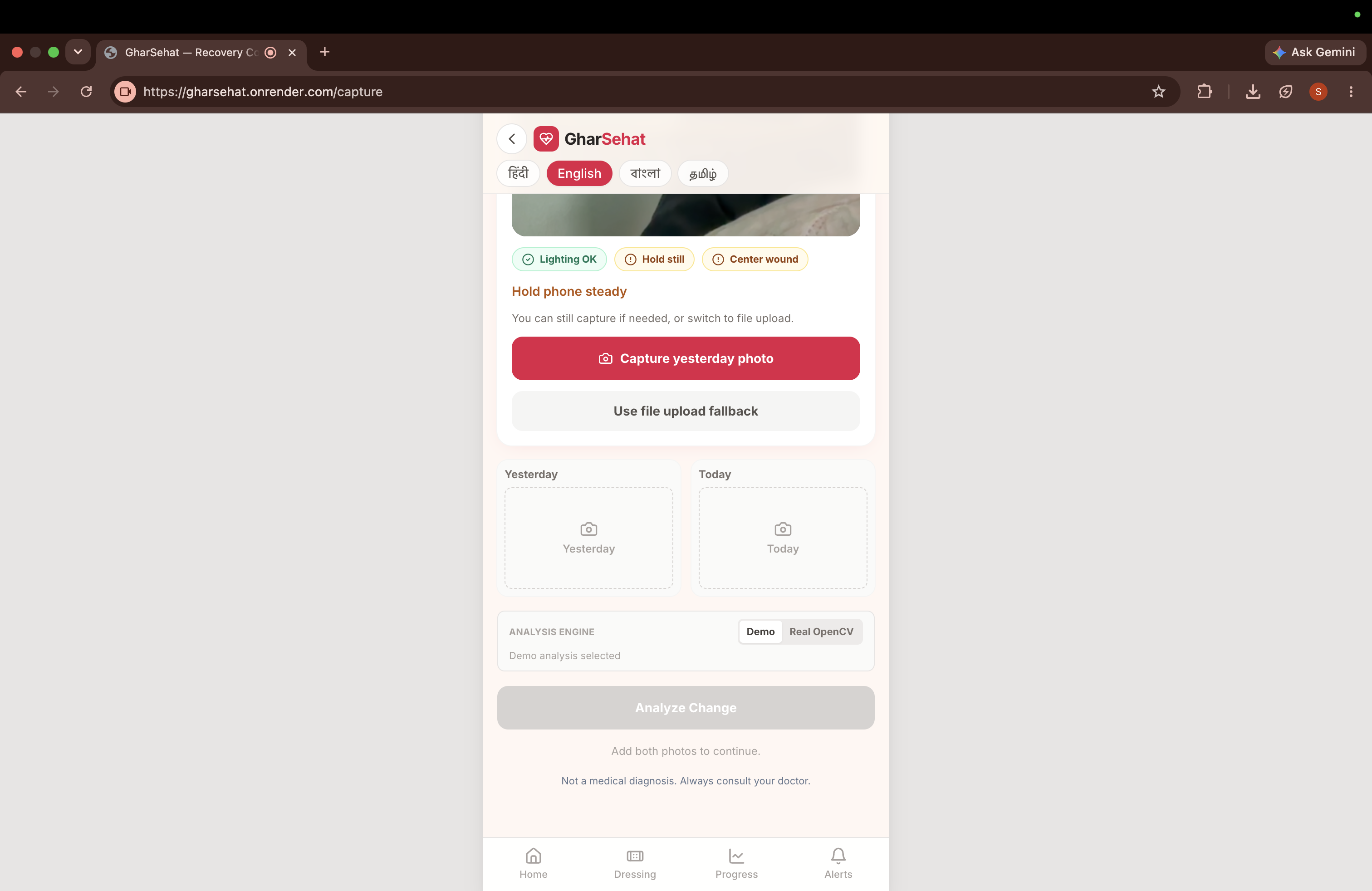
A caregiver completes a daily check-in by uploading or capturing two wound photos:
- yesterday's photo
- today's photo
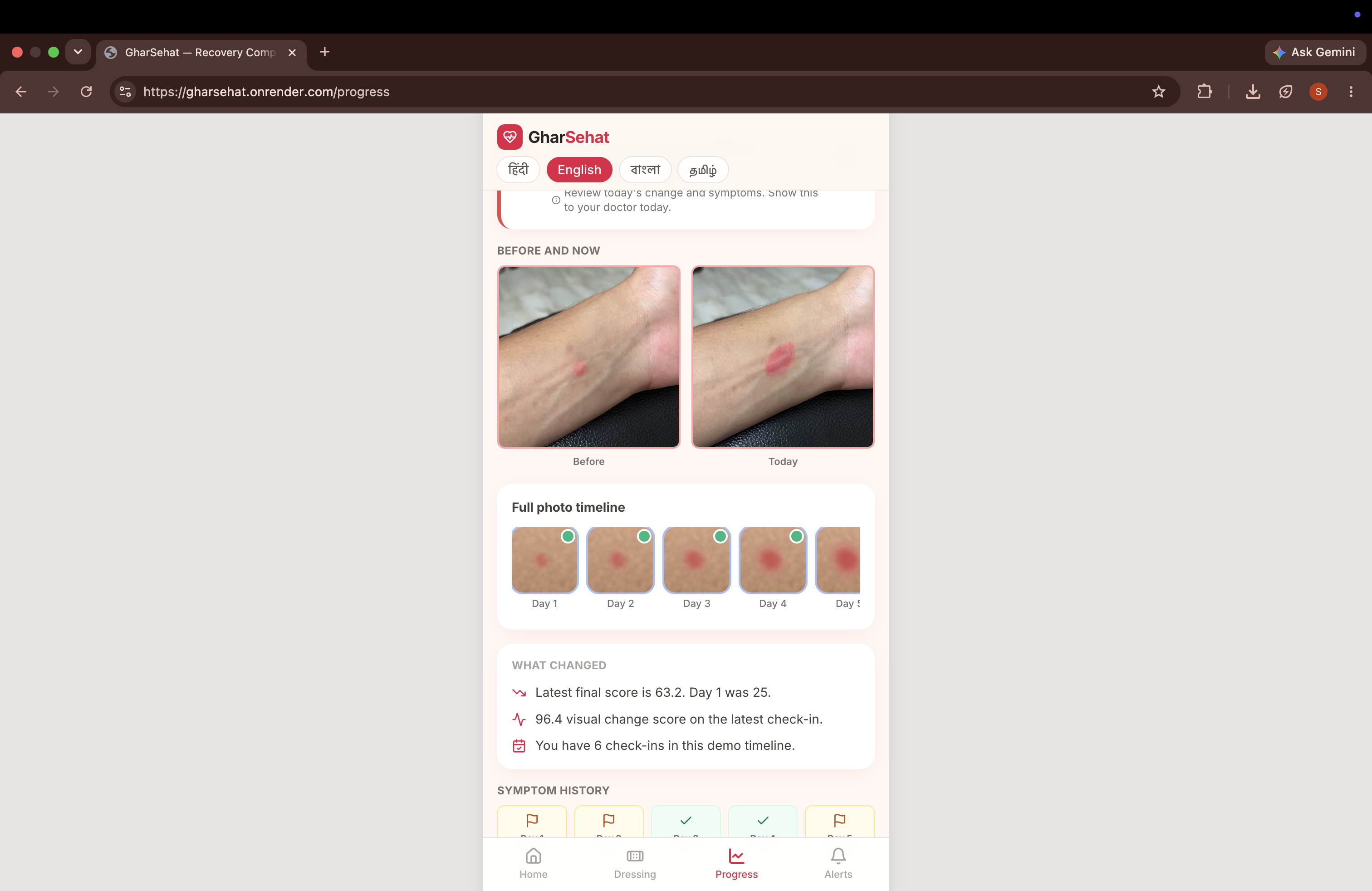
The app compares visual change between the photos, asks a short symptom checklist, and gives a clear next step:
- continue care
- watch closely
- show doctor today
- seek urgent care
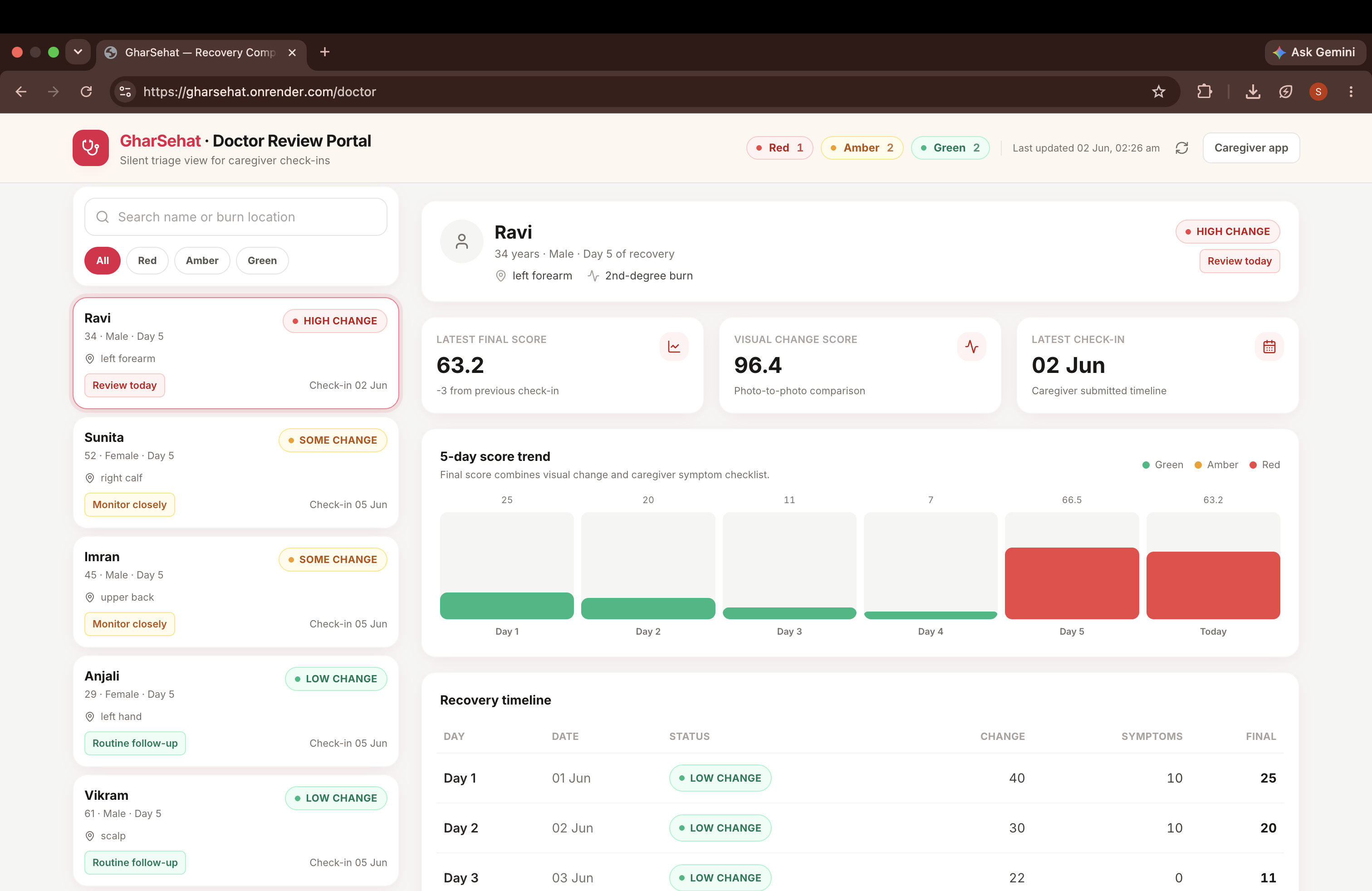
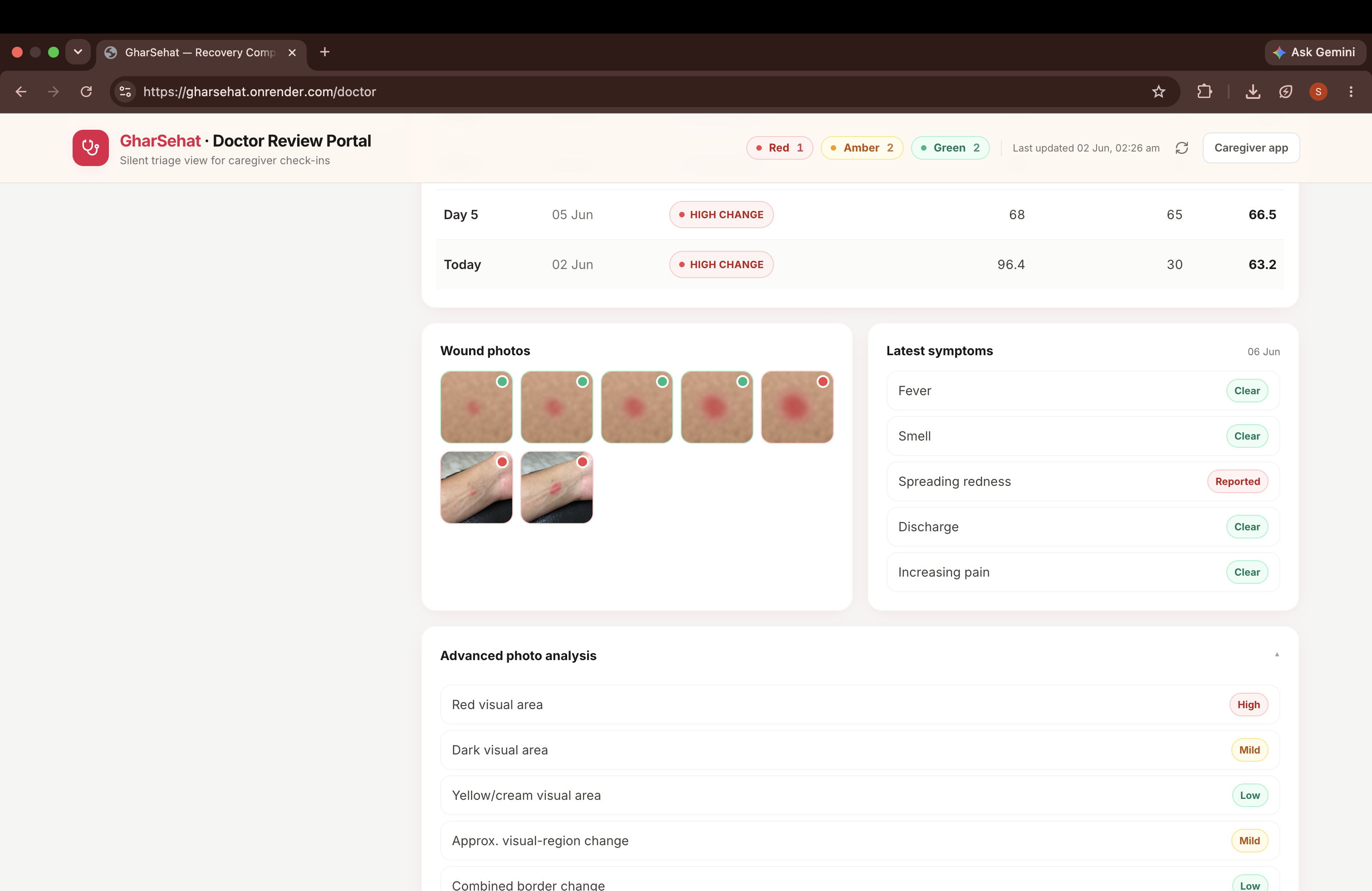
The completed check-in is saved to a doctor review portal. Doctors can view patients sorted by review priority, inspect day-wise photo timelines, review reported symptoms, and open a non-diagnostic Advanced photo analysis section.
The app deliberately avoids diagnosis language. It does not claim to detect infection, necrosis, pus, slough, wound depth, or any medical condition. It reports visual change and caregiver-reported symptoms to support clinical review.
How we built it
We built GharSehat as a functional full-stack prototype.
The frontend uses:
- React
- TypeScript
- Vite
- Tailwind CSS
The backend uses:
- Python
- Flask
- OpenCV
- NumPy
- local JSON and file-based persistence for demo check-ins
The core flow is:
caregiver check-in
→ photo comparison
→ symptom checklist
→ triage assessment
→ patient-friendly result
→ saved check-in
→ doctor portal update
## Challenges we ran into

## Accomplishments that we're proud of
We are proud that GharSehat is not just a mockup. It is a working full-stack prototype with:

a patient/caregiver portal
daily wound photo check-ins
camera and upload support
symptom-based triage
patient-friendly results
a live doctor review portal
risk-prioritized patient lists
synthetic demo wound timelines
safe non-diagnostic visual analysis
deployment-ready frontend and backend integration
We are especially proud of keeping the product clinically cautious. The app never tells a patient that they have a diagnosis. It helps organize information so a doctor can review it faster.


## What we learned
We learned that in healthcare, wording is as important as the algorithm. A system that says “infection detected” when it is not clinically validated can be dangerous. A system that says “visual change increased, please review today” is safer and more useful.

We also learned that doctors do not need more raw numbers. They need structured context: photos, symptoms, timeline, risk level, and a clear reason why a patient needs review.

Finally, we learned that reliability matters in a live demo. That is why we kept a stable demo analysis path while also building an experimental OpenCV path.


## What's next for GharSehat
Next, we want to improve GharSehat in four directions:

Stronger computer vision
Add better wound-region segmentation, color-space analysis, texture features, edge changes, and scale-aware photo comparison.

Clinical validation
Work with clinicians to evaluate whether the review-priority scores match real-world triage decisions.

Better aftercare support
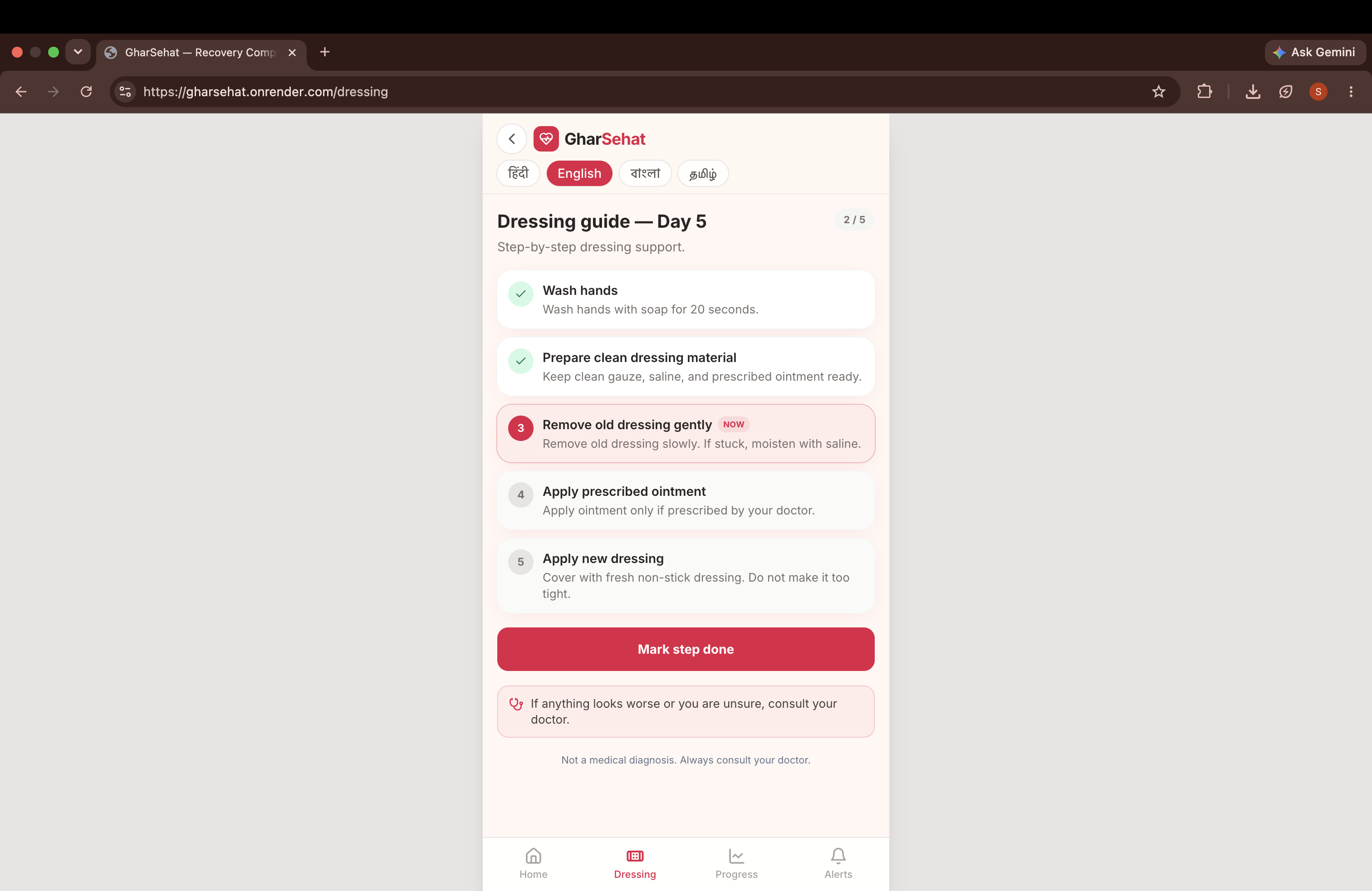
Add discharge-care guidance, dressing reminders, physiotherapy and rehab instructions, and doctor-recommended care plans.

Production infrastructure
Replace local JSON storage with a real database, move images to secure cloud storage, add authentication, and support multiple patients and doctors safely.

Our long-term goal is simple: help families recover more confidently at home while giving doctors a structured window into recovery between hospital visits.
Built With
- css
- file-based
- flask
- github
- gunicorn
- html
- image
- javascript
- local-json-storage
- numpy
- opencv
- python
- react
- render
- tailwind-css
- typescript
- vite

Log in or sign up for Devpost to join the conversation.