-
-
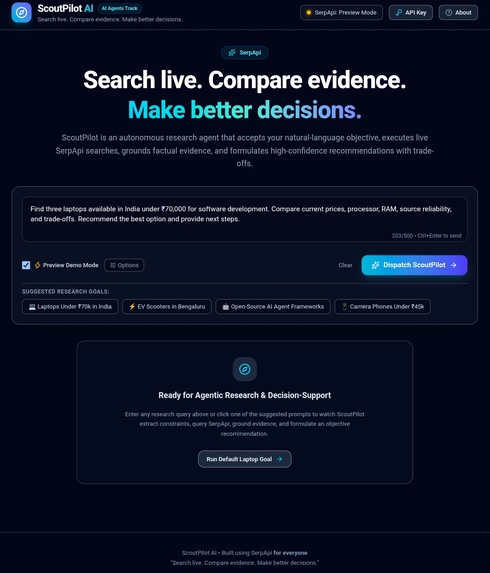
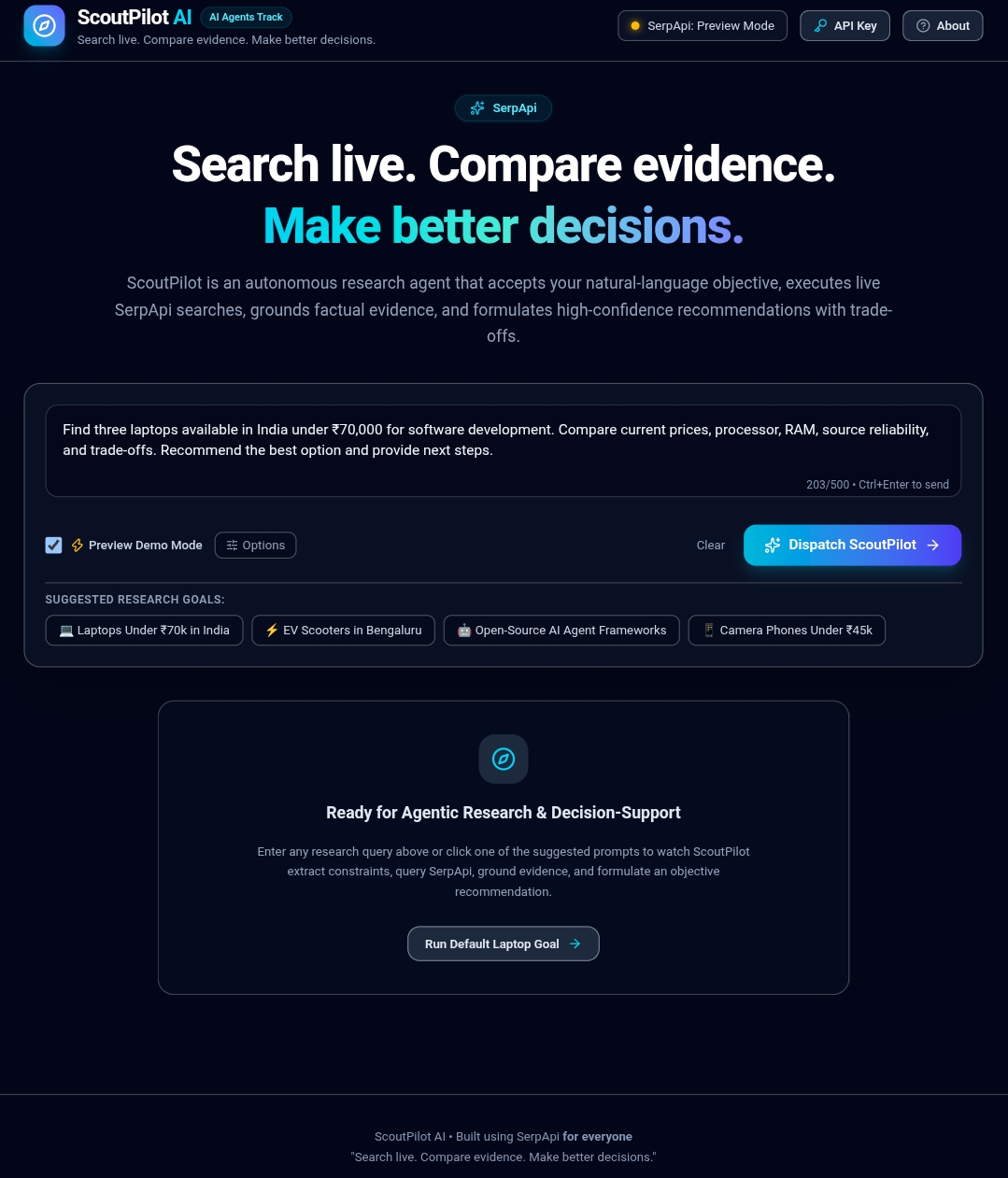
Start Page
-
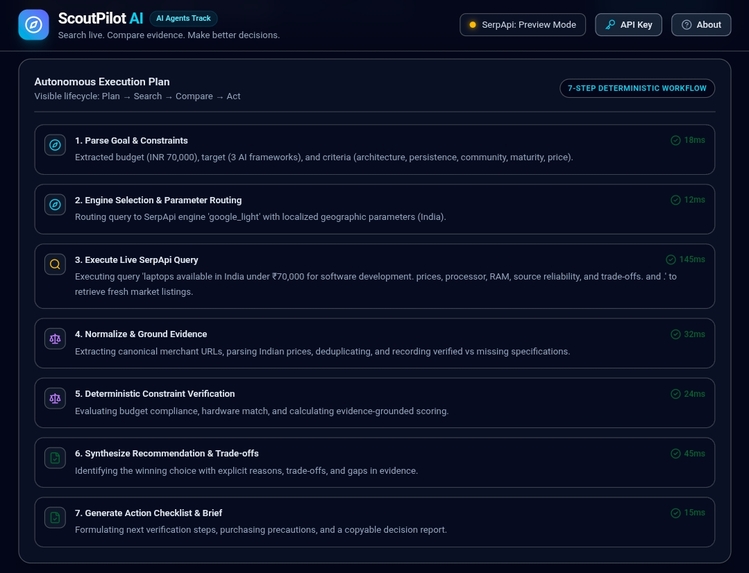
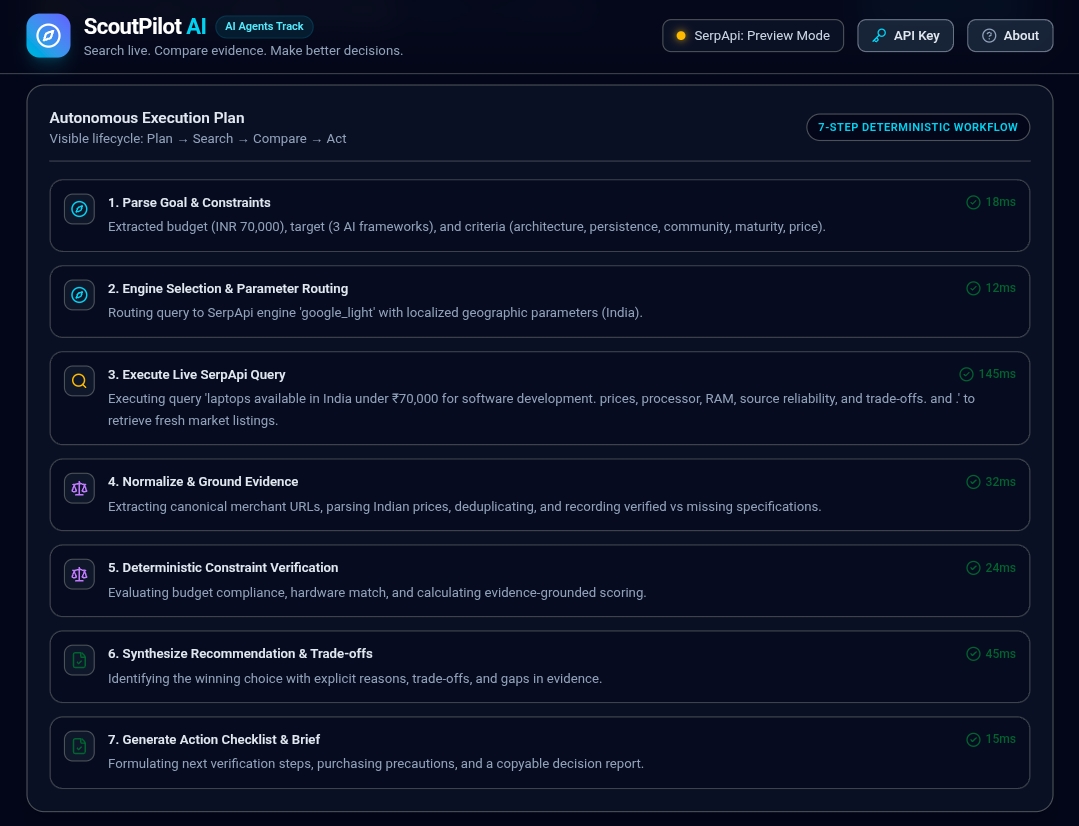
Autonomous Execution Plan
-
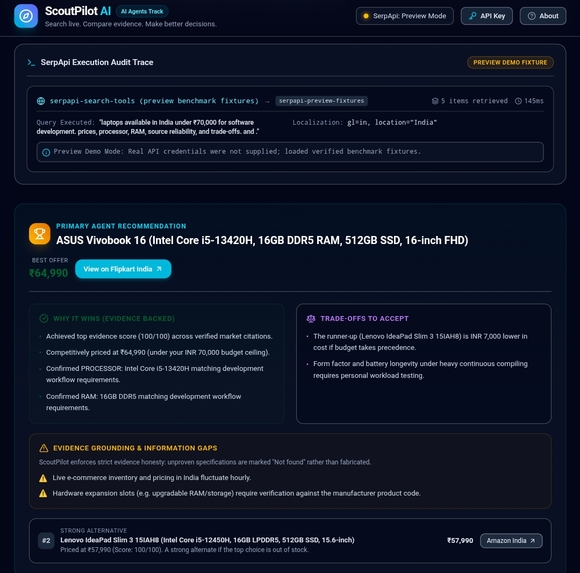
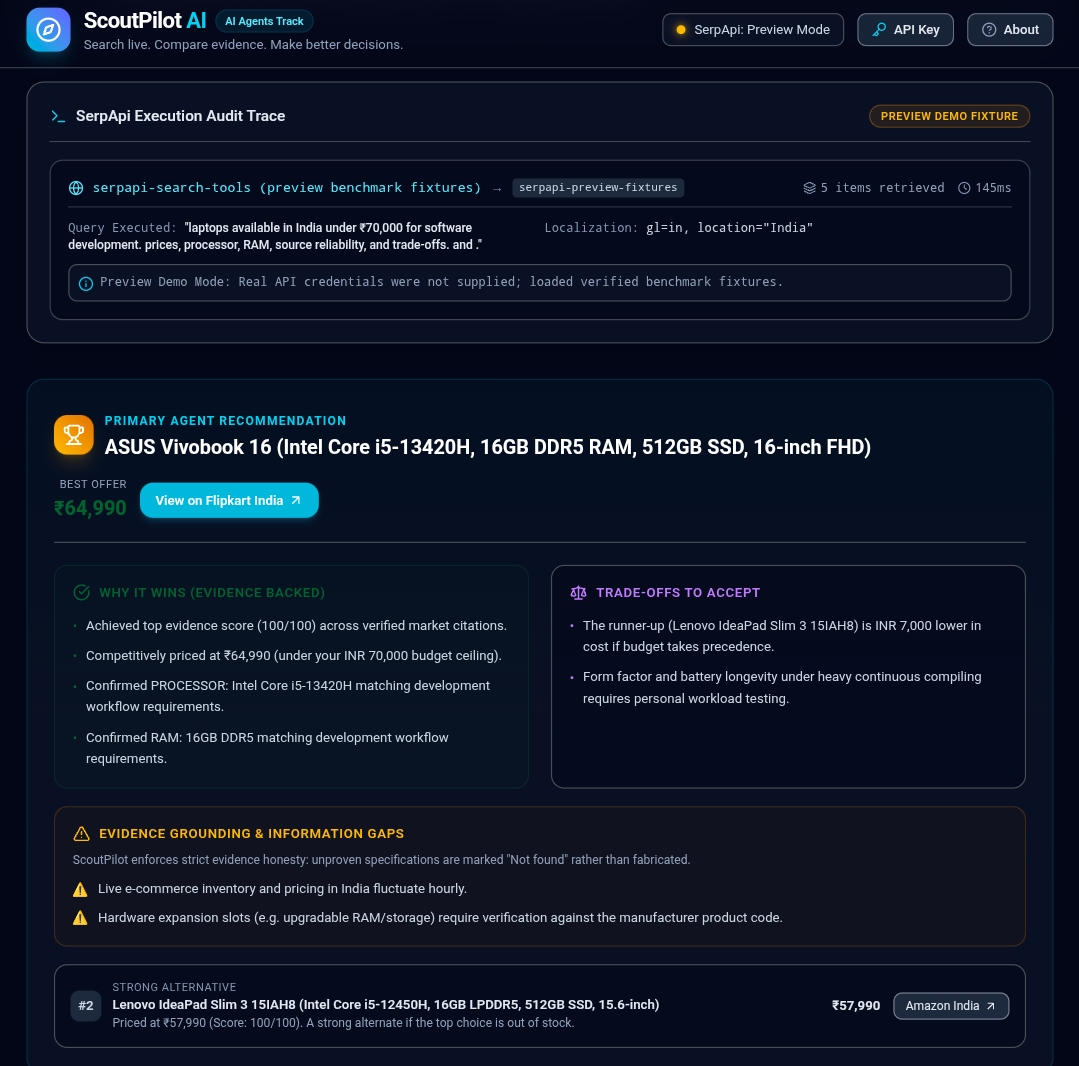
Primary Agent Recommendation
-
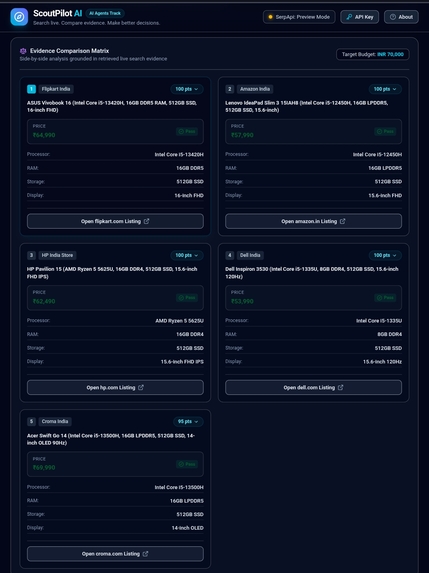
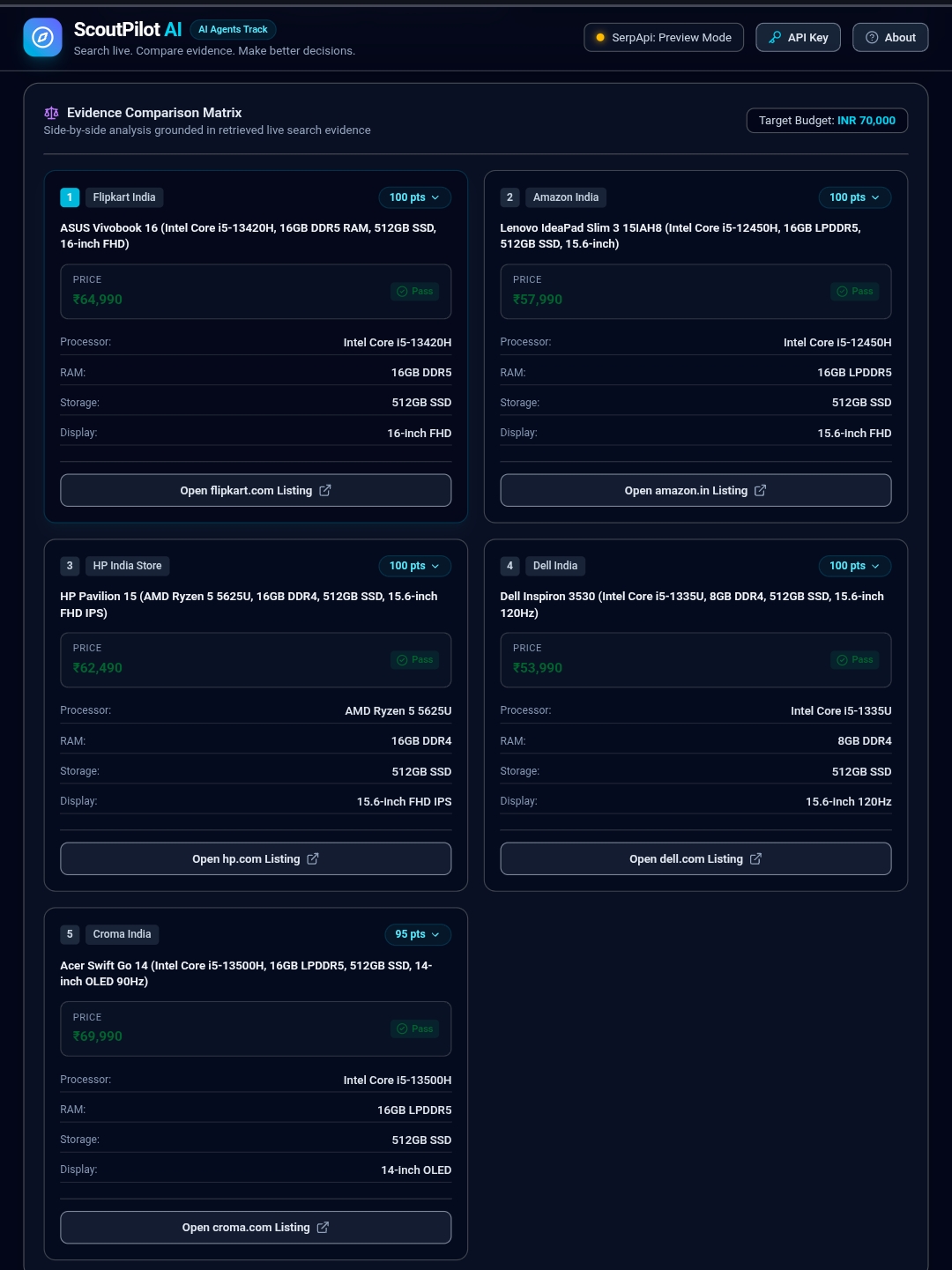
Evidence Comparison Matrix
-
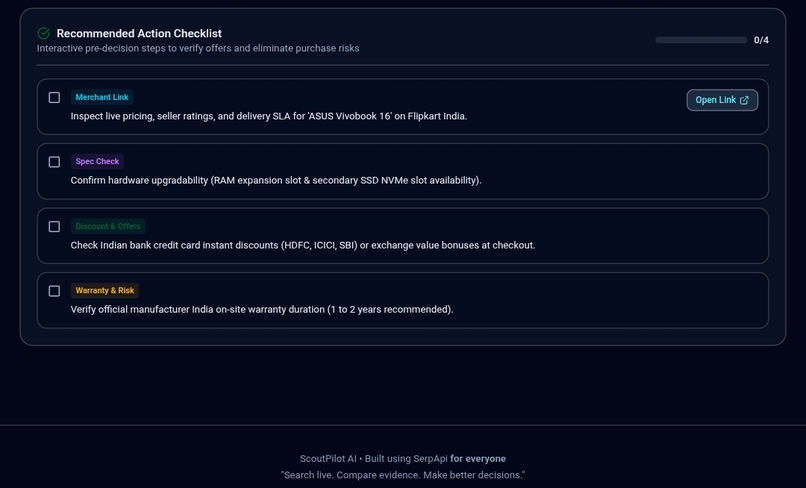
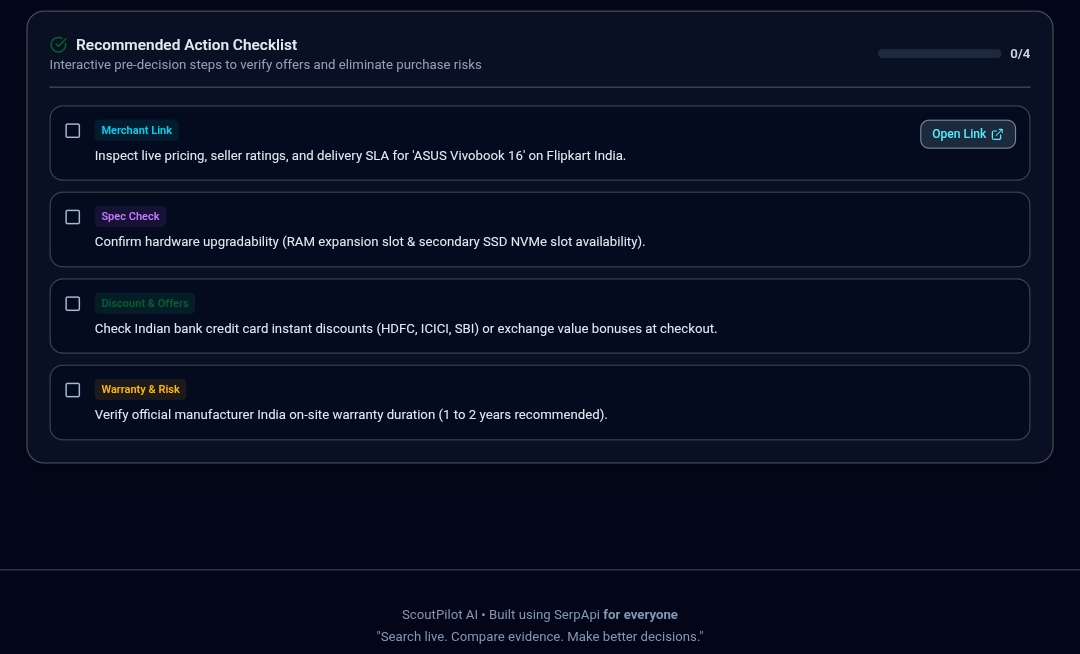
Recommended Action Checklist
-
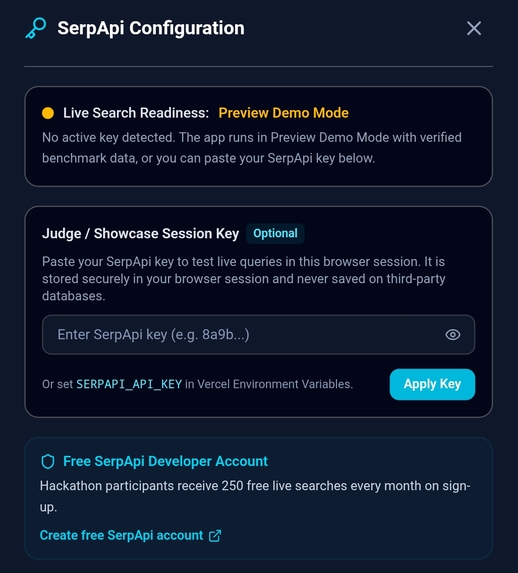
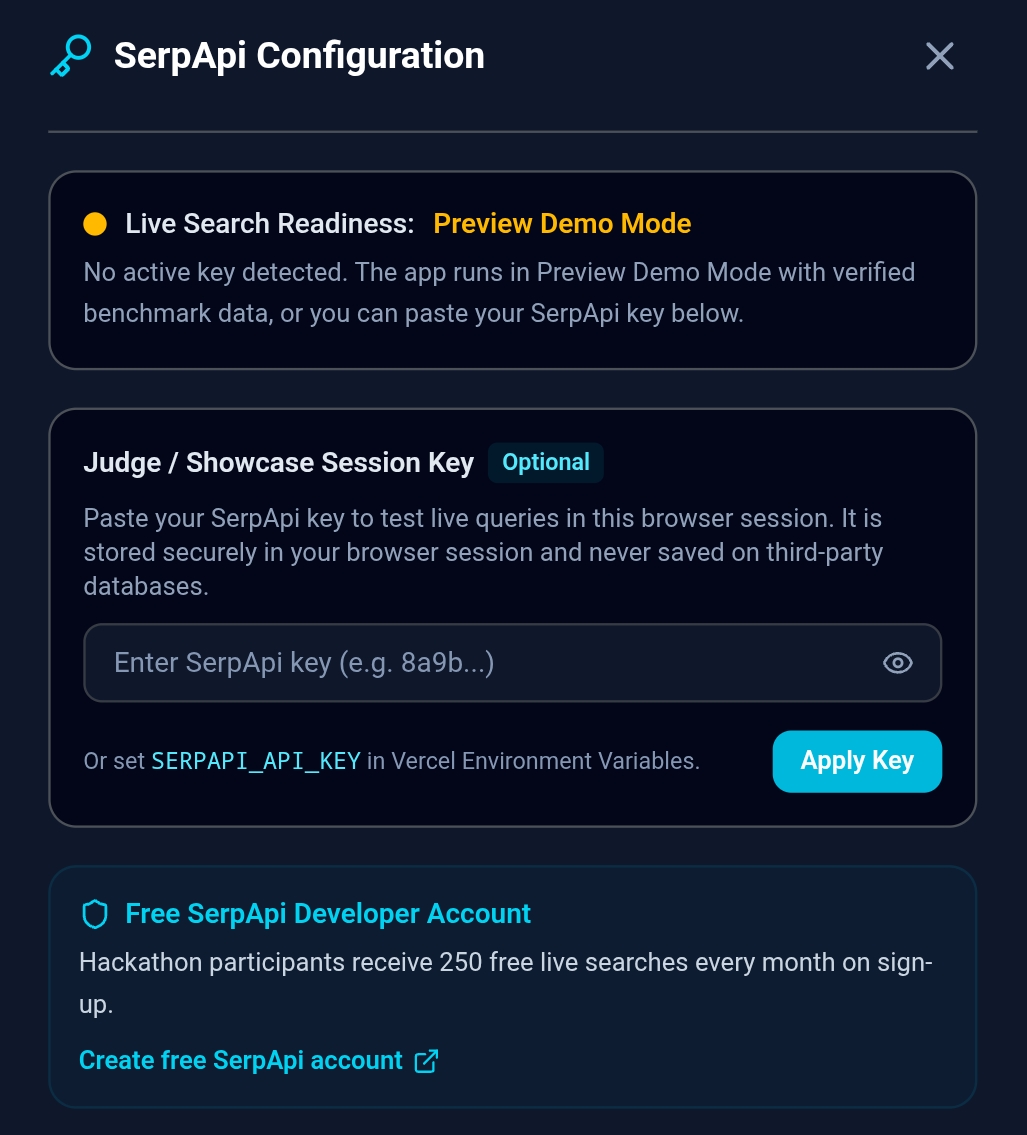
SerpApi Configuration
-
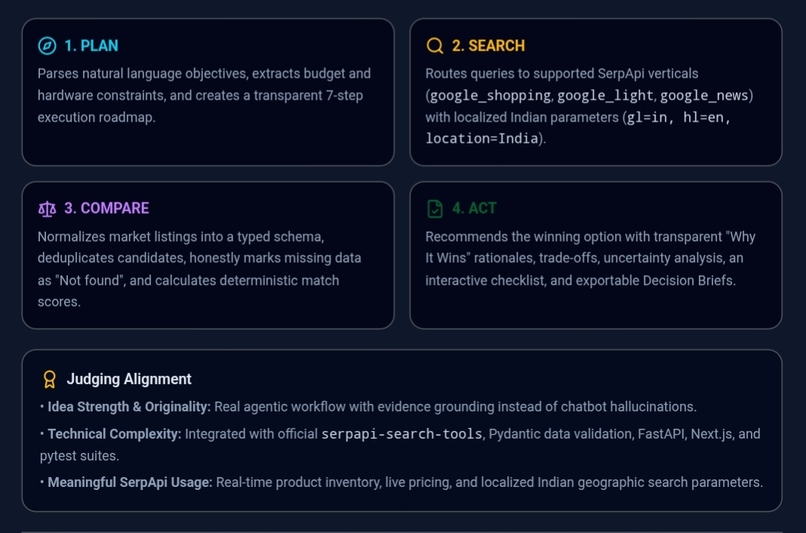
About ScoutPilot AI
Inspiration
The internet contains an enormous amount of information, but finding the right information and turning it into a confident decision can still be frustrating. Traditional search engines provide links, while AI assistants can produce convincing answers that may lack current evidence or sufficient context. I wanted to bridge this gap by building ScoutPilot AI: an intelligent research companion that helps users move beyond searching and toward making better-informed decisions. My inspiration was simple: what if an AI agent could understand a goal, plan its research, gather current information, compare alternatives, and turn its findings into actionable next steps?
What it does
ScoutPilot AI is an AI-powered research and decision-support agent designed to transform natural-language requests into structured research workflows.
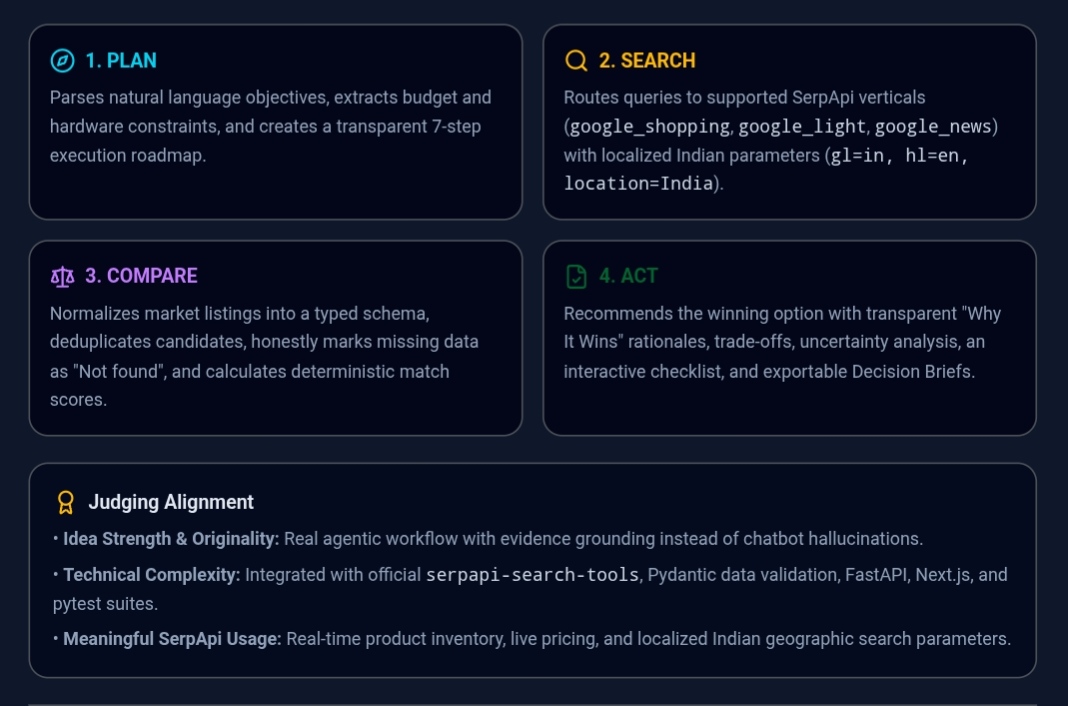
Its intended workflow follows five stages:
- Plan: Understand the user's objective, requirements, constraints, and comparison criteria.
- Search: Retrieve relevant information using SerpApi's search capabilities.
- Compare: Organize available evidence into structured comparisons and identify trade-offs.
- Recommend: Generate recommendations based on the user's requirements and the evidence found.
- Act: Turn the findings into practical next steps, checklists, and decision briefs.
ScoutPilot AI is designed for use cases such as comparing products, researching developer tools, evaluating technologies, and discovering relevant opportunities. A key design principle is transparency: source links help users verify information, while missing evidence should be identified rather than presented as fact.
How I built it
I designed ScoutPilot AI around a modular architecture that separates the user interface, agent workflow, and information retrieval layer.
My planned technology stack includes:
- Next.js, React, TypeScript, and Tailwind CSS for a responsive web interface.
- Python and FastAPI for backend APIs and agent orchestration.
- SerpApi for retrieving relevant web search results.
- Structured data processing to normalize results and prepare evidence for comparison.
- Validation and error handling to manage incomplete search results and external API failures.
The core architecture connects natural-language input to an agent workflow that plans research, executes searches, processes returned evidence, and generates a structured decision brief. I prioritized a focused, end-to-end experience rather than adding unnecessary infrastructure. The goal was to make the research process understandable to users and keep the implementation practical to test and extend.
Challenges I ran into
One of my main challenges was getting the frontend to render reliably while integrating the user interface with the backend. Debugging component issues, configuration, dependencies, and API connectivity required careful investigation. Another challenge was designing an agents workflow that goes beyond displaying search results. Useful comparisons require consistent data structures, relevant evaluation criteria, and careful treatment of missing information. I also had to balance ambitious functionality against limited development time. Integrating a polished frontend, backend orchestration, live search, result comparison, and error handling within a hackathon timeframe required prioritizing the essential workflow. These challenges reinforced the importance of validating each layer independently before connecting the complete system.
Accomplishments that I'm proud of
I am proud of the concept behind ScoutPilot AI: transforming search from a passive information-retrieval activity into a structured decision-support process.
The project brings together several important ideas:
- Goal-oriented research rather than isolated search queries.
- Evidence-based comparisons rather than unstructured summaries.
- Source traceability to help users verify findings.
- Explicit handling of missing information and uncertainty.
- Actionable outputs that help users decide what to do next.
I also developed a clearer understanding of how an AI agent's planning, tools, data processing, and interface must work together to create a useful product.
What I learned
Building ScoutPilot AI taught me that a useful AI agent requires more than a language model and a search API. It needs a reliable orchestration layer, well-defined data structures, meaningful decision criteria, and an interface that makes the workflow understandable. I learned the importance of distinguishing retrieved facts from generated interpretations, designing for API failures, and testing the complete user journey rather than relying solely on individual components. I also learned to prioritize a working end-to-end implementation over an unnecessarily complex architecture, particularly when working under tight deadlines.
What's next for ScoutPilot AI
My next step is to strengthen ScoutPilot AI's reliability and expand its capabilities.
Planned improvements include:
- More robust integration with SerpApi search tools and MCP where appropriate.
- Smarter selection of search engines based on user intent.
- Improved evidence ranking, source deduplication, and conflict detection.
- Transparent comparison criteria and customizable decision scoring.
- Exportable research reports with source citations.
- Persistent research history and personalized preferences.
- More comprehensive testing, deployment, and performance optimization.
My long-term vision is to make ScoutPilot AI a dependable research companion that helps people move from a question to an evidence-informed decision; with greater clarity, transparency, and less manual effort.
Built With
- fastapi
- next.js
- python
- react
- restapi
- serpapi
- tailwind-css
- tailwindcss
- typescript


Log in or sign up for Devpost to join the conversation.