-
-
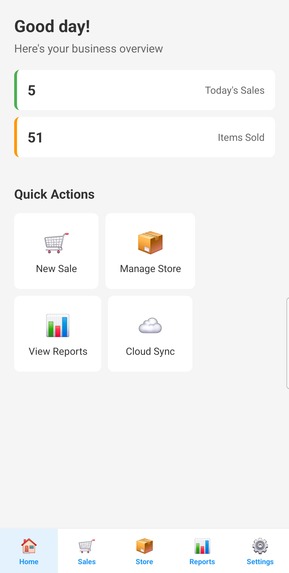
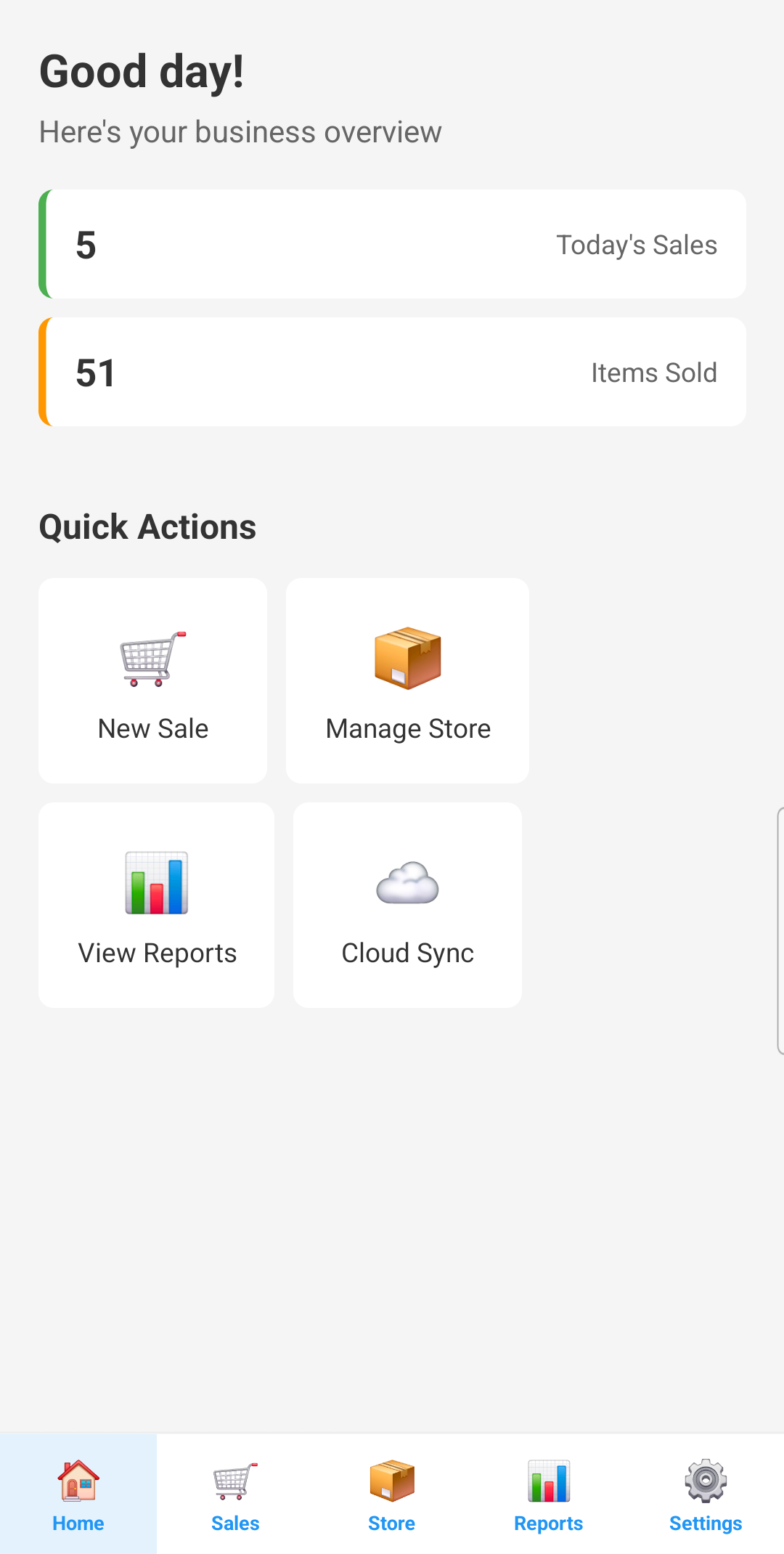
Home Screen
-
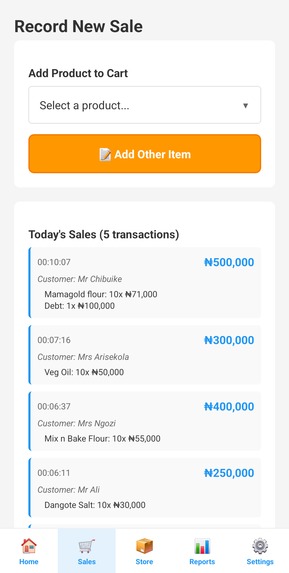
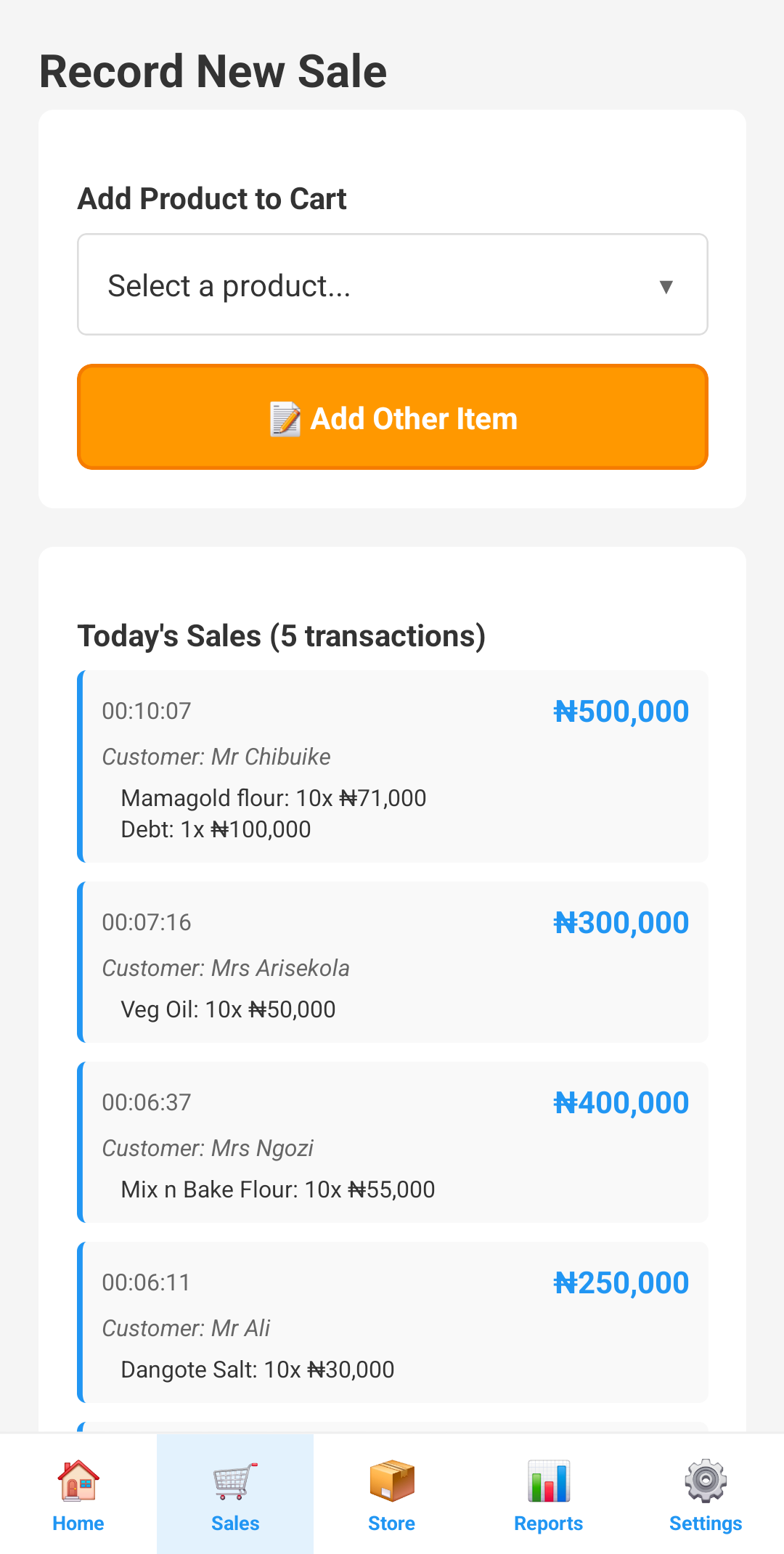
Sales Screen
-
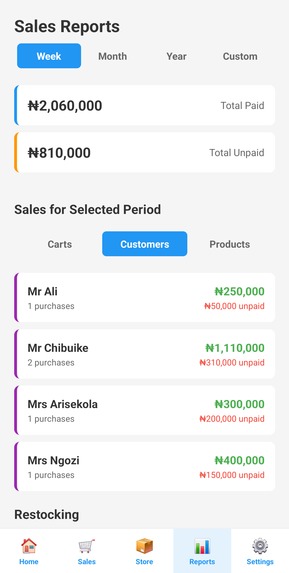
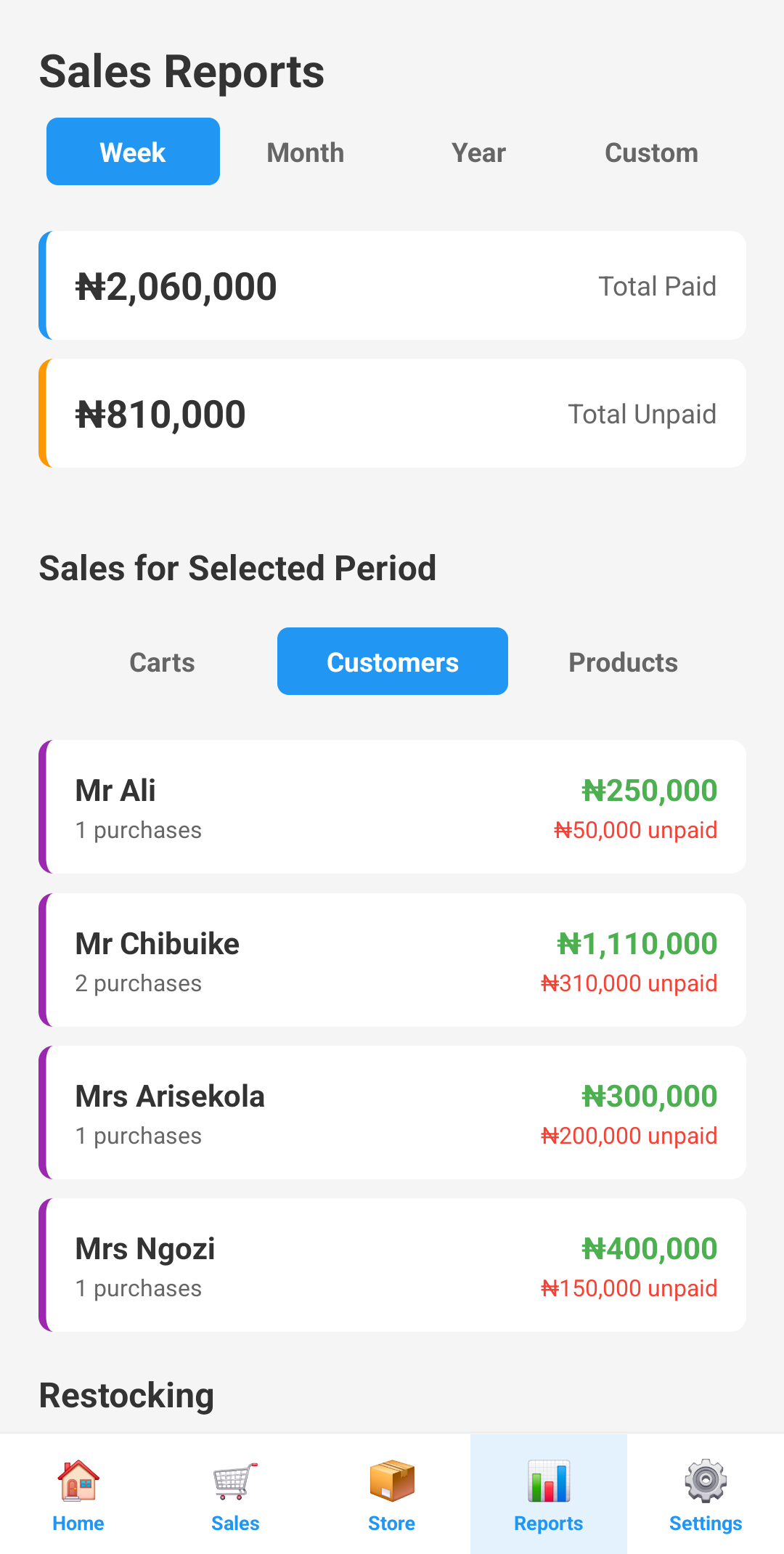
Records Screen
-
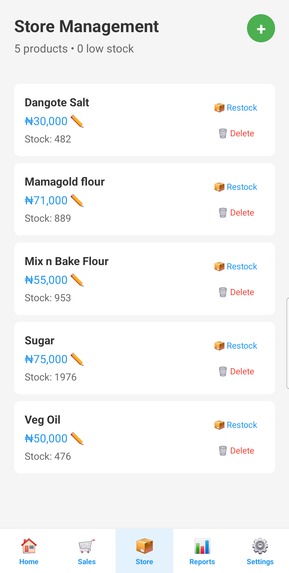
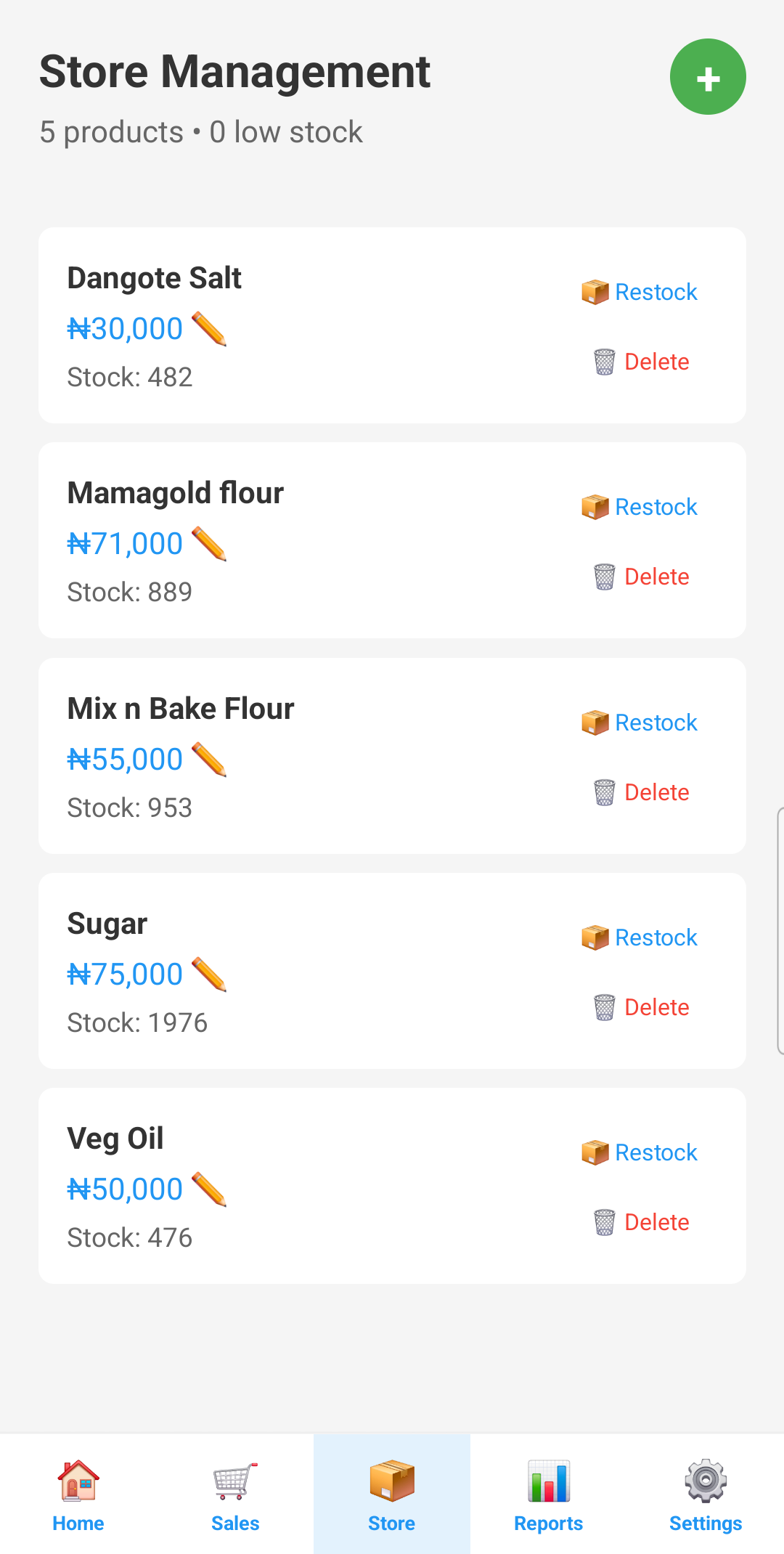
Store Management Screen
-
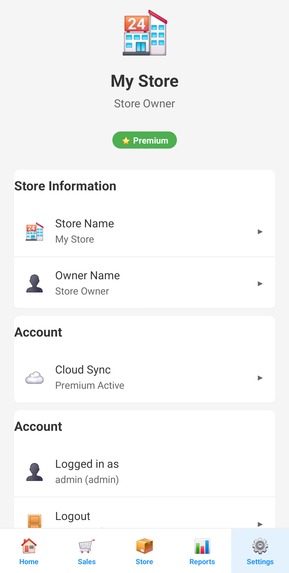
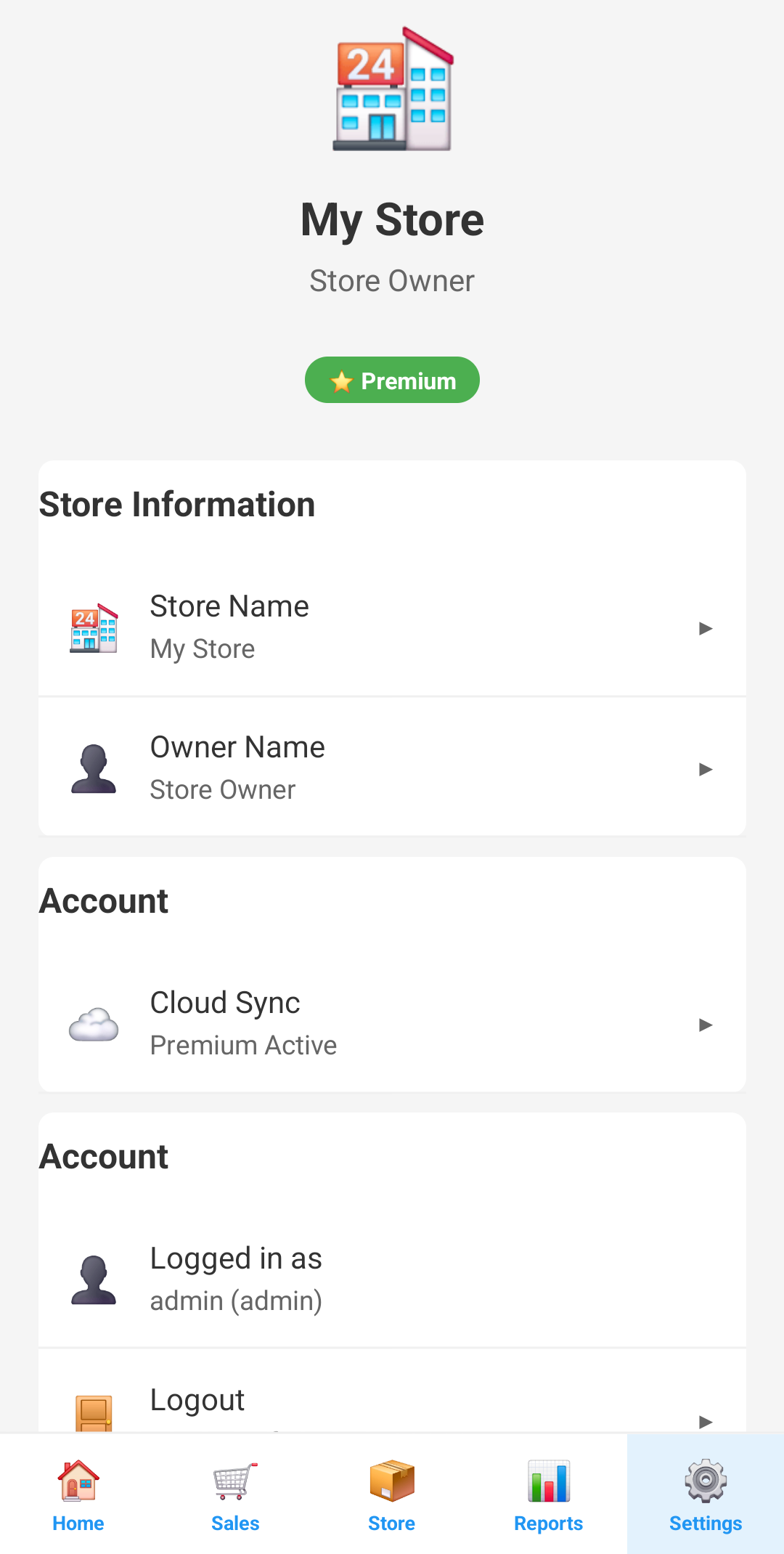
Settings Screen
Inspiration
Growing up, I helped in my mom's business until the beginning of my NYSC programme. In my time in the business, record-keeping was completed in paper notebooks, and the practice continues. This is not limited to my mother's business as it is staple across many informal traders in Nigeria. They sometimes lose sales records, carry multiple books around, and have to sift through pages of old books to trace customer debts. Traditional solutions for these issues are completely unaffordable for the average informal traders since they will need to setup computers in their shops and train staff in using the devices.
So, the inspiration struck me: what if I could build a sales and inventory app tracker that works on any Android phone, functions completely offline for basic users, and eliminates the need for laptop/POS setup and training costs?
What it Does
Lara is an offline-first mobile app that transforms any Android device into a complete business record-keeping system:
- Offline-First Architecture: Records sales, manages inventory, and tracks customer debts without internet. For basic and premium users.
- Customer Debt Tracking: Auto-suggests customers and adds outstanding debts to new sales. For basic and premium users.
- Multi-Account Management: Admin and employee accounts with centralized data sharing. For premium users only.
- Business Analytics: Sales reports, inventory alerts, and performance insights. For basic and premium users.
- Smart Cloud Sync: Intelligent synchronization that only uploads changes (80% bandwidth reduction). For premium users only.
- Resource Constraints: The app works perfectly on resource-constrained devices, using only 65MB storage and minimal battery power.
How I Built it
Technical Architecture
- Frontend: React Native with Expo for cross-platform compatibility
- Local Storage: SQLite database for offline-first functionality
- Cloud Infrastructure: AWS API Gateway + Lambda + DynamoDB
- Sync Algorithm: Custom smart sync that tracks data changes using timestamps
Key Technical Decisions
- Offline-First: Local SQLite ensures functionality without connectivity
- Premium-Only Cloud: Reduces infrastructure costs while providing value
- Smart Sync: Reduces data usage by 80% compared to full sync
- Employee Restrictions: 1-year data access limit for cost control, inability to change prices
Challenges I ran into
- Async/Sync Mismatch Crisis
The Reports screen kept crashing due to async database calls being made synchronously. After multiple failed attempts, I discovered the root cause: functions were being passed as async but called without await.
- Solution: Converted all report functions to synchronous operations using local state, with cloud data merged via cache updates.
- Centralized Data vs Performance
Balancing centralized record-keeping (admin seeing employee sales) with offline performance was complex.
- Solution: Implemented a hybrid approach - local data for immediate access, cloud sync for centralization, with cache updates maintaining consistency.
- Resource-Constrained Device Testing
Ensuring smooth performance on low-end Android devices required extensive optimization.
- Solution: Implemented list virtualization, limited data rendering, and comprehensive error boundaries.
Accomplishments that I am Proud of
Technical Achievements
- Zero-crash stability: Bulletproof error handling with triple-layer protection
- 80% cost reduction: Smart sync algorithm dramatically reduced cloud costs
- Offline-first mastery: Full functionality without internet connectivity
- Sub-100MB footprint: Optimized for resource-constrained devices
Business Impact
- 95% cost reduction: From #1,000,000 laptop and training cost to free for basic users and #5,000/month for premium users.
- 50M+ target market: Addresses Africa's massive informal trading sector
- Sustainable model: ₦/month profit per premium user
Innovation Highlights
- Smart sync algorithm: Only syncs changed data, reducing bandwidth by 80%
- Premium-only cloud: Innovative freemium model for emerging markets
- Multi-account centralization: Admin sees employee data via intelligent sync
- Customer debt integration: Auto-adds outstanding debts to new sales
What I learned
Resource-Constrained Computing Principles
- Offline-first is non-negotiable in African markets due to unreliable connectivity
- Smart algorithms beat brute force - our 80% sync reduction proves efficiency matters
- Local storage is king - SQLite provides instant access and zero data costs
- Battery optimization requires careful async operation management
African Market Realities
- Price sensitivity is extreme - even ₦5,000 can be prohibitive for daily traders
- Simplicity trumps features - complex UIs fail with low-literacy users
- Reliability over sophistication - a working basic app beats a buggy advanced one
- Community-based adoption - word-of-mouth drives growth in informal markets
Technical Deep Dives
- React Native performance optimization for low-end Android devices
- AWS cost management strategies for emerging market applications
- Database synchronization patterns for offline-first architectures
- Error boundary implementation for production-grade stability
What's Next for Lara
Immediate Roadmap (3 months)
- Voice input integration for low-literacy users using local speech recognition
- SMS backup system for areas with limited internet but strong cellular coverage
- Multi-language support starting with Hausa, Yoruba, and Swahili
Scale Strategy (6-12 months)
- Micro-lending integration using sales data for credit scoring
- Supplier marketplace connecting vendors with wholesale distributors
- Mobile money integration with payment systems
- AI-powered insights for inventory optimization and demand forecasting
Vision (2+ years)
- Pan-African expansion targeting 10 countries with localized features
- Ecosystem platform connecting millions of informal traders across Africa
- Economic impact measurement tracking GDP contribution of informal sector
Ultimate goal: Digitize Africa's informal economy while keeping it accessible, affordable, and authentically African.
Built With
- amazon-web-services
- android
- asyncstorage
- aws-api-gateway
- aws-dynamodb
- aws-lambda
- exp
- expo-apis
- github-actions
- javascript
- jsx
- node.js
- npm
- react-native
- react-navigation
- rest-apis
- sqlite

Log in or sign up for Devpost to join the conversation.