-
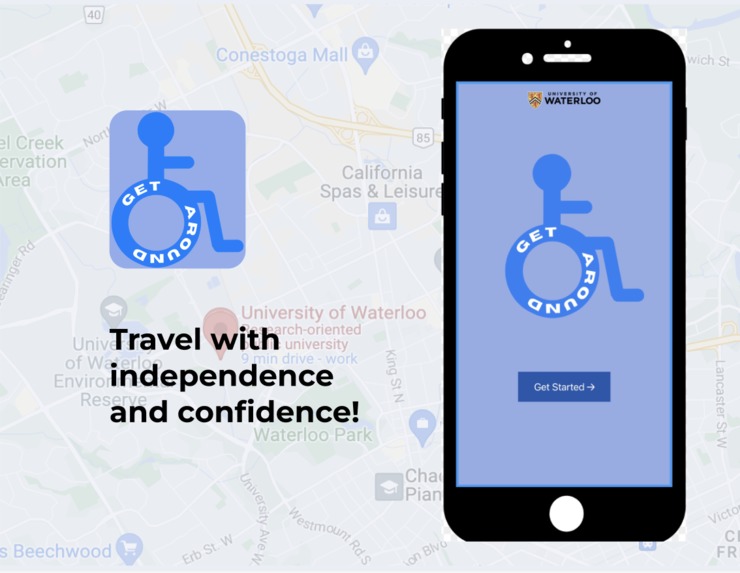
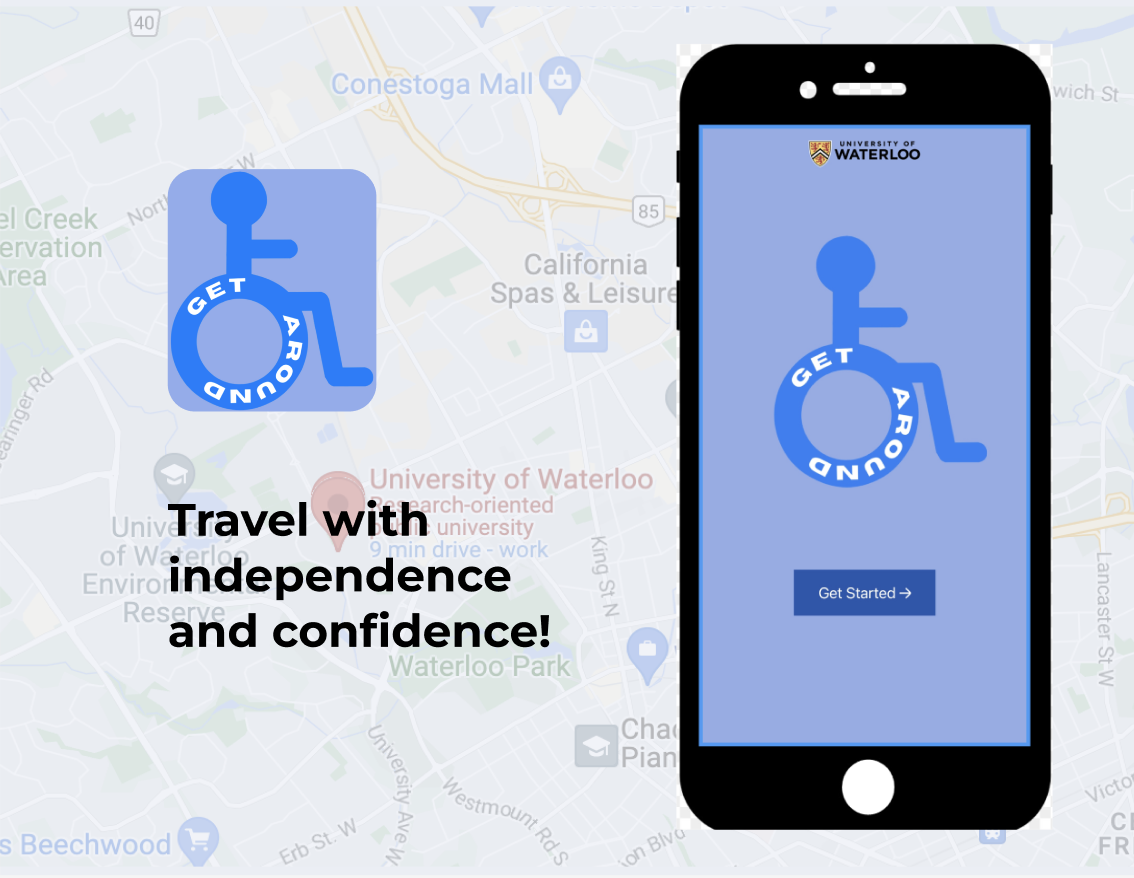
Introducing GetAround
-
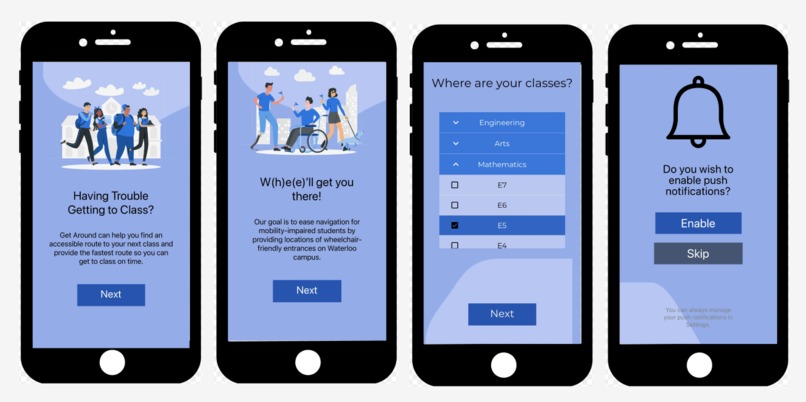
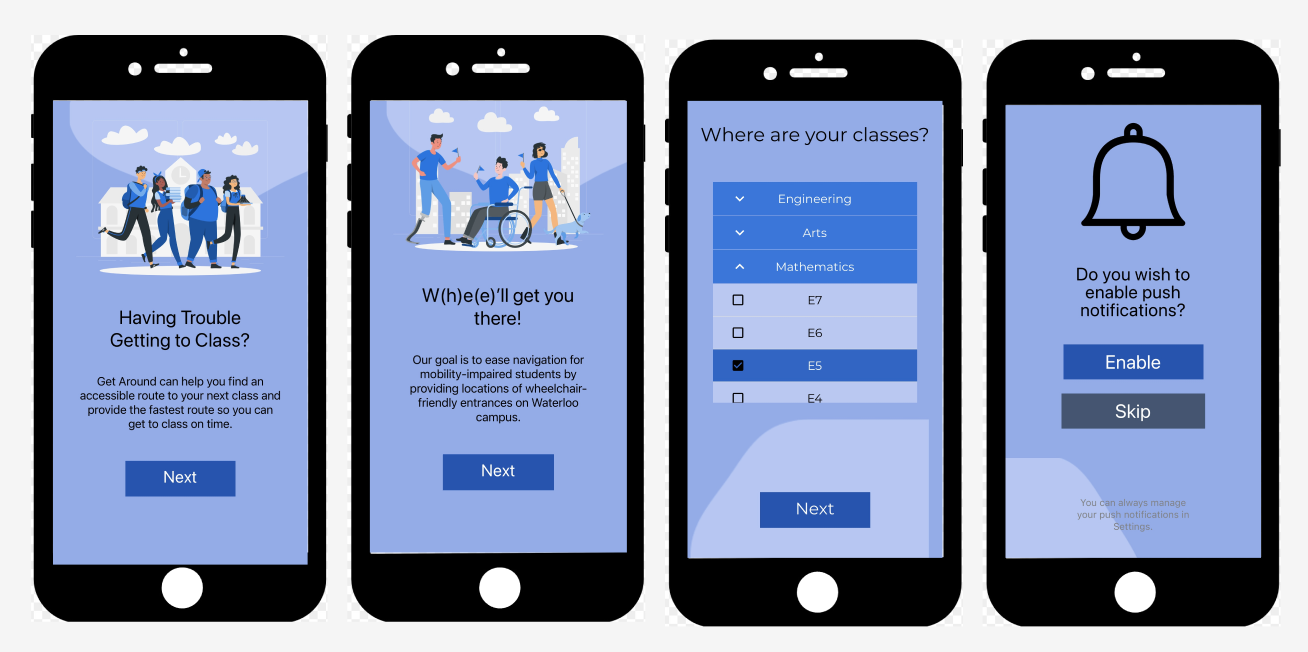
Some screenshots of GetAround on React Native
💫 Inspiration
Despite the legal obligation for higher education institutions to provide accommodations for students with disabilities, many continue to face barriers in accessing their education. To address this issue, we are excited to introduce GetAround, a revolutionary app designed to help individuals with disabilities navigate their surroundings more easily. The University of Waterloo makes it very difficult for users to locate accessibility entrances around campus by providing a list of them on their website, rather than locating them on a map. GetAround aims to change that by providing real-time information on accessible routes, elevators, and ramps, empowering individuals with disabilities to travel with greater independence and confidence.
🗺️ What it does
Available on both Android and iOS devices, GetAround offers guidance to wheelchair-friendly entrances for all University of Waterloo campus buildings. It also provides information on the accessibility features of each building, including handicapped parking, elevators, food and drink options, wheelchair-accessible entrances, and wheelchair-accessible bathrooms.
💻 How we built it
When deciding on how we wanted our app to look, we followed the Web Content Accessibility Guidelines (WCAG) to ensure our app is accessible to people with disabilities. This included choosing a colour palette that had a color contrast ratio of at least 4.5:1. In addition, we ensured our default fonts were simple, familiar, easily-parsed, and no smaller than 9 pt. We chose Montserrat for our font. Our wireframes and high-fidelity mock-ups were created in Figma. We then moved on to React Native in VS Code to build the front end of our Android and iOS app. For the back end, we used MongoDB to store our building information and wheelchair-accessible entrances.
🚧 Challenges we ran into
- We struggled in the beginning with the learning curve. Maintaining a balance between learning new programming languages and networking to get the most out of the weekend was difficult.
- The database we originally chose was not compatible with React Native.
- Didn’t know MongoDB was case-sensitive and struggled with getting the database to work.
- Entrance directions were not given by the University of Waterloo, so we needed to hardcode the coordinate of the wheelchair-accessible entrances.
🥳 Accomplishments that we're proud of
- We were able to get a functioning React Native mobile app to address a major problem that individuals with disabilities face navigating around campus.
- Successfully completed our first hackathon for two of our team members.
- We got to experiment with platforms we have never used before, such as React Native, TypeScript, and MongoDB.
🎓 What we learned
Through this project, we were able to get experience using React Native to build Android and iOS applications. We also worked with MongoDB for the first time to store our data.
➡️ What's next for GetAround
- Synchronize the app with the University of Waterloo's Student Information System to automatically display a user's class schedule.
- Utilize machine learning to automatically detect and map ramps within the app.
- Expand the app's reach by implementing it at other universities across Canada.
- Continuously improve the app by adding more accessibility features and options.
Use Twilio to send text reminders.
Created by: Lana McKay, Hassan Alawie, Matthew Zhang


Log in or sign up for Devpost to join the conversation.