-
-
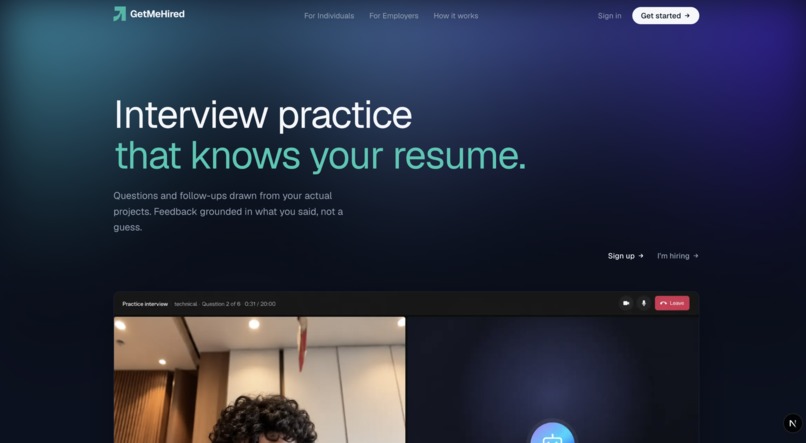
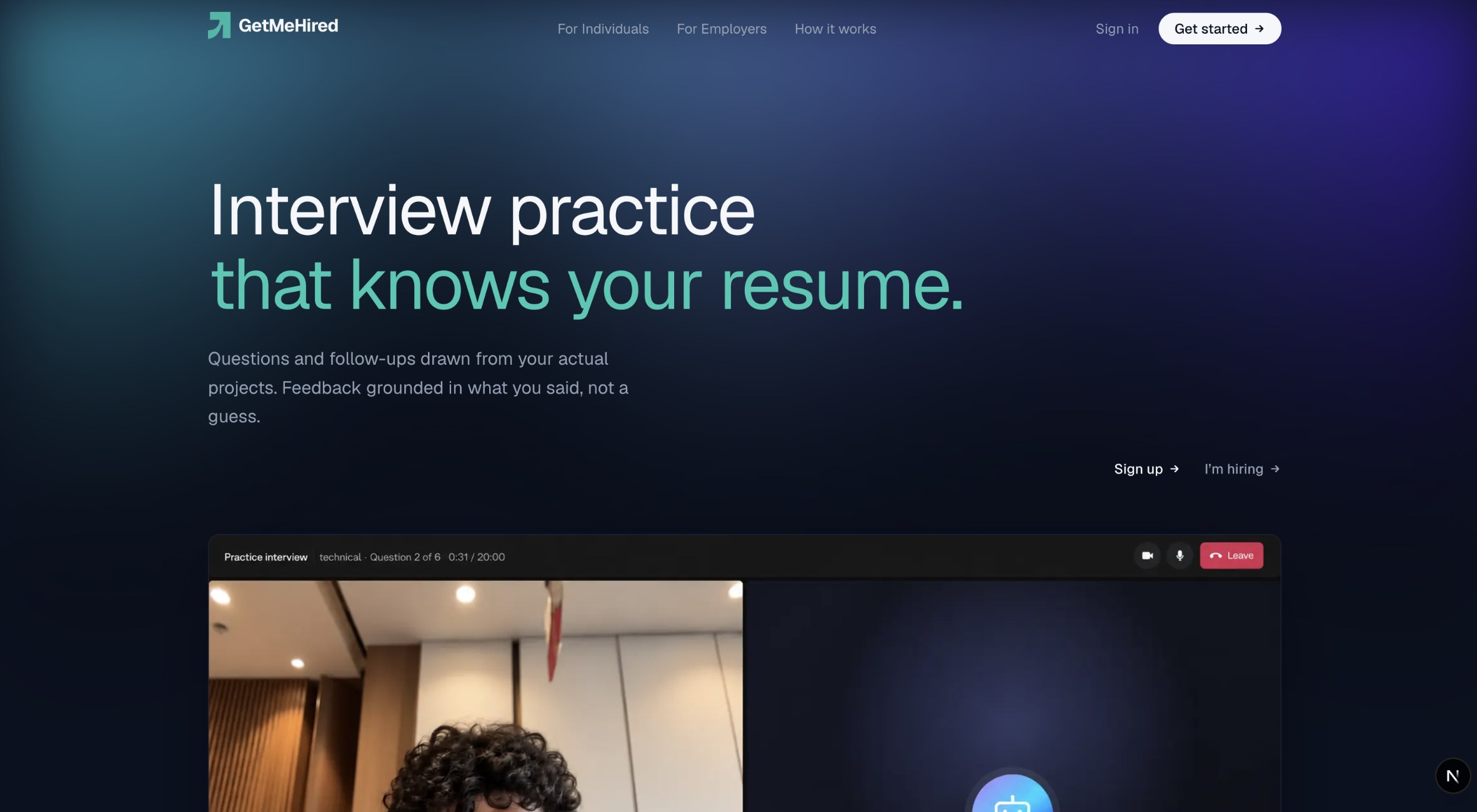
The Landing Page
-
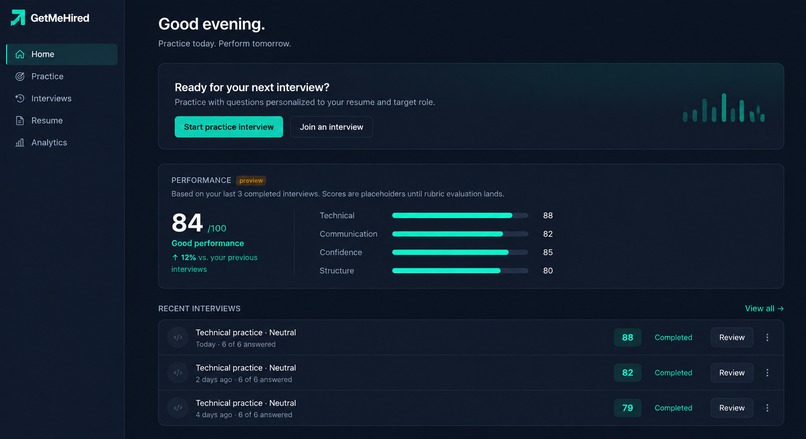
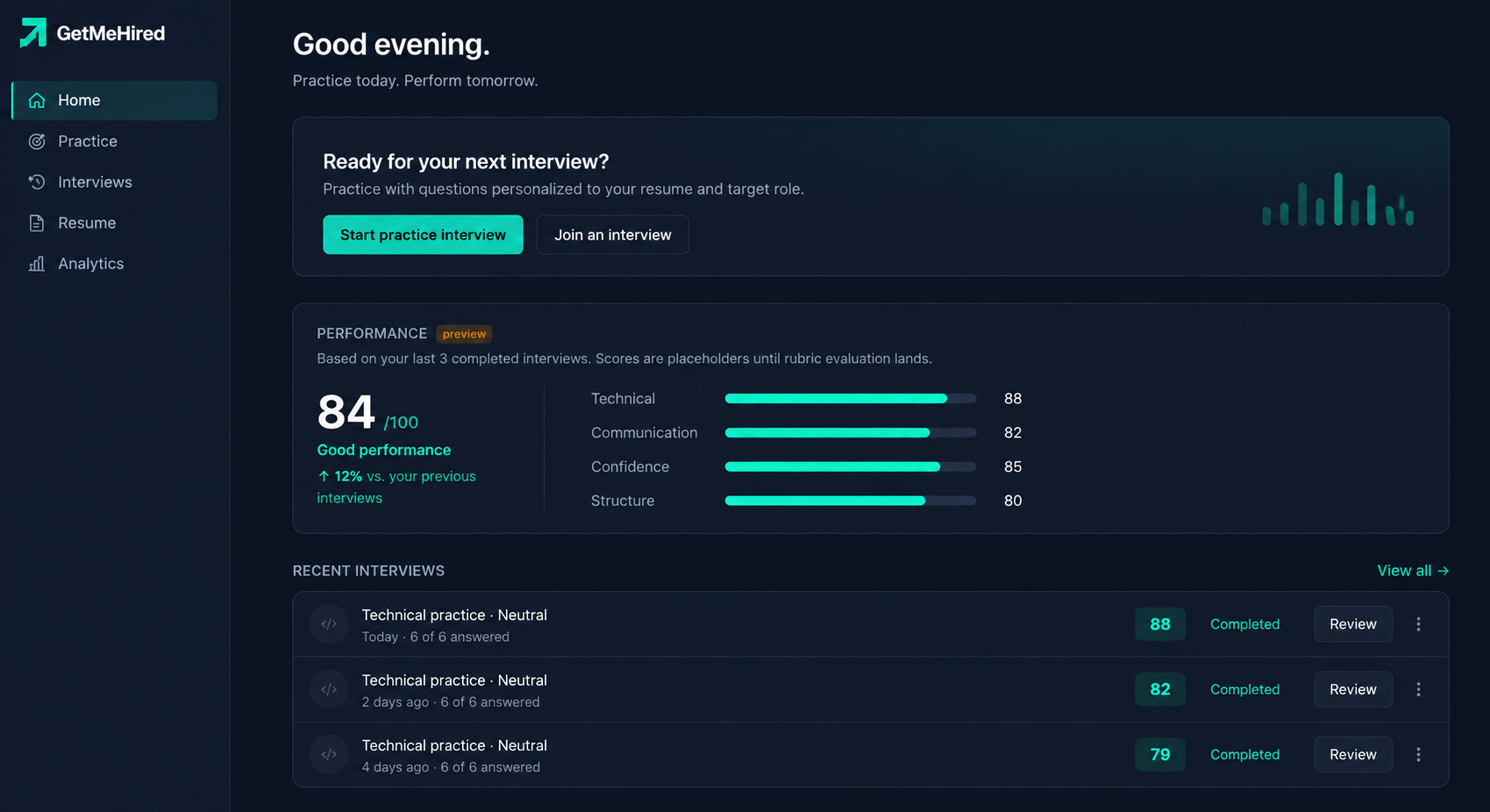
Practicioner Dashboard View
-
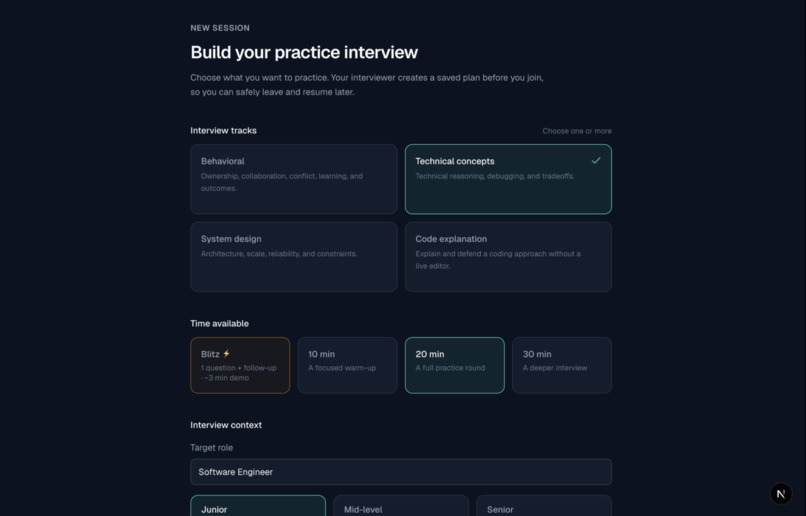
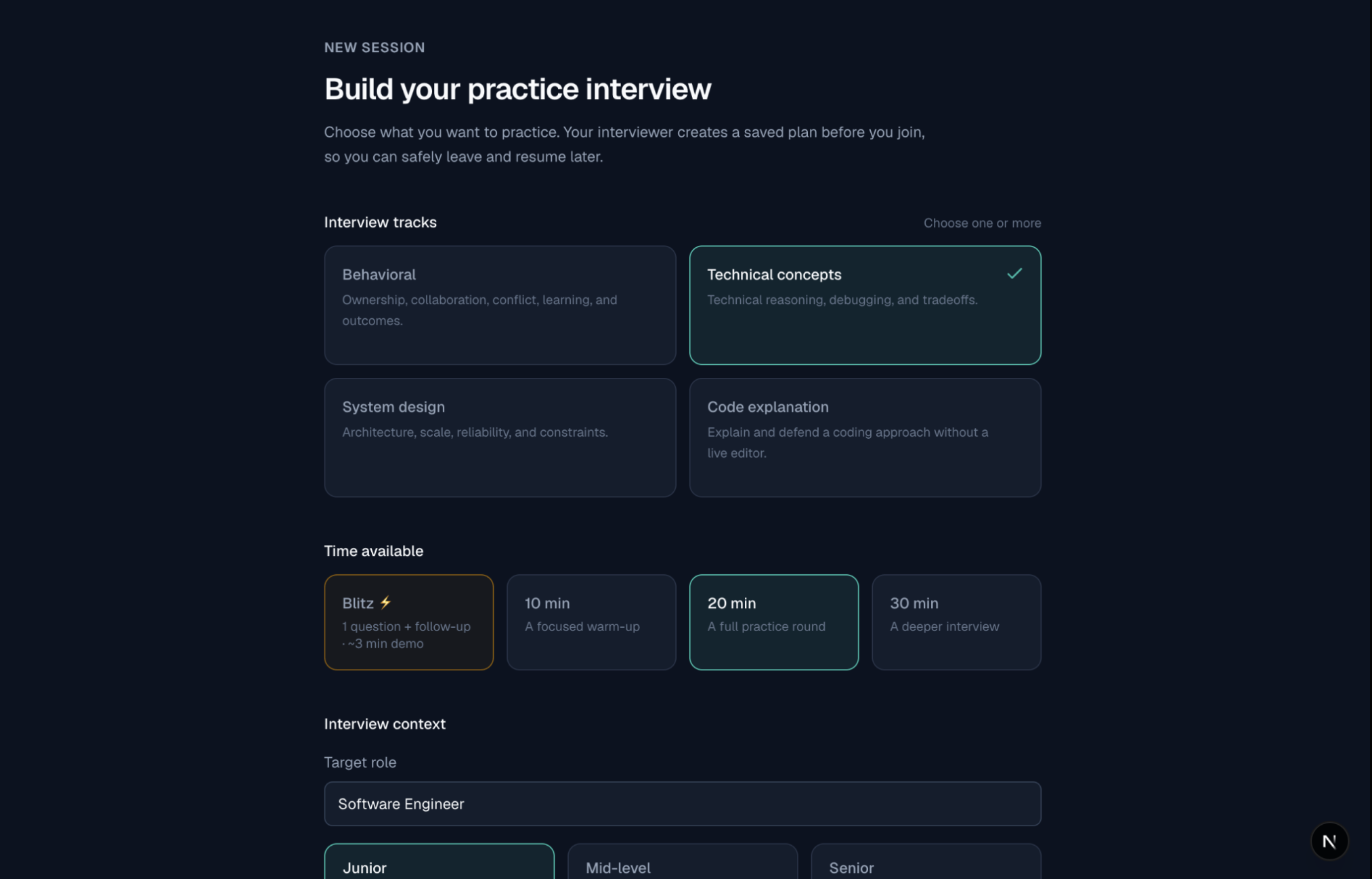
Practice Interview Setup
-
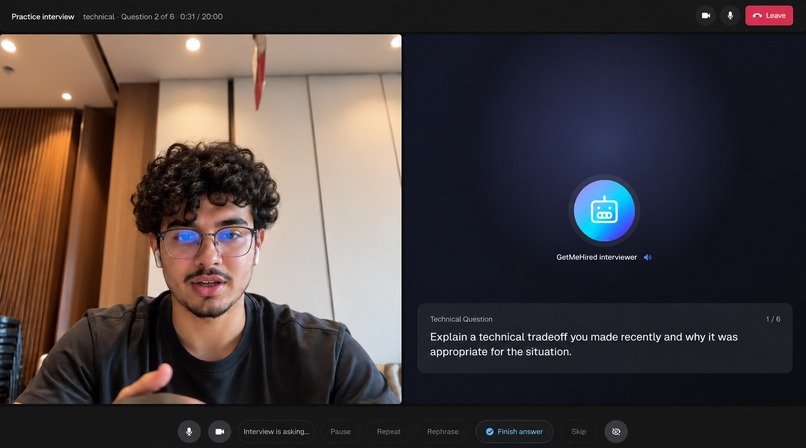
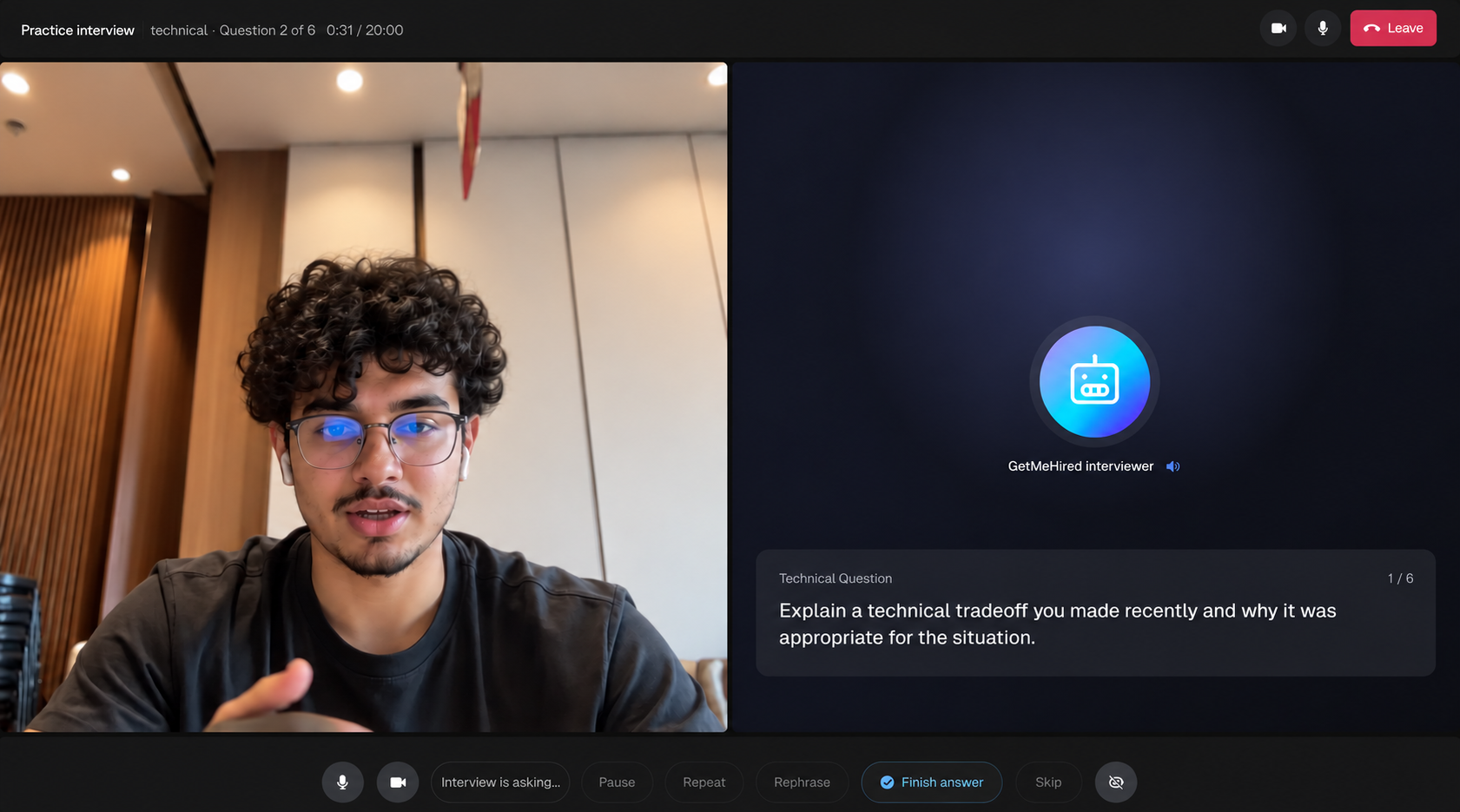
GetMeHired Meeting Excerpt
-
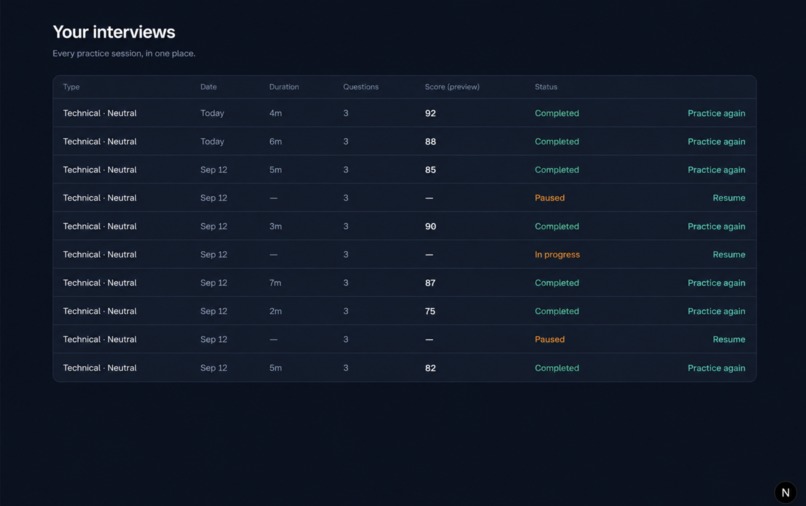
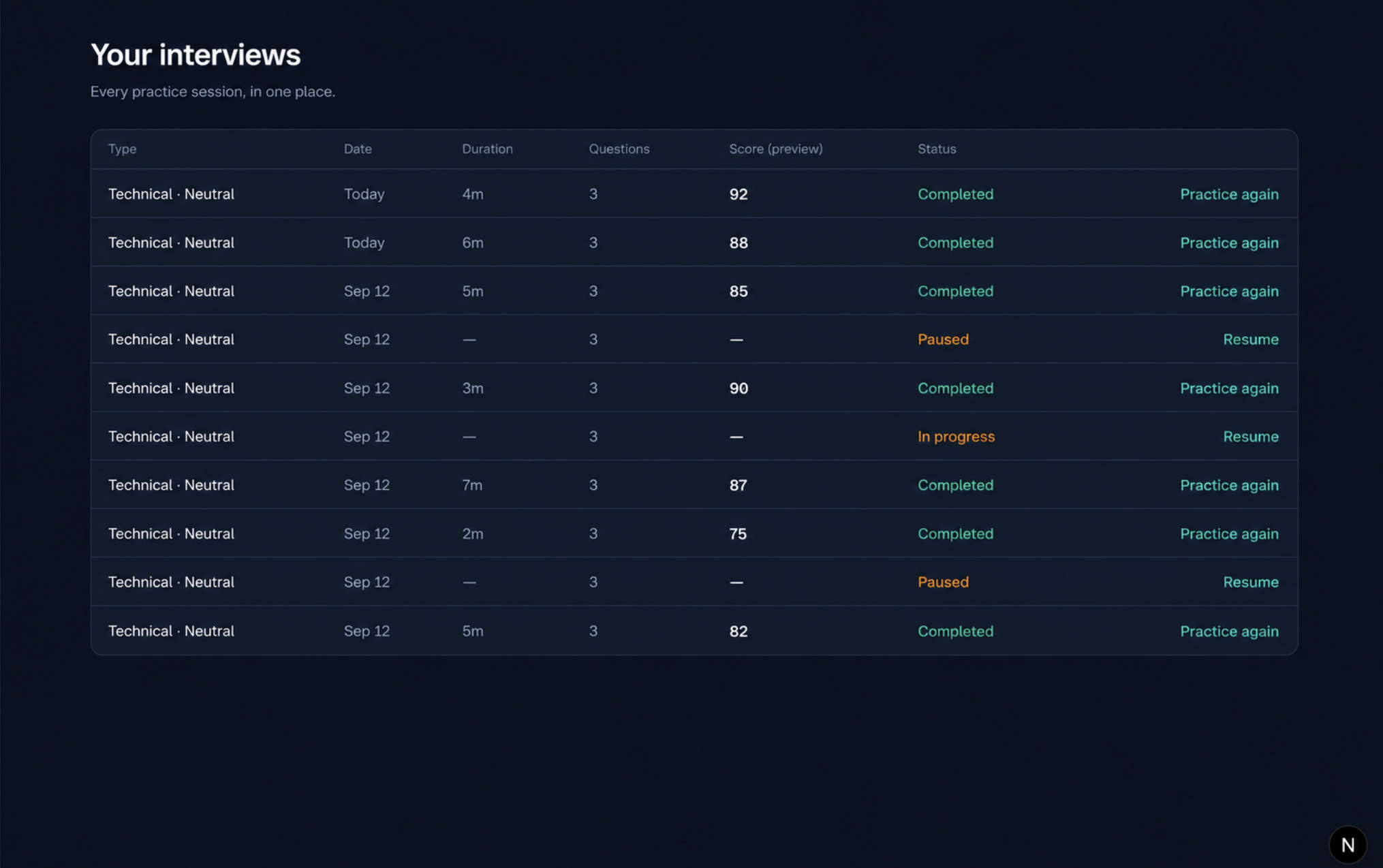
Past Interview Record
-
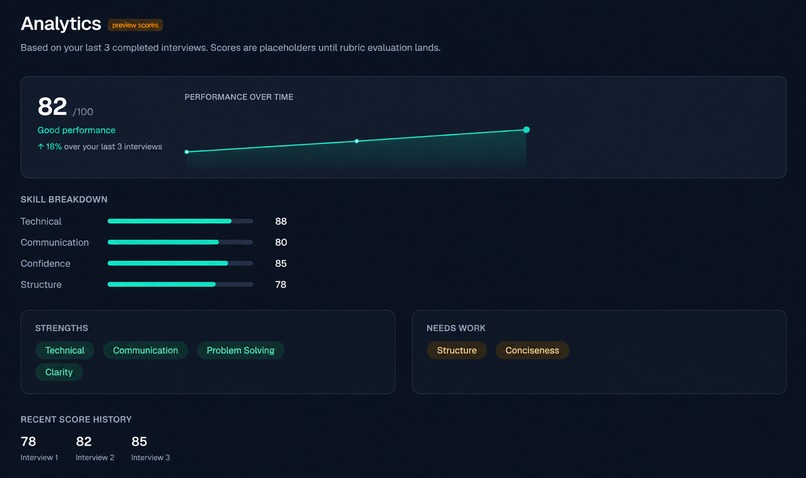
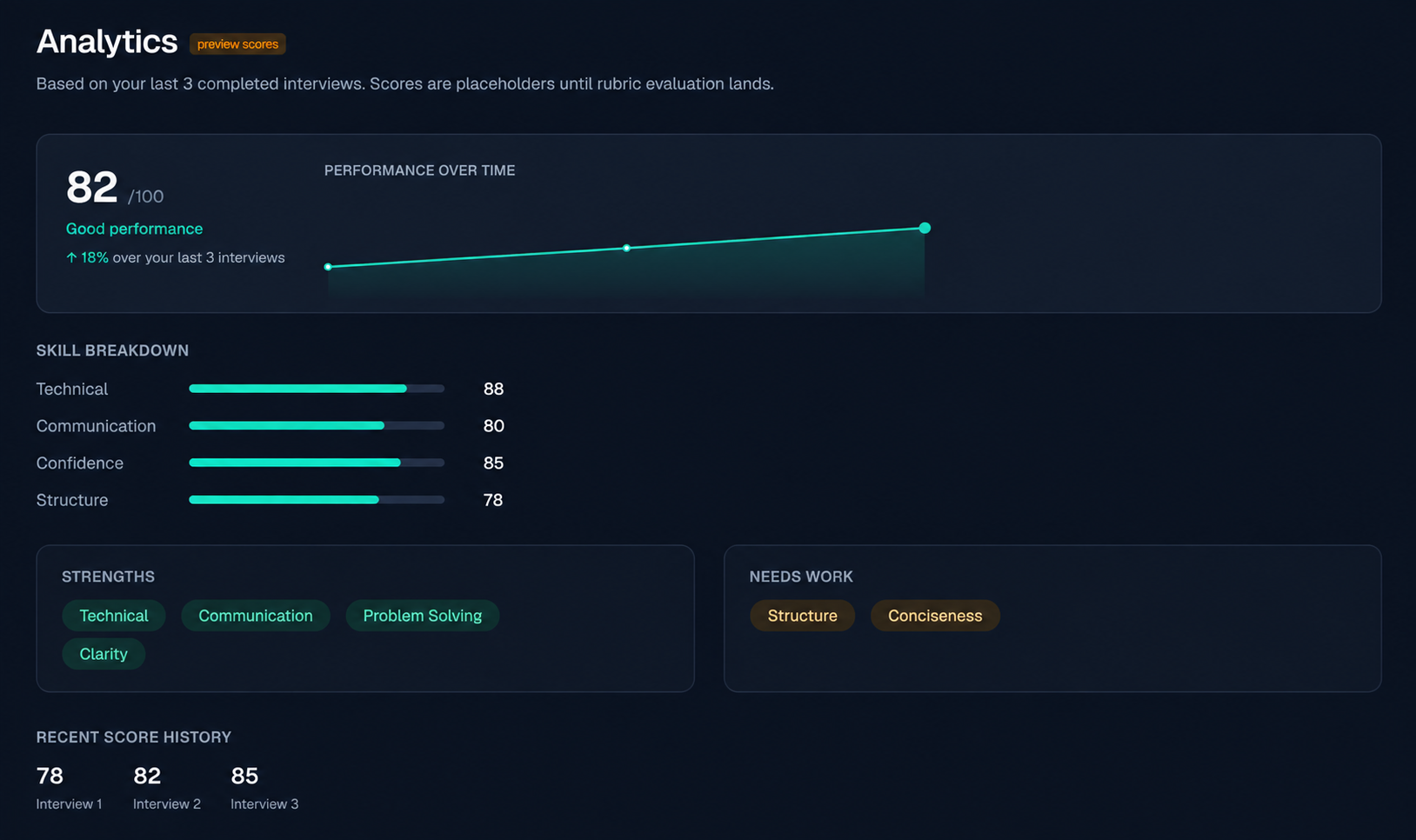
Interview Analytics Page
Inspiration
As a team of freshmen and rising juniors, we have found ourselves immersed in exploring how we can secure employment during and after college. As we move into an increasingly digital era, most interviews are now conducted over the internet through video calls, where facial and verbal composure can make a more pronounced difference. Thus, we wanted to leverage a facial analysis tool by MLH sponsor Presage to gain a more biological understanding of facial cues that could improve confidence in tandem with verbal analysis. We also believe that in an era of AI dominating recruitment, "Get Me Hired" can offer a more holistic implementation of AI by customizing recorded questions to the interviewee, allowing otherwise ignored candidates an opportunity to cut through deterministic AI recruiting solutions.
What it does
"Get Me Hired" at it's core has 2 purposes. Firstly we want to allow aspiring job-seekers and students the opportunity to practice and study for interviews based off our vast datasets and individual question curation. At this layer, the resume is analyzed to determine the student's specialty and the rigor of questions during the interview. Next, the user is placed in a video conference environment mimicking popular solutions such as Microsoft Teams and Zoom, with the application prompting the user with questions verbally and recording the user's answers. After the video interview has concluded, an analysis is run on the user's answers and based off experience and the resume's holistic analysis. This same technology can also be applied by recruiters to curate questions for aspiring candidates. Recruiters can also create interviews directly on the application, reducing the number of potential tools needed throughout the discovery and recruitment process.
How we built it
We began with a blank whiteboard, iterating through ideas centered around personal pain points and the presented tracks from the kick-off event. However as we made small talk about finding internships and full-time roles in the future and the importance of Leetcode and Hackerrank, we realized that no comparable solution exists for behavioral interviews. And thus that whiteboard full of ideas turned into a whiteboard functional requirements with the goal of improving another part of the interview process.
Once we figured out what we wanted to build, the whiteboard of ideas turned into a full technical architecture. We built the main platform using Next.js, React, and Tailwind, with Postgres and Drizzle handling the database and Clerk handling authentication and user roles. Candidates can upload their resume, complete a recorded interview directly in the browser, and have their interview media stored privately in R2 with short lived playback URLs.
For the actual interview process, we used LangChain with Gemini to generate personalized questions from the candidate's resume, ask follow up questions based on their answers, transcribe responses, and score everything using a structured rubric. ElevenLabs handles the interviewer voice, Persona is used for identity verification, and we built a service for Presage's SmartSpectra biometric system. Once an interview is complete, the results can also be minted as a verifiable credential on Solana. We packaged the full stack with Docker Compose so everything can be deployed together without having to configure each service separately.
Challenges we ran into
We experienced challenges implementing and harmonizing the vast number of MLH sponsors into the project due to conflicts we had to resolve between them in either setting up the technology or integrating with each other. There were also the age-old hackathon challenge of sleep deprivation and organizing the distribution of labor and deadlines, though a mixture of some experience and a lot of optimism made this leg easier to handle. Additionally, while exploring Houston, we learned about the Houstonian economy's largest contributor: towing, as we were towed within 20 minutes and had to pay over $300 to retrieve our vehicle.
Accomplishments that we're proud of
As juniors, we had the privilege of mentoring a freshman through their very first hackathon experience. It was rewarding to share what we had learned from our previous experiences while working together to overcome challenges throughout the hackathon. At the same time, we challenged ourselves by attempting features that we initially believed were too ambitious to complete within such a short timeframe. Through strong teamwork, problem-solving, and persistence, we were able to successfully implement many of these features and turn our original idea into a functional project. Overall, the experience pushed us beyond our expectations and showed us how much we could accomplish as a team under a tight deadline.
What we learned
Throughout this hackathon, we learned how important teamwork, project management, communication, and time management are when building a project under a tight deadline. We also learned not to immediately dismiss ideas because they seem too ambitious. Many of the features we originally thought would be impossible to complete in 36 hours ended up becoming part of our final product. We gained experience integrating different technologies and quickly solving problems as they appeared. Additionally, mentoring a first-time hacker also taught us how to communicate our ideas clearly, divide responsibilities based on each person's strengths, and support each other throughout the development process. Most importantly, we learned that a strong team and a willingness to adapt can turn an ambitious idea into a working product in a very short amount of time.
What's next for Get Me Hired
Our next step for "Get Me Hired" is to take it beyond an idea for a hackathon and develop it into a complete platform for both aspiring interviewees and employers. We plan to improve our AI interview analysis, expand the variety of interview types and questions, and provide more detailed, personalized feedback to help candidates improve over time. On the employer side, we want to build tools that make reviewing interviews faster by highlighting key moments, comparing candidates, and organizing interview results in one place. We also plan to improve the overall user experience, strengthen the platform's reliability, and begin testing Get Me Hired with real students, job seekers, and recruiters. We have even discussed bringing "Get Me Hired" to popular video conferencing tools with bots (like otter.ai). Ultimately, our goal is to make interviews easier to practice, evaluate, and improve for everyone involved.
Built With
- amazon-web-services
- backboard
- cloudflare
- next.js
- r2
- rust
- sdk
- smartspectra
- solana
- vultr


Log in or sign up for Devpost to join the conversation.