-
-
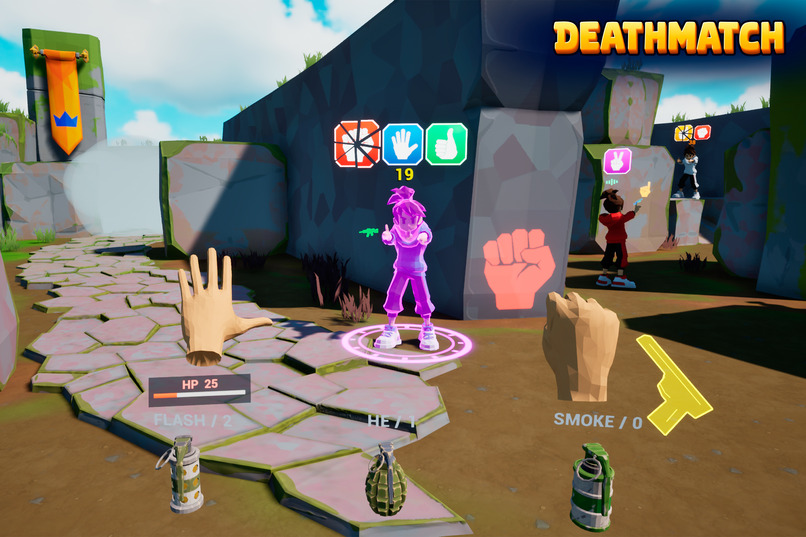
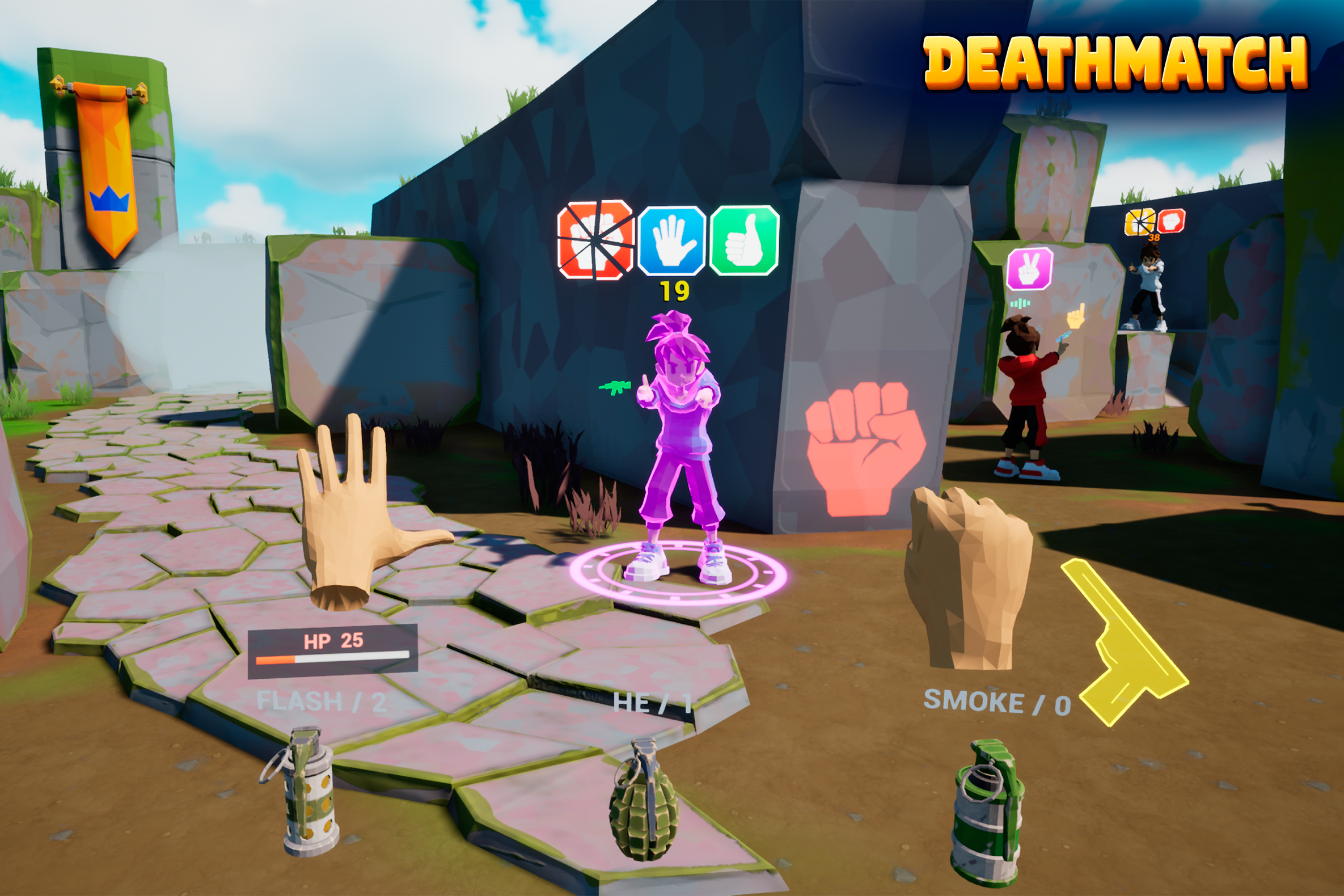
Deathmatch - free-for-all combat, quick respawns, and a fight for first place
-
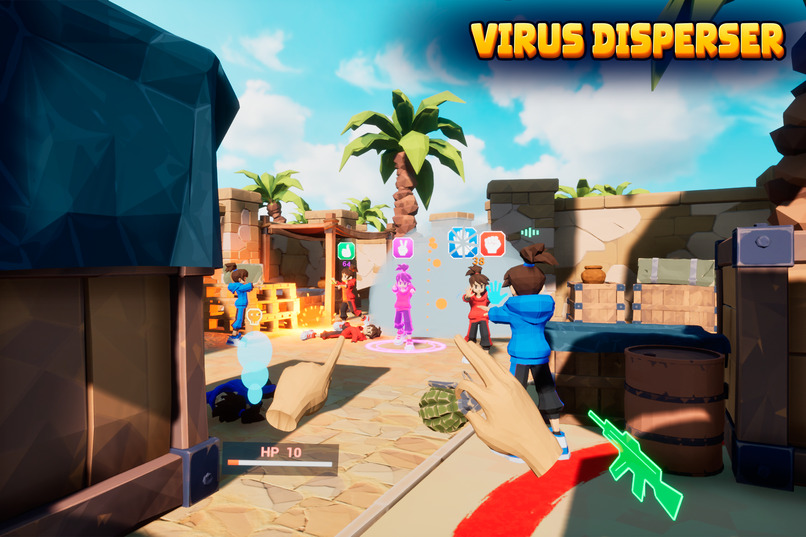
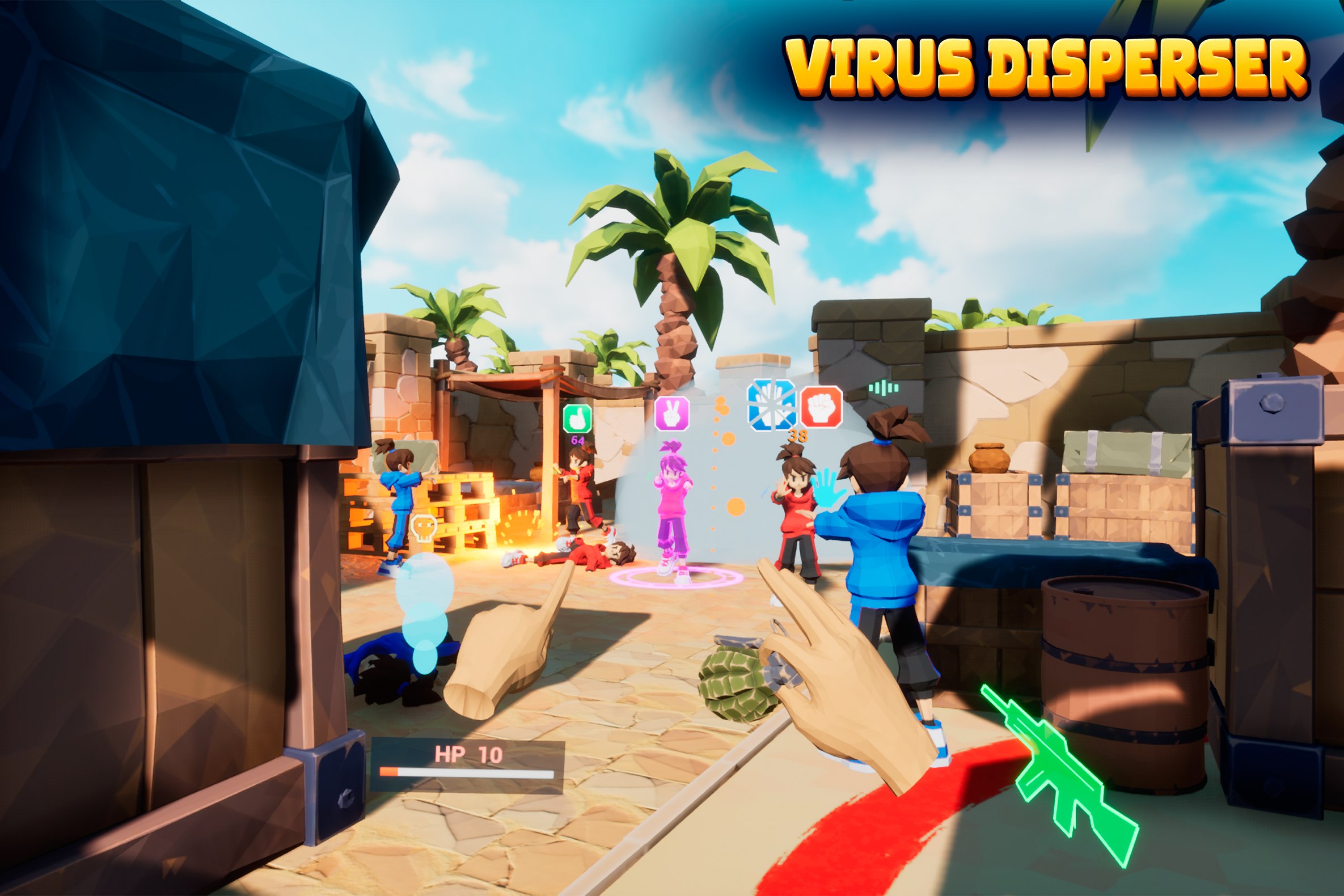
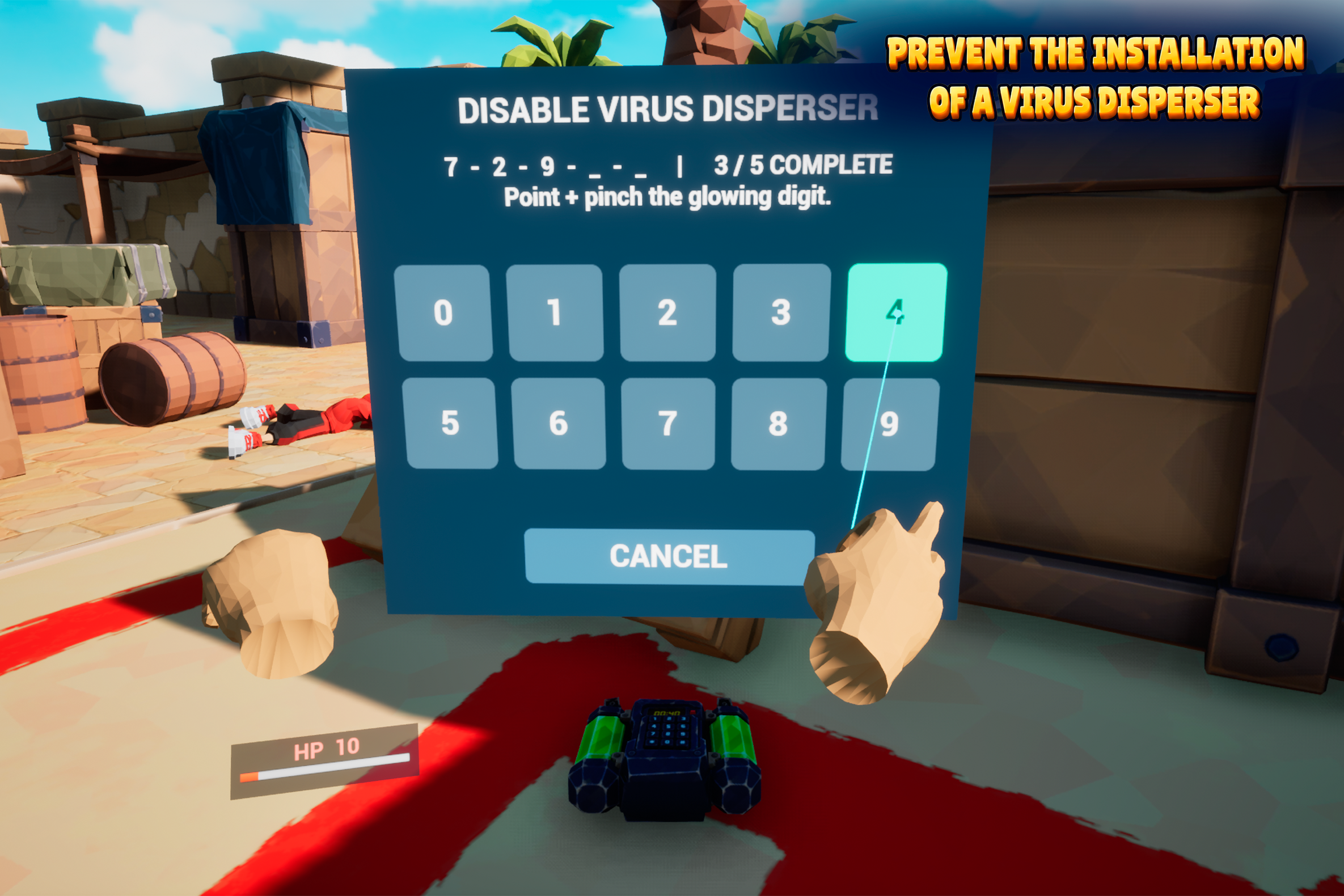
Virus Disperser - team rounds built around planting and disabling a virus disperser. Players interact with its keypad using pinch gestures
-
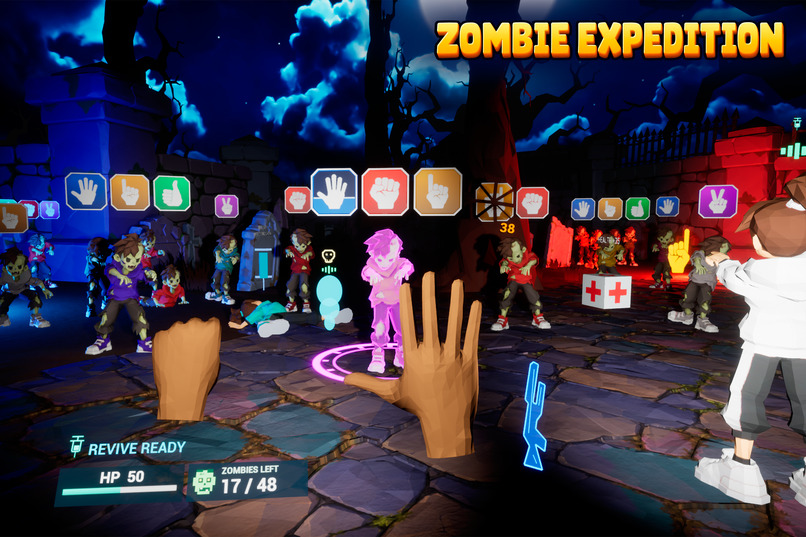
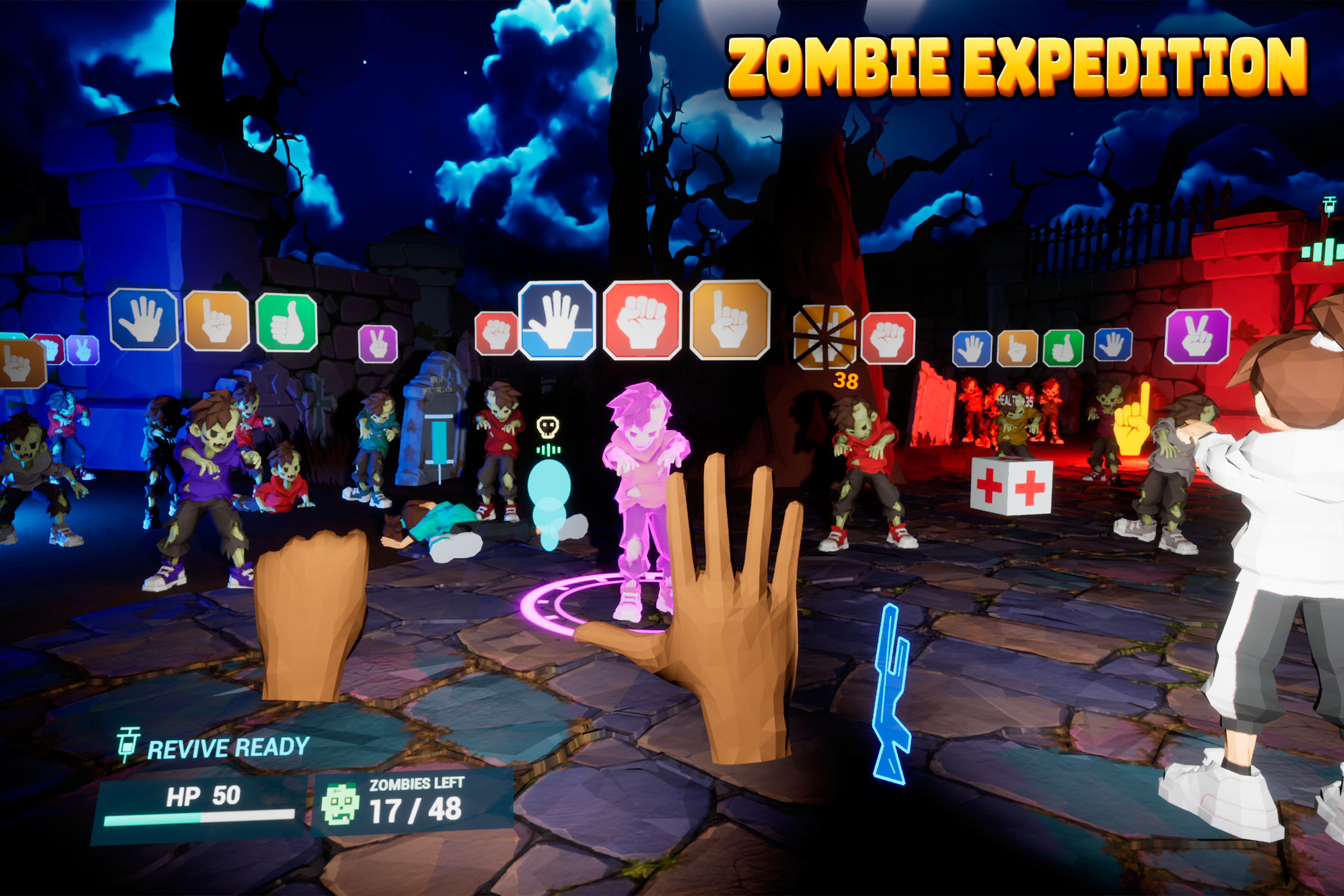
Zombie Expedition - cooperative progression through a location featuring zombie hordes, safe zones, teammate revivals, and a final boss
-
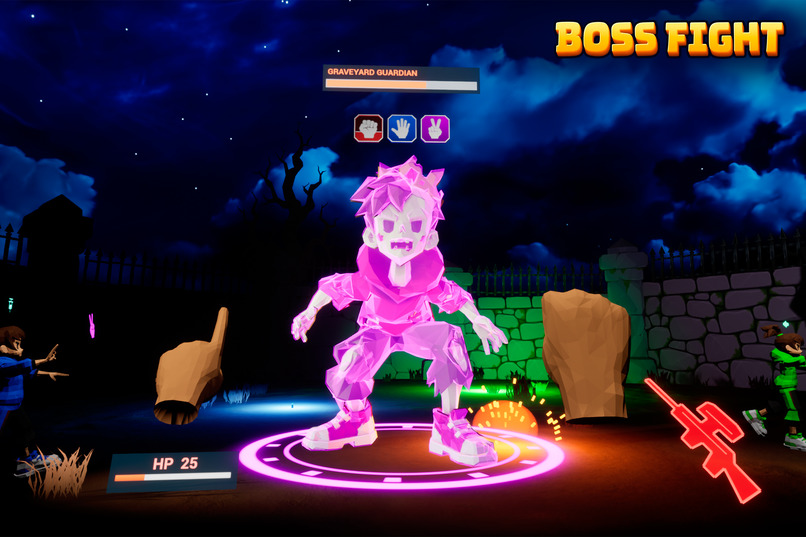
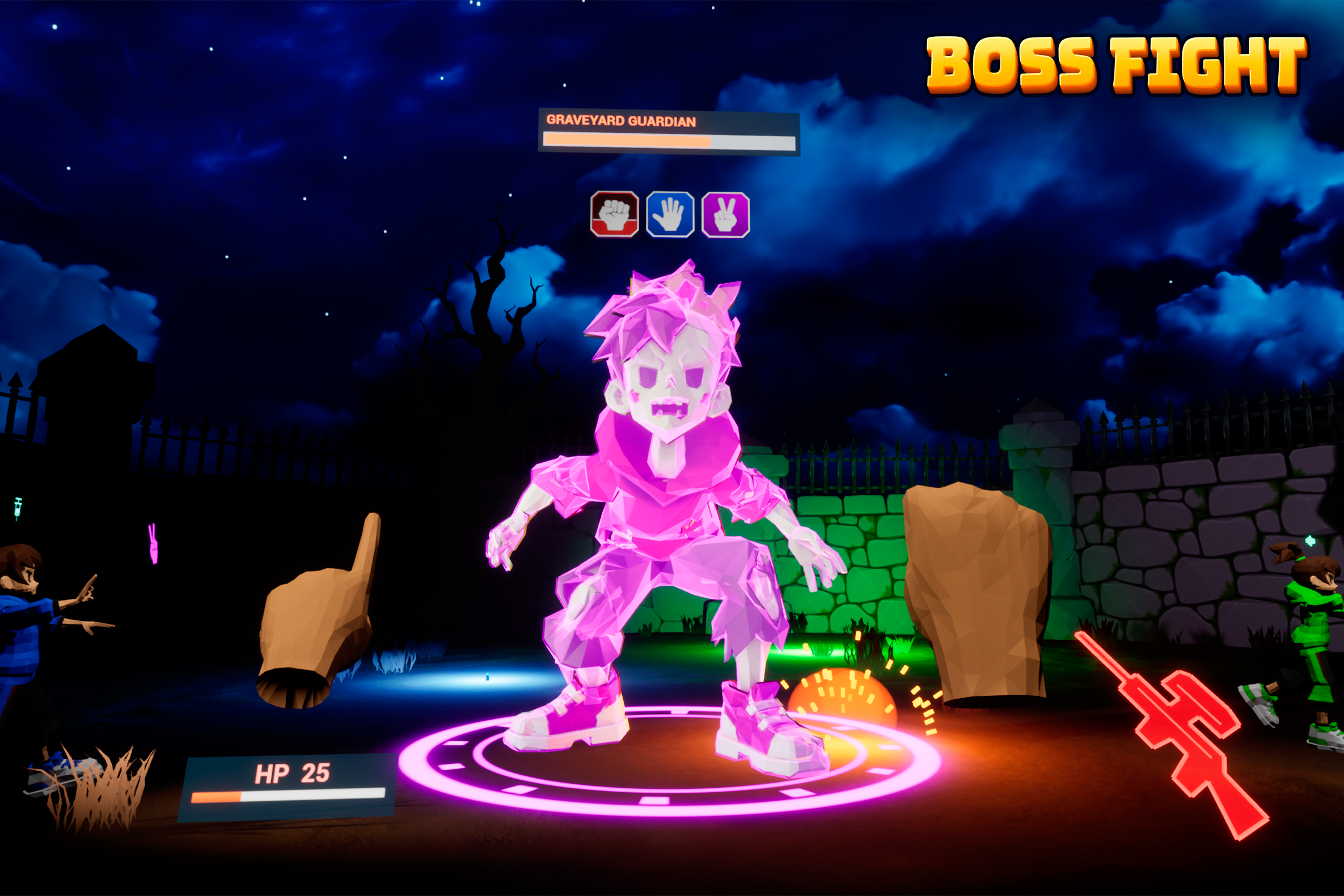
Boss Fight - Face a giant zombie boss, dodge its attacks, and fight back with hand gestures
-
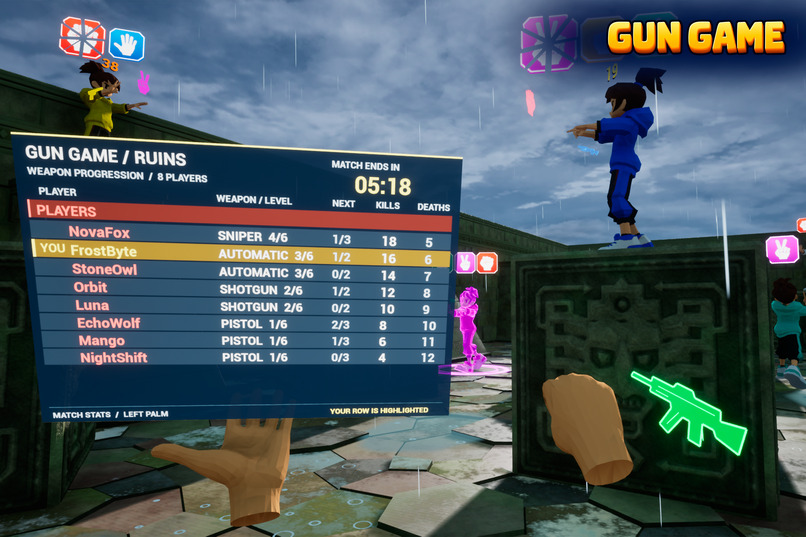
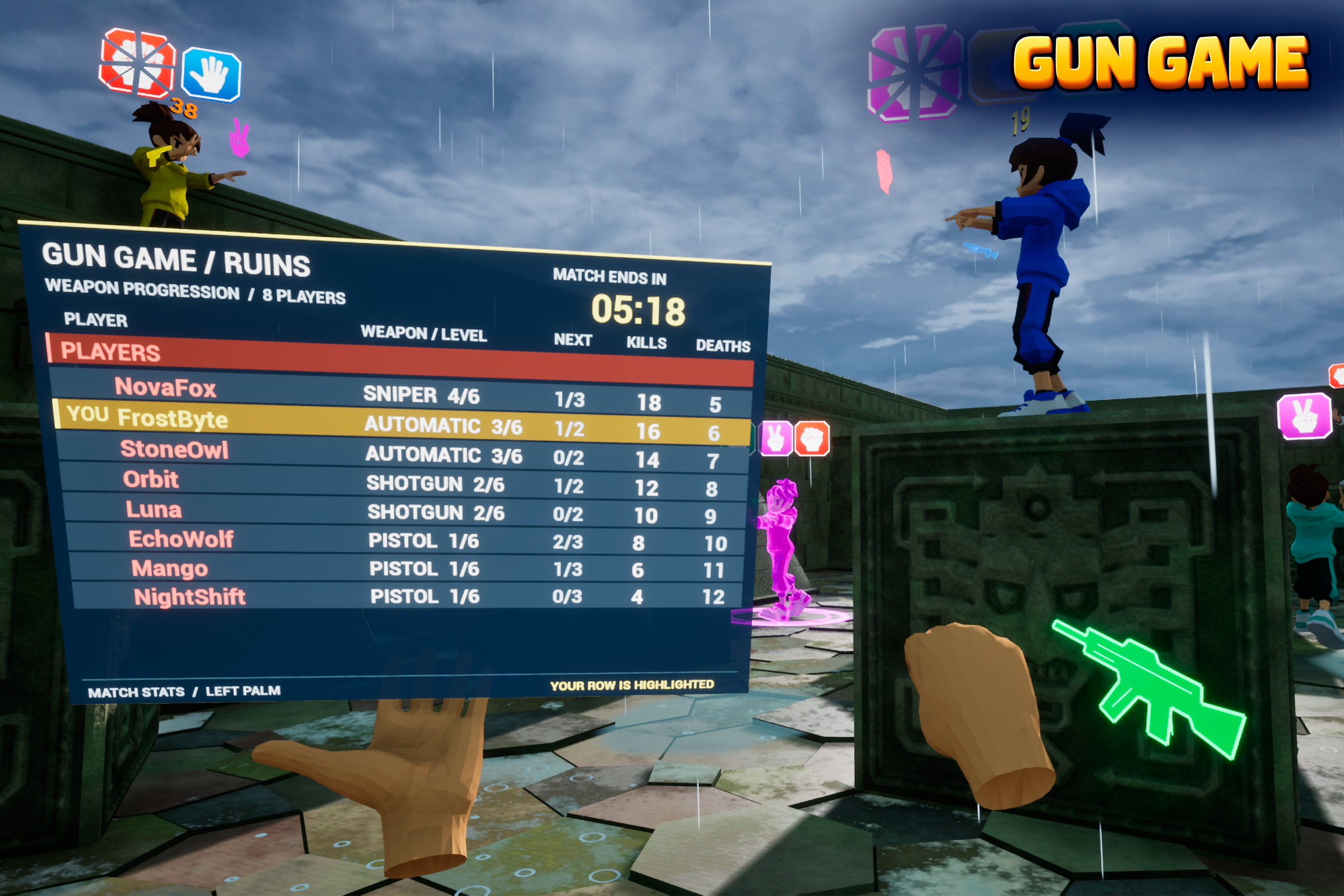
Gun Game - players advance through weapon stages by earning kills, culminating in a final grenade kill
-
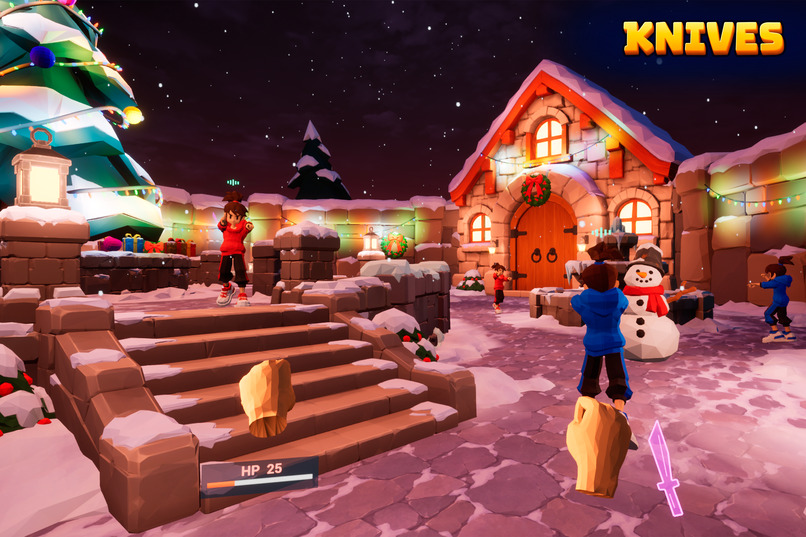
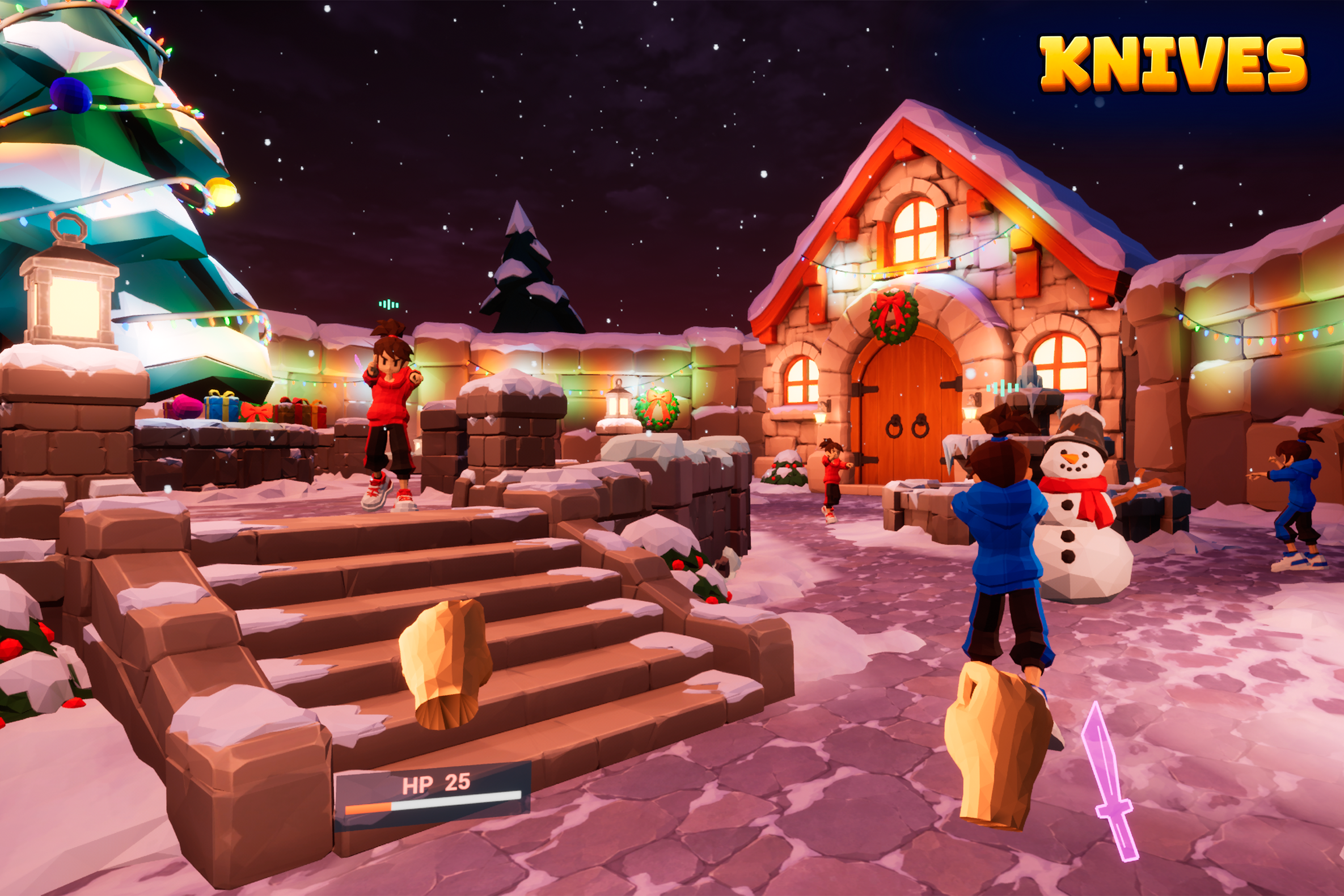
Knives - close-range team battles where a single successful strike decides the encounter
-
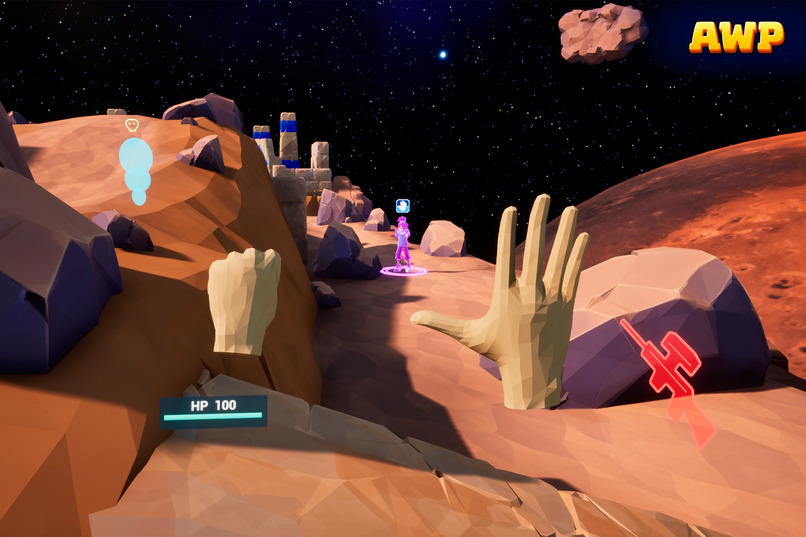
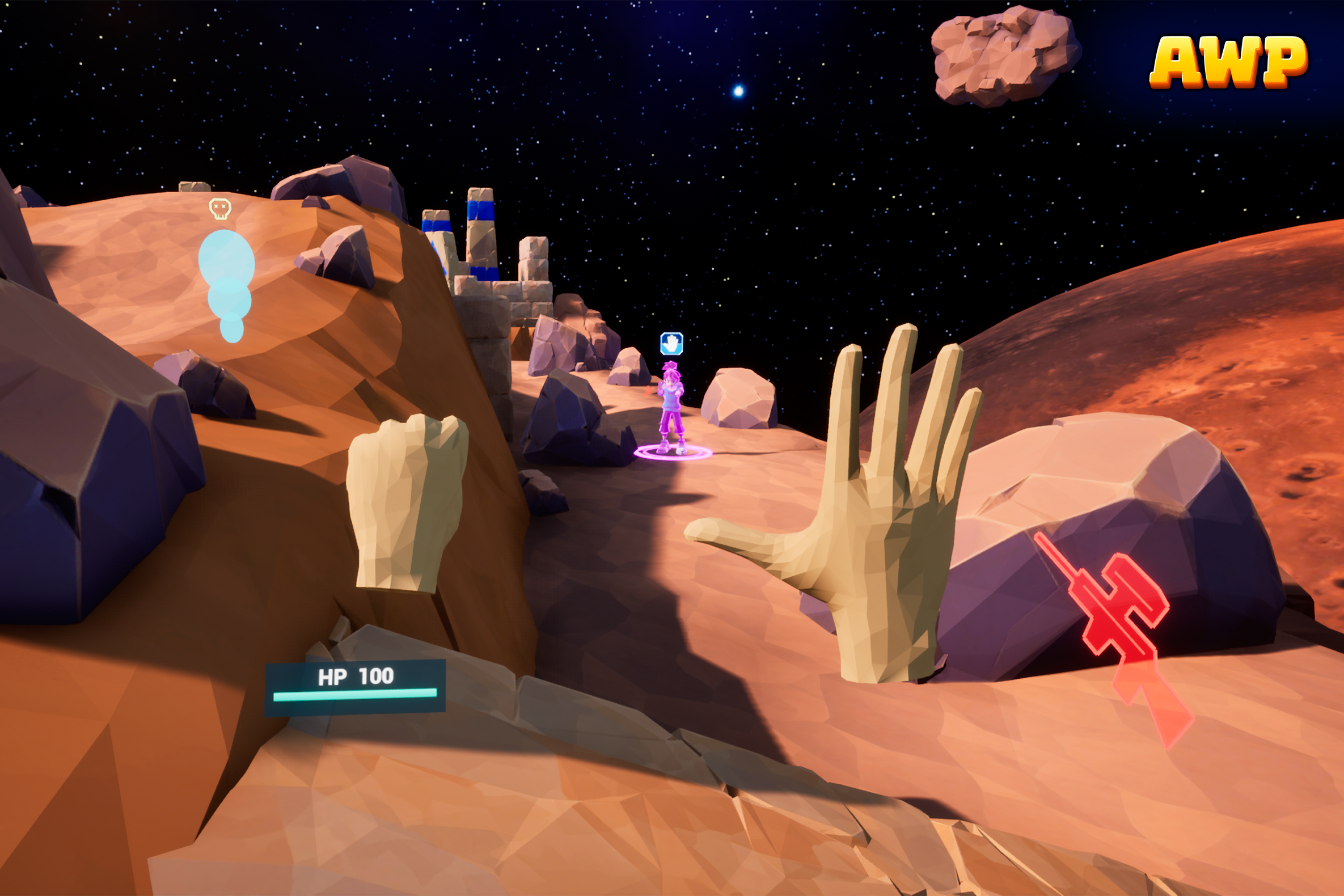
AWP - team-based sniper rounds where precise aiming and keeping the target in focus are especially important
-
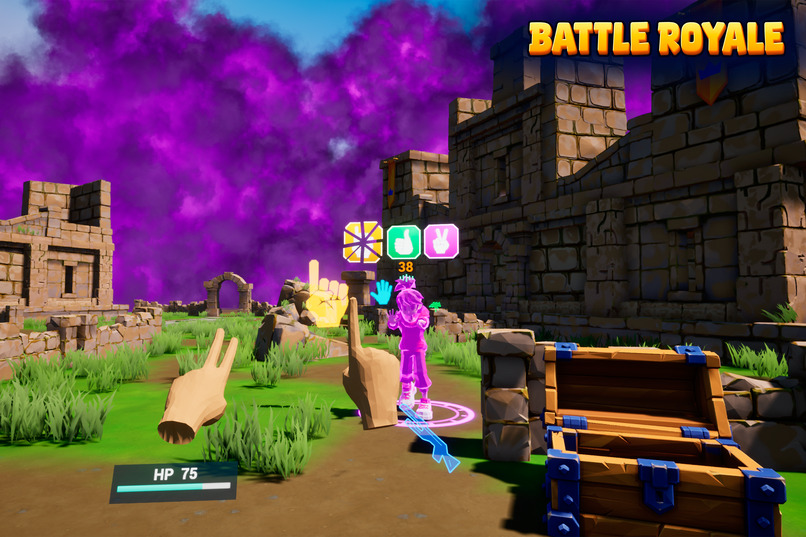
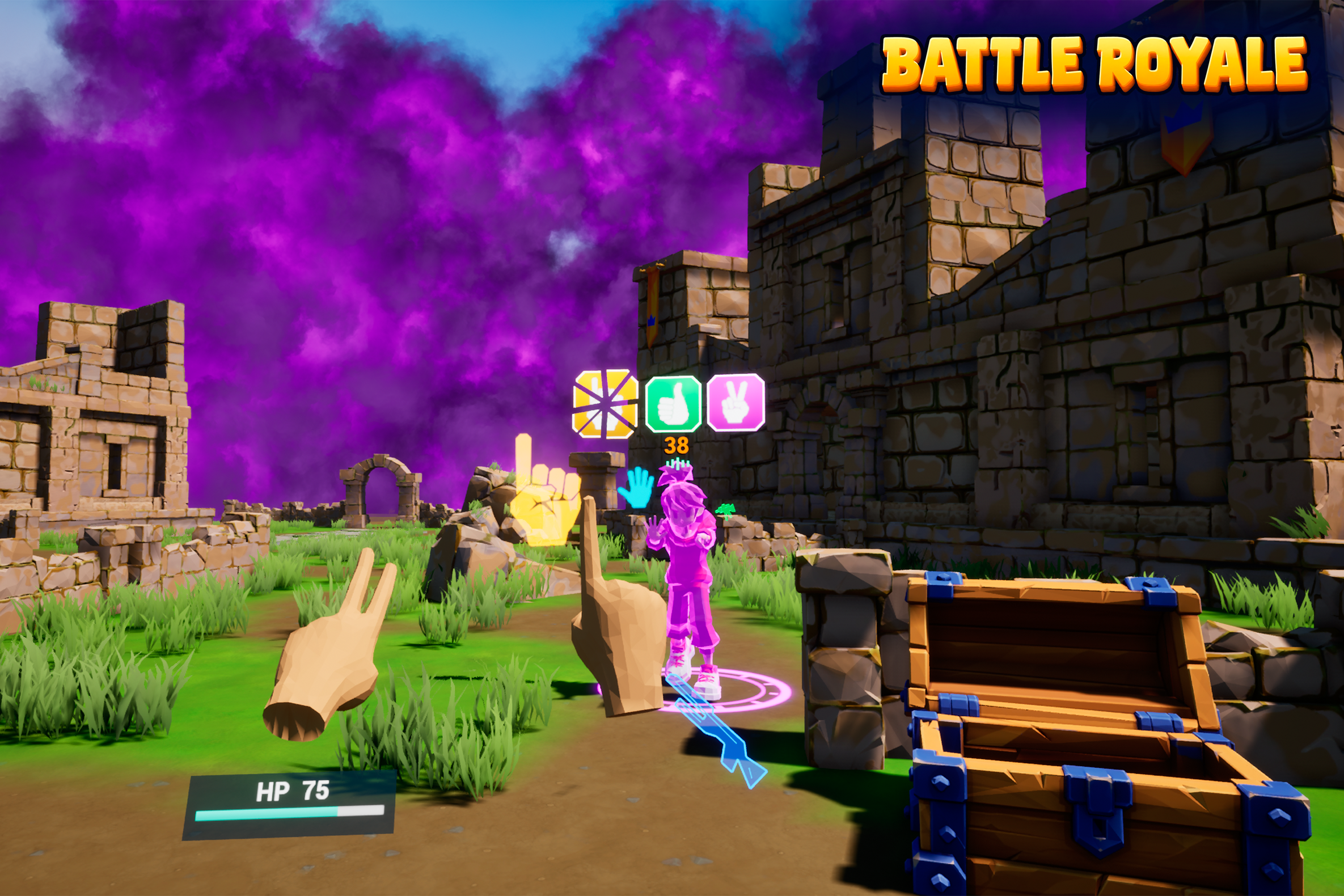
Battle Royale (planned) - Find better gear, stay inside the shrinking safe zone, and fight to be the last survivor
-
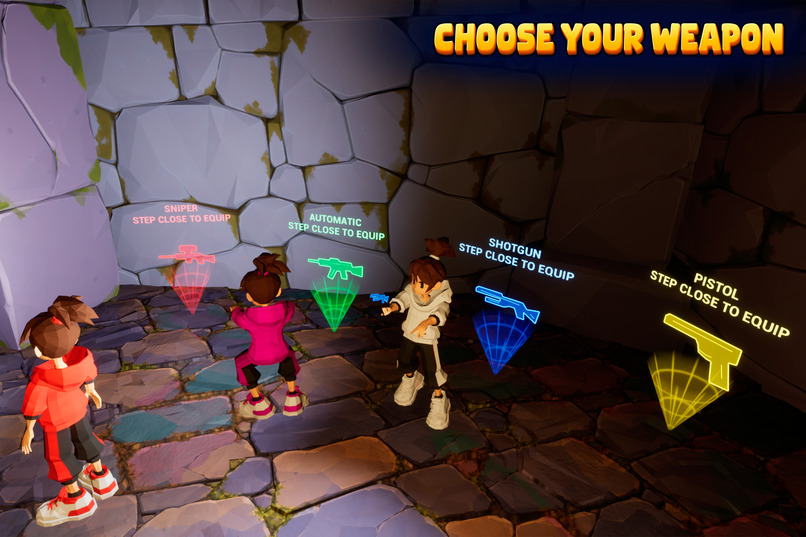
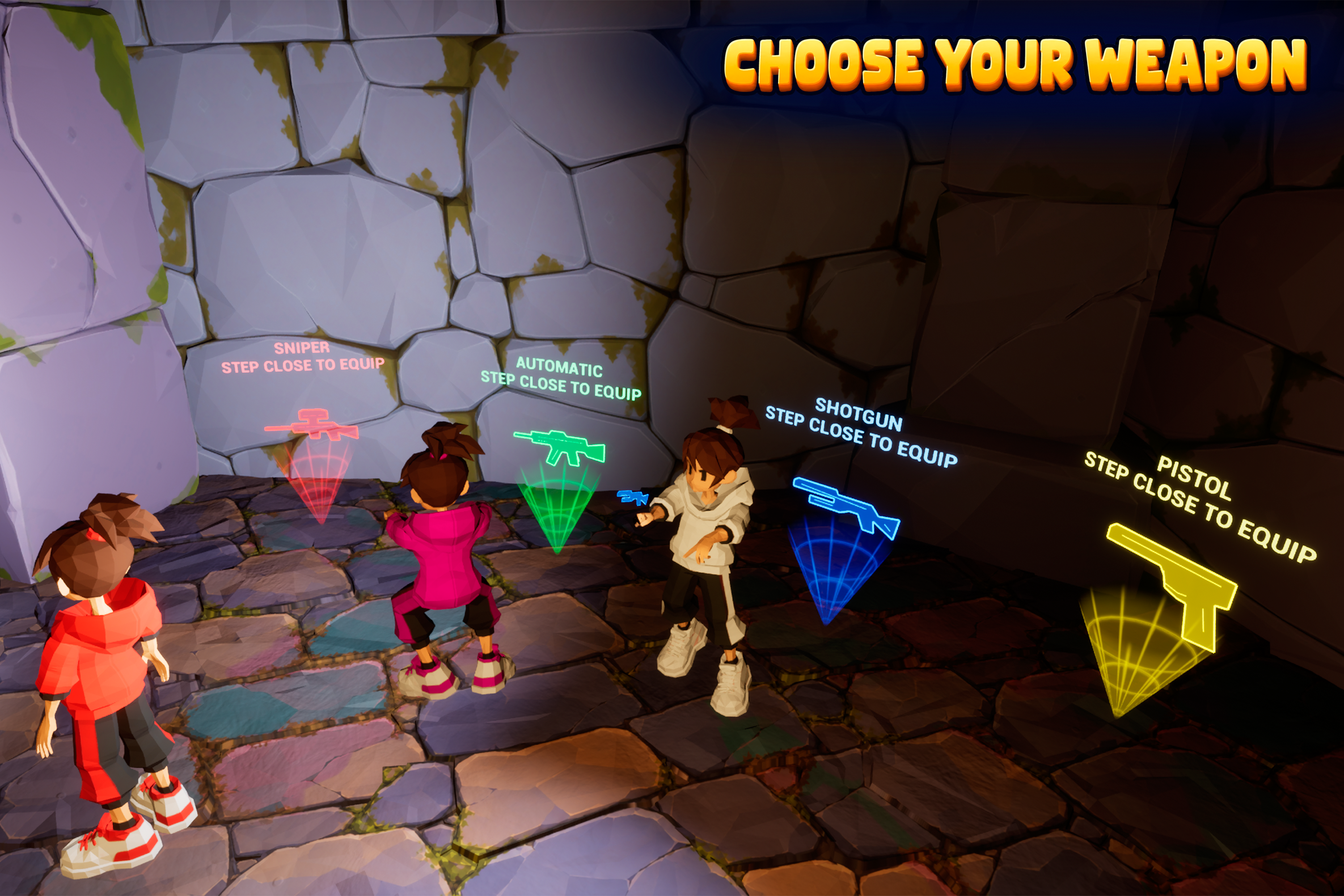
Choose Your Weapons - Equip weapon rings with different damage, range, and gesture hold times to suit your playstyle
-
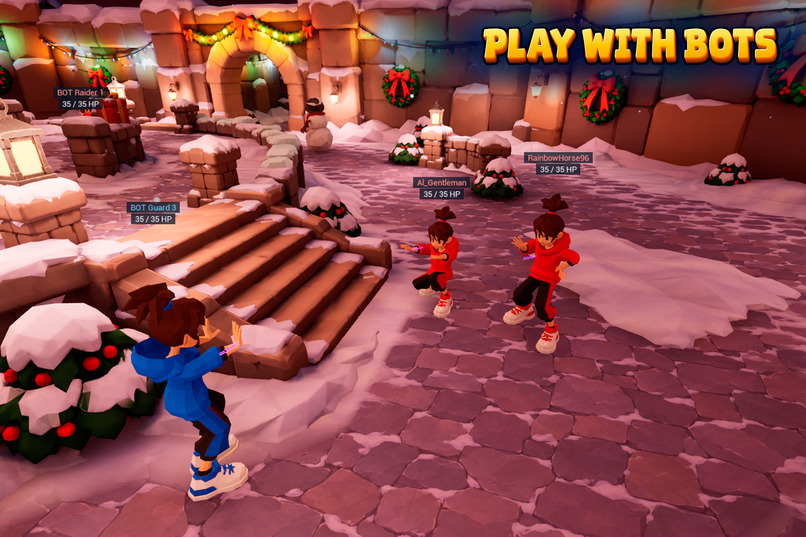
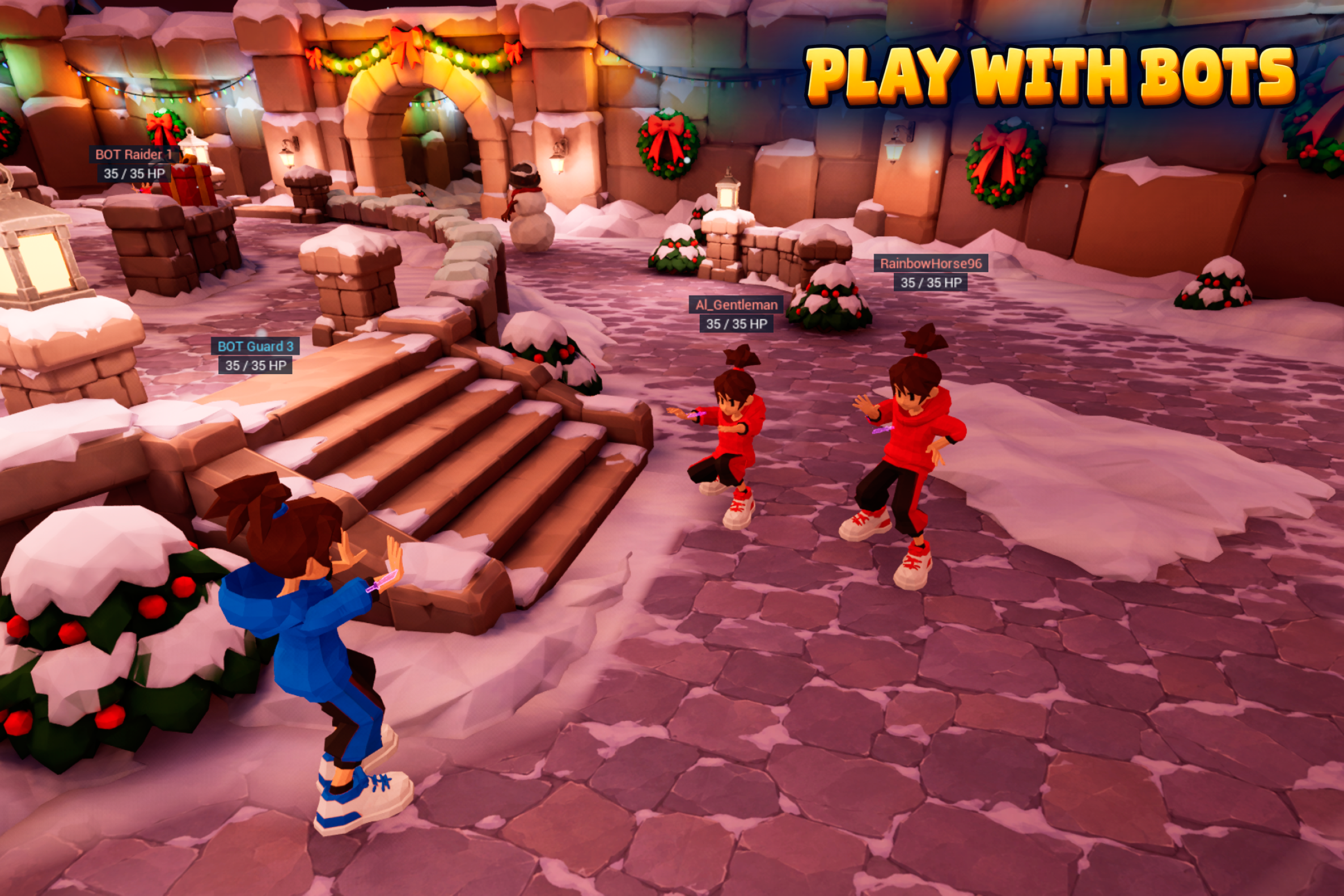
Play With Bots - Play solo or with friends while bots fill the remaining slots. Choose a difficulty that suits you
-
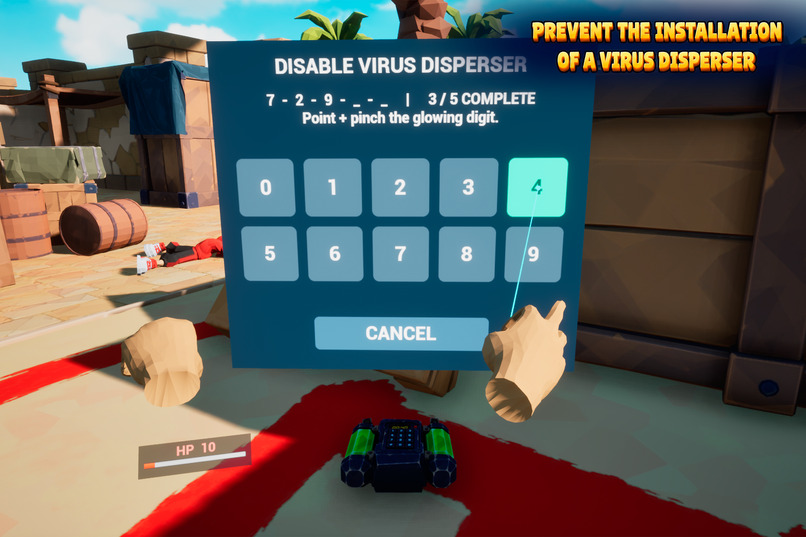
Stop the Virus Disperser - Prevent the enemy from planting the device, or disable it with pinch gestures before it activates
Inspiration
We wanted to bring the excitement of competitive matches and cooperative survival into a VR game built around hand gestures. We drew inspiration from the team battles of Counter-Strike and the fight against hordes in Left 4 Dead.
At the heart of Gesture Royale is our own combat system designed specifically for hand tracking. Our goal was to make gestures the foundation of a multiplayer action game, with movement, combat, and interactions all controlled by the player's own hands.
What it does
Gesture Royale is a multiplayer VR action game controlled entirely with your own hands. You use gestures to attack, move, turn, and interact with the interface. No controllers are required.
Gesture symbols appear above opponents. To attack, you focus on a target with your gaze and form the required gesture with your right hand. Your left hand controls movement and turning.
Weapons are represented by rings with holographic icons. The selected weapon type changes damage, gesture hold time, and effectiveness at different distances. This makes gesture accuracy, positioning, and weapon choice central to combat.
The game features six modes:
- Deathmatch — free-for-all combat, quick respawns, and a fight for first place.
- Virus Disperser — team rounds built around planting and disabling a virus disperser. Players interact with its keypad using pinch gestures.
- Zombie Expedition — cooperative progression through a location featuring zombie hordes, safe zones, teammate revivals, and a final boss.
- Gun Game — players advance through weapon stages by earning kills, culminating in a final grenade kill.
- AWP — team-based sniper rounds where precise aiming and keeping the target in focus are especially important.
- Knives — close-range team battles where a single successful strike decides the encounter.
Players can join friends, find other players through the server browser, or play matches with bots. Spatial voice chat lets them communicate directly during gameplay.
How we built it
The project was developed in Unreal Engine for Meta Quest 3 and Quest 3S. We implemented gameplay gesture recognition, online multiplayer through Epic Online Services, bots, an interactive tutorial, and a replay system.
The game went through a continuous development-and-testing cycle on Meta Quest 3 headsets, including testing in matches. Feedback from these sessions guided changes to controls, combat, interfaces, and onboarding.
We repeatedly tested the tutorial with people unfamiliar with the game and revised it based on their actual experiences.
Challenges we ran into
One of our biggest challenges was combining fast-paced combat with the limitations of hand tracking. We had to account for hands moving out of tracking range, differences in how people perform the same gesture, and the comfort of interacting with objects.
Network latency and performance on a standalone headset also required particular attention. We spent considerable time tuning the controls for comfortable play both seated and standing to accommodate different player preferences.
Teaching players was just as important. Tests showed that even mechanics that seemed clear to us as developers could be confusing. A player might try to attack with their left hand, struggle to understand a pinch interaction, or fail to notice that the path forward had opened.
We repeatedly revised the tutorial, adding animated hands, visual demonstrations, sequential tasks, and contextual guidance.
Accomplishments that we're proud of
We are proud of building a multiplayer action experience in which hand tracking supports the entire gameplay loop: movement, combat, weapon switching, grenade handling, and menu interactions.
We brought the same gesture-based combat system into six different modes, covering competitive matches and cooperative zombie survival. Players can experience these modes together or practice with bots.
We are especially proud of the progress made through testing with new players. Their feedback led to concrete improvements in the tutorial and helped us communicate unfamiliar interactions more clearly.
What we learned
Hand-based controls require their own approach to instruction and feedback. Players need to see that the game has recognized their action and understand the result.
We learned to evaluate interactions by watching how people actually use them, including whether they play seated or standing and how they naturally position their hands.
Observing new players helped us make Gesture Royale accessible to a broad audience, even though it does not rely on traditional input methods and instead uses body and hand tracking exclusively.
What's next for Gesture Royale
We plan to give players tools to create their own mods and game modes that can run on community-hosted Gesture Royale servers. Creators will be able to design their own rules, objectives, gameplay interactions, and match logic, building on our core system of entirely gesture-based controls. This will allow the community to create new gameplay experiences within Gesture Royale and share them with other players.
One major planned addition is a Battle Royale mode. Players will explore the map, search for increasingly effective weapons and equipment, and fight to survive. A shrinking safe zone will keep them moving, bring opponents together, and force decisions about when to engage and when to retreat.
We also plan to conduct larger-scale playtests with new players. We want to understand which mechanics and modes people enjoy most, what causes confusion, and which aspects need refinement. These findings will help guide our development priorities.
Another area we want to expand is cooperative play, with new enemies, events along the route, and team objectives that encourage players to work together. We want repeat playthroughs to offer more variety, giving teams different situations to face and reasons to adapt their tactics.
Built With
- 3ds-max
- c++
- marmoset-toolbag
- mixamo
- photoshop
- subtance-painter
- unreal-engine
- vegas-pro


