-
-
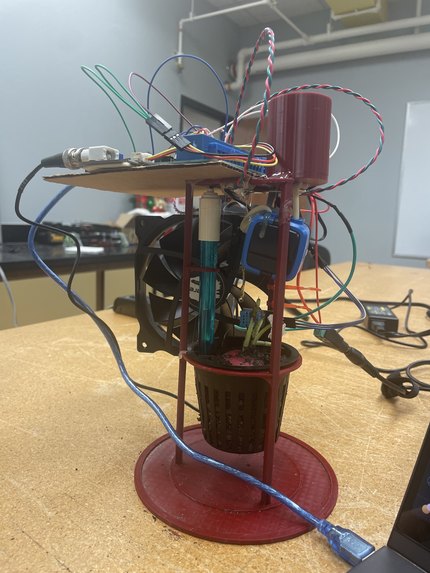
Germination Station
-
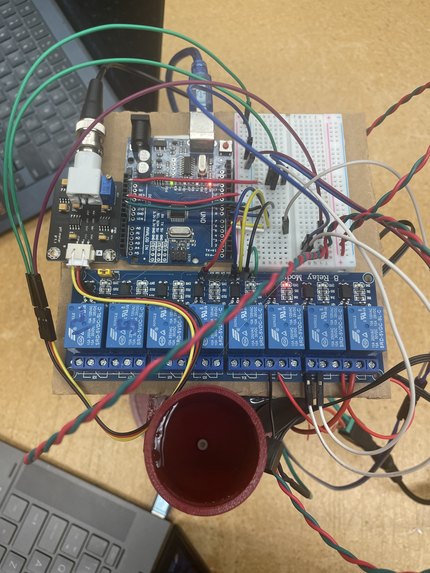
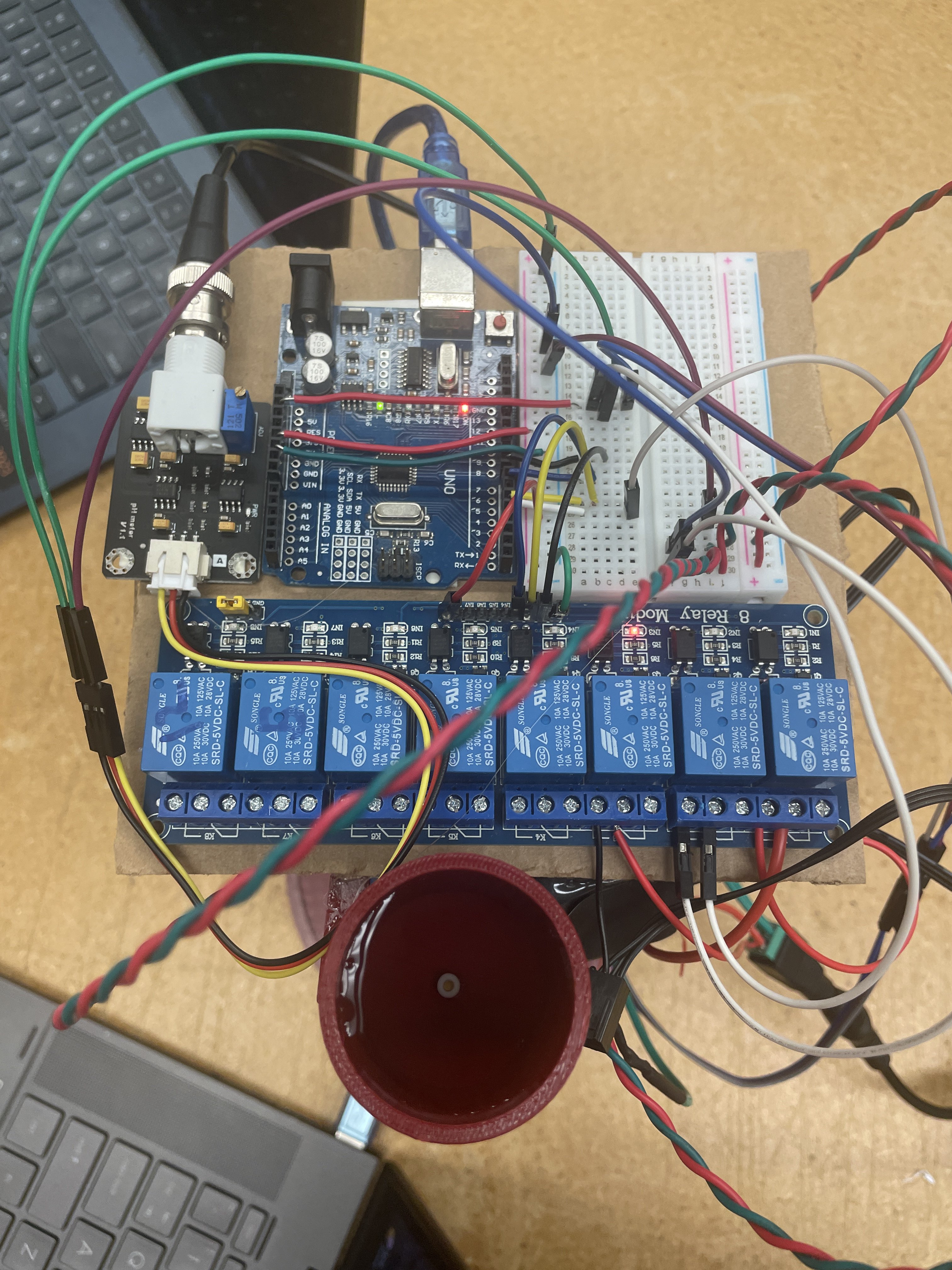
Our electronics
-
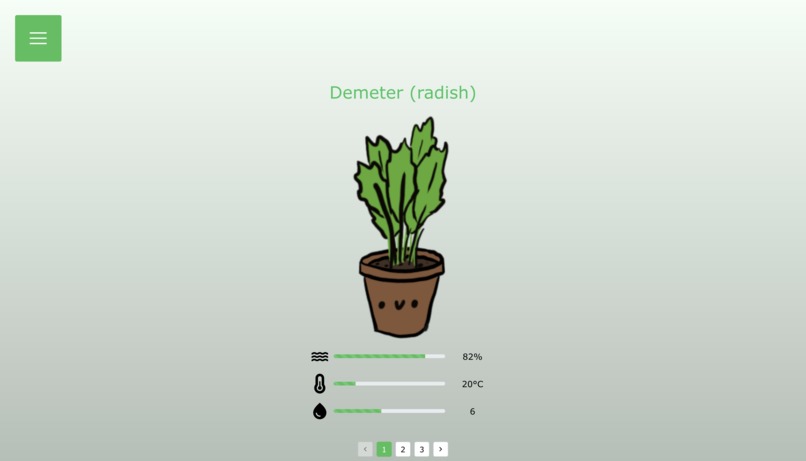
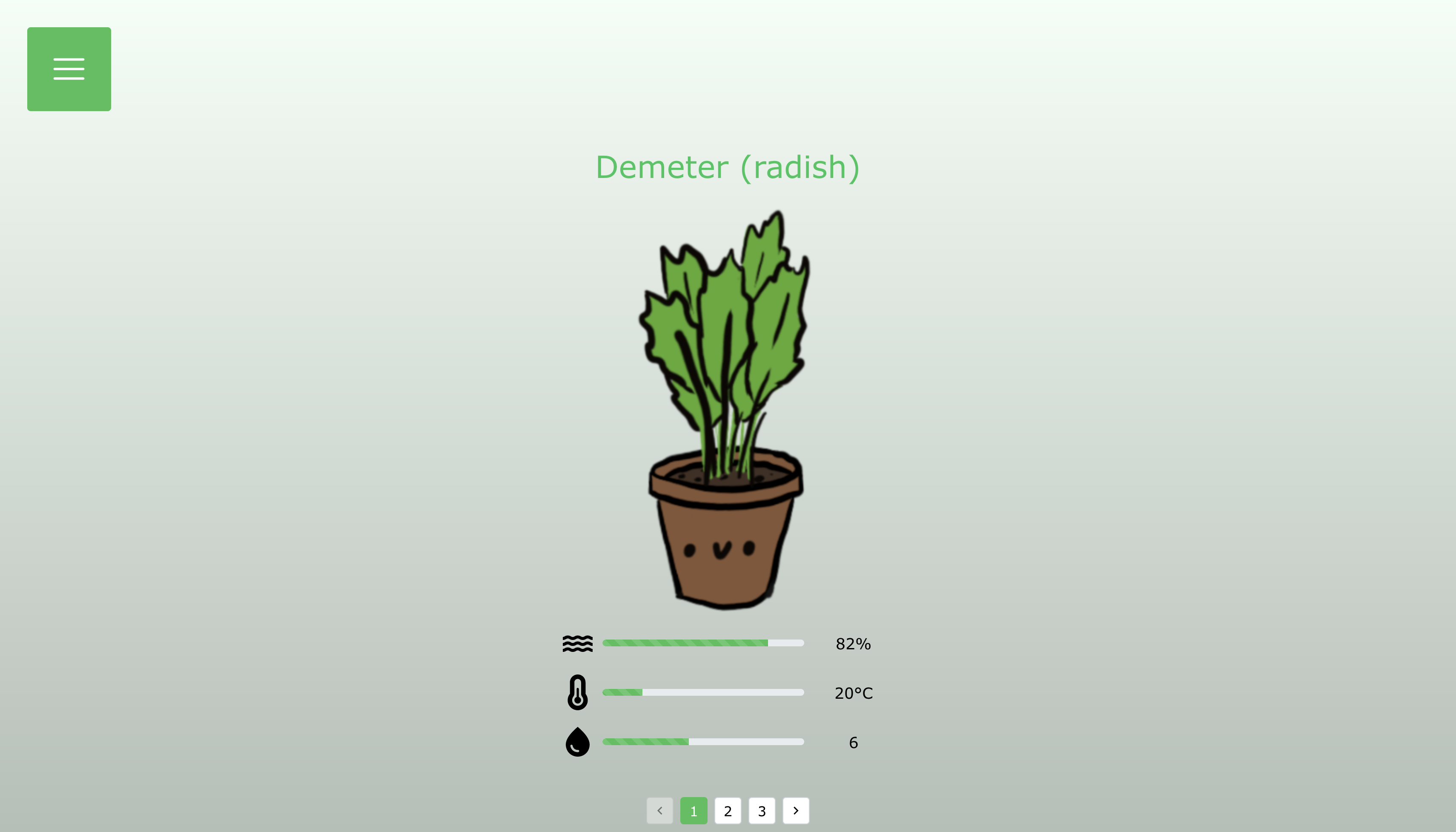
A happy radish on our website
-
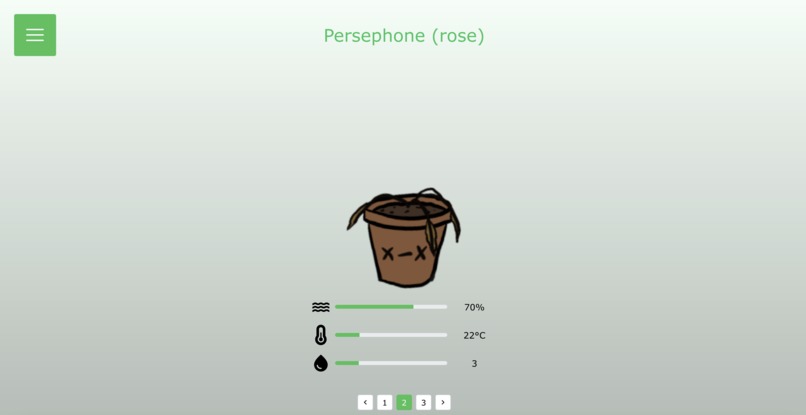
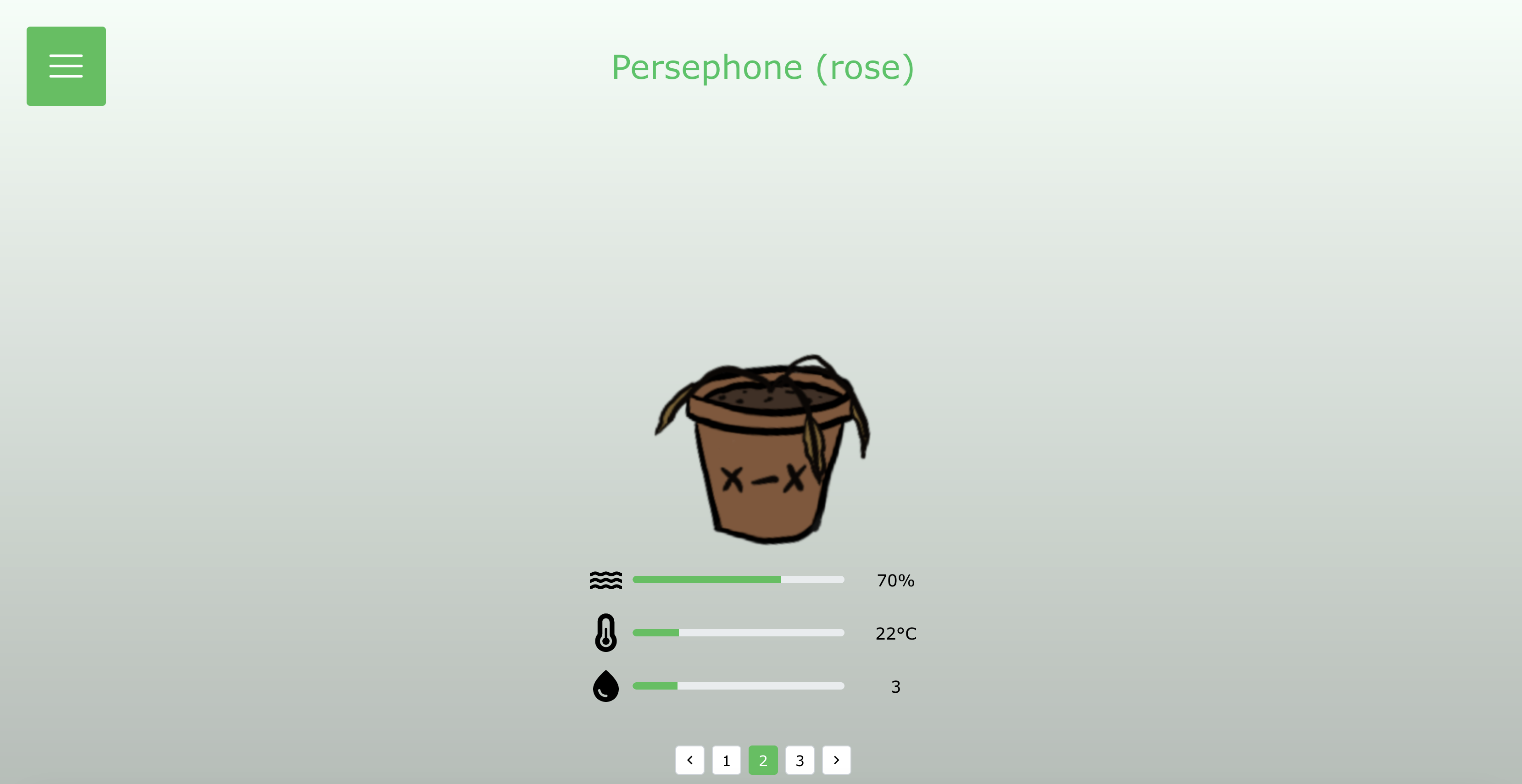
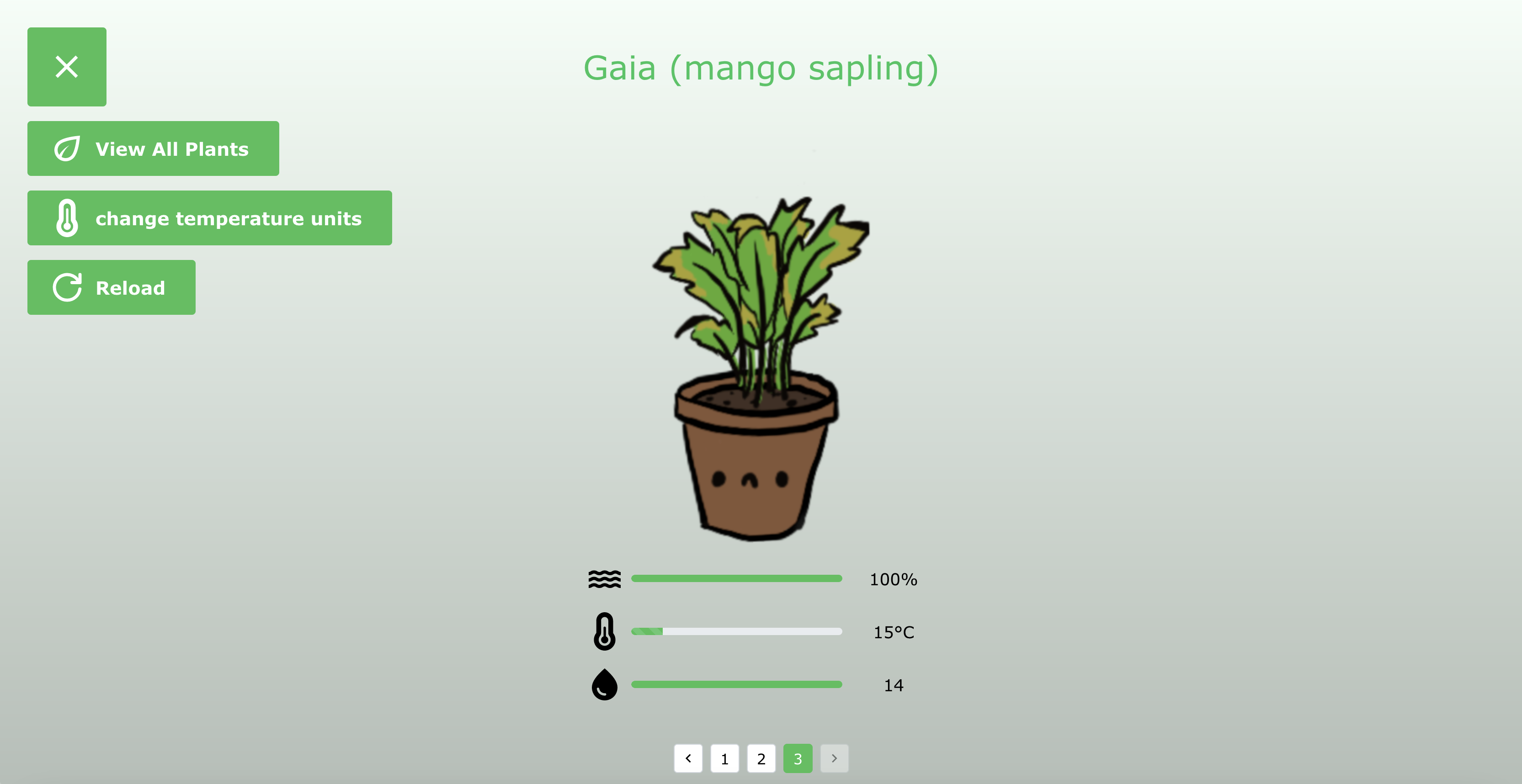
Website functionality for additional plants
-
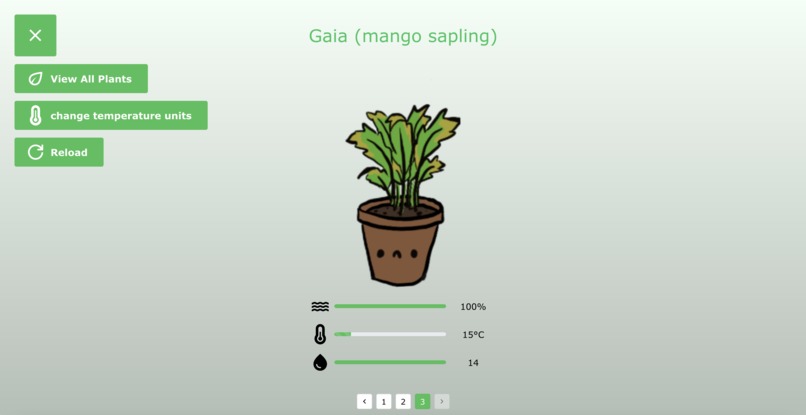
A slightly unhappy plant
Inspiration
Growing your own vegetables can be hard, especially if you don't have a green thumb. We wanted to make a robot that makes it easy to grow your own radishes.
What it does
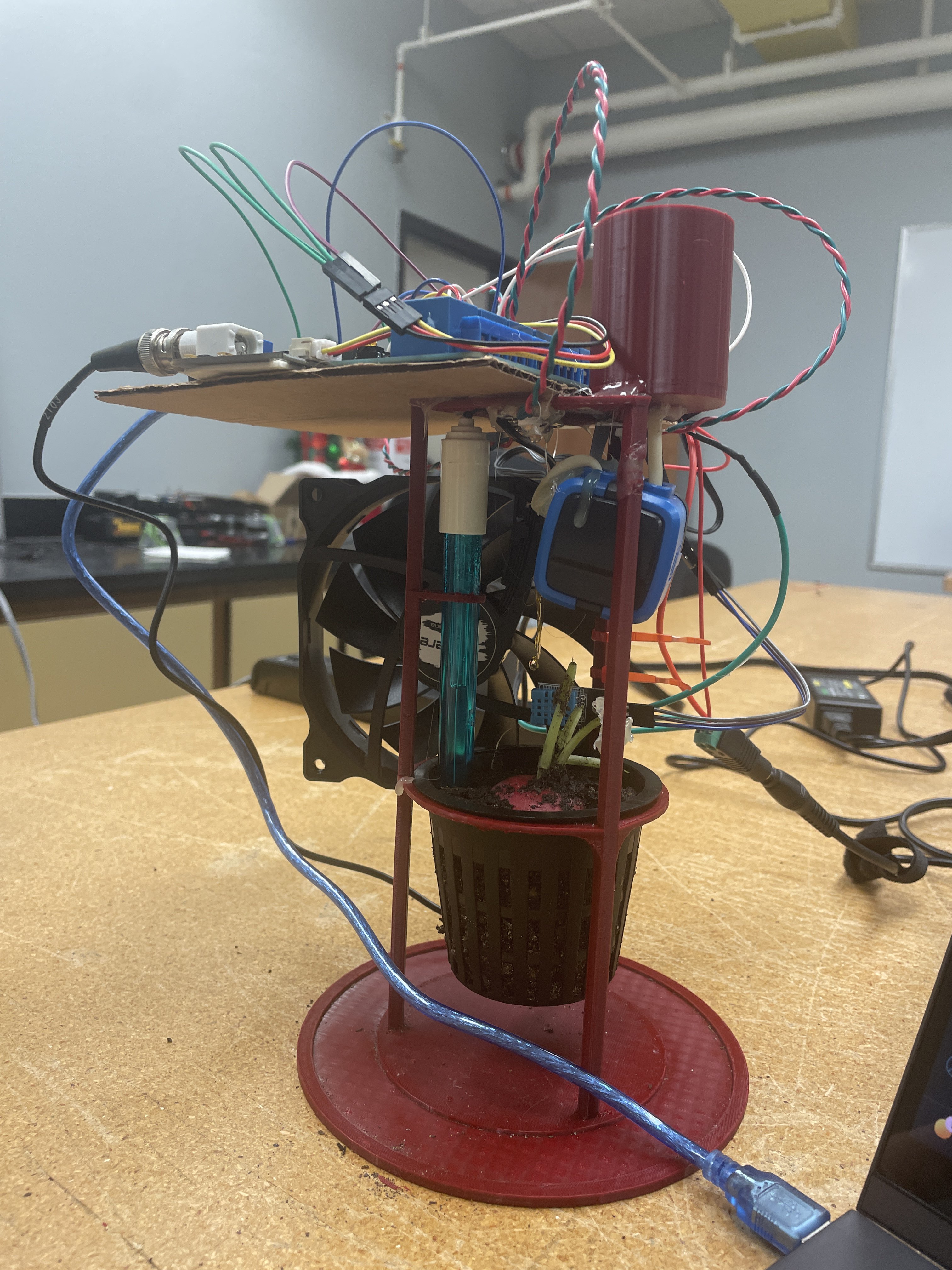
Germination Station automatically waters your radish from a small reservoir and provides full-spectrum lighting. By using a soil pH meter and a temperature and humidity sensor, a website monitors the health of your radish. If your radish is unhealthy, the website will alert you. Germination Station can even step in and help out. Humidity too high? Water flow is decreased. Temperature too high? The lights are turned off and the fan turns on to cool down your plant.
How we built it
We used an Arduino Uno and relay module to control small full spectrum LED lights, a pH meter, DHT11 temperature/humidity sensor, PC fan, and water pump. We made a CAD model of and 3D printed a frame to hold our radish basket, with a drip tray underneath for water drainage and small water reservoir on top.
Using React and Mantine, we developed a website that displays the humidity, temperature, and soil pH of your radish as well as its status.
Challenges we ran into
We had some issues with getting the lights, fan, and water pump to run on the correct cycle with our Arduino code, but we were eventually able to get everything working as planned. We also developed a website to connect to the Arduino, but since we were not able to get a WiFi module, we could not yet implement WiFi connectivity from our robot to the website. Additionally, the PC fan we used was unmarked and unbranded, so we were not sure what the voltage, current, and power ratings were. We were not able to get our fan working reliably, but everything else functions as intended.
Accomplishments that we're proud of
We're proud of creating a system with multiple outputs (fan, water pump, lights, etc) that can react to multiple inputs in the span of only 24 hours. We're glad we were able to put together a mini version of our robot idea with nearly all functionality implemented—if we had a WiFi module, we could have full connectivity to our locally hosted website.
What we learned
Documentation is very important—we may not have run into as many issues with the fan if we were using a part that was marked and well-documented. We also learned the importance of not exceeding LED voltage limits, even by a little bit. Even if it appears the LED is within the acceptable power rating, LEDs draw exponentially more current as you increase the voltage, which can not only break your lights, but potentially your power source as well.
What's next for Germination Station
We want to finish implementing WiFi functionality and scale up our design to work with other types of plants and more plants in the robot. We'd like to make it look more professional, and eventually make it a completely closed system to eliminate variables such as the conditions of the room Germination Station is placed in.

Log in or sign up for Devpost to join the conversation.