-
-
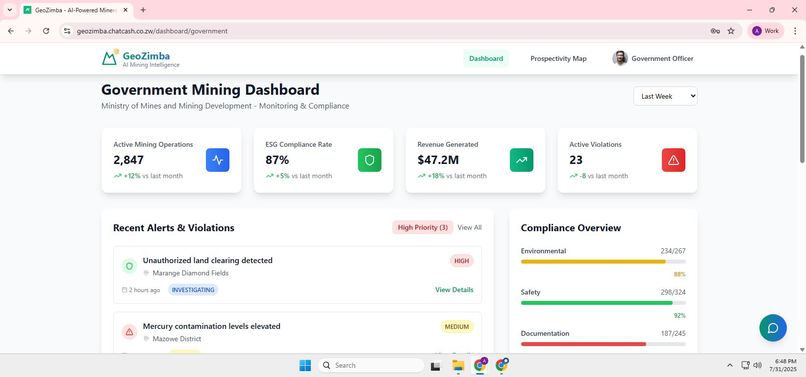
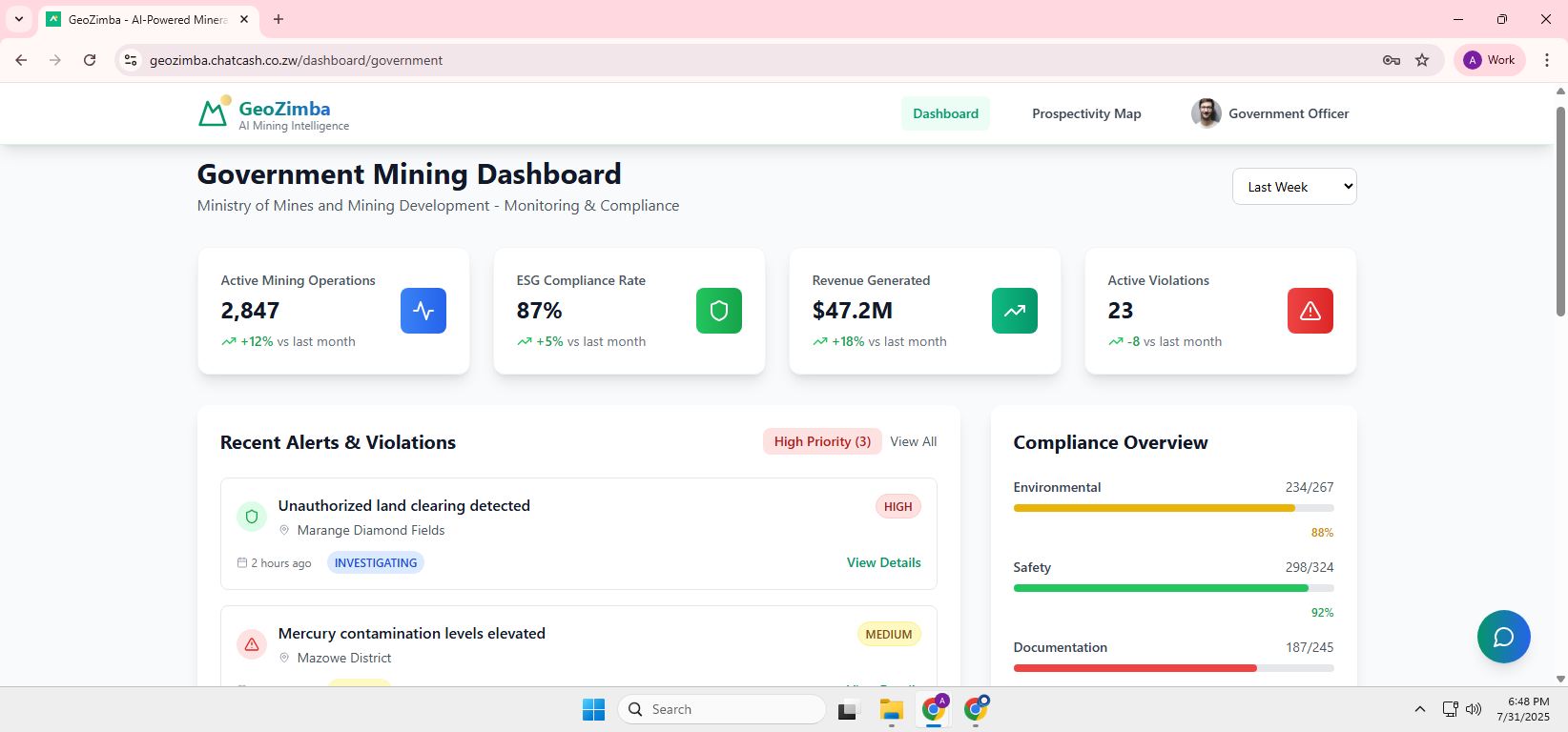
Government dashboard
-
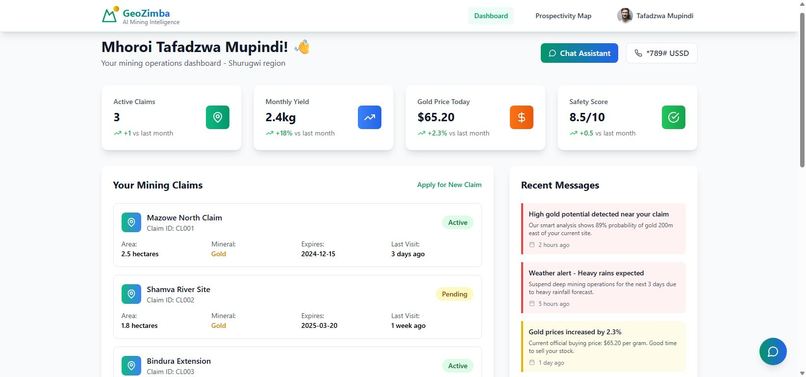
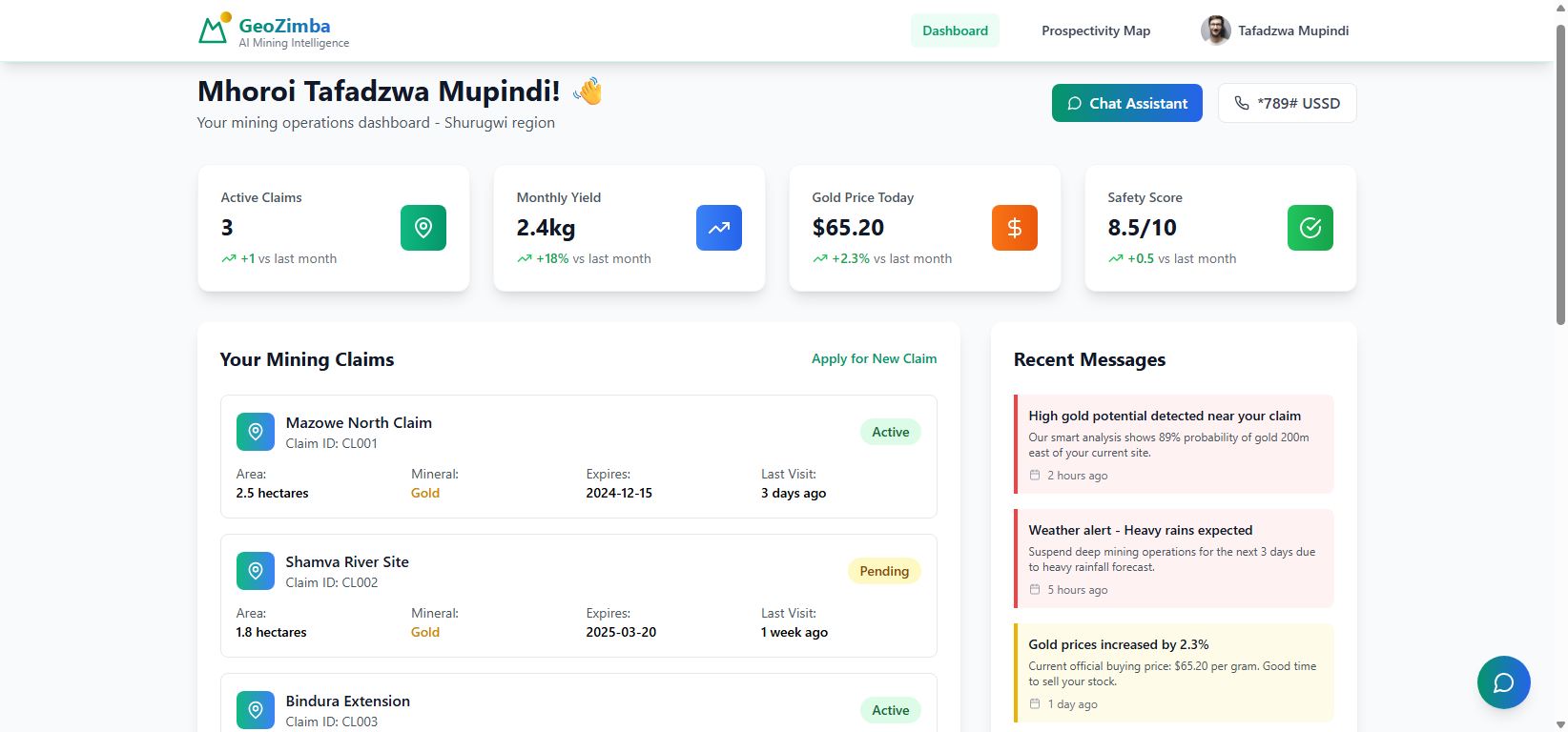
Artisinal miner dashboard
-
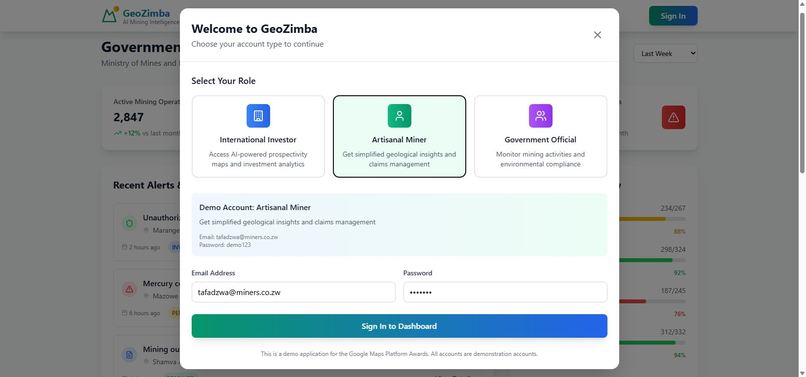
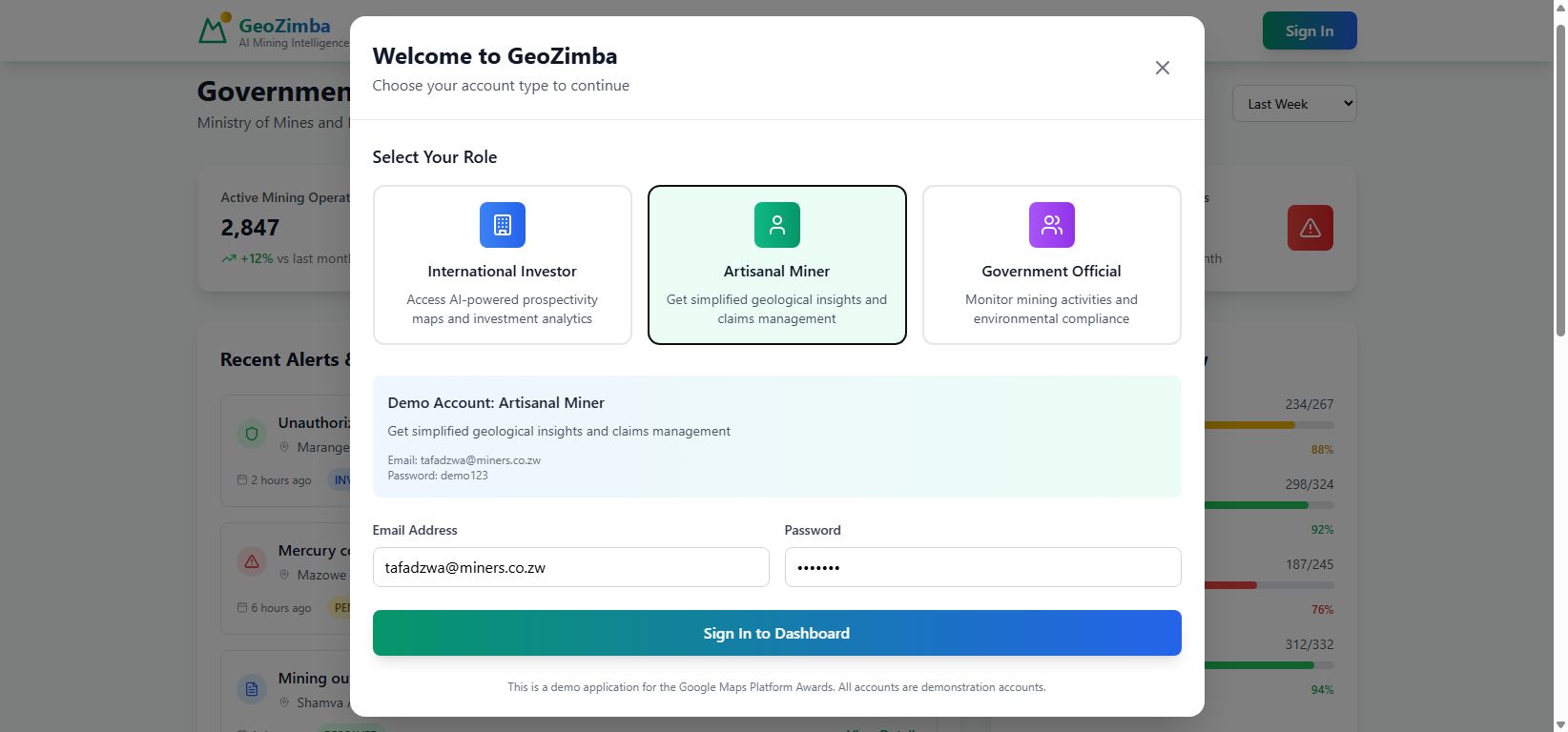
User types
-
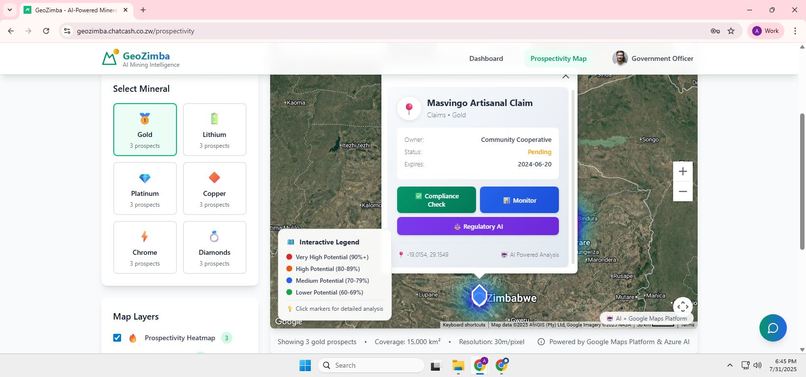
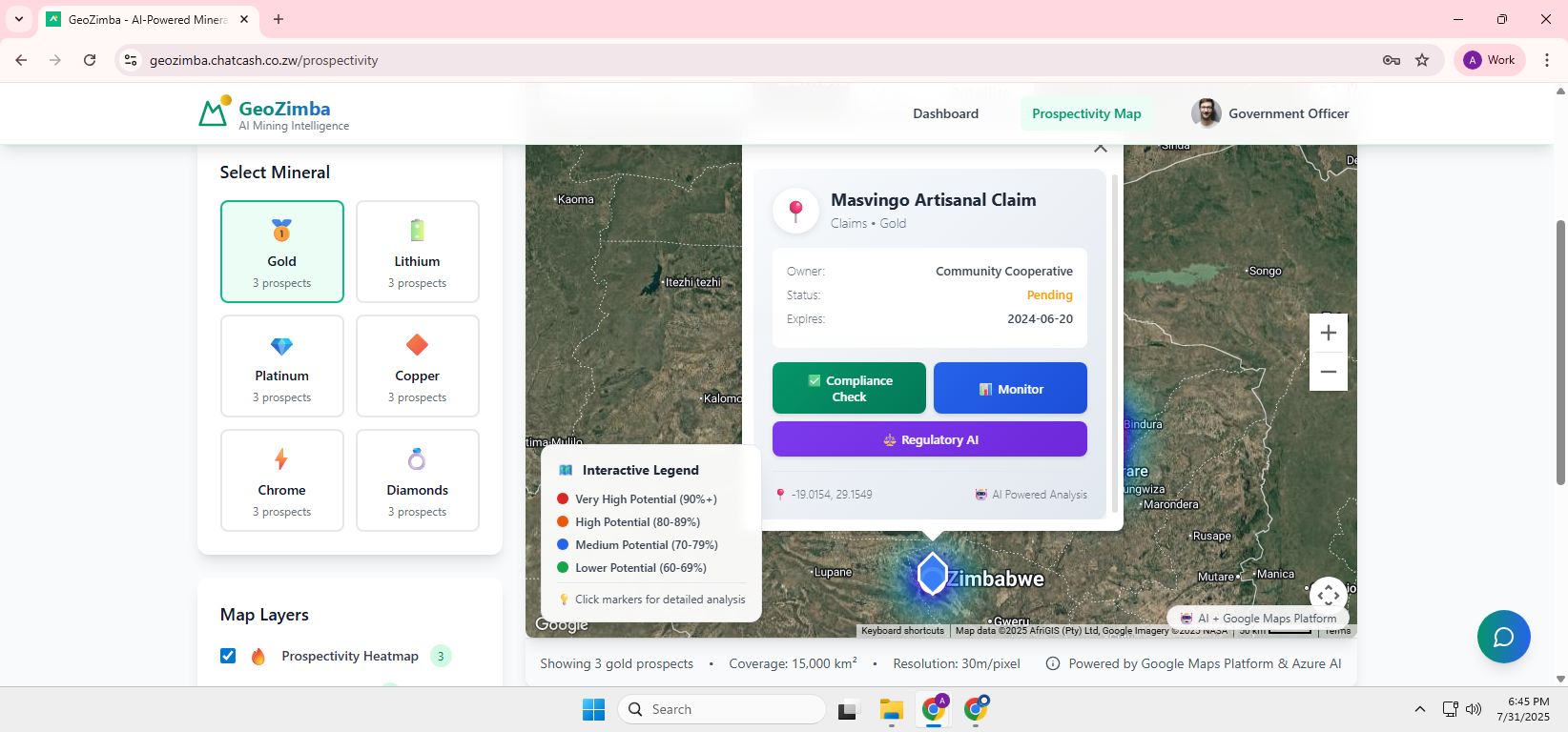
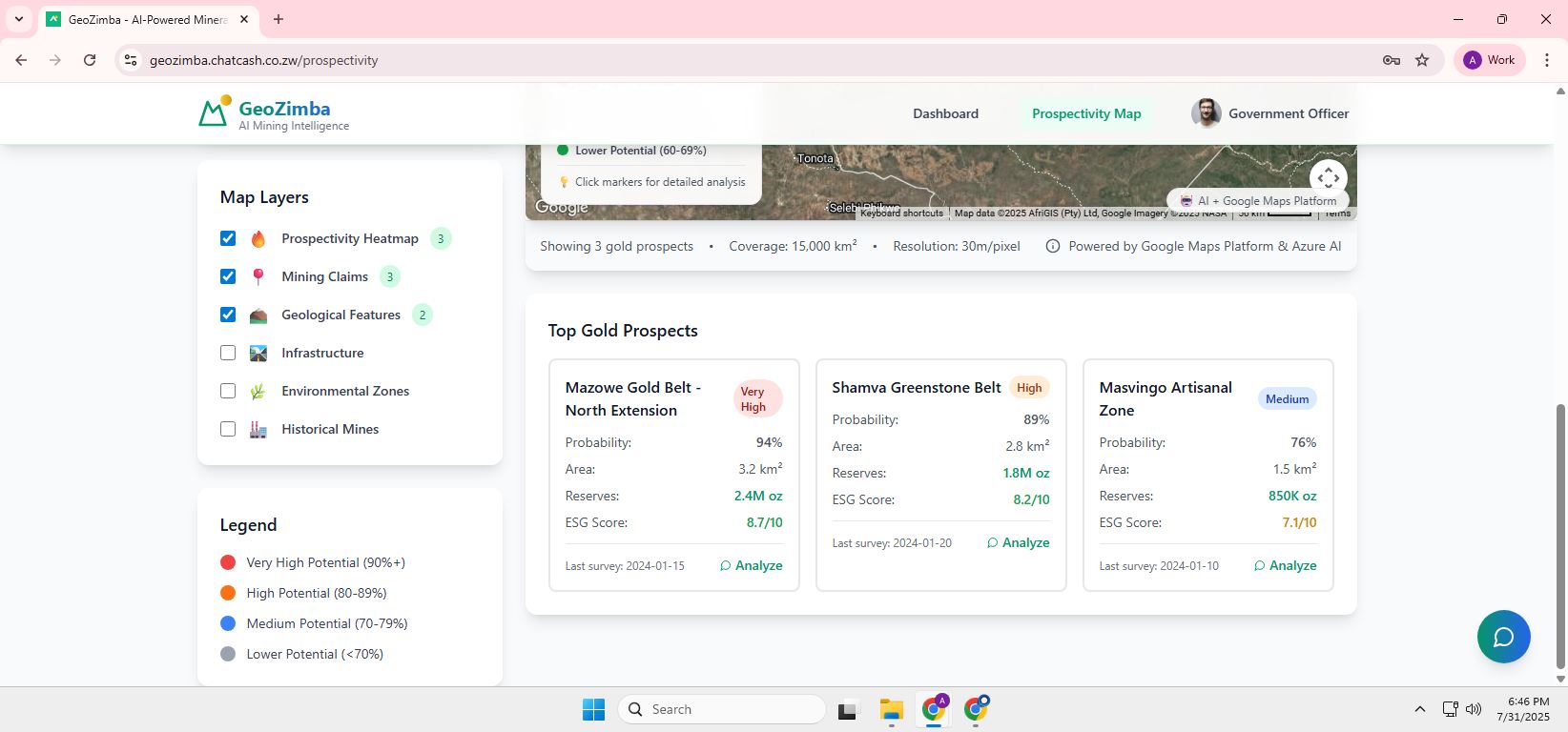
Prospectivity mining map
-
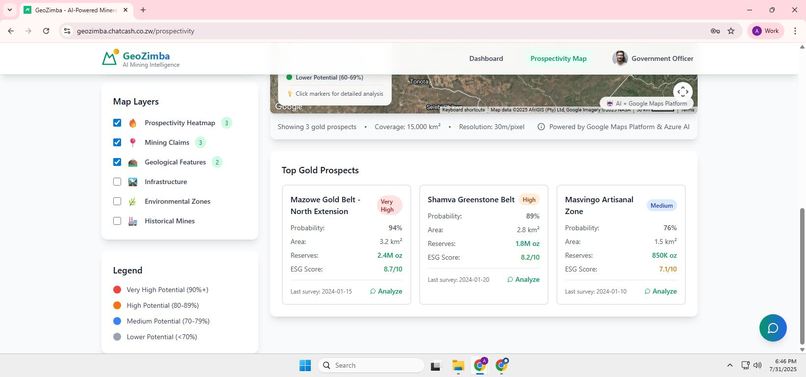
Mining map layers
GeoZimba - Devpost Submission
Inspiration
Zimbabwe is incredibly rich in mineral resources, yet traditional exploration methods are often expensive, time-consuming, and inaccessible to many. We were inspired to democratize access to critical geological and mining intelligence, leveraging the power of AI and advanced mapping technology. Our goal was to create a platform that not only helps large investors identify high-potential deposits but also empowers artisanal miners with vital information and assists government bodies in effective oversight and sustainable resource management. The Google Maps Platform, with its robust geospatial capabilities, was the natural choice to visualize this complex data and bring our vision to life.
What it does
GeoZimba is an AI-powered mineral exploration platform designed to revolutionize how Zimbabwe discovers, manages, and develops its vast mineral wealth. It provides a comprehensive, interactive mapping and intelligence dashboard tailored for three key user groups:
- International Investors: Access AI-powered prospectivity maps, investment analytics, and ESG compliance reports to identify high-potential mineral deposits and make informed investment decisions.
- Artisanal Miners (ASM): Get simplified geological insights, real-time gold prices, claim information, safety advice, and directions to high-potential areas, empowering them with critical knowledge.
- Government Officials: Monitor mining activities, track environmental compliance, manage applications, and gain regulatory insights through real-time data and alerts.
The platform integrates AI-driven analysis with interactive Google Maps, offering dynamic heatmaps, custom markers with rich info windows, and a conversational AI assistant to provide tailored insights and actions for each user role.
How we built it
GeoZimba is built as a modern React application using TypeScript, bundled with Vite for a fast development experience, and styled with Tailwind CSS for a clean, responsive UI.
- Frontend Foundation: We used React for the user interface, with React Router DOM handling navigation between different dashboards and the main prospectivity map.
- Mapping Core: The heart of GeoZimba is its integration with the Google Maps Platform. We extensively utilized the Maps JavaScript API to create a highly interactive map, featuring custom markers with unique shapes and colors for different data layers (claims, geology, infrastructure, environmental zones, historical mines). The Visualization Library was crucial for generating dynamic heatmaps that visually represent mineral prospectivity based on AI analysis.
- Data Integration (Simulated AI): While a full-scale AI backend was beyond the scope of the hackathon timeframe, we implemented a robust simulation of AI-powered data. Our chat interface provides intelligent, context-aware responses based on user roles and queries, mimicking real-time insights from geological models. Prospectivity data, ESG scores, and investment metrics are dynamically generated to showcase the potential of such an integration.
- Role-Based Experience: We designed distinct dashboards and interactive elements for Investors, Artisanal Miners, and Government Officials. This involved creating custom info windows for map markers that display relevant actions and information tailored to each user's needs, enhancing usability and relevance.
- Interactive Elements: Custom components were developed for charts, data cards, and a dynamic chat interface, all designed to provide a seamless and engaging user experience.
Challenges we ran into
Our journey was not without its challenges:
- Performance at Scale: Rendering a large number of custom markers, each with unique styling and interactive info windows, alongside a dynamic heatmap, posed significant performance challenges. We overcame this by optimizing marker creation, leveraging Google Maps'
optimized: falsefor custom icons, and carefully managing state updates to ensure a smooth user experience. - Complex Data Visualization: Translating multi-dimensional data (geological probability, investment requirements, ESG scores) into clear, intuitive visual elements on a map was complex. We iterated on custom info window designs, color-coding, and interactive elements to make the data easily digestible for all user types.
- User Role Diversification: Crafting distinct yet cohesive experiences for three very different user personas within a single application required careful design and implementation. Ensuring that each role received relevant information and actions on the map and in the chat was a continuous refinement process.
- Google Maps API Nuances: Deeply understanding and effectively utilizing the various features of the Google Maps Platform, from custom SVG paths for markers to the intricacies of the Visualization Library, required dedicated effort and experimentation.
Accomplishments that we're proud of
We are incredibly proud of several key accomplishments:
- Creating a truly interactive and innovative map experience: The dynamic custom markers, rich info windows with user-specific actions, and seamless heatmap integration demonstrate the power of Google Maps Platform in visualizing complex data.
- Developing a multi-faceted platform: Successfully designing and implementing tailored dashboards and functionalities for three distinct user roles (investors, artisanal miners, government) within a single application, addressing diverse needs.
- Simulating advanced AI capabilities: Effectively showcasing the potential of AI in mineral exploration and management through intelligent chat responses and data-driven insights, even without a live AI backend.
- Building a visually appealing and responsive UI: Leveraging Tailwind CSS to create a modern, clean, and responsive user interface that provides an excellent experience across devices.
- The potential for real-world impact: We believe GeoZimba has the potential to significantly contribute to sustainable and equitable mineral resource management in Zimbabwe, empowering various stakeholders.
What we learned
Building GeoZimba was a profound learning experience. We delved deep into the intricacies of integrating AI-driven insights with interactive geospatial data, discovering innovative ways to render complex datasets on a map without compromising performance. We learned the importance of tailoring user experiences for diverse stakeholders – from sophisticated investors to local artisanal miners – ensuring the platform was intuitive and valuable for each. Mastering the Google Maps Platform APIs, especially for custom markers, dynamic info windows, and the Visualization Library for heatmaps, was key to achieving the rich, interactive experience we envisioned. We also gained significant insights into optimizing map performance with numerous custom elements and managing application state efficiently in a React environment.
What's next for GeoZimba
The future of GeoZimba is bright and full of potential:
- Real-time Data Integration: Connecting to actual geological, satellite, and market data sources to provide truly live insights.
- Advanced AI/ML Models: Implementing more sophisticated machine learning models for predictive analytics, anomaly detection, and more precise prospectivity mapping.
- Mobile Application: Developing native mobile applications for Android and iOS to provide on-the-go access, especially for artisanal miners in remote areas.
- Offline Capabilities: For areas with limited internet connectivity, enabling offline access to maps and essential data.
- Community Features: Expanding features for artisanal miners, such as peer-to-peer knowledge sharing, cooperative formation tools, and direct market access.
- Regulatory Compliance Automation: Further automating compliance checks and reporting for government officials, integrating with existing national databases.
- Expanded Mineral Coverage: Incorporating data and insights for a wider range of minerals found in Zimbabwe and potentially other regions.
- Partnerships: Collaborating with local mining associations, government bodies, and research institutions to integrate GeoZimba into existing workflows and maximize its impact.
Built With
- css
- google-maps-javascript-api
- google-maps-platform
- google-maps-visualization-library
- html
- javascript
- lucide-react
- react
- react-router-dom
- tailwind-css
- typescript
- vite


Log in or sign up for Devpost to join the conversation.