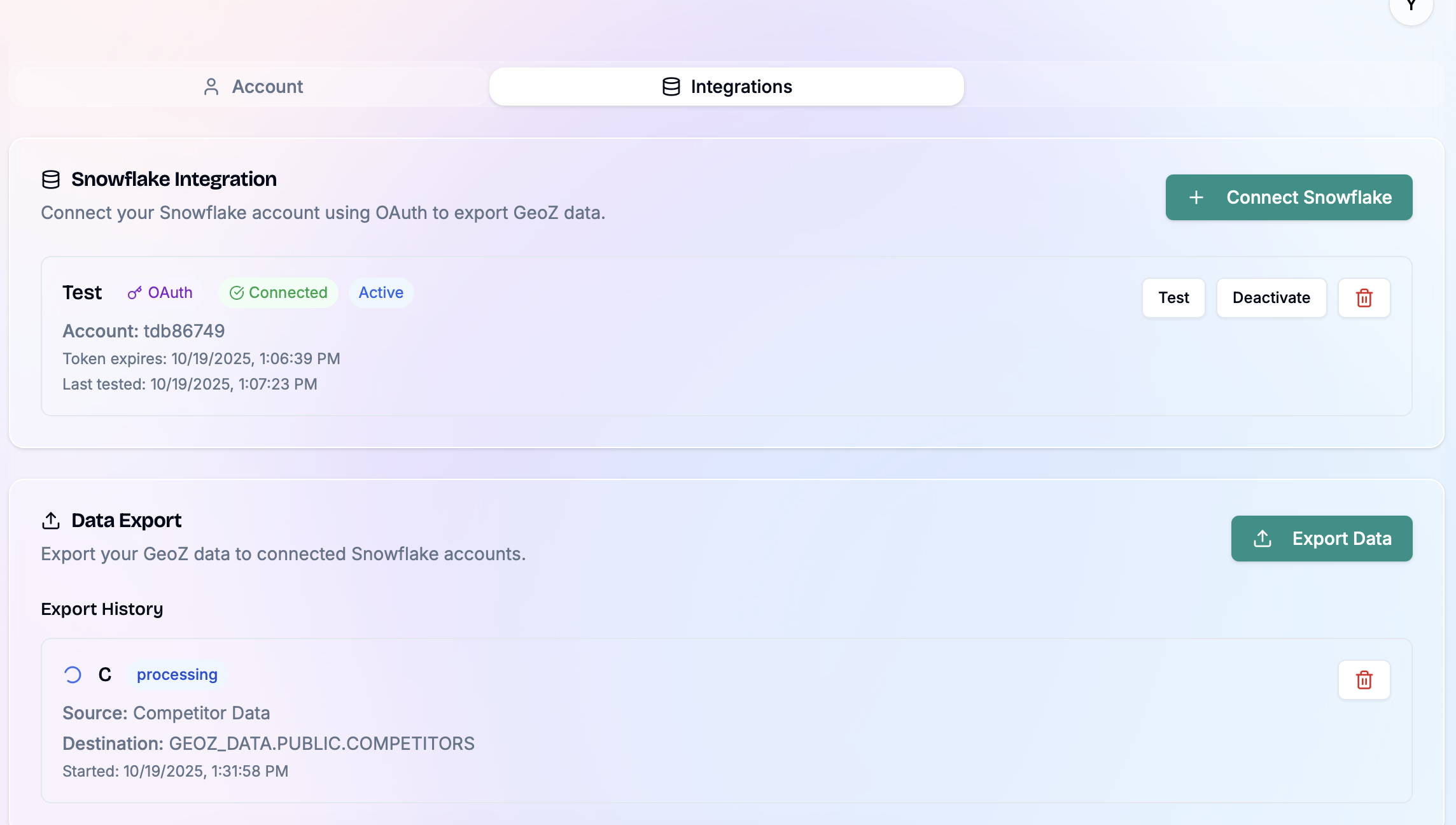
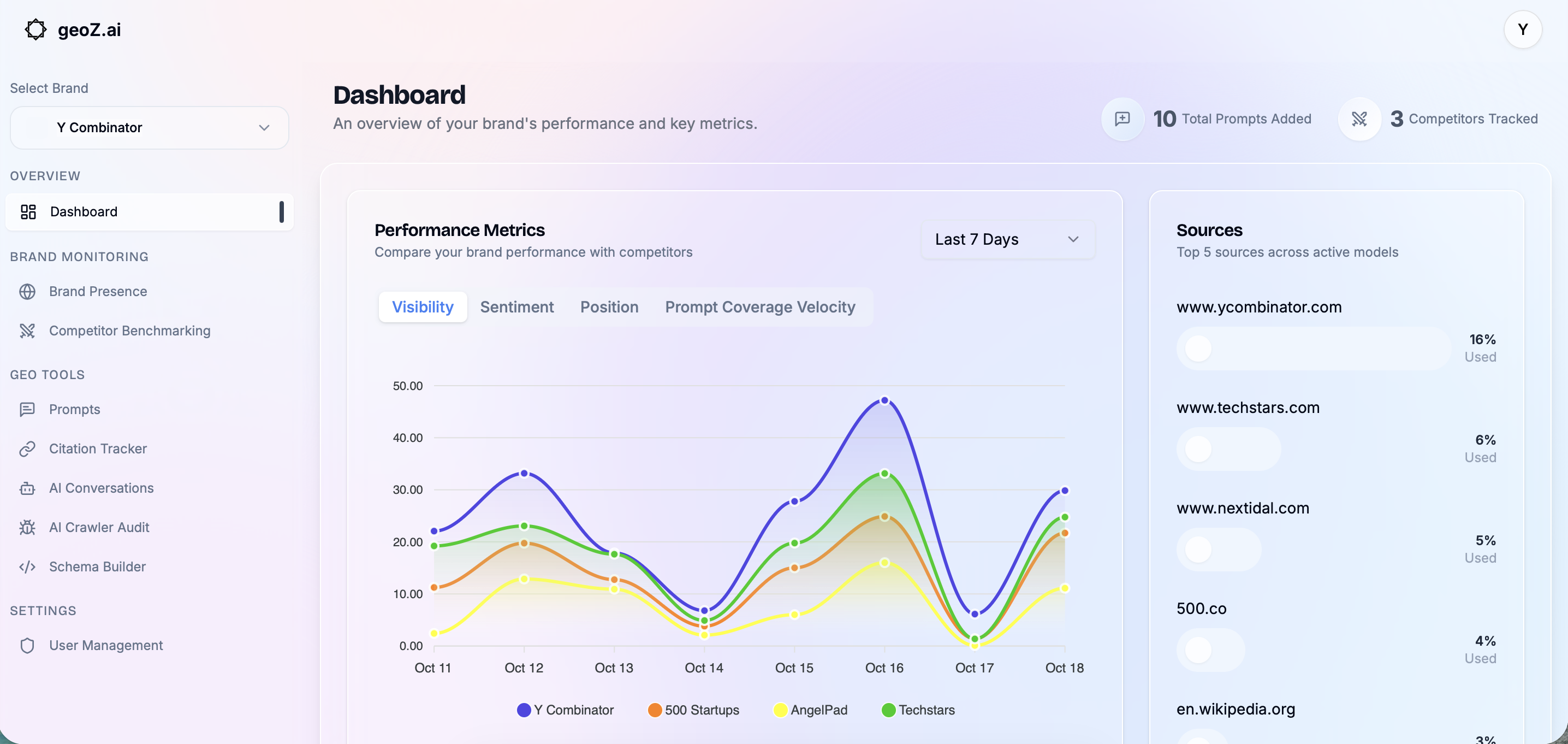
Inspiration Search is shifting to answers. ChatGPT, Perplexity, Gemini and others are now the front doors to the web—yet marketers have no analytics for how often these engines mention their brand or which sources the engines truly trust. GeoZ AI was born to give teams the “Google Search Console + GA4” they wish existed for AI answers. What it does Track AI visibility: See where and how often AI engines mention your brand vs. competitors across key queries. GEO metrics: Proprietary measures like Prompt Coverage Velocity (PCV), Weighted Source Utilization (WSU), Citation Path Depth (CPD), Topic Centrality, and more. Citation intelligence: Which sources get cited, how deep they’re referenced, and what to publish to win future citations. Conversation Explorer: Inspect answer snapshots from ChatGPT/Perplexity with cited sources and reasoning-friendly metadata. Competitor Benchmarking: Side-by-side AI mention share, coverage gaps, and playbooks to overtake rivals. Recommendations & agents: Topic-aware content briefs, schema suggestions (TechArticle/FAQPage/Speakable), and auto-experiments that predict uplift. How we built it Data layer: Supabase (Postgres, SQL functions, Edge Functions) for eventing, feature store, and fast aggregates. Acquisition: Browserless-powered collectors for ChatGPT/Perplexity runs, plus Perplexity and OpenAI APIs for controlled test queries. Analytics: PCV/WSU/CPD pipelines with topic modeling; GA4 ingestion to correlate AI exposure → site sessions. App: React + Vite front end; dashboards for mentions, citations, and metric trends; role-based workspaces. Orchestration: Agent loops (fetch → analyze → recommend → measure uplift → retune prompts). Challenges we ran into Engine variability: Different answer engines hedge, re-rank, and fan-out differently—normalizing that into apples-to-apples metrics was hard. Attribution: Connecting “AI mention” to downstream traffic required careful GA4 mapping and anti-double-counting logic. Reliable scraping & quotas: Keeping collectors stable through UI changes/rate limits and ensuring ethical, terms-compliant usage. Evaluation data: Creating a repeatable benchmark set of prompts and expected outcomes to measure uplift, not anecdotes. Schema impact measurement: Isolating the effect of TechArticle/FAQPage/Speakable changes amid concurrent edits. Accomplishments that we're proud of A new analytics category: Practical, marketer-friendly GEO metrics that go beyond vanity counts. Actionable loops: Not just “what happened,” but “do this next”—with predicted uplift per recommendation. Competitor clarity: Clear visibility into who engines trust and why (source mix, depth, and recency). Speed to insight: From domain onboarding → topic graph → prioritized content gaps in minutes. What we learned Freshness wins: Engines reward recently corroborated sources; consistent refresh cadence matters more than massive one-offs. Source quality mix matters: Shifting your WSU toward .gov/.edu/standards bodies meaningfully lifts mention share. Fan-out aware content works: Designing pages to catch multiple branches of an engine’s query expansion increases coverage. Agents need guardrails: Human-in-the-loop checkpoints and tight eval sets keep auto-edits safe and effective. What’s next for GeoZ AI Auto-Optimize Agents: Closed-loop agents that file content PRs, update schema, and request indexing with measured holdouts. Engine-Specific Playbooks: Tuned strategies per ChatGPT, Perplexity, Gemini, Claude based on their citation behaviors. Deeper Revenue Mapping: Tie AI visibility to pipeline: session quality, assisted conversions, and time-to-first-mention. Open Benchmarks: A community GEO eval set so teams can reproduce and compare uplift. RAG & Docs Coverage: Extend beyond web pages to product docs/FAQs and measure their contribution to answer quality.
GeoZ AI
Generative Engine Optimization Tool
Updates

Leave feedback in the comments!
Log in or sign up for Devpost to join the conversation.