GeoSentinel AI: An Agentic Digital Twin for Secure Healthcare Infrastructure
Inspiration
Healthcare systems today are becoming increasingly connected through cloud platforms, IoT medical devices, AI models, and digital health records. While these technologies improve patient care, they also introduce new cybersecurity risks, infrastructure failures, and operational challenges.
My inspiration came from two areas:
- My previous research in AI, GIS, and public health analytics.
- The growing number of cyberattacks on healthcare organizations that directly impact patient safety.
I wanted to build an intelligent system that doesn't just monitor infrastructure but actively understands, predicts, and responds using autonomous AI agents.
What it does
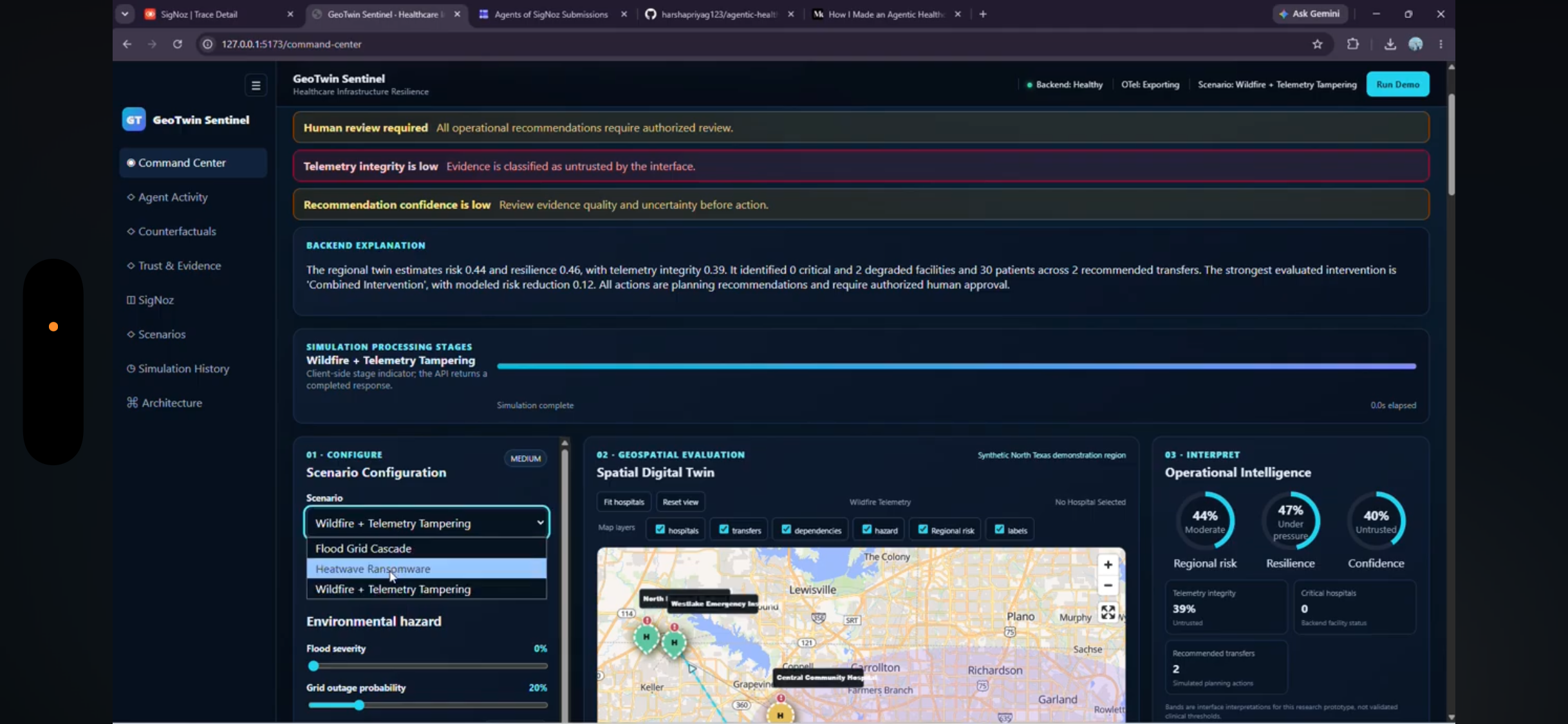
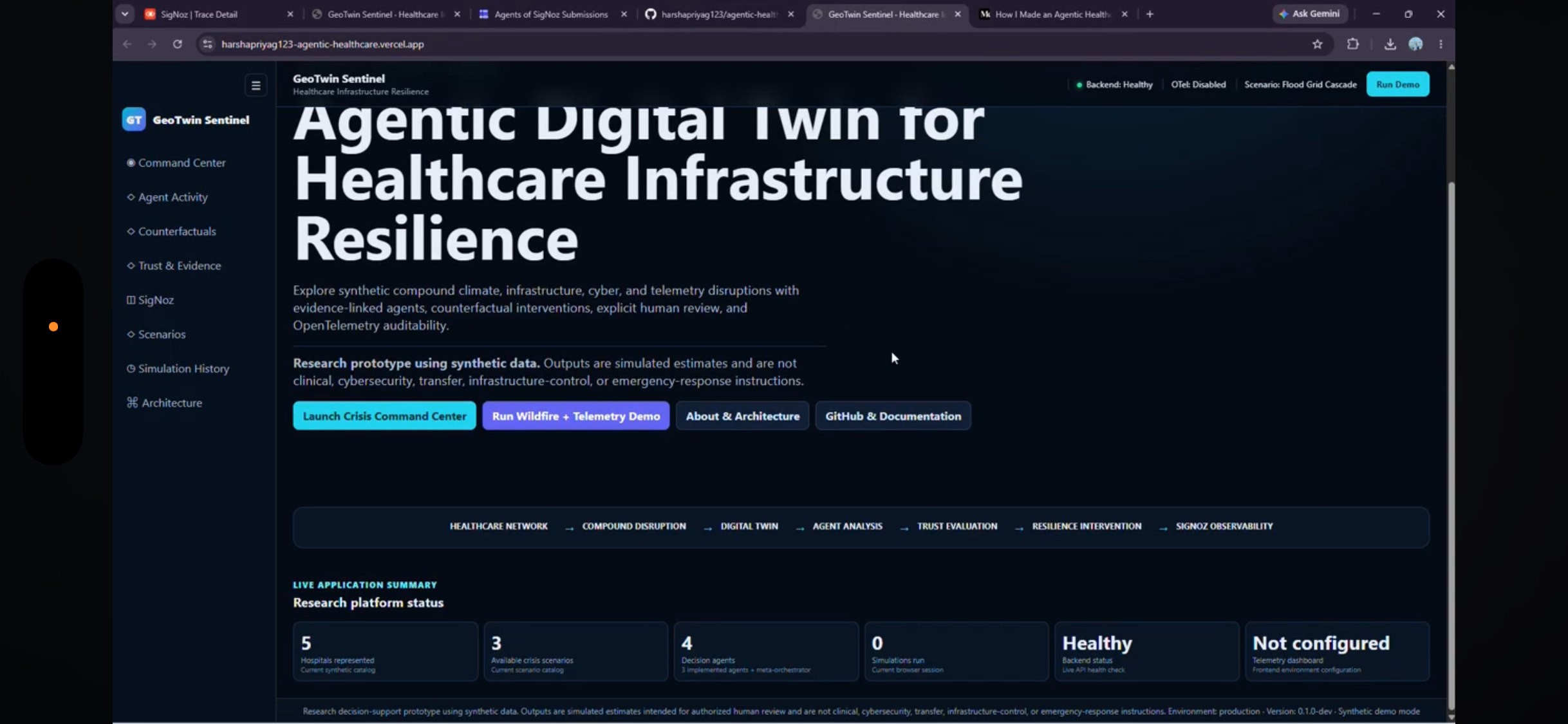
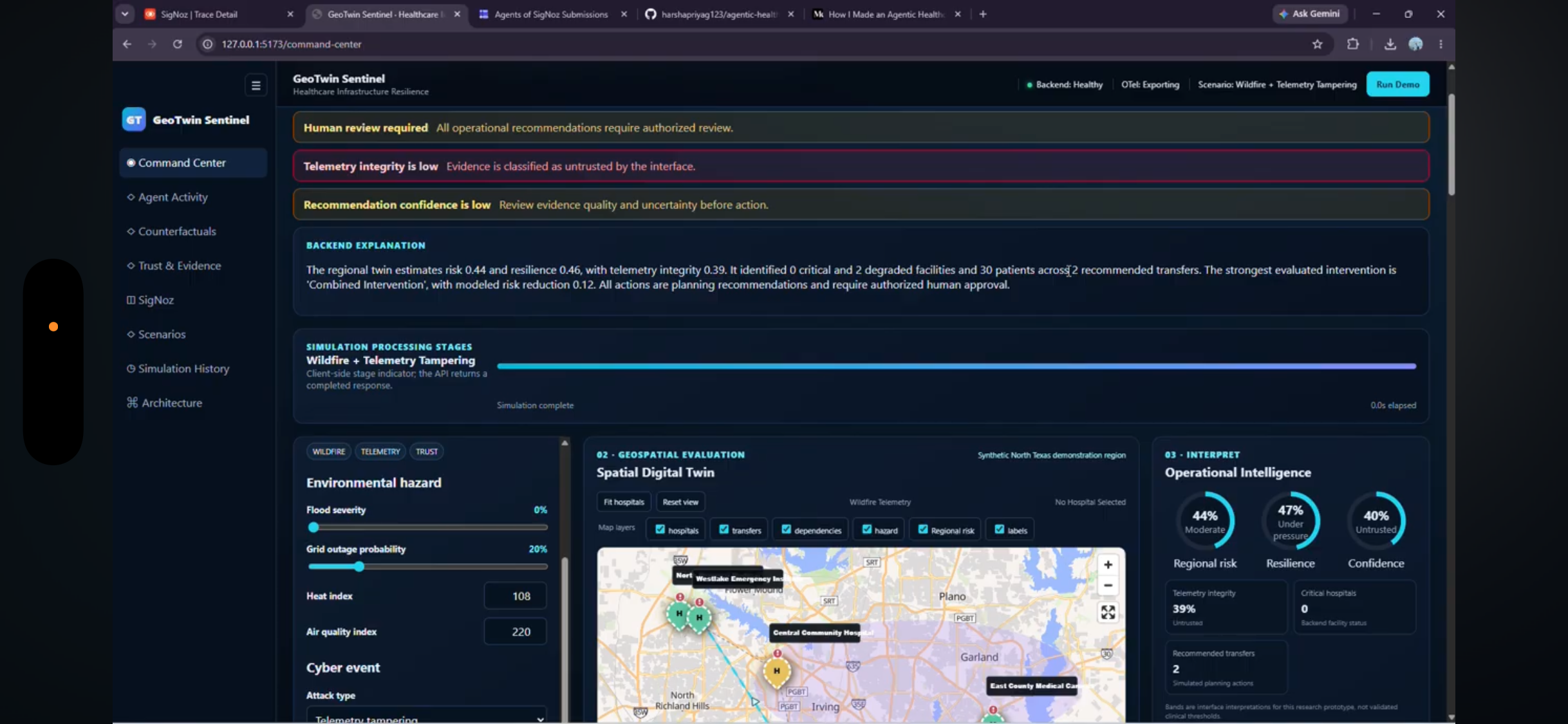
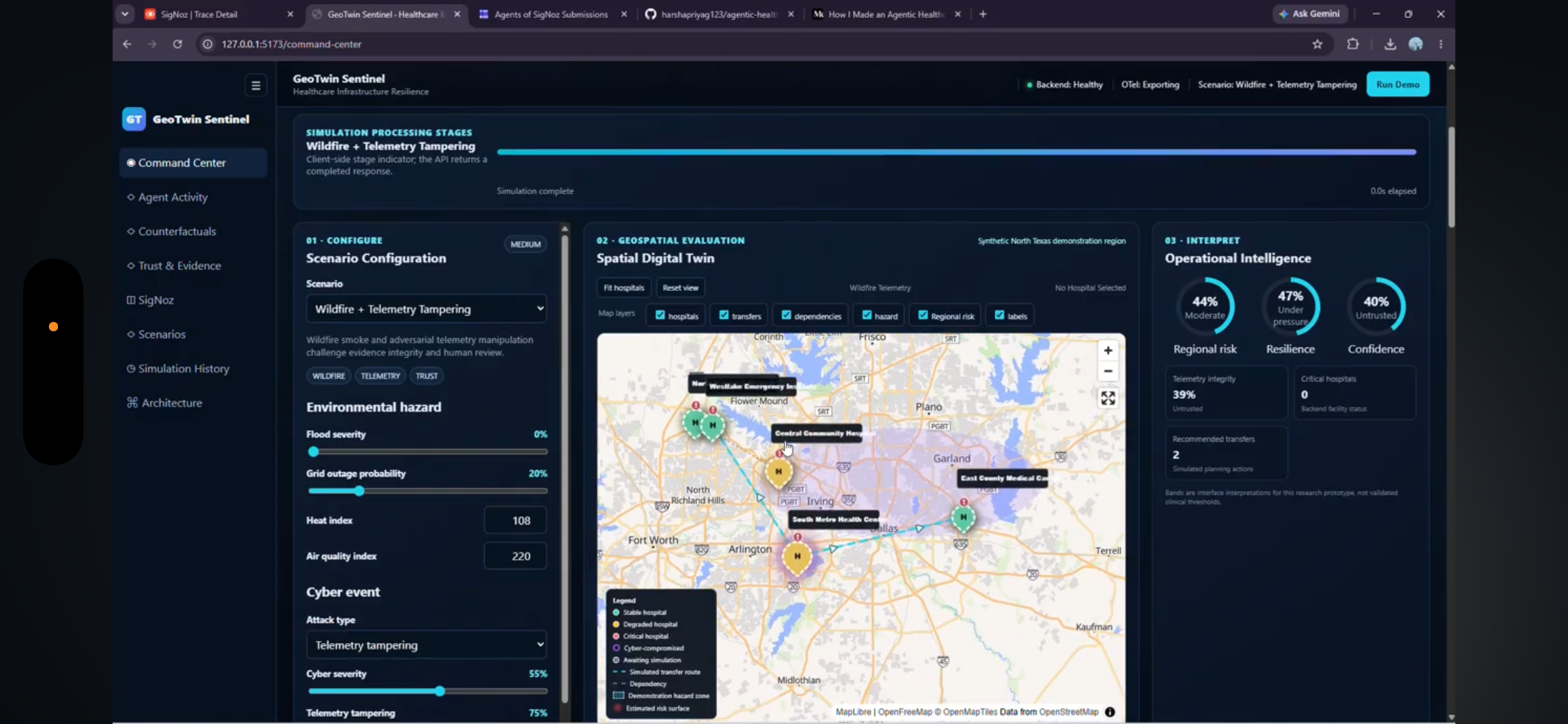
GeoSentinel AI creates a real-time Digital Twin of healthcare infrastructure.
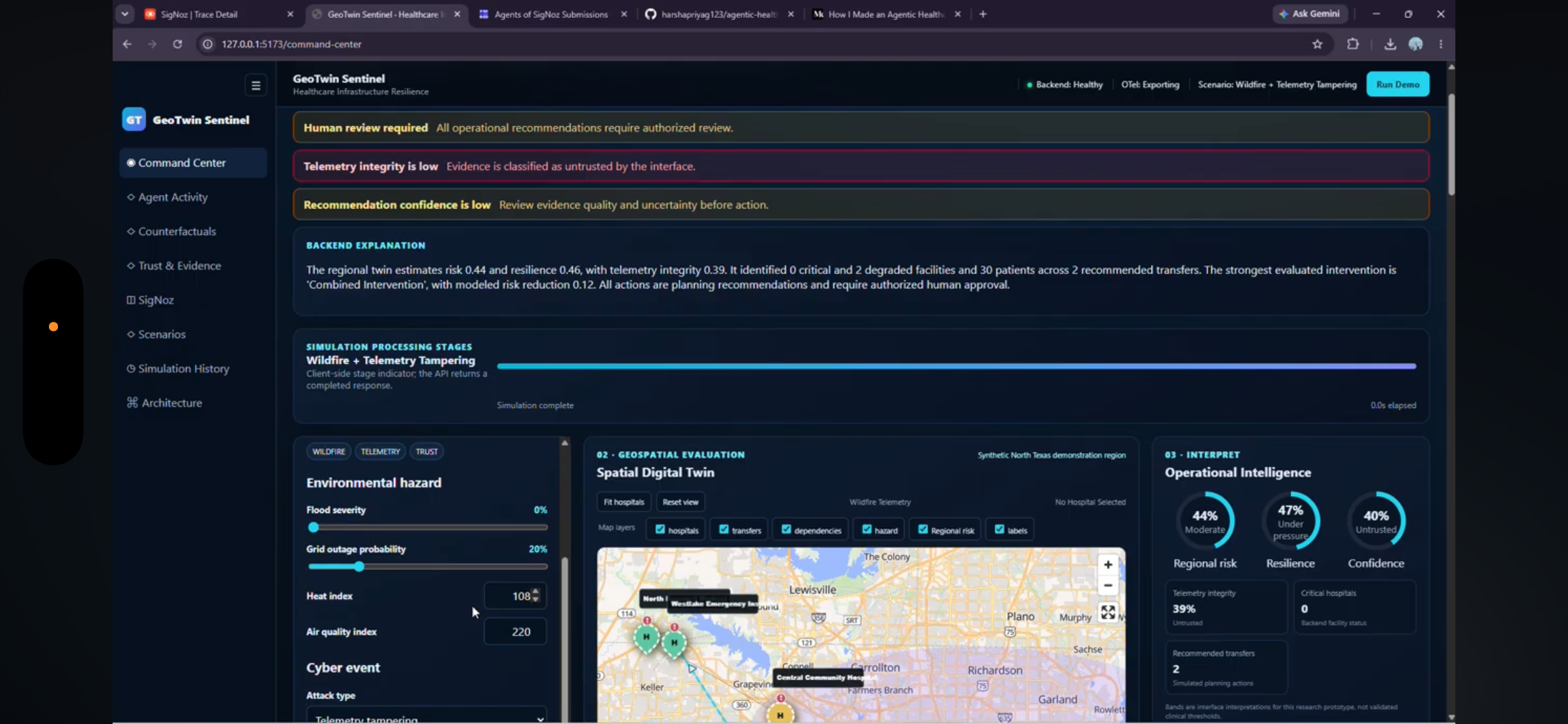
The platform continuously collects data from infrastructure logs, IoT devices, cybersecurity events, environmental sensors, and geospatial datasets.
Multiple AI agents collaborate to:
- Detect cyber threats
- Predict equipment failures
- Monitor environmental health risks
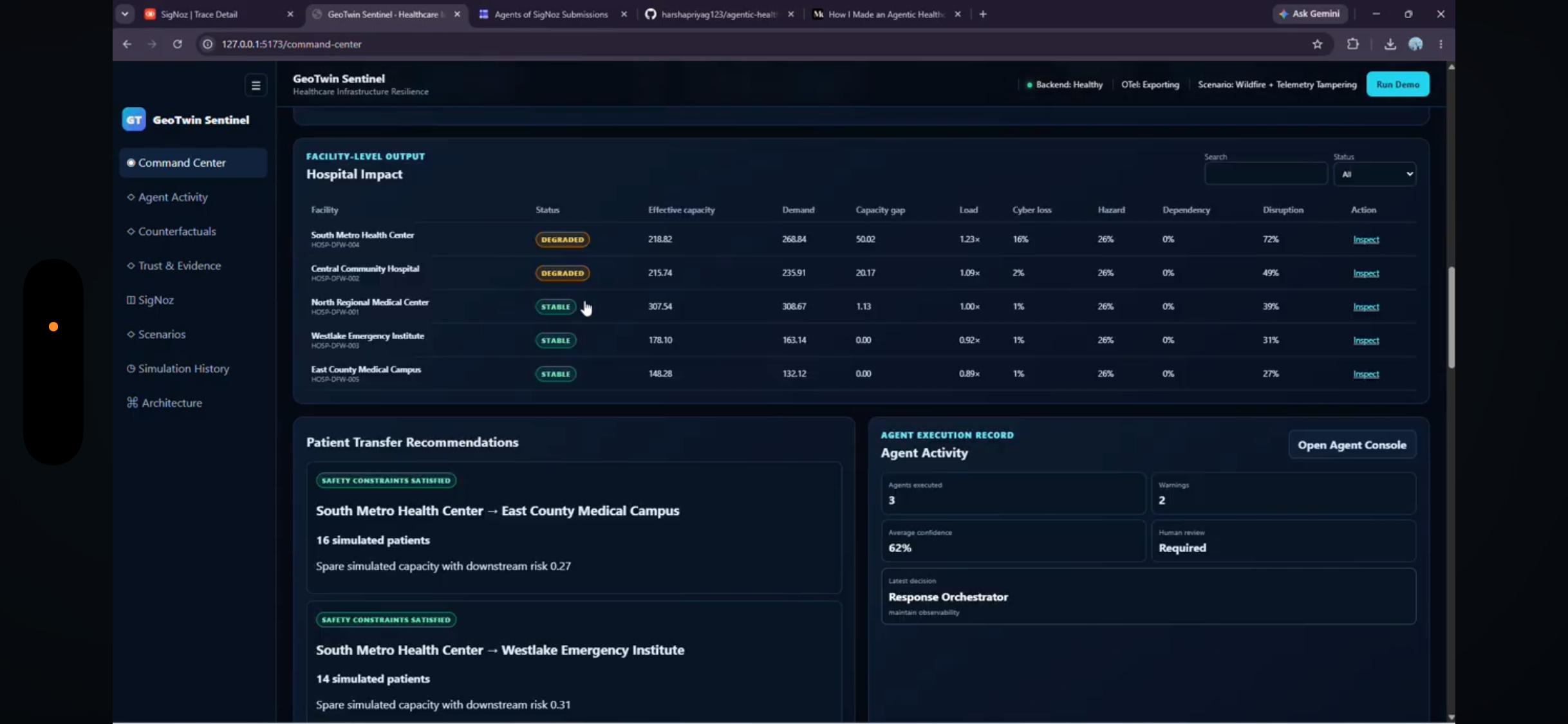
- Assess hospital operational status
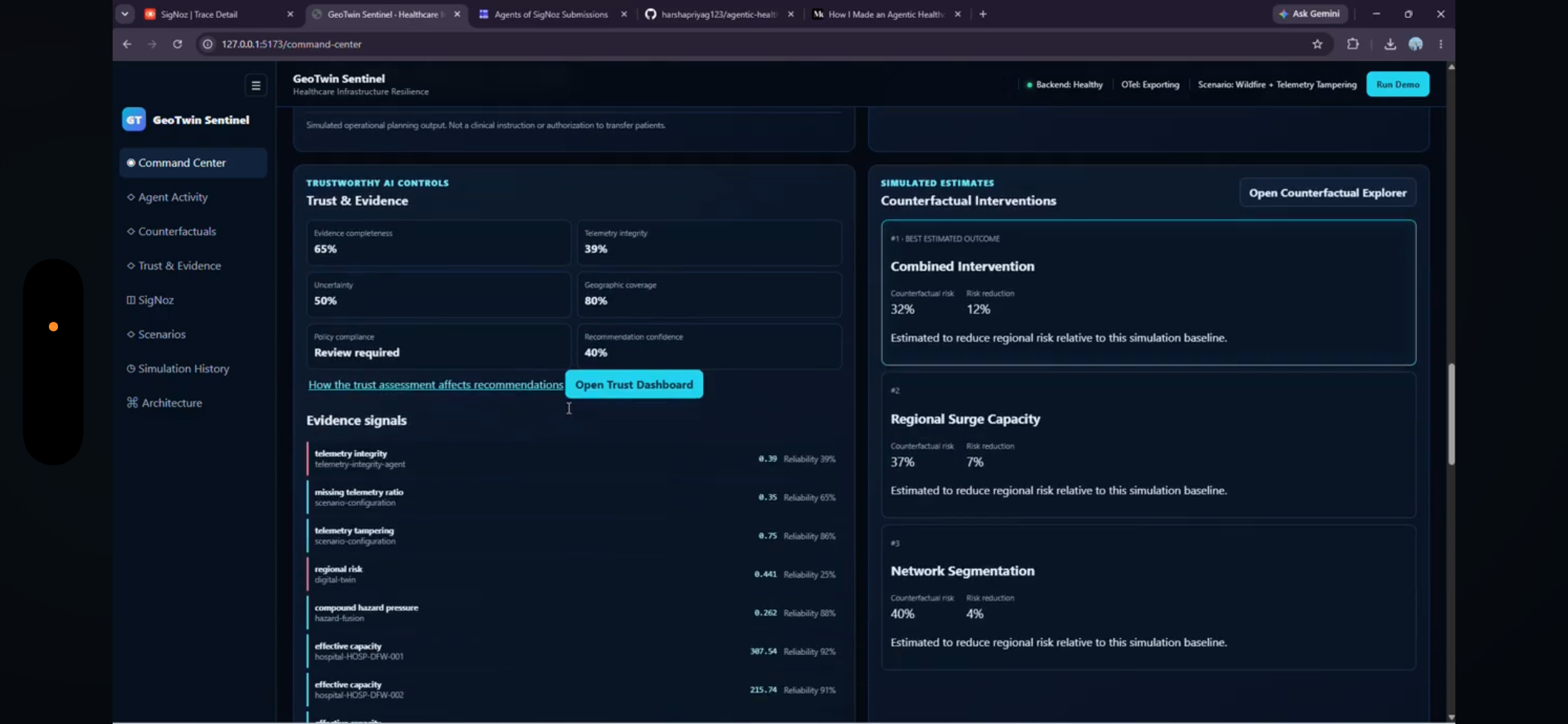
- Generate recommendations for administrators
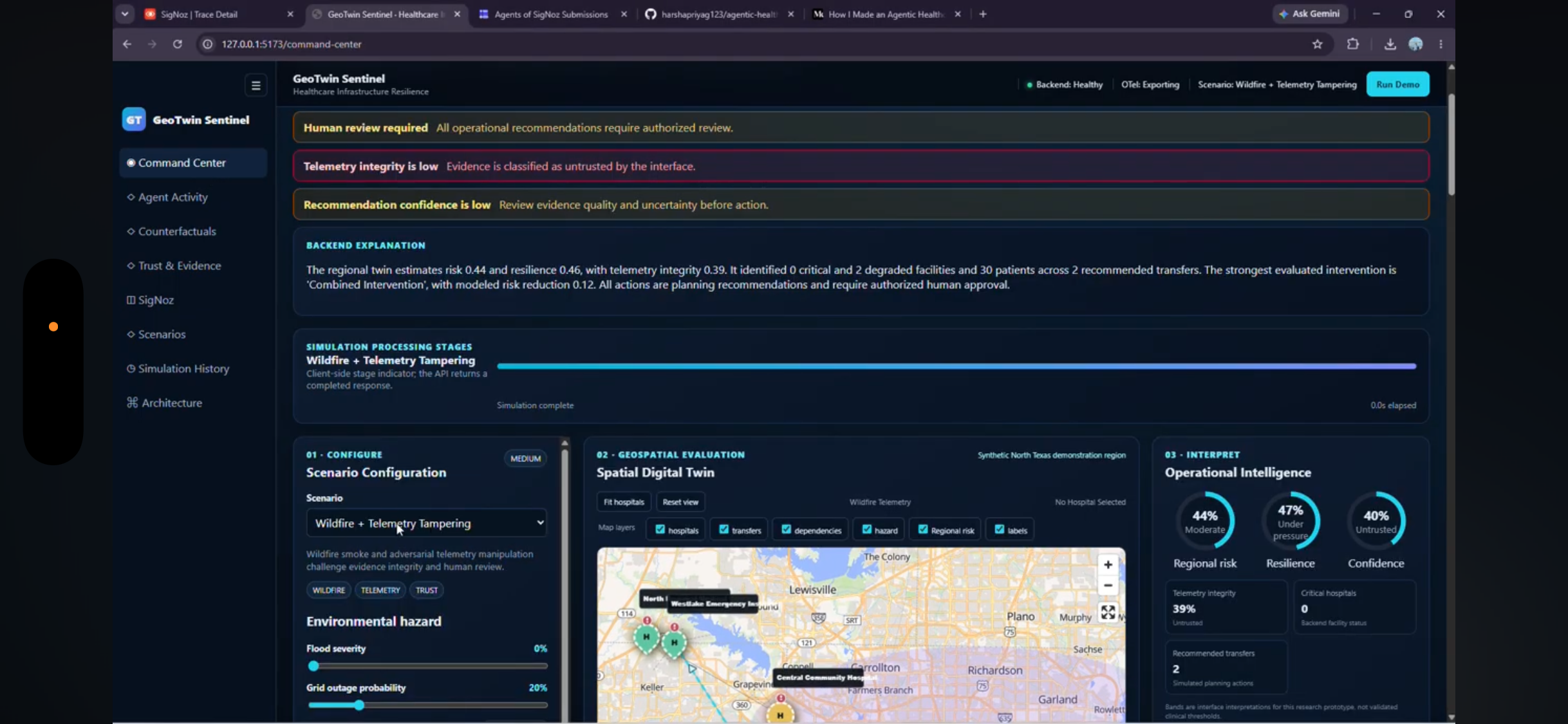
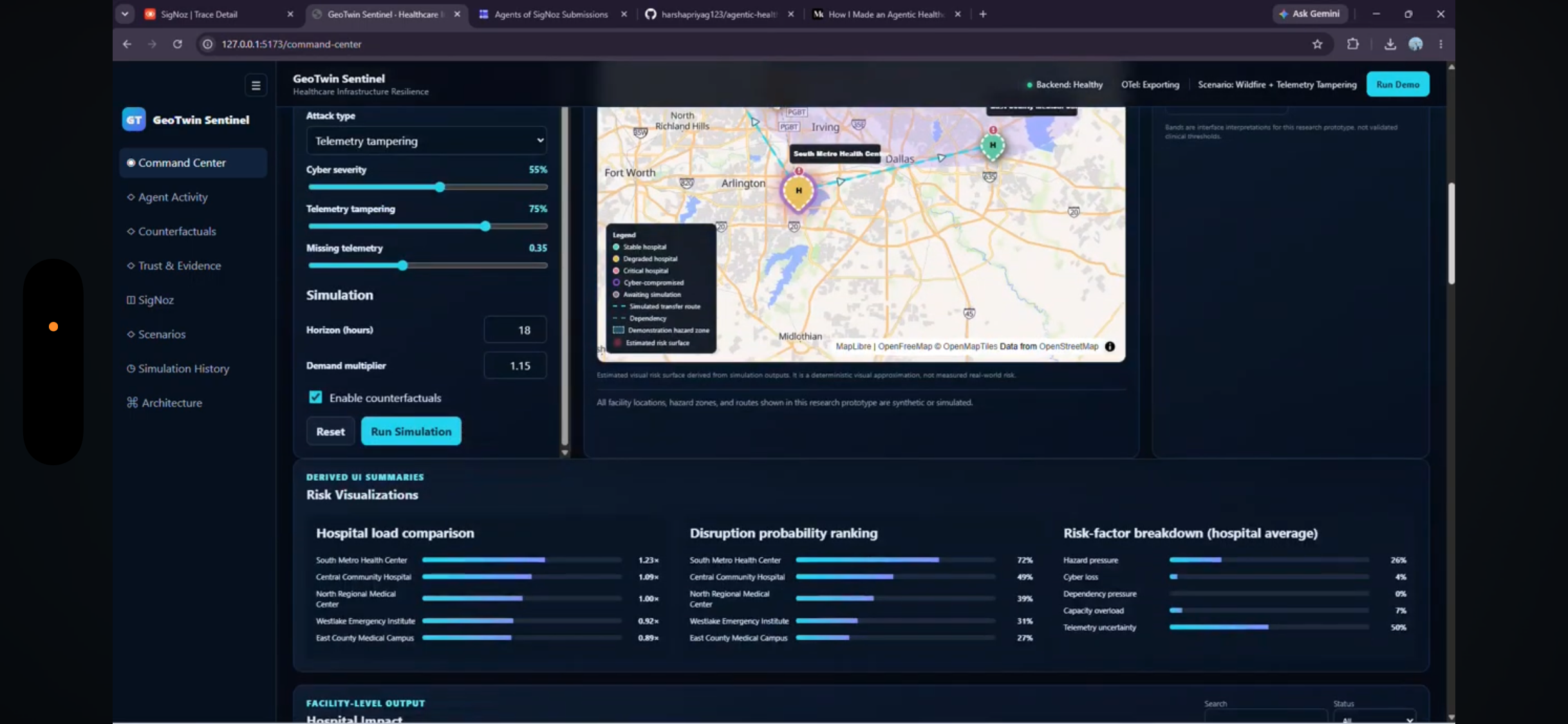
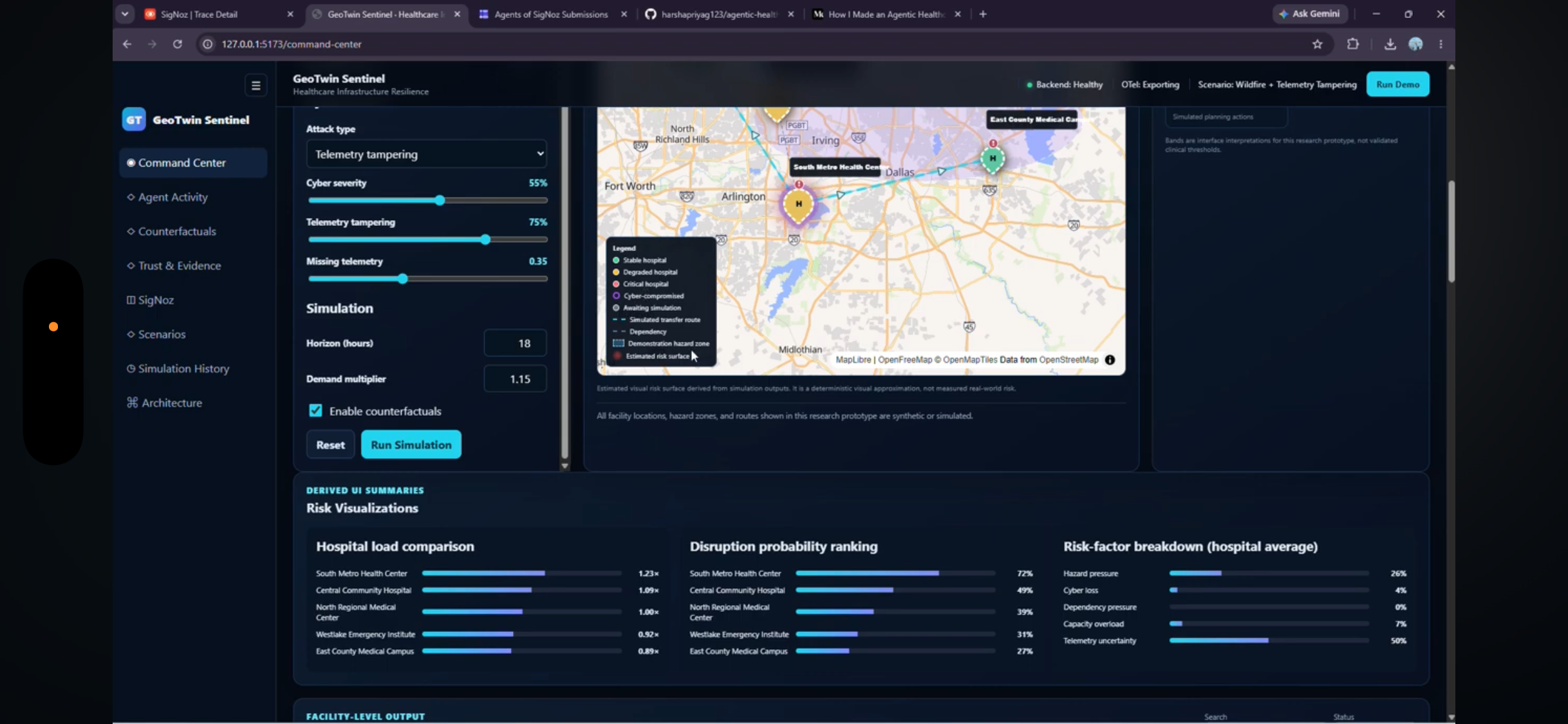
- Visualize everything on an interactive GIS dashboard
Rather than simply displaying alerts, the agents reason about system health and recommend corrective actions.
How we built it
The platform consists of several modular components.
AI Layer
- Agentic AI architecture
- LLM-powered reasoning
- Multi-agent orchestration
Backend
- FastAPI
- Python
- PostgreSQL/PostGIS
- REST APIs
Frontend
- React
- TypeScript
- Tailwind CSS
- Map visualization dashboard
Geospatial Intelligence
- OpenStreetMap
- GIS layers
- Environmental datasets
- Risk heatmaps
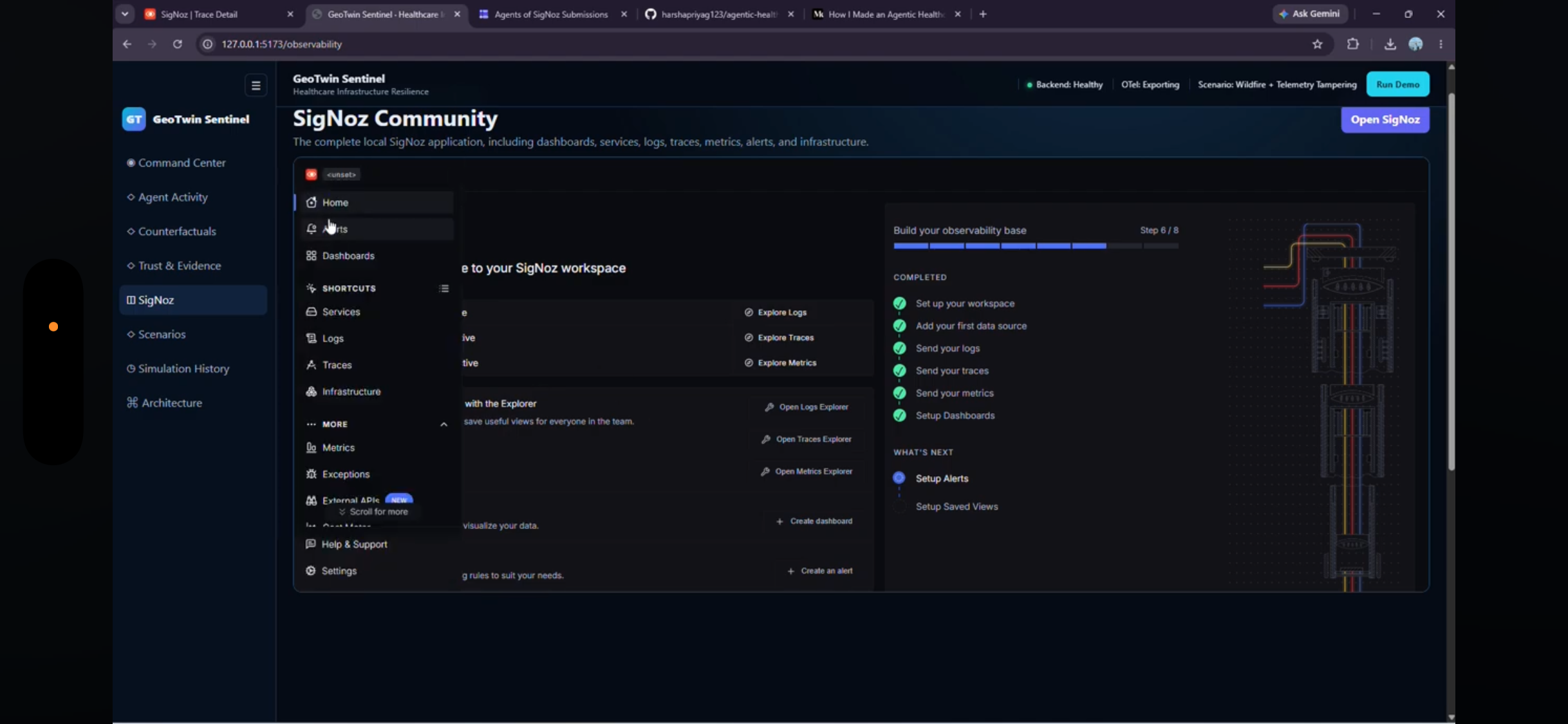
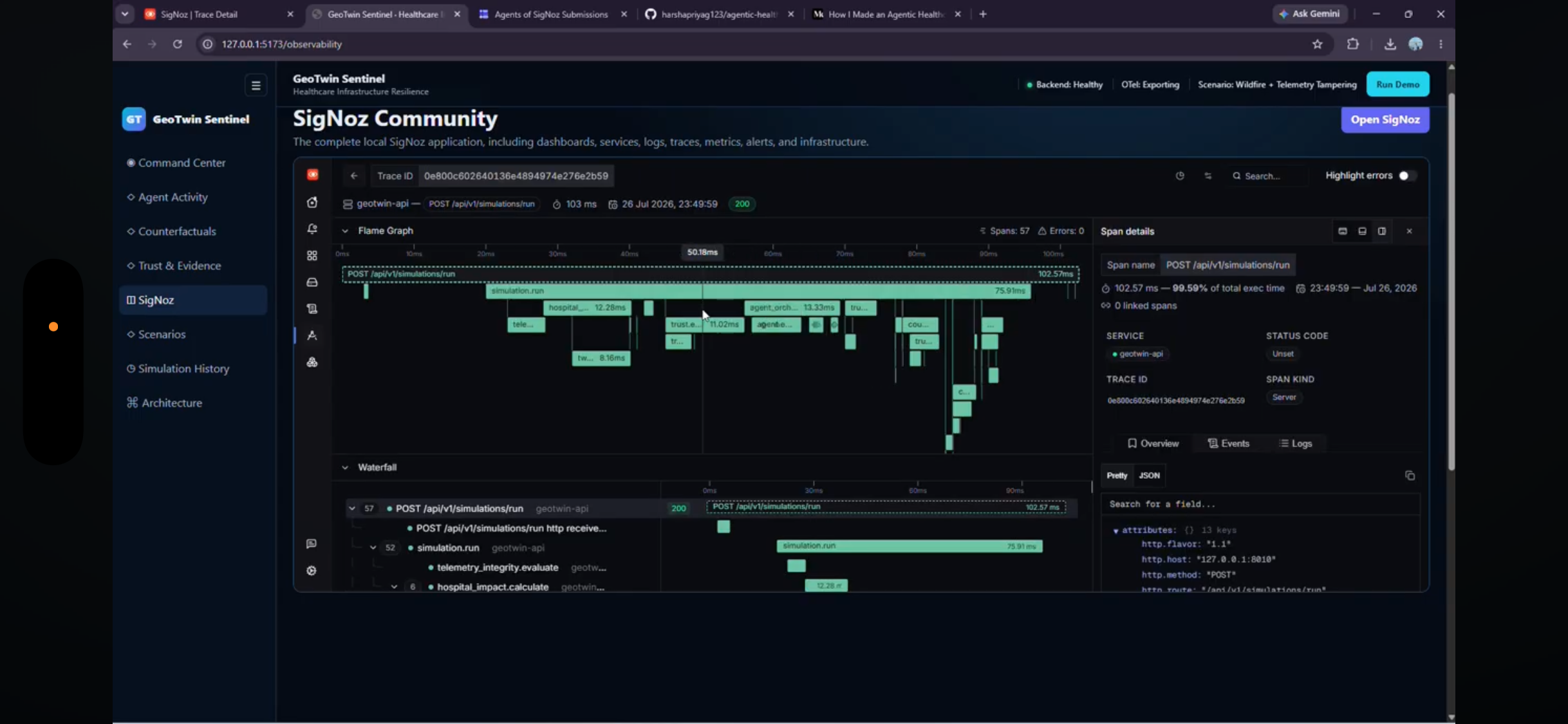
Observability
- OpenTelemetry
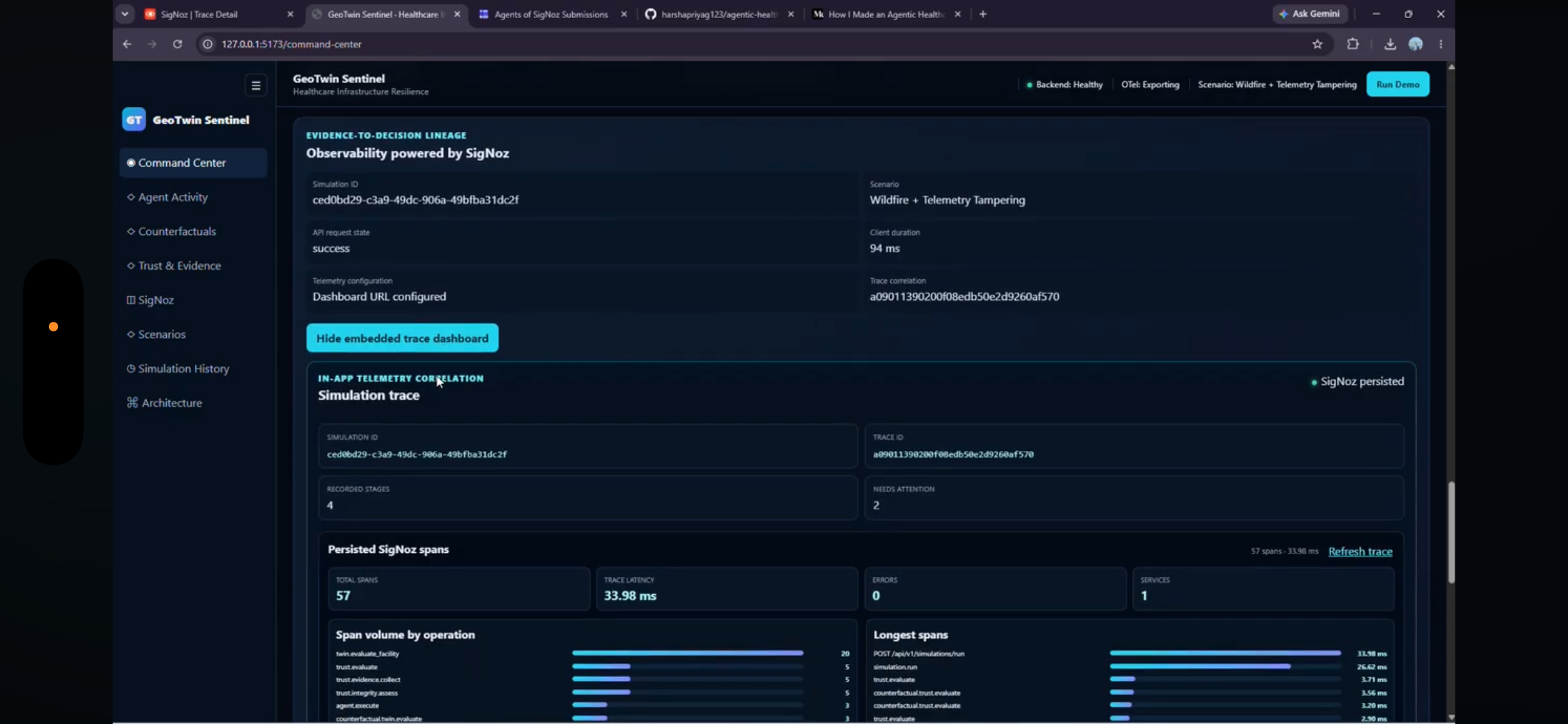
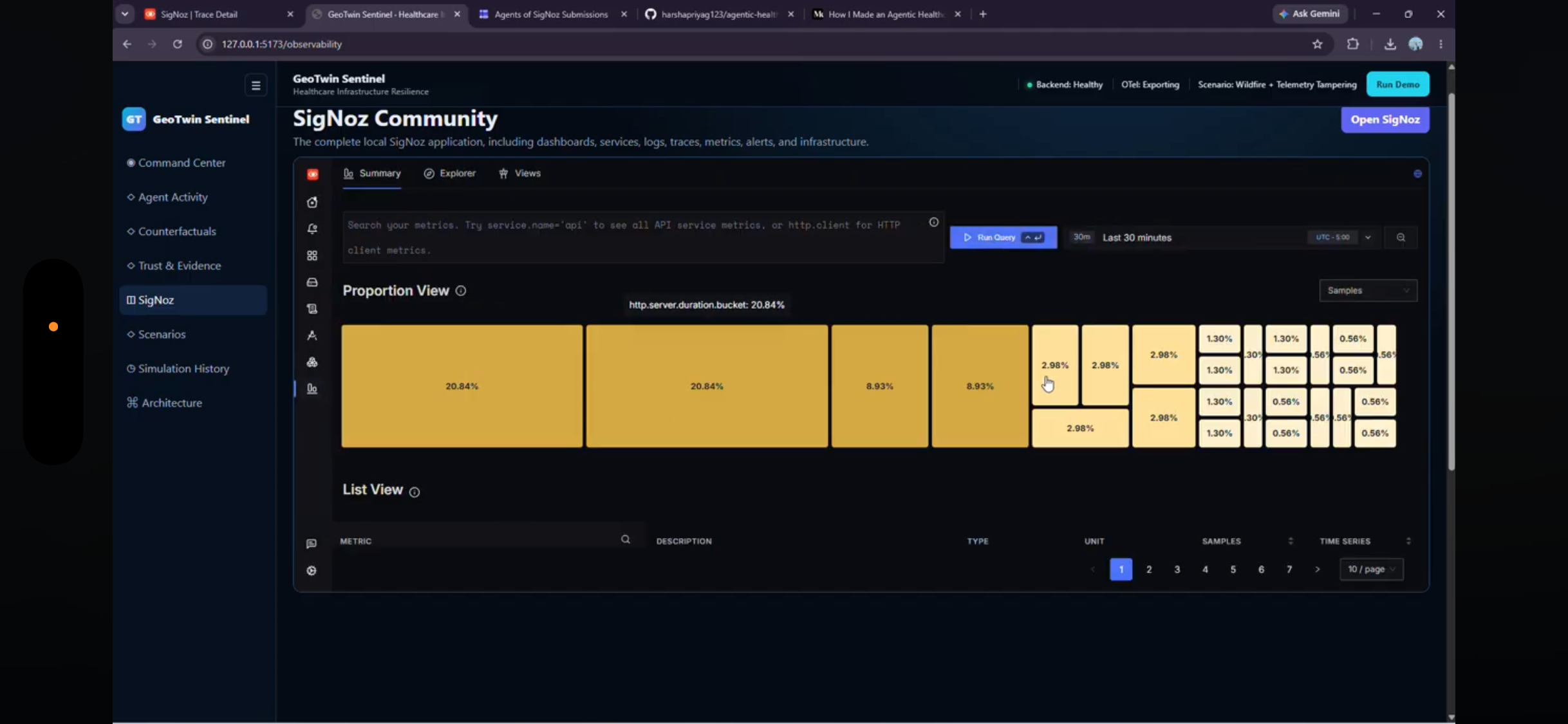
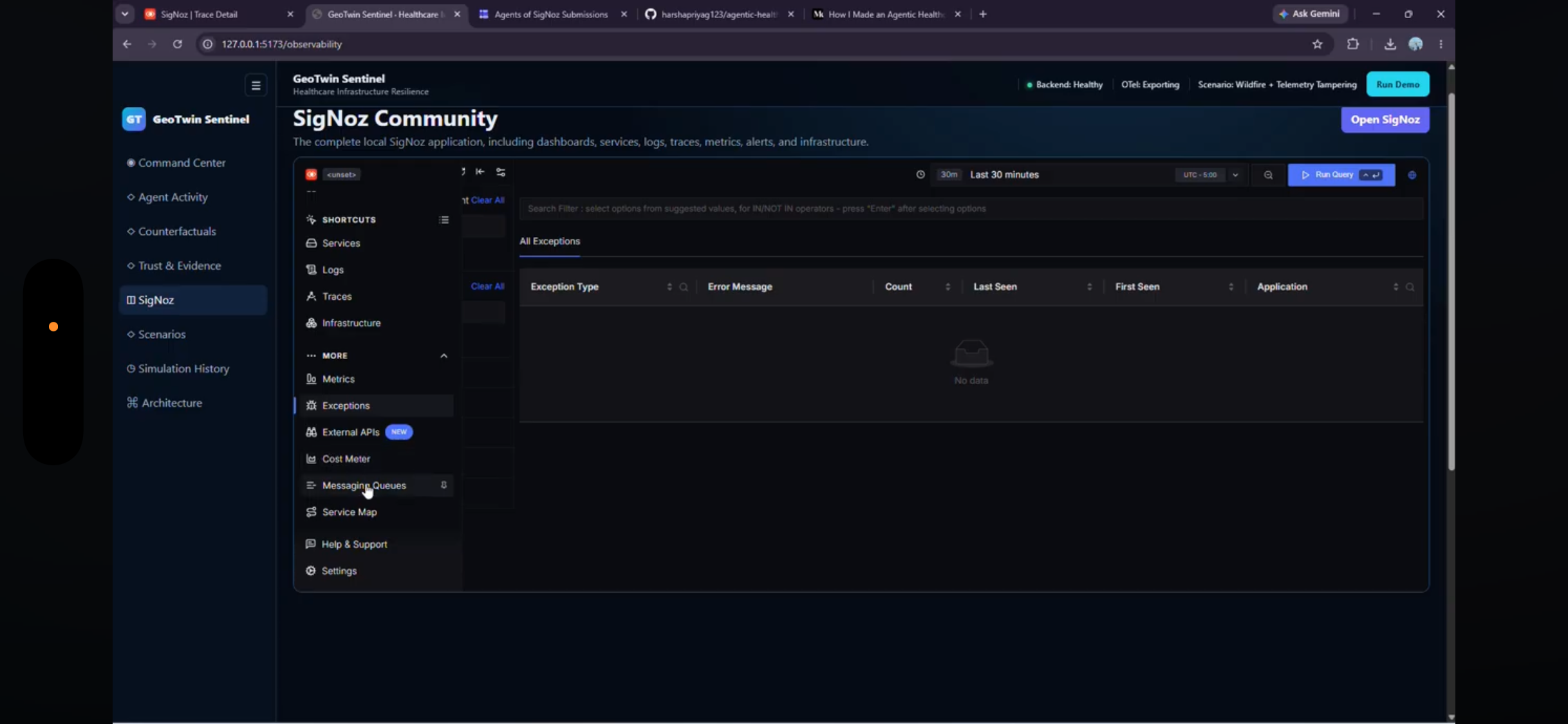
- SigNoz
- Distributed tracing
- Infrastructure monitoring
Challenges we ran into
The biggest challenge was integrating heterogeneous data sources.
Healthcare infrastructure generates logs, sensor readings, cybersecurity alerts, and geospatial information in different formats. Designing AI agents capable of understanding these sources while maintaining a shared understanding of system state required careful orchestration.
Another challenge was balancing autonomous decision-making with explainability. Every recommendation generated by the agents must be transparent and supported by evidence.
Accomplishments that we're proud of
- Built a modular multi-agent architecture.
- Combined Digital Twin technology with GIS.
- Integrated observability into AI workflows.
- Created a unified dashboard for cyber, infrastructure, and public health monitoring.
- Designed a scalable architecture suitable for hospitals and smart cities.
What we learned
This project reinforced that modern healthcare resilience requires collaboration between AI, cybersecurity, cloud infrastructure, and geospatial intelligence.
We also learned that observability is essential for trustworthy AI systems. Without visibility into model decisions and infrastructure health, autonomous systems cannot be safely deployed.
What's next
Future work includes:
- Real-time hospital IoT integration
- Predictive maintenance models
- RAG-powered medical knowledge retrieval
- Federated learning across hospitals
- Digital Twin simulation for disaster preparedness
- Multi-hospital collaboration network
- Research publication and open-source release


Log in or sign up for Devpost to join the conversation.