-
-
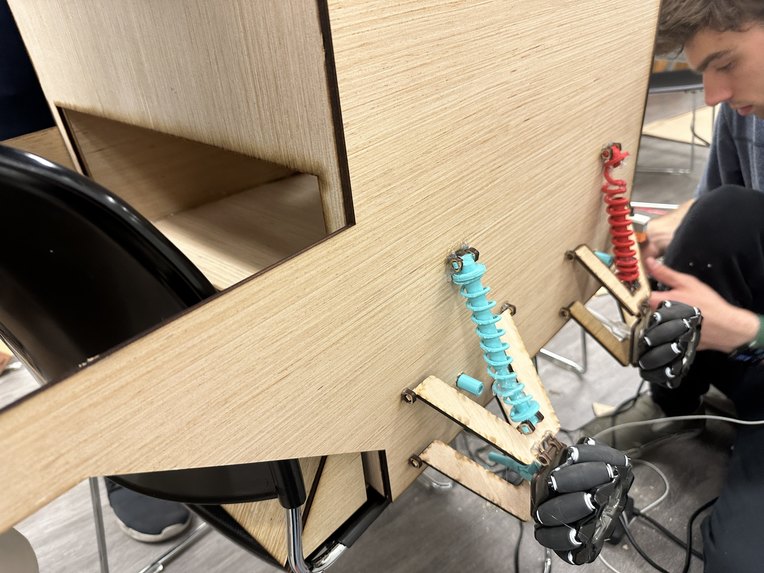
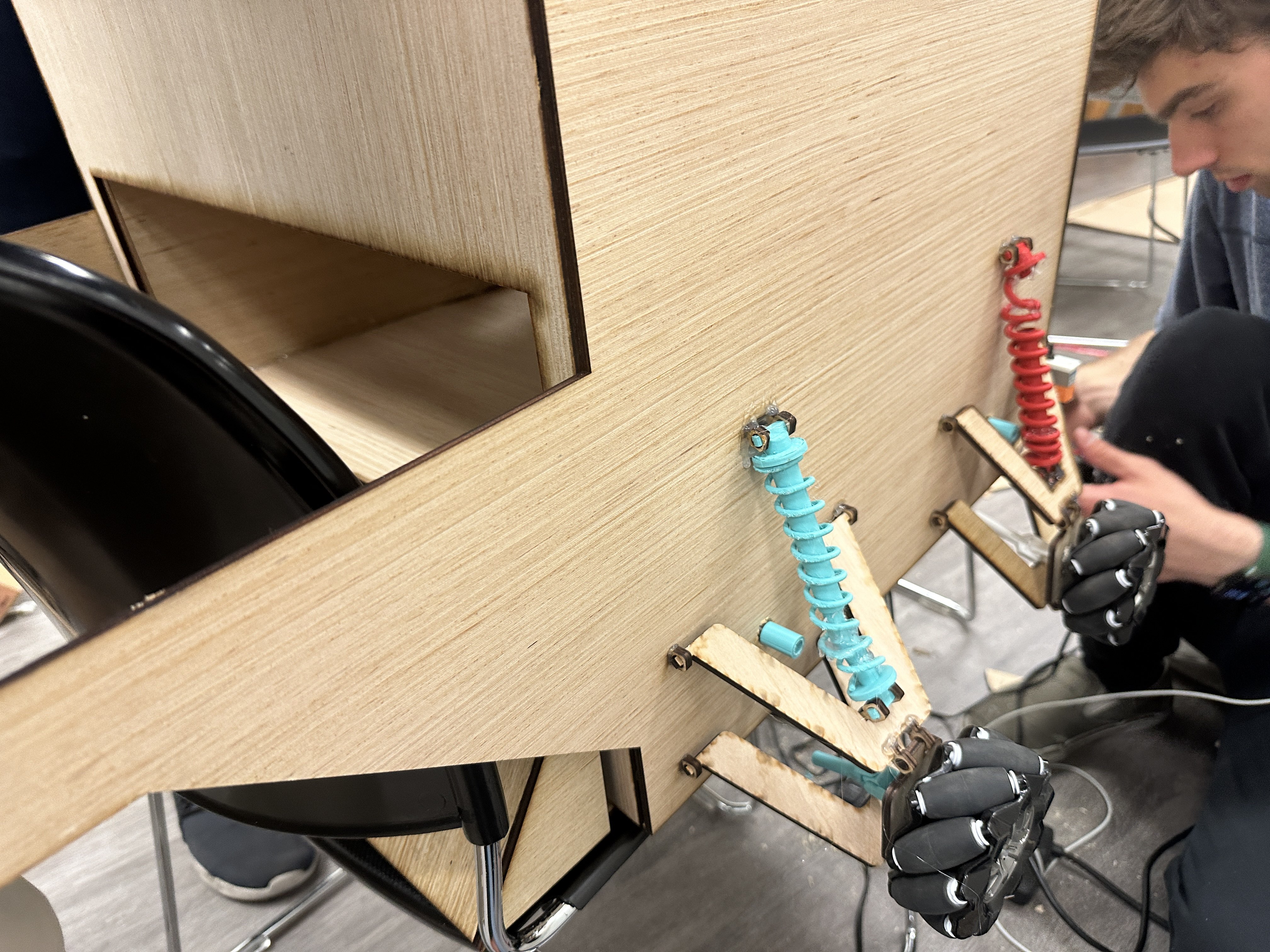
Shock Absorbers
-
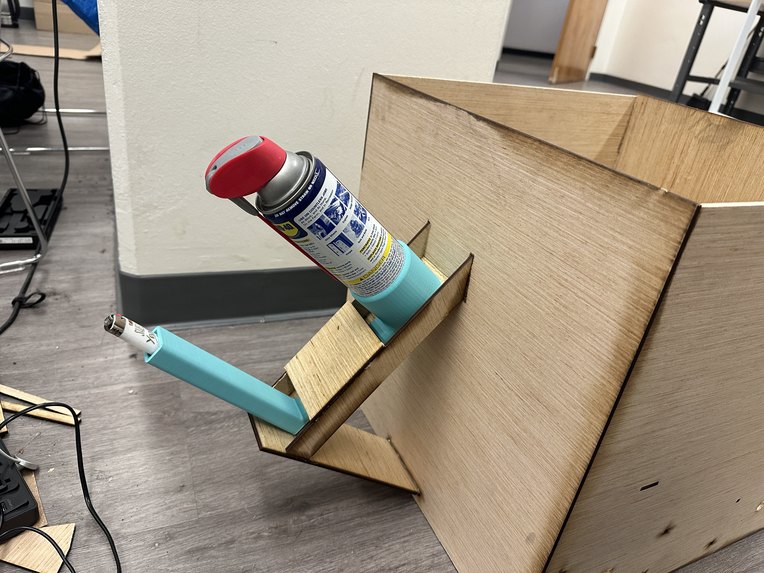
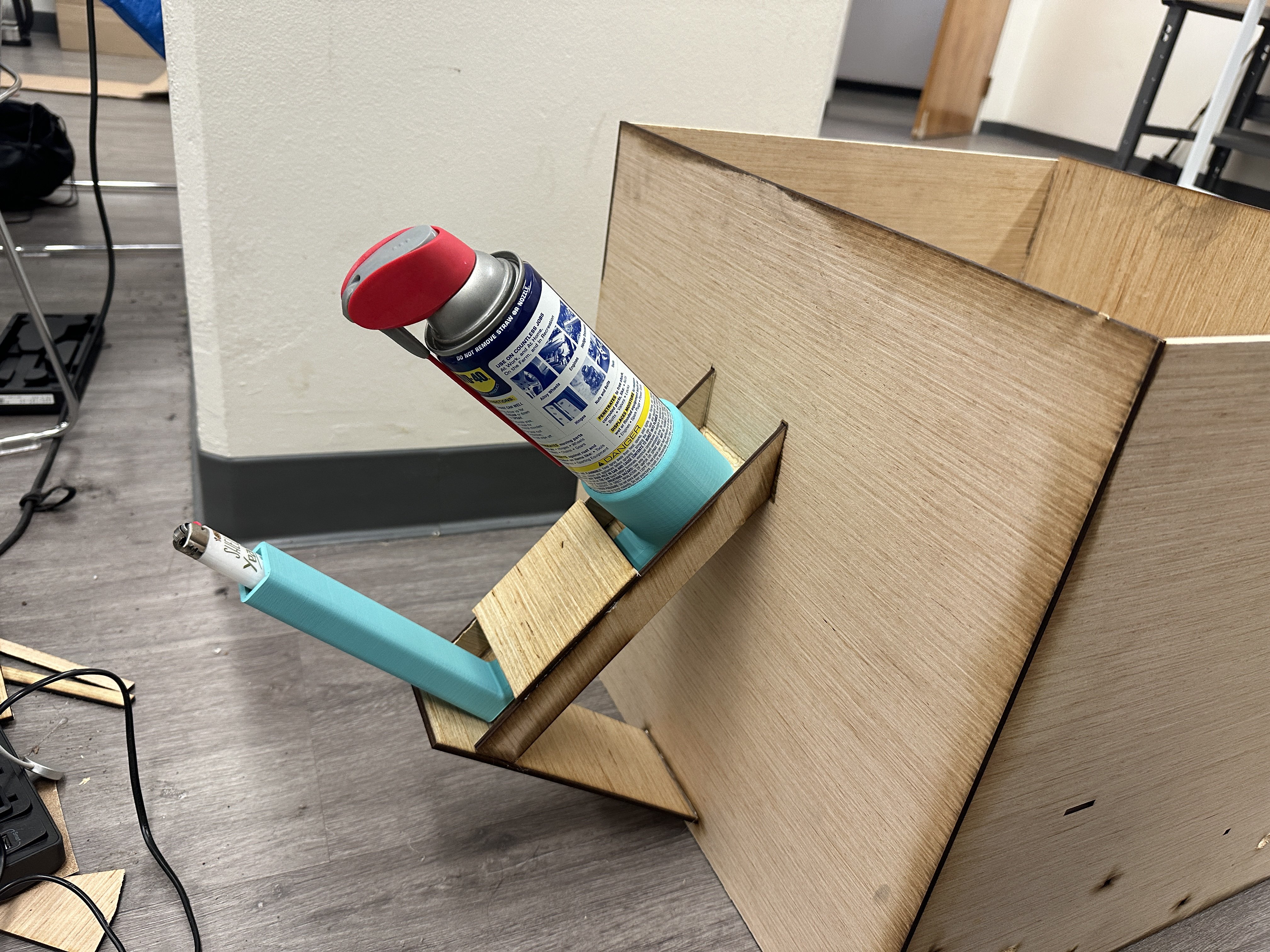
Flamethrower
-
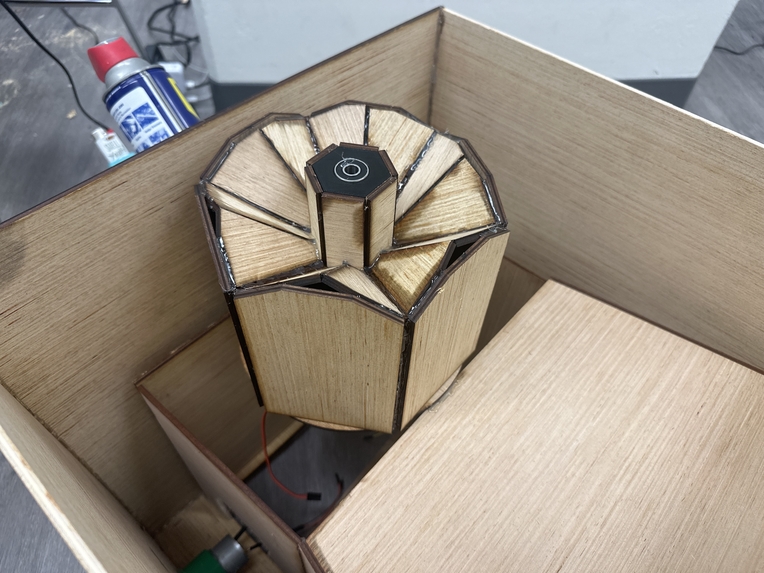
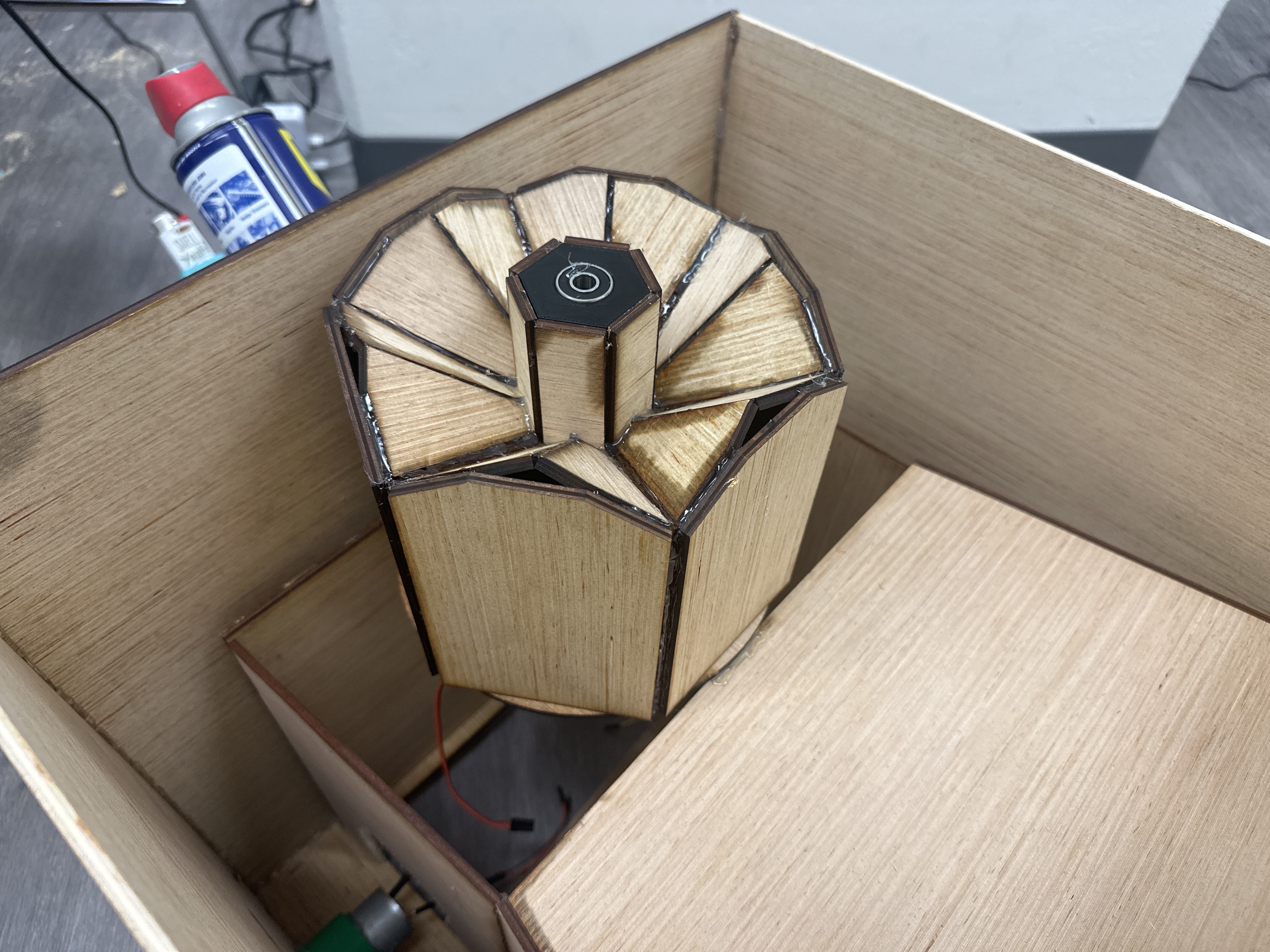
Seed Dispersal Mechanism
-
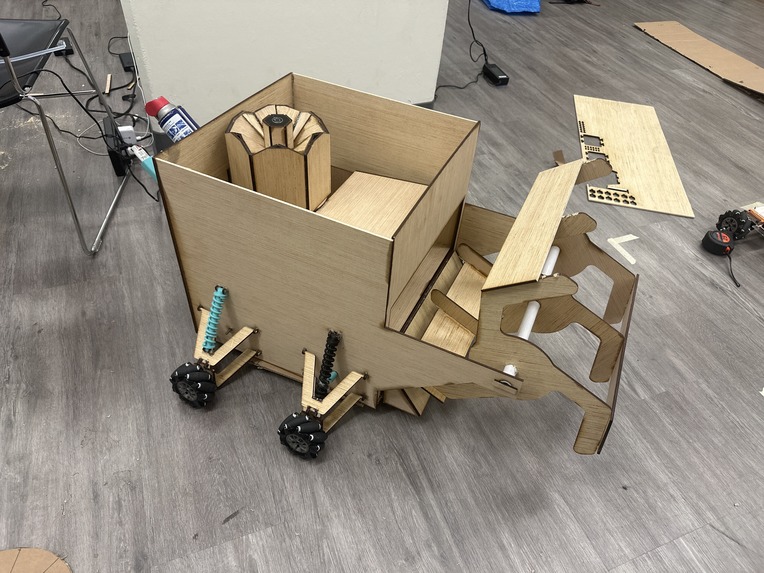
Rover
-
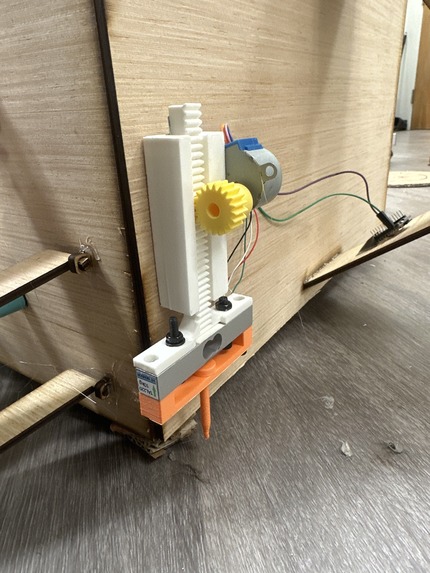
Ash Sensor
Inspiration
We were inspired by the original date for IDEA Hacks, which unfortunately were postponed due to the infamous LA wildfires in January. In the following weeks, it was clear that the county of Los Angeles had not taken the necessary preventative measures for a place with such a hot and dry climate, leading to the destruction of over 57,000 acres and the deaths of at least 30 citizens. We sought to create something that would allow for the city of Los Angeles as well as elsewhere to take a more proactive approach to preventing wildfires.
What it does
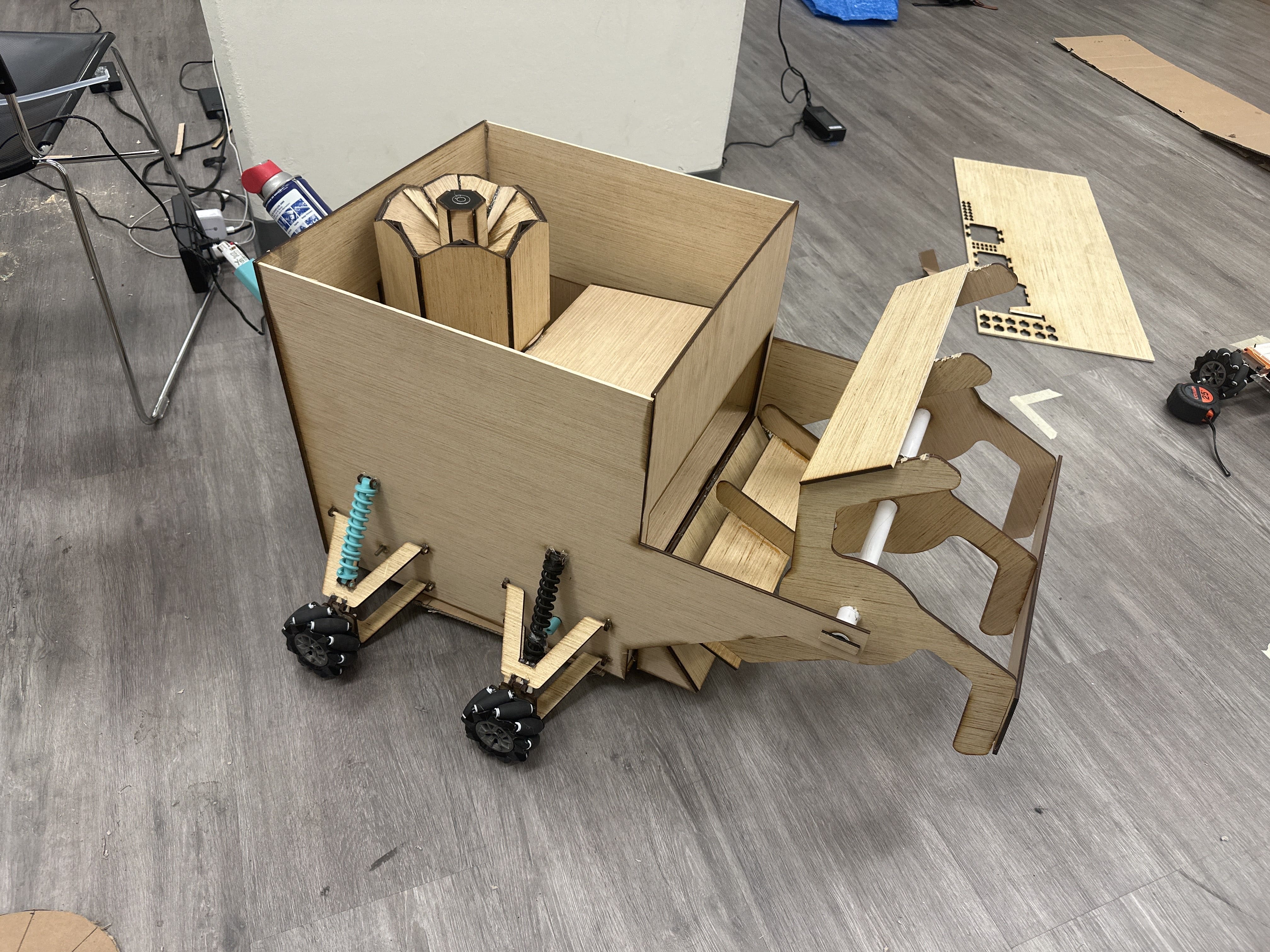
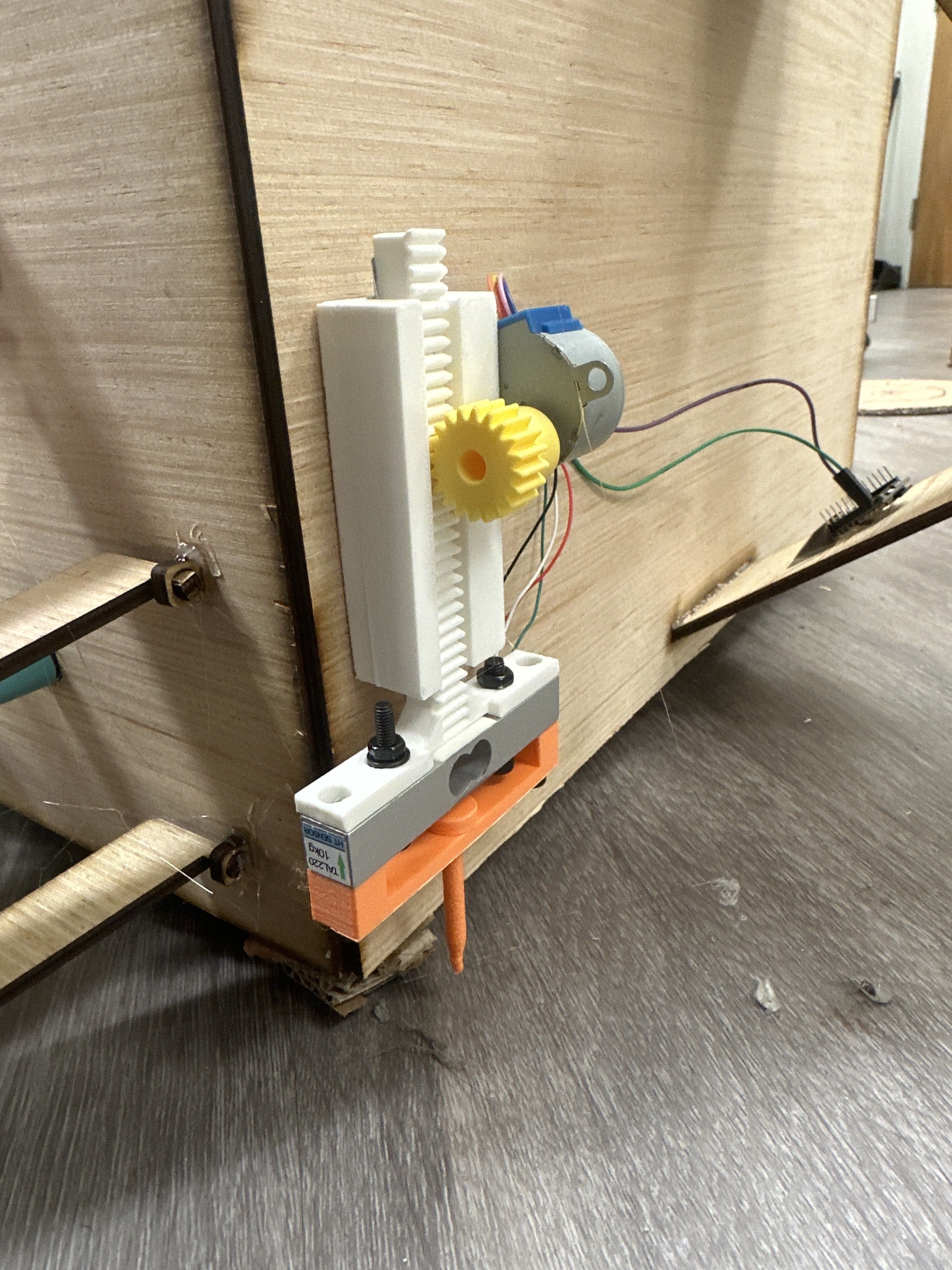
The Global Enhancement Operation to Restore Geological Ecosystems, or GEORGE-inator, is a rover that can be let loose into the wild like a fire-preventing roomba. Equipped with a spinning rake mechanism, it is capable of taking in dry brush and processing it in an internal wood chipper, leaving behind flat pieces that will have a more difficult time burning due to the lack of air pockets between the timber. The back is also equipped with a small flamethrower to carefully burn away any easily ignitable scrap pieces in a controlled manner before they spark a much larger blaze. In addition to these fire prevention measures, the GEORGE-inator also includes a spinning chamber that drops seeds native to the area to help with reforestation after a wildfire occurs. Mounted sensors are capable of determining the type and measuring the depth of the top layer of ash after a wildfire, as well as the presence of any mycelium or mushrooms that are indicative of a recovering ecosystem.
How we built it
Designed in CAD, subteams created the various mechanisms we needed to accomplish all of our previously stated goals. Using the trusty laser cutter and 3D printers found in the Boelter makerspace, we were able to construct a rudimentary prototype out of wood paneling and 3D printed components.
Challenges we ran into
Our main challenge was creating the mechanisms with the limited hardware provided as well as integrating each component into a single seamless machine at the end. Fortunately, due to our efforts in developing useful CAD designs, our pieces were able to slot together with relative ease.
Accomplishments that we're proud of
We're particularly proud of the engineering and thought that is behind each of the components. For our wheels, we designed custom shock absorbers and hinge mechanisms to allow for the rover to navigate hilly and uneven terrain. Our dispensing mechanism allows for up to six different native seeds to be distributed as the rover meanders through the forest. Our sensors incorporate AI to detect the type of ash as well as its depth, allowing for remote data collection that can be used by climate scientists to better understand the aftermath of wildfires as well as determine the best ways to speed up the reforestation process. Additionally, we are proud of the compact nature of this rover to contain all these different mechanisms within its simple shell.
What we learned
We expanded our knowledge of Onshape, the CAD software we used to allow for collaboration between team members, which is why the integration of all our mechanisms went as smoothly as it did.
We learned that you're supposed to shake a can of WD-40 before using it. (who knew?)
We also better familiarized ourselves with the ESP32 and began understanding use cases for both Arduinos and ESP32s.
What's next for the GEORGE-inator
Besides refining our incredibly crude prototype, we had several other components that we had hoped to include, including a water irrigation system, dust, soil, and air sensors, and treads rather than the wheels we had access to for better navigation.

Log in or sign up for Devpost to join the conversation.