-
-
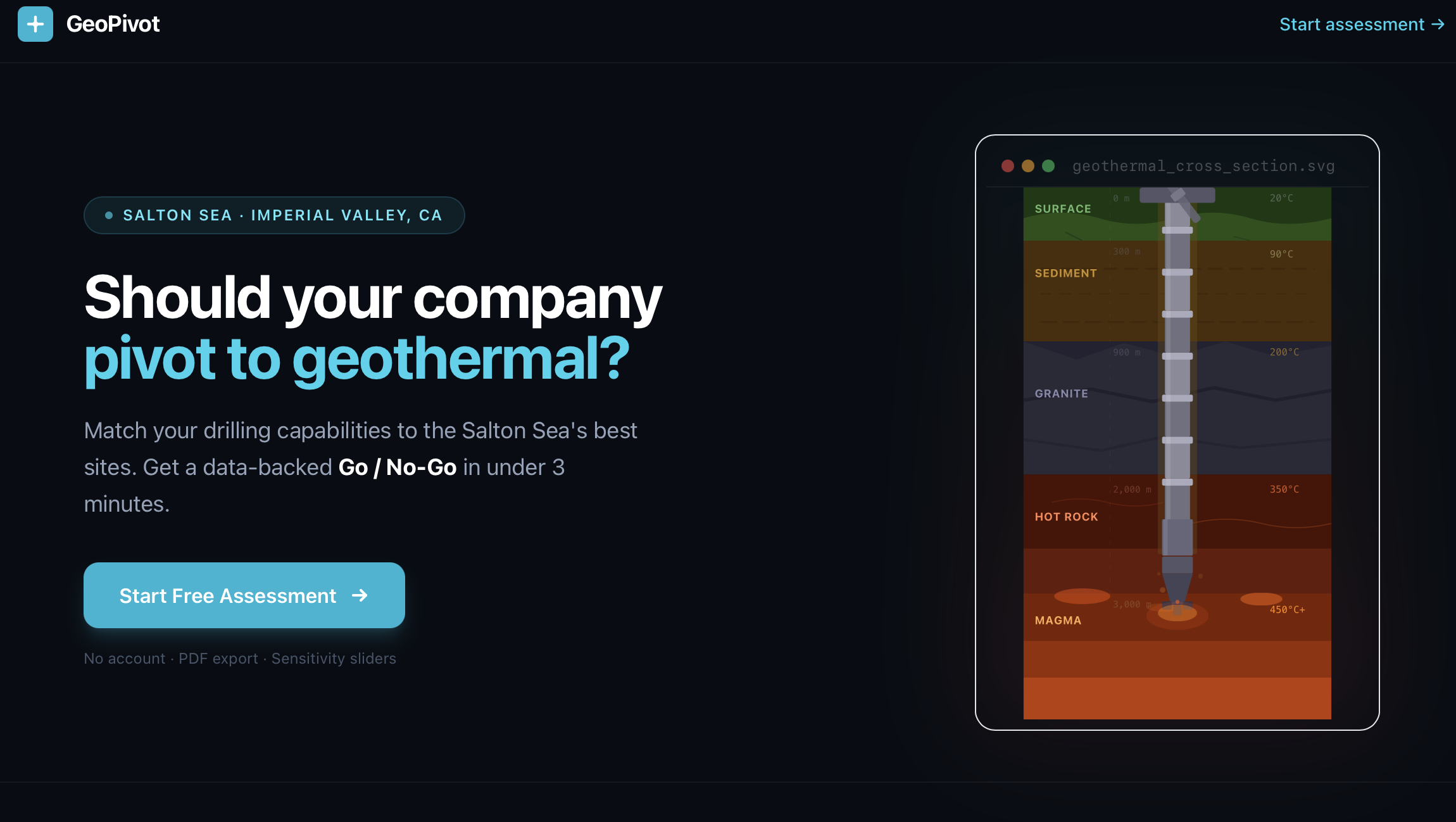
Landing Page
-
Page 2
-
Page 3
-
Page 4
-
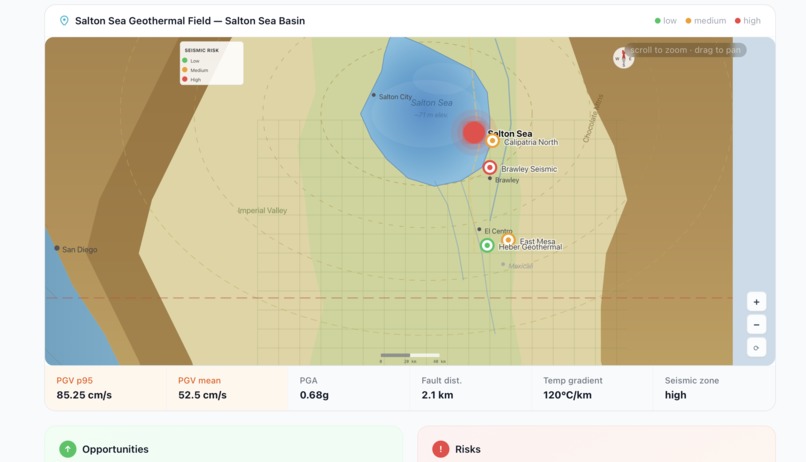
Moveable Map
-
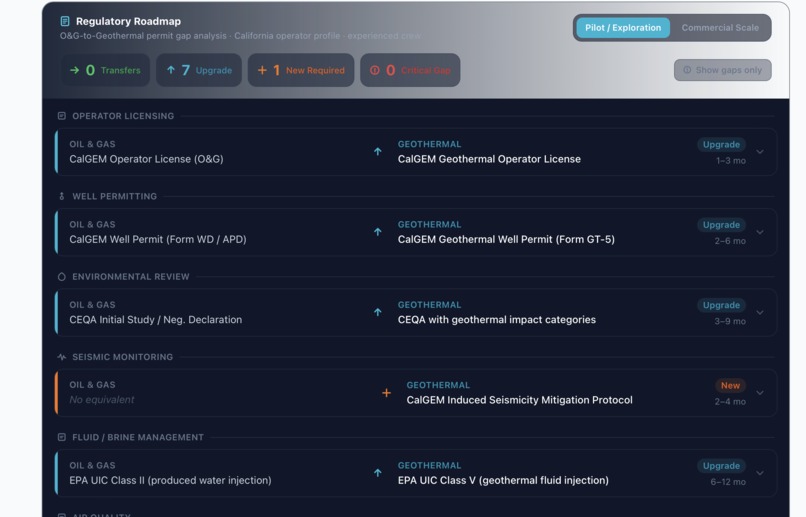
Permit and paperwork comparison
-
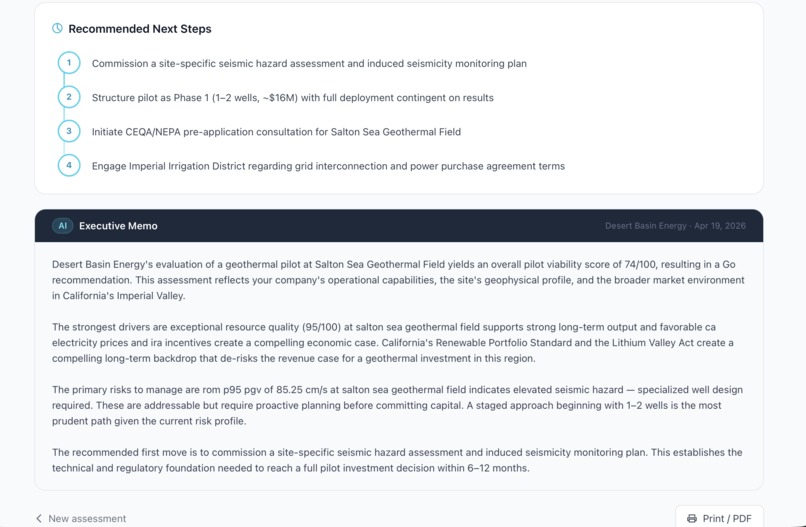
AI overview of project
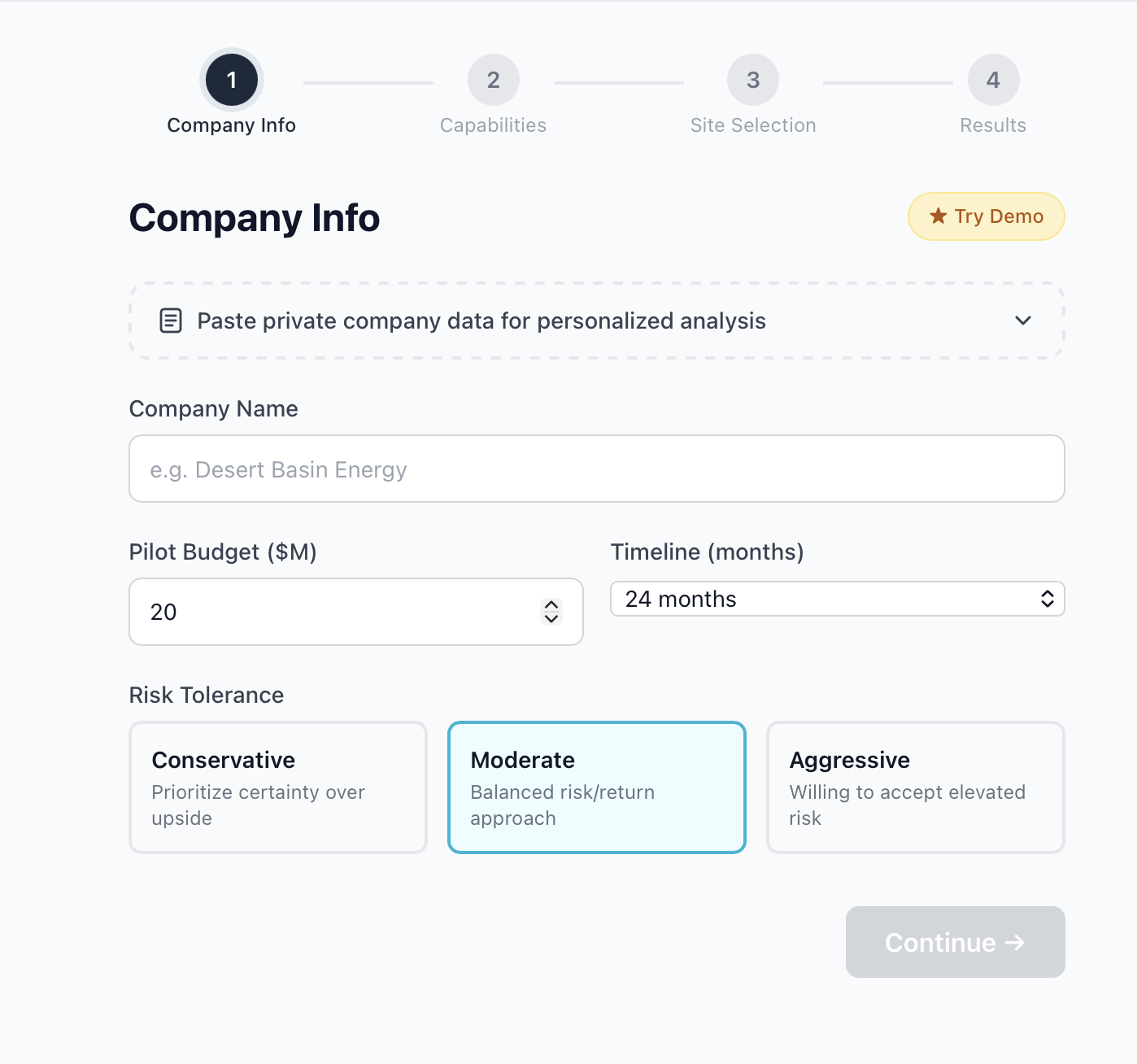
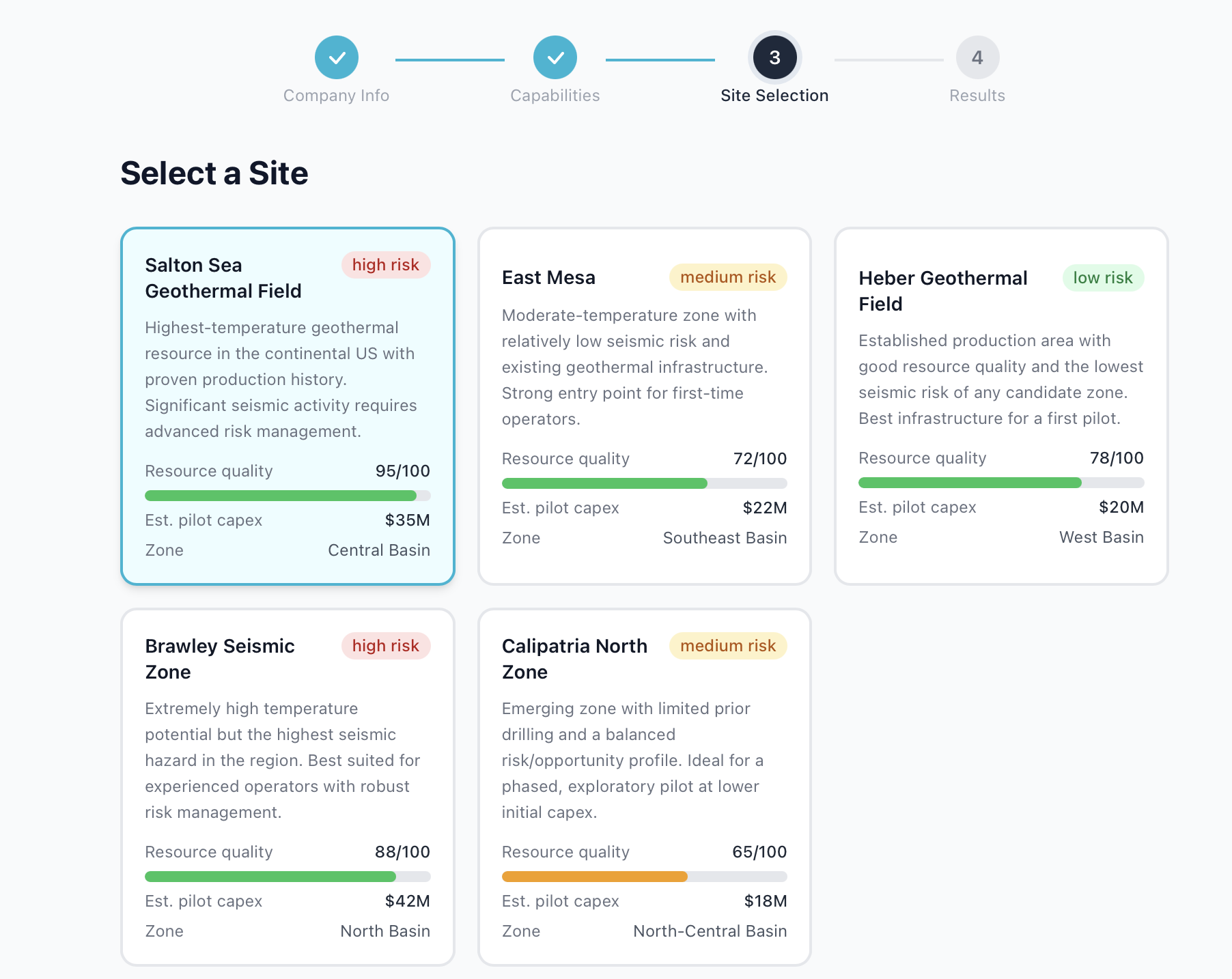
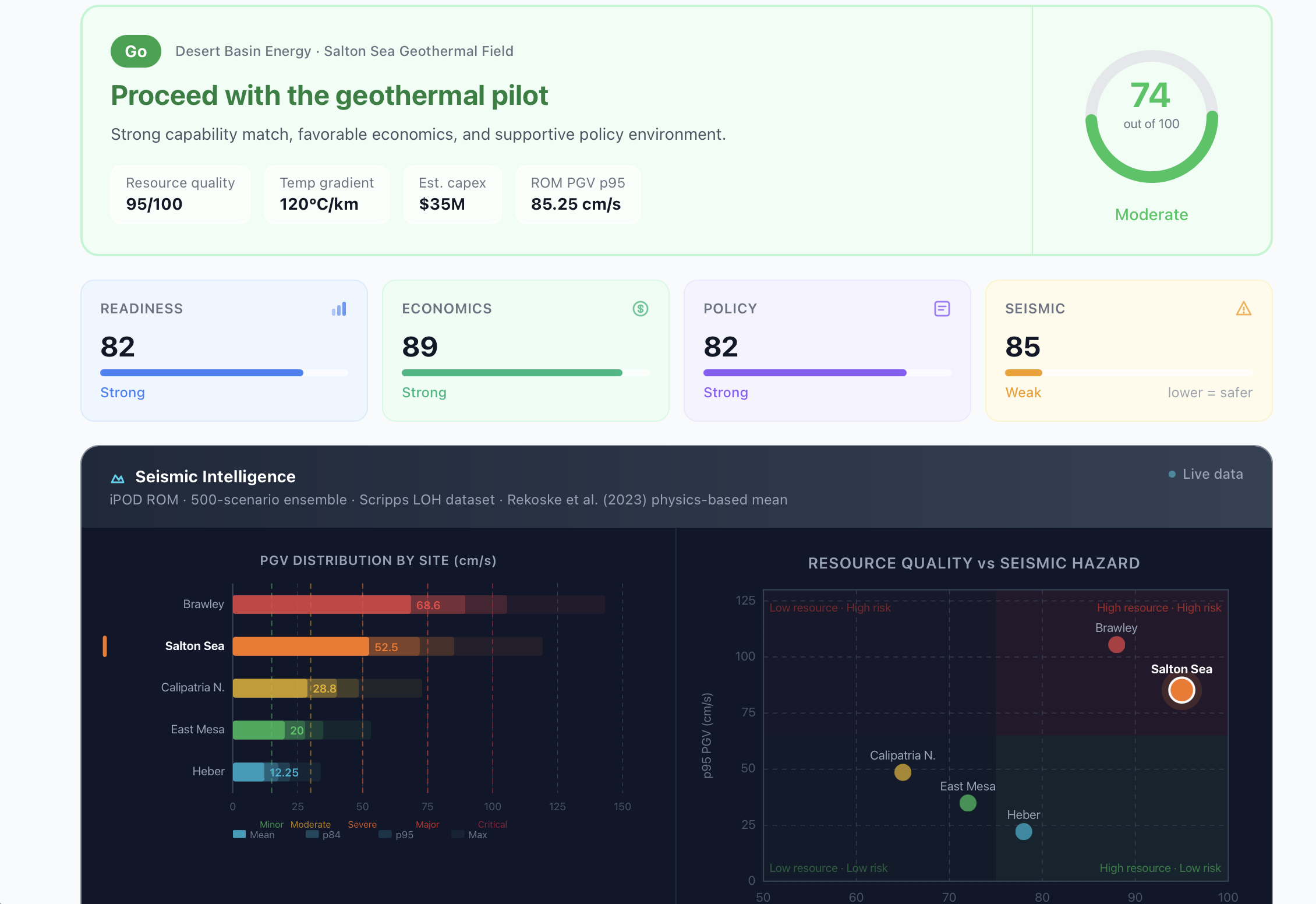
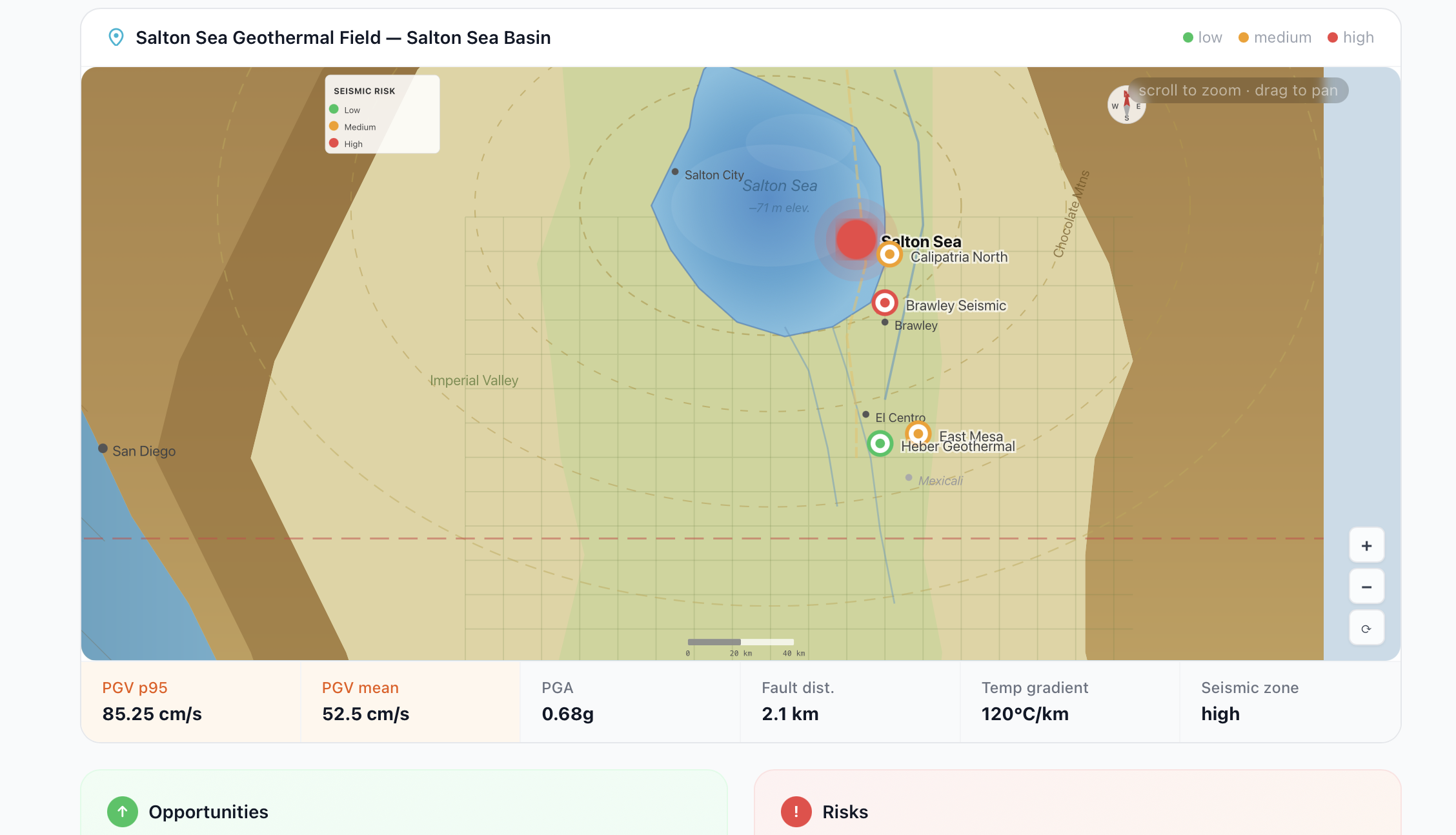
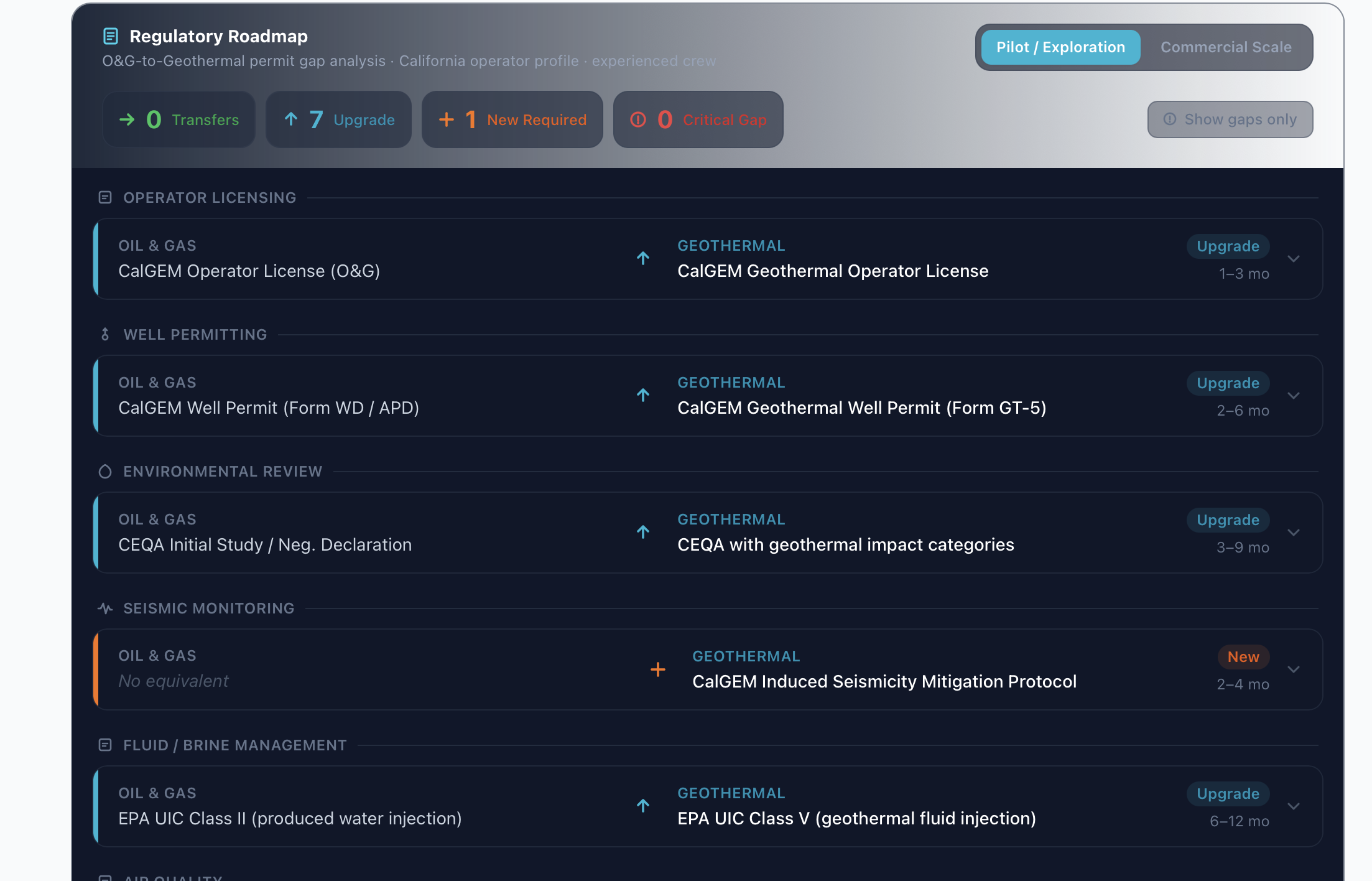
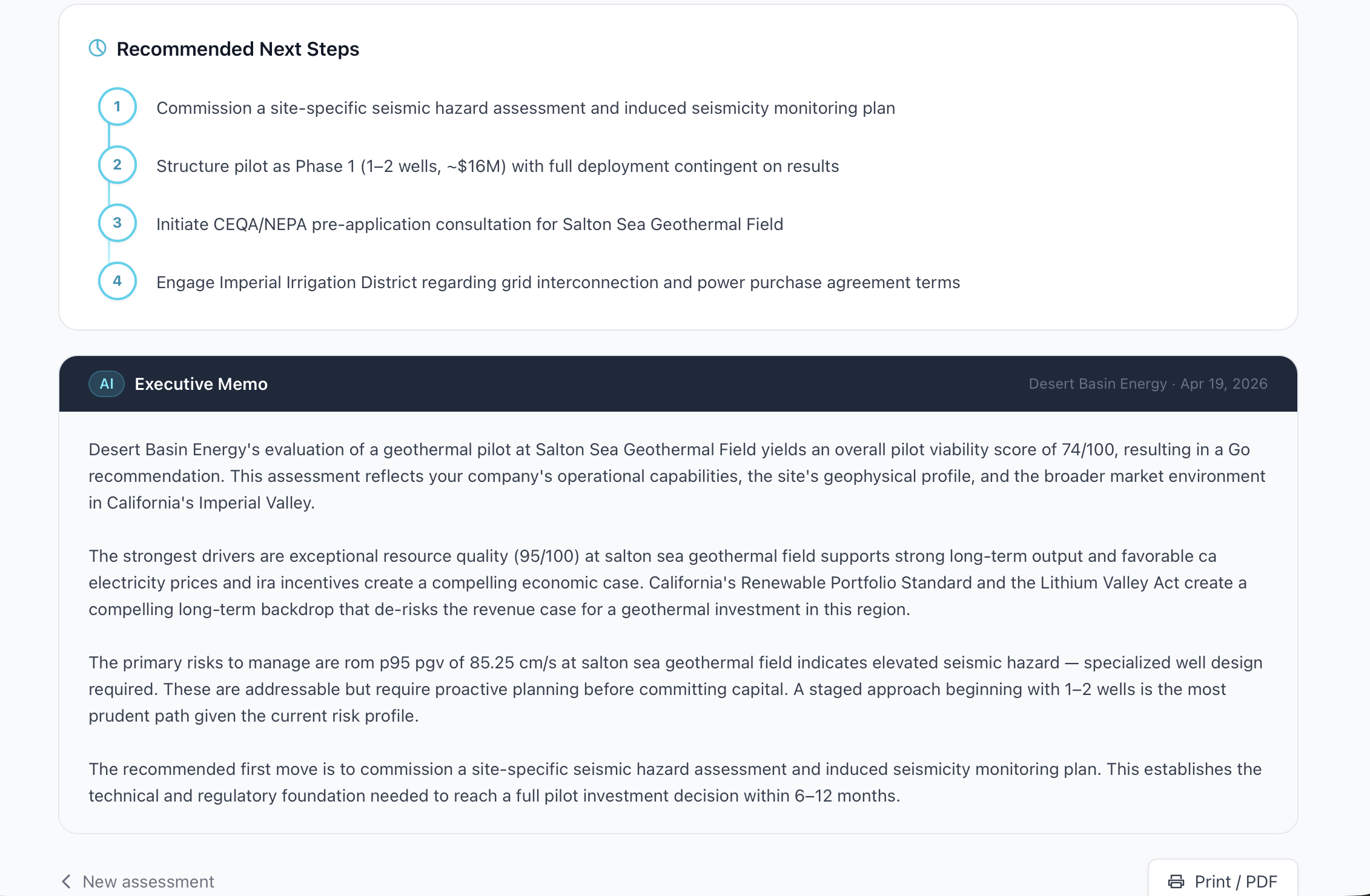
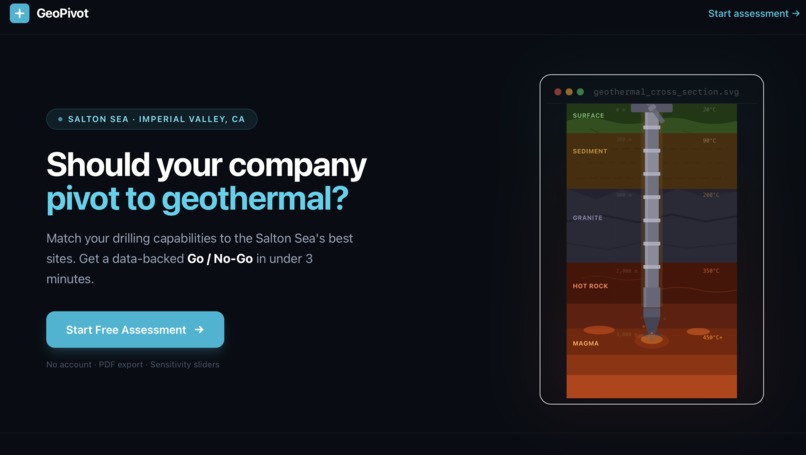
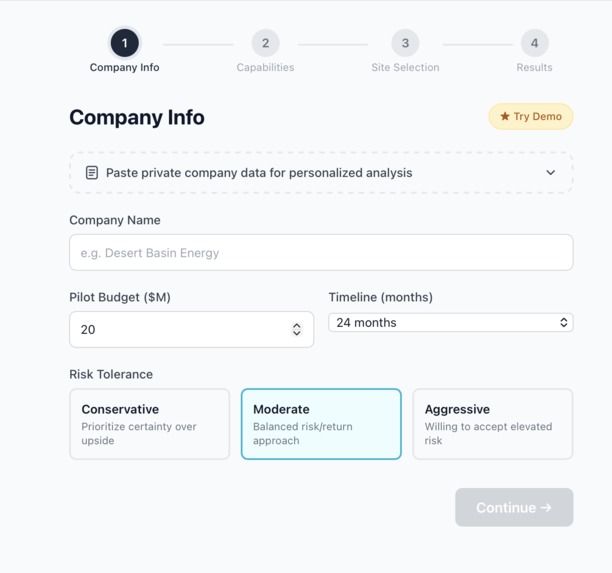
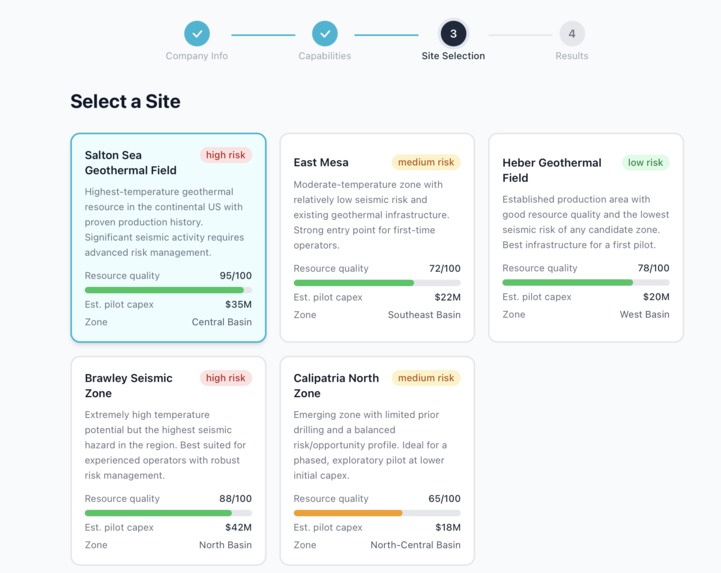
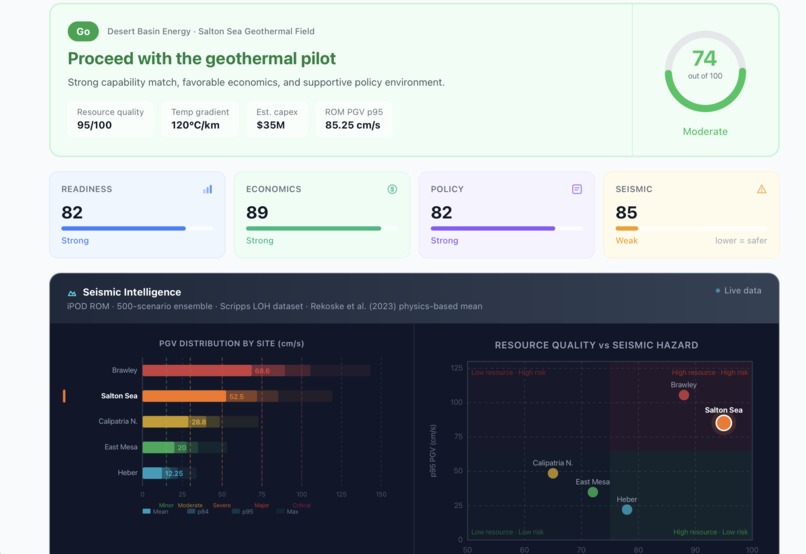
Inspiration: The energy transition is creating a once-in-a-generation opportunity for oil and gas companies — but most don't know if their existing rigs, crews, and capital actually make a geothermal pivot viable. The Salton Sea region sits on one of the most promising untapped geothermal resources in the US, yet decision-makers lack a fast, data-backed way to evaluate it. We built GeoPivot to close that gap. What it does: GeoPivot is a 3-minute decision-support tool at geothermal-drilling1.vercel.app that takes a company's drilling capabilities, budget, timeline, and risk tolerance and scores them against 5 real Salton Sea candidate sites. It factors in site-level seismic risk (PGA, fault proximity, historical seismicity), IRA incentives, California electricity prices, and geothermal capacity factors to deliver a clear Go / Conditional Go / No-Go recommendation — no consultants required. How we built it: We built GeoPivot entirely with Claude Code, using it to scaffold and ship a full-stack Next.js 14 + TypeScript + Tailwind application in under 24 hours. Claude Code generated the 4-step assessment wizard, the deterministic scoring engine, the SVG Salton Sea map component, and the Anthropic-powered /api/analyze and /api/explain routes. Seismic data was sourced from Rekoske et al. (2023, JGR) — physics-based PGV ground motion simulations published on Zenodo — and the app was deployed to Vercel with automatic GitHub integration. Challenges we ran into: Connecting Claude Code to our GitHub repository required configuring a fine-grained personal access token with the correct Contents: Read and Write permissions — a non-obvious step that took iteration to resolve. We also hit Vercel's default 10-second serverless timeout on our Anthropic API routes, which we resolved by adding maxDuration = 60 and switching to streaming responses. Extracting and integrating real-world HDF5 seismic data into a TypeScript-friendly format required bridging Python (h5py, scipy RBF interpolation) with our Next.js data layer. Accomplishments that we're proud of: Shipping a fully functional, publicly deployed web app in 24 hours using Claude Code as the primary developer. The scoring engine is entirely deterministic and citable — every seismic risk score traces back to peer-reviewed physics simulations. The app requires no account, loads in seconds, and delivers a structured recommendation that a real decision-maker could act on. What we learned: Claude Code can take a product from zero to deployed in a single session when given clear context — but managing GitHub permissions, environment variables, and deployment configuration still requires human judgment. We also learned that for a hackathon, depth beats breadth: a polished single-region tool is more compelling than a half-built multi-region one. What's next for GeoPivot: Integrating the full Rekoske et al. PGV dataset directly into site scoring, expanding to Great Basin, Hawaii, and Pacific Northwest geothermal regions using DOE Geothermal Data Repository datasets, adding PDF report export so teams can share results with stakeholders, and building sensitivity sliders so users can see how changes in budget or timeline shift the recommendation in real time.
Built With
- claude
- claude-code-data-&-scientific-hdf5-(rekoske-et-al.-2023-pgv-datasets-via-zenodo)
- github-apis-&-ai-anthropic-claude-api-(claude-sonnet-4-6)
- h5py
- languages-typescript
- numpy
- python-frameworks-next.js-14
- react-platforms-&-cloud-vercel
- scipy-(rbf-interpolation)-other-anthropic-sdk
- tailwind-css

Log in or sign up for Devpost to join the conversation.