-
-
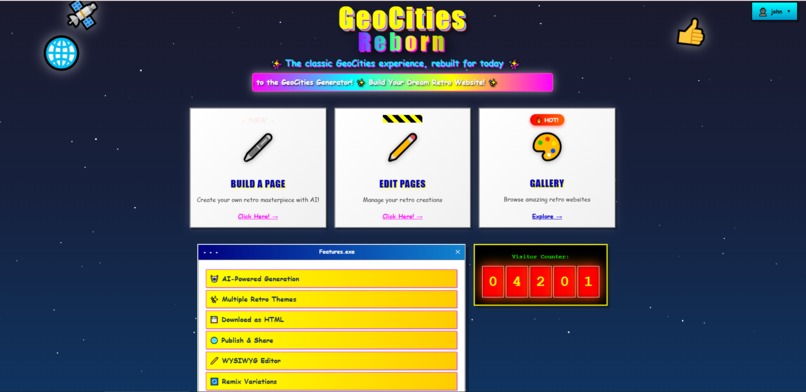
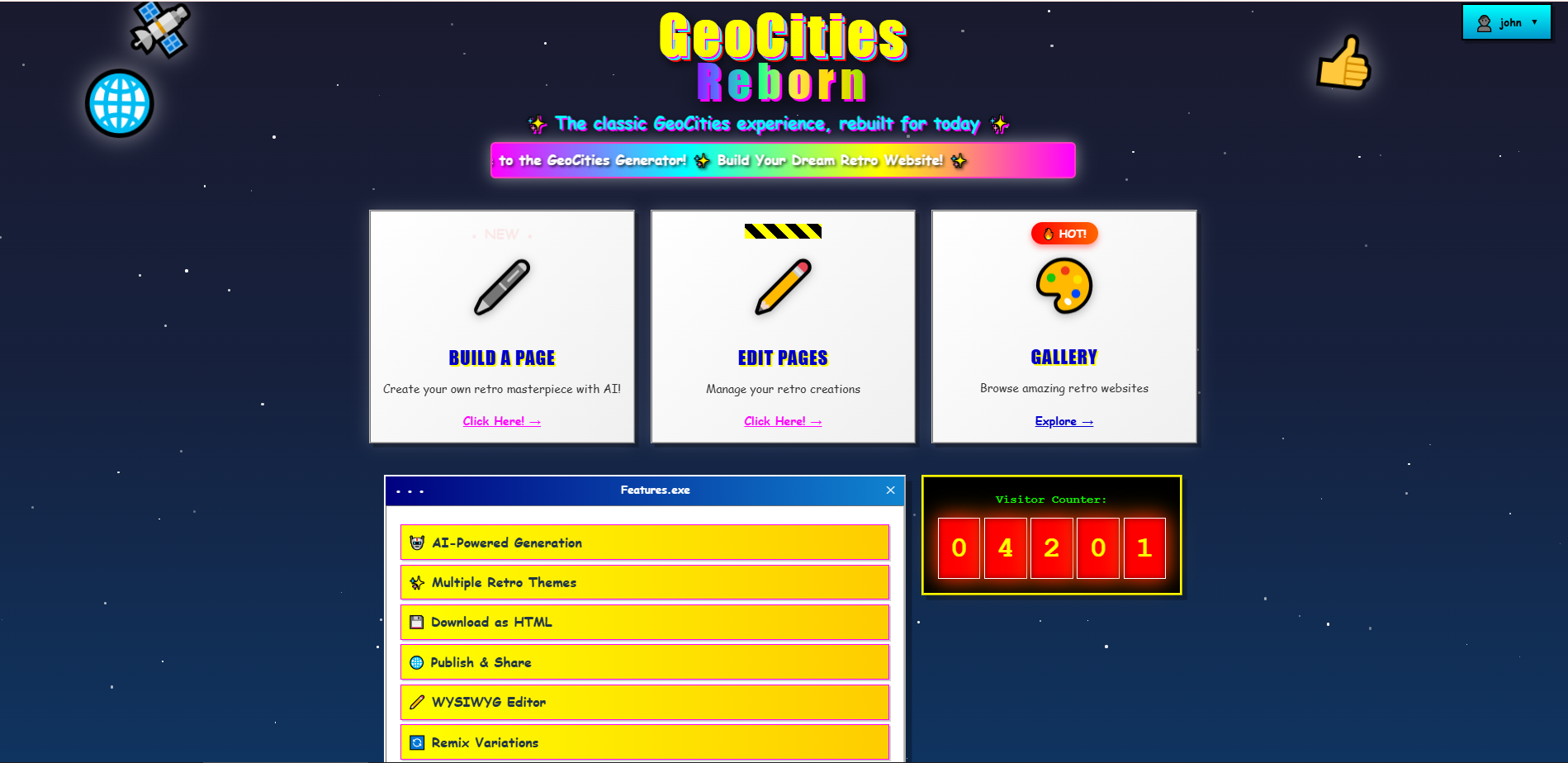
Hompage
-
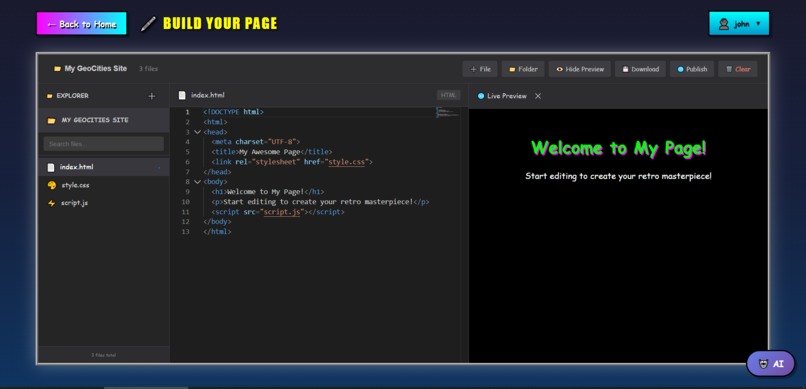
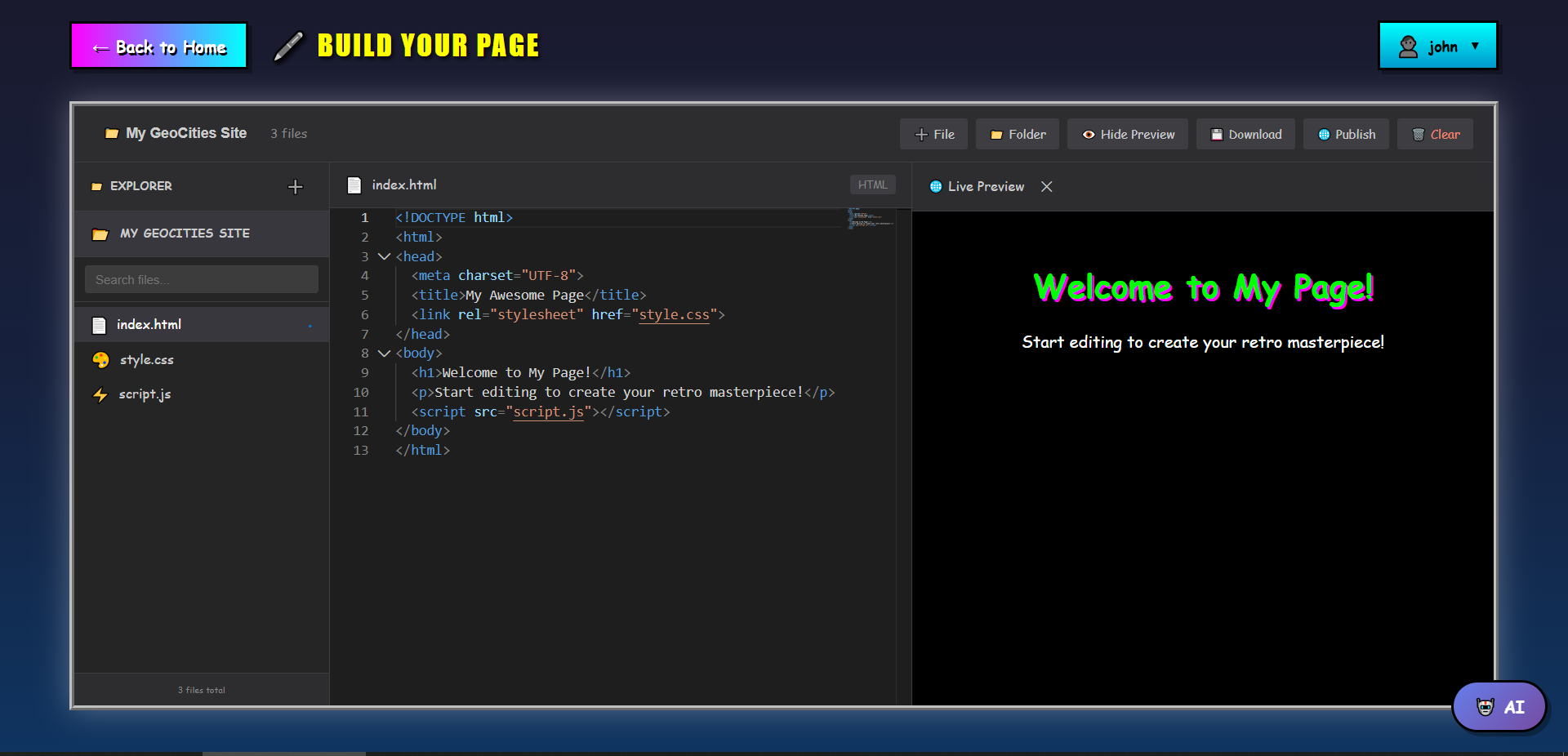
Editor
-
-
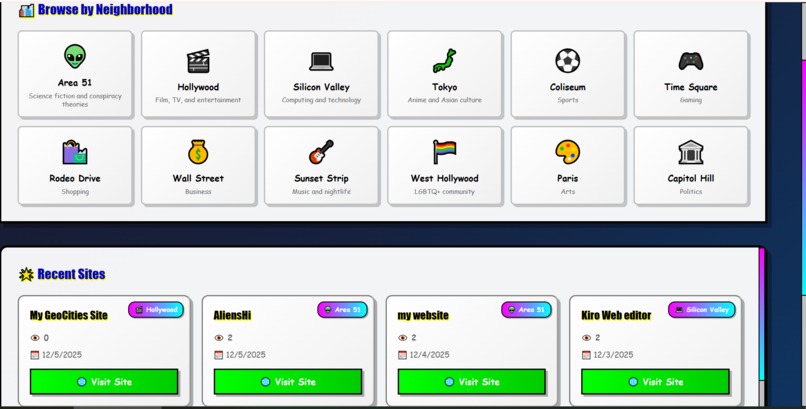
Inspiration
The internet of the late 90s and early 2000s was a wild, creative, wonderfully chaotic place. GeoCities gave millions of people their first taste of web development a space where anyone could build their own corner of the internet, complete with animated GIFs, visitor counters, neon backgrounds, and under construction signs. When GeoCities shut down in 2009, we didn’t just lose a hosting platform we lost a piece of internet culture and the free-spirited creativity it inspired. GeoCities Reborn was created to bring that magic back using the power of modern web technologies
What it does
GeoCities Reborn is a modern platform that brings back the nostalgic creativity of early 2000s web building, but powered by today’s technology.
Here’s what the platform enables:
Create Retro Websites Instantly
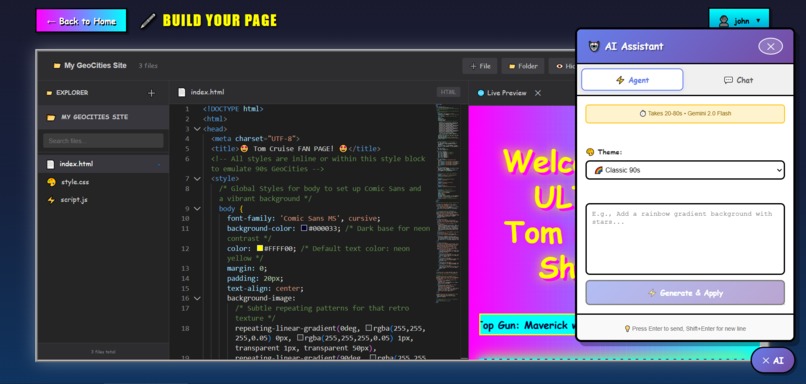
Users can generate 90s/early-2000s-style web pages using Google Generative AI. Just type a prompt, and the system produces a full HTML/CSS page that matches the classic GeoCities vibe — bright colors, GIFs, wild layouts, and all.
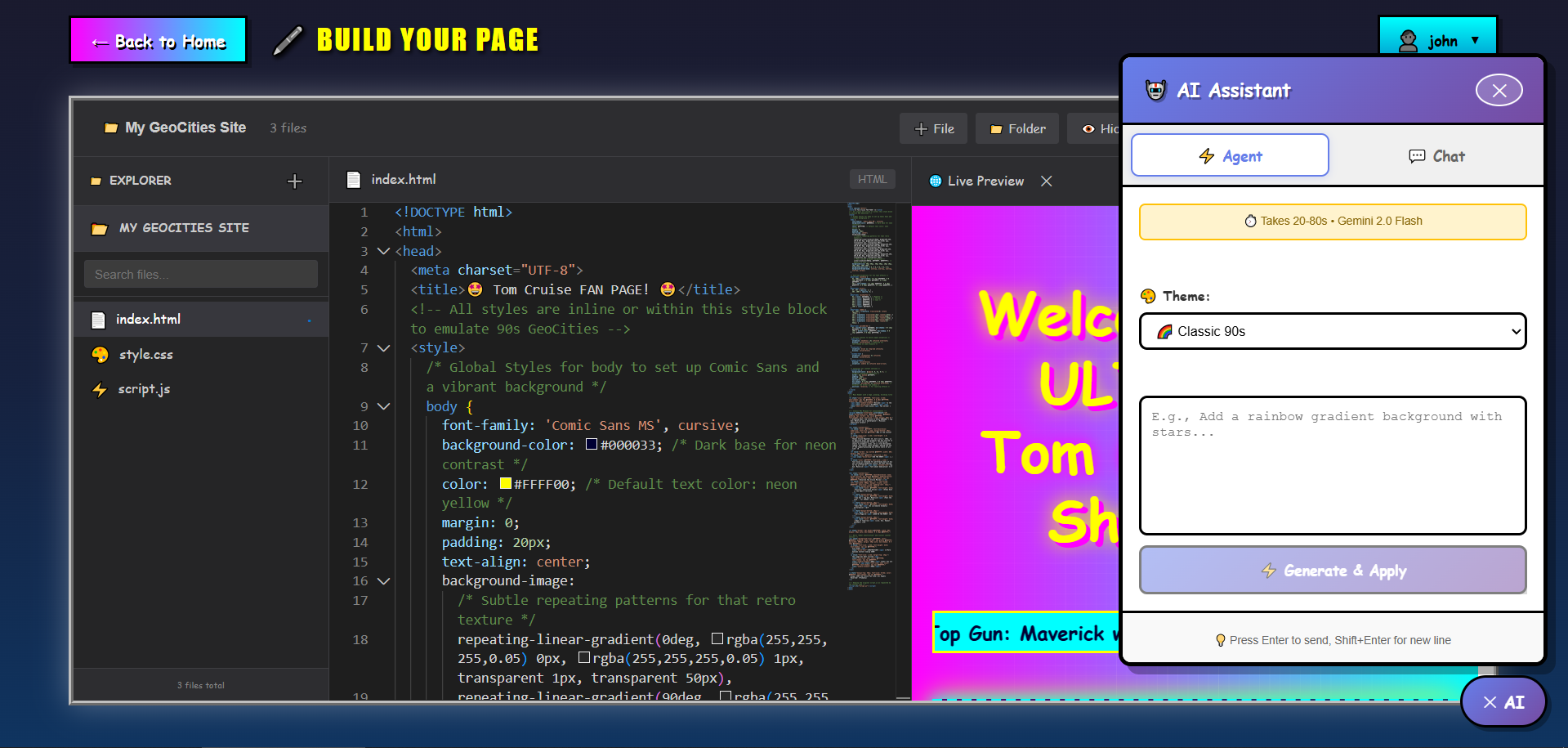
Build With No Coding — AI Copilot (Gemini-Powered) GeoCities Reborn includes an AI Website-Building Copilot powered by Google Gemini, turning anyone into a retro web designer — no coding required.Using Agent and conversation mode
** Or Build With Full Control (Code Editor)**
For advanced users, the Monaco Editor (same as VS Code) offers: Direct HTML/CSS editing Syntax highlighting Real-time updates
** Create an Account & Save Your Work**
Users can sign up, log in, and save their pages securely using: JWT authentication MongoDB storage Uploaded assets (images, GIFs) via Multer
Publish to the Retro Gallery
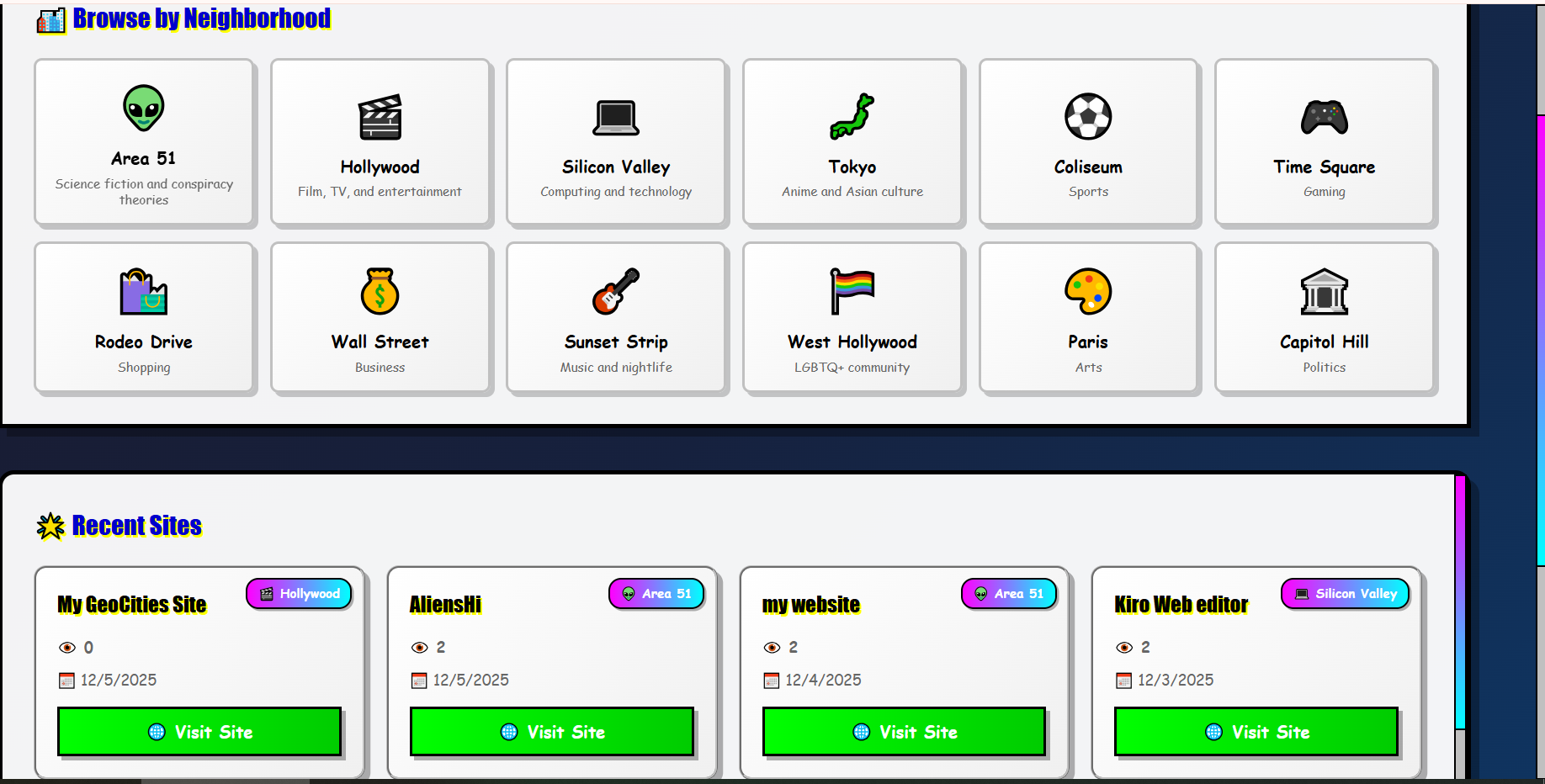
Creators can publish their pages publicly to a community gallery, where others can browse, get inspired, and explore all the unique retro websites.
How we built it
Architecture Overview The project follows a modern full-stack architecture: GeoCities-Reborn/ ├── frontend/ # React + TypeScript + Vite │ ├── src/ │ │ ├── pages/ # HomePage, ProfilePage, BuildPage, etc. │ │ ├── components/# Reusable UI components │ │ └── context/ # Auth context for user state │ └── vercel.json # Deployment configuration └── backend/ # Node.js + Express API └── src/ ├── server.js # Main server & routes └── storage.js # MongoDB integration
Key Features Implementation
AI-Powered Page Generation We integrated Google's Generative AI to help users create retro-styled web pages. Users provide a prompt, and the AI generates HTML/CSS that captures the 90s aesthetic:
WYSIWYG Editor Using TipTap, we built a rich text editor that lets users visually edit their pages without touching code: - Text formatting (bold, italic, underline, colors) - Image insertion - Custom styling options - Real-time preview
- Code Editor For power users, we integrated Monaco Editor (the same editor that powers VS Code) to allow direct HTML/CSS editing.
- User Authentication Implemented secure JWT-based authentication:
- Gallery System Users can publish their pages to a public gallery, browse others' creations, and get inspired.
Challenges we ran into
Balancing Nostalgia with Usability Challenge: Making the site feel authentically retro without sacrificing modern UX principles. Solution: I kept the visual aesthetic (animated GIFs, bright colors, Comic Sans) but ensured the interface remained intuitive and responsive. The navigation is clean, and actions are predictable.
AI Content Generation Challenge: Getting the AI to consistently generate valid, retro-styled HTML that works across browsers. Solution: I crafted detailed prompts with specific constraints and examples. We also implemented validation and sanitization to ensure generated code is safe and functional.
3*Deployment Configuration* Challenge: Vercel's serverless architecture required special configuration for our SPA routing.
Accomplishments that we're proud of
Revived a nostalgic web-building experience with modern AI power.
Implemented a full AI agent workflow using Gemini for reasoning, creation, and editing.
Built a fully working no-code WYSIWYG editor that anyone can use. Created automated doc-to-site pipelines that turn documents into websites in seconds. Delivered a fun, beginner-friendly platform that lowers the barrier to web creation. Optimized for speed and accessibility, making sites lightweight and mobile-friendly. Launched neighborhoods, allowing users to customize their own space online.
What we learned
AI can dramatically simplify web creation, especially when paired with a powerful reasoning model like Gemini.
- Users prefer natural-language workflows, and the AI agent system made even complex tasks feel simple.
- WYSIWYG and AI complement each other — visual builders + AI instructions give the best user experience.
- Document-to-website conversion is a real need, especially for creators who want instant online presence.
- Nostalgia + modern AI tech resonates with users, making the project feel fun but still practical.
- Performance and accessibility matter, even when generating layouts automatically.
- Clear prompts = better results, and we refined prompt engineering throughout development.
What's next for GeoCities-Reborn
Custom Domains: Allow users to connect their own domains - Template Library: Pre-built retro themes users can customize - Social Features: Comments, likes, and follows - Export Options: Download entire sites as ZIP files - Collaboration: Multiple users editing the same page - Analytics: Retro-styled visitor statistics

Log in or sign up for Devpost to join the conversation.