Inspiration
Gentle Path came out of a problem I know firsthand: task-initiation friction. I don't struggle with doing the work once I'm in it — I struggle with the first thirty seconds before I start. A vague assignment like "write the report" can sit untouched for hours, not because it's hard, but because there's no obvious first physical action to take. Most productivity tools assume the hard part is staying organized. For me, the hard part is starting at all — so I wanted to build something that treats task initiation as the actual problem to solve, not an assumed given.
What it does
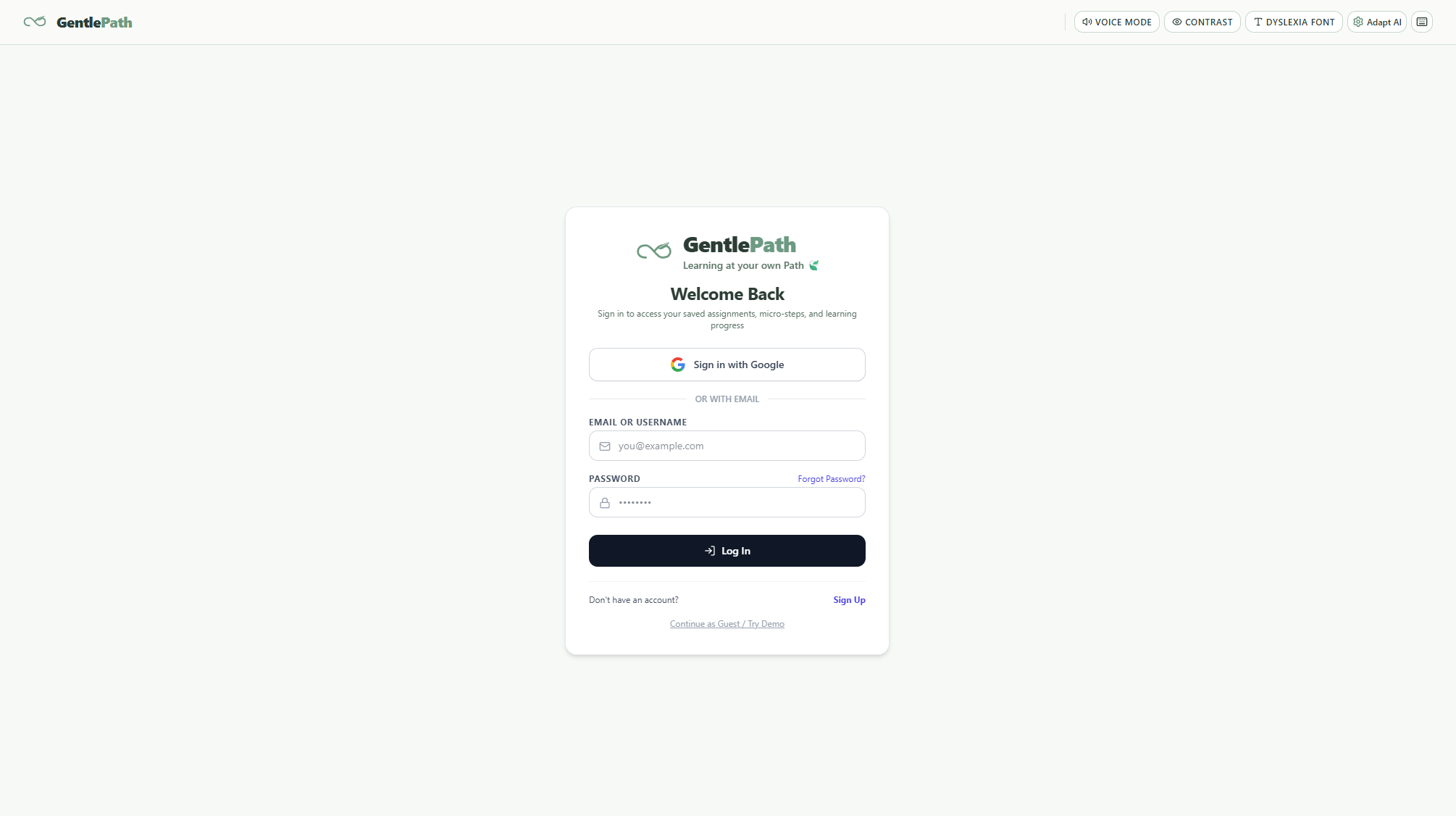
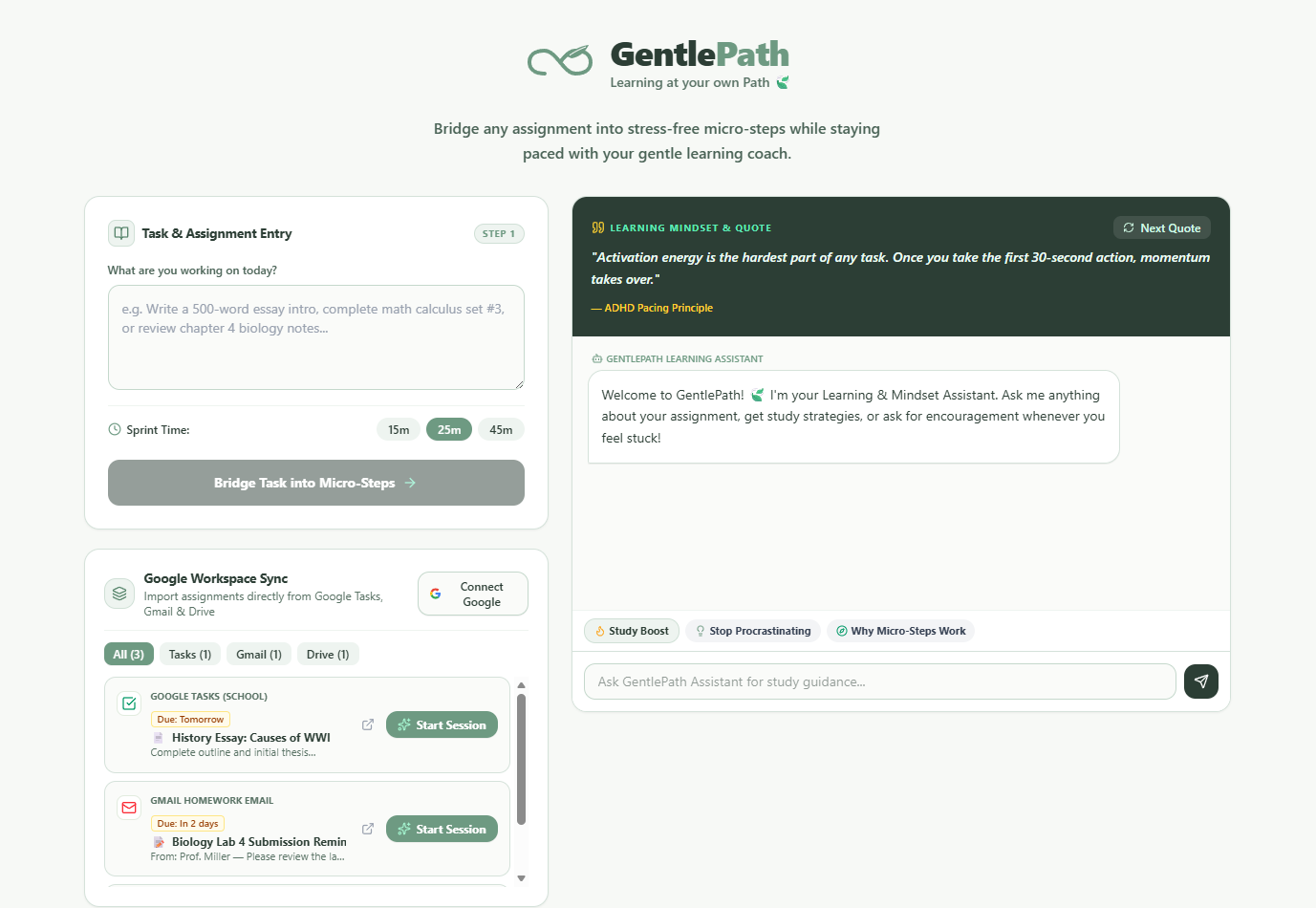
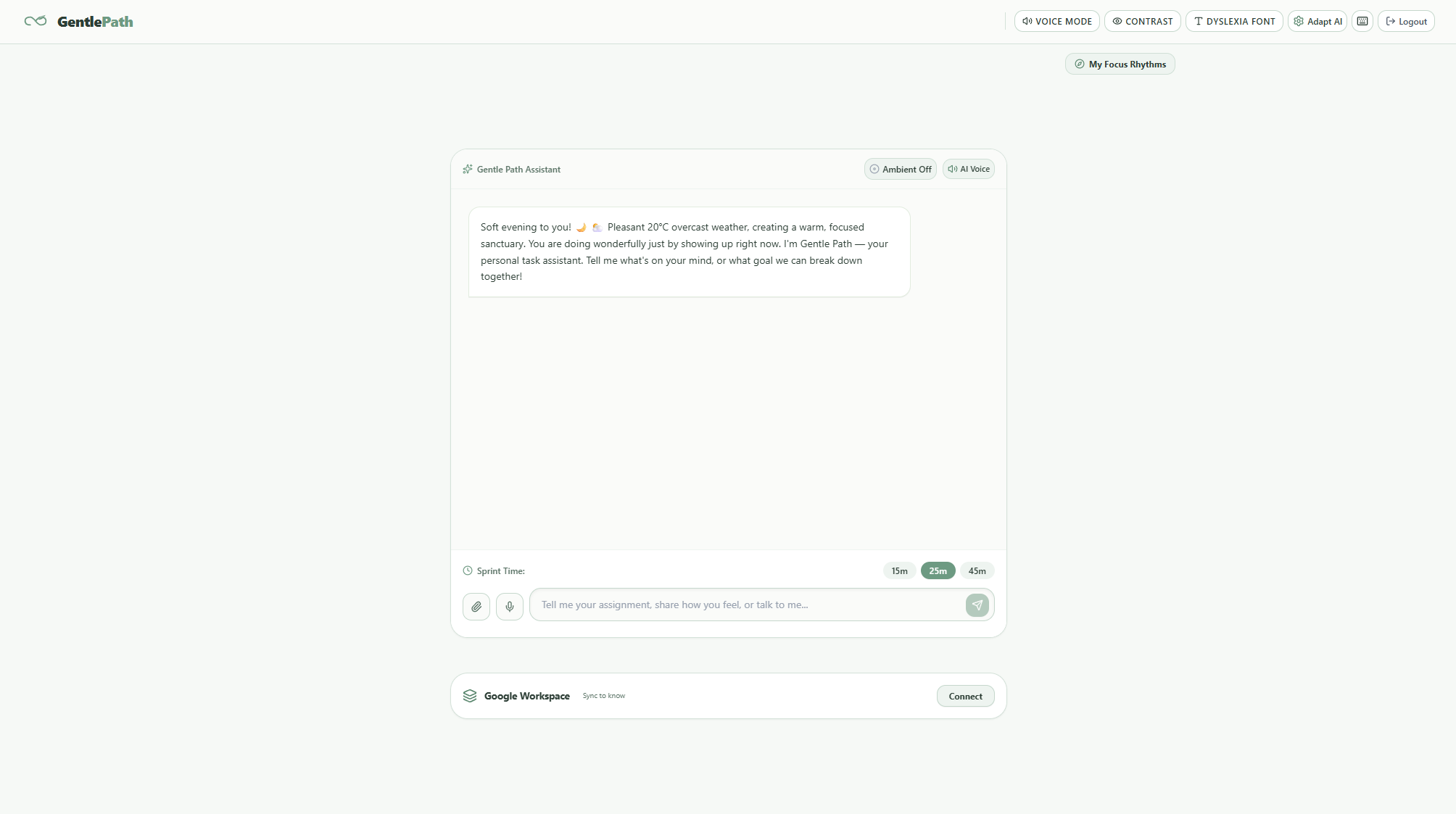
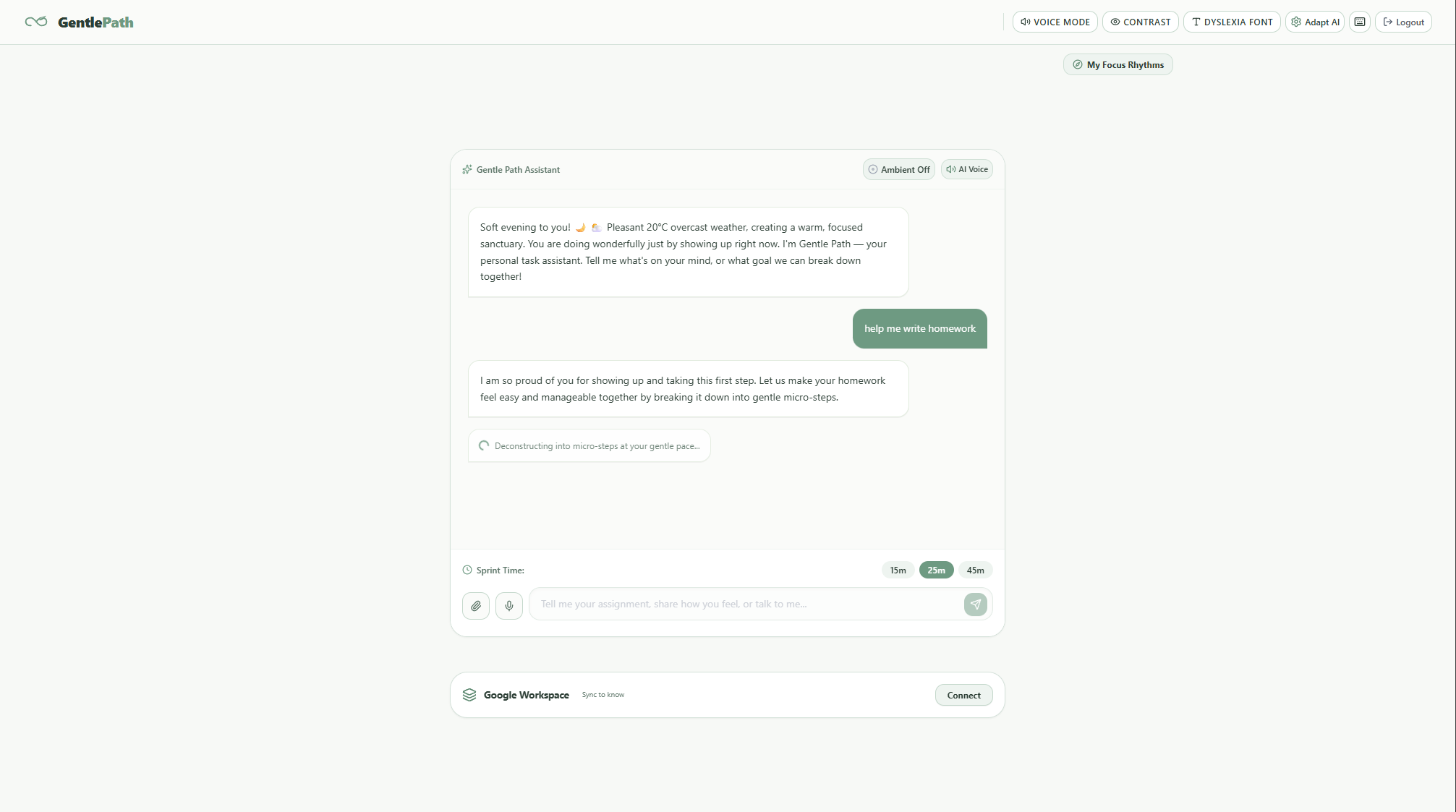
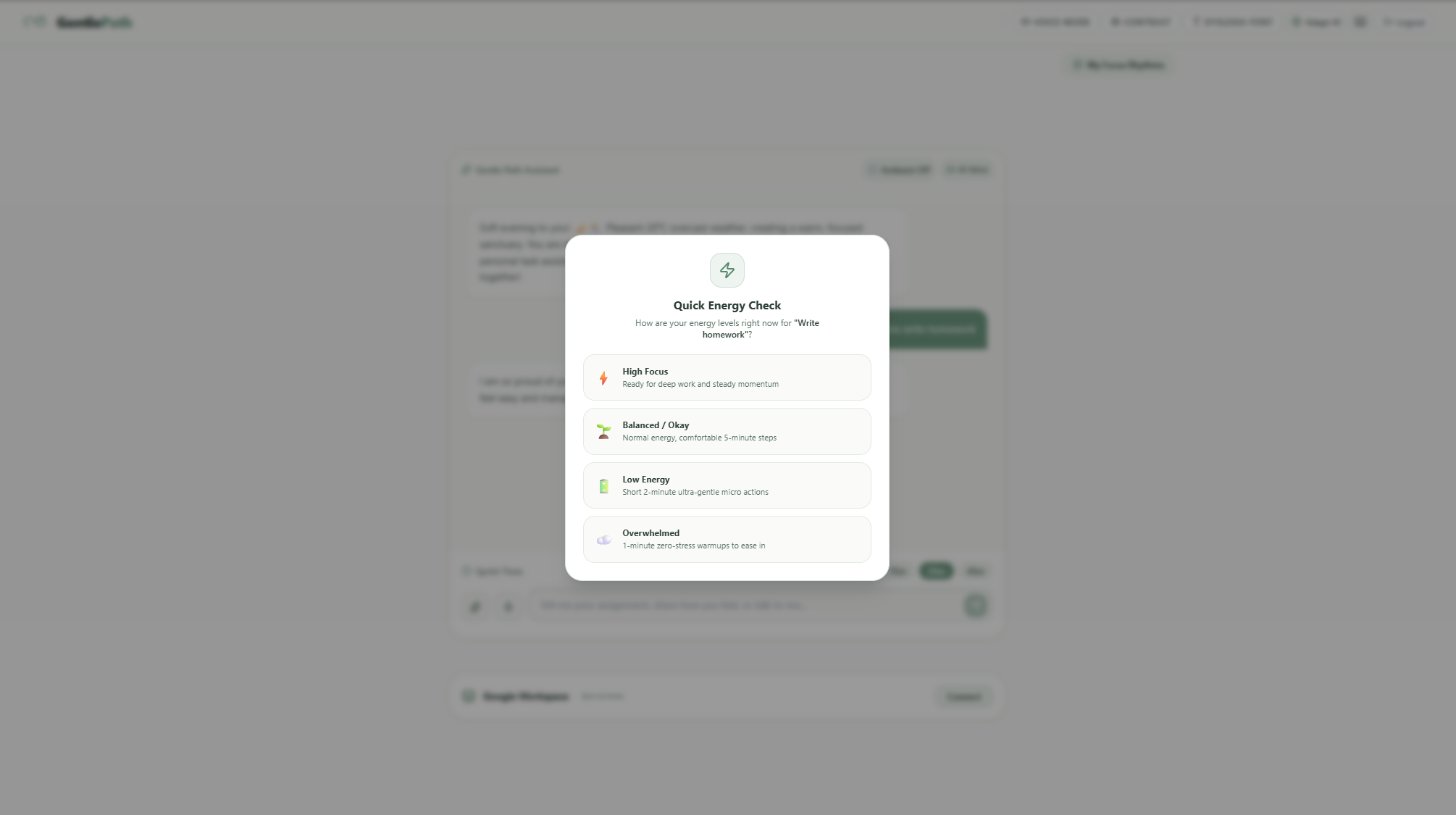
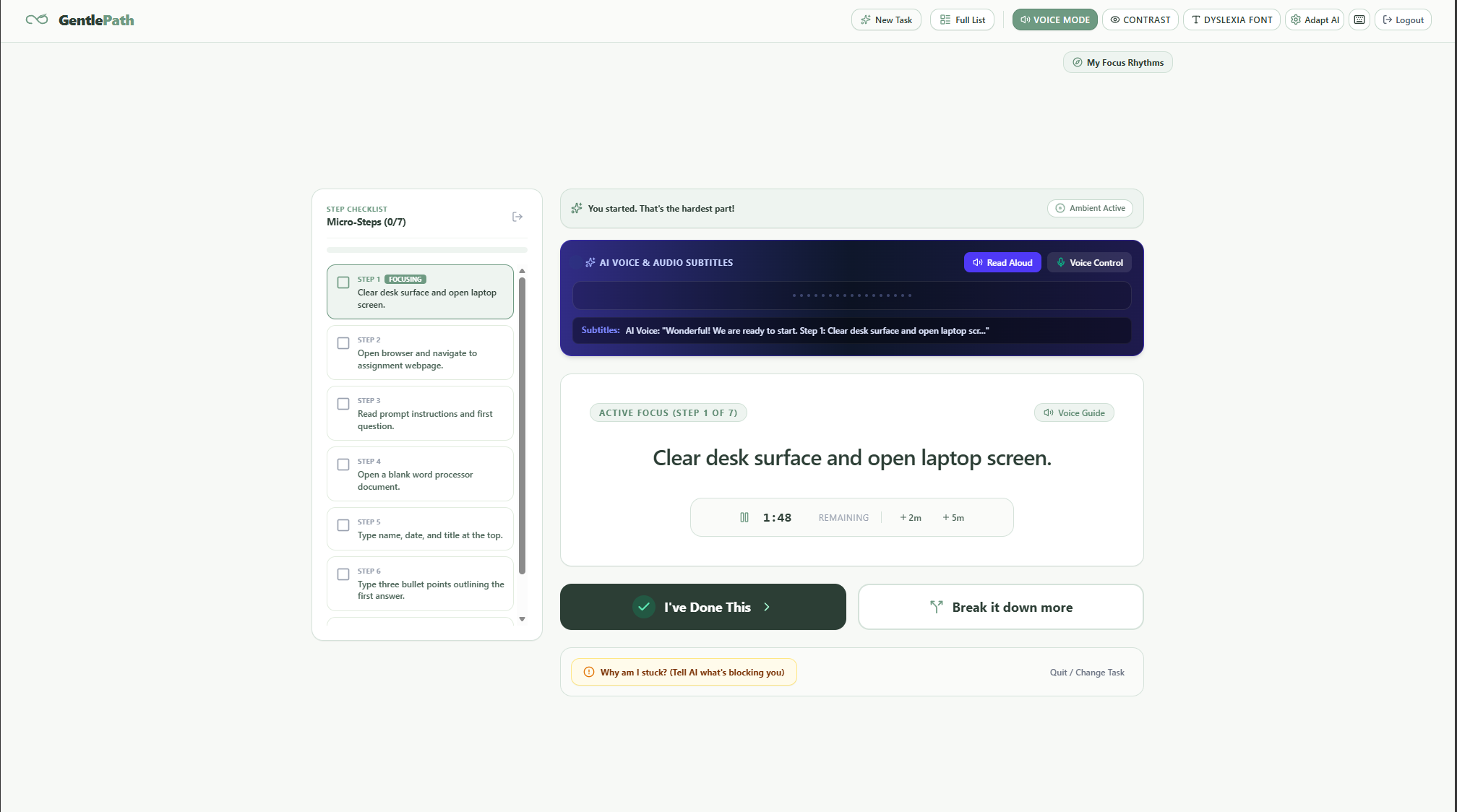
Gentle Path takes a task or assignment description and breaks it into small, concrete, physically-startable micro-steps — "open a blank doc and type your name at the top," not "begin the essay." It shows one step at a time to avoid overwhelming the user with a full list, offers to re-break a step into smaller pieces if the user stalls, and paces itself using calming voice guidance and ambient background sound instead of countdown-timer pressure or gamified streaks.
How we built it
The frontend is React, TypeScript, and Tailwind CSS, with a lightweight Node/Express backend that proxies calls to Gemini so the API key never touches the client. The AI is prompted to return structured JSON — an array of short, flat-toned micro-steps with time estimates — which the UI renders one at a time. Voice guidance uses the Speech Synthesis API, and ambient focus sound (rain, café, ocean, piano) is generated with the Web Audio API and auto-selected rather than exposed as another setting to fiddle with. Accessibility was treated as a core requirement rather than an add-on: full keyboard navigation, ARIA labels, a dyslexia-friendly font toggle, and a high-contrast mode.
Challenges we ran into
The hardest part was getting voice, AI responses, and ambient audio to work together without stepping on each other. Each piece was straightforward in isolation — text-to-speech, an LLM call, a background audio loop — but layering all three meant handling timing carefully: making sure the AI's spoken guidance didn't talk over itself on step transitions, that ambient audio didn't clash with or drown out the voice, and that none of it felt like three separate systems bolted together instead of one coherent, calm experience.
What we learned
Designing a genuinely calm UI is harder than it sounds, mostly because it means deliberately not doing things that are standard in most apps. Gamification, streaks, and urgent countdown timers are default patterns for a reason — they're proven to drive engagement — but for someone with task-initiation or attention struggles, that kind of pressure backfires and can turn a stall into shame. Building Gentle Path meant constantly checking every feature against the question "does this add pressure?" rather than "does this add engagement?" — a different design instinct than most productivity tooling optimizes for.

Log in or sign up for Devpost to join the conversation.