
What it does
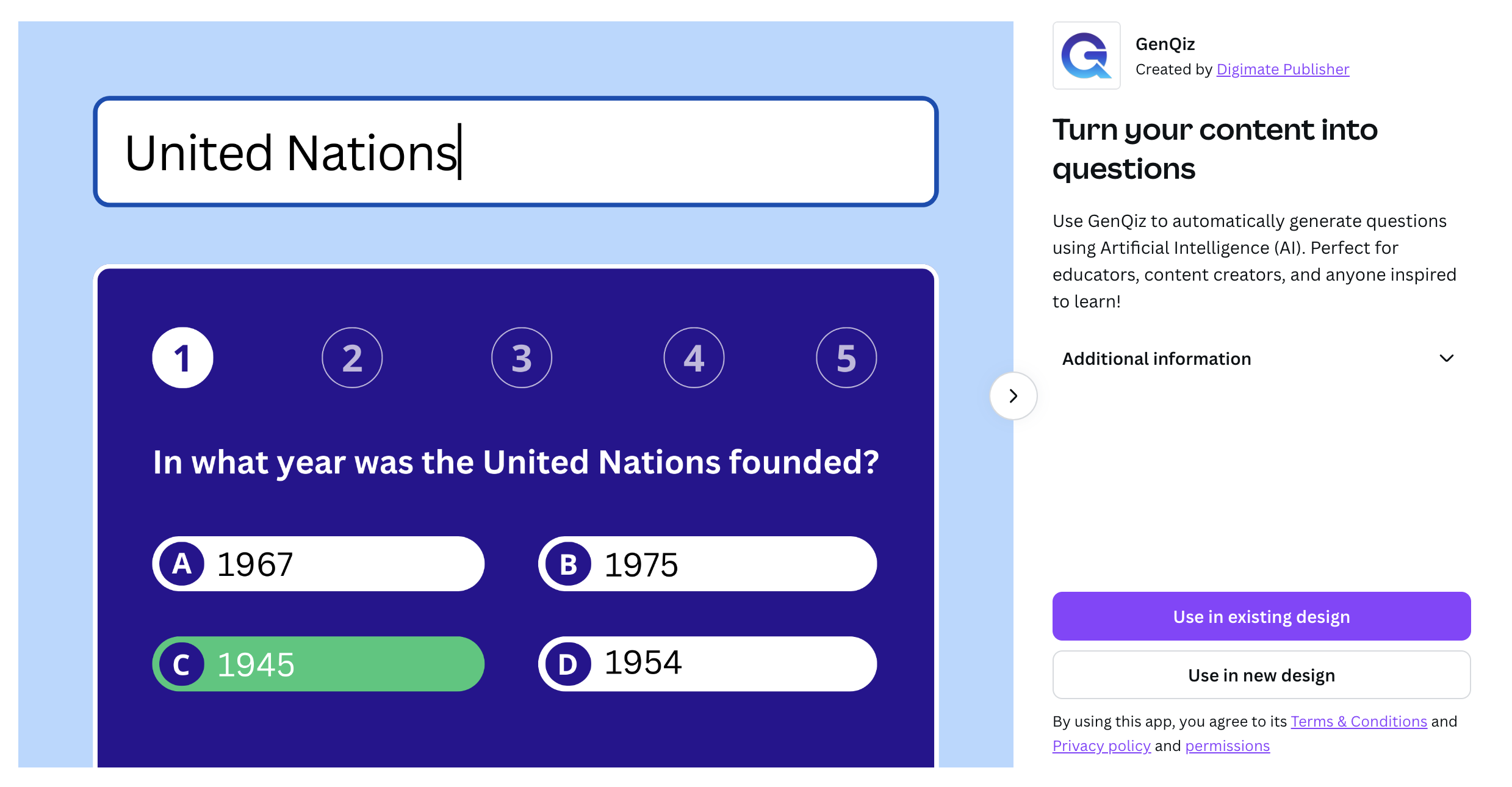
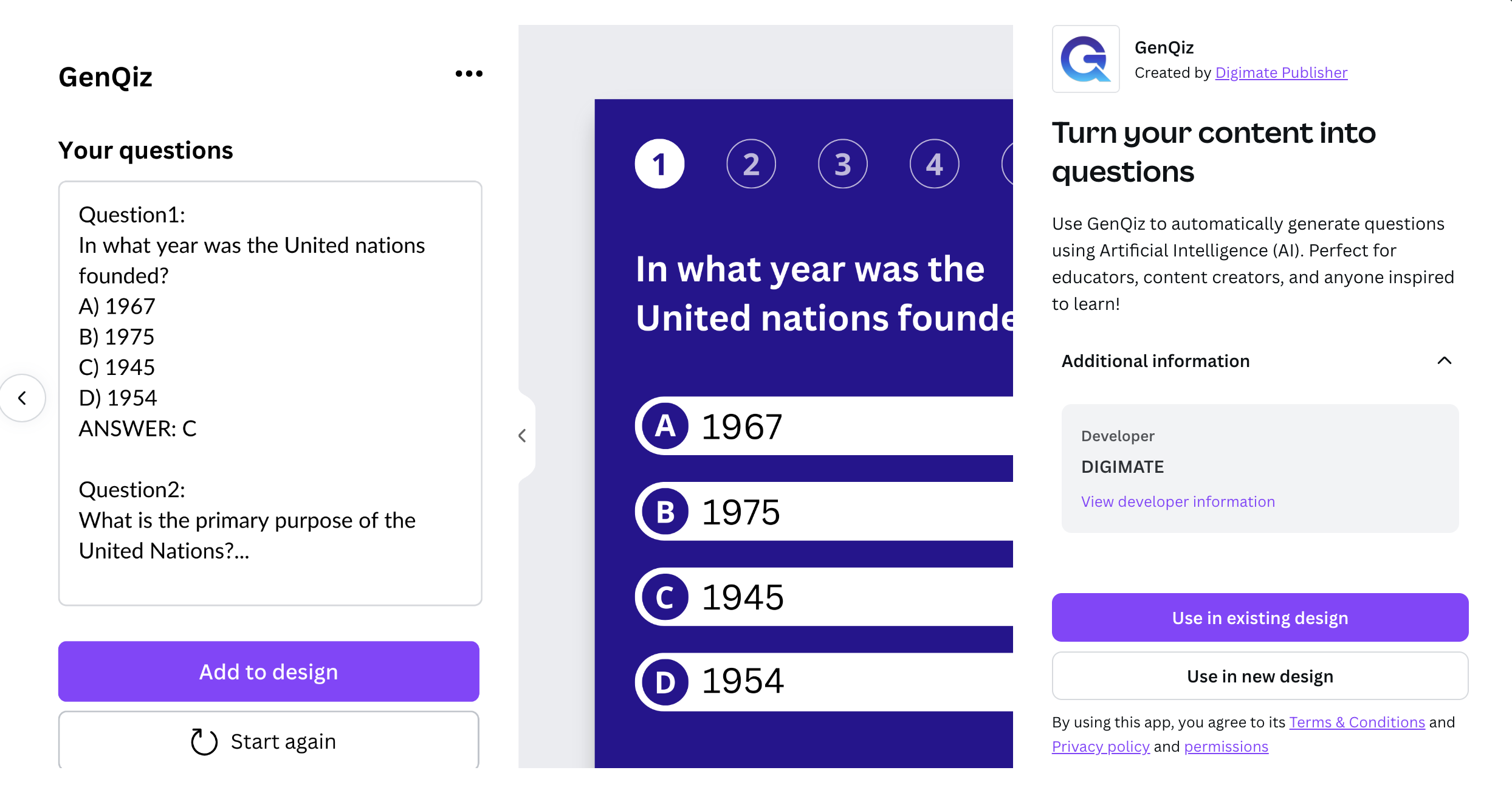
GenQiz is a sophisticated application designed to automatically generate a diverse set of questions from provided educational content using advanced technologies. By leveraging Artificial Intelligence (AI), Machine Learning (ML), Natural Language Processing (NLP), and Large Language Models (LLMs), GenQiz streamlines the creation of lectures, educational materials, learning sessions, and online courses.
Key Features:
- Customizable Question Types: Generates multiple-choice, true/false, fill-in-the-blank, and short answer questions.
- Focus Areas: Allows users to specify topics or concepts for targeted question generation.
- Interactive Materials: Facilitates the creation of engaging and interactive educational resources.
- Progress Tracking: Monitors student performance, provides instant feedback, and suggests learning methods.
- Advanced Analytics: Offers insights into question effectiveness and learning outcomes.
How we built it
To build GenQiz, we integrated several cutting-edge technologies:
- Artificial Intelligence (AI): Used to analyze and understand content, recognizing key concepts and generating relevant questions.
- Natural Language Processing (NLP): Applied for semantic analysis and question creation, ensuring questions are contextually accurate and meaningful.
- Large Language Models (LLMs): Utilized to process diverse content and produce high-quality questions with deep language understanding.
Development Process:
- Content Input: Users upload various content types including text, multimedia, and web links.
- Parameter Settings: Defined preferences for question type, difficulty level, and language.
- Algorithm Integration: Employed advanced algorithms to analyze content and generate tailored questions.
- User Interface Design: Developed an intuitive interface for ease of use and customization.
Challenges we ran into
Building GenQiz came with several challenges:
- Algorithm Complexity: Designing algorithms capable of accurately analyzing and interpreting diverse content required extensive development and testing.
- Data Quality: Handling a wide range of content types and ensuring accurate context understanding posed significant challenges.
- User Experience: Creating an intuitive and user-friendly interface while offering extensive customization options was complex.
- Performance and Scalability: Managing computational resources to process large volumes of content efficiently and ensuring the platform scaled to meet growing user demands.
- Feedback Integration: Continuously improving question generation algorithms based on user feedback was essential for refinement and development.
Accomplishments that we're proud of
- Innovative Technology Integration: Successfully incorporated AI, NLP, and LLMs to create a sophisticated and effective question generation tool.
- User-Friendly Design: Developed an intuitive interface that simplifies the question creation process and accommodates diverse educational needs.
- Customizable Features: Enabled extensive customization to generate questions that meet various educational objectives and student needs.
- Efficiency Gains: Reduced the time required for question creation, enhancing productivity for educators and improving learning outcomes for students.
What we learned
- Importance of Flexibility: Balancing flexibility with ease of use is crucial for creating a tool that is both powerful and accessible to diverse users.
- Need for Accuracy: Accurate content analysis and context understanding are vital for generating relevant and effective questions.
- Continuous Improvement: Incorporating user feedback is essential for refining algorithms and enhancing overall user experience.
- Scalability Considerations: Planning for performance and scalability from the beginning is crucial to handle growth and maintain efficiency.
What's next for GenQiz
Looking ahead, we plan to:
- Enhance Algorithms: Continue refining AI, NLP, and LLM algorithms to improve question quality and adapt to new content types and educational trends.
- Expand Integrations: Explore additional integrations with educational platforms and tools to broaden GenQiz’s functionality and reach.
- Improve User Experience: Incorporate more user feedback to further enhance the interface and customization options.
- Increase Scalability: Develop solutions to ensure the platform can handle larger volumes of content and a growing user base efficiently.
- Develop New Features: Introduce advanced features such as automated learning path recommendations and deeper analytics for personalized education.
GenQiz is committed to evolving with educational needs and technological advancements to continuously provide value to educators and learners.


Log in or sign up for Devpost to join the conversation.