Inspiration
Navigating genomic data analysis and germline variant interpretation can feel like learning a new language without a guide. Students, bioinformaticians, and clinicians entering the field face a steep learning curve: they must understand specialised databases, complex nomenclature standards such as HGVS, and essential safety boundaries. Yet much of this knowledge is acquired through trial and error with messy real-world data or dense technical documentation.
We built GenomeDesk to bridge that gap. It is a dedicated, interactive learning platform that develops practical small-variant review skills through concise reference material, guided workflows, and case-based simulations. Our goal was to create a reliable workbench and study companion for anyone seeking to master germline variant workflows with confidence.
What GenomeDesk Does
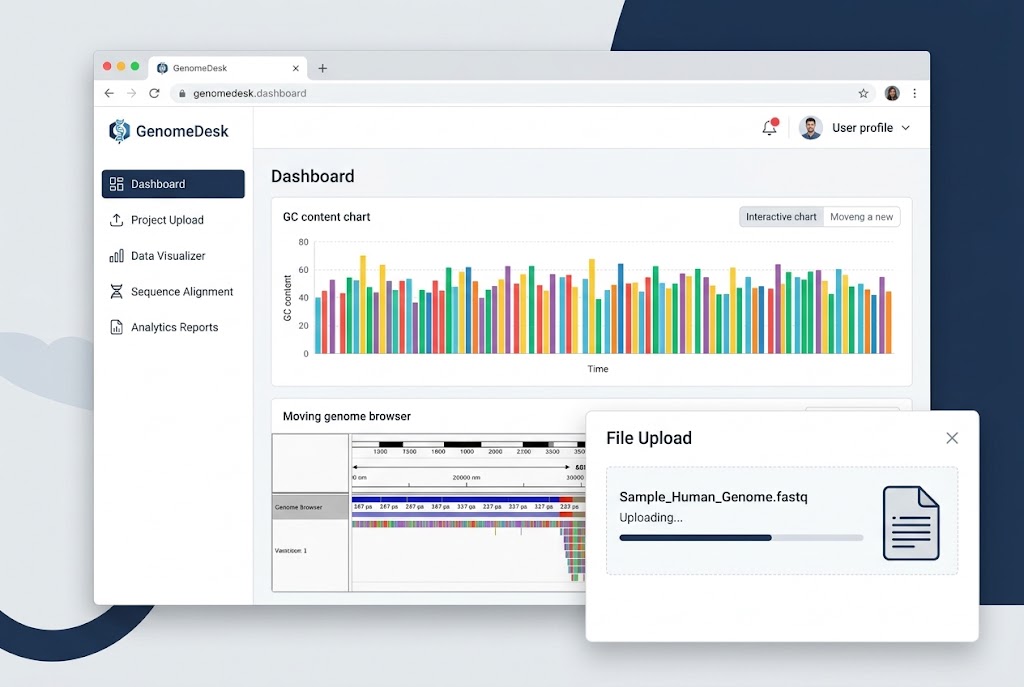
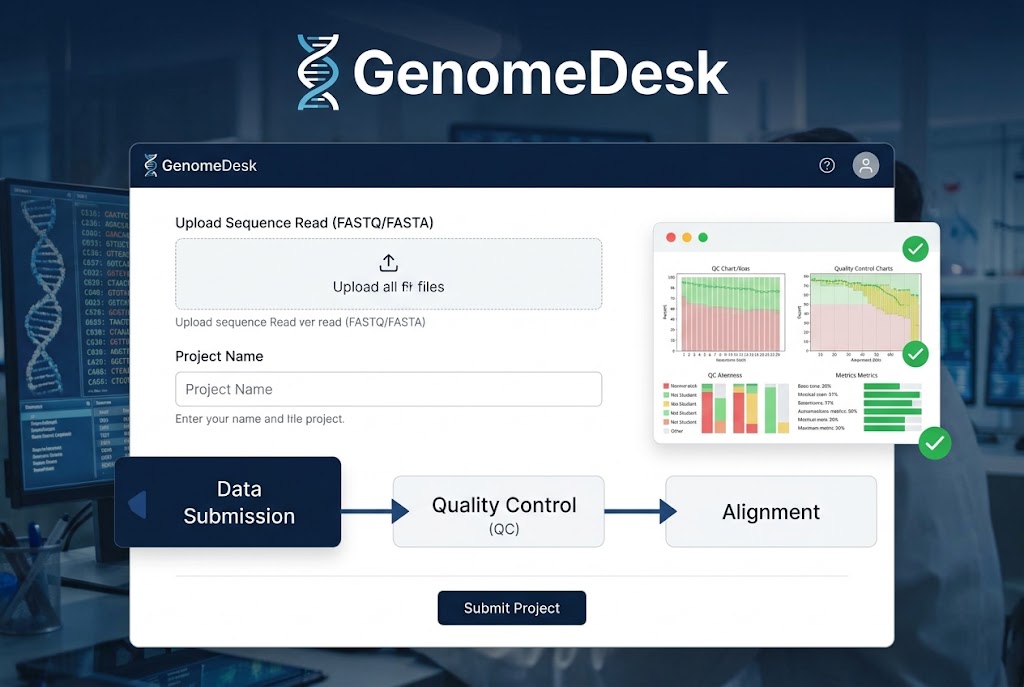
GenomeDesk is an interactive web application for learning and mastering germline variant workflows. Its streamlined digital workspace brings together several focused modules: • Foundations Review: Refreshes core concepts, including genomic assemblies, transcripts, evidence terminology, and safe clinical workflows. • Database Masterclass: Offers five focused lessons on when, why, and how to use key genomic databases, including common pitfalls to avoid. • Interactive Decision Guides: Helps users match clinical questions with the most appropriate starting resource. • HGVS Nomenclature Quest: Provides interactive practice in reading, writing, and validating reference-based variant descriptions. • Simulations and Knowledge Checks: Uses case-based scenarios and mixed retrieval questions to guide users through evolving germline variant cases in a safe, controlled sequence. • Progress Dashboard: Tracks completed activities, accuracy, and concepts due for spaced review.
How We Built It
• Repository: HelloAGit/GenomeDesk. • Front end and architecture: A modern, responsive web application supports seamless learning and smooth movement between simulations, reference guides, and dashboards. • Content and curriculum engine: The curriculum reflects real-world clinical and bioinformatics frameworks. Structured JSON and content pipelines deliver dynamic quizzes, vocabulary tooltips, and progressively challenging casework. • Deployment: GitHub-based hosting and continuous integration support rapid iteration and browser-based access.
Challenges We Faced
• Turning complex biology into intuitive experiences: Translating technical concepts such as HGVS coordinate shifts, transcript variation, and database query rules into clear, bite-sized interactions was a significant design challenge.
• Designing realistic case simulations: The simulations needed to reflect authentic clinical and research review while remaining educational, approachable, and safe for beginners. Achieving that balance required careful narrative design and logic branching.
• Organising specialised information: We had to structure a large volume of terminology, acronyms, and database specifications without overwhelming users.
Accomplishments We Are Proud of
• Built a cohesive, end-to-end learning environment that spans foundational vocabulary through advanced variant workflow logic. • Developed a functional Progress Dashboard and spaced-review system that turns passive reading into active, measurable skill development. • Created a clean, distraction-free interface, including a “Calm mode”, designed for focused genomic study.
What We Learned
• Clarity requires deep understanding: Explaining complex bioinformatics concepts simply demands a strong grasp of the underlying mechanics, from standard and MANE Select transcripts to evidence weighting. • Interactive learning outperforms passive reading: Active choices, realistic simulations, and immediate feedback help users retain genomic nomenclature and database logic more effectively than documentation alone.
What Is Next for GenomeDesk
• Expand the case library: Add advanced somatic variant modules, pharmacogenomics workflows, and multi-gene panel analysis simulations. • Integrate community feedback: Refine features through ongoing beta testing with students and genomics professionals. • Enhance interactivity: Introduce collaborative challenge modes and deeper integration with external genomic database APIs for real-time query practice.

Log in or sign up for Devpost to join the conversation.