-
-
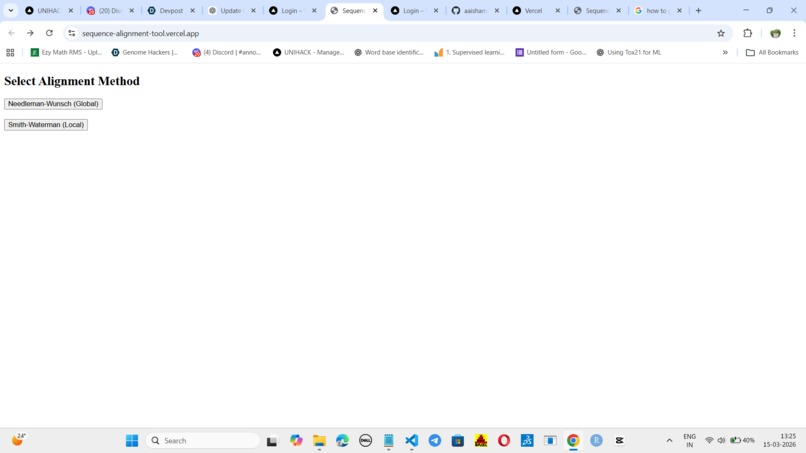
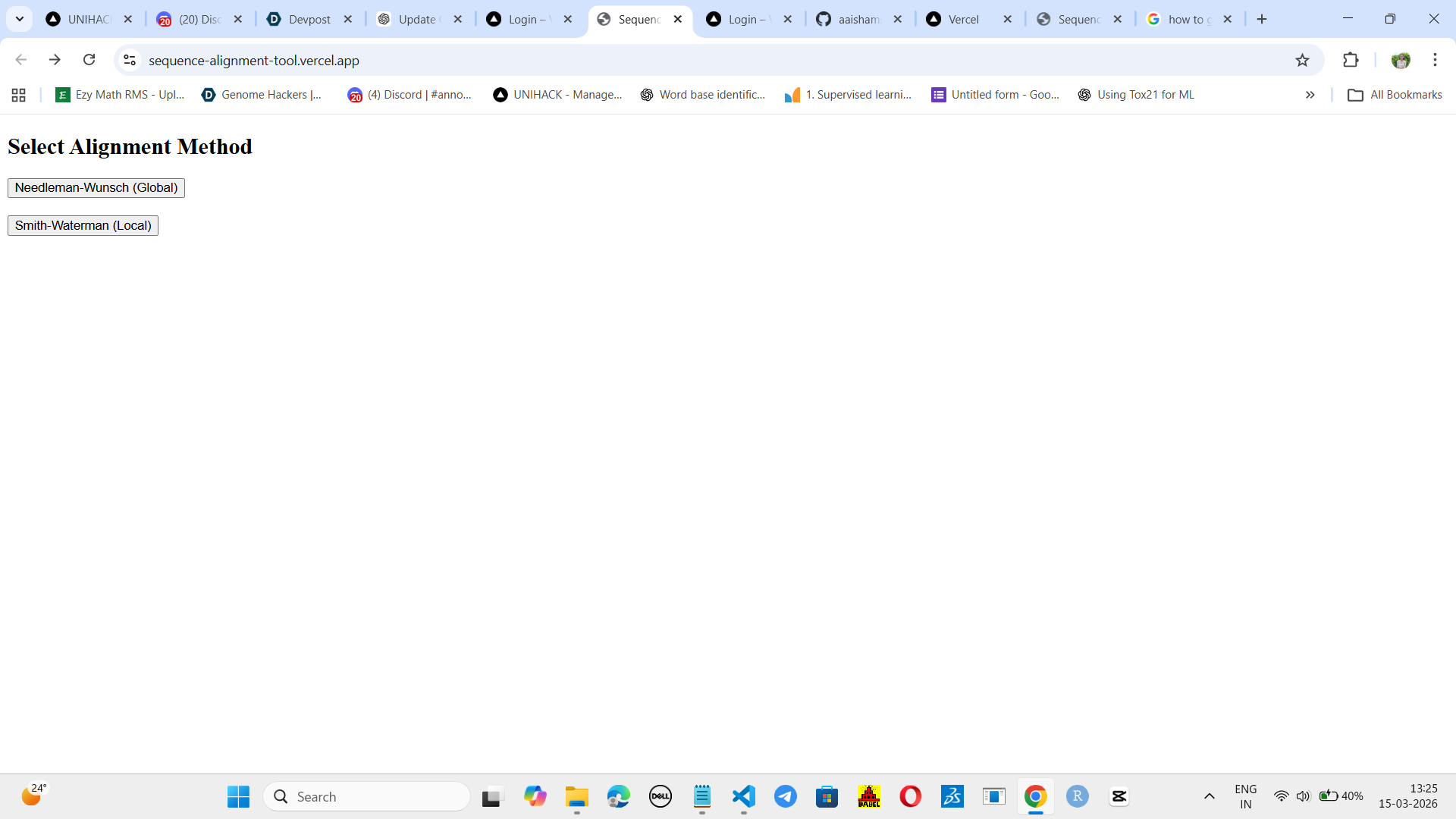
Home Page
-
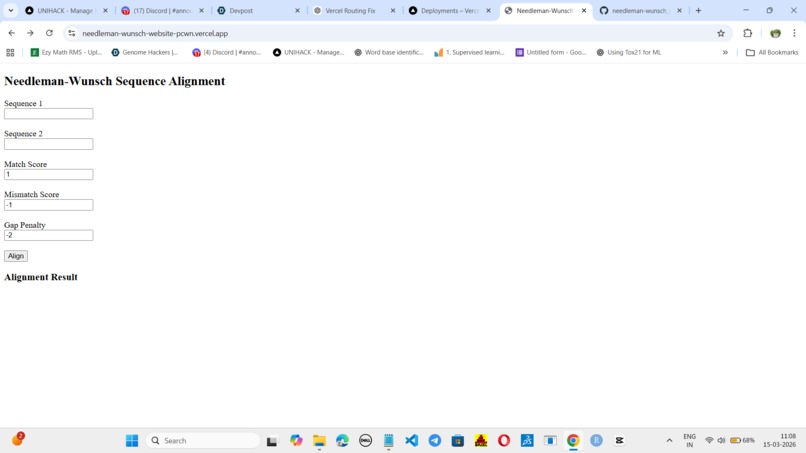
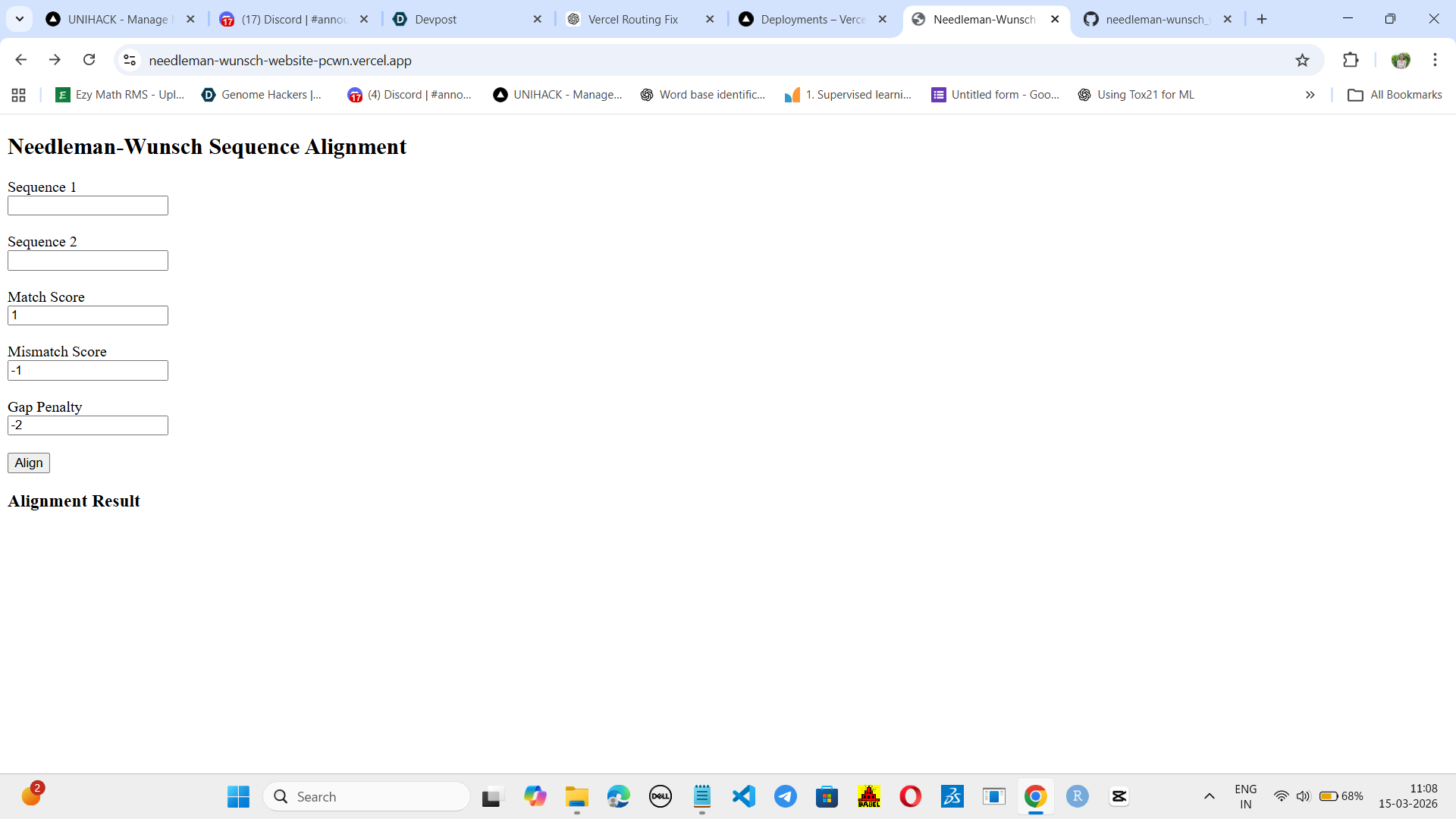
Needleman-Wunsch Sequence Alignment Page
-
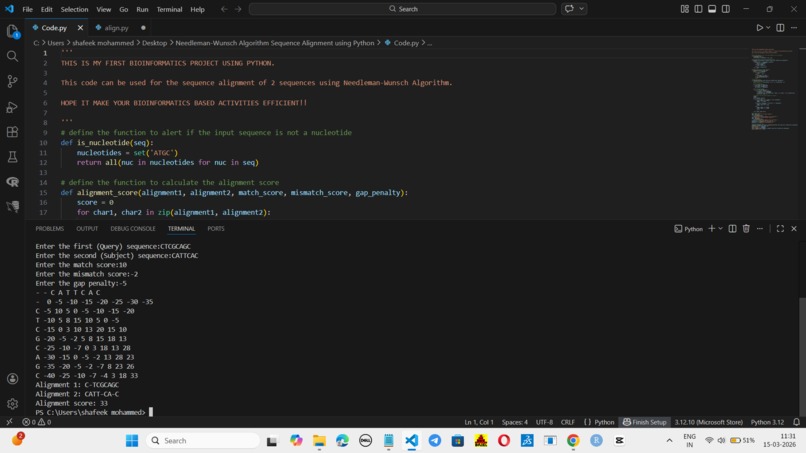
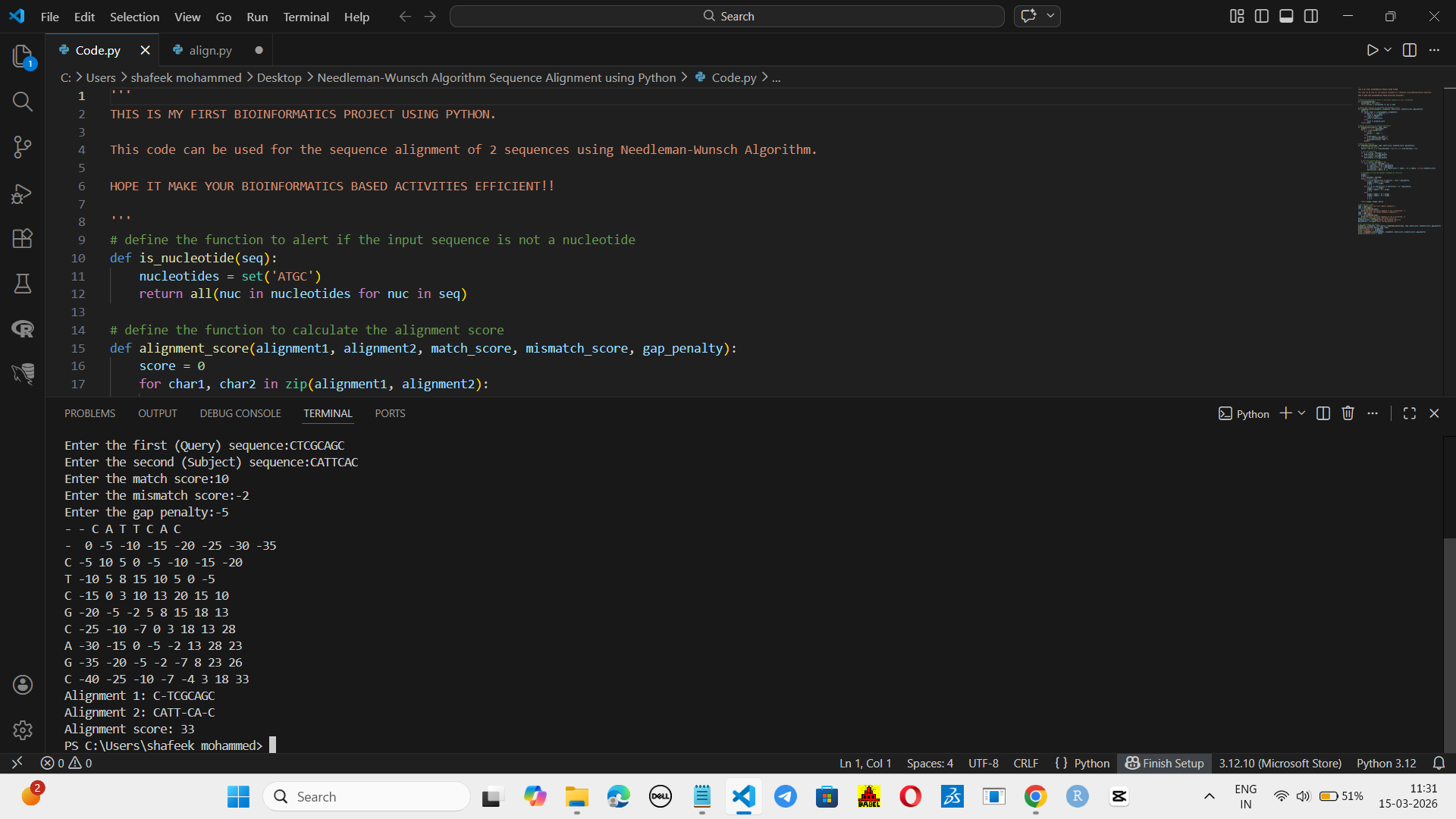
Sample Result
Inspiration
Manual sequence alignment is slow, error-prone, and frustrating for bioinformatics students. We wanted a faster, automated way to compare DNA, RNA, and protein sequences, so we built a Sequence Alignment Tool in Python and deployed it on Vercel for easy access.
What it does
- Accepts two sequences (DNA, RNA, or protein) from the user.
- Performs Needleman-Wunsch (global) and Smith-Waterman (local) alignment.
- Outputs alignment score, aligned sequences, and visual representation.
How we built it
- Language: Python 3
- Algorithms: Needleman-Wunsch & Smith-Waterman
- Deployment: Frontend built with HTML and JS; backend deployed on Vercel with Python serverless functions
- Version control: GitHub repository linked to Vercel for CI/CD
- Debugging: ChatGPT
Challenges we ran into
- Difficulties of doing a web development project for the first time.
- Displaying the results neatly.
- Limitations of Vercel's free version.
- Adapting Python scripts to serverless architecture on Vercel, which required restructuring functions.
Accomplishments that we're proud of
- Successfully implemented both global and local alignment algorithms.
- Built a fully automated, web-accessible tool usable by other students and researchers.
- Made the tool fast and scalable, capable of handling long sequences without crashing.
What we learned
- How to integrate Python backends with web deployments (Vercel).
- Practical insights into sequence alignment algorithms and computational complexity.
- Best practices for CI/CD pipelines, handling serverless functions, and managing dependencies.
What's next for Genome Hackers
- Add support for multiple sequence alignment.
- Implement interactive visualisation of alignments.
- Expand to protein structure predictions and integration with external databases.
- Optimise performance for large genomic datasets.
- Create more tools to simplify the lives of Bioinformatics researchers.


Log in or sign up for Devpost to join the conversation.