-
-
CRISPR
-
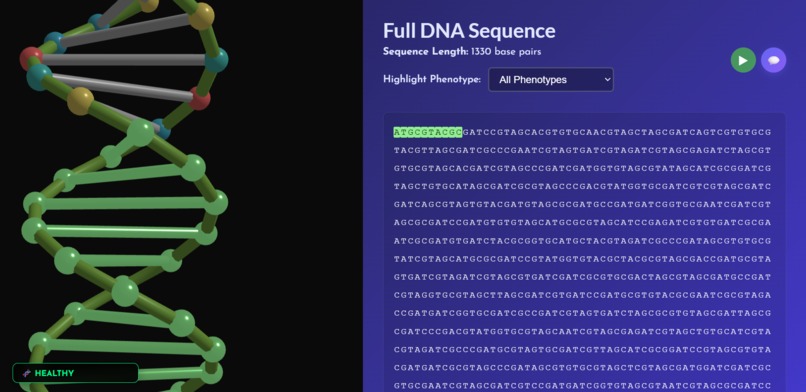
Finding Phenotype of Genotype
-
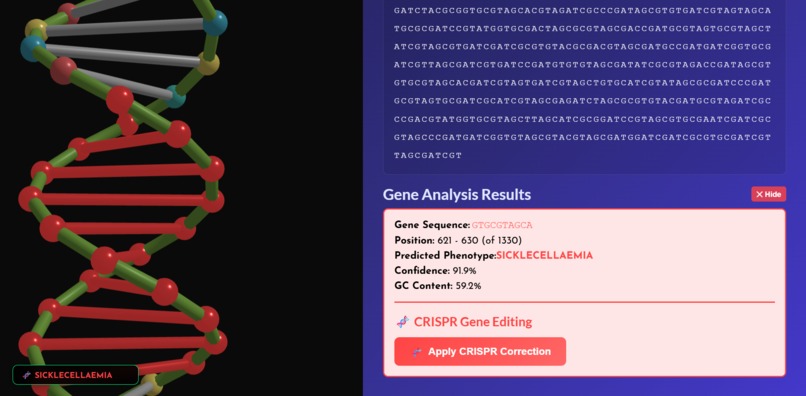
CRISPR Editing Simulation
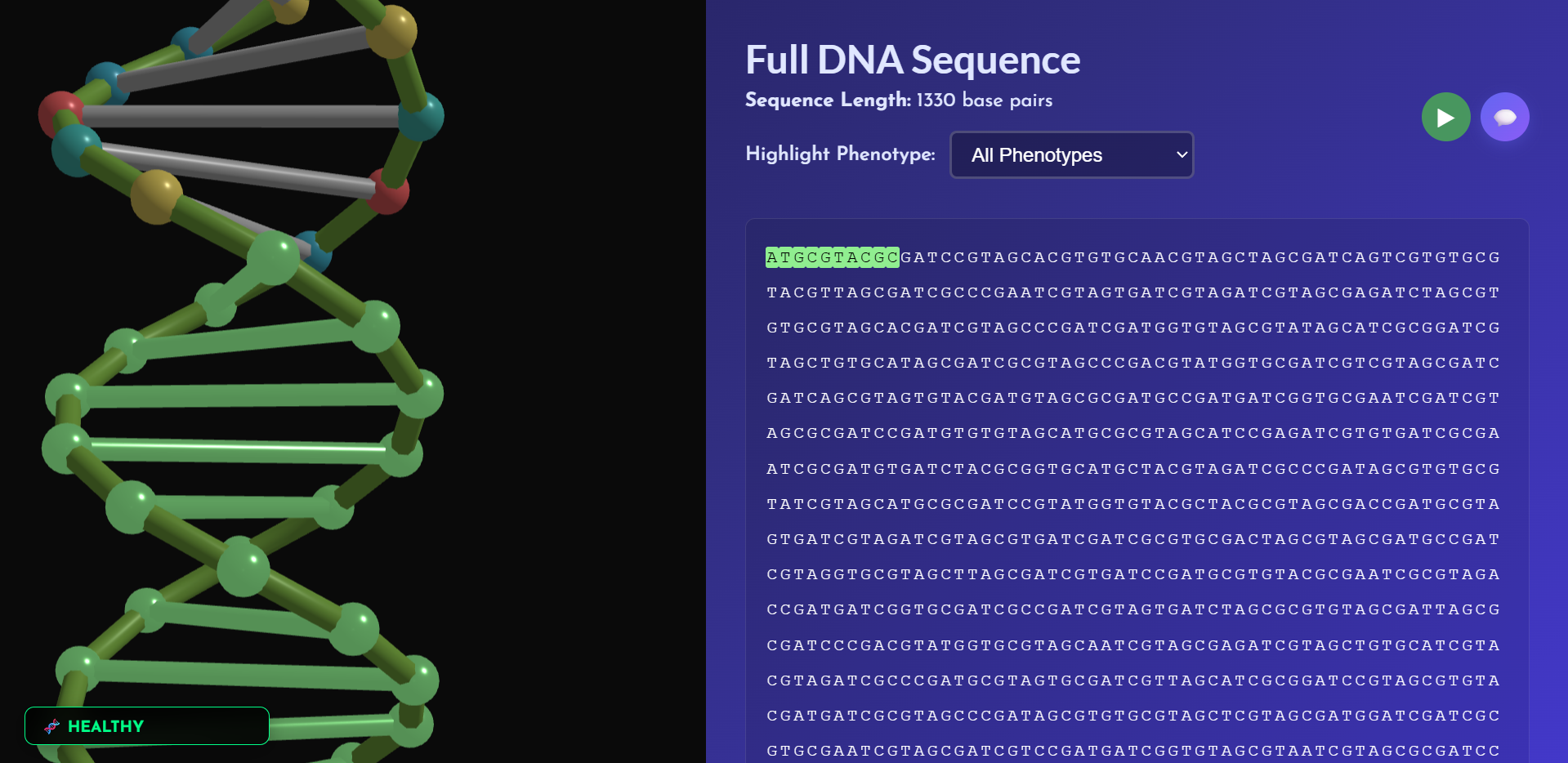
1. Inspiration The revolutionary CRISPR gene editing technology and the potential of AI to revolutionize genetic research inspired us to build this system. We wanted to bridge the gap between complex DNA analysis and accessible, intelligent tools that can help researchers and scientists understand genetic patterns and predict phenotypes with unprecedented accuracy.
2. What it does Genie-Phenie is an AI-powered DNA analysis platform that combines deep learning with biological sequence processing to:
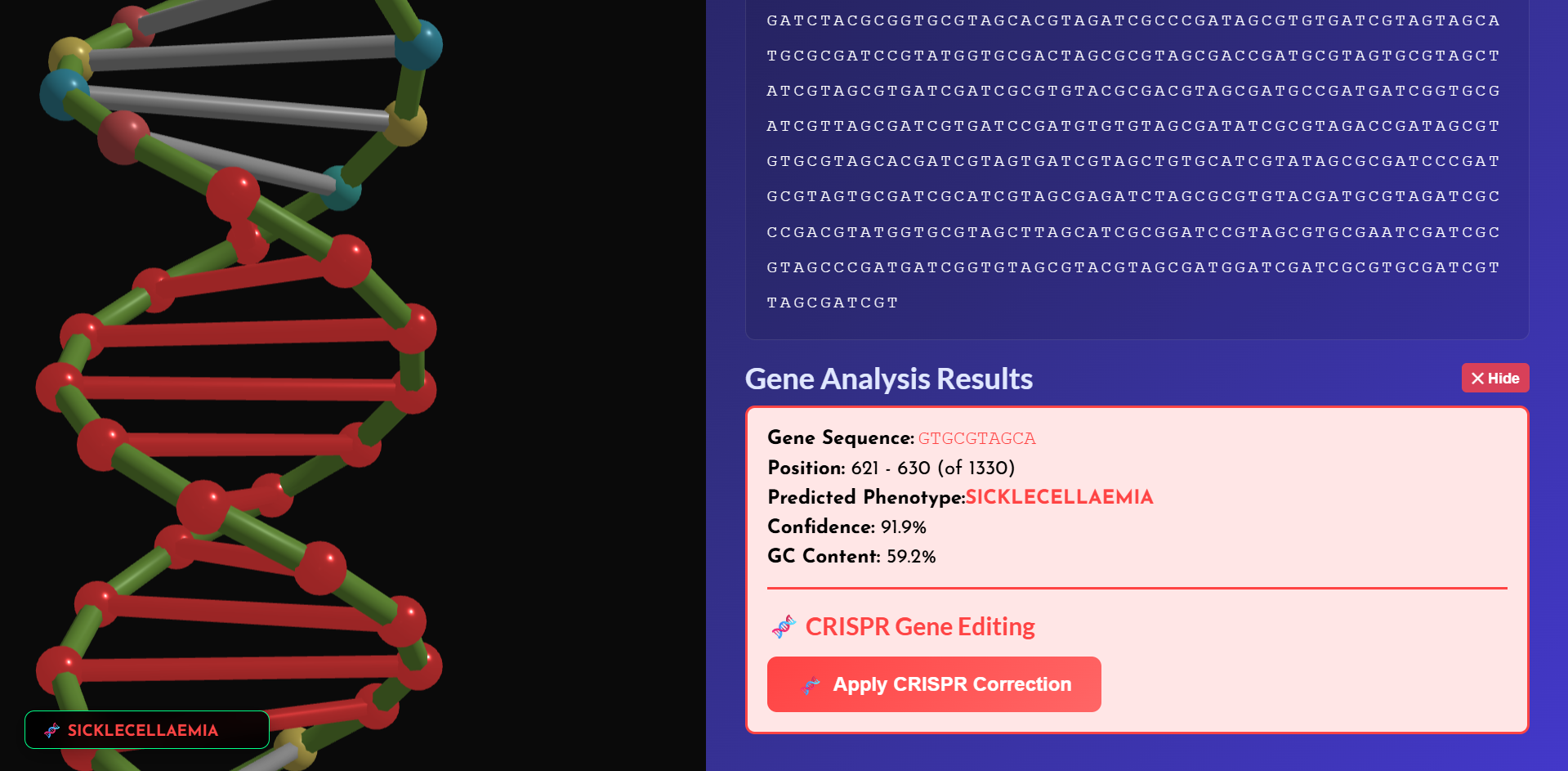
- Predict Phenotypes: Analyzes DNA sequences using a custom Biological GPT model to predict phenotypes like SICKLECELLANEMIA, HEALTHY, and NORMAL with confidence scores
- Sliding Window Analysis: Performs comprehensive genome scanning using a sliding window approach
- CRISPR Gene Editing: Provides intelligent gRNA suggestions and template DNA sequences for gene correction
- Agentic Chat Interface: Features an AI assistant that can understand natural language requests and automatically perform complex DNA analysis tasks
- Real-time Visualization: Offers interactive 3D DNA helix visualization with real-time highlighting of analyzed genes
- Intelligent Filtering: Allows users to filter and highlight specific phenotypes across the entire genome
3. How we built it
- Backend: FastAPI with Python, PyTorch for deep learning, and Google's Gemini API for intelligent responses
- Frontend: React with Vite, featuring responsive design and real-time animations
- AI Model: Custom Biological GPT architecture with K-mer tokenization and multi-task learning
- DNA Processing: Advanced sequence analysis with GC content calculation and phenotype prediction
- Chat System: Agentic AI interface that can trigger complex actions based on natural language input
- Visualization: Interactive DNA double helix with real-time gene highlighting and CRISPR correction animations
4. Challenges we ran into
- Model Training: Developing a robust Biological GPT model that could accurately predict phenotypes from DNA sequences required extensive experimentation with different architectures
- Real-time Processing: Implementing sliding window analysis that could process large DNA sequences without performance bottlenecks
- CRISPR Integration: Creating accurate gRNA and template DNA suggestions that would work in real-world gene editing scenarios
- Agentic AI: Building a chat system that could understand complex biological requests and translate them into actionable commands
- 3D Visualization: Developing smooth, real-time DNA helix animations that could highlight specific genes and show CRISPR corrections
- Data Integration: Handling large DNA sequence files and ensuring efficient processing across the entire pipeline
5. Accomplishments that we're proud of
- Intelligent DNA Analysis: Successfully built an AI system that can predict phenotypes with high accuracy using our own Biological GPT architecture
- Agentic Chat Interface: Created a conversational AI that can understand requests like "find sickle cell anemia cases" and automatically perform the analysis
- Real-time CRISPR Simulation: Implemented 3D animations showing real-time gene correction with suggested gRNA and template DNA sequences
- Comprehensive Genome Scanning: Developed a sliding window system that can analyze entire DNA sequences and highlight disease-causing mutations
- Professional UI/UX: Built a modern, responsive interface that makes complex genetic analysis accessible to researchers
- Full-Stack Integration: Successfully integrated AI models, real-time processing, and interactive visualizations into a cohesive platform
6. What we learned For this, I just would like to provide: https://arihara-sudhan.github.io/ari-learns Please check, CRISPR there.
7. What's next for Genie-Phenie
- Bioscopic Imaging: Integrate advanced imaging techniques to visualize DNA structures at the molecular level
- Off-target Prediction: Develop AI models to predict and minimize CRISPR off-target effects for safer gene editing
- Enhanced LLM Training: Train our language model with a large corpus of genomic data and collaborate with genome scientists to make it more robust
- Multi-species Support: Extend the platform to analyze DNA sequences from different species
- Clinical Integration: Work towards FDA approval for clinical applications in genetic disease diagnosis
- Cloud Platform: Scale the system to handle multiple users and larger datasets in a cloud environment
Built With
- cors-middleware-eslint
- css-fastapi
- custom-biological-gpt
- dna-sequence-analysis
- git
- google-gemini-api
- html
- in-memory
- javascript
- jinja2-rest-api
- k-mer-tokenization-python
- model-checkpoints
- numpy
- phenotype-classification-file-based-storage
- processing
- pytorch
- react
- real-time-animations
- responsive-design-crispr-cas9
- uv-3d-dna-helix
- vite

Log in or sign up for Devpost to join the conversation.