-
-
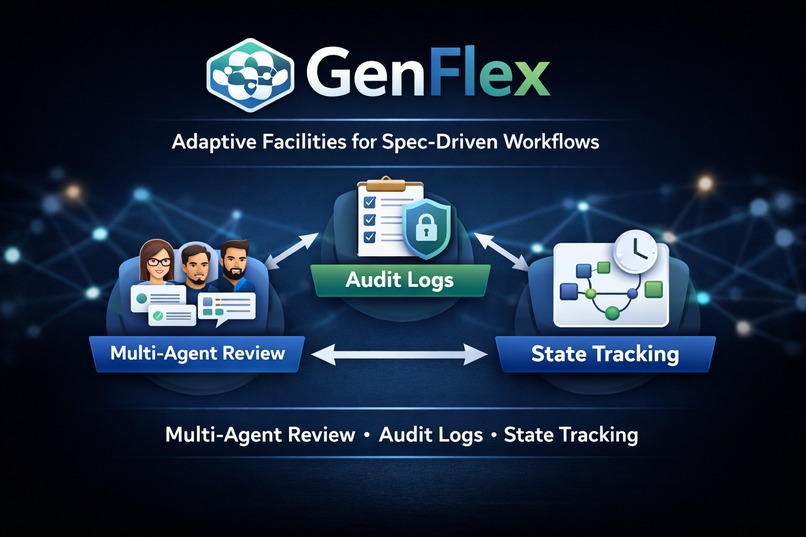
GenFlex: flexible AI support for SDD with agent reviews, ad hoc audit logs, and user-defined phase tracking.
Inspiration
AI-assisted development is powerful, but many frameworks impose large, rigid processes. We wanted something lighter: flexible facilities that adapt to each developer’s own SDD workflow.
What it does
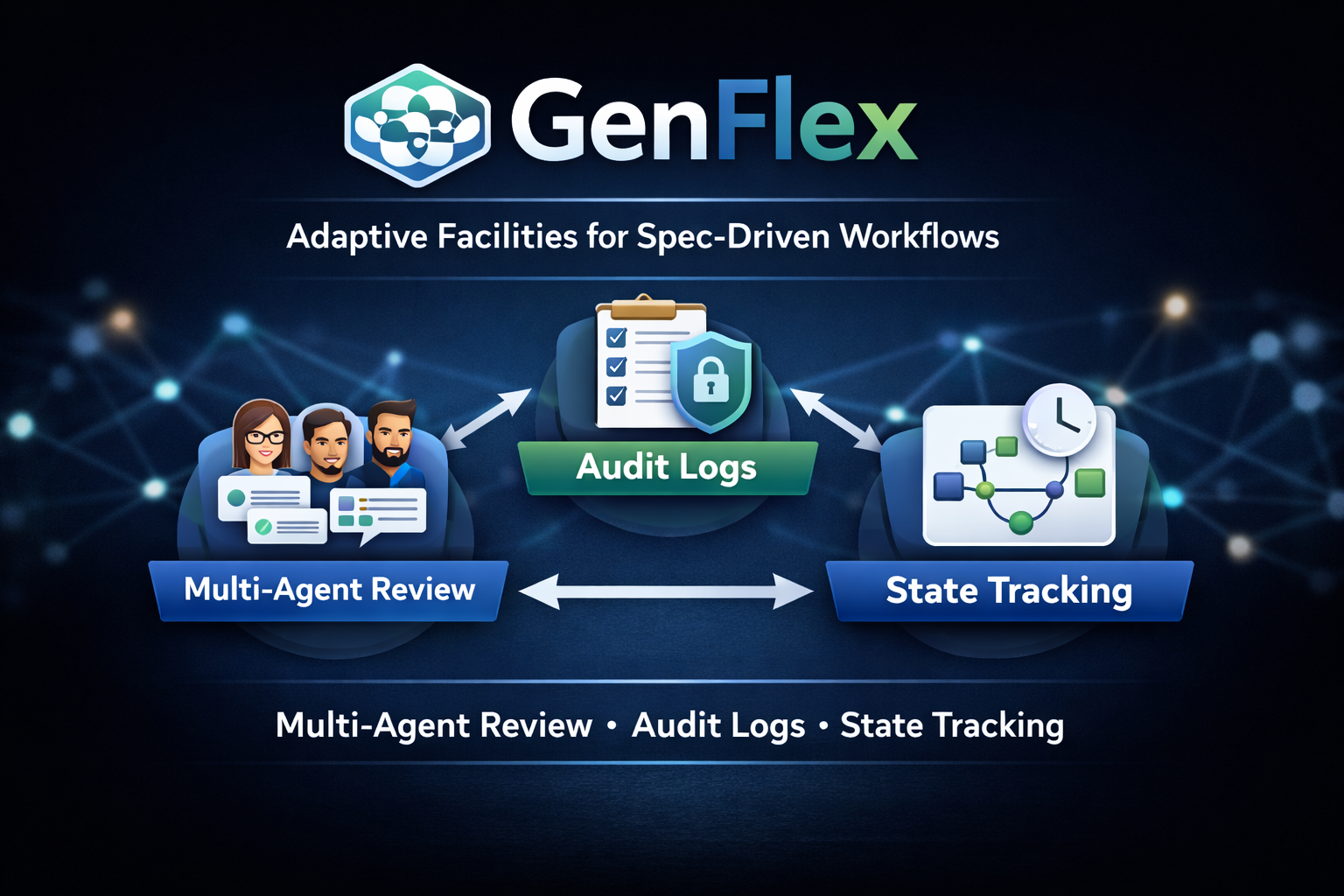
GenFlex provides three independent capabilities:
- invokes relevant AI agents to review documents or code changes;
- keeps ad hoc audit logs for decisions, changes, reviews, and activity;
- tracks user-defined phases without prescribing their sequence.
A central /genflex trigger dispatches each request to the appropriate facility.
How we built it
We built GenFlex as a portable collection of Markdown skills with a golden source and thin pointers for different AI tools. Agents, templates, audit logs, and phase tracking are all customizable through project files.
Challenges we ran into
The biggest challenge was balancing useful structure with freedom. Too little structure makes AI collaboration inconsistent; too much creates another rigid methodology. We also had to account for differences between AI hosts, especially around context retention and independent agent execution.
Accomplishments that we're proud of
We created a small, dependency-free SDD support layer that can be added to a project without imposing a new development process. It supports targeted agent reviews, persistent audit evidence, user-defined phase tracking, custom agents, and custom templates.
What we learned
AI-assisted development works best when context is explicit, durable, and easy to inspect. Lightweight Markdown artifacts can preserve decisions and progress while allowing the user to remain in control of the workflow.
What's next for genflex
We plan to improve host compatibility, strengthen practical validation, and continue refining context management, agent collaboration, and project customization.
Built With
- ai-assisted-development
- cline
- markdown
- openai-codex
- prompt
- spec-driven-development
- vs-code

Log in or sign up for Devpost to join the conversation.