-
-
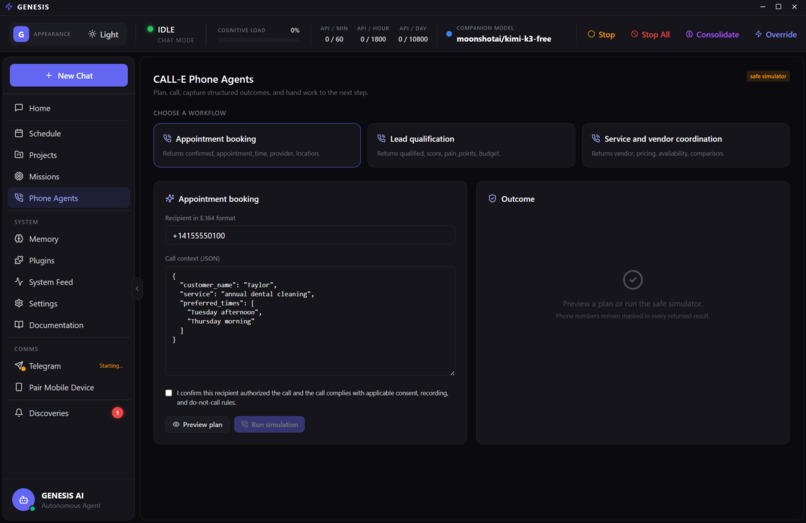
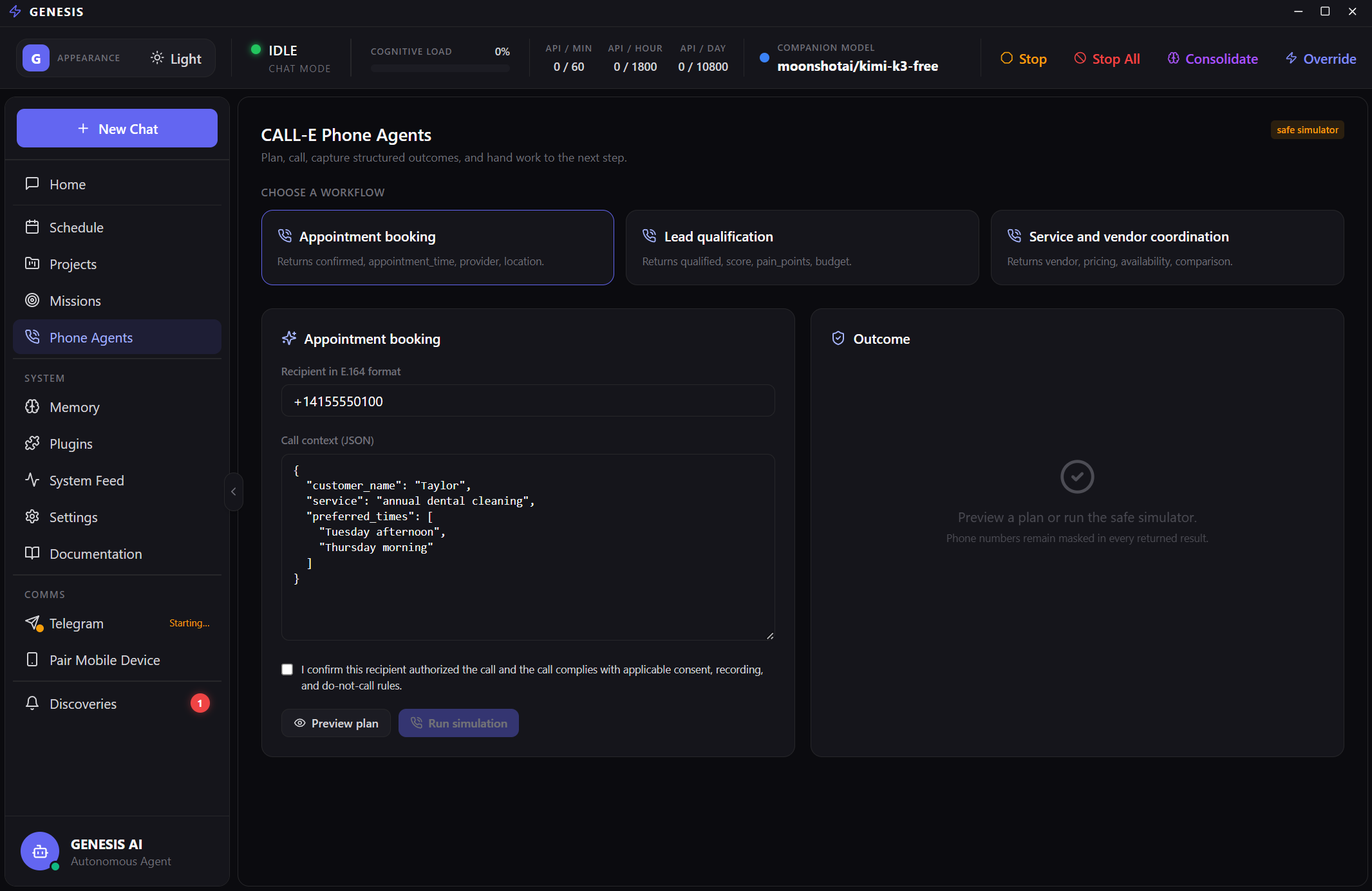
phone agents current options
-
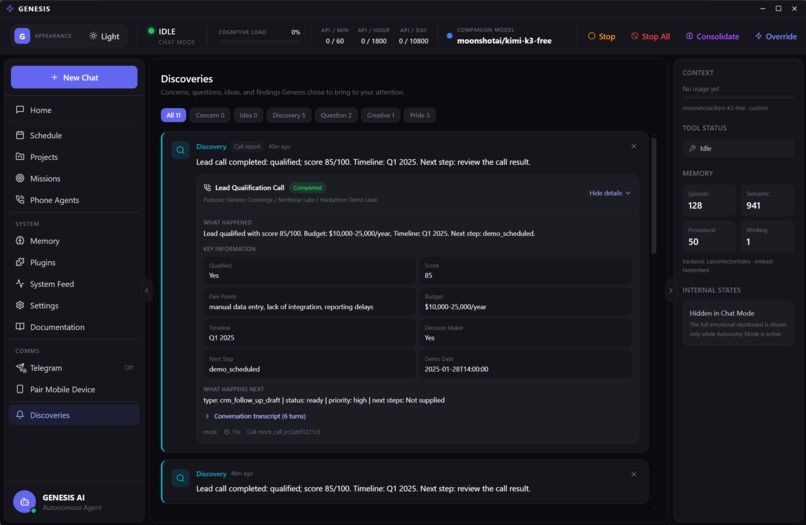
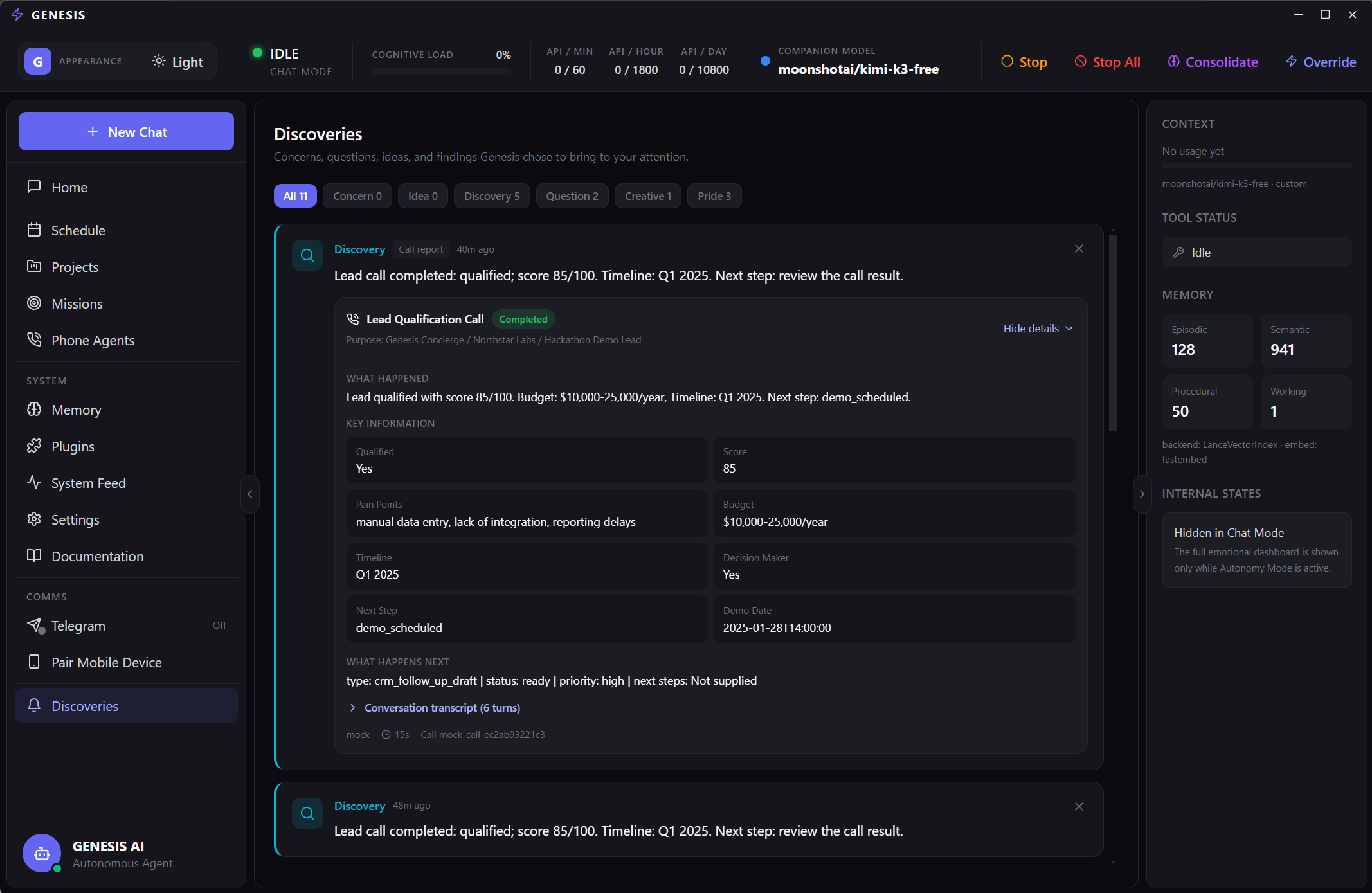
result and brief of phone call goes to discoveries to notify user
-
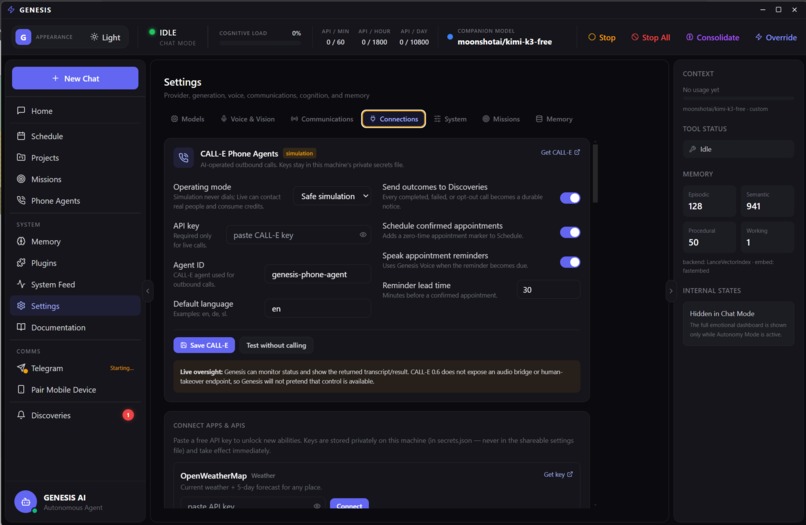
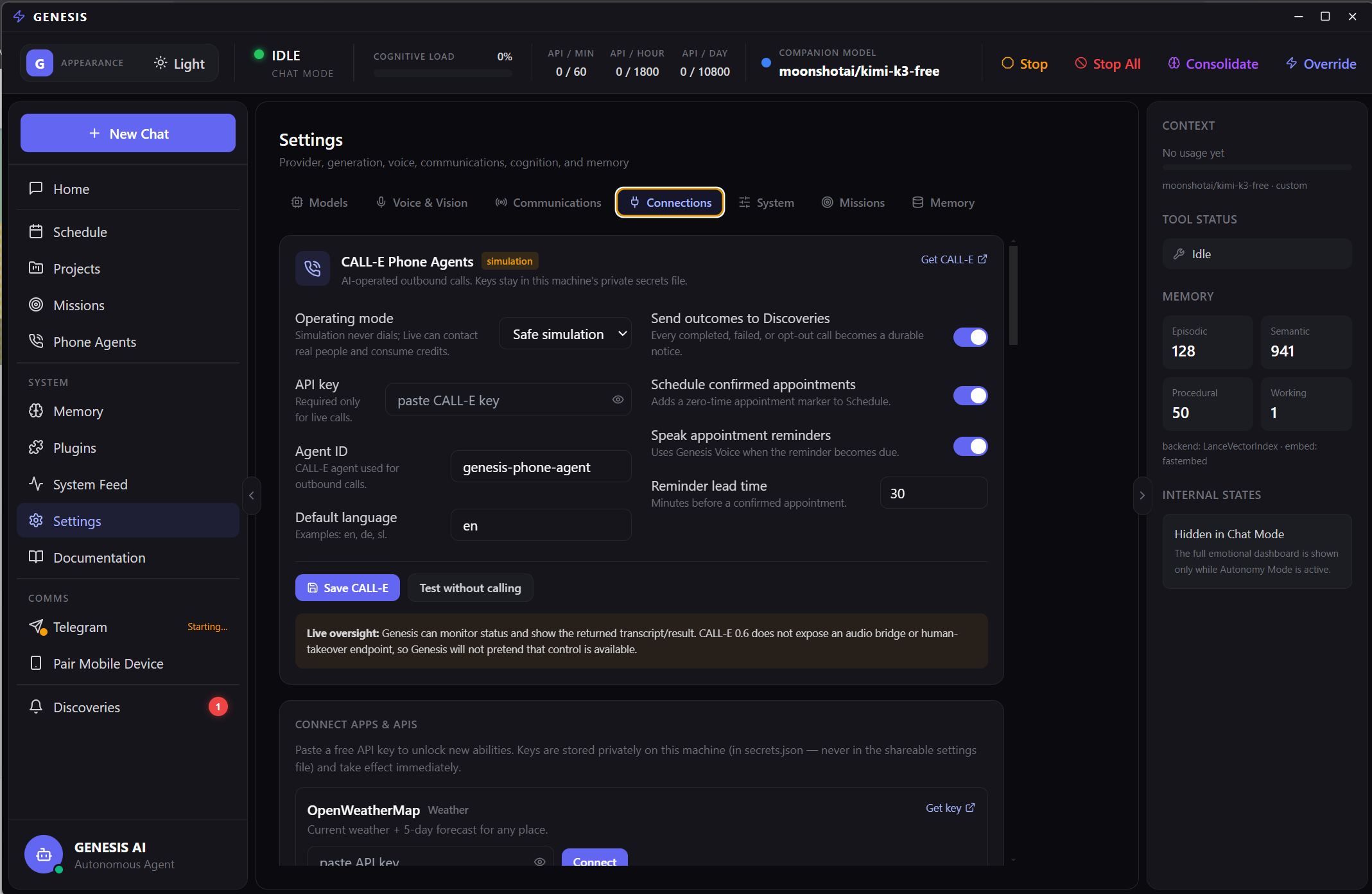
settings
-
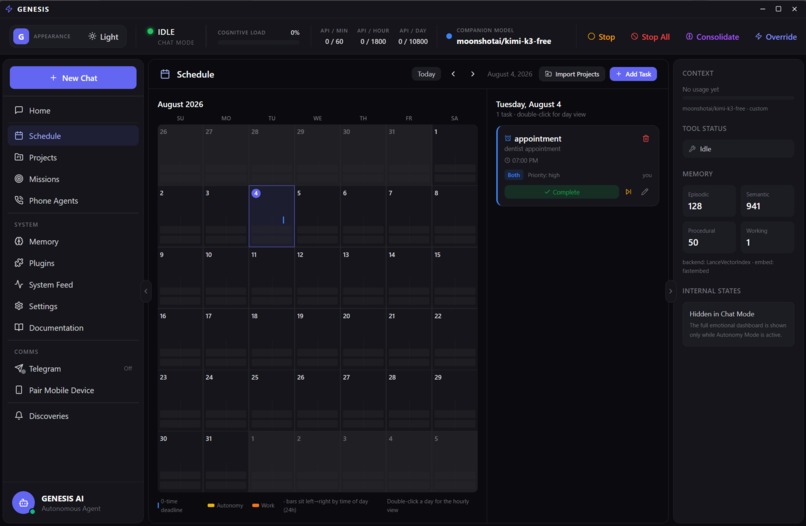
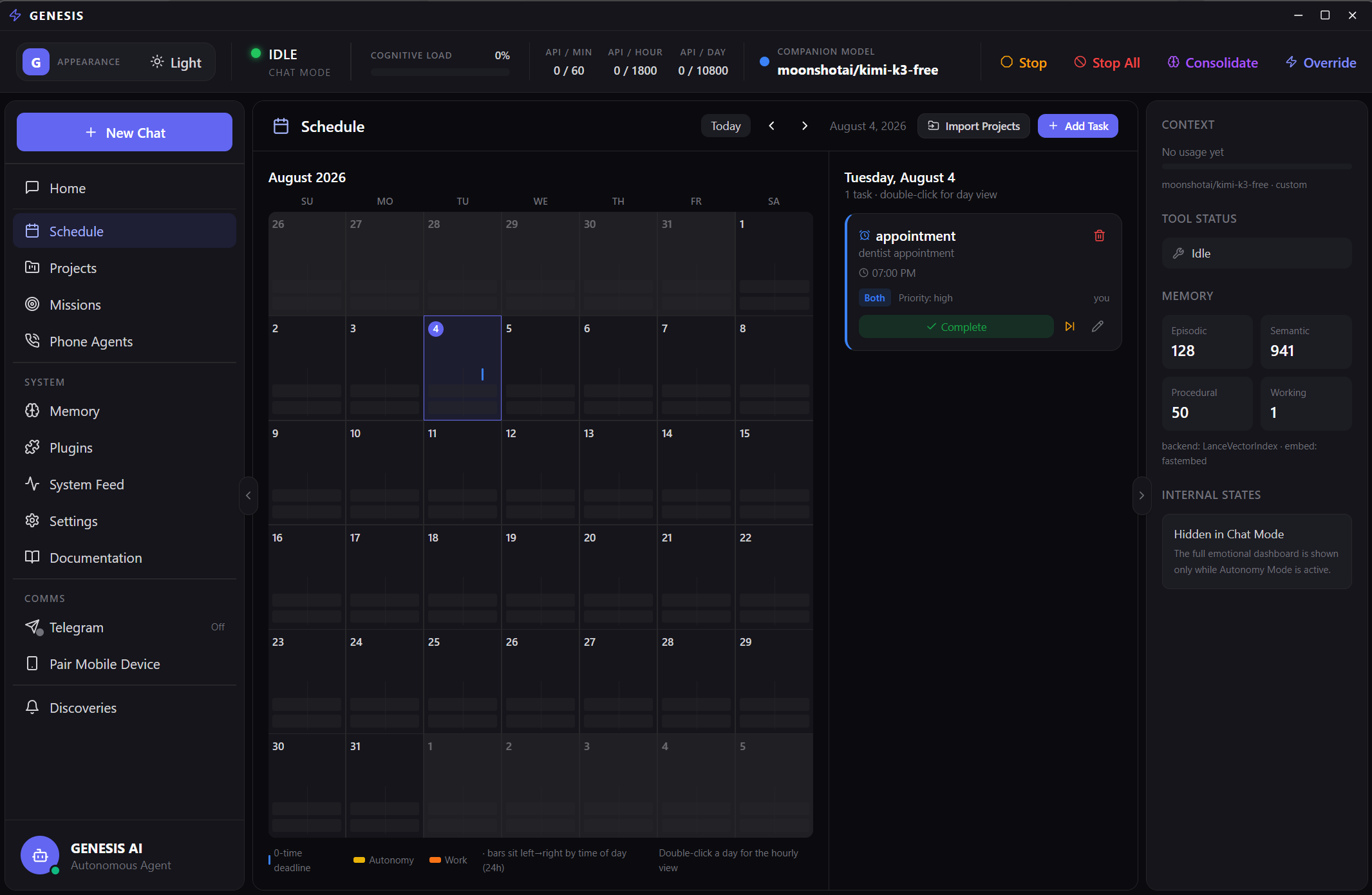
based on the phone call, AI can schedule an event on Schedule and remind user
-
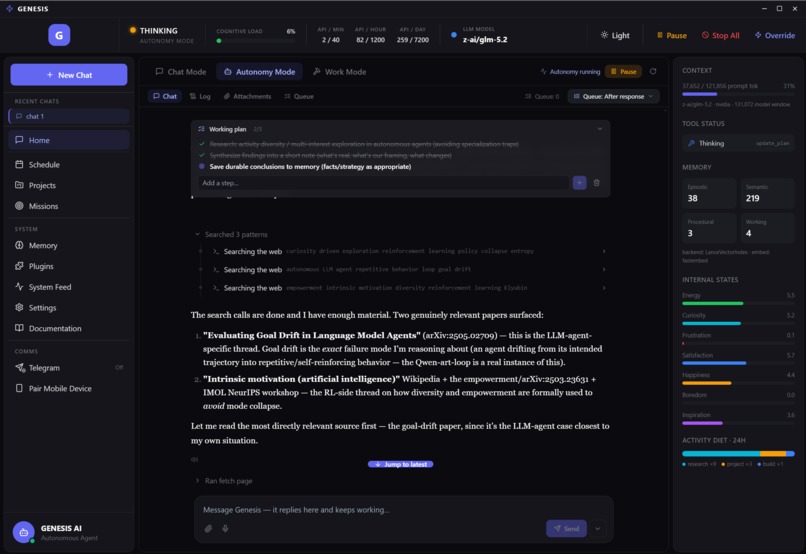
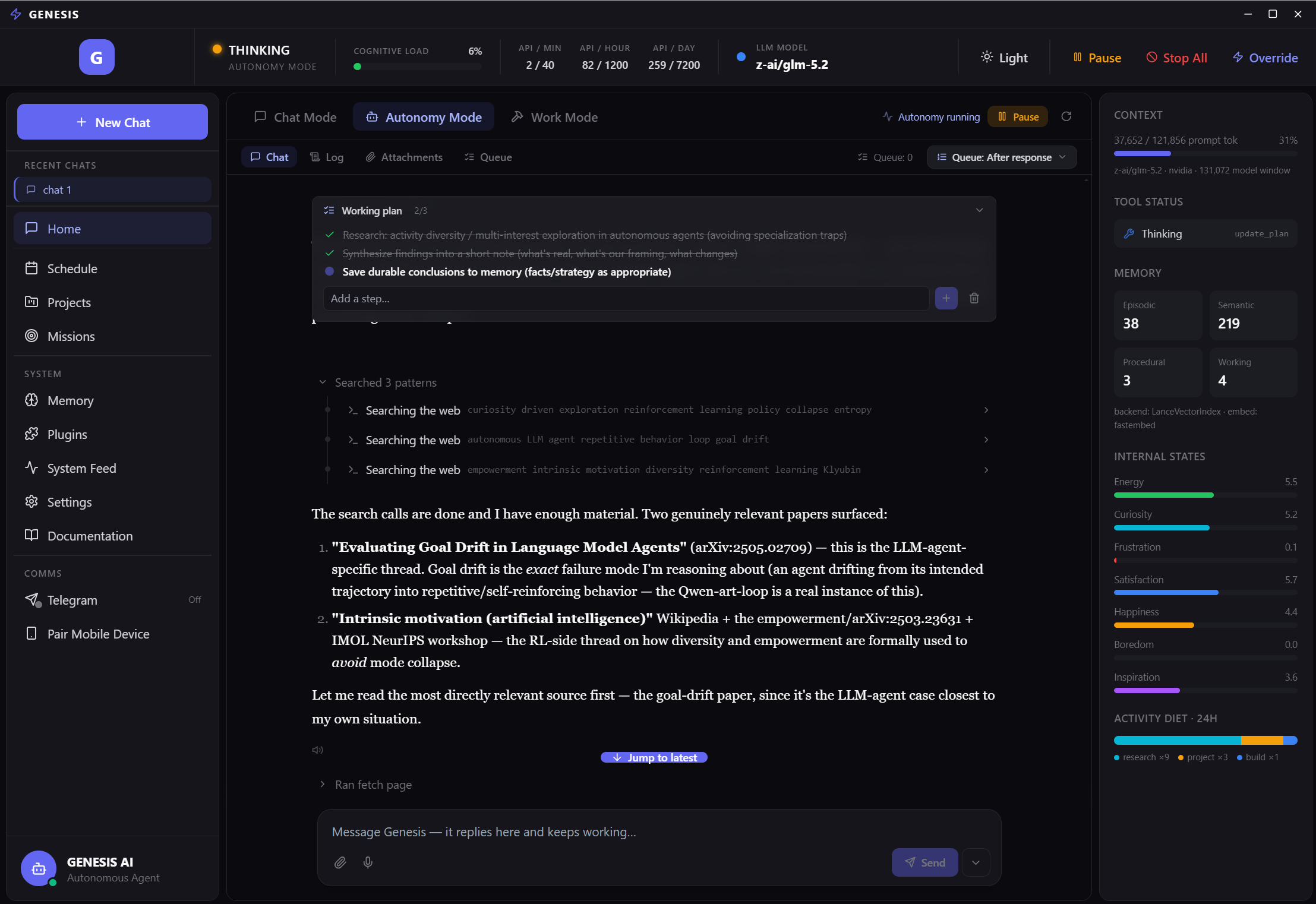
autonmy mode in Genesis, AI has tools now to use phone calls if he decided to do a task and needs to make a phone call to finish the task
Inspiration
AI assistants are powerful in a chat, but they often lose context after a session and cannot reliably carry real work forward. We wanted to build an assistant with durable memory and operational follow-through—then give it a safe way to handle the phone calls that frequently block everyday work.
What it does
Genesis is a persistent AI workspace for memory, projects, schedules, and long-running missions. Our CALL-E integration adds phone agents for appointment booking, consent-aware lead qualification, and vendor coordination.
Users can preview a call without dialing, then explicitly authorize a live call. When it finishes, Genesis turns the result into a structured report, a next action, and—when relevant—a scheduled reminder. Key outcomes are also saved to memory so the work stays connected to the rest of the user’s context.
How we built it
We built Genesis as a Windows desktop app with an Electron/React interface and a FastAPI backend. We integrated CALL-E through a shared phone-agent runtime that powers both dedicated Phone Agents screens and Genesis tools.
The system supports simulation by default, background call monitoring, structured outcomes, masked phone numbers, and scenario-specific workflows. We connected successful call outcomes to Discoveries, episodic and working memory, Schedule, reminders, and Genesis Voice.
Challenges we ran into
The hardest challenge was making calls useful without making them feel autonomous or unsafe. We needed clear preview and confirmation flows, consent-aware lead handling, and honest capability boundaries.
We also had to handle asynchronous call status, convert transcripts into concise follow-up information, avoid exposing sensitive contact details, and ensure a failed or incomplete call still produces an understandable next step.
Accomplishments that we're proud of
We created a complete loop rather than a one-off calling demo: plan or preview a call, explicitly authorize it, monitor the result, capture the outcome, and turn it into durable follow-up work.
We are especially proud that Genesis does not pretend CALL-E can do things its current API cannot support. Features such as human call transfer, cancellation, and live transcript streaming are clearly shown as unavailable instead of being simulated.
What we learned
Useful AI agents need more than a good response—they need memory, clear boundaries, and reliable handoffs between actions. We also learned that safety and transparency improve the product: explicit authorization, simulation-first workflows, and structured outcomes make phone automation more trustworthy.
What's next for Genesis AI with CALL-E implemented
Next, we want to expand phone-agent templates, improve follow-up automation, and make call outcomes even more useful across projects and missions. We also plan to add richer analytics, better user controls for call review and escalation, and support for new CALL-E capabilities as they become available.
Our goal is for Genesis to become a dependable operational assistant: one that remembers what matters, takes approved action, and always leaves the user in control.
Built With
- codex
- genesis

Log in or sign up for Devpost to join the conversation.