Inspiration
Developers spend countless hours recreating existing applications—analyzing UI layouts, designing databases, writing APIs, implementing business logic, and setting up project architecture.
Current AI tools can generate frontend code from designs, but they cannot understand how an application actually works.
We asked ourselves:
What if AI could reverse-engineer an entire application from just a screenshot?
Genesis AI was built to answer that question.
What it does
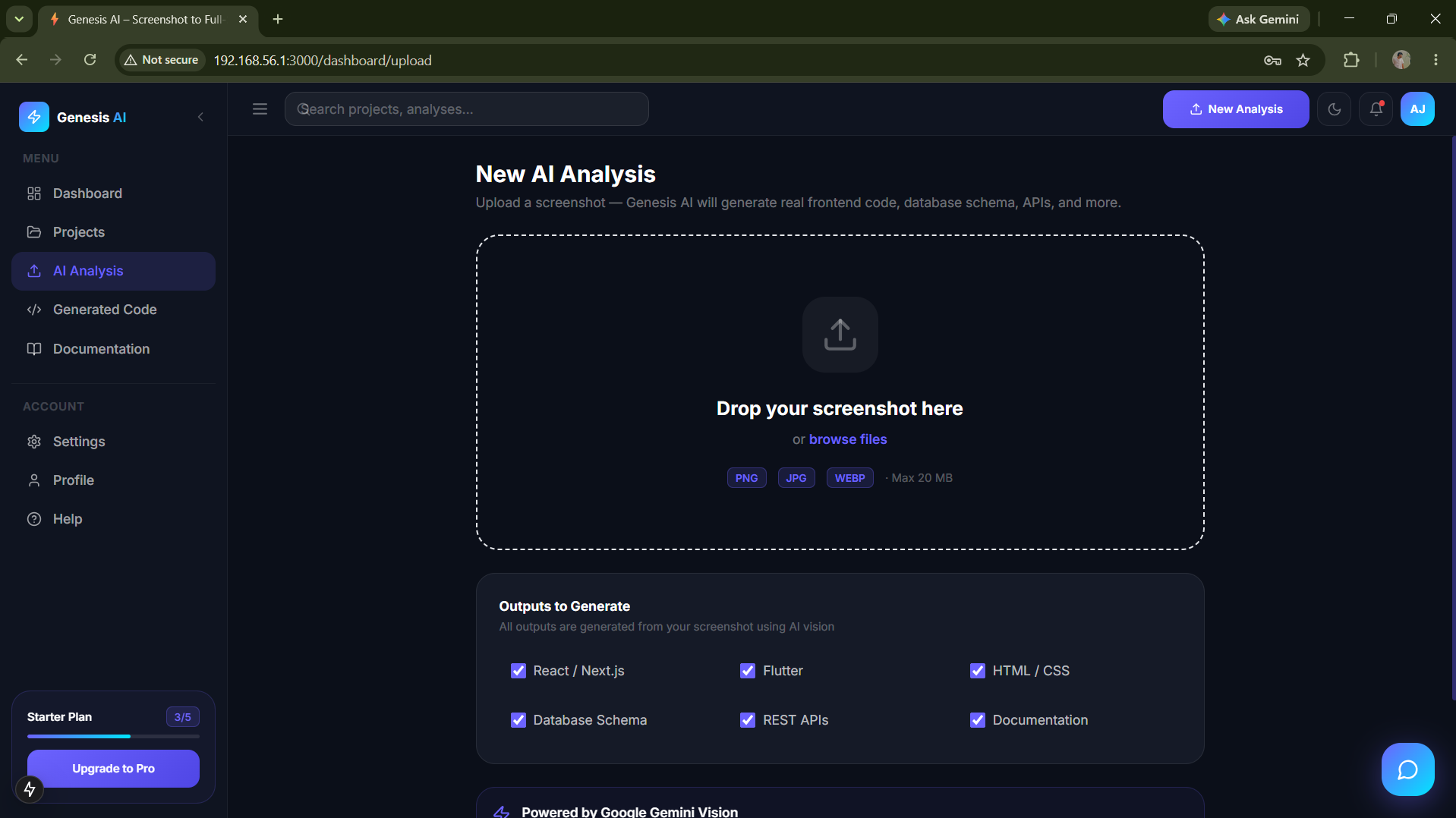
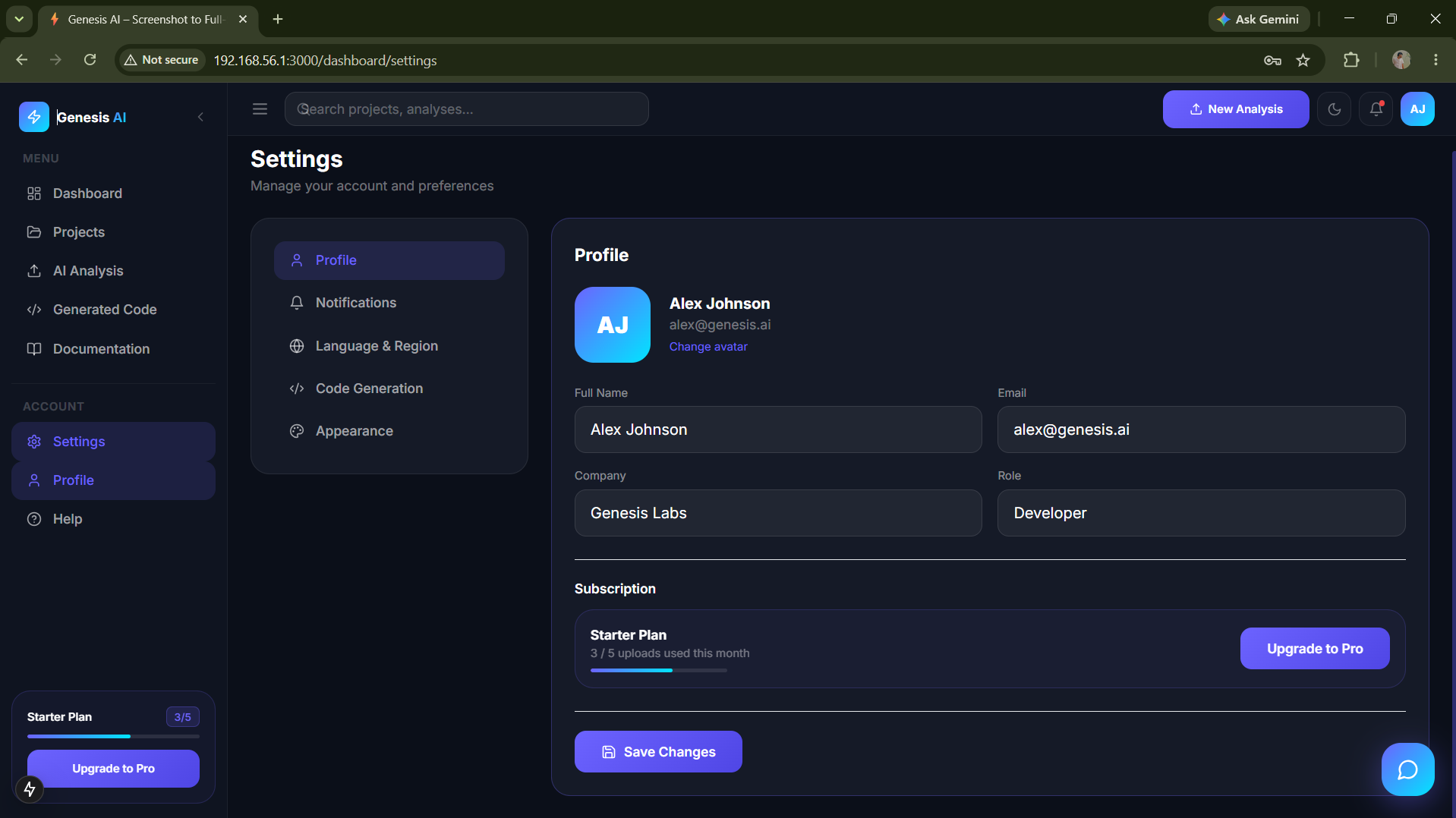
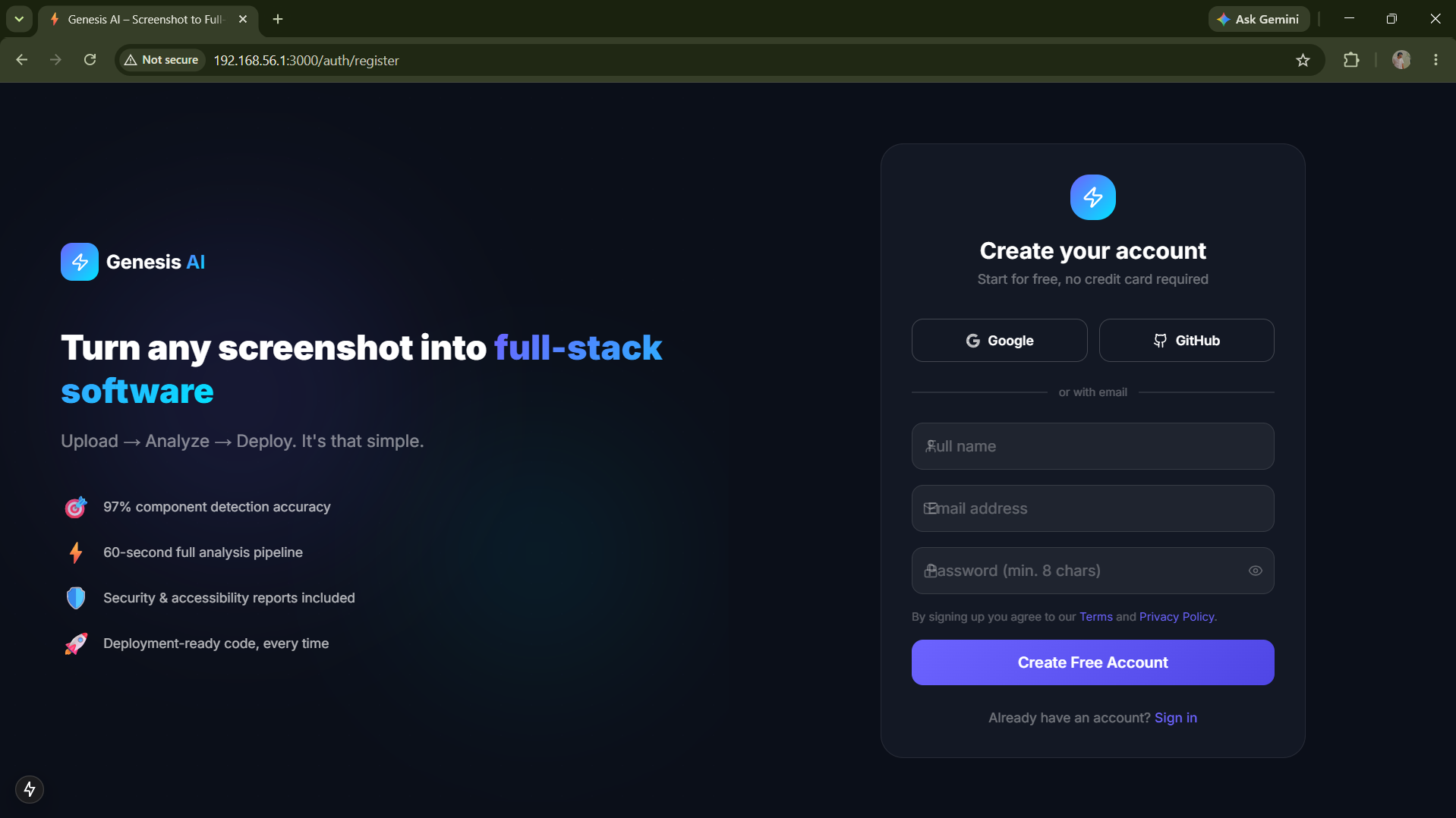
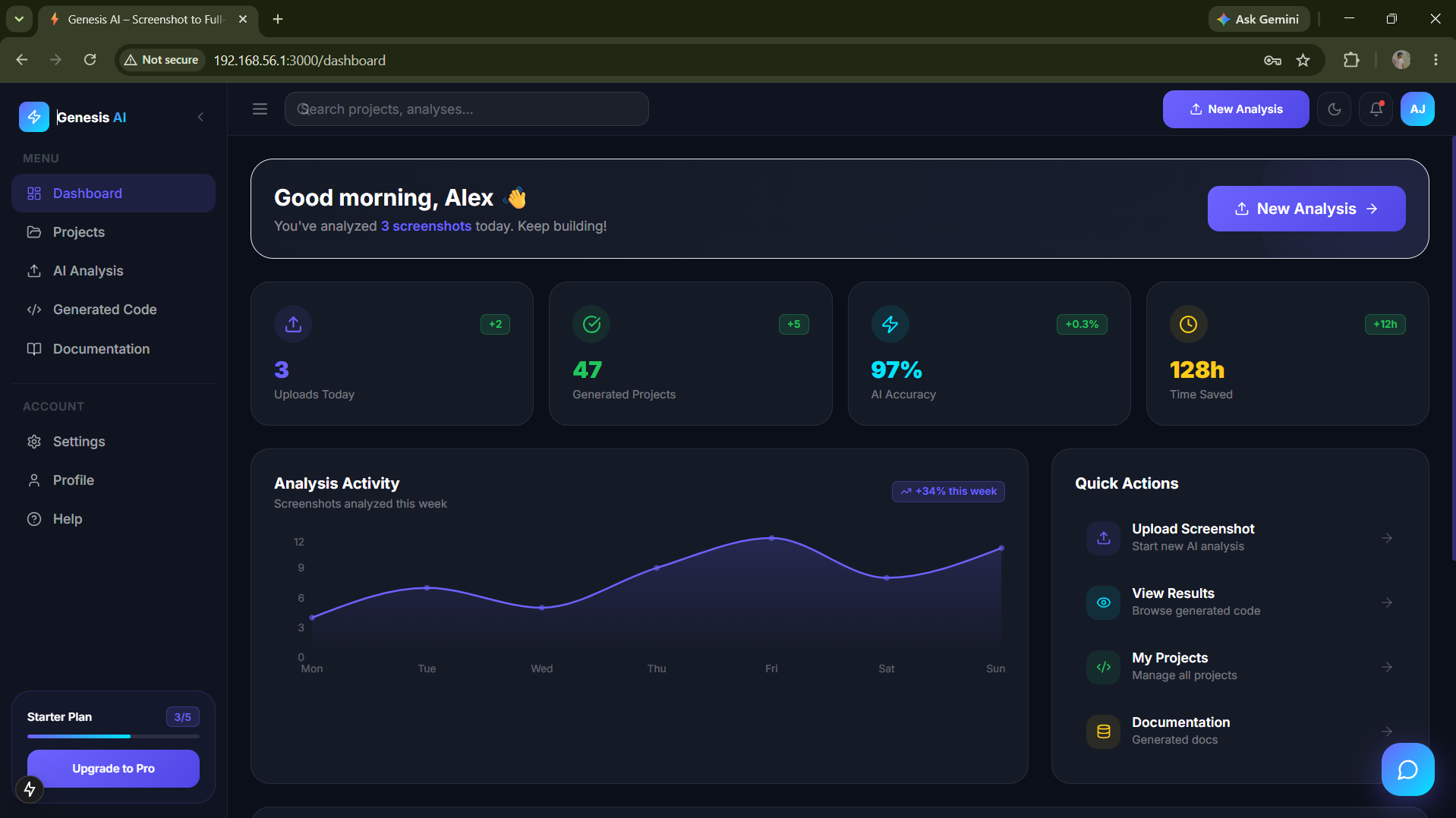
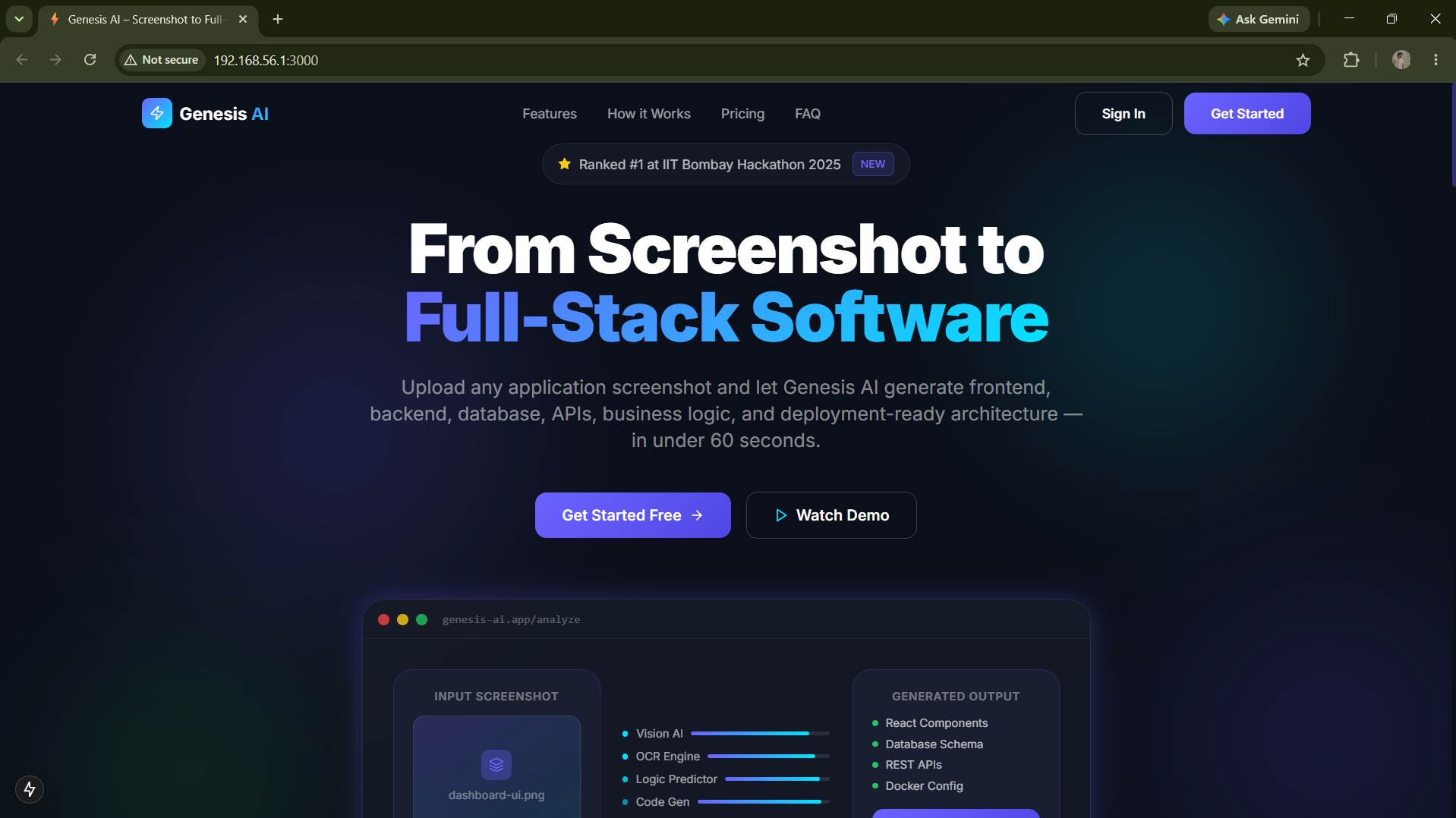
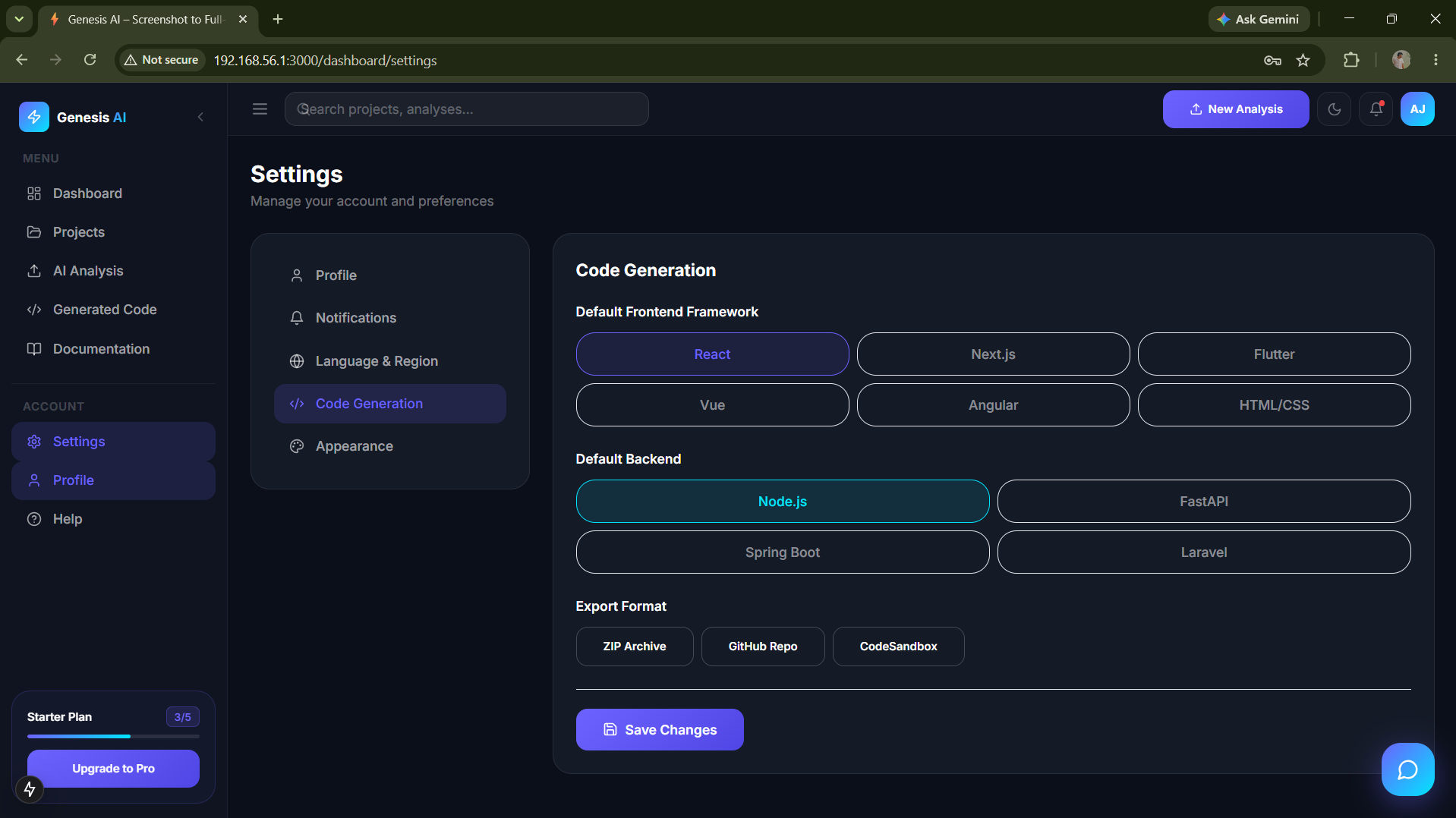
Genesis AI converts a screenshot of any web or mobile application into a production-ready full-stack project.
✨ Features 🎨 Detects UI components automatically ⚛️ Generates React / Next.js frontend 📱 Generates Flutter UI 🗄️ Creates database schema 🔌 Generates REST APIs 🧩 Predicts business logic 🧭 Reconstructs navigation flow 🔒 Performs security analysis ♿ Reviews accessibility 📄 Generates project documentation 🚀 Produces deployment-ready project structure
How we built it
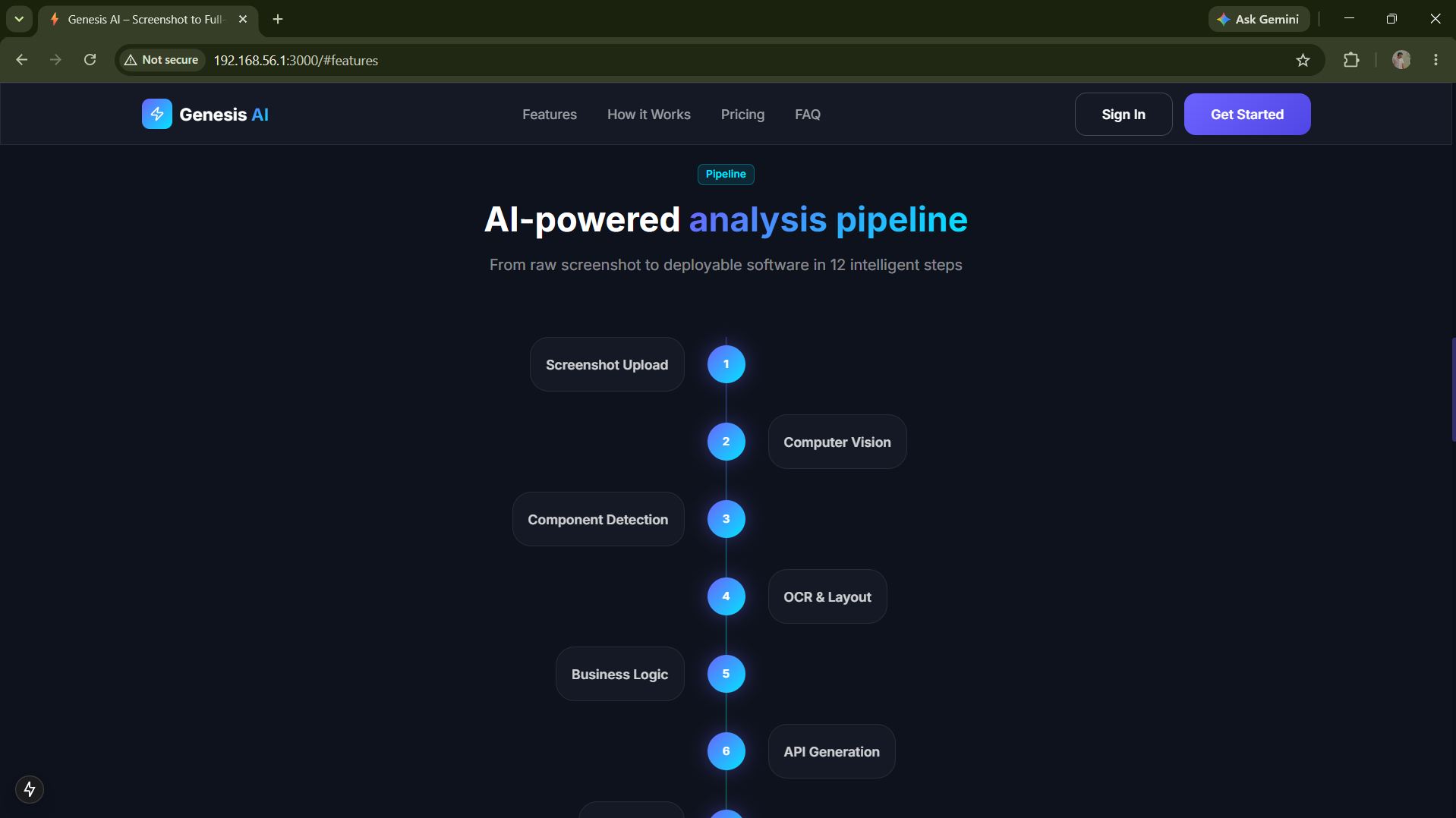
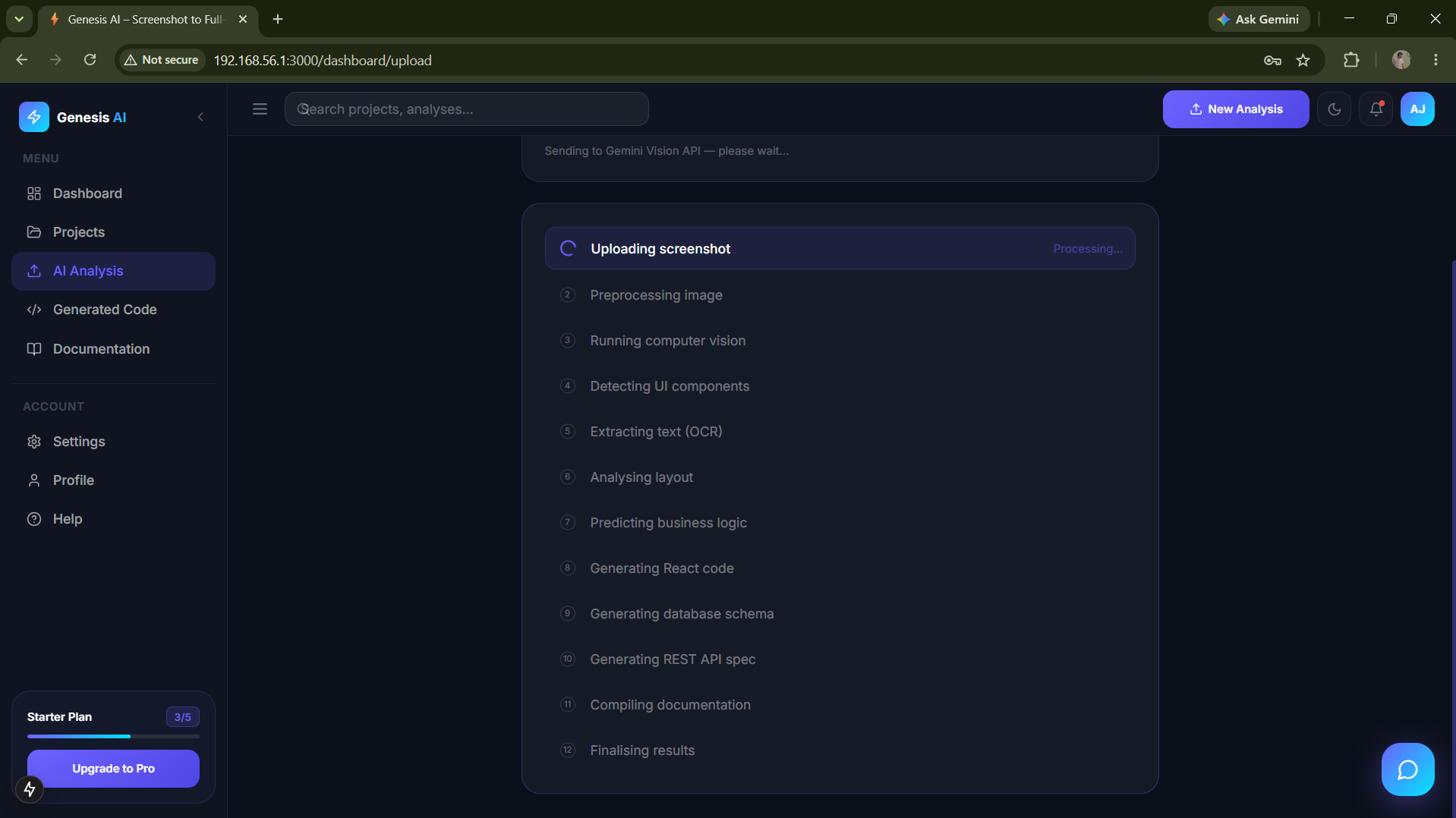
Our system combines Computer Vision, Deep Learning, Machine Learning, and Software Engineering into one intelligent pipeline.
Screenshot │ ▼ Computer Vision (UI Detection) │ ▼ Vision-Language Model │ ▼ Interaction Understanding │ ▼ Database Generator │ ▼ API Generator │ ▼ Frontend Generator │ ▼ Security & Accessibility Review │ ▼ Deployment-Ready Project Tech Stack 🧠 Artificial Intelligence Vision Transformers Vision-Language Models Machine Learning Computer Vision OCR 💻 Frontend Next.js React Tailwind CSS ⚙️ Backend FastAPI Python 🗄️ Database PostgreSQL 🚀 DevOps Docker GitHub
Challenges we ran into
The biggest challenge was teaching AI to understand software behavior, not just interface design.
A screenshot doesn't contain backend logic, APIs, or database structures. We developed a multi-stage reasoning pipeline that infers these missing pieces from visual patterns and common software architecture principles.
Another challenge was generating modular, scalable, and developer-friendly code instead of static UI templates.
Accomplishments that we're proud of
Built an end-to-end software reverse-engineering pipeline Generated complete full-stack architectures from screenshots Automated API and database generation Combined Computer Vision, Machine Learning, and Software Engineering into a single workflow Created a scalable architecture for future multi-framework support
What we learned
This project showed us that software interfaces reveal far more than visual design.
By combining Computer Vision, Deep Learning, and software engineering principles, AI can infer application architecture, workflows, and developer intent with remarkable accuracy.
We also learned the importance of explainable AI, modular design, and integrating multiple intelligent systems into a unified platform.
What's next for Genesis AI
Our future roadmap includes:
✅ Mobile app reverse engineering ✅ Desktop application support ✅ Microservice generation ✅ AI-generated unit tests ✅ CI/CD pipeline generation ✅ Kubernetes deployment ✅ Multi-language support ✅ VS Code Extension ✅ Figma Plugin ✅ Legacy software modernization
Vision
Our long-term vision is to make software development dramatically faster by enabling AI to understand, reconstruct, and modernize applications from visual interfaces.
From screenshot to software—powered by AI.

Log in or sign up for Devpost to join the conversation.