Genomic AI pipelines have become the backbone of precision medicine and pharma R&D. But they’re fragile. Sequencing instruments change chemistry, reference genomes evolve, annotation databases drift, and downstream classifiers silently degrade. Each stage introduces opportunities for errors - batch effects, false negatives in repetitive regions, inconsistent annotations - that aren’t obvious until something breaks.
Today, most monitoring systems are reactive and rule-based: they flag an anomaly after the fact, leaving human analysts scrambling to diagnose root causes. This is slow, opaque, and prone to repeated mistakes.
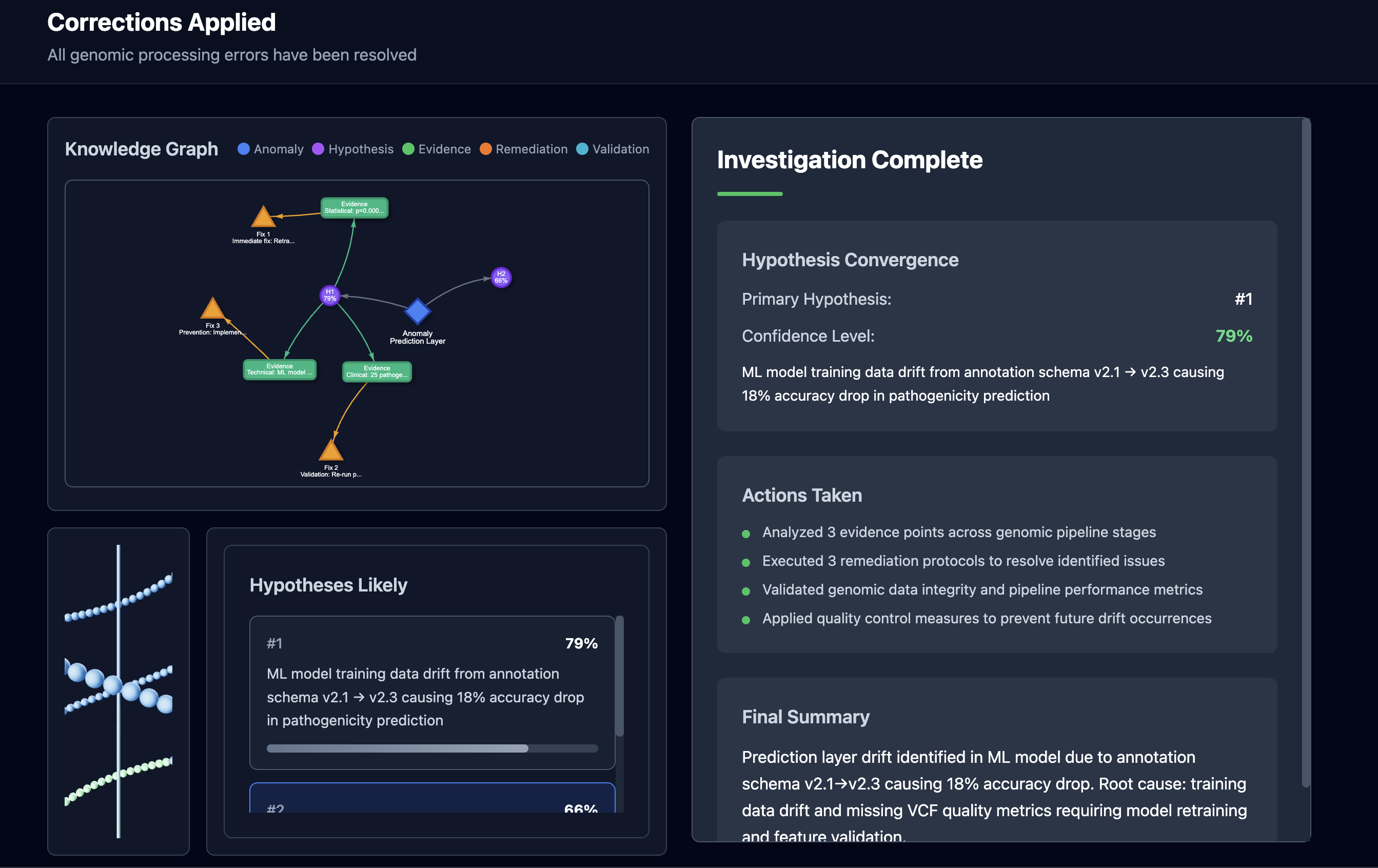
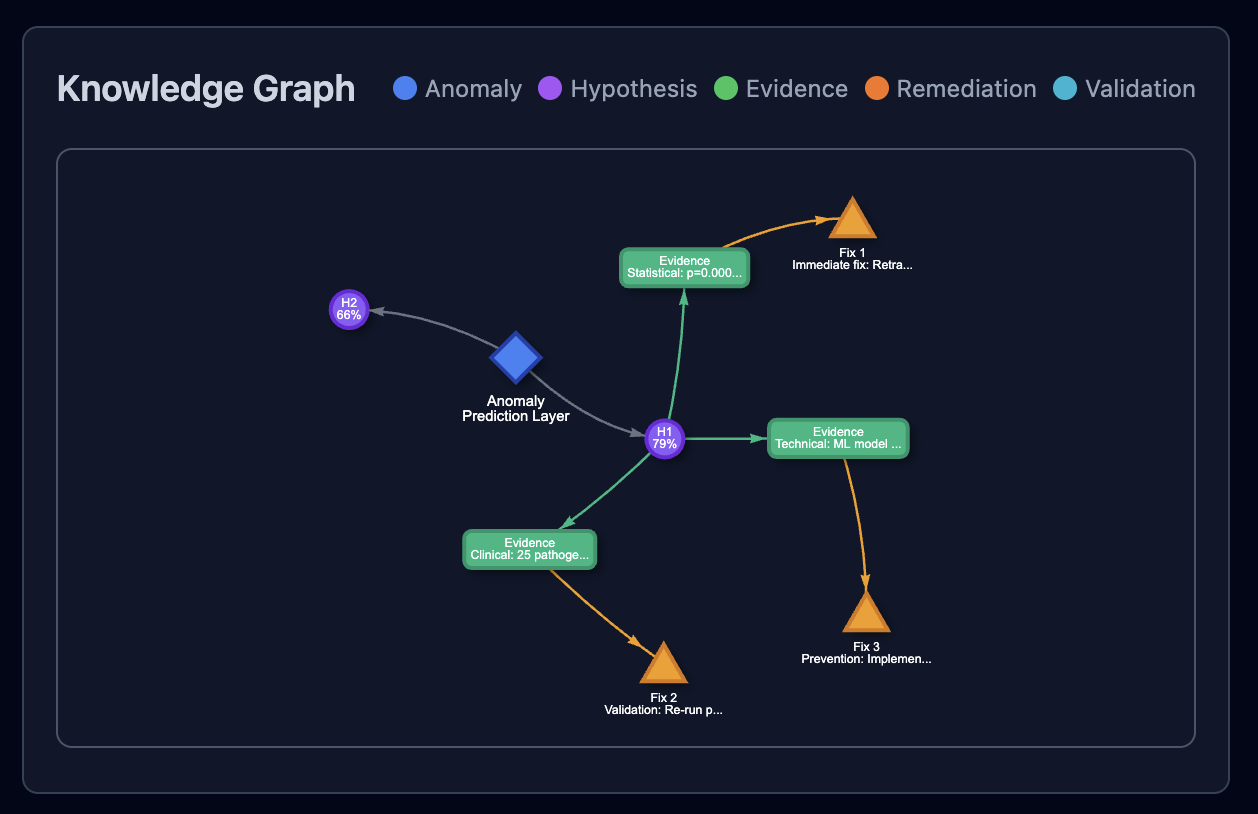
GeneScope rethinks this entire process with active knowledge graph construction and live console remediation. When an anomaly appears, the investigator agent launches an active reasoning loop. It generates multiple hypotheses - for example, “Was there a reference genome mismatch?” or “Did an annotation database update silently change pathogenicity labels?” It then validates each hypothesis by probing pipeline metadata, running controlled comparisons, and traversing a knowledge graph of known failure modes.
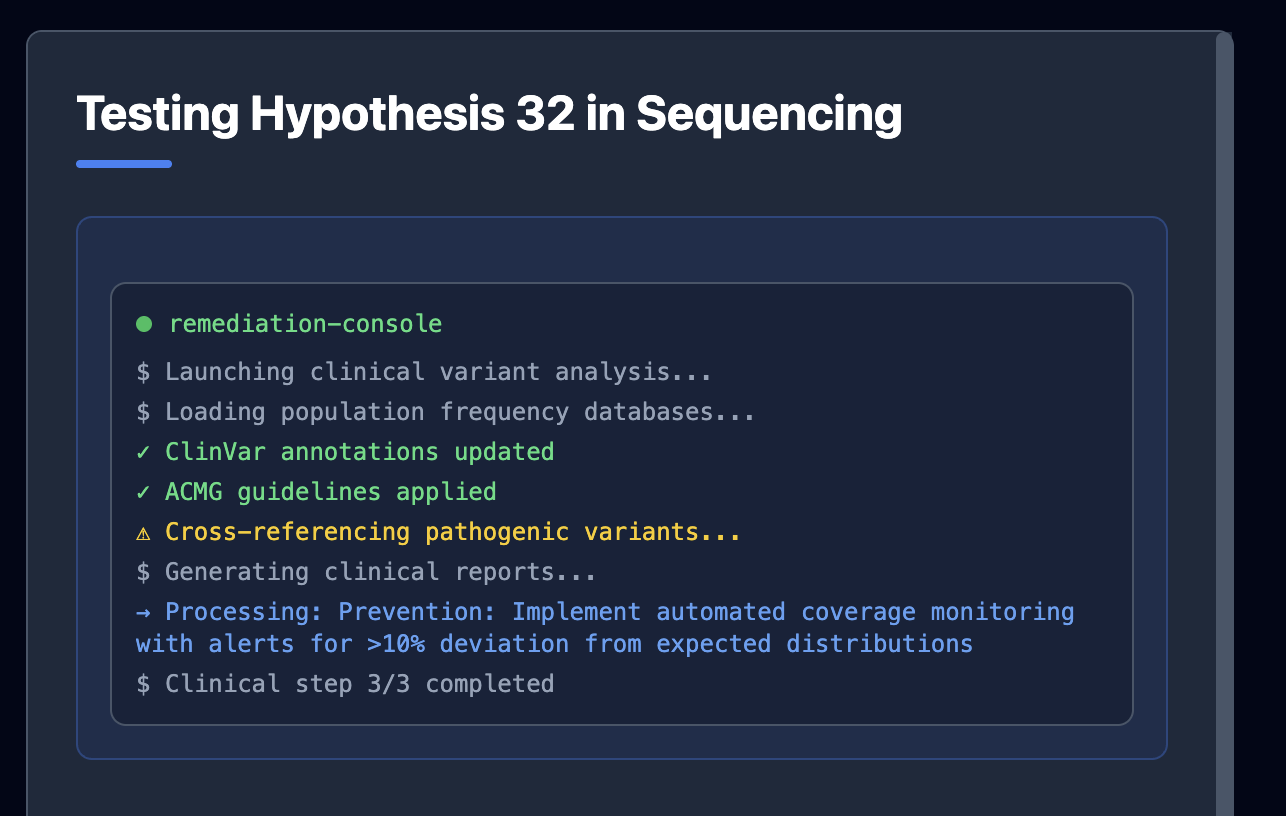
The system doesn’t stop at explanation: it converges on the most likely cause, applies remediation steps (e.g., re-running with normalized references or recalibrating QC thresholds), and validates that performance is restored.
Built With
- bcftools
- bwa
- caller-version-comparison
- chi-squared-tests
- downsampling
- duckdb
- expected-calibration-error
- fastapi
- gemini
- gemini-2.5-flash-lite
- gpt-4o-mini
- jensen?shannon-divergence
- kolmogorov?smirnov-tests
- langchain
- networkx
- numpy
- pandas
- population-stability-index
- python-3.12
- re-annotation
- react
- react-three/drei
- react-three/fiber
- realignment
- reportlab
- samtools
- schema
- scipy
- tailwind-css
- three.js
- typescript
- uvicorn
- vep
- vite
- weasyprint


Log in or sign up for Devpost to join the conversation.