Inspiration
In 2021, I filed a patent for a web interaction layer where websites declare supported actions so external agents (bots) can interact with them without relying on the visual UI.
At the time, I was focused on automation where the browser could effectively stay in the background. The agent could perform actions without the user needing to watch every step.
WebMCP made me revisit the same idea from the opposite direction:
What happens when the visual interface is not something to bypass, but something the human and AI need to share?
Many web tasks can happen while the page is hidden or barely looked at - purchasing, form filling, data entry, even some document operations.
But visual learning is different.
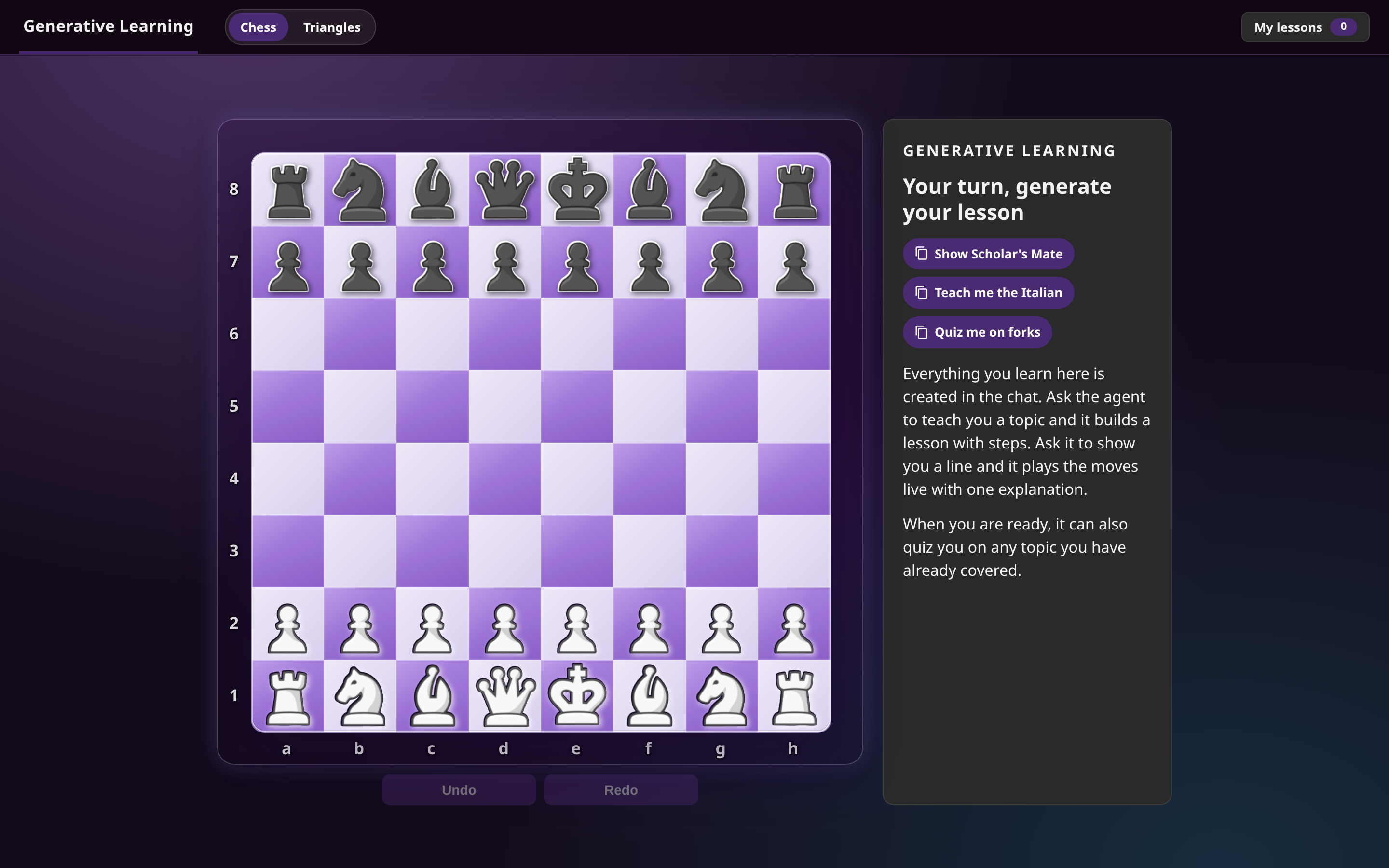
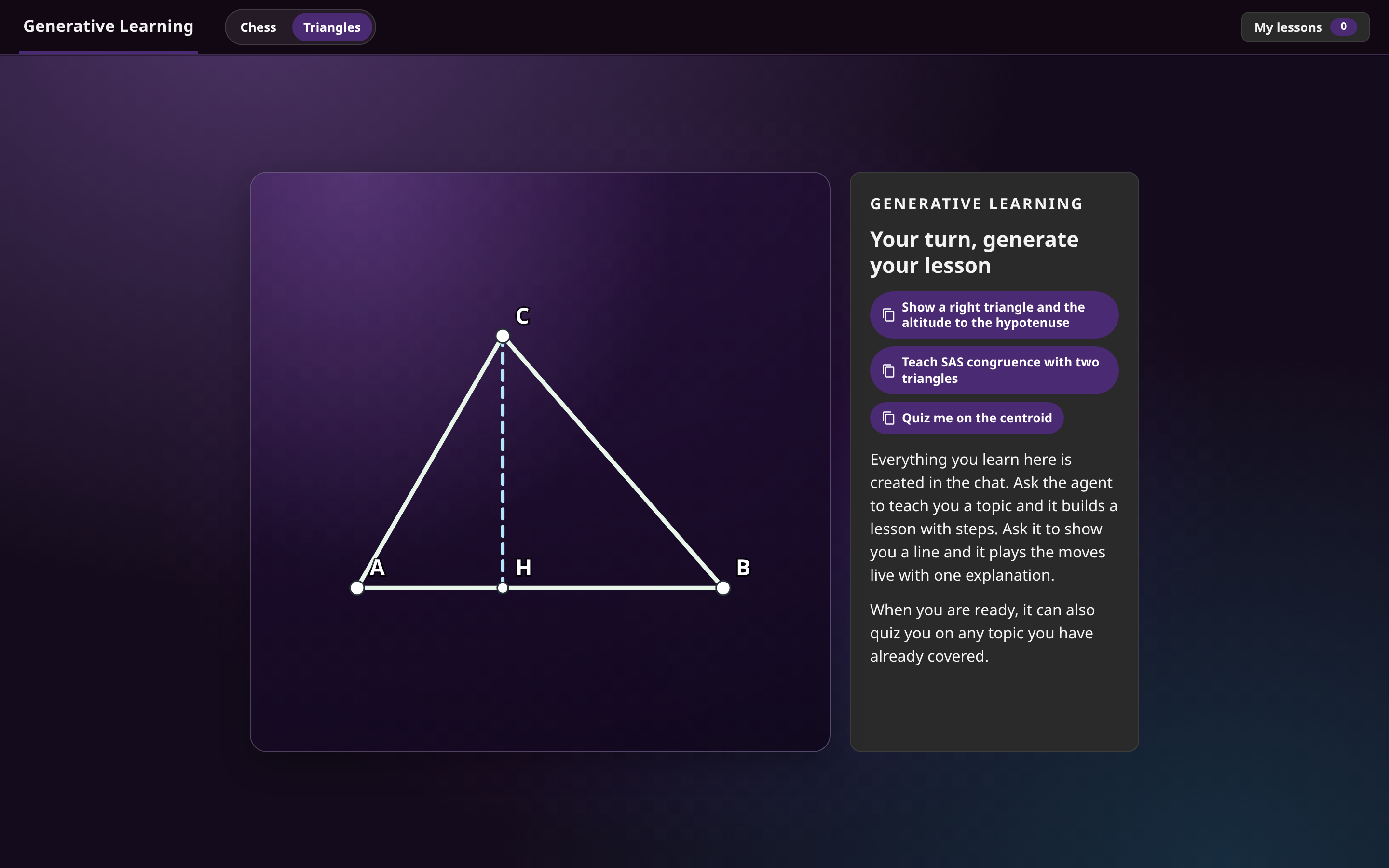
You cannot meaningfully learn chess, manipulate a triangle, inspect a circuit, or reason about spatial relationships while the learning surface is hidden. The learner needs to see it, act on it, and understand what changes.
So I specifically looked for learning domains where the visible interface is essential to the task itself.
AI can generate great explanations, diagrams, and canvases - but learning often needs a professional environment that stays in place.
That led me to ask:
What if AI generated the lesson, not the learning surface?
I built persistent, domain-specific learning surfaces where the learner and AI tutor can see, act, and continue together.
What it does
The learner chooses what to learn and how to learn it.
The AI teaches inside the existing surface: demonstrating, annotating, asking questions, reacting to learner actions, and guiding the lesson step by step.
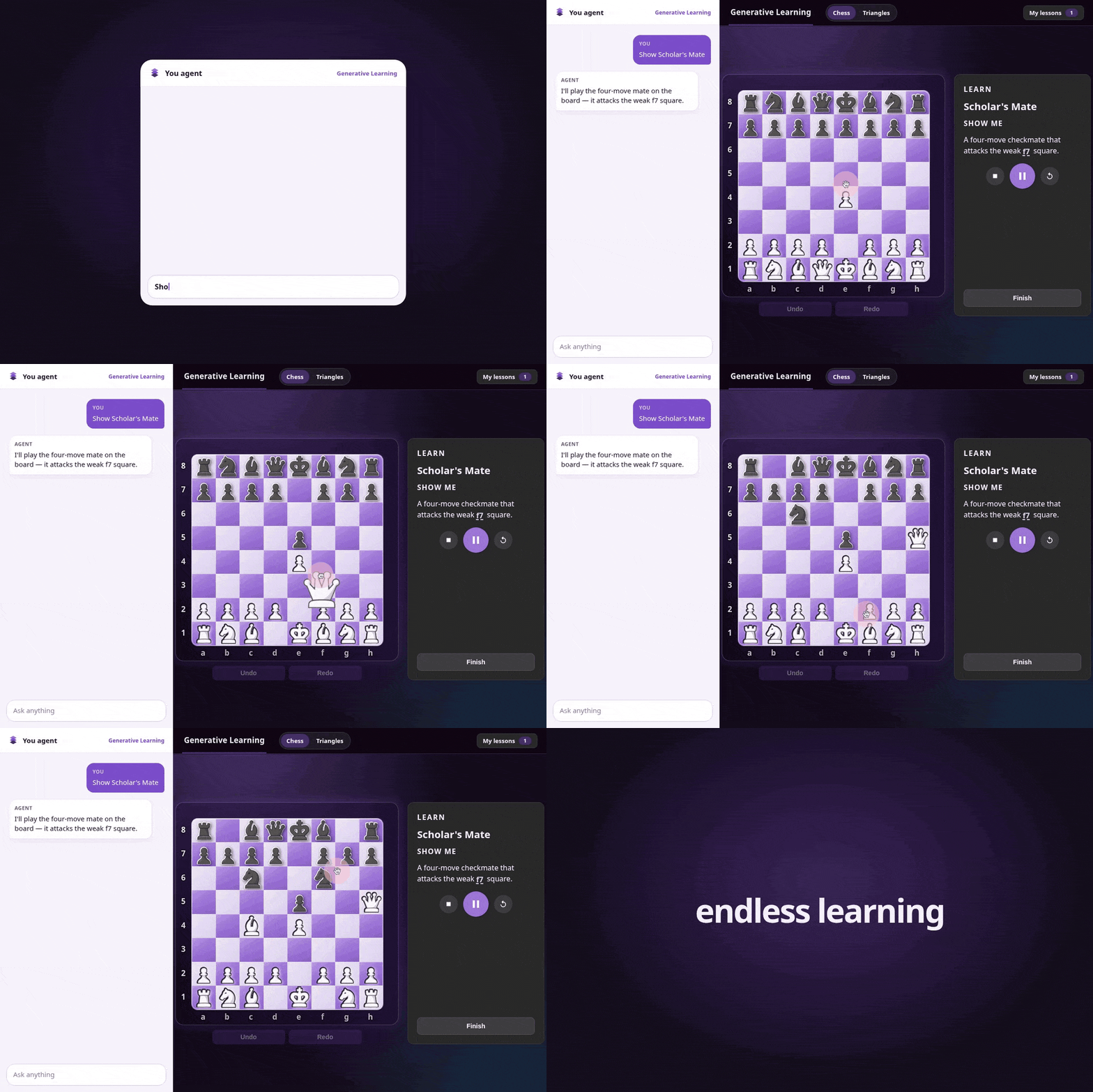
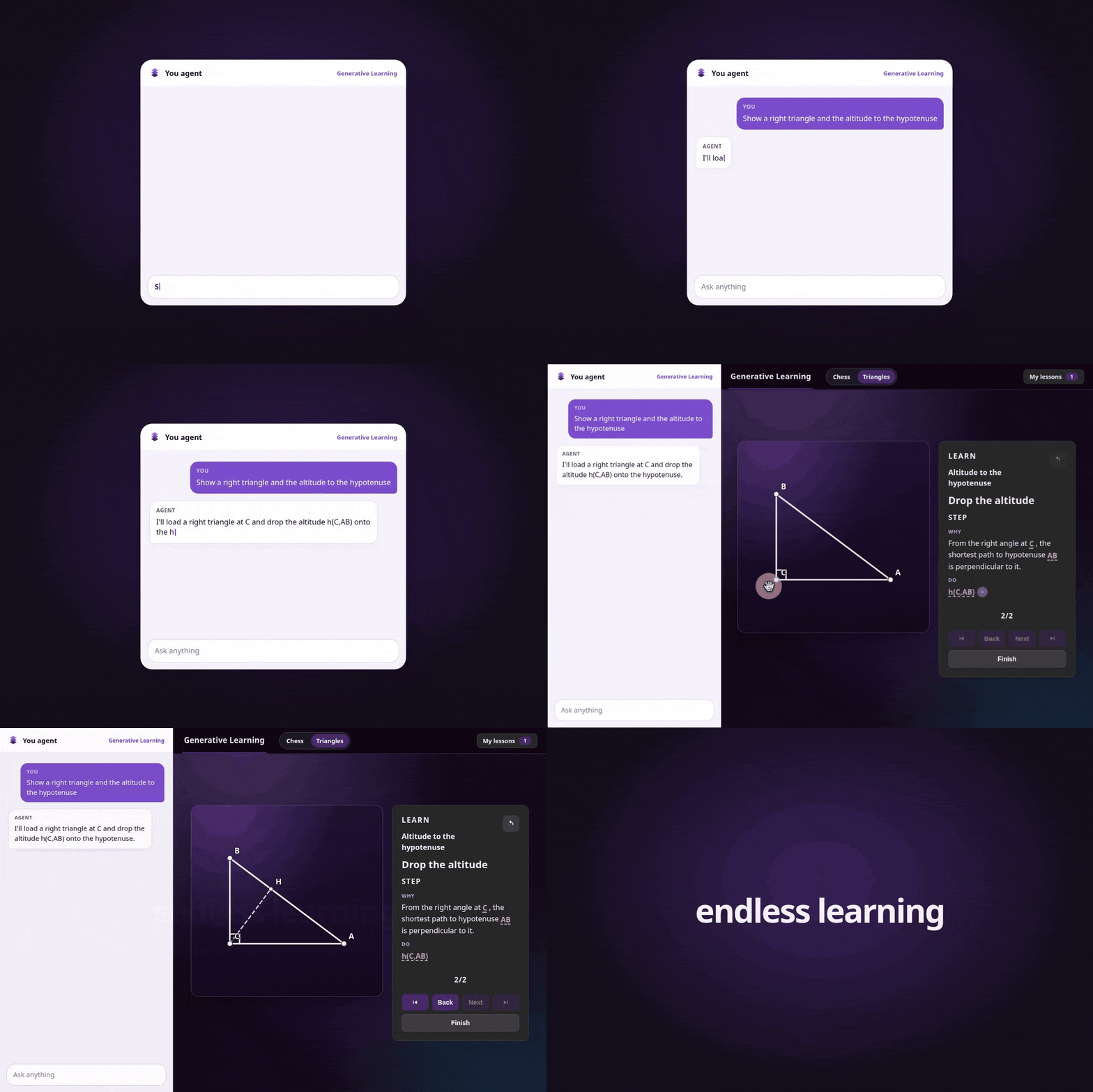
Chess and an interactive triangle-learning surface are two working examples of the same pattern.
Build the learning surface once. Personalize the lesson endlessly.
How I built it
Each surface exposes structured WebMCP tools for generating lessons, updating the learning state, and acting on the environment.
Chess and triangle learning expose different domain actions, but use the same collaboration loop:
generate a lesson, demo, or quiz → read state → demonstrate → learner acts → read change → continue
The agent works through explicit tools instead of scraping or rebuilding the UI.
Challenges I ran into
The biggest challenge was the missing reverse communication path from the learning surface back to the chat.
A tutor might ask:
“What move would you play to checkmate in one move?”
The learner should make the move directly on the board, and the surface should report that action back to the agent so the lesson can continue naturally.
Today, that loop is incomplete. The AI cannot truly wait for a learner action and automatically resume when the surface reports it.
For the prototype, I generate a prompt describing the learner’s action and ask the user to send it back to chat manually.
What’s missing is a native:
AI asks → learner acts → surface reports → AI continues
That bidirectional communication would make the tutoring flow much more natural.
Accomplishments that I'm proud of
I built two different learning domains - chess and triangle learning - using the same WebMCP pattern.
More importantly, the AI is not just automating an interface. It is teaching through it, while the learner works on the same live state.
That turns WebMCP from an automation layer into a collaboration layer.
What I learned
The biggest lesson was:
Generative learning does not require a generative interface.
A stable, professional surface can actually give AI more useful freedom, because it provides reliable tools, shared state, and meaningful learner actions.
I also learned that truly interactive tutoring needs more than tool calls. It needs bidirectional agent-surface communication so the learner can act directly in the environment and the AI can continue from that action.
What's next for Generative Learning
Chess and triangle learning prove the pattern.
The same idea could apply anywhere learning needs a shared interactive environment - circuits, chemistry, maps, music, and more.
These are examples of the broader pattern, not announced products.
Longer term, the same surfaces could also support teacher-defined learning goals and measurable outcomes while preserving a fully personalized learning path.
Built With
- react
- webmcp


Log in or sign up for Devpost to join the conversation.