-
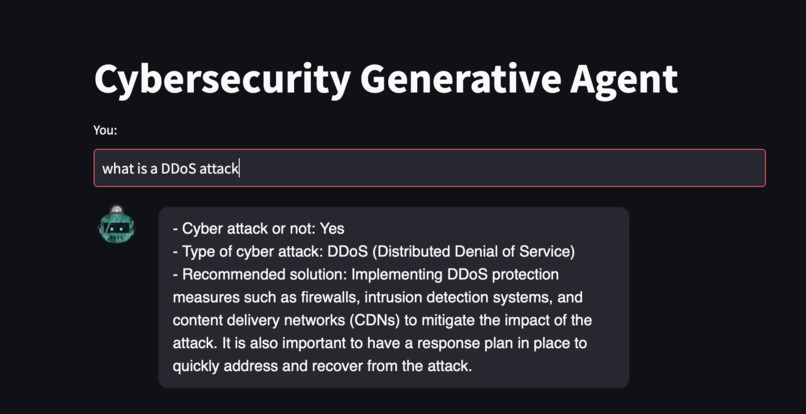
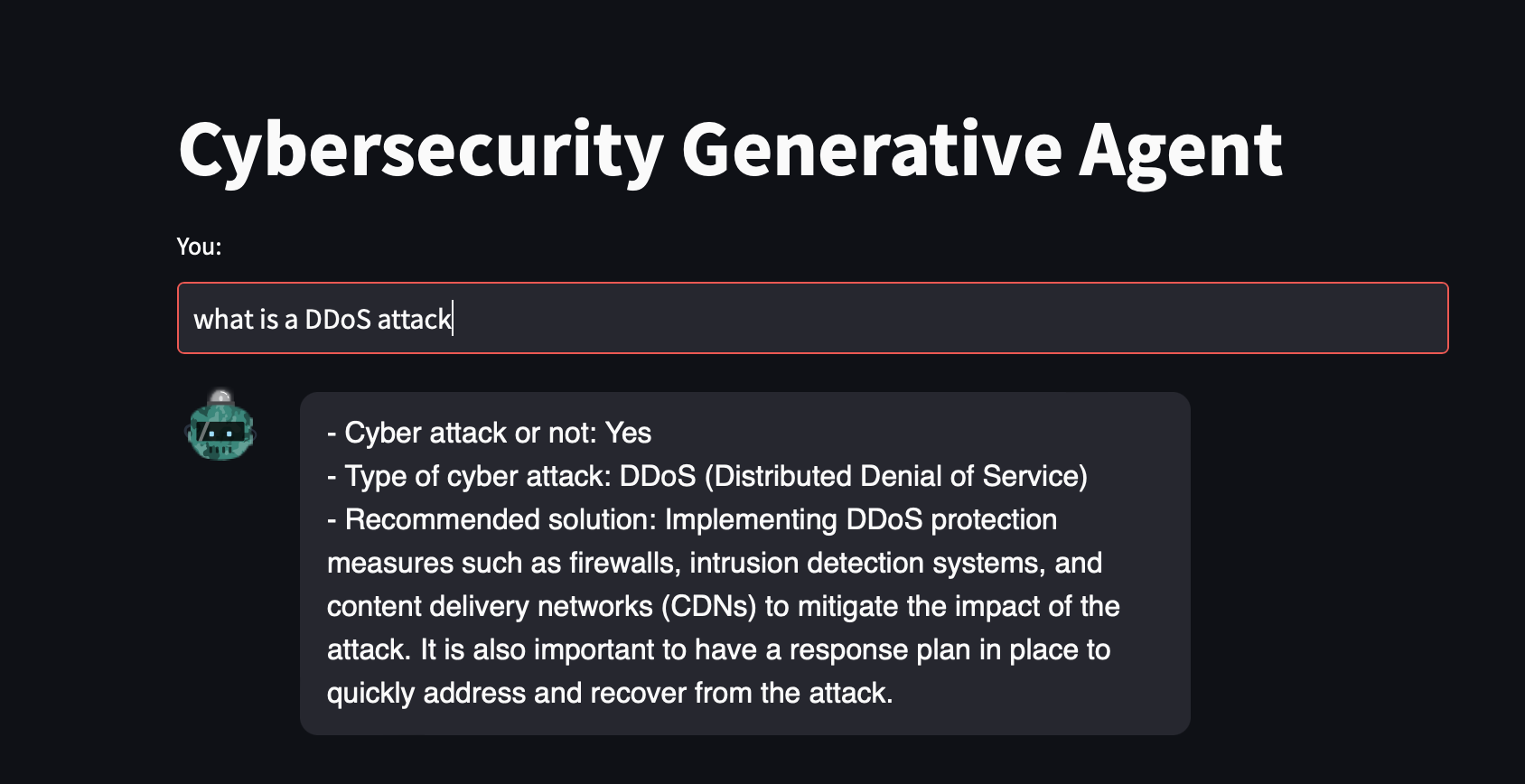
Chatbot Agent
-
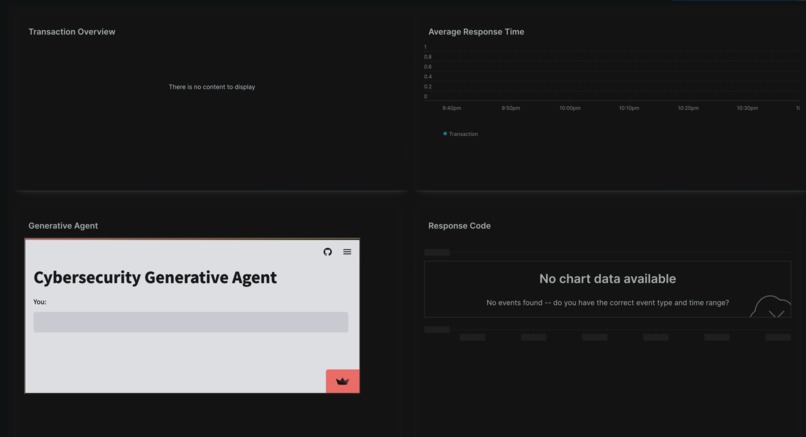
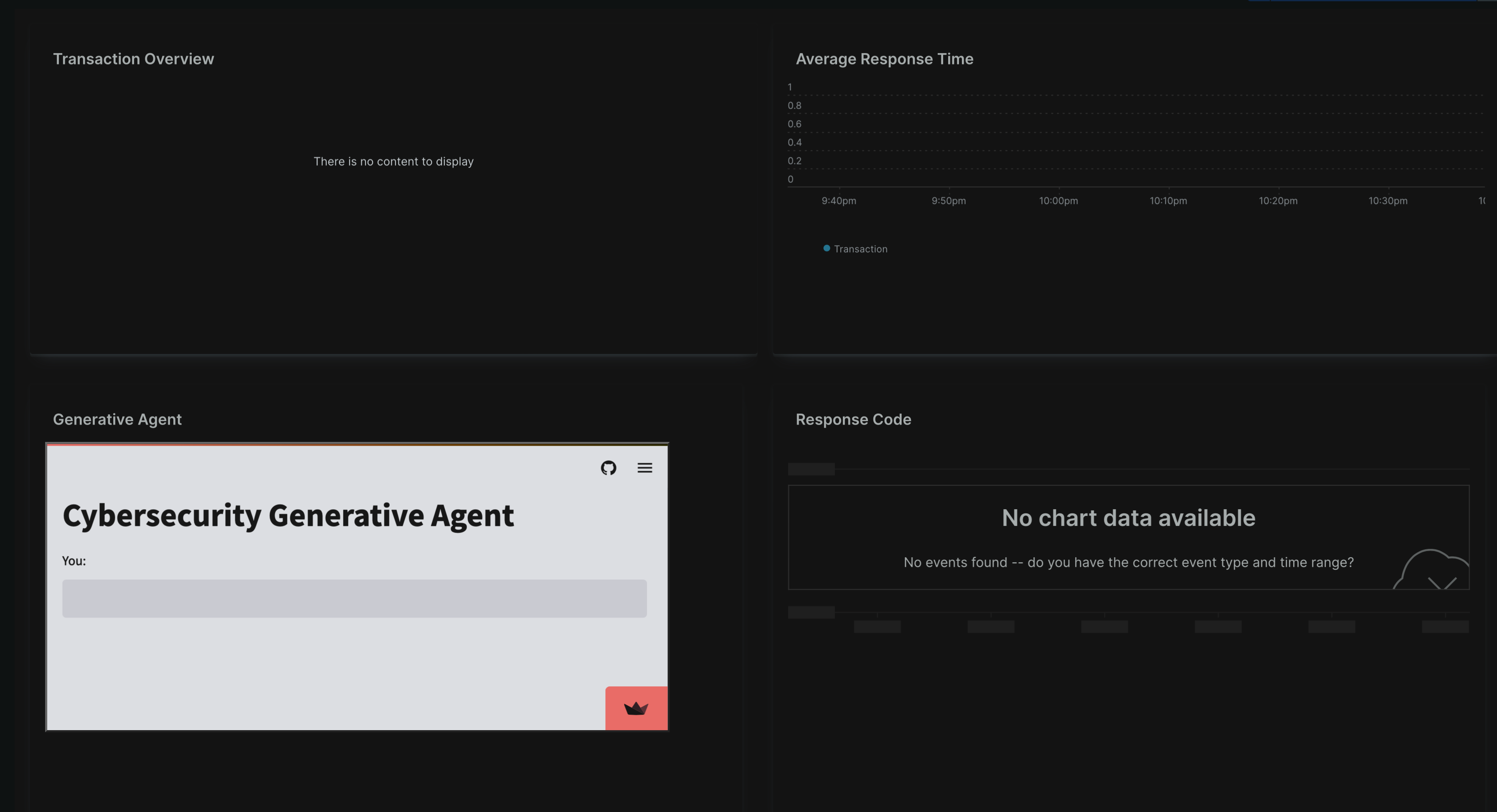
NewRelic Dashboard
Inspiration
Working in a small organization without a dedicated internal IT department sparked the need for a solution to handle security expertise.
What it does
Our agent, trained on existing cybersecurity data, stays current with real-time data sources like Twitter and Google News. It combines the power of GPT3, these datasets, and customer's network server log files to provide clear explanations of threats and actionable items.
How we built it
We utilized a cybersecurity dataset from Hugging Face and OpenAI's GPT3 model. The recommendations are delivered through a chatbot built on Streamlit.
Challenges we ran into
Due to time constraints, we couldn't fine-tune the model to our preference. We also couldn't integrate Fennel, Amplitude, or LanceDB. However, in a full launch scenario, we would incorporate Fennel for feature engineering, Amplitude for usage insights, and LanceDB for user queries and long-term memory.
Accomplishments that we're proud of
We successfully built a functional prototype that achieves our basic objectives. We were able to integrate our app into New Relic.
What we learned
We need to delegate tasks more effectively, particularly to non-tech roles, to enhance efficiency and task concurrency.
What's next for Cybersecurity Generative Agents
We aim to train and fine-tune the data, field test it, and assess whether the minimum viable prototype meets our target customer's basic needs. We'll iterate on the base concept as necessary. Given the architecture of our system, we believe it can be adapted to various use cases outside of cybersecurity, especially where real-time data is crucial for decision-making. Potential use cases include:
- Competitor Tracking
- Geo-political Analysis
- Adjacent Idea Generation
- Industry News Monitor/Analysis
- Travel Warnings
- Brand Sentiment Analysis
Built With
- hugging-face
- new-relic
- openai
- streamlit


Log in or sign up for Devpost to join the conversation.