-
-
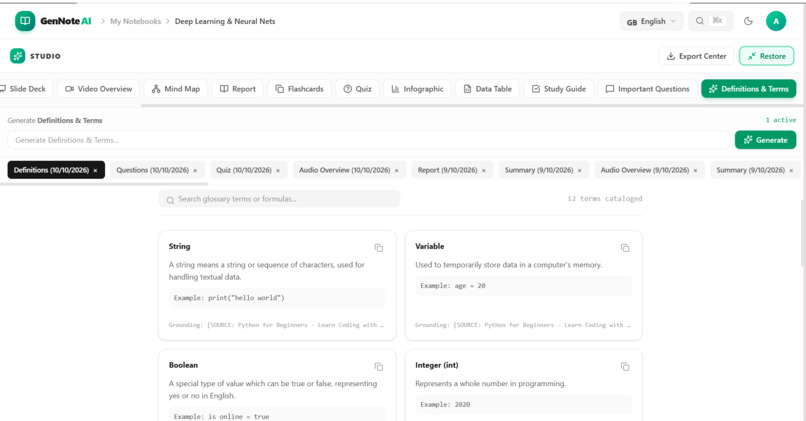
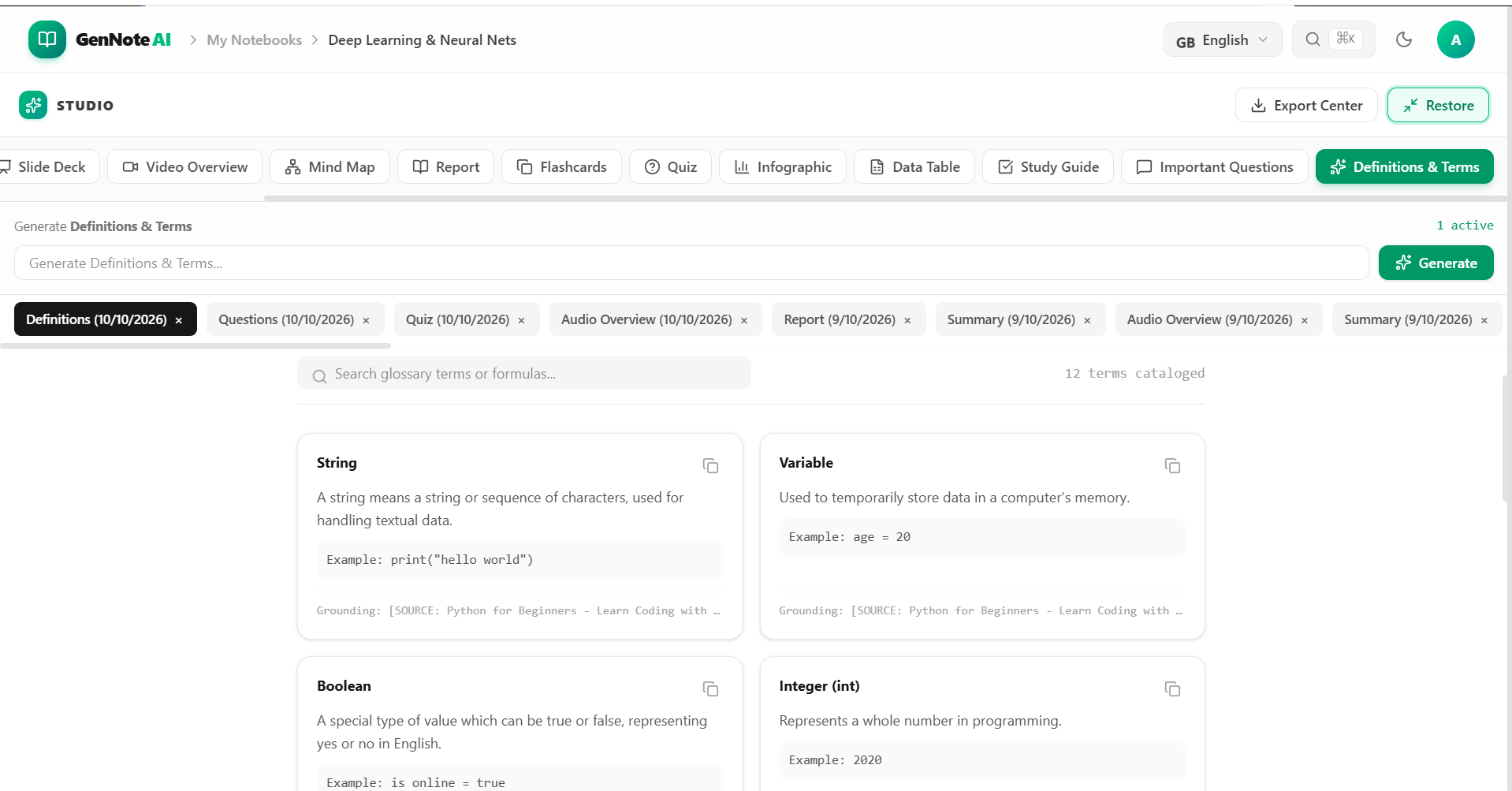
Definitions and Terms
-
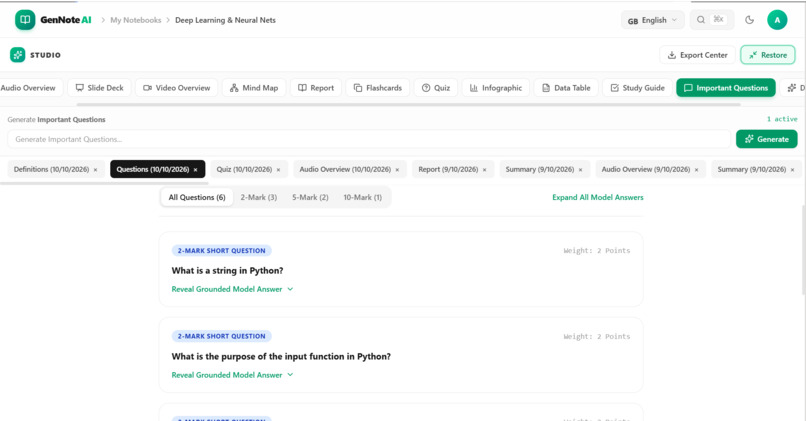
Important Questions
-
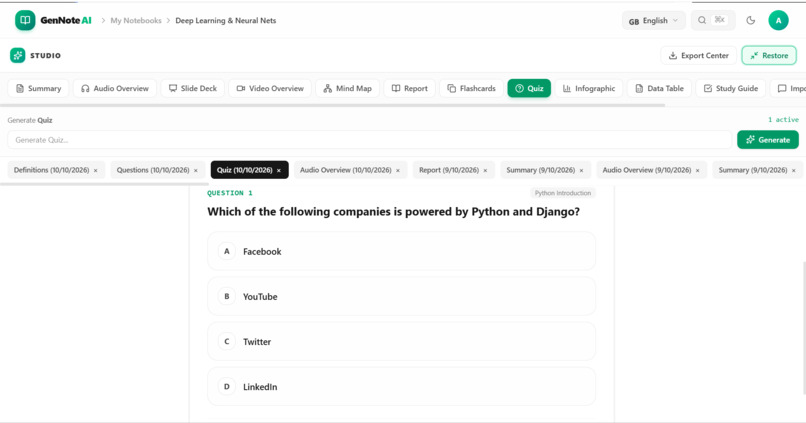
Quiz
-
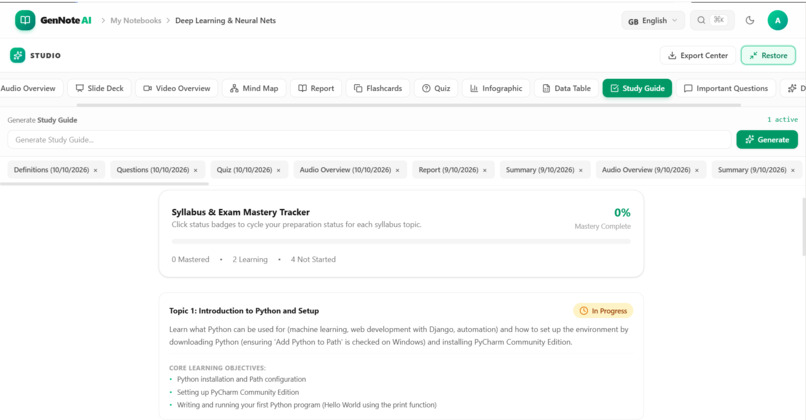
Study Guide
-
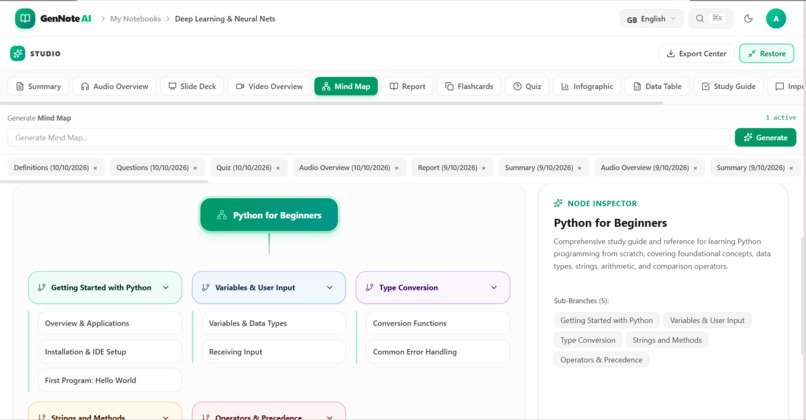
Mind Map
-
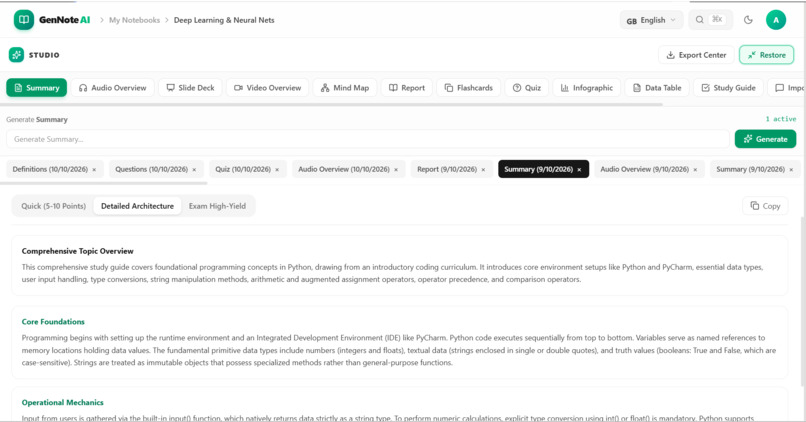
Summary
-
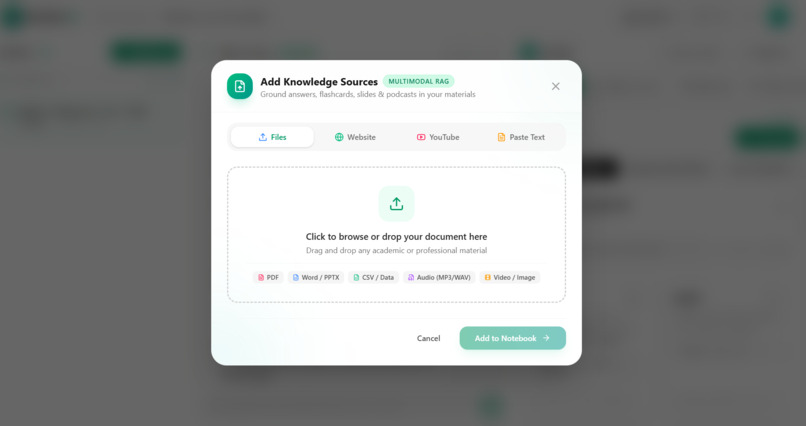
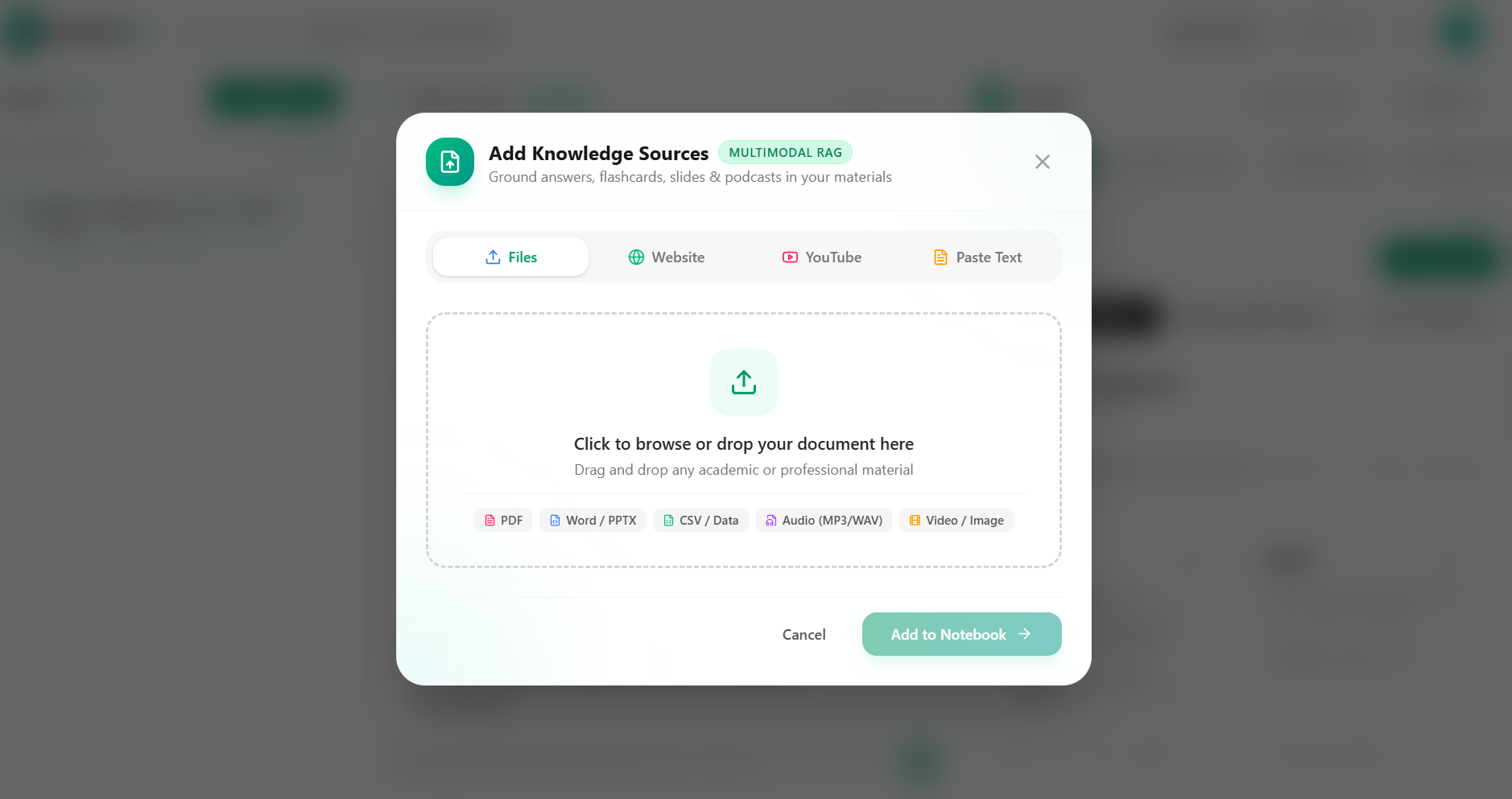
Add source
-
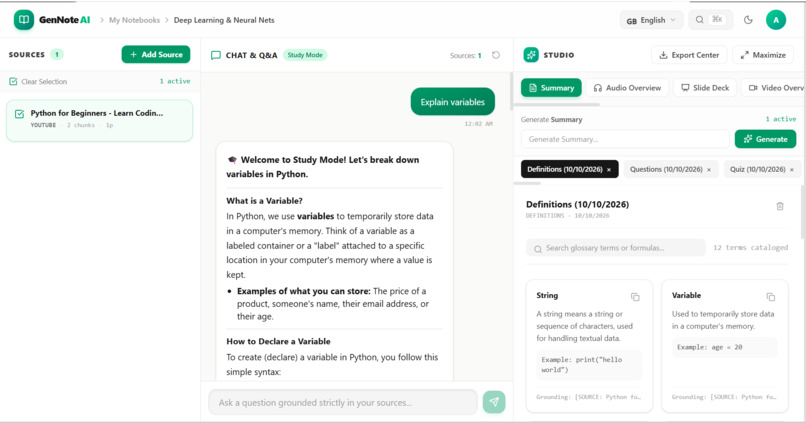
Dashboard
-
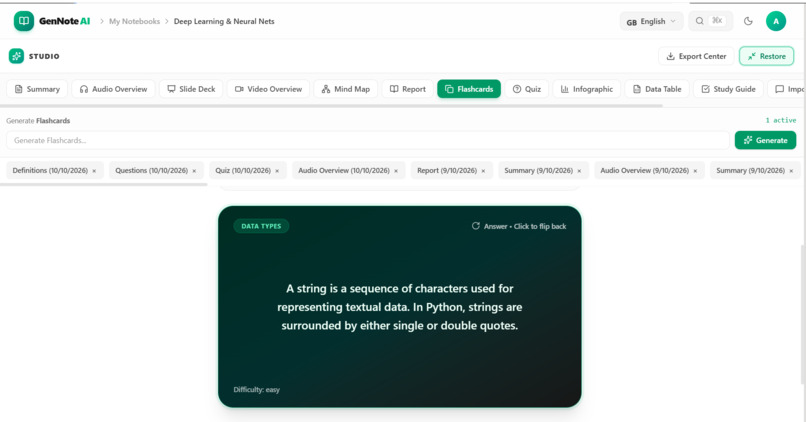
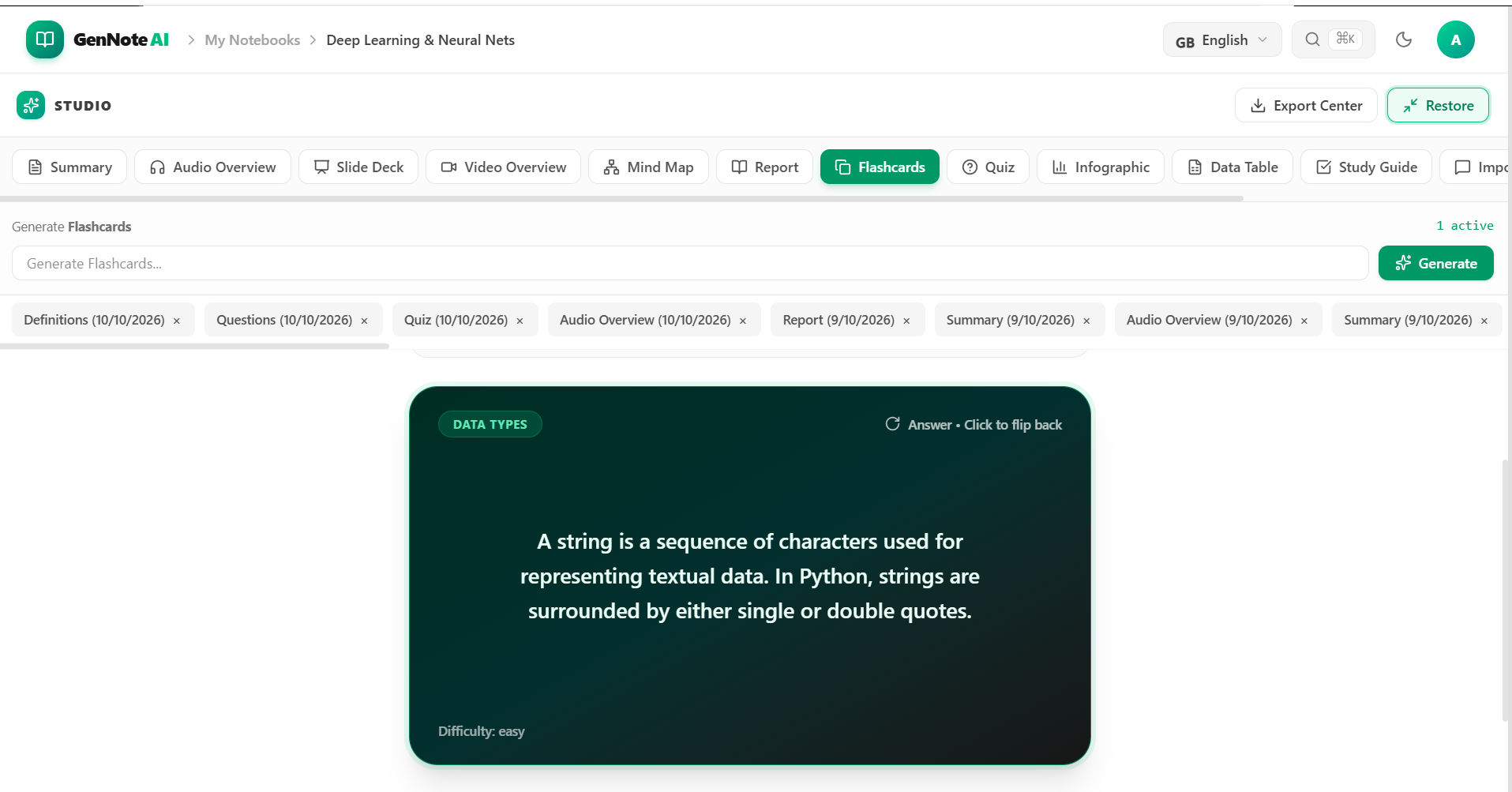
Flashcards
-
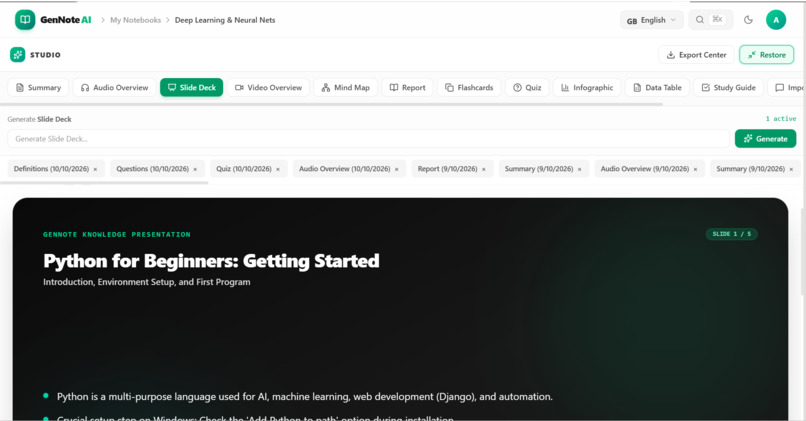
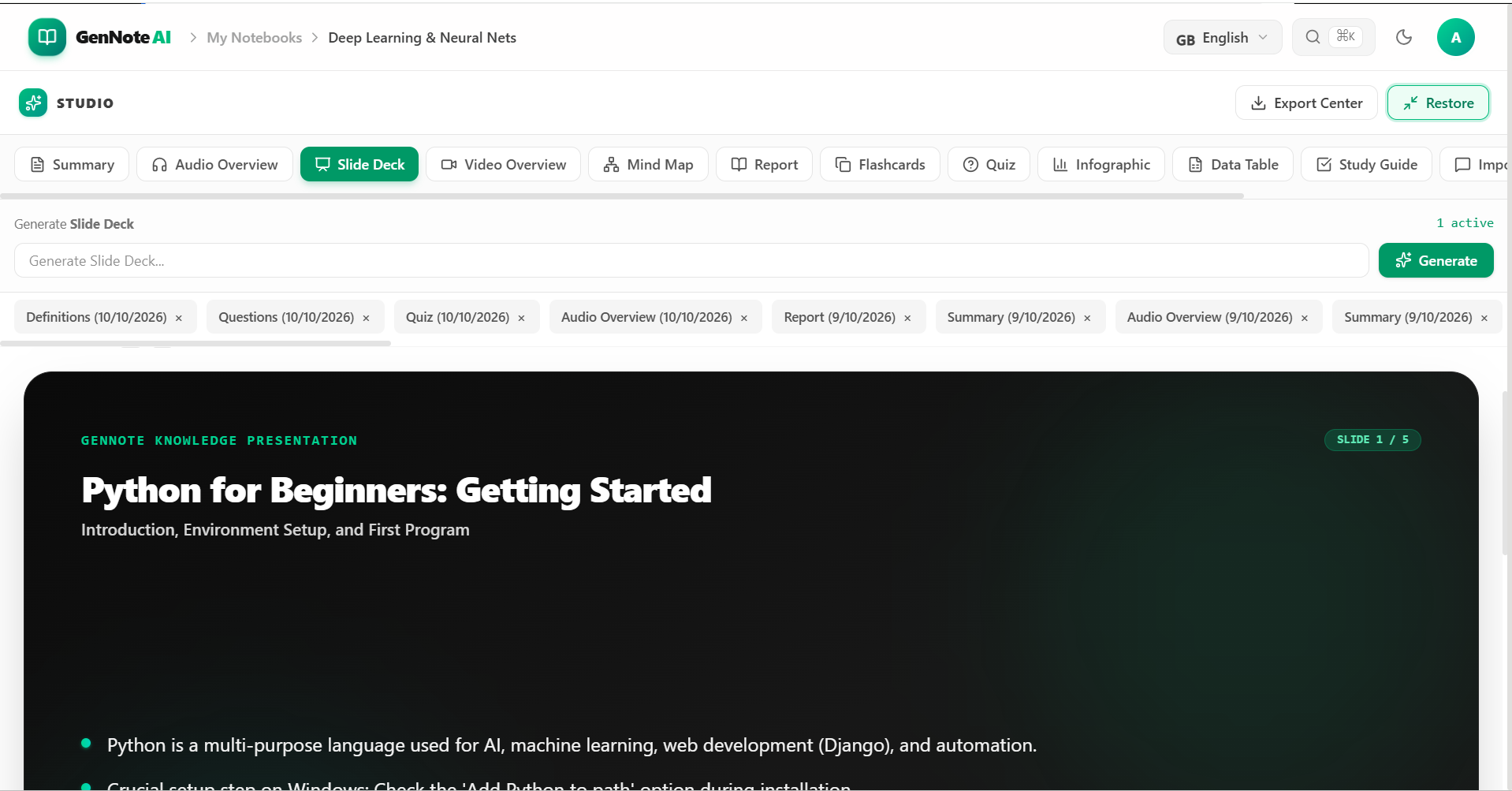
Slide Deck
-
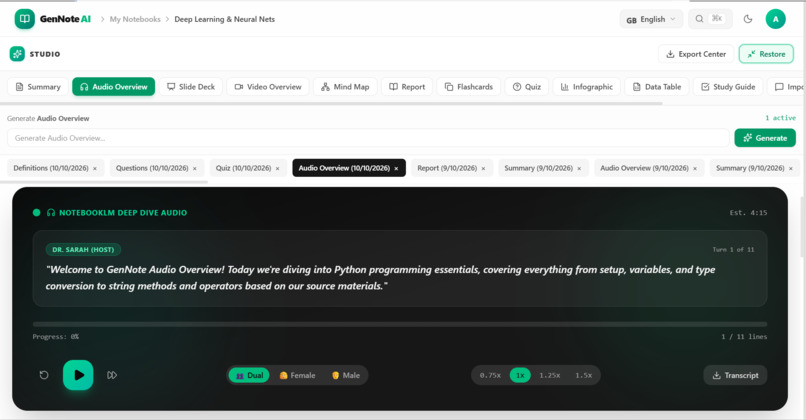
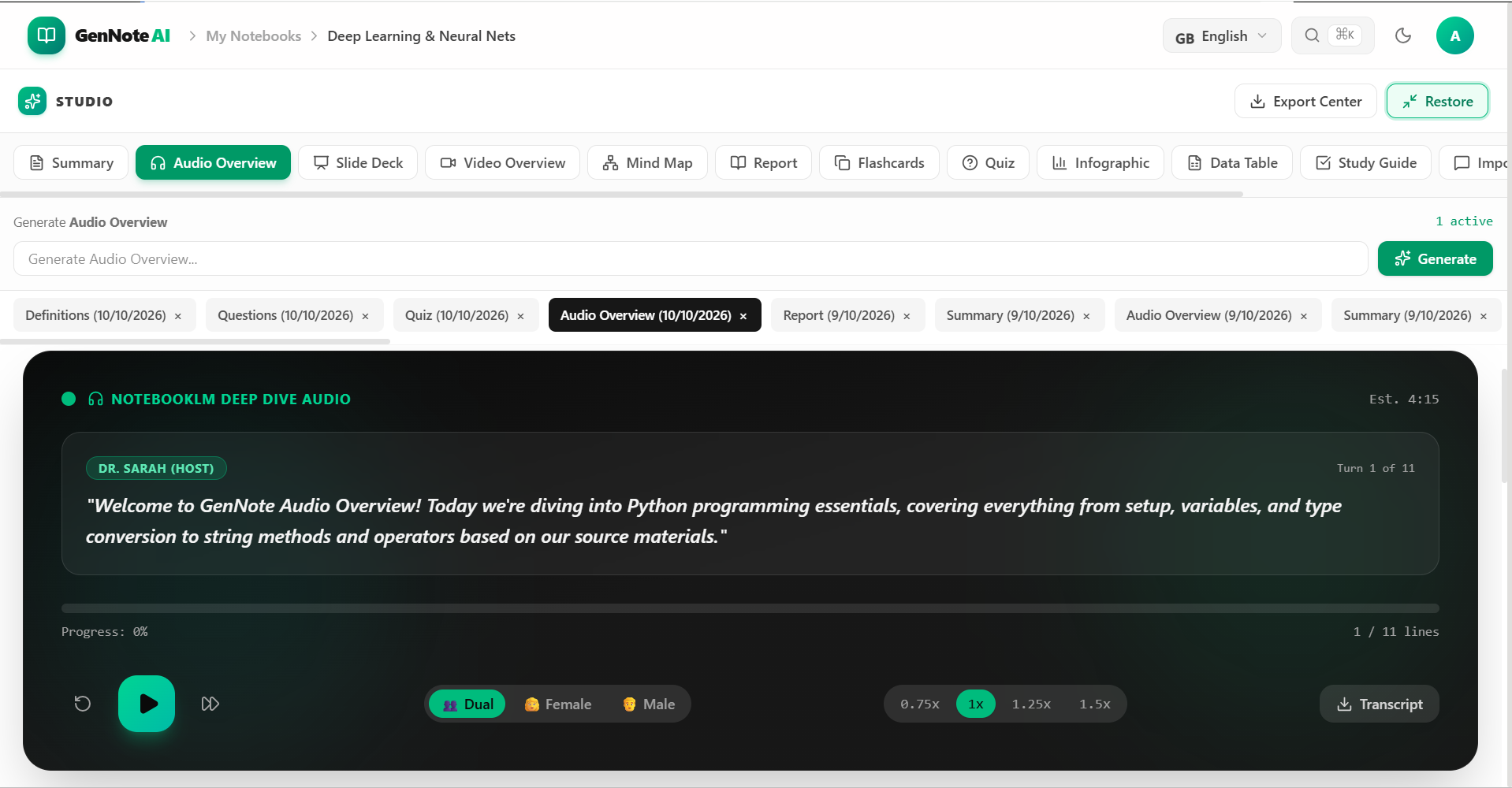
Audio Overview
Inspiration
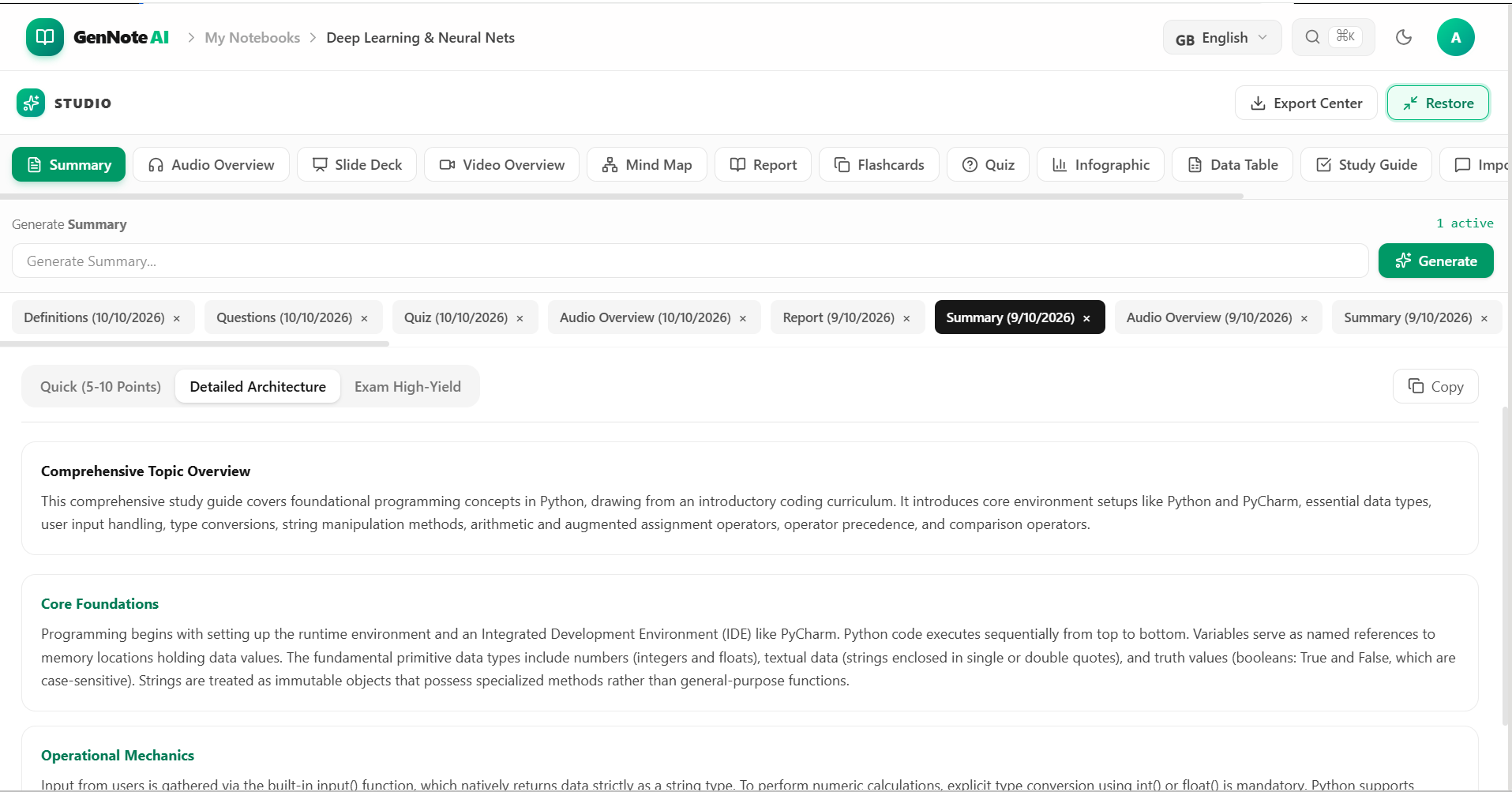
Students often spend hours reading lengthy textbooks, PDFs, research papers, and lecture materials just to find the most important information. Preparing notes, flashcards, questions, and revision materials manually takes even more time.
This inspired us to create GenNote AI, an AI-powered study assistant that transforms learning materials into useful and interactive study resources. Our goal is to help students spend less time organizing their study materials and more time understanding and learning.
What it does
GenNote AI allows students to upload learning materials such as PDFs, Word documents, text files, and other supported sources.
The application extracts and processes the content and uses AI to generate useful learning resources such as:
- Summaries and structured study notes
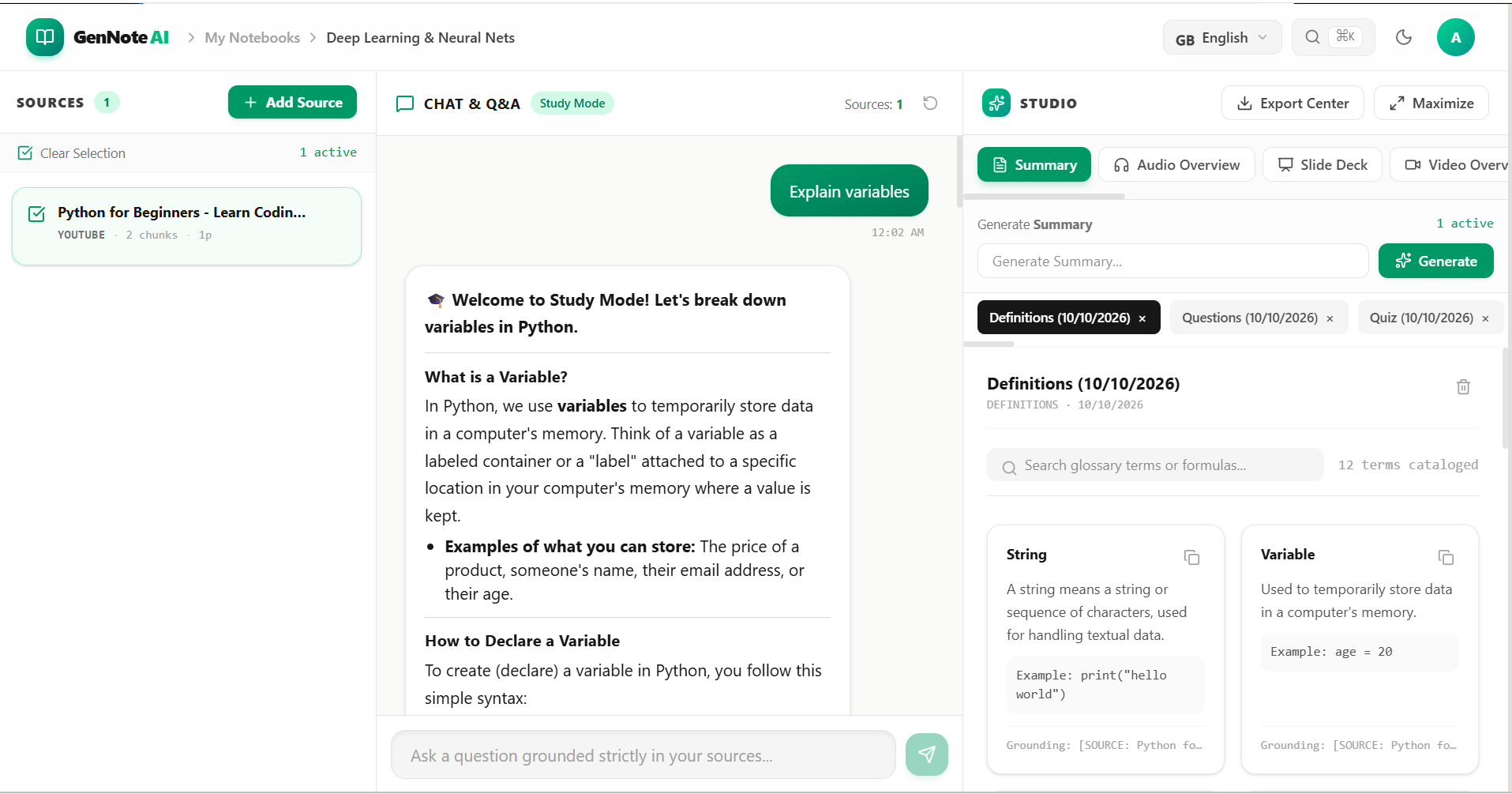
- Source-grounded question answering with citations
- Interactive flashcards
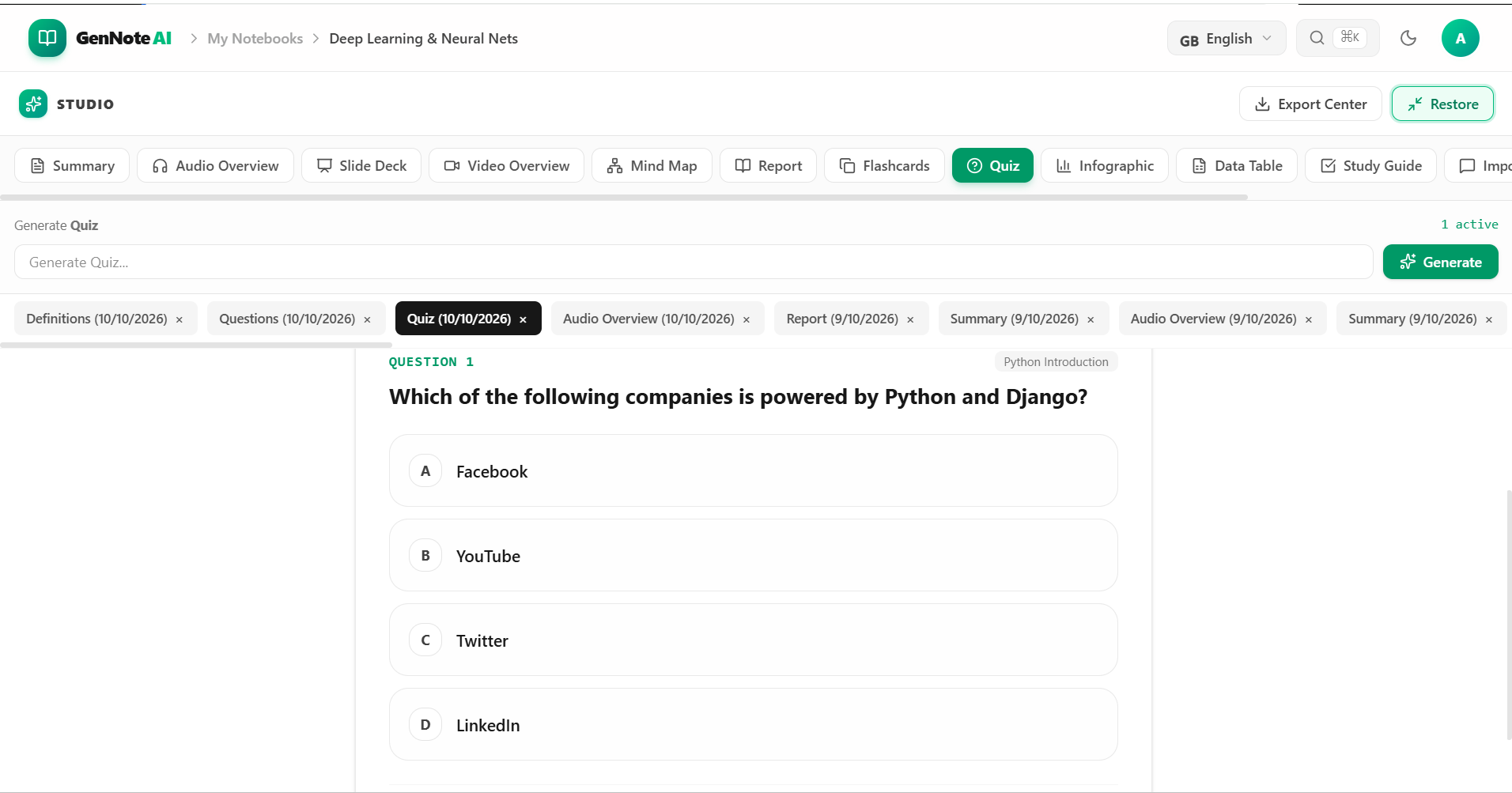
- Multiple-choice quizzes with explanations
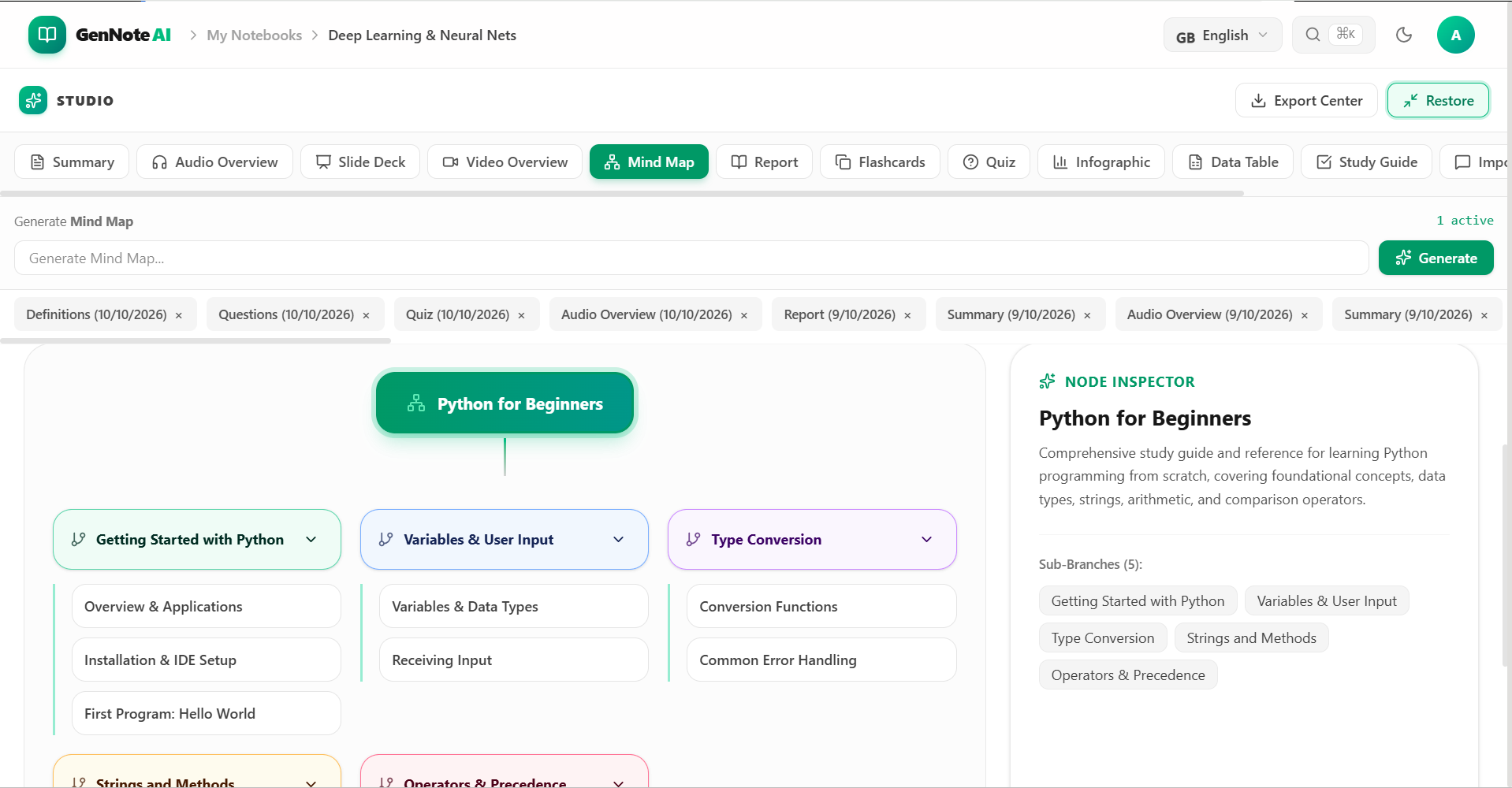
- Mind maps for visual learning
- Presentation slide decks
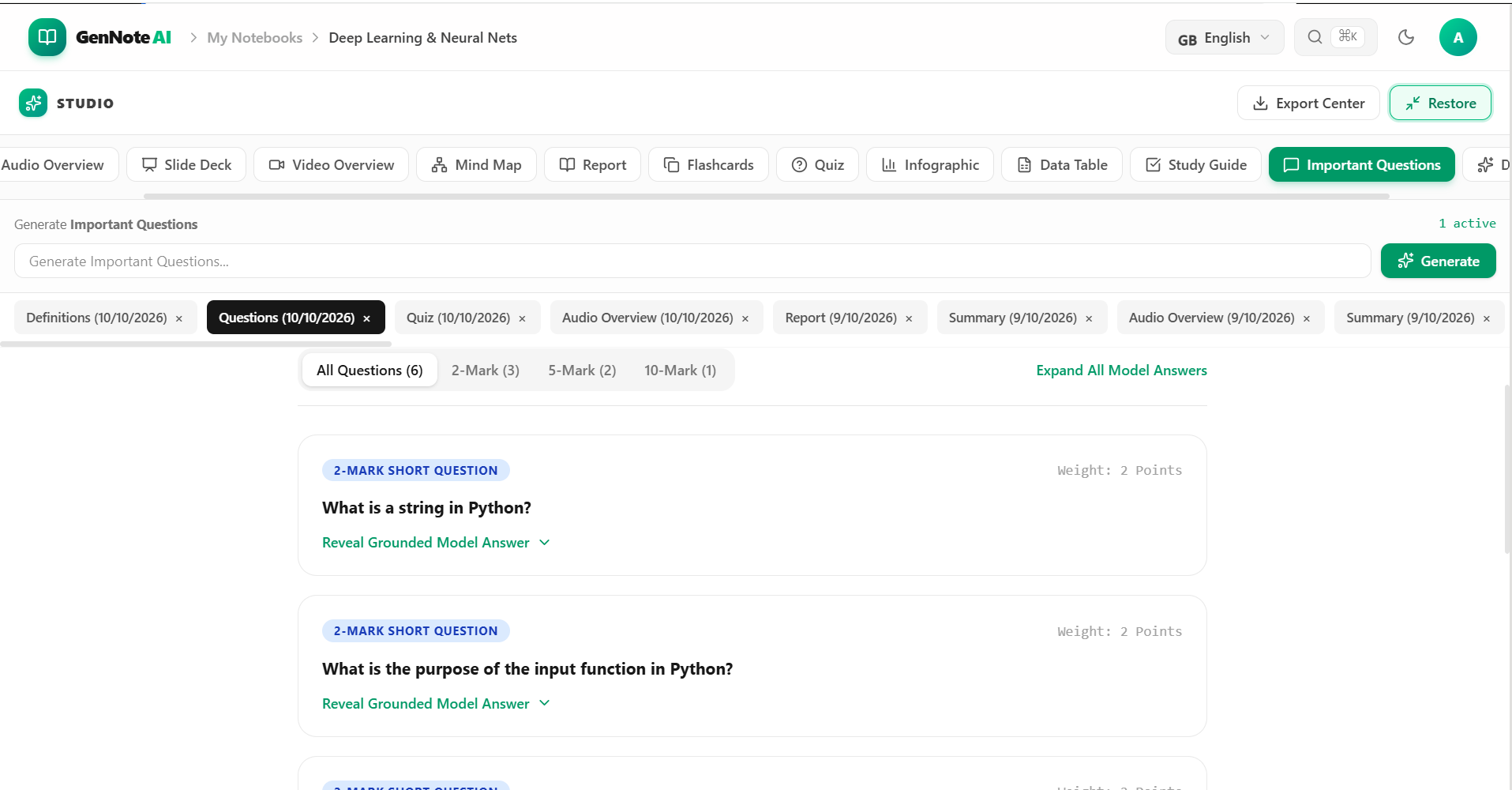
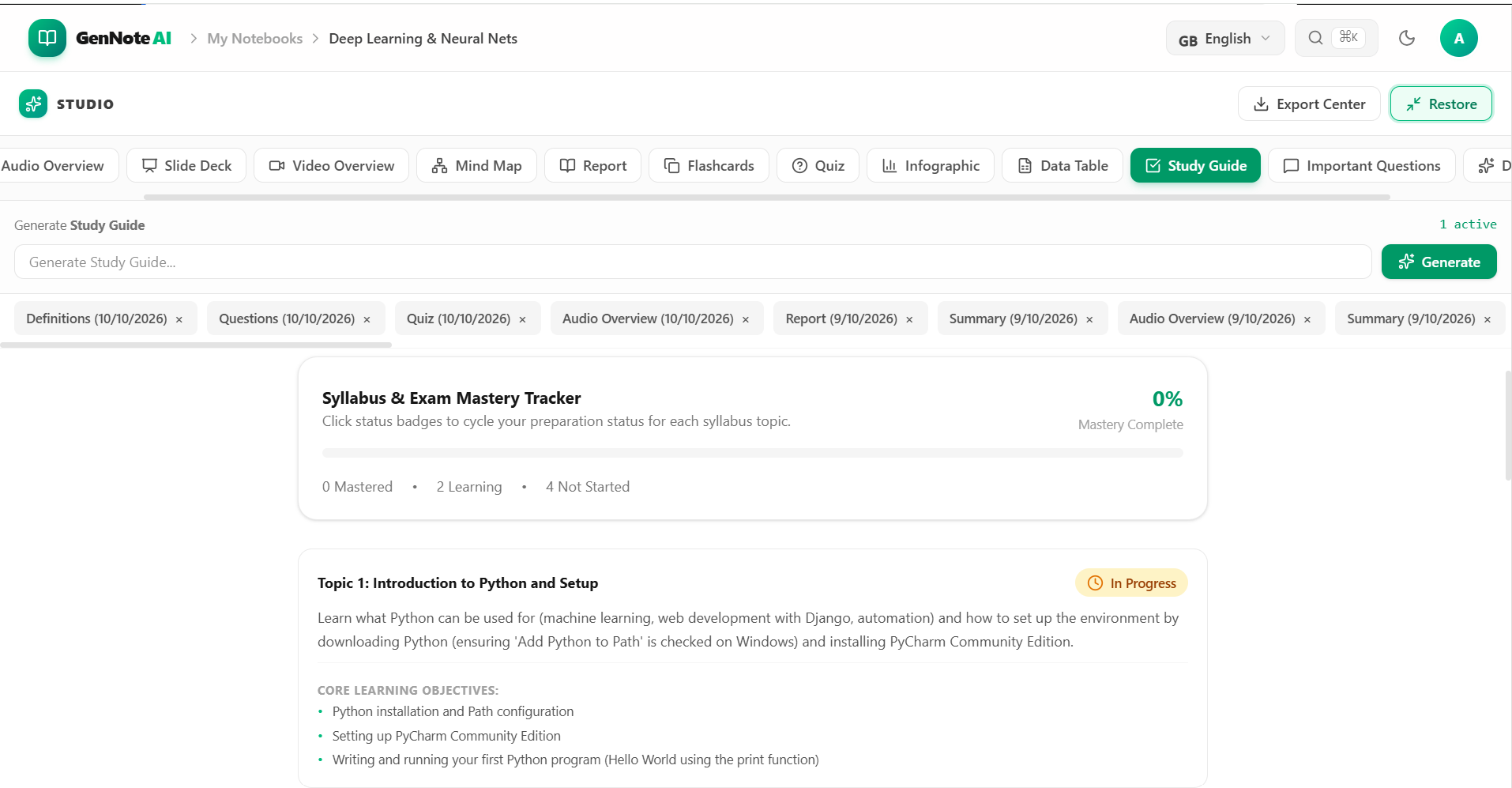
- Important questions and study guides
- Audio Overviews for podcast-style learning
- Multilingual learning support, including English, Tamil, and Hindi
Instead of using different applications for summarization, quizzes, flashcards, and presentations, GenNote AI aims to bring these tools together in one study workspace.
How we built it
We built GenNote AI using a modern web development stack.
The frontend is developed using React, TypeScript, Tailwind CSS, and Vite to provide a simple and interactive user interface.
The backend uses Node.js and Express to handle uploaded files, process user requests, and communicate with the AI service.
For AI-powered features, we use the Google Gemini API. The extracted content is provided as context to the AI so that it can generate summaries, answers, quizzes, flashcards, and other study resources based on the student's learning material.
We use document-processing libraries such as pdf-parse for PDF files and Mammoth for DOCX documents. After extracting the content, it is processed and sent to the AI for analysis and generation.
The overall workflow is:
Upload Source → Extract Content → Process & Ground Context → Gemini AI → Generate Study Resources → Display Interactive Results
Challenges we ran into
One of our biggest challenges was accurately extracting content from different types of documents. PDFs can contain complex formatting, tables, images, multiple columns, and scanned pages, which makes reliable text extraction difficult.
Another challenge was keeping AI-generated answers closely connected to the uploaded source instead of allowing the model to provide unrelated information.
We also faced challenges while generating structured outputs such as quizzes, flashcards, mind maps, and presentation slides because each feature requires a different output structure.
Designing multiple AI-powered tools while keeping the application simple and easy for students to use was another important challenge.
Accomplishments that we're proud of
We are proud that GenNote AI has grown from a simple textbook summarization idea into a broader AI-powered study workspace.
Instead of generating only summaries, the project can create different types of learning resources from the same study material.
We are especially proud of features such as source-grounded question answering, interactive flashcards and quizzes, visual mind maps, presentation generation, multilingual learning, and Audio Overviews.
Bringing these learning methods together in one application was one of our main accomplishments.
What we learned
While developing GenNote AI, we learned how modern AI models can be integrated into real-world web applications.
We gained practical experience with:
- React and TypeScript frontend development
- Node.js and Express backend development
- REST APIs and AI API integration
- Google Gemini
- PDF and document text extraction
- Prompt engineering
- Structured AI output generation
- Source grounding and citation handling
- Designing interactive educational interfaces
- Debugging full-stack applications
Most importantly, we learned that building an AI application is not only about calling an AI model. The quality of document extraction, context preparation, prompting, validation, and user experience all affect the final result.
What's next for Generative AI Study Notes Summarizer from Textbooks
Our next goal is to make GenNote AI more accurate, reliable, and personalized.
We plan to improve document extraction, especially for scanned PDFs, handwritten notes, diagrams, tables, and complex textbooks.
We also want to improve source retrieval and citation accuracy so students can easily verify information against their original learning materials.
In the future, we plan to add more personalized learning features, better multilingual support, improved Audio Overviews, progress tracking, smarter quizzes based on weak areas, and additional export options.
Our long-term vision is to make GenNote AI a complete AI-powered learning companion where students can upload their learning materials and move from reading → understanding → practicing → revising within a single workspace.
Built With
- css3
- express.js
- framer-motion
- gemini-api
- generative-ai
- google-gemini
- html5
- javascript
- lucide-react
- mammoth
- node.js
- pdf-parse
- react
- rest-api
- tailwind-css
- typescript
- vite
- youtube-transcript

Log in or sign up for Devpost to join the conversation.