-
-
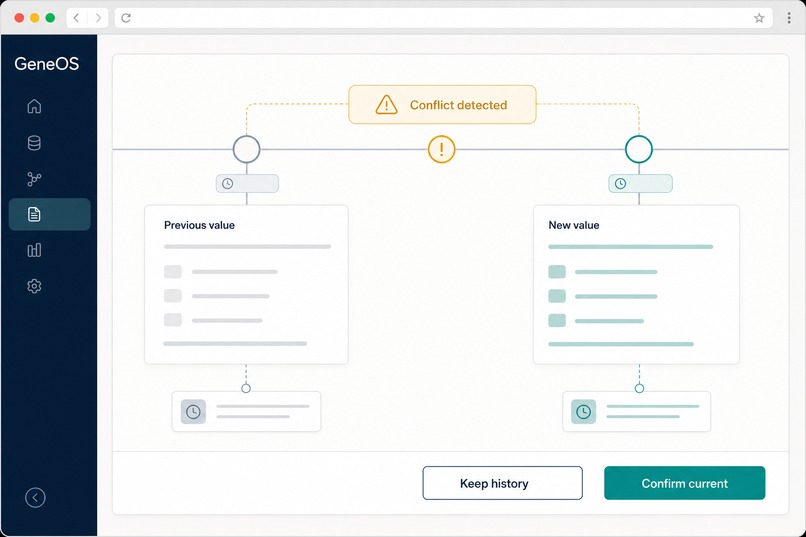
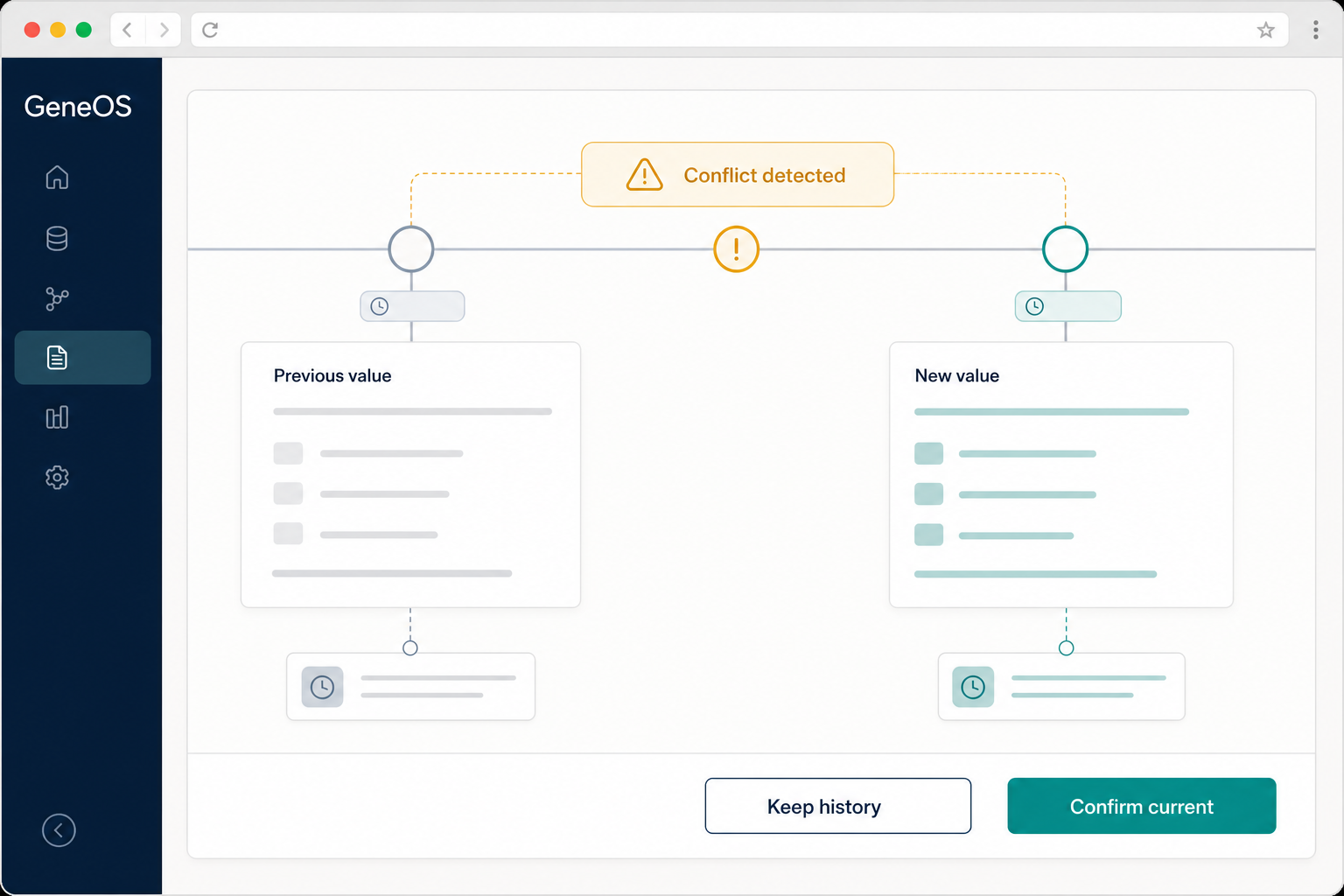
Updates without erasing history
-
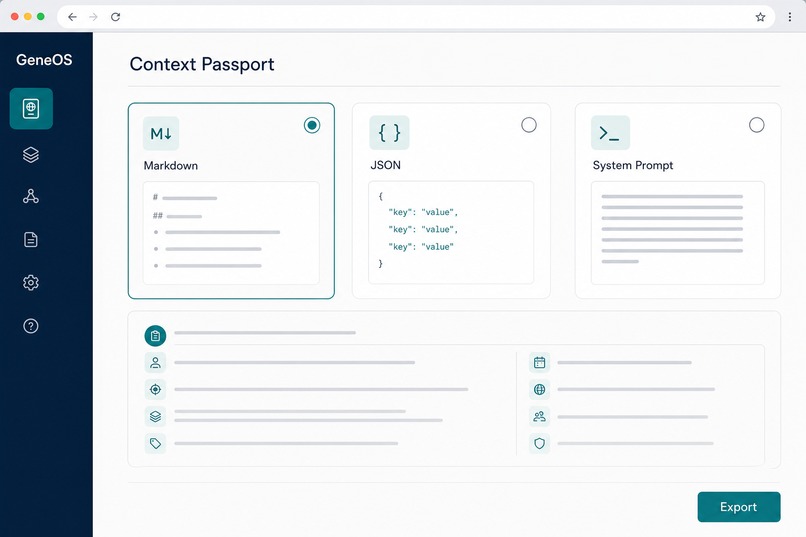
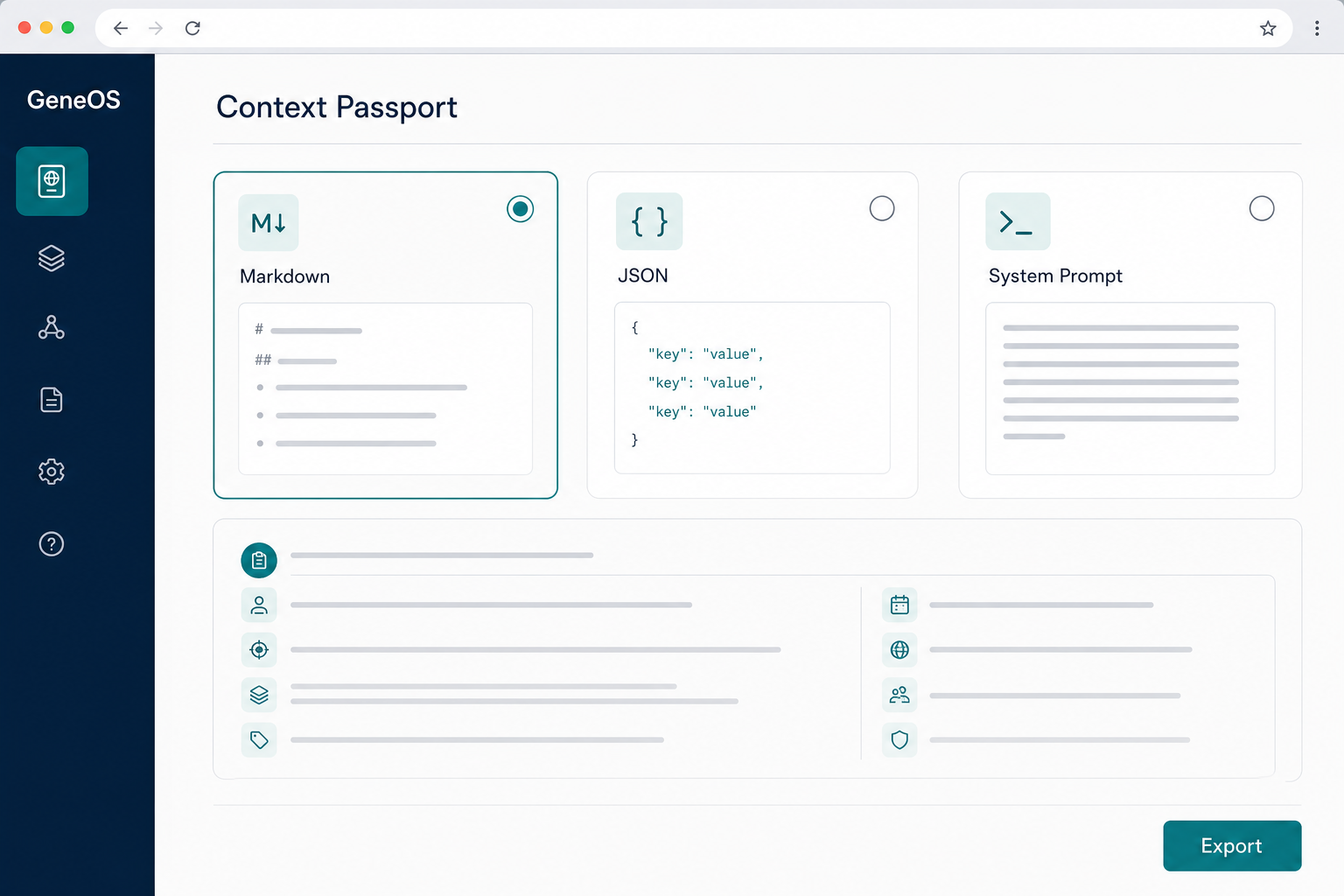
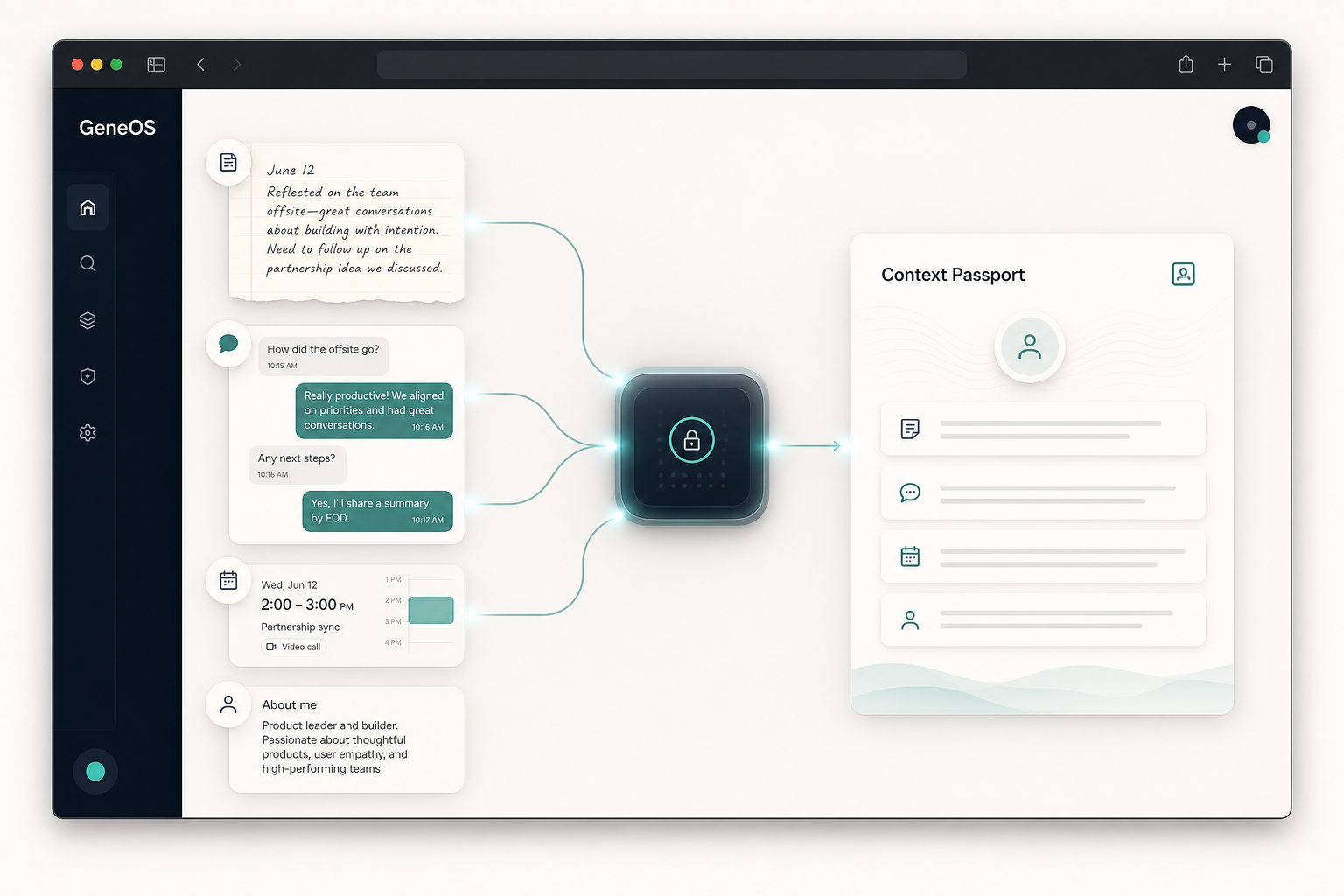
Portable context for any AI
-
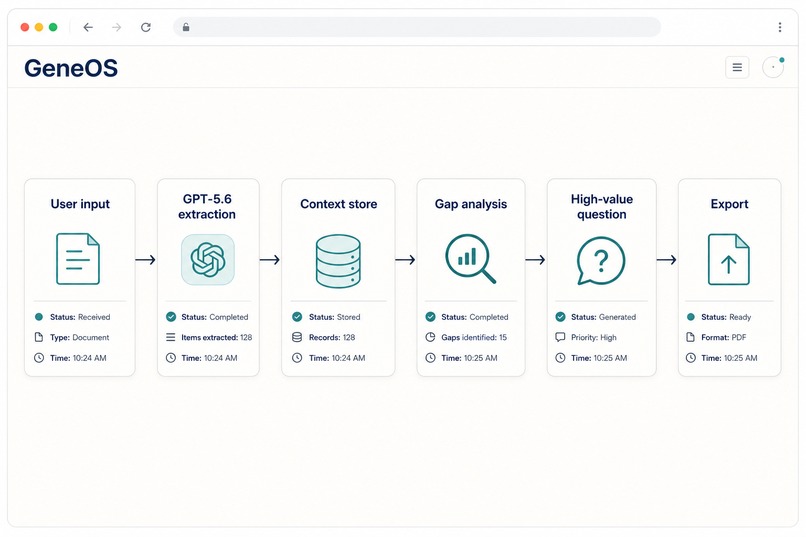
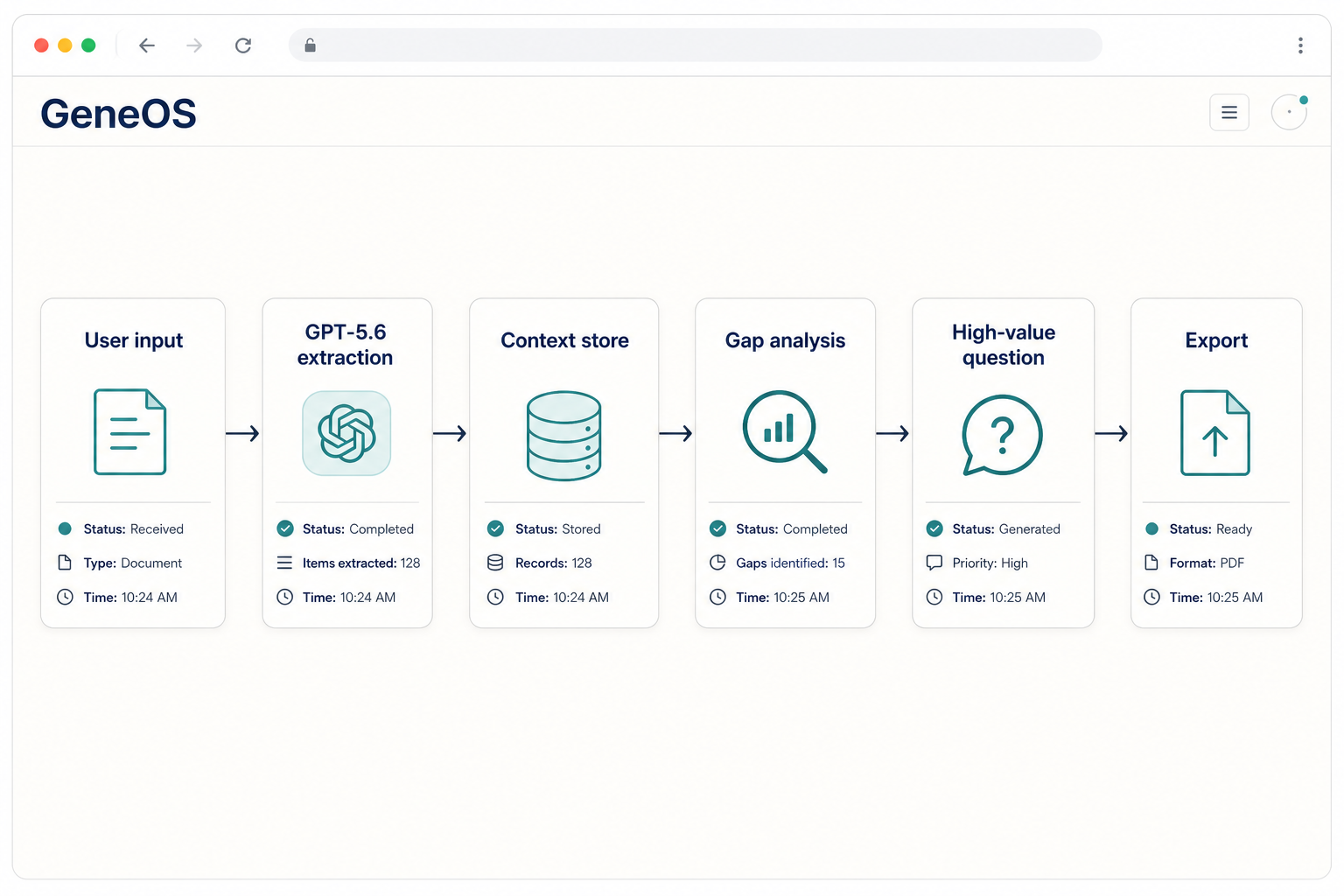
User input → GPT-5.6 extraction → Context store → Gap analysis → High-value question → Export
-
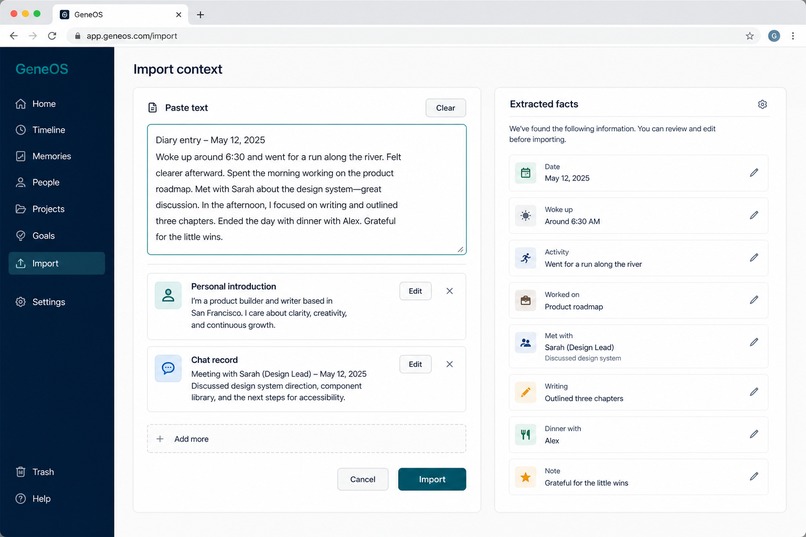
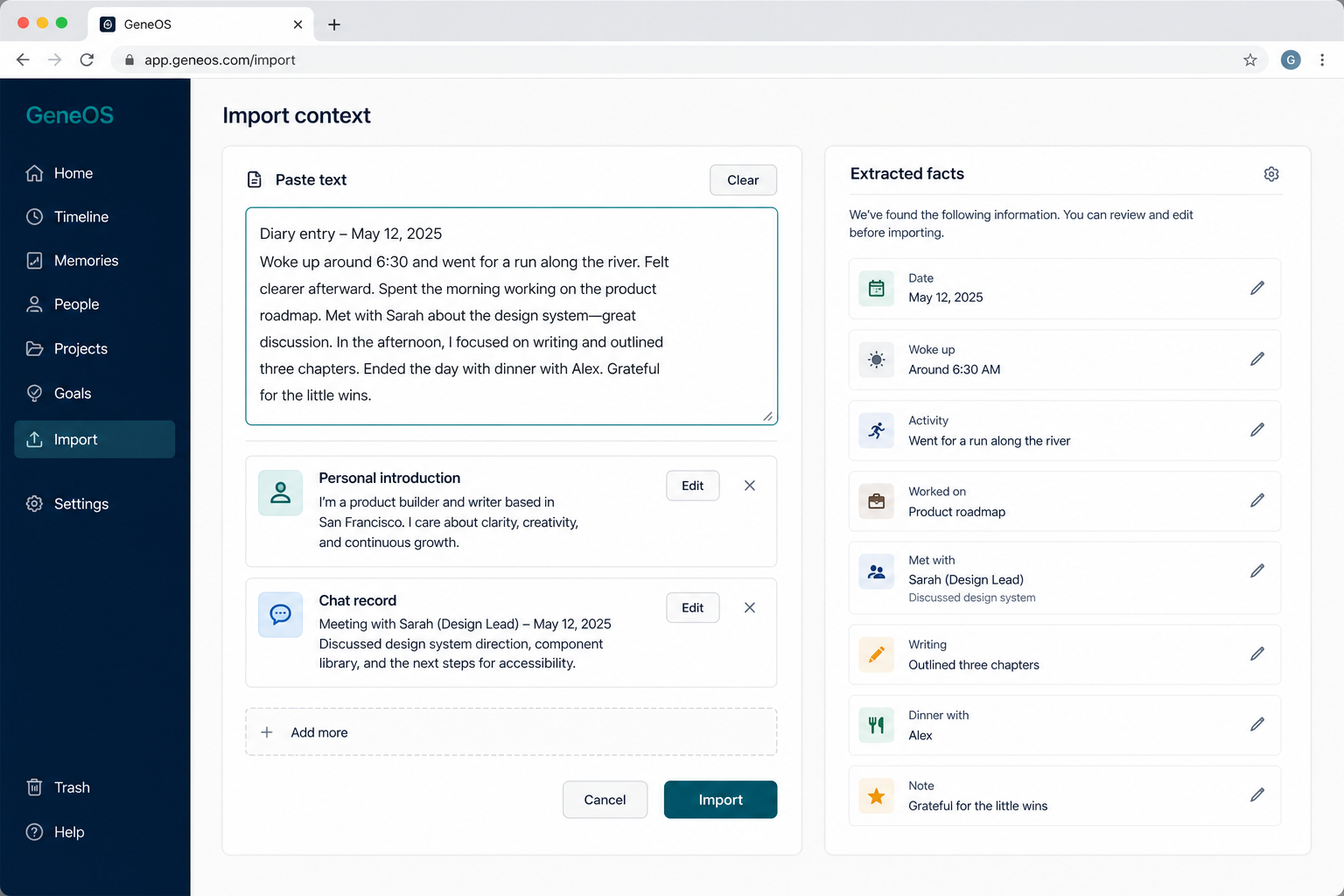
Turn scattered information into structured context
-
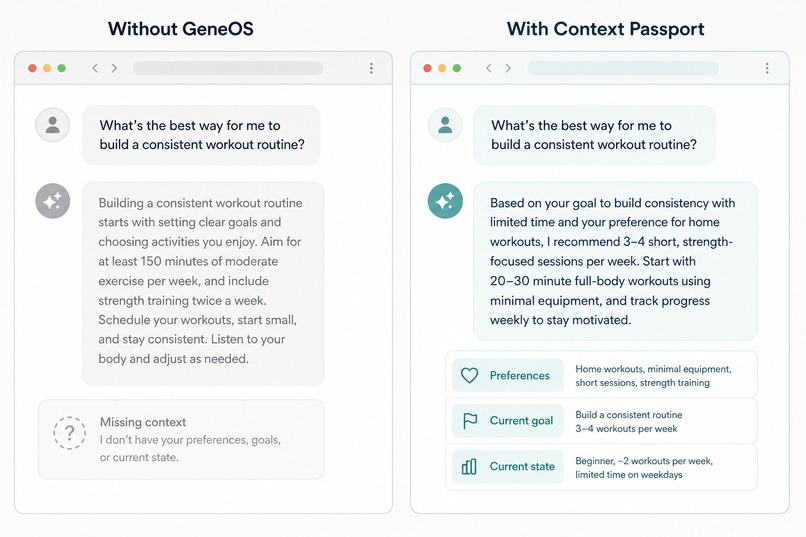
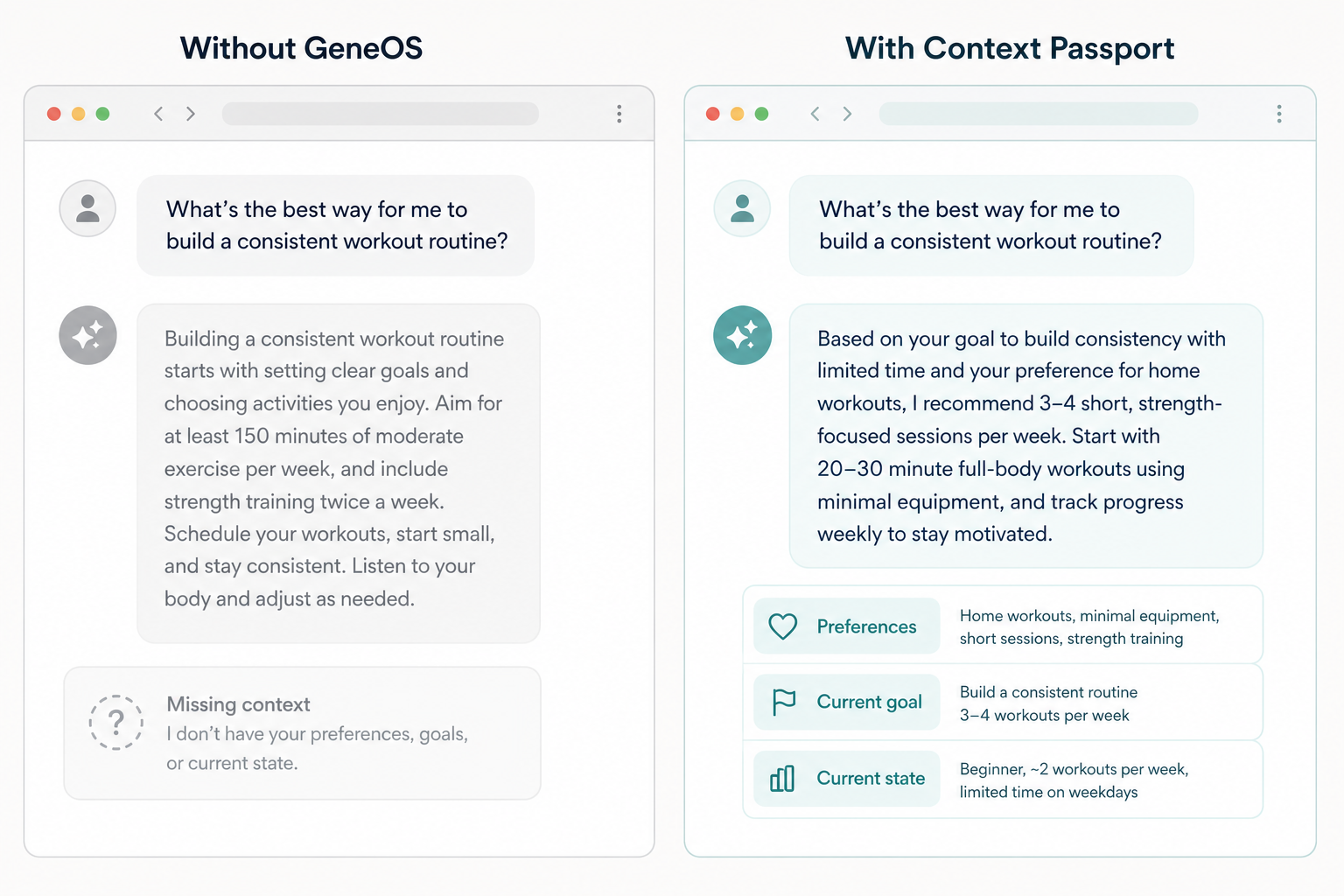
The same AI, with a much better understanding
-
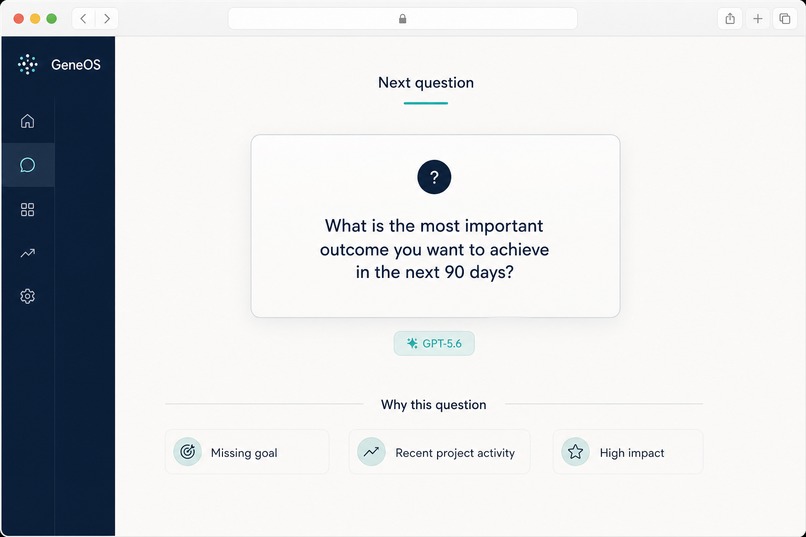
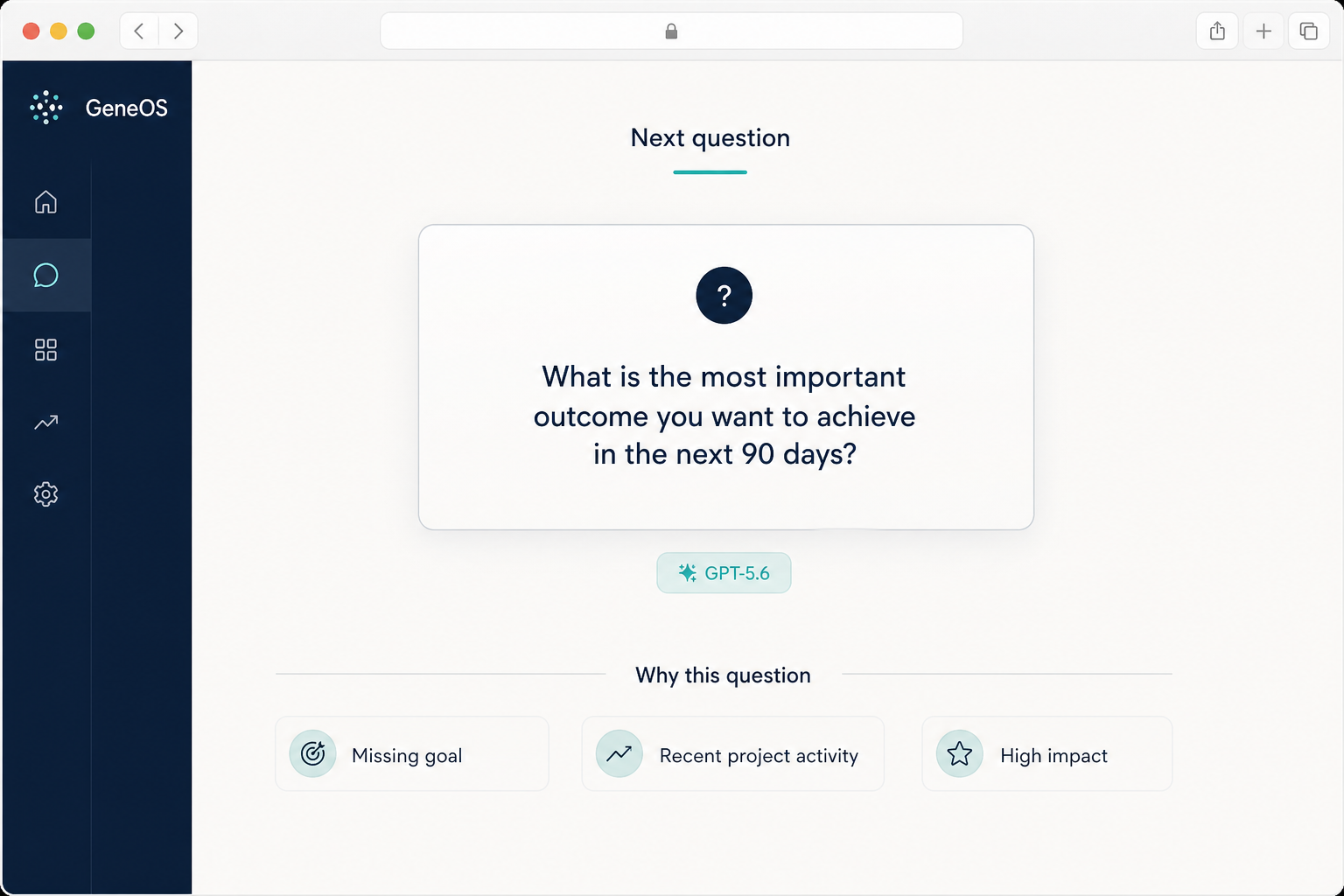
One high-value question at a time
-
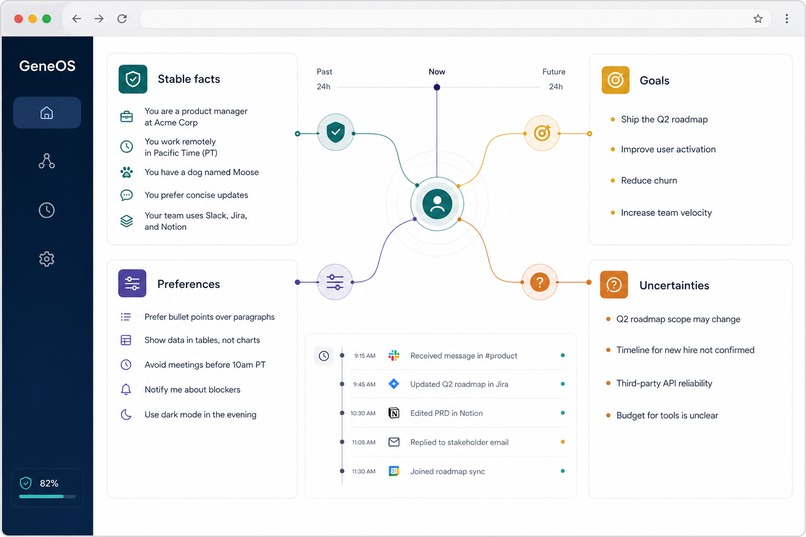
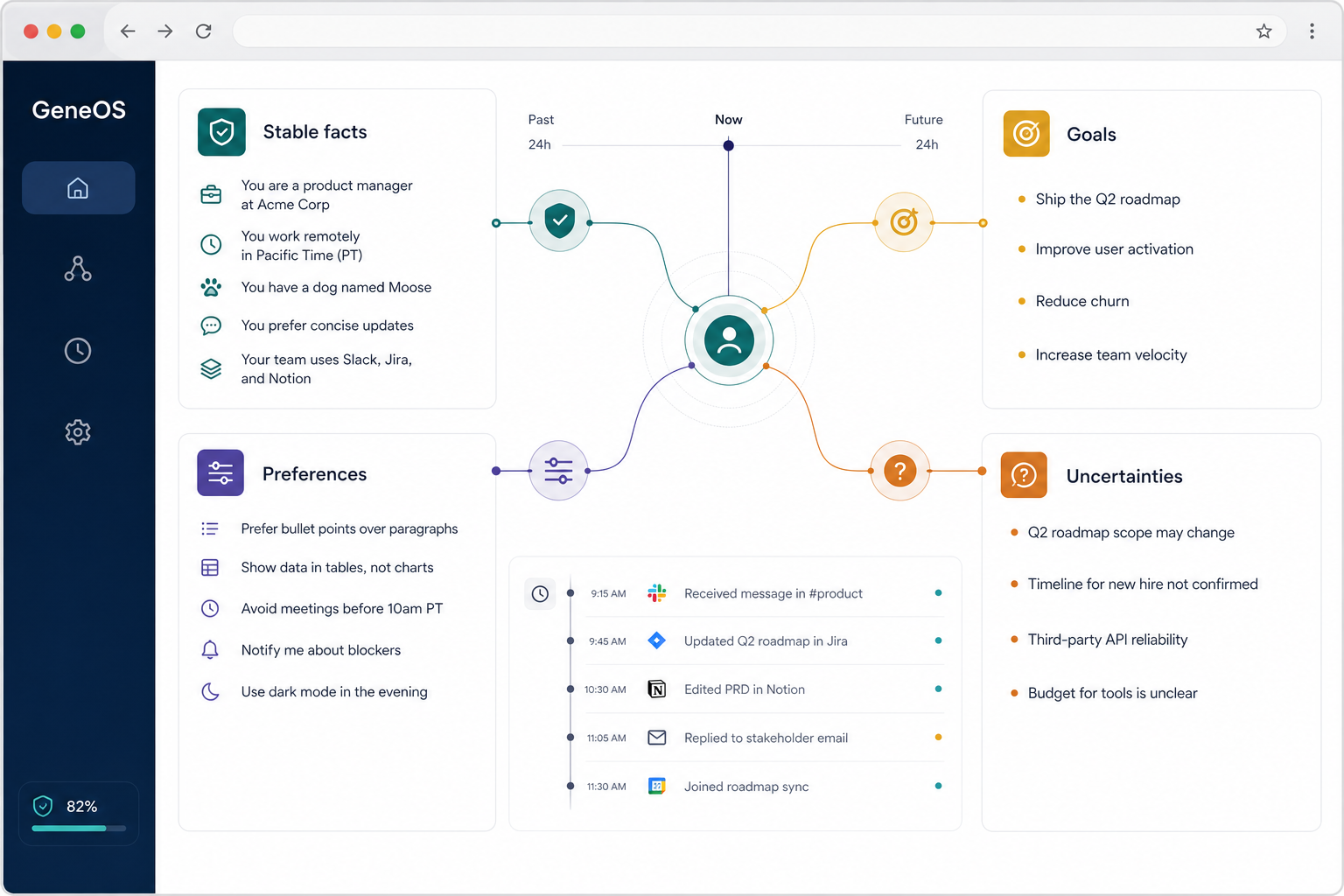
A living, time-aware model of the user
-
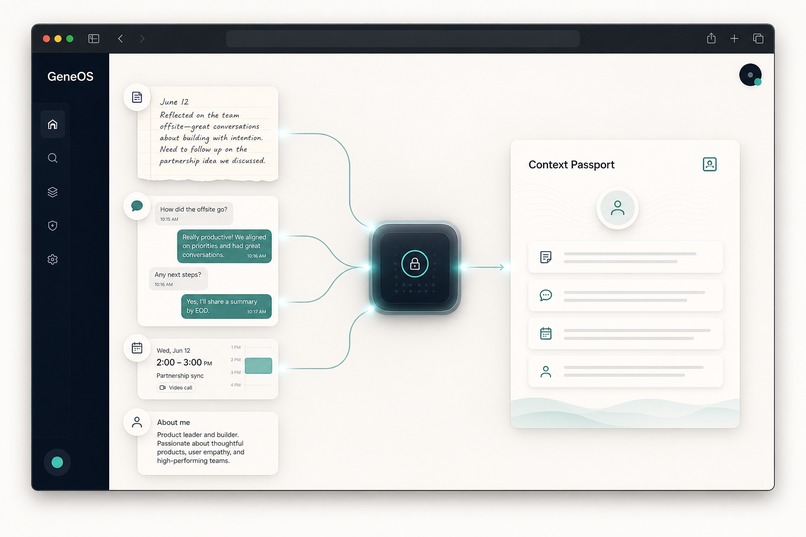
Your context should belong to you.
GeneOS: A Context Passport for Every AI
Inspiration
AI assistants are becoming more capable, but every new conversation still begins with the same problem: the AI does not really know the person it is helping.
People repeatedly explain their work, goals, preferences, relationships, past decisions, and current circumstances. Useful personal context is scattered across notes, journals, chats, documents, and different AI platforms. Even when an AI remembers something, users often cannot inspect, correct, or transfer that memory.
GeneOS explores a simple idea: personal context should belong to the user, not to a single conversation or AI product.
What it does
GeneOS turns unstructured personal information into a portable, time-aware Context Passport.
A user can paste notes, journal entries, conversations, or a personal introduction. GPT-5.6 then transforms that material into structured context, including:
- stable facts;
- current circumstances;
- preferences;
- goals;
- experiences;
- relationships;
- uncertain or incomplete information;
- potentially outdated or conflicting facts.
Each item can include its source, timestamp, confidence, and update status.
GeneOS then evaluates what it still does not understand and asks one high-value question at a time. Instead of showing users a long profile form, it progressively improves their context through short, relevant conversations.
The resulting Context Passport can be reviewed, corrected, and exported as Markdown, JSON, or an AI-ready system prompt.
How it works
The core workflow is:
- Import unstructured personal information.
- Extract structured and time-aware context.
- Detect missing, uncertain, outdated, or contradictory information.
- Rank possible follow-up questions by expected information value.
- Ask the single most useful question.
- Merge the answer into the existing context.
- Export a portable Context Passport.
- Compare an AI response before and after the passport is applied.
[Replace or expand this section after the final implementation is complete.]
How we built it
GeneOS was built as a web application using:
- [final frontend framework];
- [final database and authentication solution];
- the OpenAI API;
- GPT-5.6 for context extraction and reasoning;
- structured outputs for reliable context records;
- [final deployment platform].
The context model separates relatively stable facts from time-sensitive state. This allows GeneOS to preserve historical information without treating every old statement as still current.
[Add a short architecture explanation after the working version is complete.]
How we used Codex
Codex was the primary engineering collaborator throughout Build Week.
It helped:
- translate the product concept into a focused hackathon scope;
- design the data model and application architecture;
- implement the frontend and backend;
- integrate the OpenAI API;
- create structured schemas and validation;
- write tests and diagnose failures;
- improve the user experience;
- prepare deployment and documentation.
The majority of the project’s core functionality was developed in the Codex session referenced in the submission.
[Add two or three concrete examples from the actual Codex development history.]
How we used GPT-5.6
GPT-5.6 powers the intelligence inside the product rather than serving only as a general chatbot.
It is used to:
- extract structured context from unstructured material;
- distinguish stable facts from changing circumstances;
- identify ambiguity and possible contradictions;
- estimate which context is missing;
- select the next highest-value question;
- merge new answers without silently overwriting meaningful history;
- generate concise, portable context for use with other AI systems.
[Only retain capabilities that are present and demonstrable in the final build.]
Challenges
One challenge was deciding what an AI should remember. A statement may be true, outdated, uncertain, subjective, or only relevant in a particular situation.
Another challenge was preventing newly imported information from silently replacing older context. GeneOS therefore treats personal context as time-aware records rather than one continuously rewritten biography.
The third challenge was question selection. Asking many questions is easy; choosing the single question that most improves future assistance is much harder.
[Replace these with the challenges actually encountered during development.]
Accomplishments
We are proud of building a complete loop from unstructured input to structured context, intelligent follow-up, user correction, and portable export.
The project also demonstrates that useful AI personalization does not require an opaque memory system. Users can see what the system believes, inspect its sources, correct mistakes, and decide what to share.
[Add only completed and tested accomplishments.]
What we learned
Personalization is not simply about storing more information. It requires understanding time, confidence, relevance, provenance, and user control.
We also learned that the quality of a follow-up question can be more valuable than the quantity of information collected.
What’s next
Future versions of GeneOS could add:
- encrypted and local-first storage;
- permission-controlled context packages for different situations;
- imports from notes, chats, health data, and personal archives;
- automatic expiration and reconfirmation of dynamic information;
- contextual profiles for work, health, learning, and relationships;
- direct integrations with multiple AI assistants.
Our longer-term goal is to make personal context portable infrastructure that users can carry between AI products while remaining in control of their own data.
Built With
- api
- codex
- css
- github
- gpt-5.6
- json
- next.js
- openai
- postgresql
- react
- responses
- shadcn/ui
- supabase
- tailwind
- typescript
- vercel
- zod

