🚀 GeneoAnalytics: Own Your Spot in AI Search
💡 Inspiration
The way people search is changing fast. AI tools like ChatGPT, Claude, and Perplexity are answering questions that used to go to Google — but there’s no playbook for how businesses can show up in those answers. Traditional SEO doesn’t work in a world where there's no "10 blue links." We wanted to solve that.
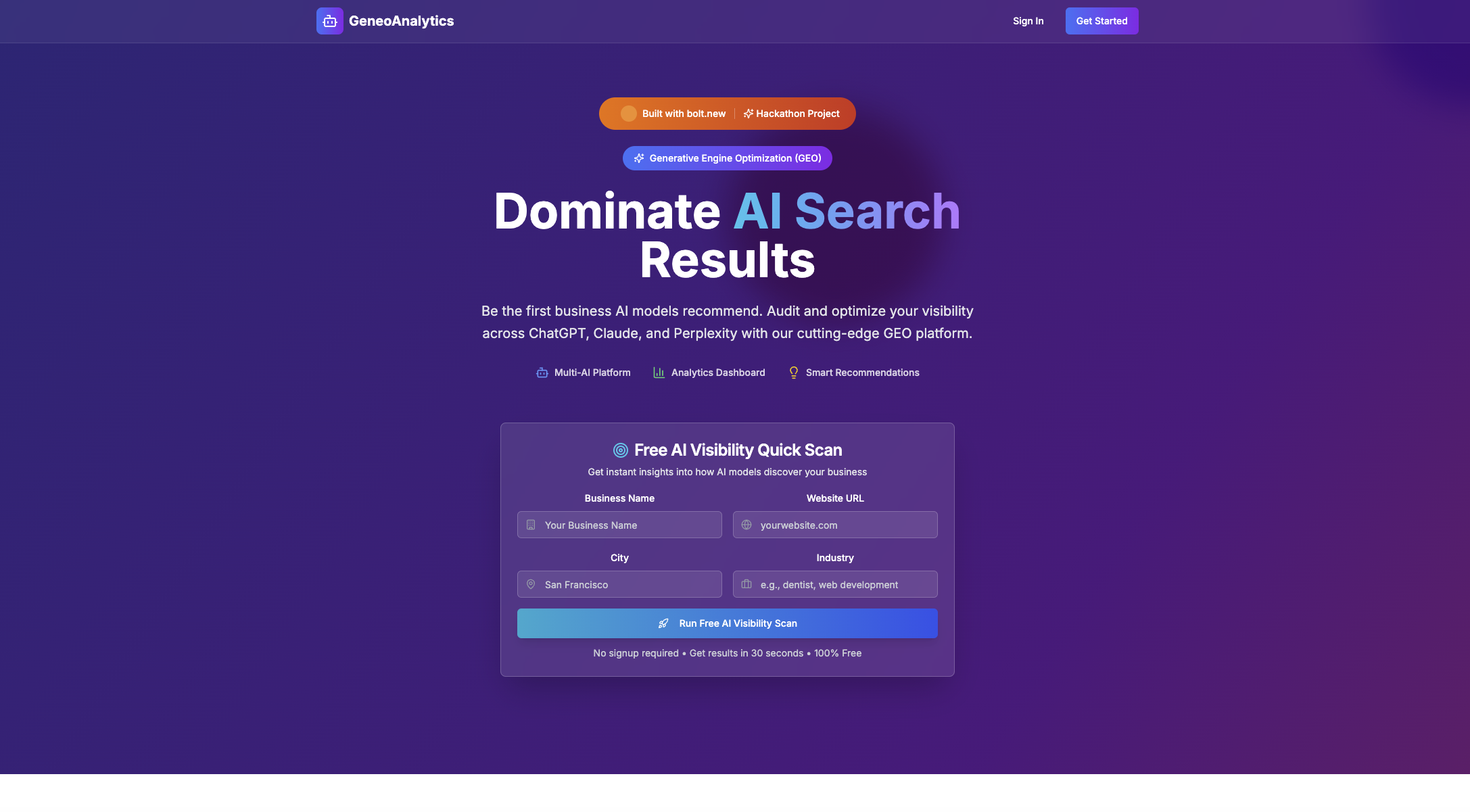
GeneoAnalytics was born from that realization — to give businesses the first real visibility engine for AI-generated search results.
🔍 What It Does
GeneoAnalytics audits how visible your business is across leading AI models. It:
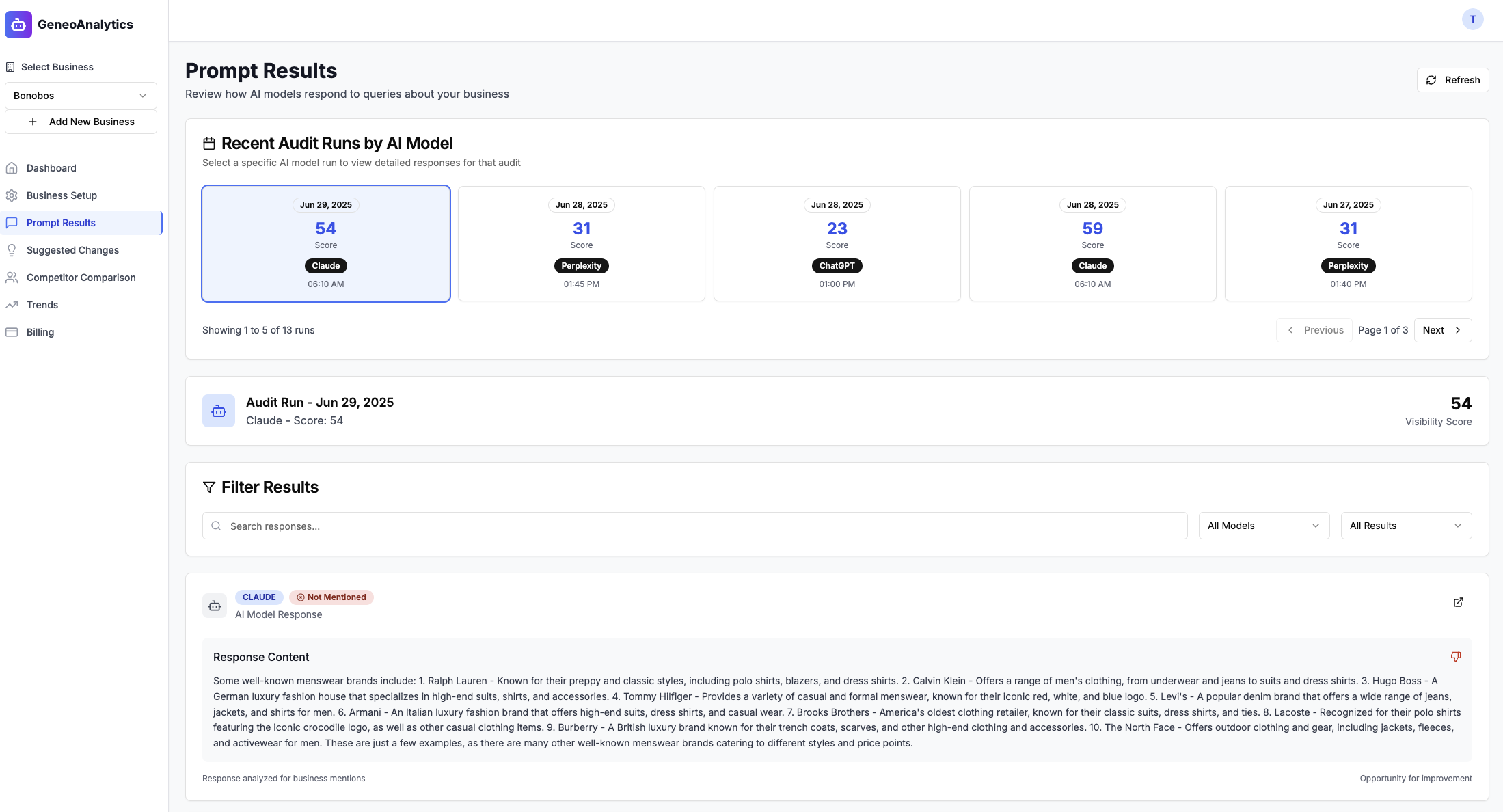
- Runs real-world prompts (e.g. “Best roofing companies in Atlanta”) through OpenAI, Claude, and Perplexity
- Detects whether your business is mentioned or not
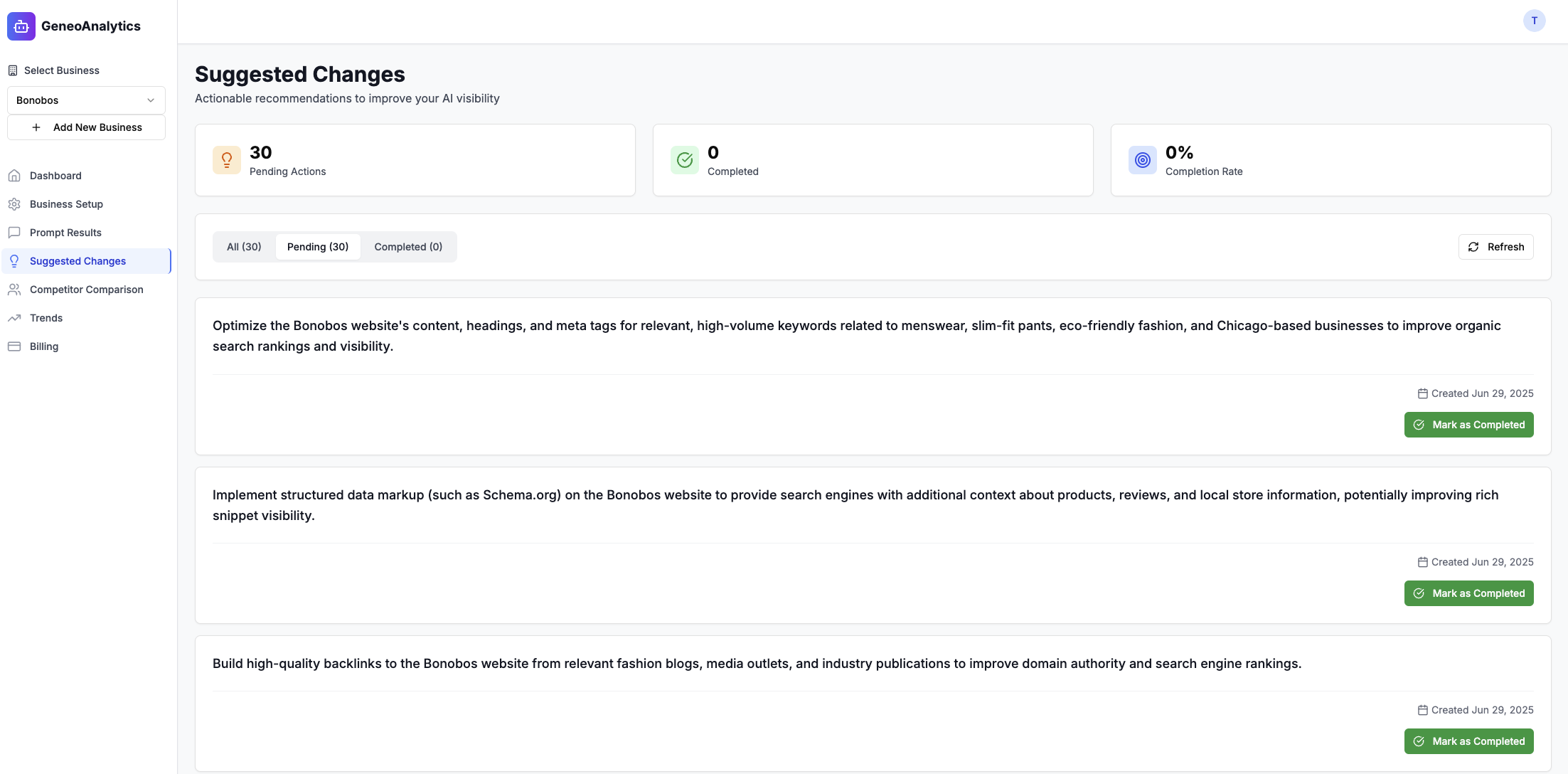
- Generates actionable recommendations to improve your visibility
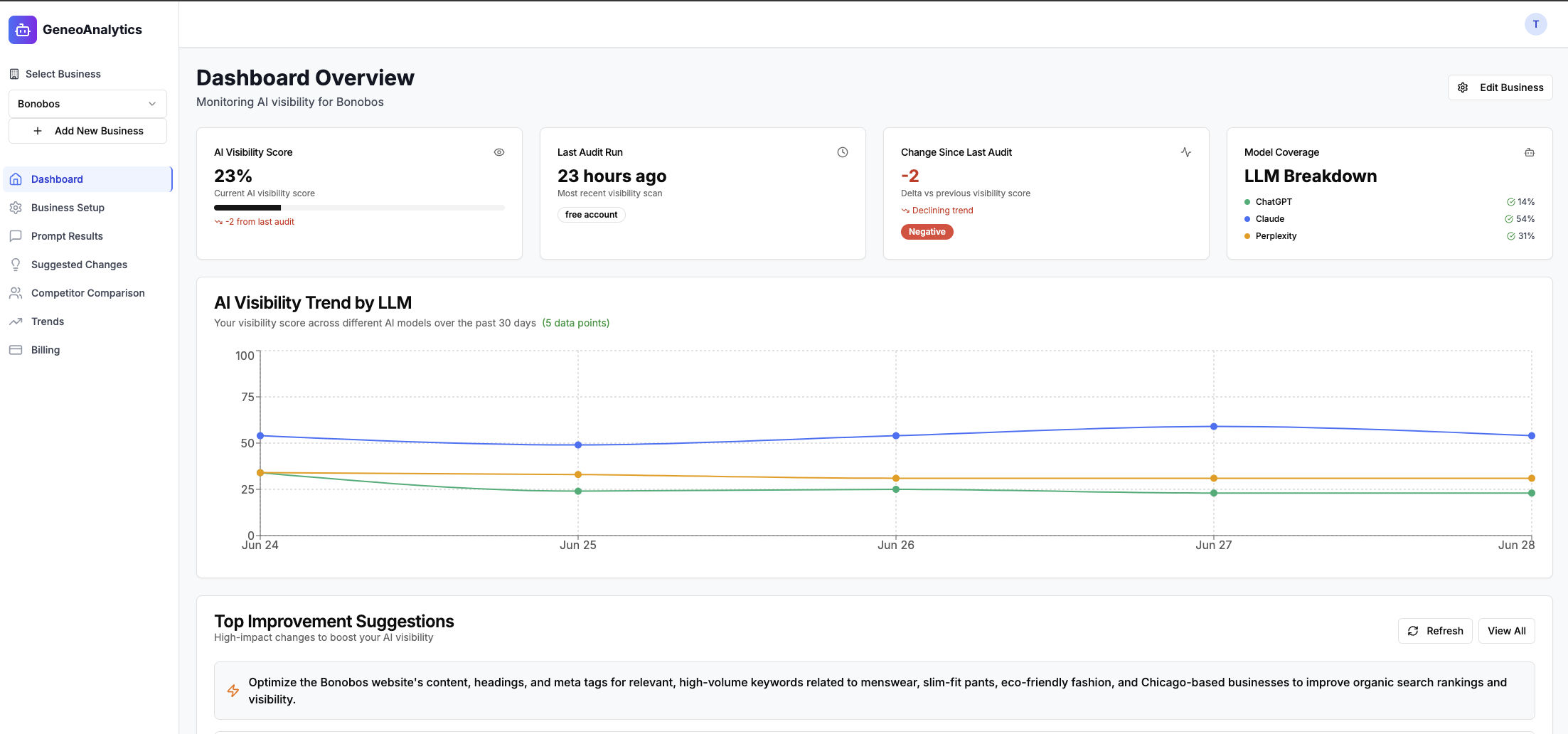
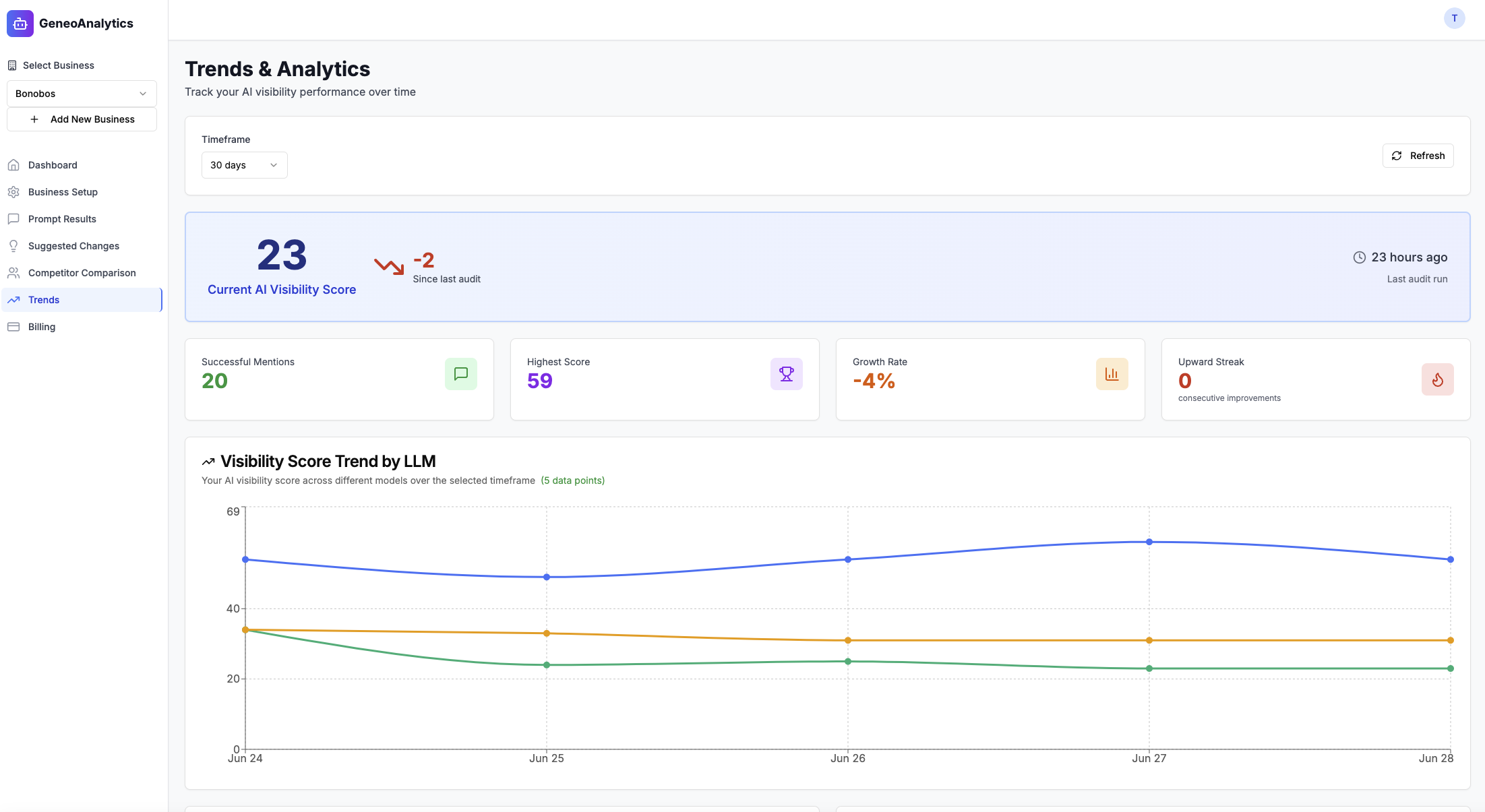
- Tracks historical visibility scores over time
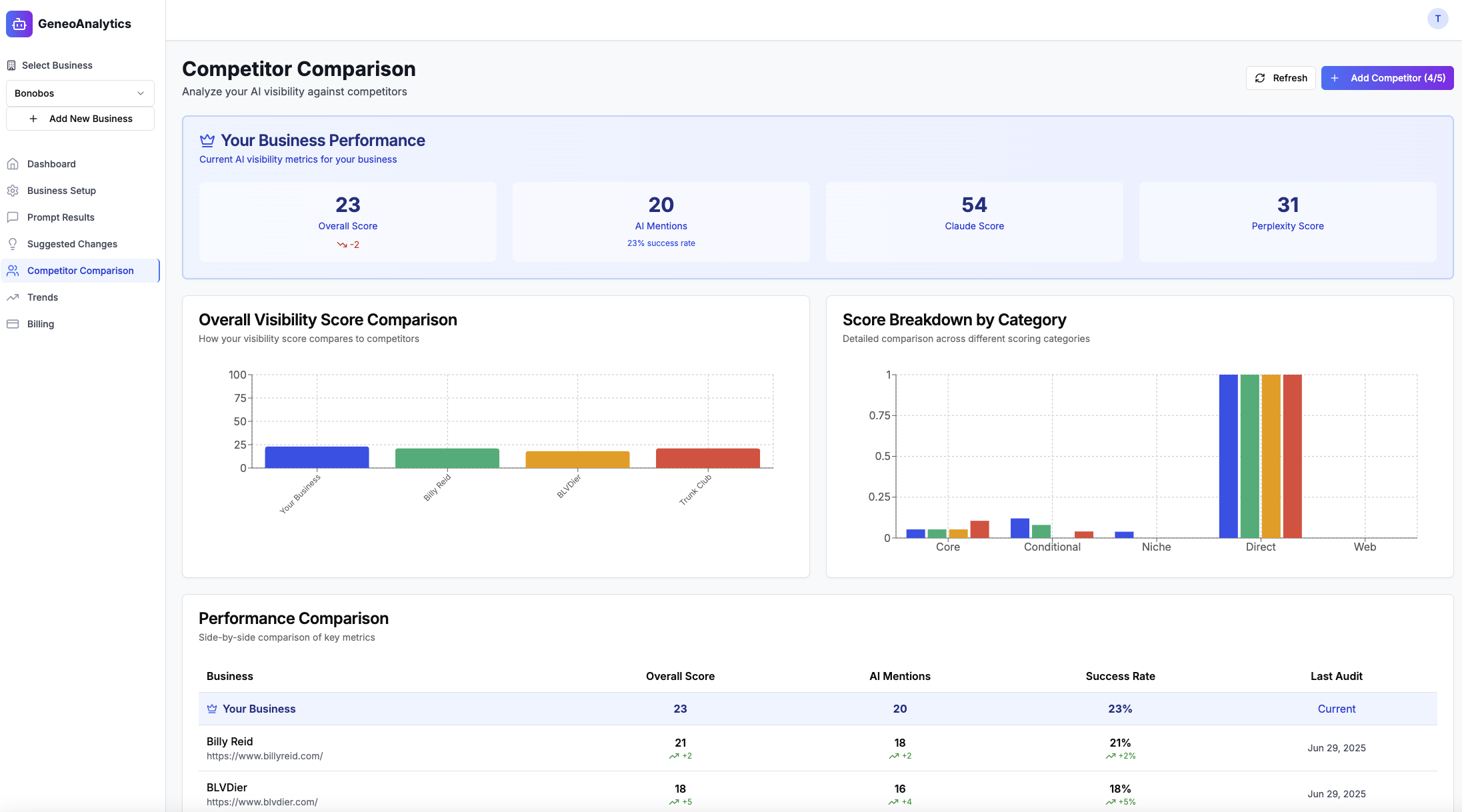
- Compares your presence against competitors in the same city/industry
It’s like SEO analytics — but for the next generation of AI-driven search engines.
🛠️ How We Built It
- Frontend: Next.js 15 with App Router, Tailwind CSS, Shadcn/UI
- Backend: Node.js with Supabase/PostgreSQL
- LLM Clients: OpenAI GPT-4, Claude 3, and Perplexity via their APIs
- Auth: Supabase Auth with custom business onboarding
- Stripe: For managing pro subscriptions
- Infra: Hosted on Vultr, with background cron jobs triggering visibility scans daily
Each audit run stores prompt-level results, business metadata, and AI answers — all normalized and tracked over time.
⚔️ Challenges We Ran Into
- Prompt hallucination: AI models often make up business names, so we had to design a robust visibility scoring method that detects real presence.
- Next.js quirks: We ran into export/static conflicts between API routes and App Router — requiring careful route isolation.
- Cross-model differences: Each AI model behaves differently, so we had to design a system that supports vendor-specific logic while maintaining uniform scoring.
- Database schema: Modeling historical scan data with site-level versioning and time-based comparisons wasn’t trivial.
🏆 Accomplishments That We're Proud Of
- A clean, working MVP that can scan real businesses and produce visibility metrics across 3 major AI models
- A dynamic prompt engine that adjusts per business context
- Built-in audit recommendations using LLM output to guide improvement
- Zero third-party SDKs required to monitor visibility — everything runs through our own API and background jobs
🧠 What We Learned
- AI optimization is not SEO — the models don’t respond to keywords, they respond to relevance, reputation, and content footprint.
- Small business visibility is wildly inconsistent — even great companies get ignored unless they’re well-structured online.
- There’s massive demand for tools that explain how to get discovered in a world where search is a conversation, not a list.
🔮 What's Next for GeneoAnalytics
- Webpage change tracking: We’ll monitor business websites and correlate content changes with shifts in AI visibility.
- LLM-specific tuning: Separate scoring and prompt strategies for OpenAI vs Claude vs Perplexity.
- Industry benchmarks: Show businesses how they rank against competitors in their city and niche.
- Public visibility leaderboard: Think SEO visibility reports — but for AI.
We’re just getting started. GEO (Generative Engine Optimization) is going to be a massive category — and GeneoAnalytics is leading the way.
Built With
- anthropic-claude-api
- bolt.new
- next.js
- node-fetch
- node.js
- openai-api
- perplexity-api
- postgresql
- raw-body
- react
- stripe
- supabase
- tailwind-css
- tiktoken
- typescript
- vercel-(local-dev)


Log in or sign up for Devpost to join the conversation.