Inspiration
Scientific and genetic information is spread across many databases, making it difficult to explore, connect, and understand. I wanted to create a tool that makes this information easier to access while keeping the underlying scientific sources visible.
What it does
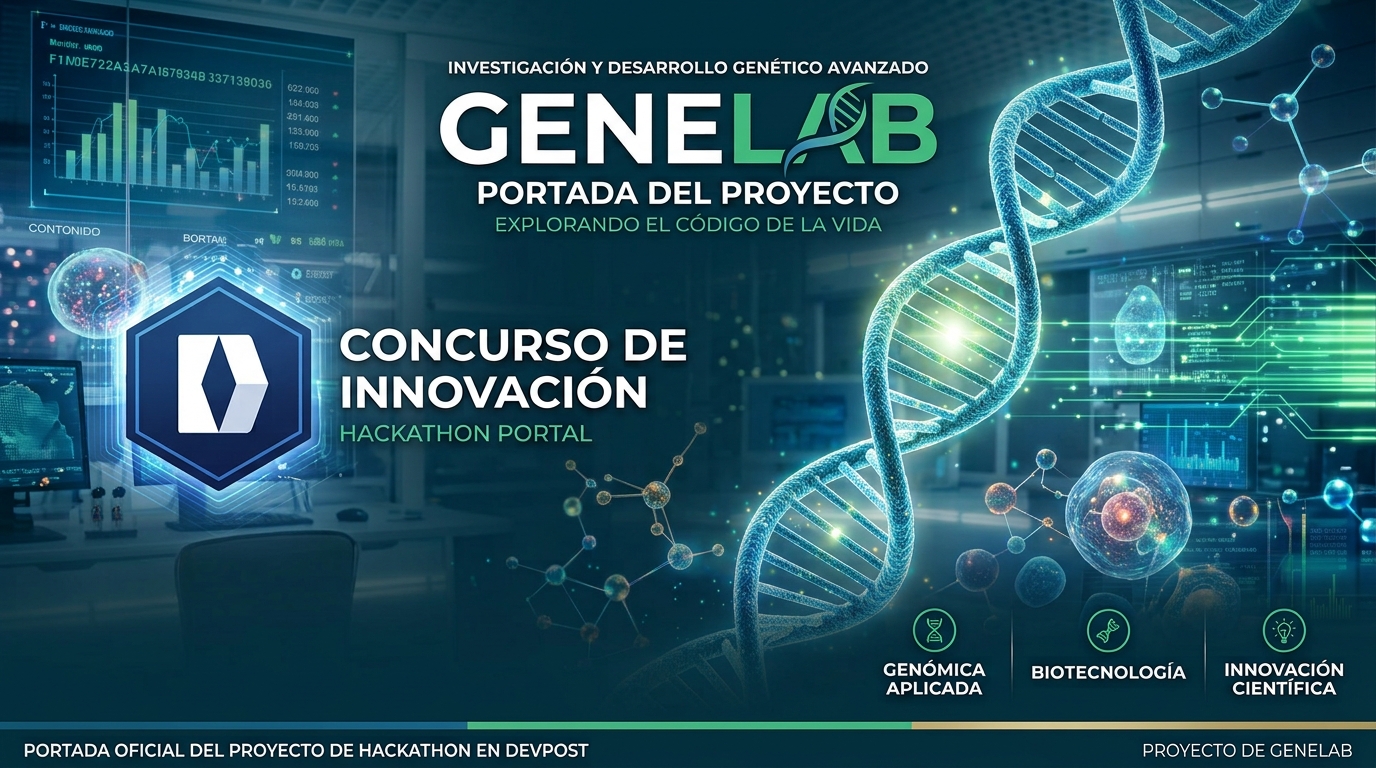
GeneLab is a bilingual AI-powered platform for exploring human genetics and molecular biology. Users can search for human genes, explore genetic variants, access biomedical literature, and use computational molecular biology tools in one place.
How we built it
GeneLab was built as a web application with a modular architecture designed to connect with real scientific databases and APIs. It uses JavaScript, HTML, CSS, GitHub, and AI-assisted development with GitHub Copilot. Scientific data is separated from AI-generated explanations, with sources and provenance kept visible.
Challenges we ran into
One of the biggest challenges was making the Gene Explorer truly dynamic instead of limiting it to a small predefined list of genes. We also had to handle API responses, different identifiers, caching, errors, and preventing incorrect gene records from being displayed.
Accomplishments that we're proud of
We built a bilingual scientific platform capable of dynamically exploring human genes rather than relying on a fixed catalogue. We are also proud of designing GeneLab around scientific transparency, real data sources, and a modular architecture that can grow into more advanced research tools.
What we learned
We learned how challenging it is to work with real biological databases and how important data validation, provenance, API reliability, and clear separation between scientific evidence and AI-generated content are.
What's next for GeneLab
Next, we want to expand the literature and variant explorers, add more computational molecular biology tools, and develop an AI research assistant that can help users understand and connect scientific evidence without replacing expert judgment.
Built With
- ai
- copilot
- github
- github-copilot
- ia

Log in or sign up for Devpost to join the conversation.