-
-
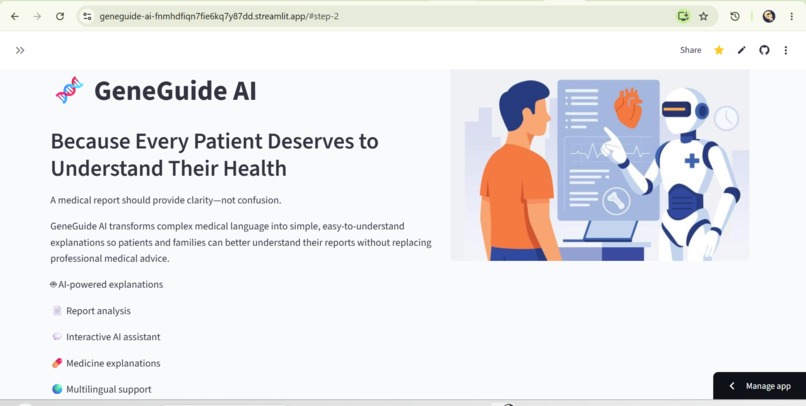
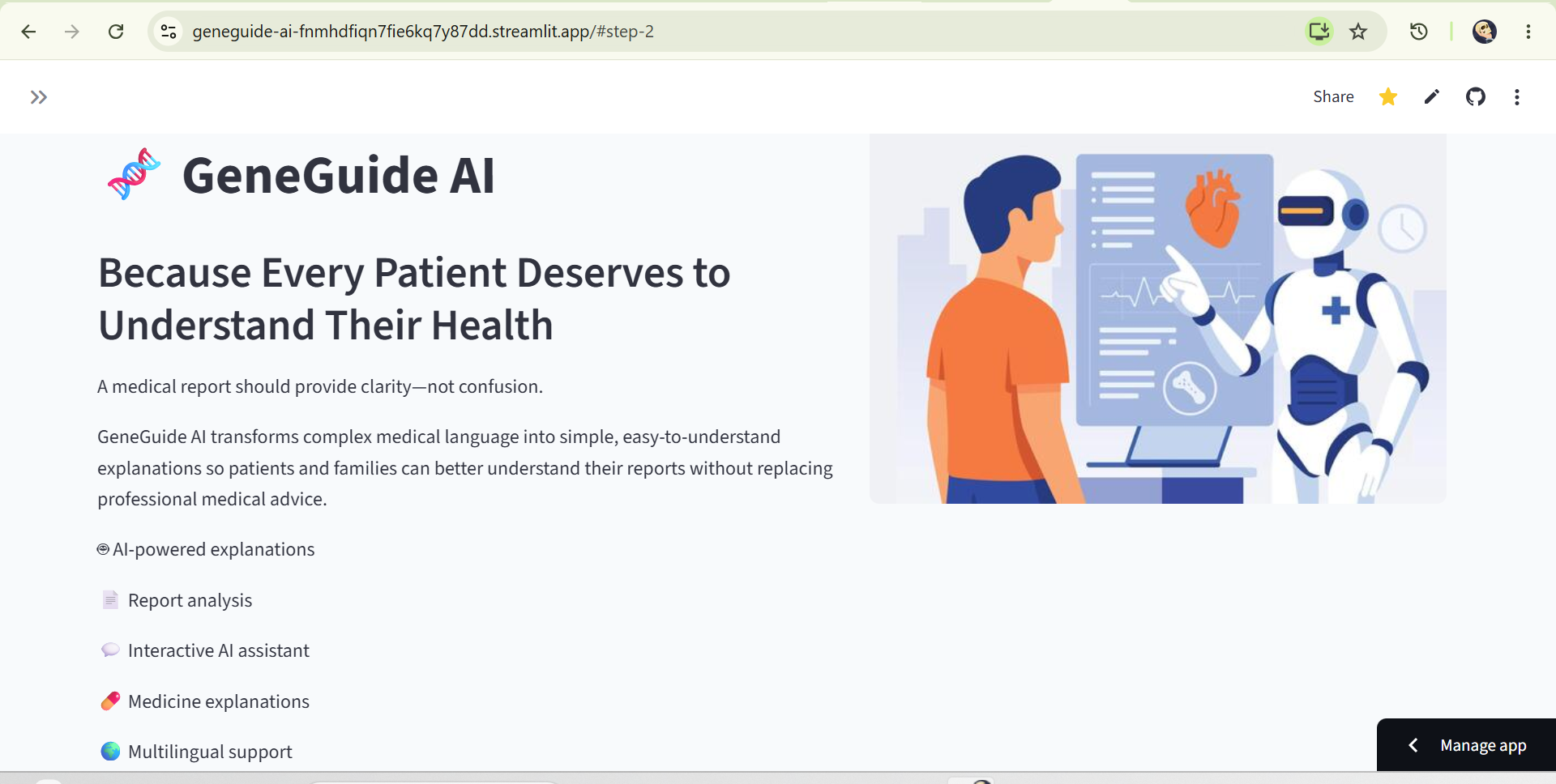
Homepage
-
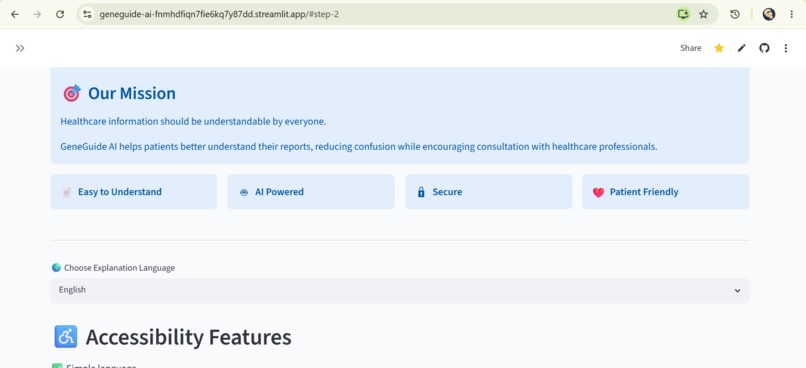
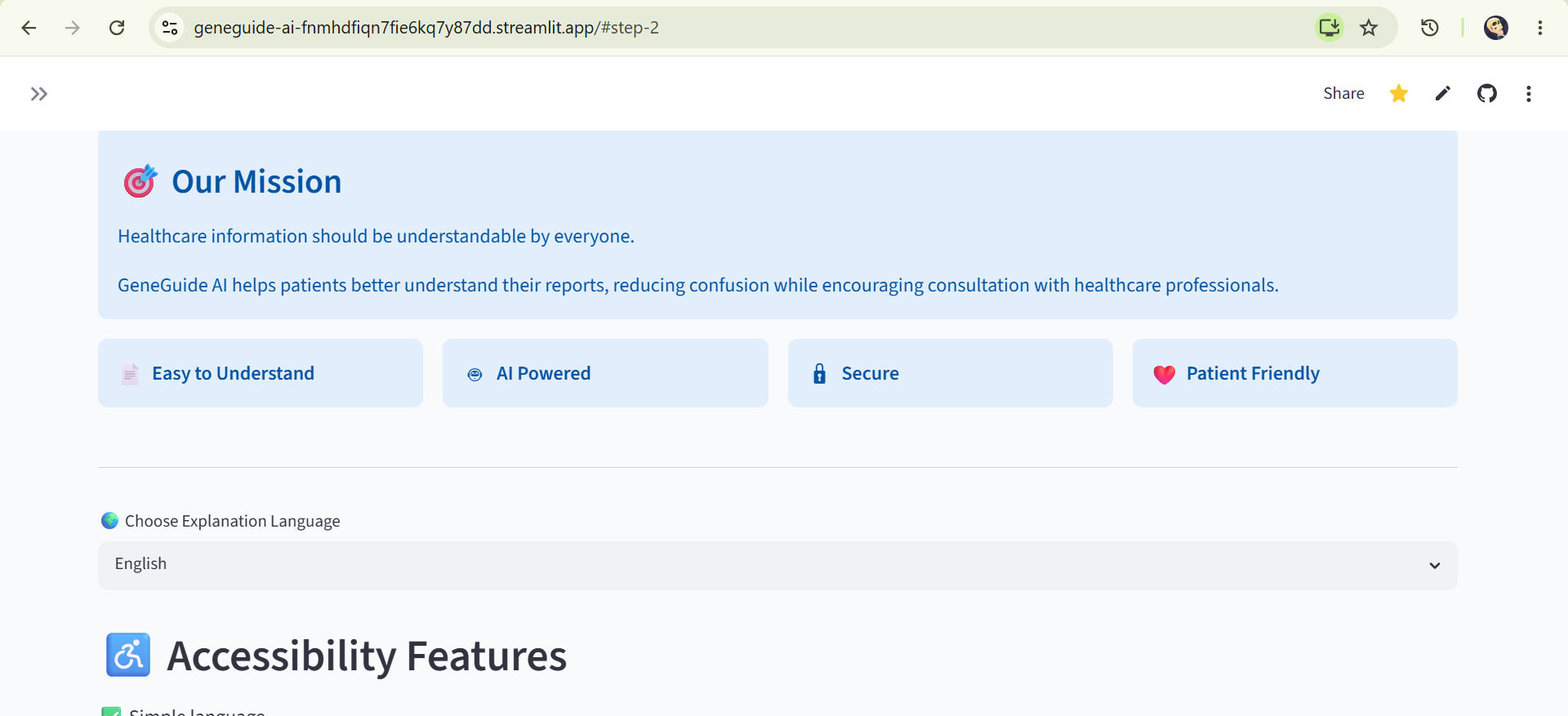
our mission
-
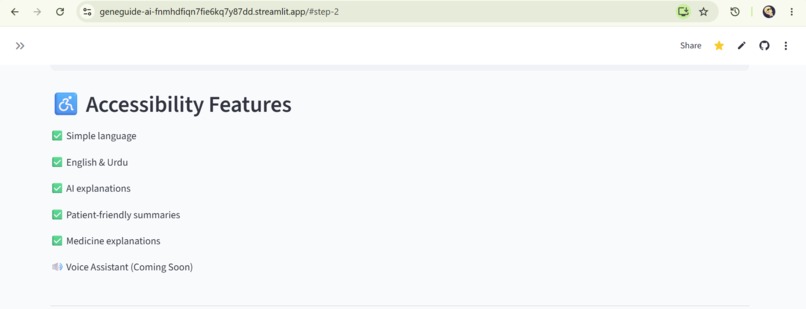
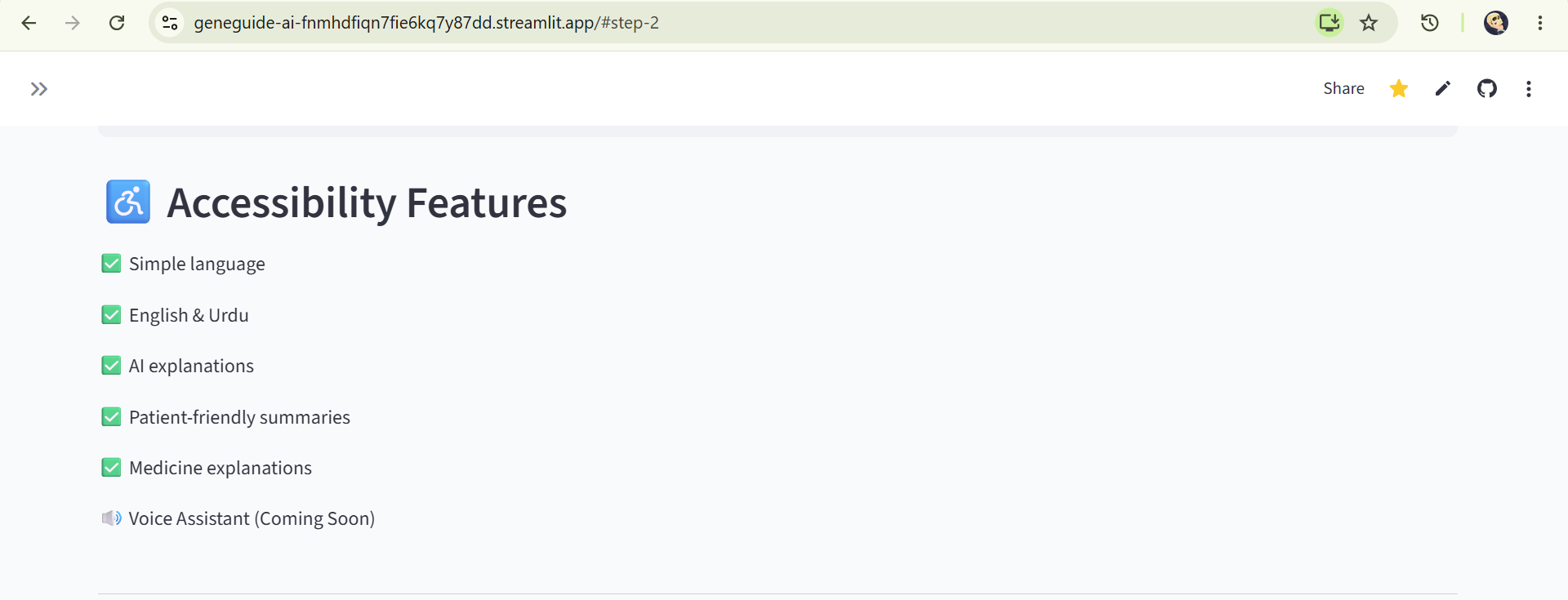
Accessibility features
-
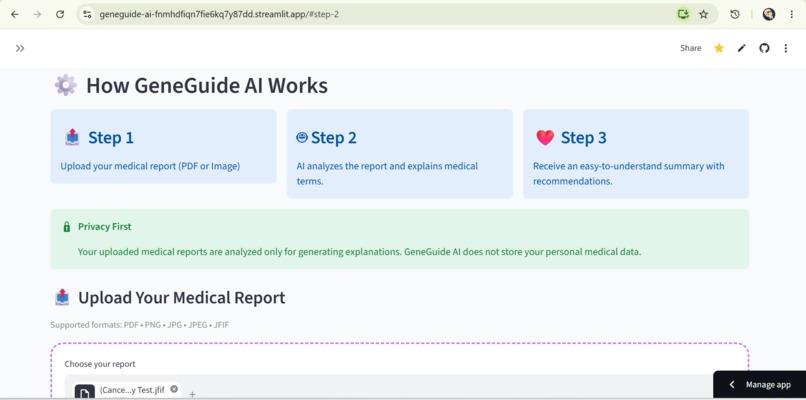
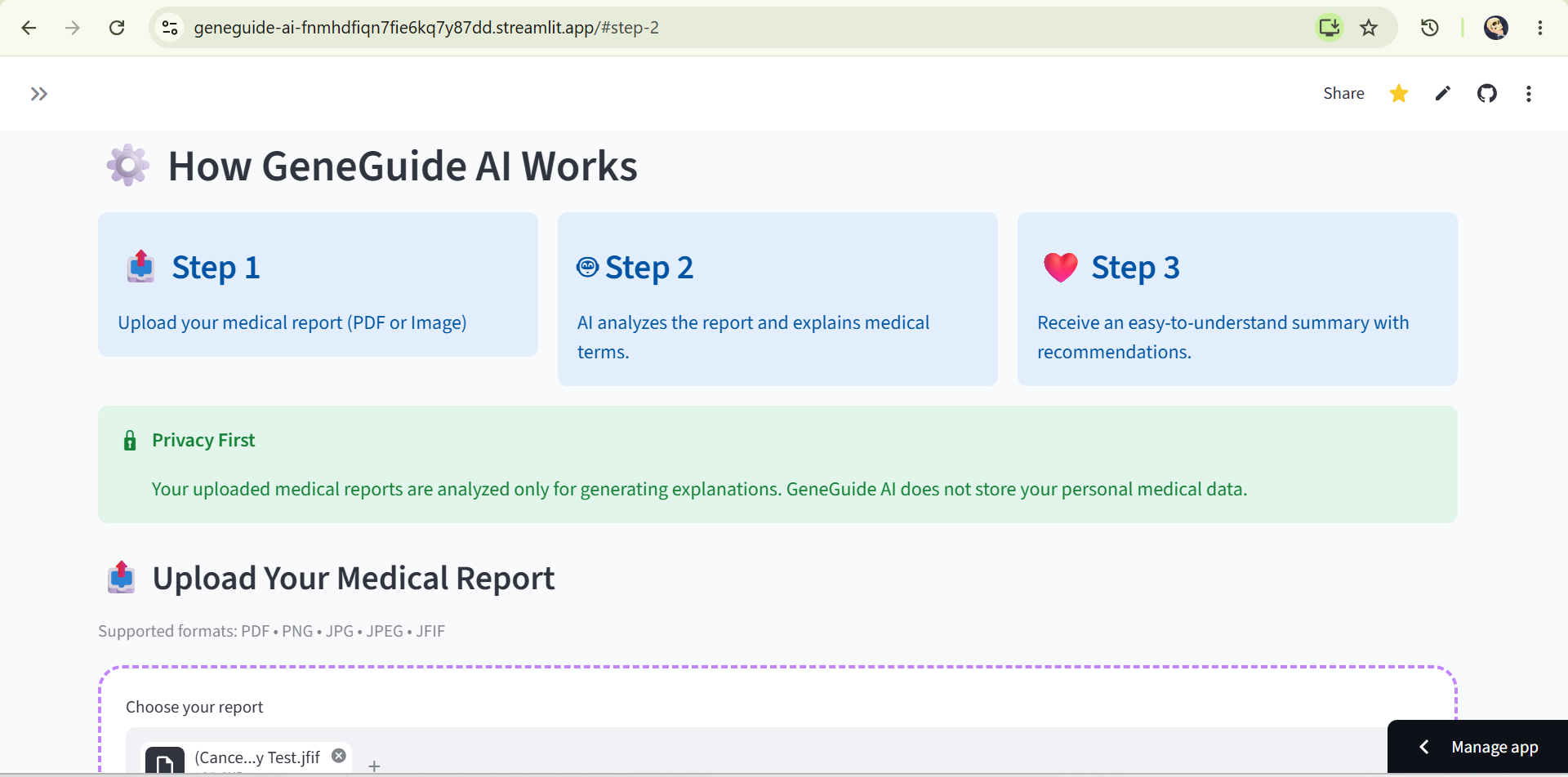
How GeneGuide AI works?
-
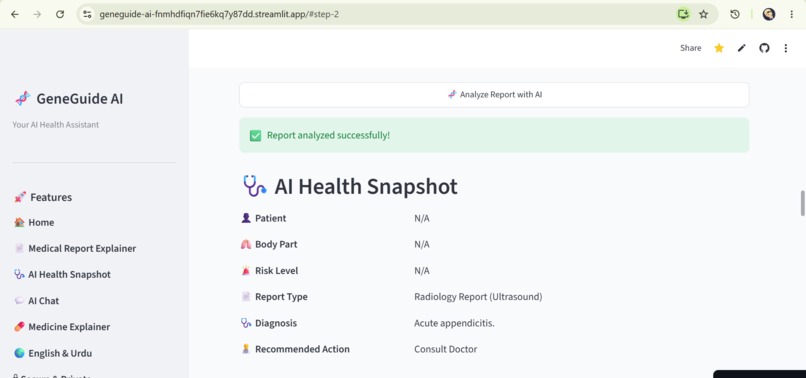
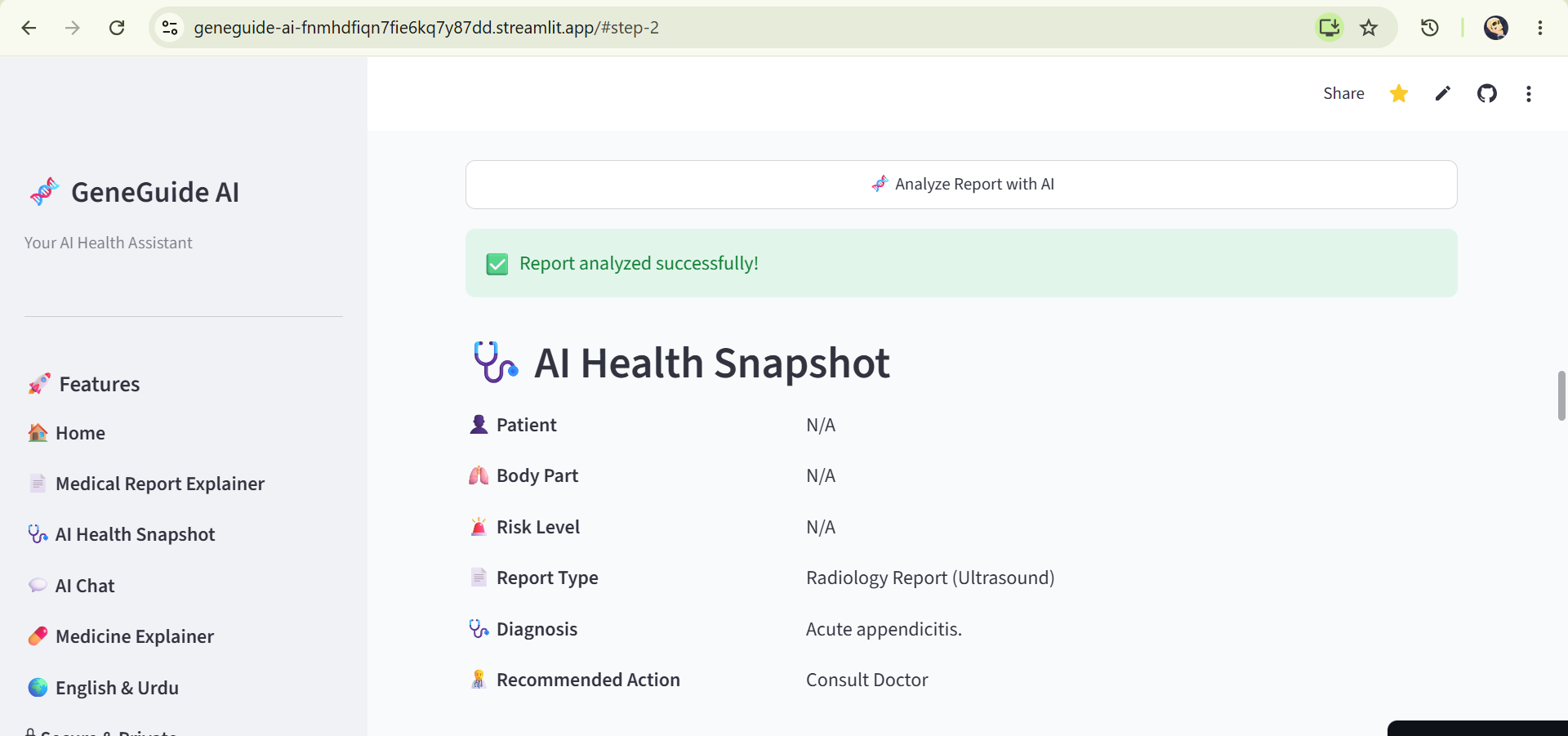
AI health snapshot
-
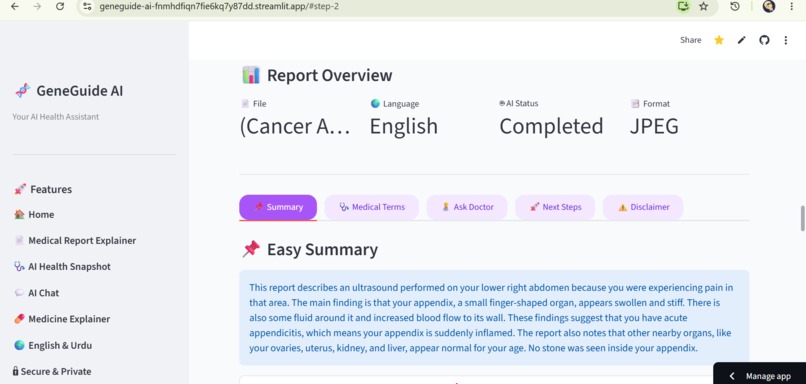
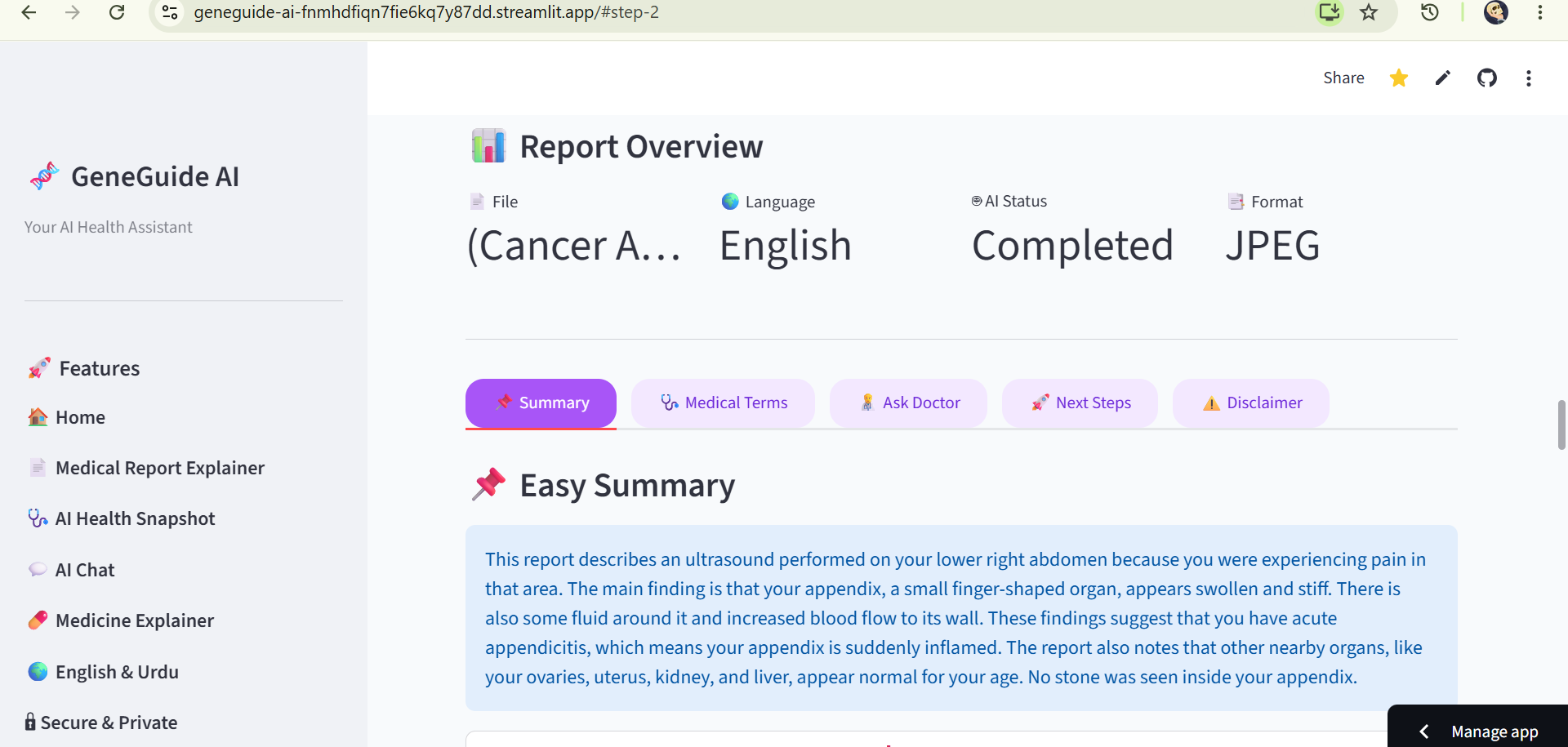
Report overview
-
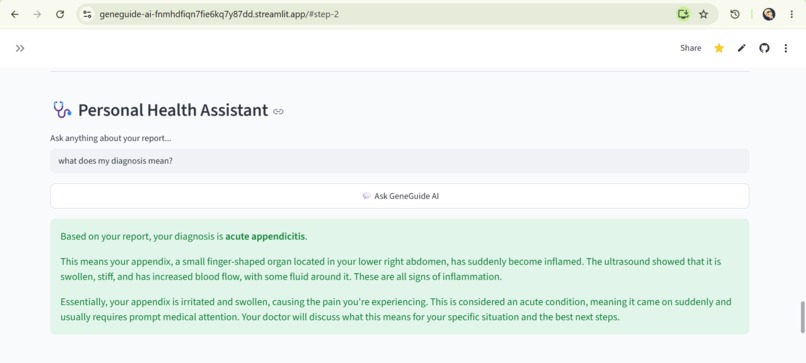
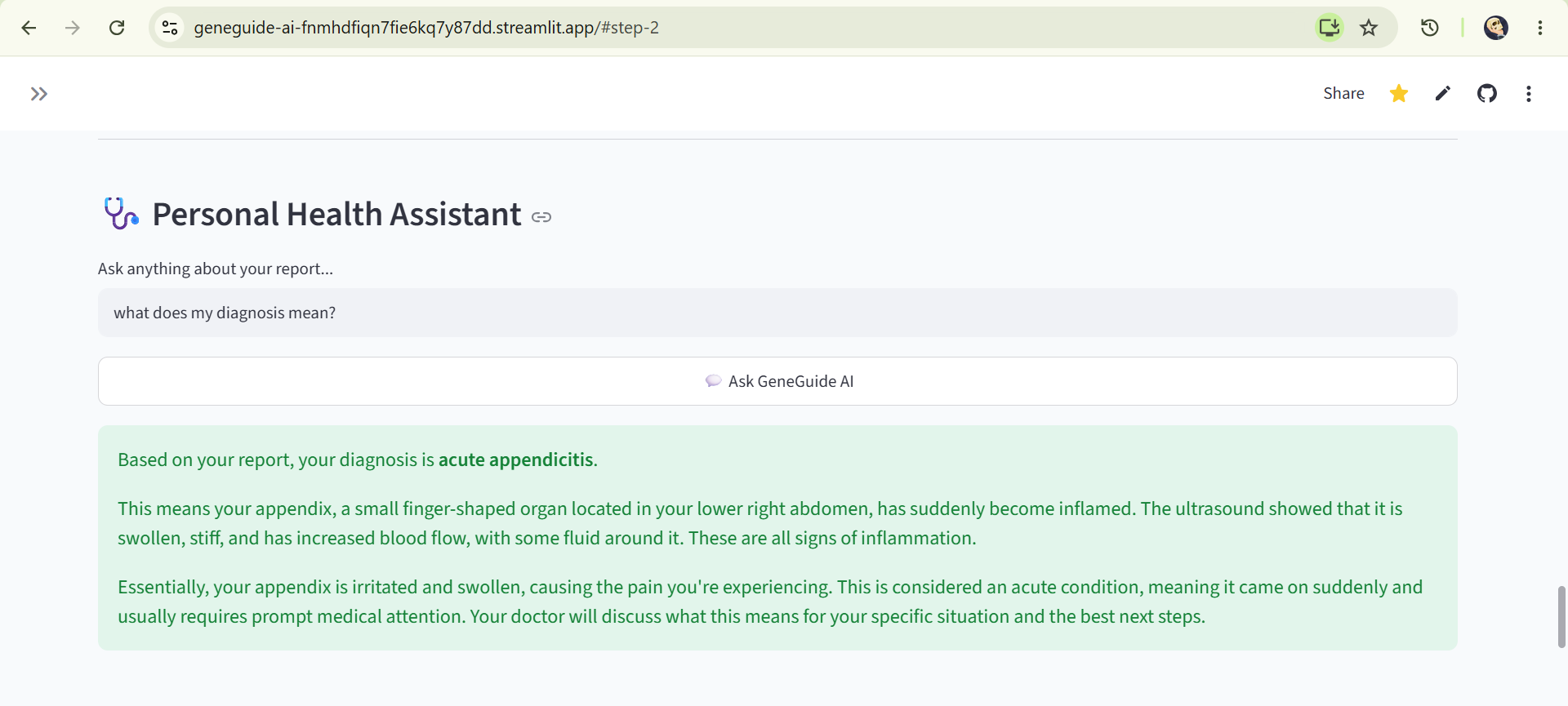
personal health assistant(chat with GeneGuide AI) related to your report
-
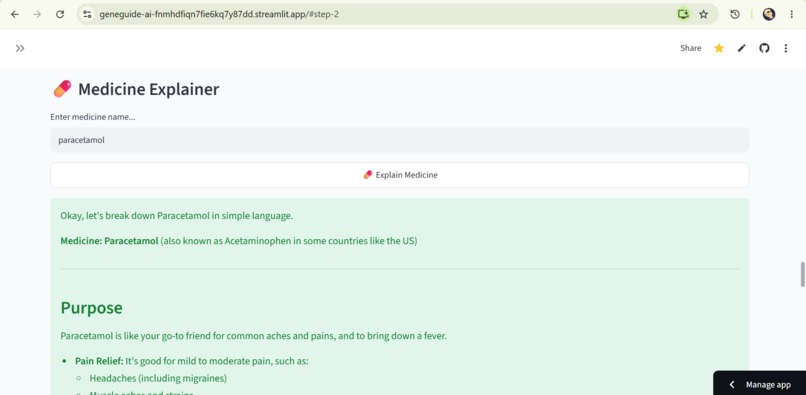
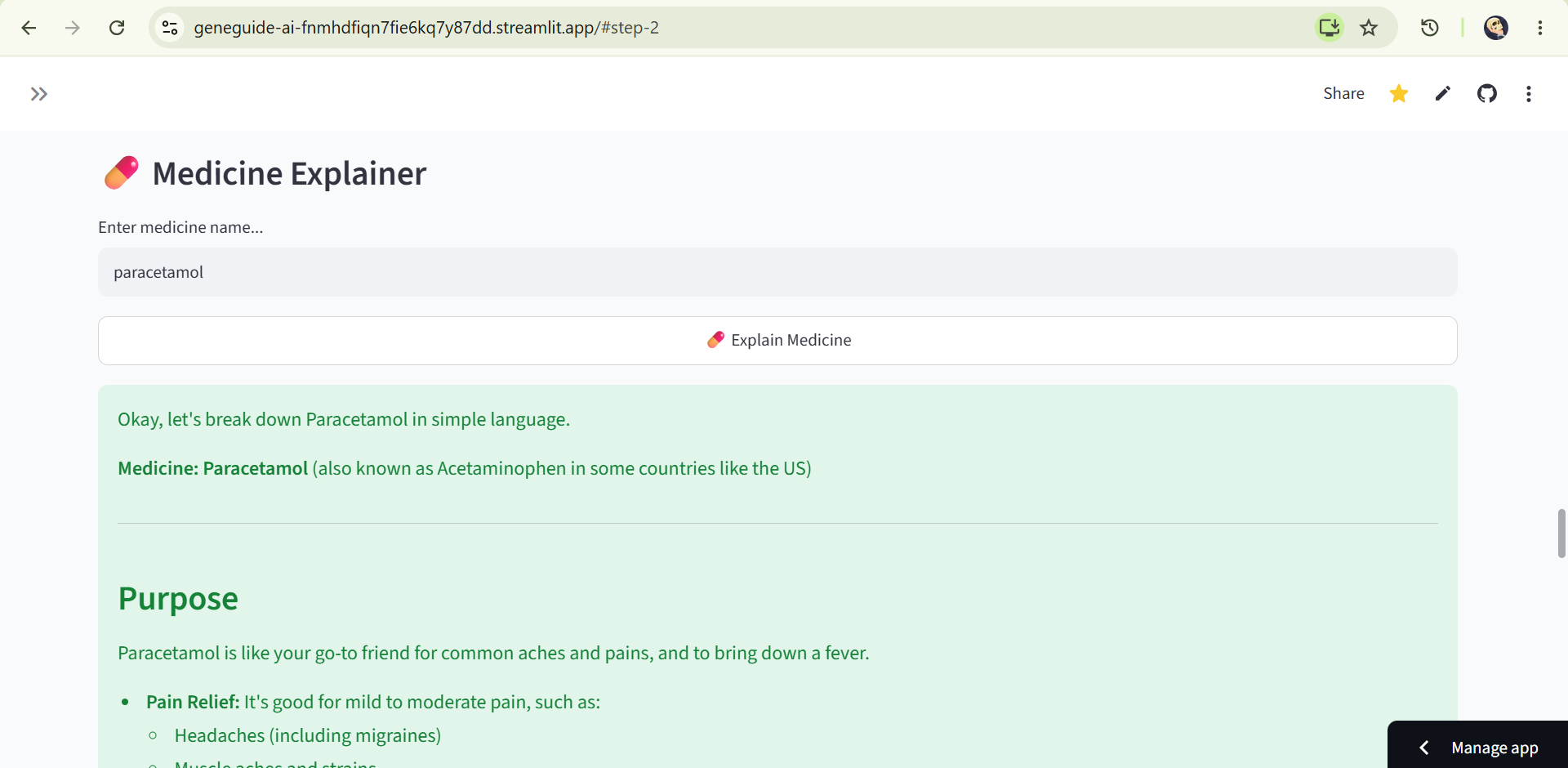
Medicine explainer
-
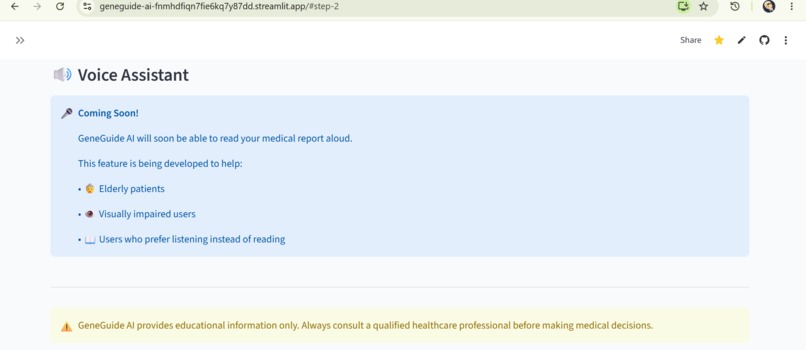
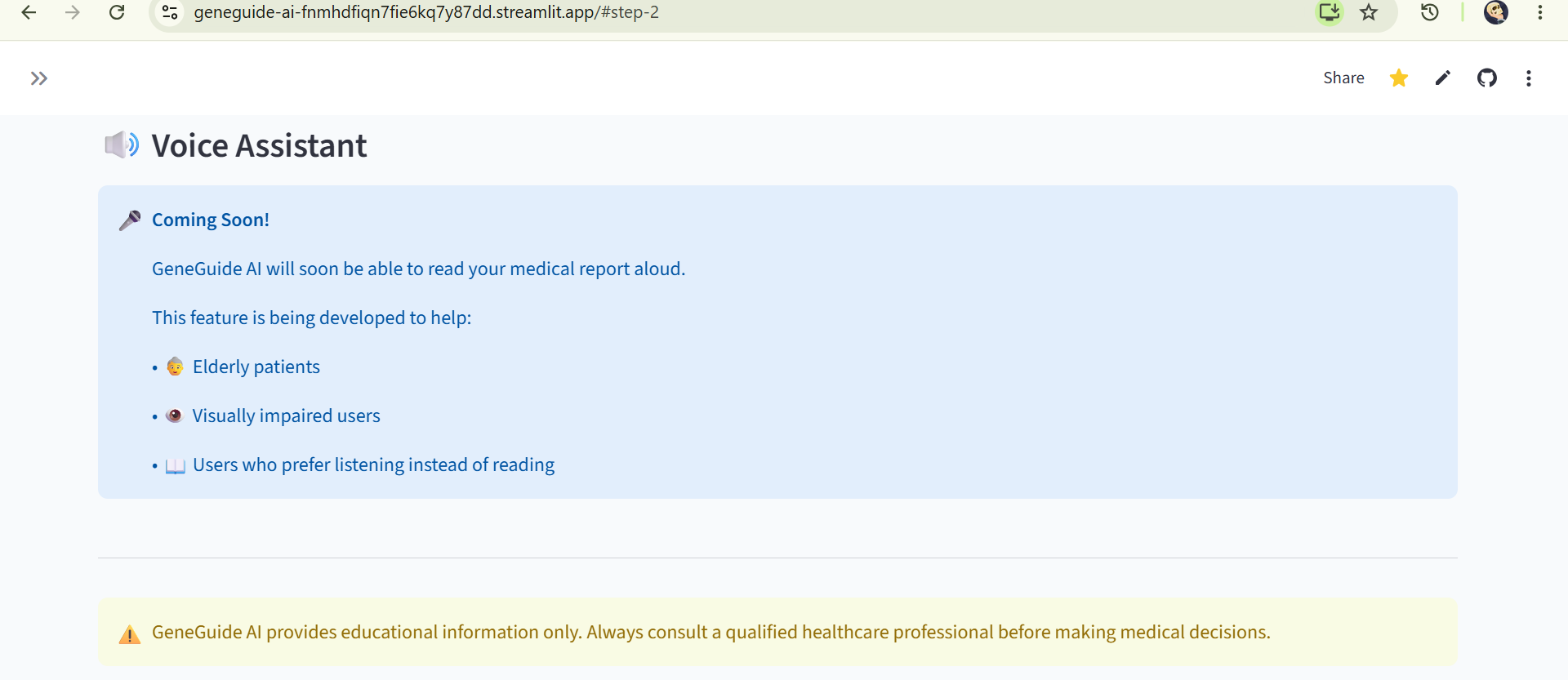
voice assistance(coming soon)
-
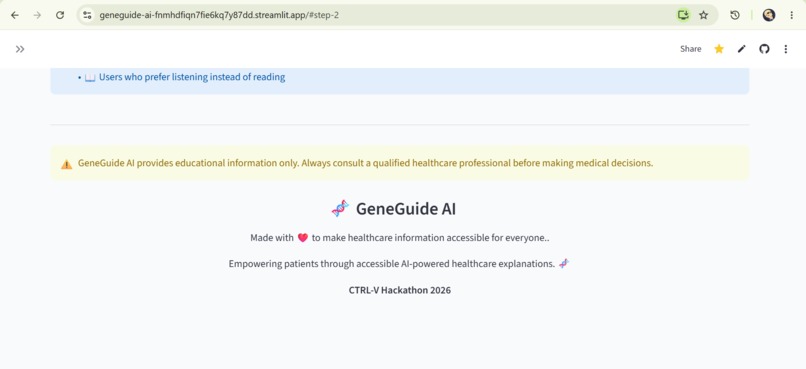
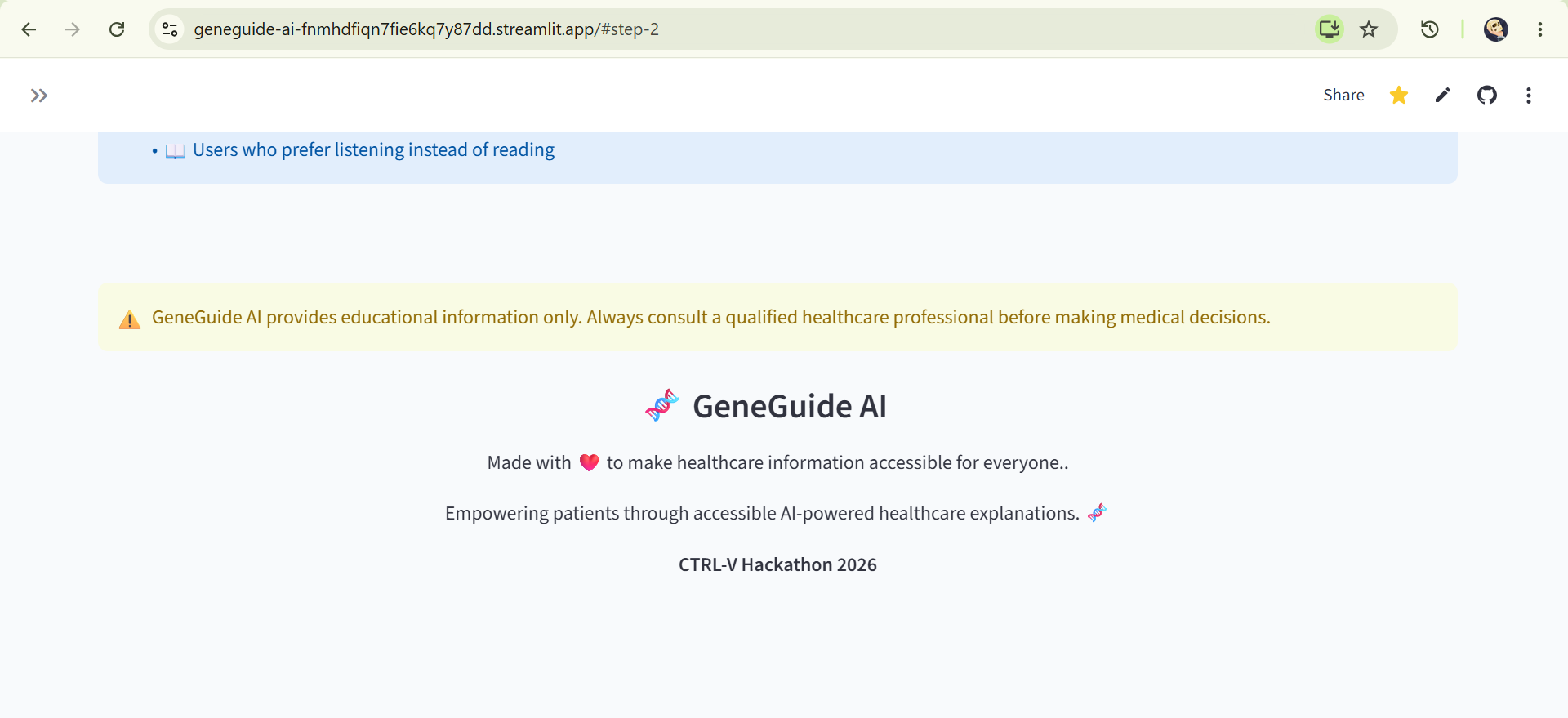
Footer of GeneGuide AI
Inspiration
Medical reports are often written using complex medical terminology that can be difficult for patients and their families to understand. Many people leave hospitals with reports but still have questions about what their diagnosis means, what the medical terms indicate, or what they should discuss with their doctor.
I wanted to build a solution that makes healthcare information more accessible by using Artificial Intelligence to translate complex medical reports into simple, easy-to-understand explanations.
GeneGuide AI was created to reduce confusion, improve health literacy, and help patients become more informed before speaking with healthcare professionals.
What it does
GeneGuide AI is an AI-powered medical report explainer that helps patients understand their health reports in plain language.
The application allows users to upload medical reports as PDFs or images. Using Google's Gemini AI, it analyzes the report and generates:
- A patient-friendly summary
- AI Health Snapshot
- Explanation of difficult medical terminology
- Questions patients can ask their doctor
- Recommended next steps
- Medicine explanations
- Interactive AI chat for follow-up questions
The application also supports explanations in both English and Urdu, making healthcare information more accessible to a wider audience.
How we built it
GeneGuide AI was developed using Python and Streamlit to create an interactive and user-friendly web application.
Medical reports are processed differently depending on the uploaded file type:
- PDF reports are converted into text using PyMuPDF.
- Image reports are analyzed using Google Gemini Vision.
Google Gemini API powers the AI engine by understanding medical content and generating patient-friendly explanations.
The application also includes separate AI modules for:
- Medical report explanation
- Medicine explanation
- Interactive report-based chat
Finally, I deployed the project using Streamlit Community Cloud so anyone can access it directly through a web browser without installing additional software.
Challenges we ran into
One of the biggest challenges was designing AI prompts that consistently generated accurate, structured, and easy-to-understand medical explanations.
Supporting both PDF and image uploads required two different processing pipelines, and ensuring that both produced consistent outputs took several rounds of testing and refinement.
Another challenge was balancing simplicity and functionality. I wanted the application to remain easy for patients to use while integrating multiple AI-powered features such as report explanation, multilingual support, interactive chat, and medicine explanations into a single interface.
Accomplishments that we're proud of
I am proud of building a complete AI-powered healthcare assistant within the hackathon timeframe.
Some achievements include:
- Supporting both PDF and image medical reports
- Providing multilingual explanations in English and Urdu
- Creating an AI Health Snapshot for quick understanding
- Building an interactive AI chatbot for report-related questions
- Adding a Medicine Explainer to help users understand prescribed medications
- Successfully deploying the project online for public access
Most importantly, I created a solution that focuses on accessibility by making complex medical information easier for everyone to understand.
What we learned
Throughout this project, I gained valuable experience integrating Large Language Models into a real-world healthcare application.
I learned prompt engineering, Streamlit deployment, PDF processing, AI image understanding, user interface design, and how to build AI-powered applications that prioritize accessibility, usability, and a positive user experience.
This project also strengthened my problem-solving skills as I worked through deployment issues, API integration challenges, and UI improvements to create a complete working application.
What's next for GeneGuide AI
I plan to continue improving GeneGuide AI by adding several new features, including:
- Voice-based explanations for visually impaired and elderly users
- Support for additional regional and international languages
- Improved OCR for scanned and handwritten medical reports
- Interactive health dashboards with better visual summaries
- Secure patient history and report tracking with user consent
- Laboratory trend analysis for comparing multiple reports over time
My long-term goal is to make healthcare information understandable and accessible for everyone, regardless of their medical knowledge or language.


Log in or sign up for Devpost to join the conversation.