Inspiration
The idea for GeneGuardian was born from a personal experience. A close friend of mine lost a family member to a hereditary condition that could have been prevented or managed if they had known the genetic risks earlier. This left a deep impact on me — not just emotionally, but intellectually. I started wondering: "Why isn’t genetic knowledge accessible to everyone? Why is biology only taught in classrooms and textbooks?"
At the same time, I realized how many students — especially in under-resourced communities — never get to interact with real scientific tools, let alone explore fields like genomics or biotechnology. These subjects can feel locked away behind lab doors or expensive degrees.
That’s when the idea struck: what if we could build something simple, digital, and visual — something that lets people play with biology, understand their own DNA, and get curious about how life works?
GeneGuardian was created to do exactly that. It’s my way of turning personal loss into purpose — by helping others become more aware, more informed, and maybe even inspired to pursue science themselves.
What it does
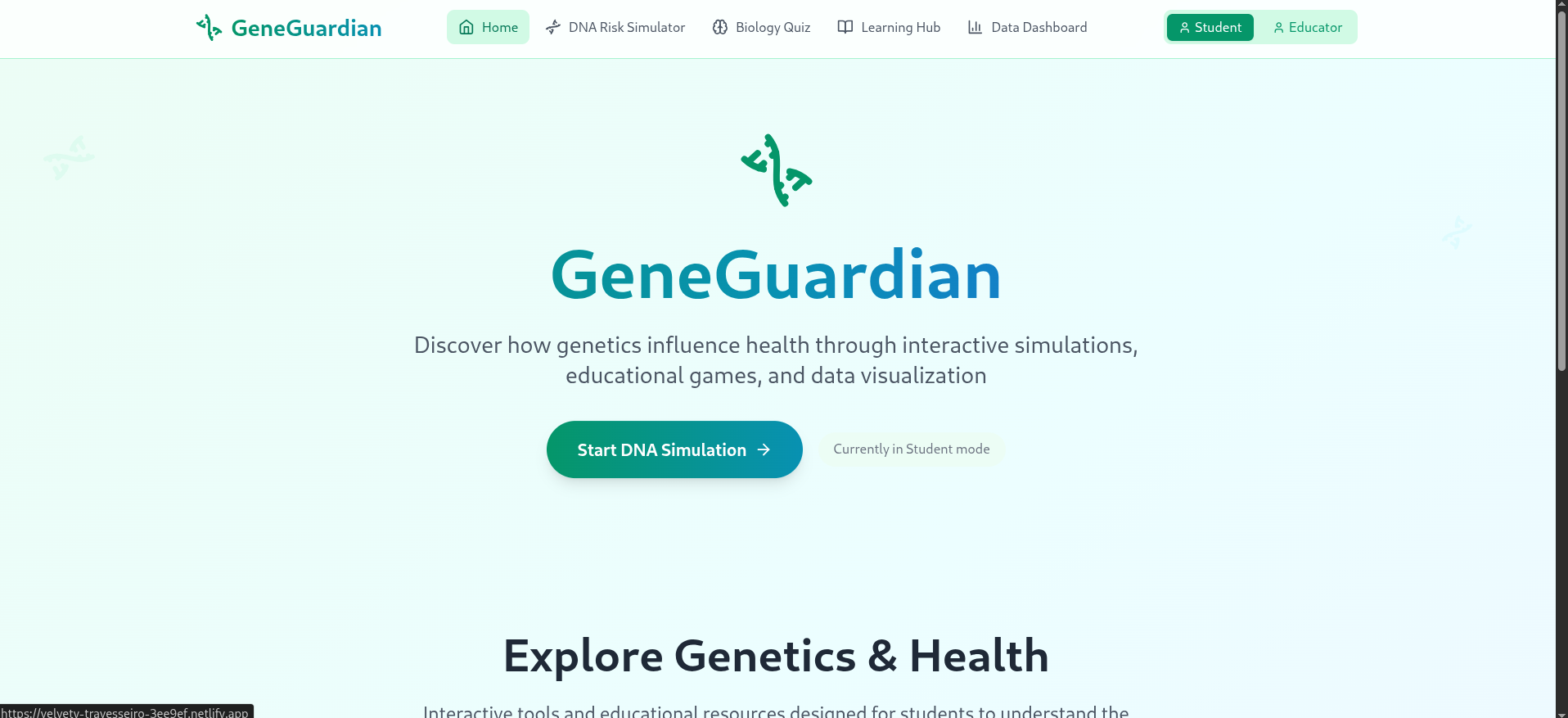
GeneGuardian is a web-based platform that simulates how genetic traits might influence health outcomes. It allows users to:
- Explore simulated DNA sequences
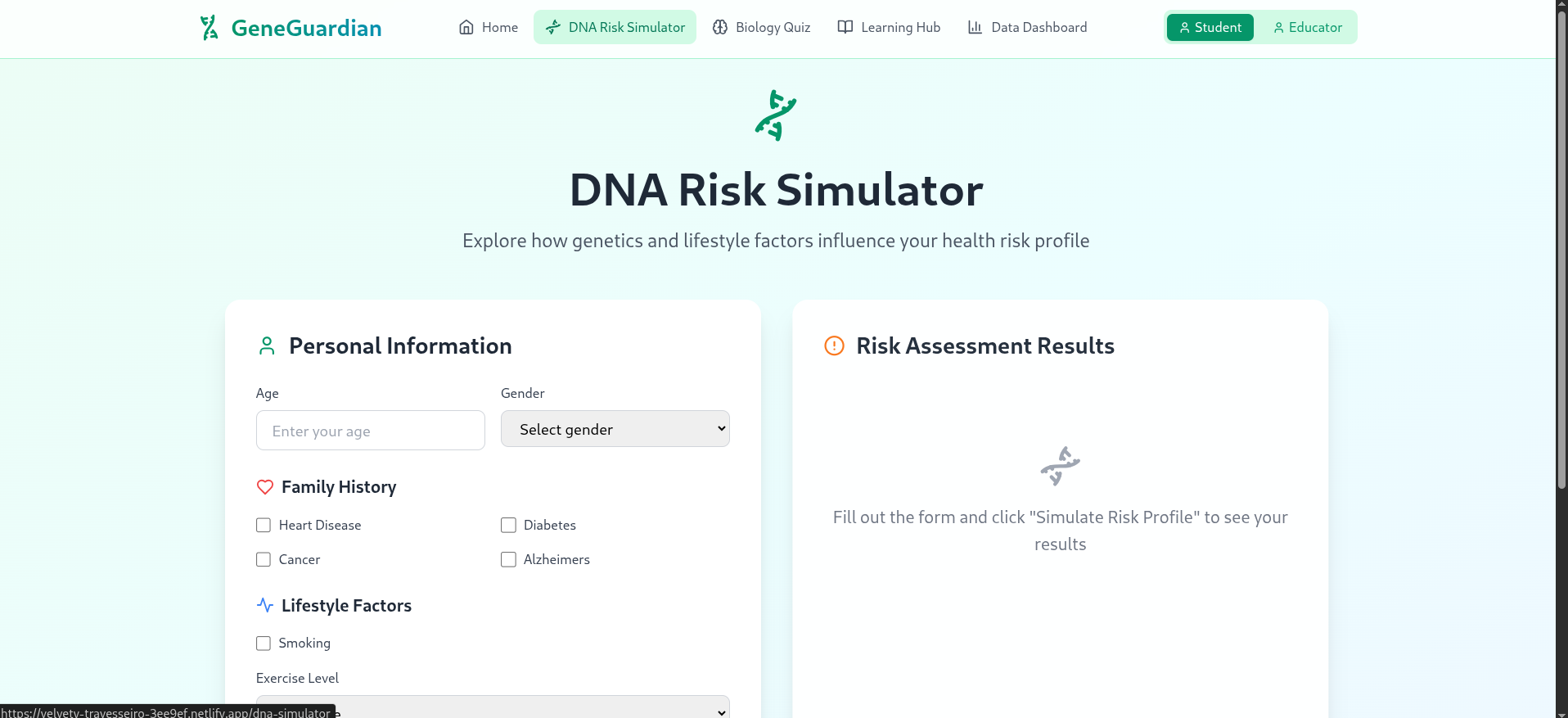
- Visualize potential health risks
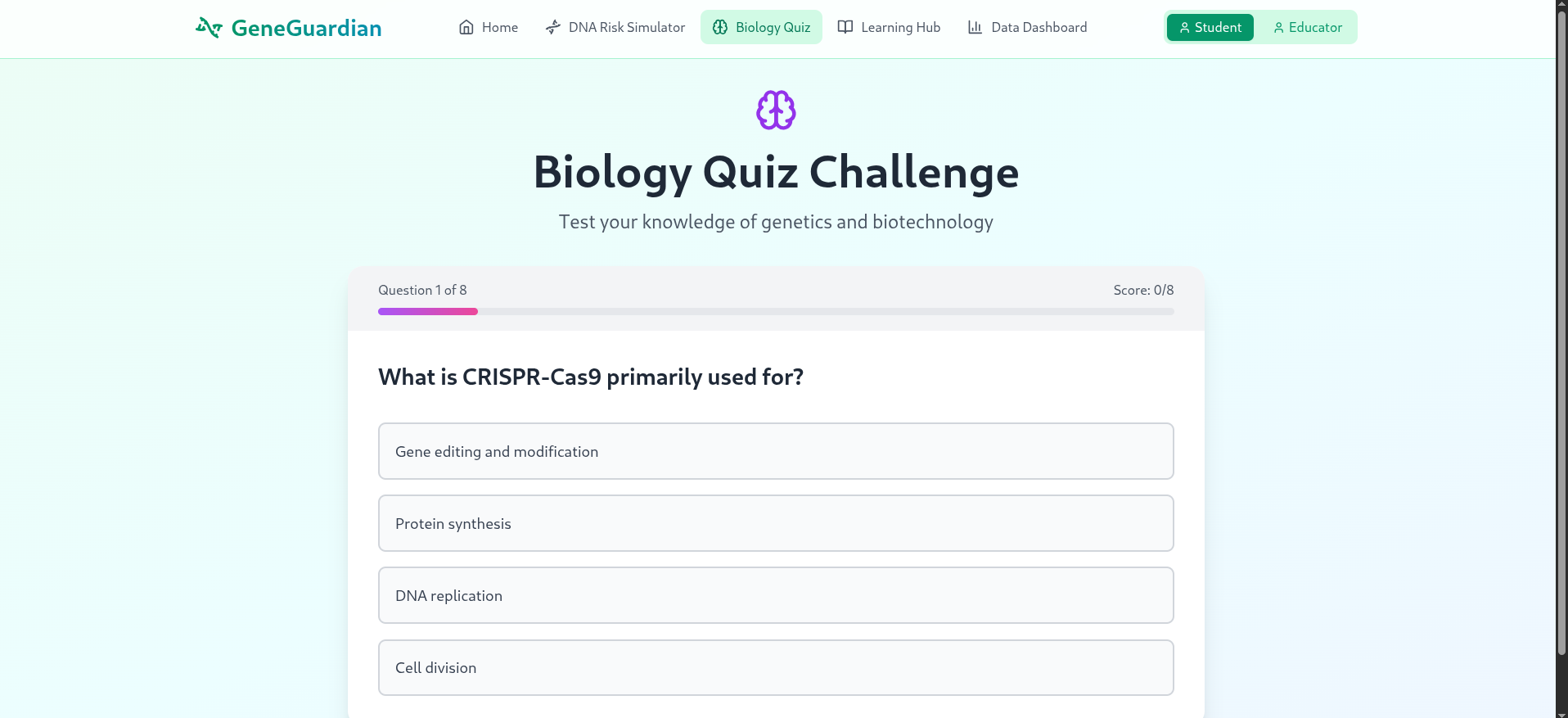
- Learn through biology quizzes and curated resources
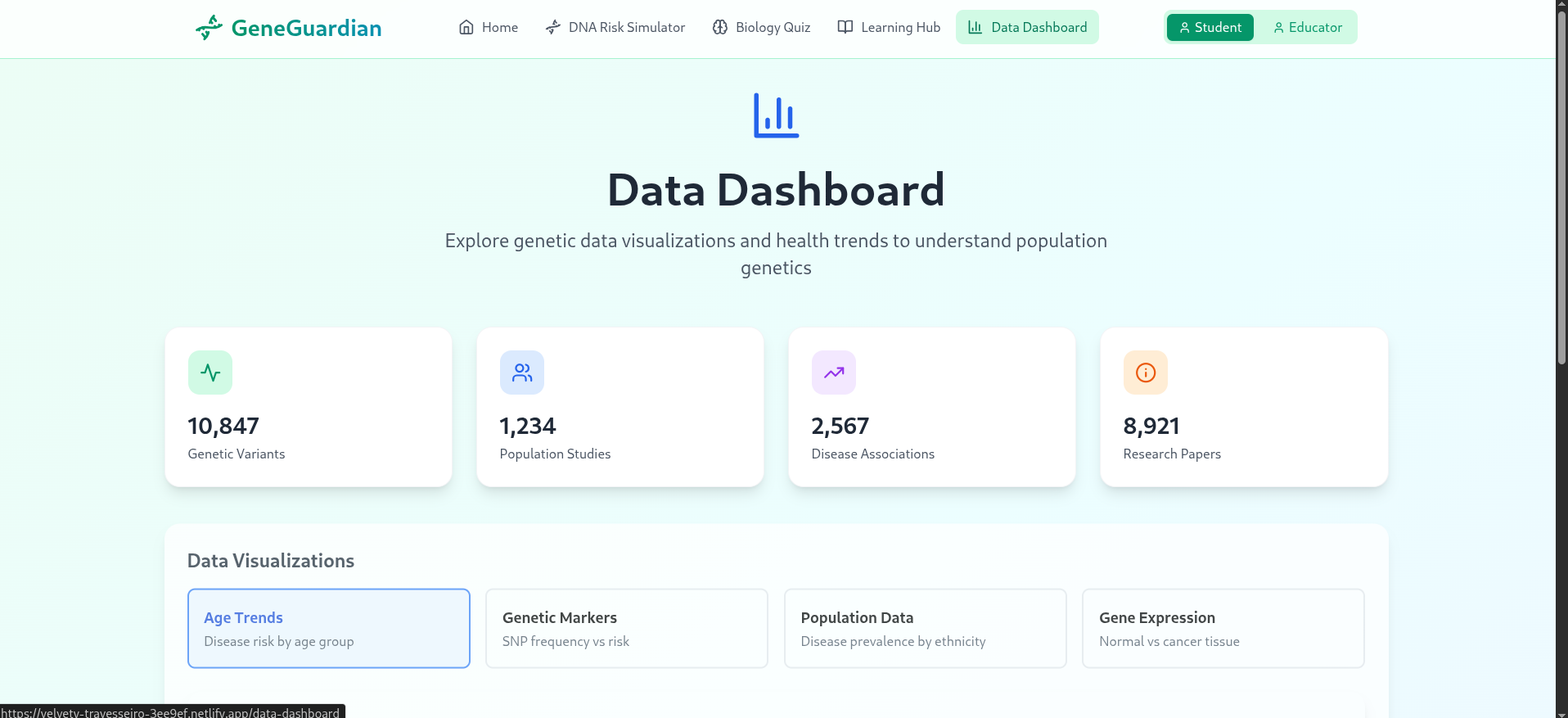
- Interact with global data visualizations of genetic patterns and biodiversity
- Engage in gamified learning to better understand synthetic biology, outbreaks, and more
It’s part simulator, part teacher, part game — designed to make biology engaging and understandable.
How we built it
We built GeneGuardian using the MERN stack:
- Frontend: React.js with Tailwind CSS for a clean, responsive UI
- Backend: Node.js and Express.js for handling API routes
- Database: MongoDB for storing quiz data, resources, and user inputs
- Charts: Recharts and Chart.js for genetic and biodiversity visualizations
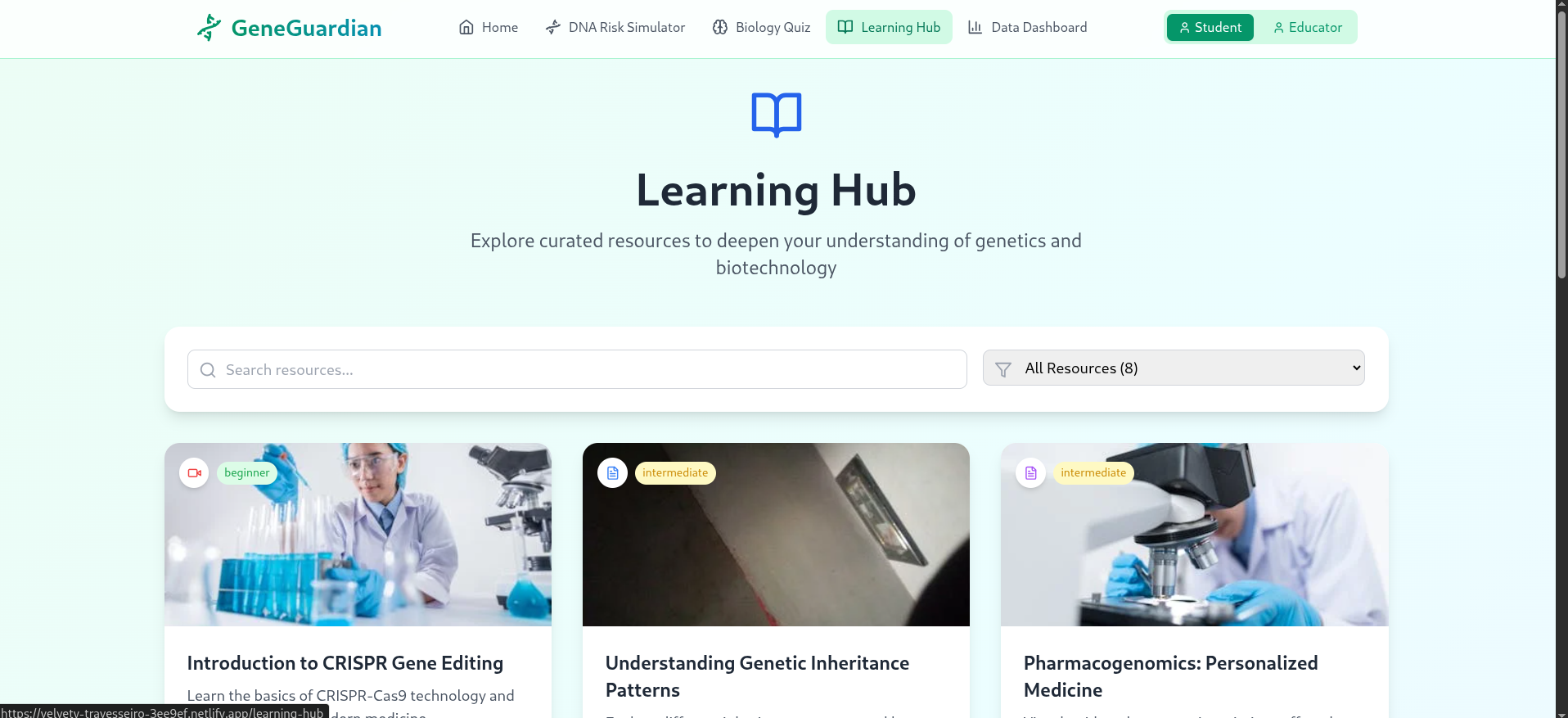
We organized the app around reusable components and pages for each feature (Simulator, Quiz, Dashboard, Learning Hub). Sample genetic data was simulated using JSON and visualized dynamically.
Challenges we ran into
- Simulating DNA data in a meaningful but beginner-friendly way
- Making biology concepts digestible without oversimplifying
- Balancing interactivity with performance on limited bandwidth devices
- Designing a UI that appeals to both students and educators
- Integrating chart libraries that worked seamlessly with our datasets
Accomplishments that we're proud of
- Built a fully functioning DNA Risk Simulator from scratch
- Created an interactive biology quiz game with scoring and feedback
- Designed a clean, educational experience with no prior lab tools needed
- Made biology fun and visual for anyone, regardless of background
What we learned
- How to simplify complex biological concepts using interactive UI
- How to structure full-stack apps that merge science, education, and design
- The importance of accessibility and inclusive design in educational tools
- How impactful open-source collaboration can be in STEM learning
What's next for GeneGuardian
- Integrate real (anonymized) public datasets for more realistic simulations
- Add “Educator Mode” for classroom use and curriculum planning
- Expand the gamified features into a full biology-based story game
- Enable user accounts to track learning progress
- Partner with biology educators and NGOs to deploy in schools
We’re excited to keep building GeneGuardian into a platform that inspires curiosity and empowers future biologists and innovators.
Built With
- chart.js
- css3
- eslint
- express.js
- framer-motion
- git
- github-actions
- html5
- javascript
- json
- lucide-react
- mongodb
- netlify
- node.js
- postcss
- react-18
- recharts
- tailwind-css
- typescript
- vite

Log in or sign up for Devpost to join the conversation.