-
-
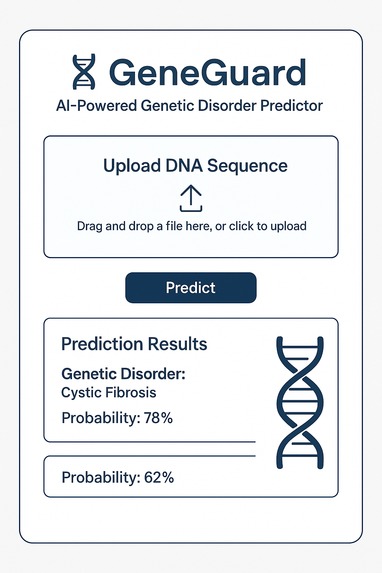
GeneGuard is an AI-powered tool that predicts genetic disorders using DNA sequence data.
Inspiration
While exploring interdisciplinary tech challenges, I found BioHack 2025 and wanted to build something meaningful using AI and biology. Genetic disorders are often diagnosed late, and I felt AIML could help change that.
What It Does
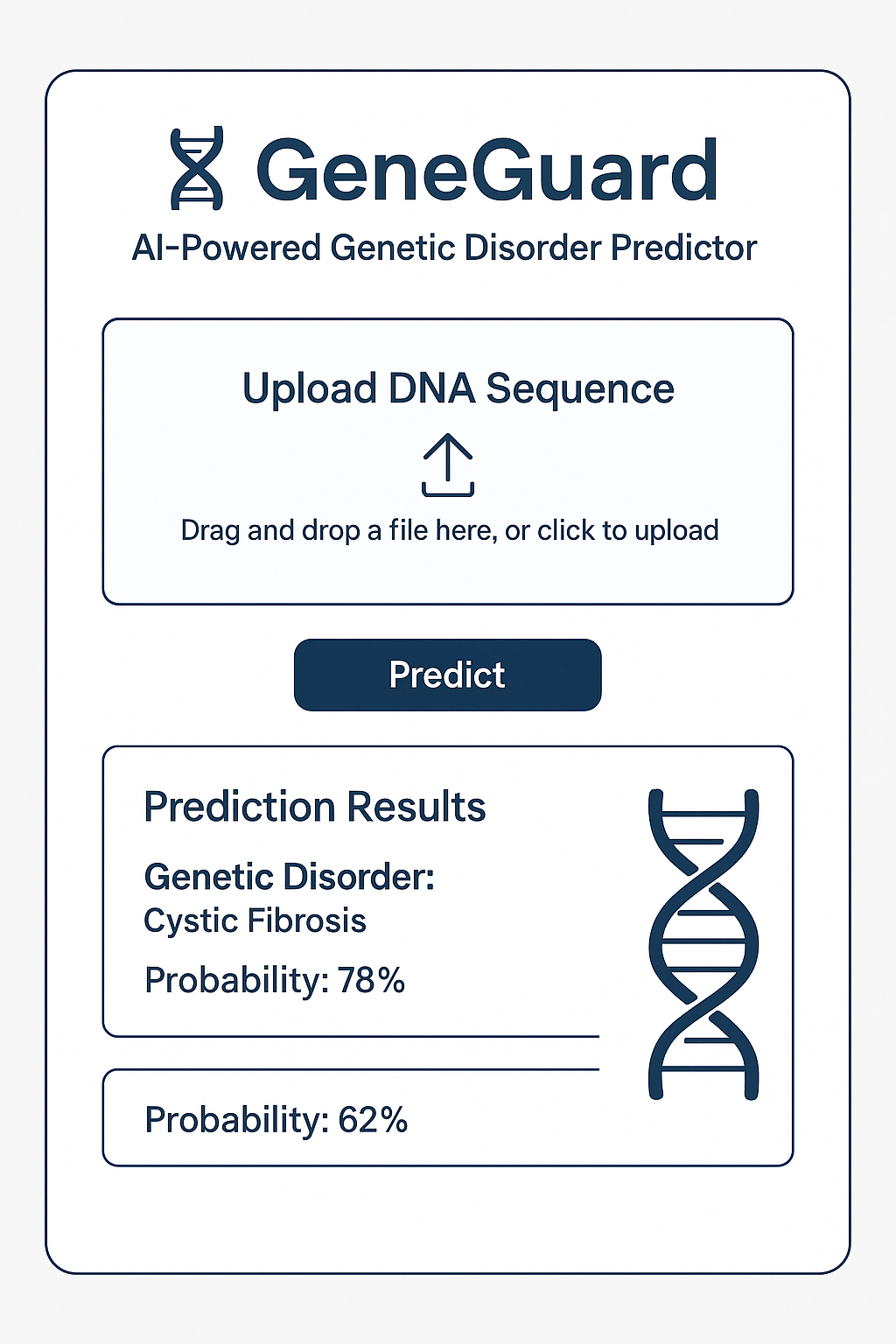
GeneGuard uses machine learning to analyze DNA patterns and predict the likelihood of common genetic disorders. Users can upload simulated DNA sequences, and the model returns predictions with probabilities.
How I Built It
- I used Python with pandas, NumPy, and scikit-learn to train classification models on synthetic genetic data.
- A basic web interface was built using Flask to let users test DNA sequences.
- The UI was designed in Figma to simulate a health-tech experience.
- GitHub was used for version control and sharing the final codebase.
Challenges
- Preprocessing DNA sequences for ML was tricky, especially encoding them efficiently.
- Finding real open genetic datasets was tough, so I used synthetic data and references.
- Integrating biological accuracy with model interpretability was a challenge.
What I Learned
- How to structure a biology-based tech project.
- Better understanding of genetic markers and how ML models can aid early detection.
- How to present health-focused projects to non-technical judges.
What's Next
- Use real anonymized datasets (like from NIH/1000 Genomes Project).
- Integrate genetic counseling suggestions based on predictions.
- Make the app mobile-ready with better UI and security for health data.


Log in or sign up for Devpost to join the conversation.