Inspiration
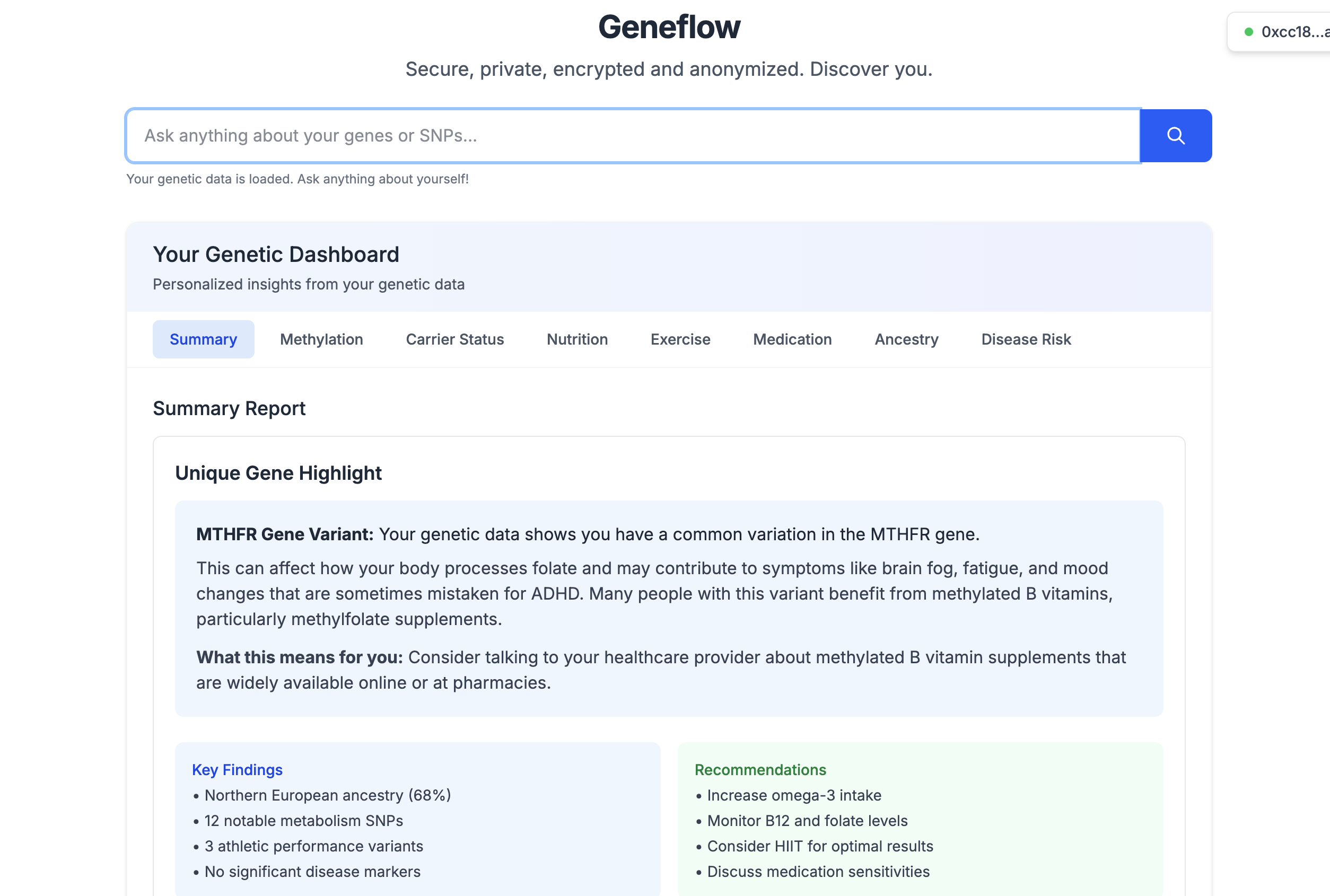
I've always been deeply concerned about genetic data privacy. When I learned that 7 million 23andMe users had their data breached in 2023, including myself, I realized something had to change. After downloading my genetic data and deactivating my account, I built a simple tool to analyze my own genetic information. This personal exploration revealed a genetic variant (MTHFR) affecting folate metabolism that explained years of persistent low energy—something doctors had missed. Taking methylated folate supplements based on this discovery dramatically improved my quality of life. This life-changing revelation showed me the immense value hidden in our genetic data and inspired me to create GeneFlow—a platform that would make these insights accessible to everyone while ensuring genetic data remains firmly in user control, aligned with sovereignty and security.
What it does
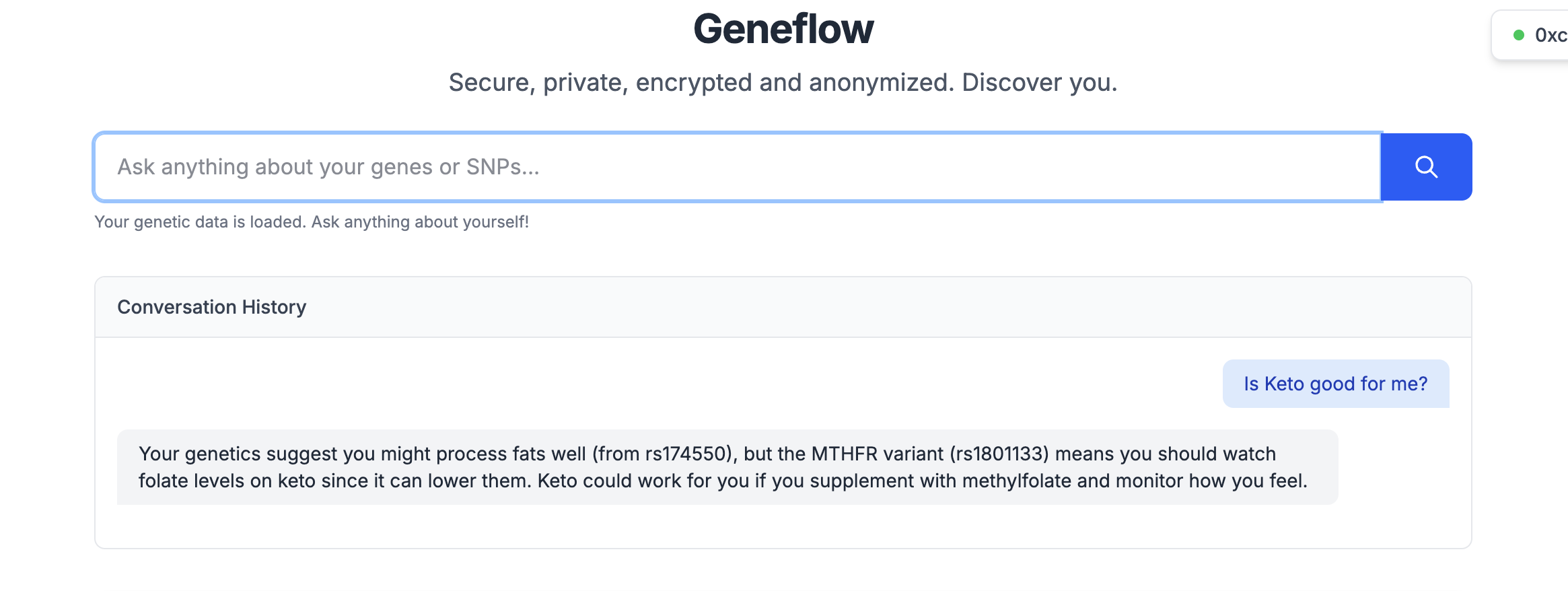
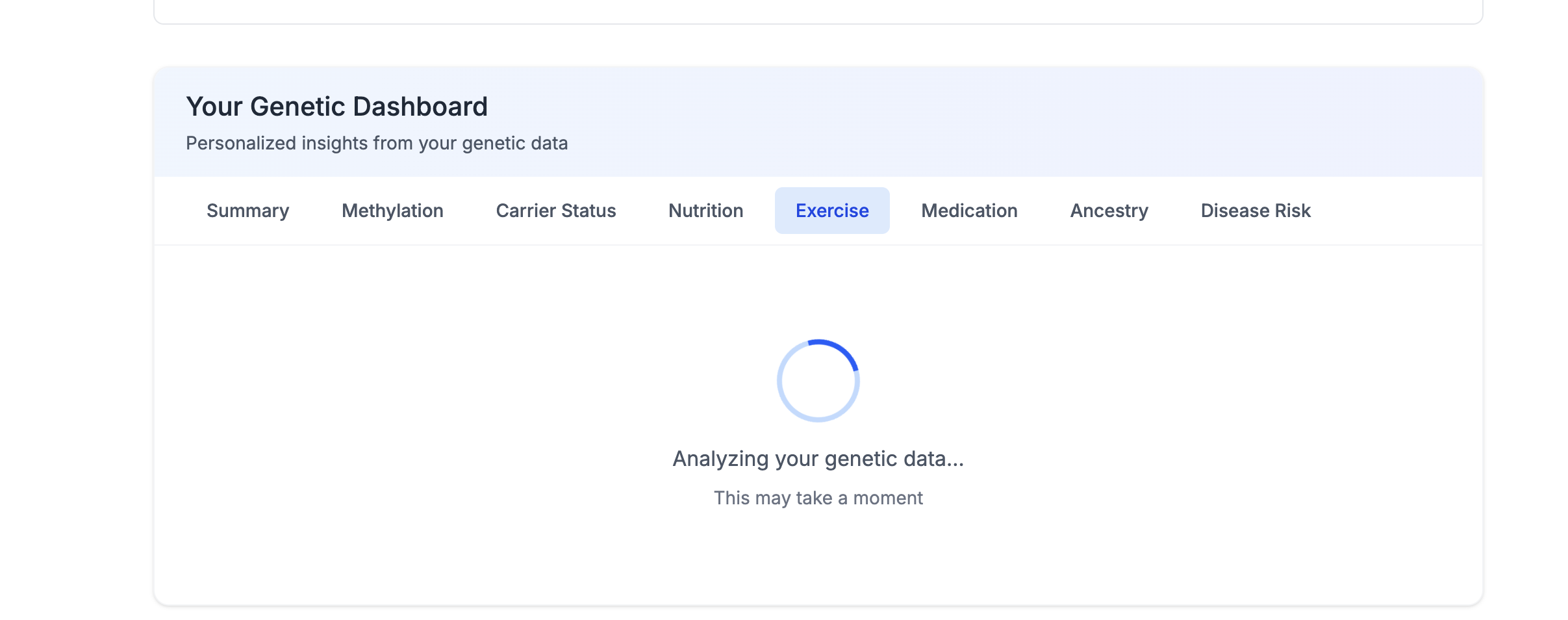
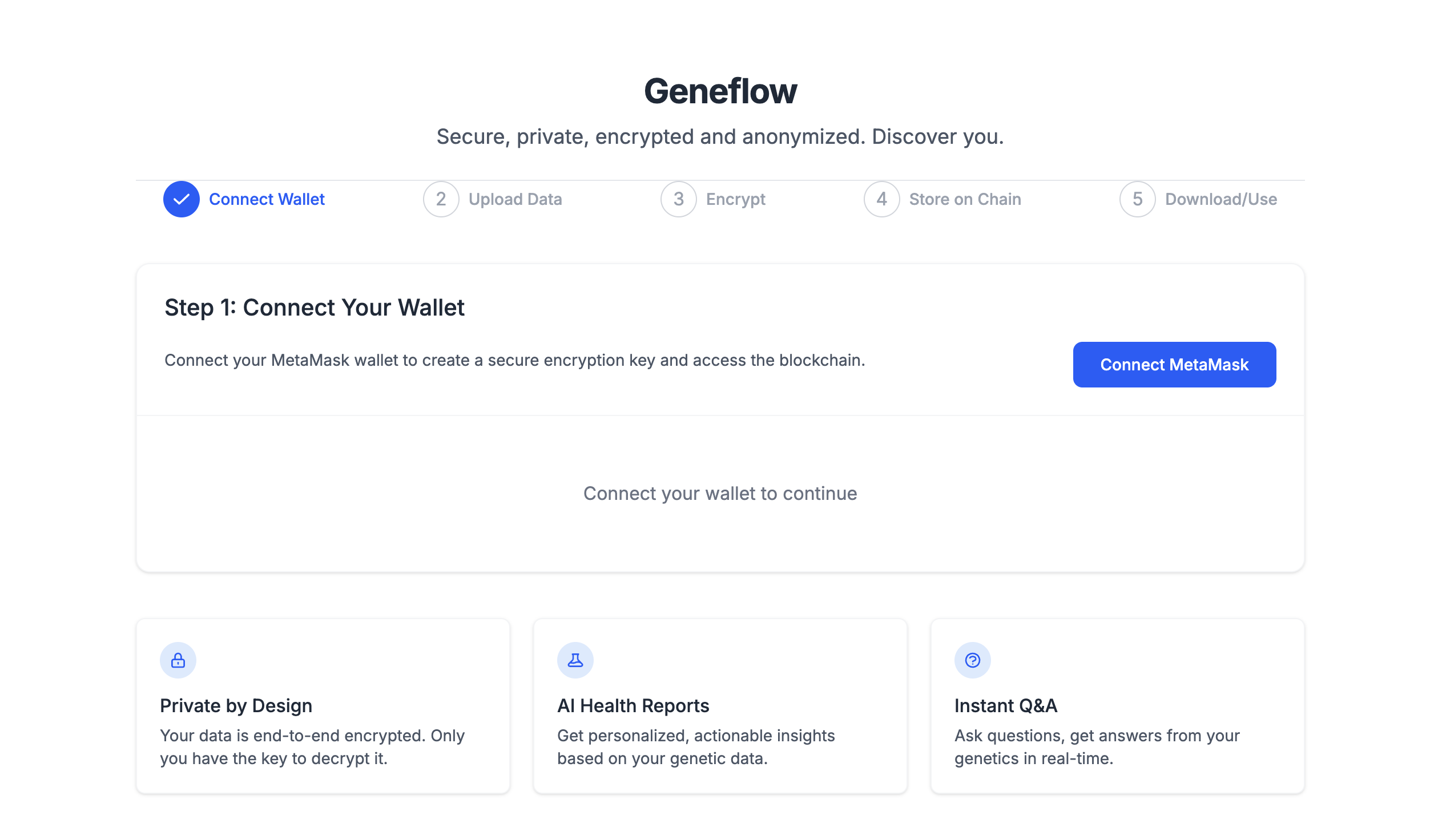
GeneFlow is a genetic analysis platform that gives users complete ownership and control over their genetic data. It enables users to upload genetic data files from services like 23andMe, encrypt them client-side with keys derived from their crypto wallet, and receive comprehensive analysis reports including health insights, ancestry composition, and nutrition recommendations. The platform includes an interactive AI chatbot that answers specific questions about genetic data in plain language. Unlike traditional genetic testing companies that store and often sell user data, GeneFlow ensures genetic information remains exclusively under user control through blockchain-based encryption and storage—providing the same trustless security guarantees that make Bitcoin so bullish-worthy.
This targets a $27B industry, the app alone offers for FREE what would cost $5,000+ per person in tests ranging from diet/health to prenatal planning. My core goal is to use it to dispel fear around blockchain and excite everyday people about something that is on the news and everyone cares a lot about (especially with the recent 23andMe scandals), I think it is a perfect usecase of what you can get when you have true ownership.
How we built it
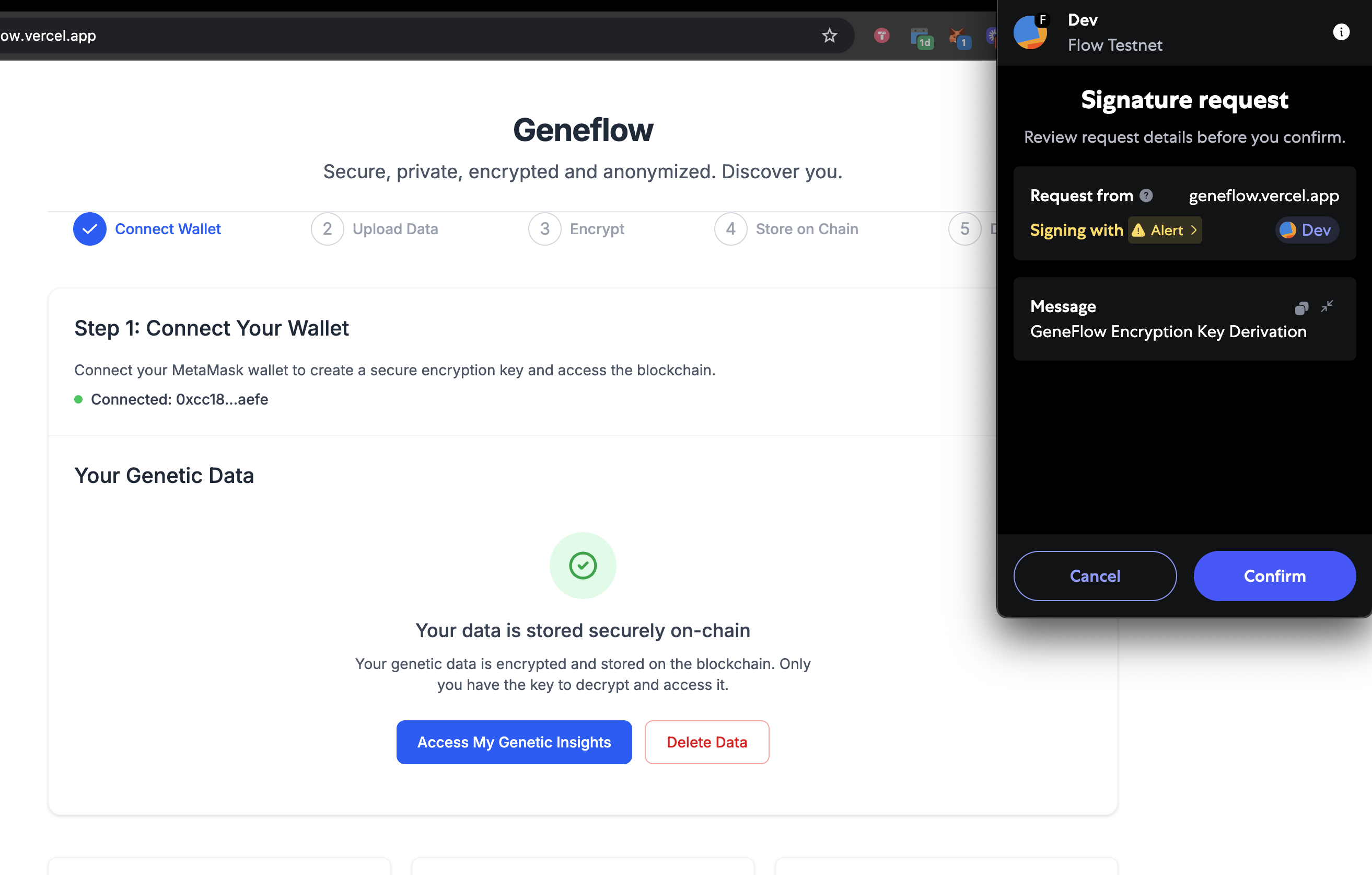
I developed GeneFlow using a privacy-first approach where genetic data never leaves the user's device unencrypted. The frontend uses Next.js, React, TypeScript, and TailwindCSS to create an intuitive interface for a complex subject. The encryption system implements client-side AES-GCM using wallet-derived keys, ensuring only the user can access their data. When users upload genetic files (supporting both 23andMe and Ancestry.com formats), the data is encrypted locally before blockchain storage. The AI-powered analysis system generates comprehensive reports and enables conversational interactions while maintaining strict privacy guarantees. I designed the system architecture to eventually leverage Bitcoin's superior security model, which provides the perfect immutable foundation for storing the most sensitive personal data we possess. Right now the contract is in solidity because it's what I am most familiar with and I thought it might be powerful to initially launch it in the Rootstock bitcoin L2 ecosystem (though am open to alternative strategies), the idea is that it would strengthen the EVM-compatible side of the BTC ecosystem.
For genetic data storage, I've designed a two-layer approach: an immediate functioning implementation using Solidity (deployable on Bitcoin L2s like Rootstock) coupled with a Bitcoin anchoring mechanism where cryptographic proofs of genetic data integrity are periodically committed directly to Bitcoin's blockchain. This approach leverages Bitcoin's unparalleled security while maintaining practical functionality.
Challenges we ran into
Implementing end-to-end encryption with wallet-derived keys required solving complex cryptographic challenges. Creating a system that maintained complete data privacy while still allowing for AI analysis presented significant technical hurdles. I had to develop custom parsers for different genetic data formats while ensuring the system remained user-friendly despite its technical complexity. Balancing the need for comprehensive analysis with response speed was particularly challenging, requiring careful optimization of prompts and data processing. Throughout development, I kept Bitcoin's principles at the forefront—designing systems that minimize trust requirements and maximize user sovereignty, even when dealing with highly technical genetic information that typically requires institutional expertise.
Accomplishments that we're proud of
I'm most proud of creating a system that maintains absolute privacy while providing valuable insights that can genuinely improve lives. The platform successfully parses complex genetic data and translates it into actionable, understandable reports. I developed an encryption architecture that ensures users never lose control of their most sensitive personal information. The interactive chat feature makes complex genetic concepts accessible to non-specialists through natural conversation. Most importantly, I've demonstrated how blockchain technology can be meaningfully applied to protect sensitive biological data—extending Bitcoin's revolutionary approach to personal sovereignty beyond financial applications into healthcare, creating a model for trustless data management in sensitive domains.
What we learned
Building GeneFlow taught me the power of combining blockchain principles with healthcare data. I gained deep insights into secure data handling patterns and client-side encryption techniques. I learned how to create user-friendly interfaces for complex genomic information, making scientific concepts accessible without sacrificing accuracy. I discovered that the trust-minimized approaches pioneered by Bitcoin can be successfully applied to sensitive domains well beyond finance. Perhaps most importantly, I learned that giving users control over their data doesn't have to come at the expense of functionality—in fact, it can enhance it by enabling more personalized, privacy-preserving analysis that users can genuinely trust.
What's next for GeneFlow
GeneFlow's immediate roadmap focuses on deeper Bitcoin integration through three key initiatives: First, I'm implementing a Bitcoin timestamping system using OP_RETURN to commit genetic data hashes directly to Bitcoin blocks. This provides cryptographic proof of data existence and integrity anchored in Bitcoin's security, giving users verifiable evidence their genetic information hasn't been tampered with. I leverage Rebar Data's comprehensive Bitcoin block information to provide users with transparent visualization of these anchoring transactions.
Second, I'm building Rebar Shield integration for private genetic data submission. Given the extreme sensitivity of genetic information, bypassing public mempools is essential—Rebar Shield's direct-to-miner transaction paths provide the perfect solution, ensuring genetic data transactions aren't visible in public mempools before confirmation.
Third, I'm exploring Alkanes smart contract integration for programmable consent mechanisms, allowing users to create Bitcoin-secured rules governing how their genetic information can be accessed, with transaction histories tracked through Rebar's data platform. This allows conditional, time-limited access for specific purposes (like healthcare provider consultation) while maintaining Bitcoin's security guarantees.
The ultimate vision is to create the gold standard for secure genetic data management on Bitcoin—demonstrating how Bitcoin's fundamental innovations can revolutionize healthcare privacy while expanding Bitcoin's utility beyond financial applications in a way that targets everyday consumers for mass adoption.
Built With
- css
- deepseek
- genetic
- javascript
- llm
- nextjs
- react
- solidity
- tailwind

Log in or sign up for Devpost to join the conversation.