Inspiration🧠
Even with today’s cutting edge technology and leading scientific research that helps us develop, advance and improve in everyday life, those with rare genetic diseases are still left behind.
Living with life threatening condition with little to no cure, considering, “less than 5% of more than 7,000 rare diseases believed to affect humans currently have an effective treatment”, is already frustrating, but when doctors aren’t knowledgeable/experienced enough to treat such cases, or when patients have only themselves to rely on to search for any experimental drugs, the everyday struggle becomes a nightmare to deal with. But what’s even more tragic is despite there being “300 million people worldwide [suffering a rare disease], [where] approximately 4% of the total world population is affected by [one] at any given time” , people still have to go through the exhausting trial and error process of finding a cure/treatment, EVEN when in several cases, they share exactly the same disease!
Shockingly enough, there isn’t ANY collection of data or analysis being shared, on what medications/treatments work for different people, and which ones help or harm them!
Citation Kaufmann, P., Pariser, A.R. & Austin, C. From scientific discovery to treatments for rare diseases – the view from the National Center for Advancing Translational Sciences – Office of Rare Diseases Research. Orphanet J Rare Dis 13, 196 (2018). https://doi.org/10.1186/s13023-018-0936-x
Wakap SN, Lambert DM, Alry A, et al. Estimating cumulative point prevalence of rare diseases: analysis of the Orphanet database [published online September 16, 2019]. Eur J Hum Genet. doi: 10.1038/s41431-019-0508-0. https://ojrd.biomedcentral.com/articles/10.1186/s13023-018-0936-x
What it does 💻
For our project, we have tried our best to match Varient’s goal in partially helping develop a diagnosis assistance tool for the rare disease population (with genetic mutations), so that it becomes a crucial gadget in finding appropriate drug treatments, providing accurate and up to date information, while also facilitating support in decision making.
Our My Heroes gene assistant web app’s specific features include:
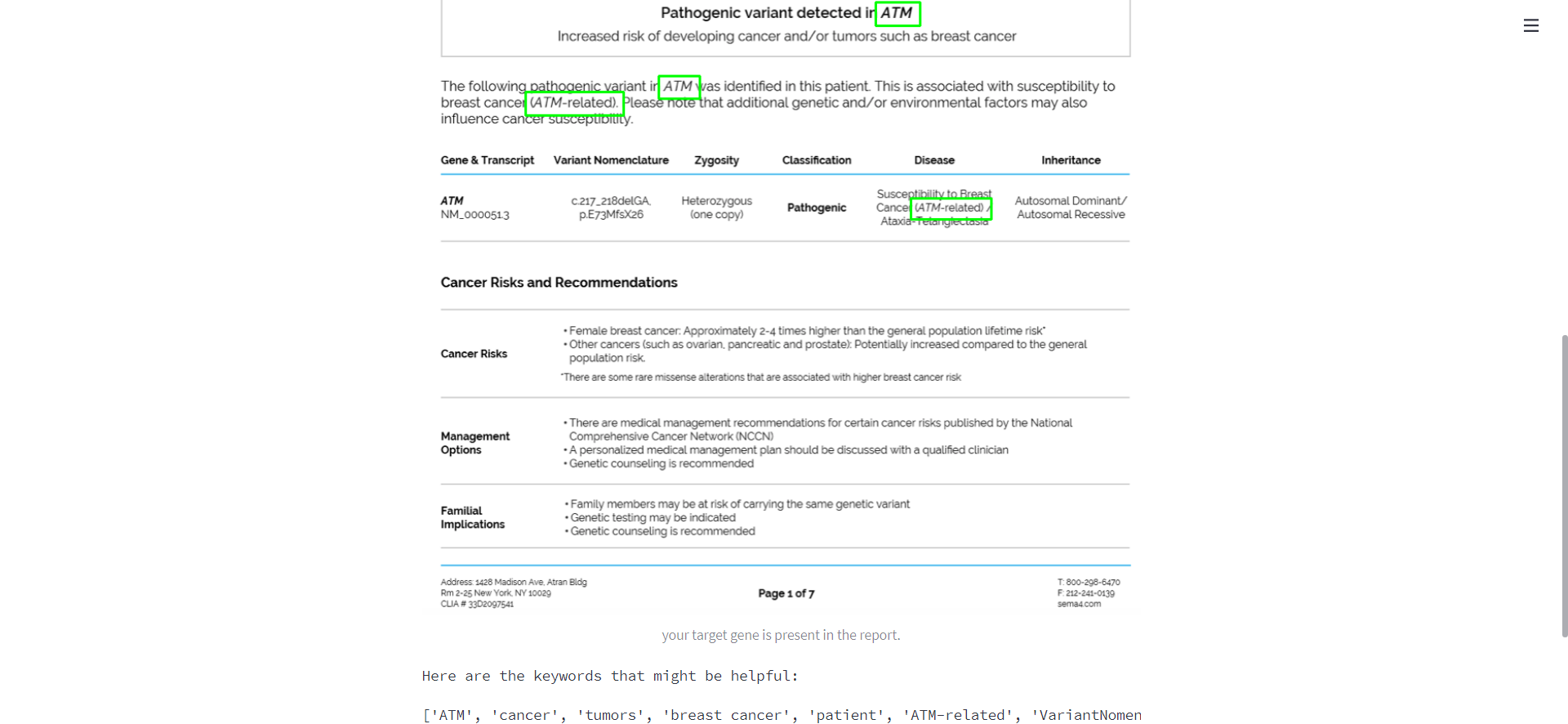
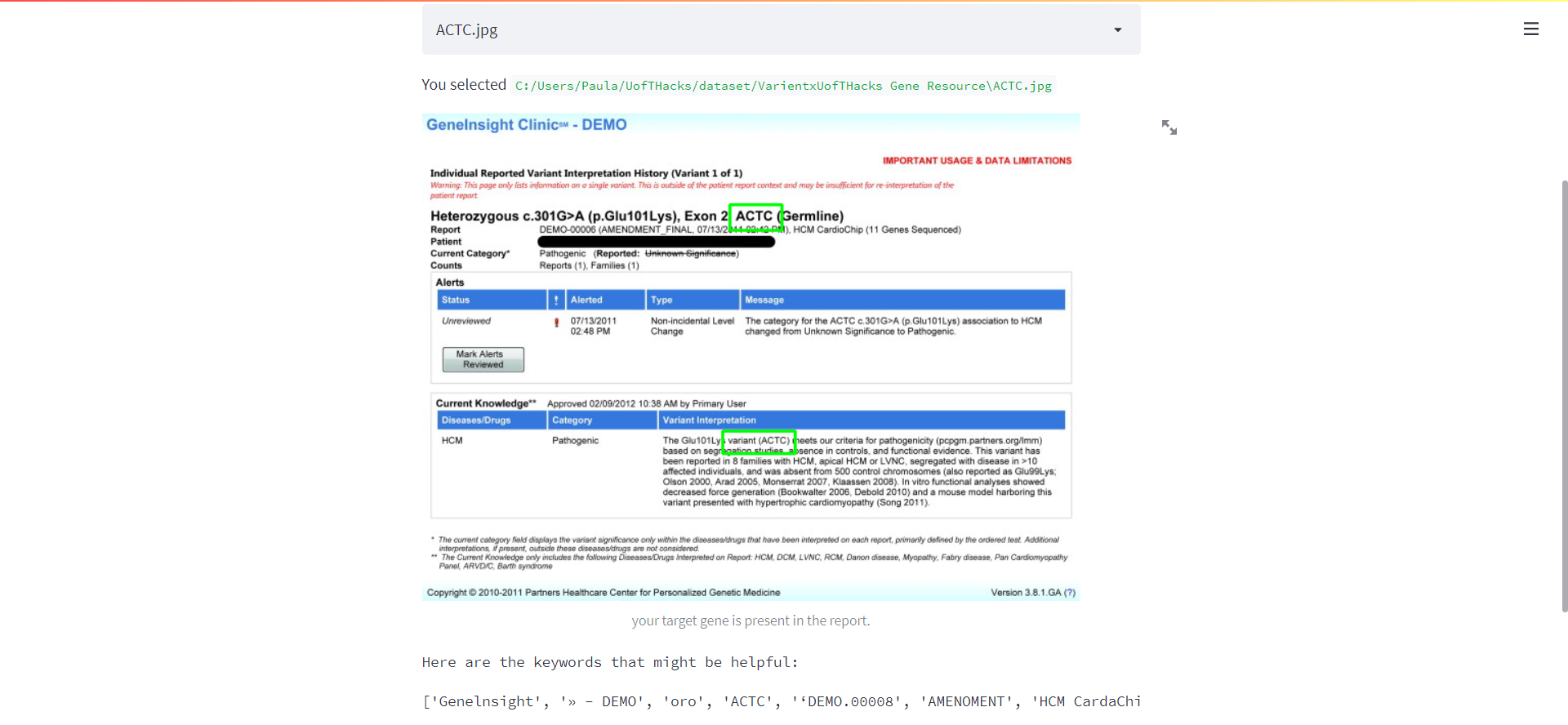
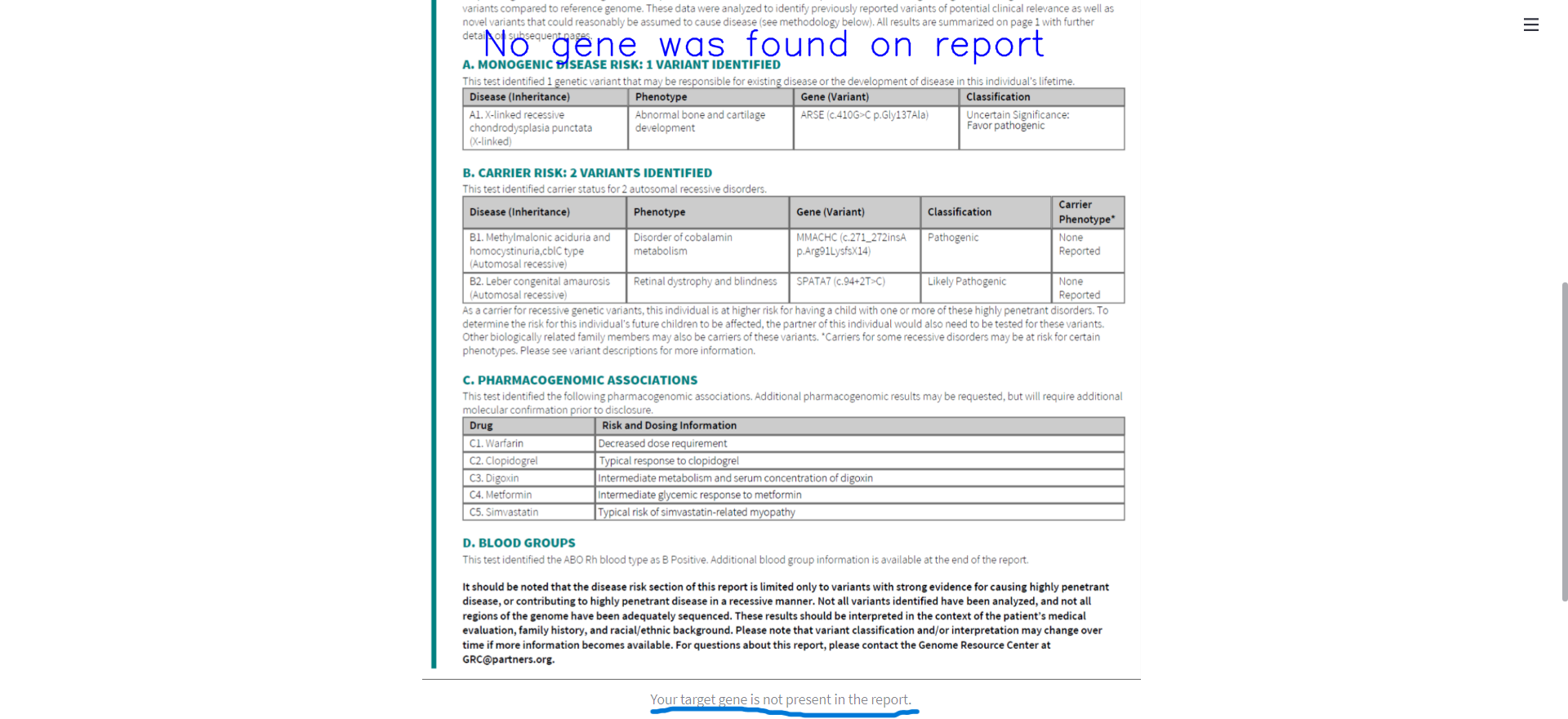
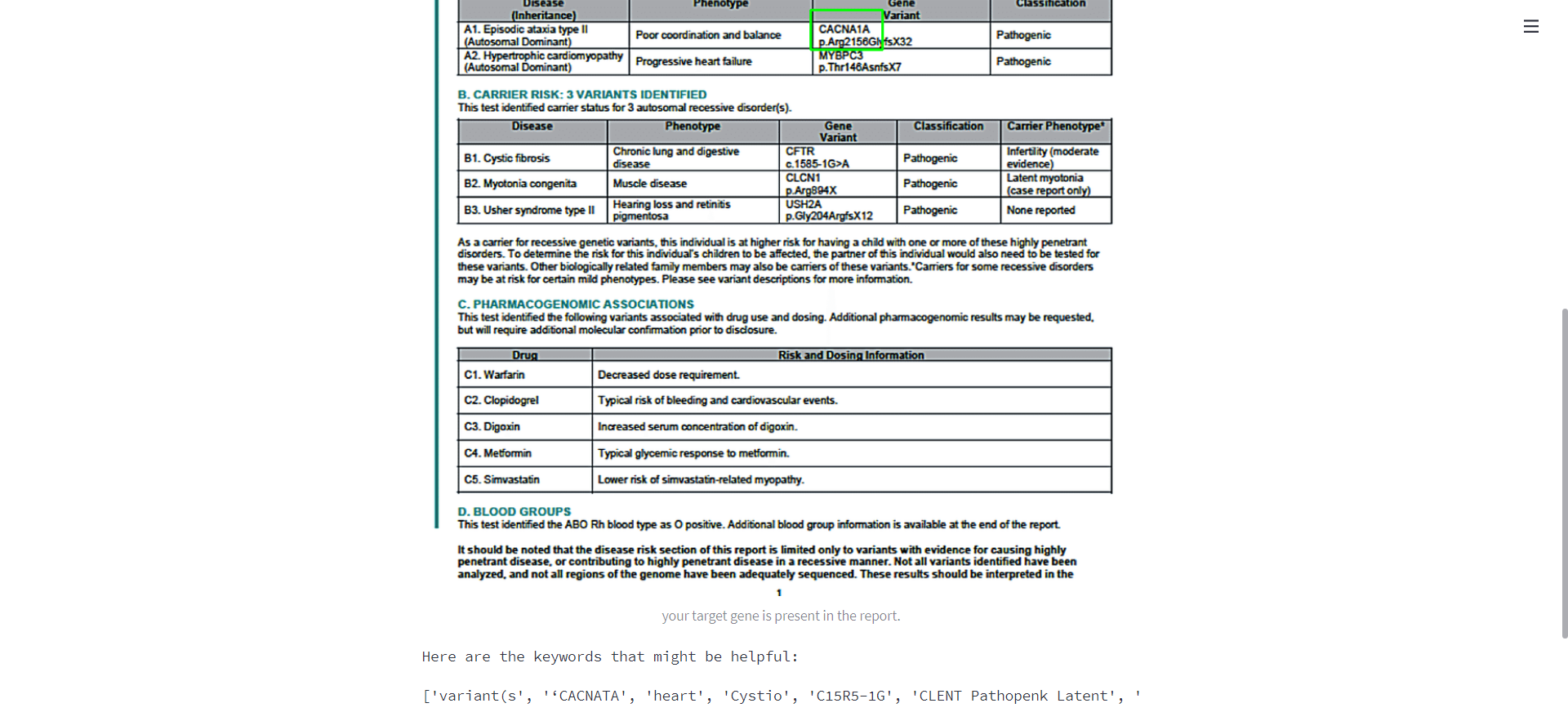
Ability to select images that indicate a relevant gene in the report
Generating and displaying relevant keywords, such as names of related disease and mutated gene names.
Providing insights on how the related disease can be treated.
Supporting patients understand key information from the reports.
The user interface includes: a User registration/login (for authorization and account information purposes), a Dropbox/file attachment ( for images), a Catalog of uploads (for the usability of modifying/deleting items), Display of labeled/annotated report, and a Summary page
How we built it 🔧
Used Python for the backend and Machine learning component of the app.
Implemented pytesseract OCR to extract texts/key words (mutation names on ) from the images(image labeling) supplied by the report, and labeled them with OpenCV, along with;
Using spacy’s en_ner_bionlp13cg_md (pretrained NLP model for medical report text processing) to extract relevant keywords from the texts.
Used streamlit library to deploy the machine learning web app.
Worked with React.js for frontend (login, signup, the navbar, settings), Firebase for User authentication and Google authentication integration and Firestore (NoSQL database) implementation as well as storage.
We utilized Google Docs/Discord for brainstorming, and Trello for distributing and keeping track of time and tasks assigned.
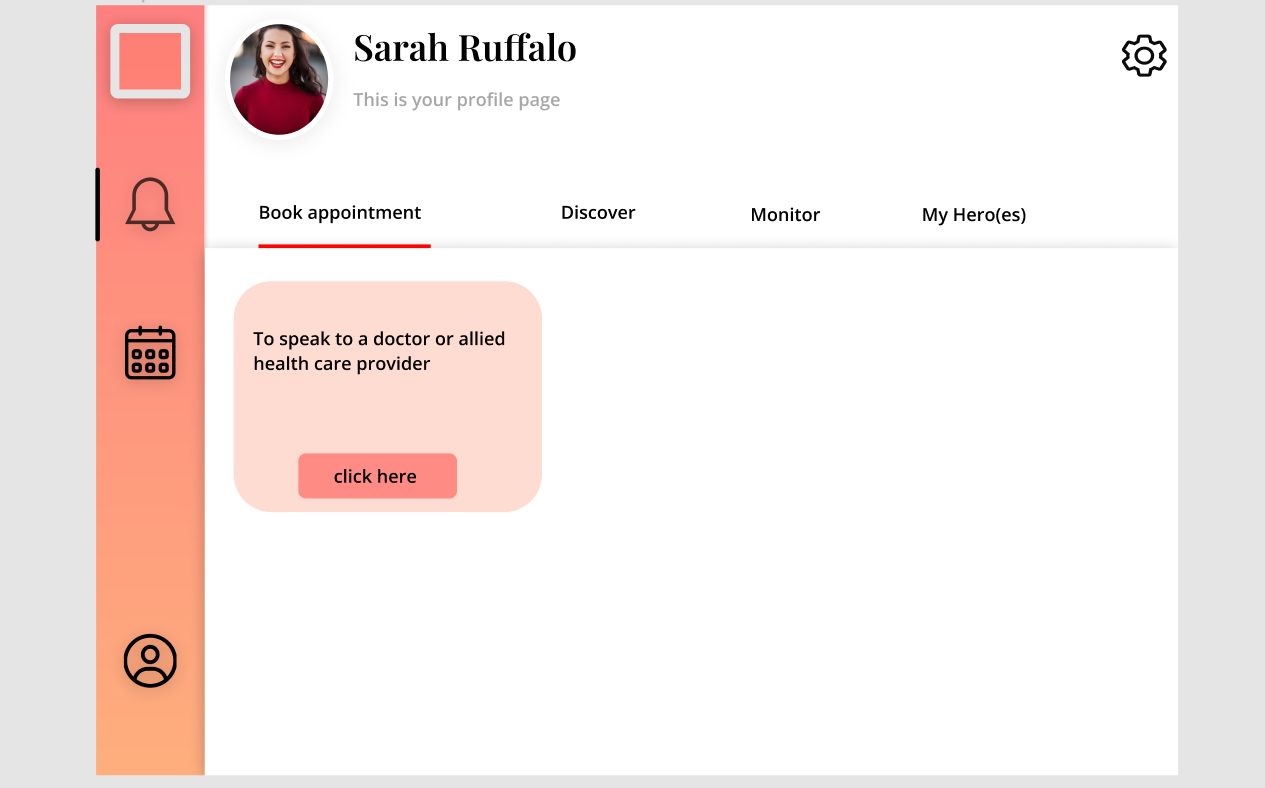
Utilized Figma for designing and prototyping.
Challenges we ran into 🔥
Familiarizing ourselves with Figma to build a complex but easy to use medical record health app.
We had trouble integrating the NLP model part to the frontend and ended up using streamlit to make the backend functional.
Even though we were aware the Machine Learning part would take a significant chunk of our time, we didn't realize just how much it actually did. We also required and were working with all hands on deck which prevented us from other tasks.
With one of our members being a novice programmer and involved with another large scale event commitment taking place at the same time as this event, we were short one team member
Another team member lacking significant experience in Machine Learning and related technologies resulted in a lack of cohesiveness throughout the process.
None of us was familiar with how to use Flask, and only one of us was familiar with REST API’s. We also had several issues integrating with the frontend (connecting API’s, sending post requests, getting data back), and had to figure out an alternative solution by using Streamlit to display images, modify it using functions in Python, and display the new image and extracted keywords. We also had issues deploying the streamlit app, as we kept getting errors.
Accomplishments that we're proud of 💪
We are proud of being able to collaborate and work together despite our overall lack of experience in Machine Learning and differences in previous experiences within the team mates. We are also proud to have built a functional ML app, and make it usable to the user because we spent most of our time getting the NLP to work.
How to run the app Pytesseract For windows: Via https://github.com/UB-Mannheim/tesseract/wiki For mac
Download and install the spacy model: Download en_ner_bionlp13cg_md via https://allenai.github.io/scispacy/ pip install spacy Pip install
What we learned ✍️
. Restoring the health of the patients by streamlining the process and help the doctors provide the best treatment for such specific and rare diseases. (Our app could be used as an assistant (AI assistant?) Or personal record tracker or personal assistant 2. It facilitates universal information sharing, and keeps all the data in one place (some people might get private treatments which don't require the use if a health card, so they can input their info in this central platform for easier, quicker,and efficient process.
What's next for My Heroes ✨
Integrating the machine learning app to the frontend so that the app can have actual users and a smooth, simple UI Design .
To improve the accessibility features of the app.
We would love to see our app to be in the hands of our patiently waiting users as soon as possible! We hope that with its improvements, it helps them provide some peace of mind, and hopefully makes life easy for them.

Log in or sign up for Devpost to join the conversation.