-
-
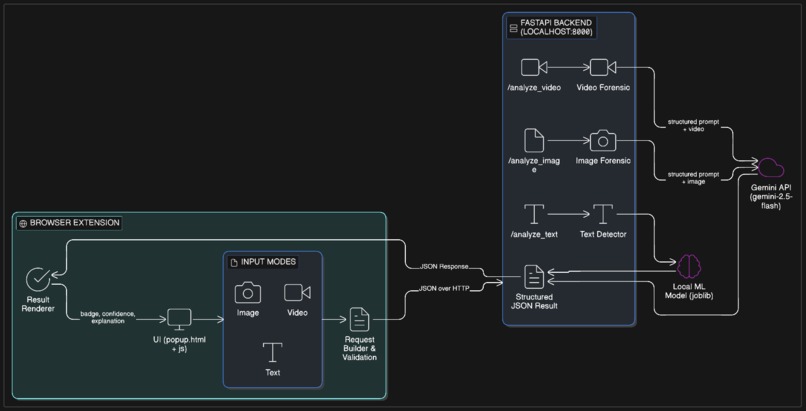
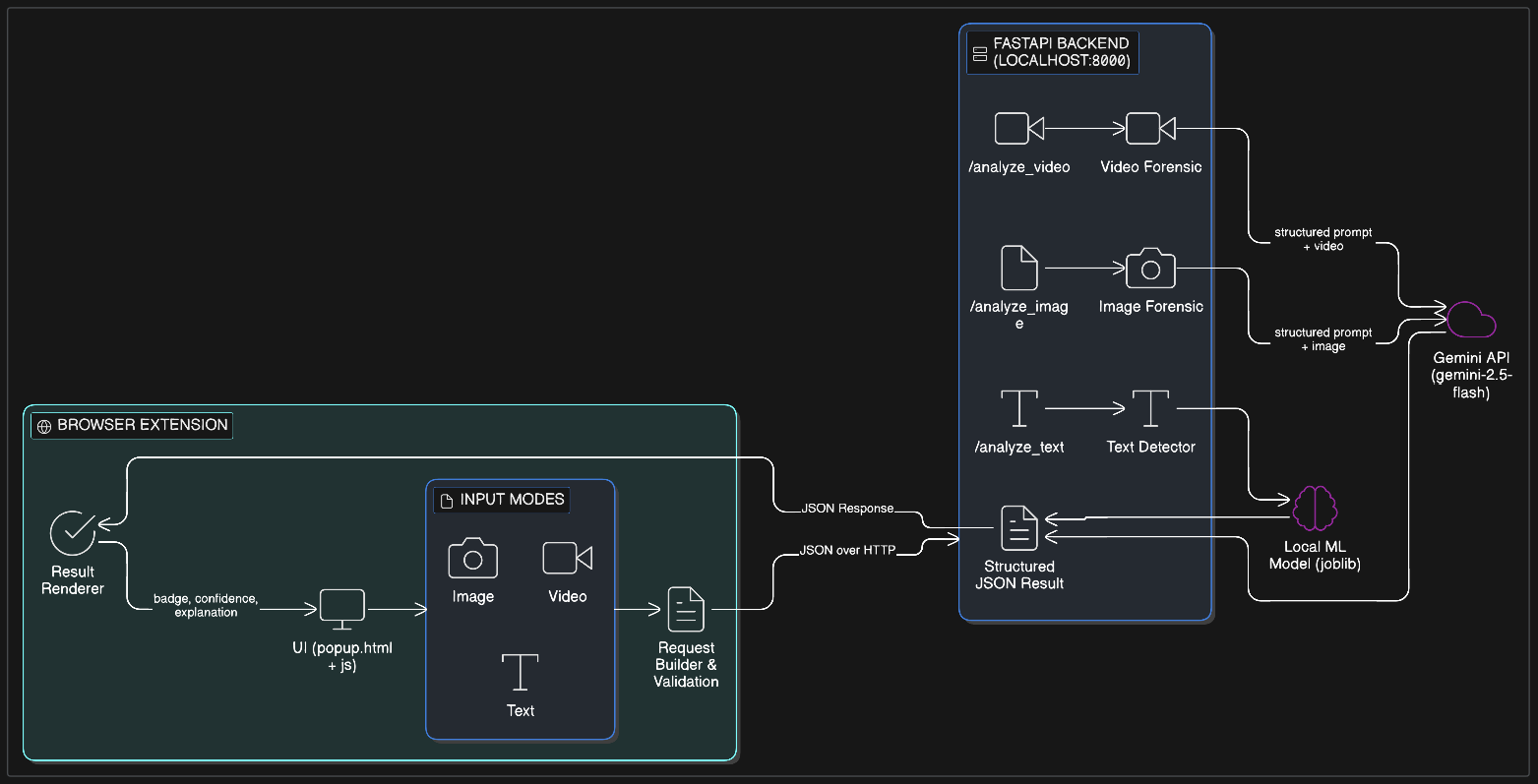
System Architecture
-
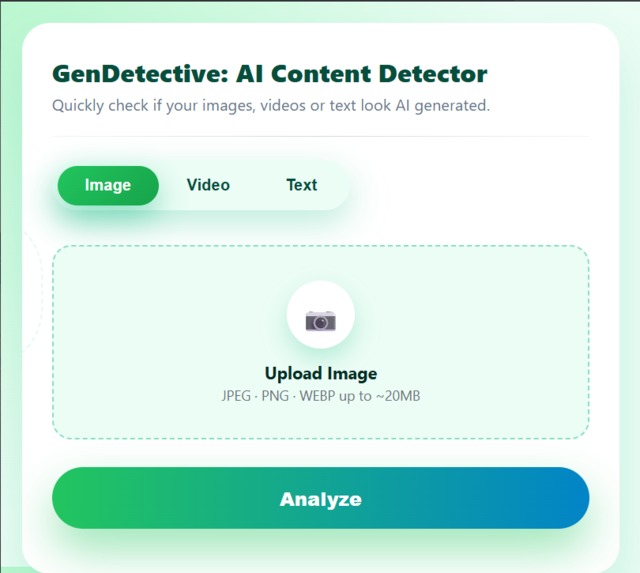
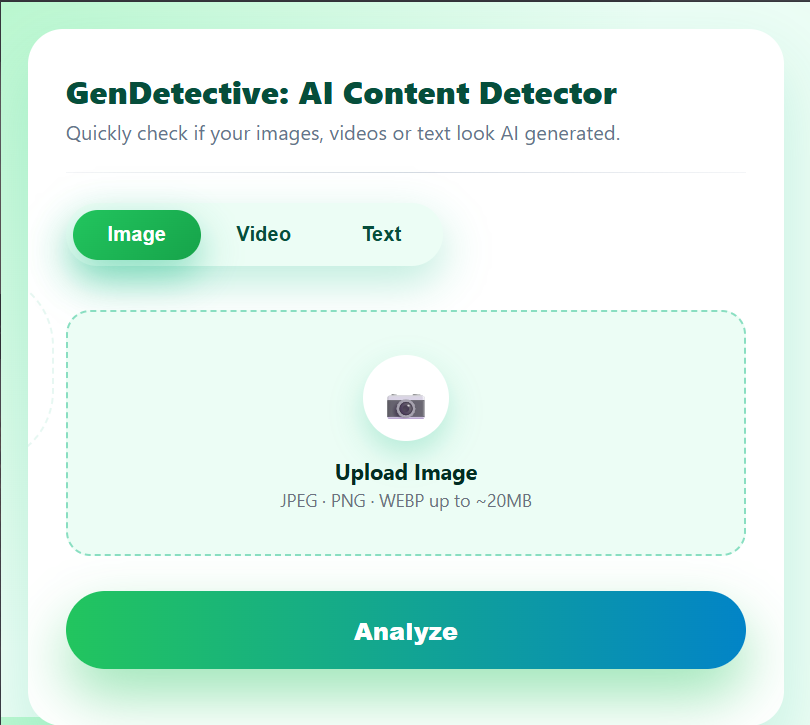
Extension Frontend
-
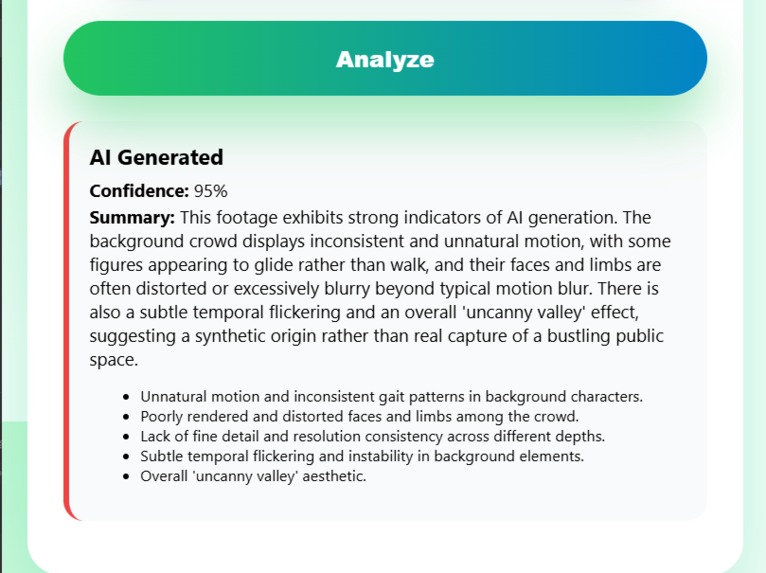
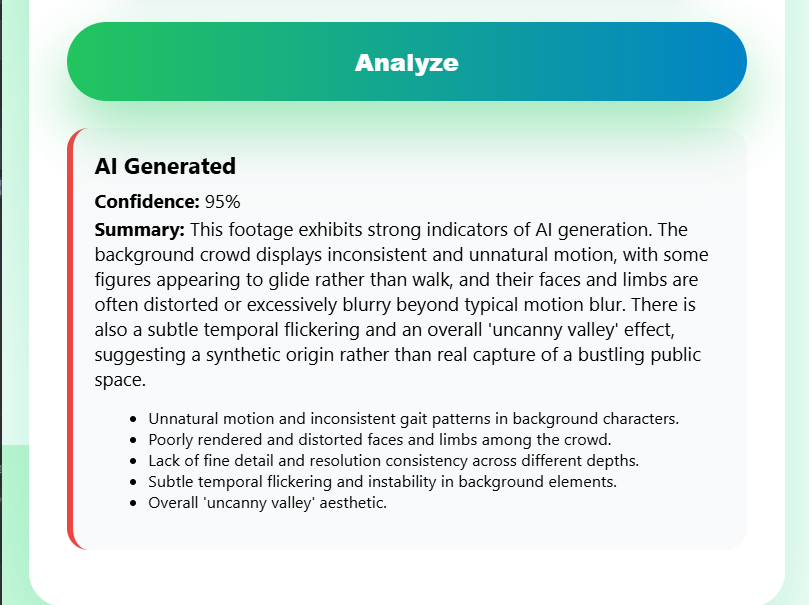
Image output example
-
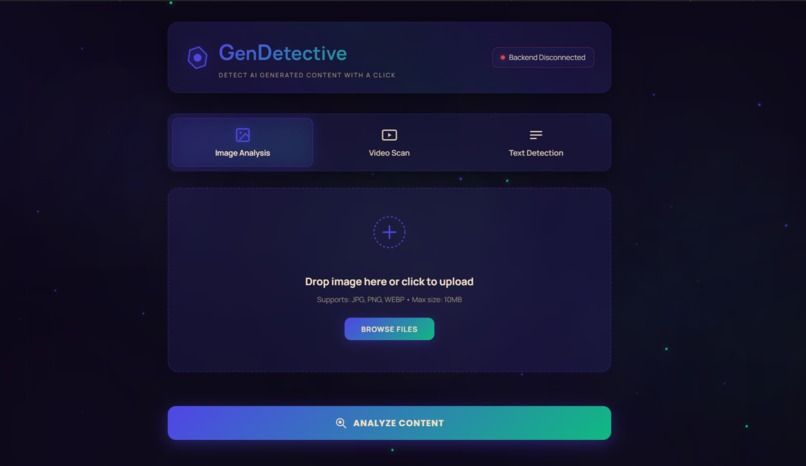
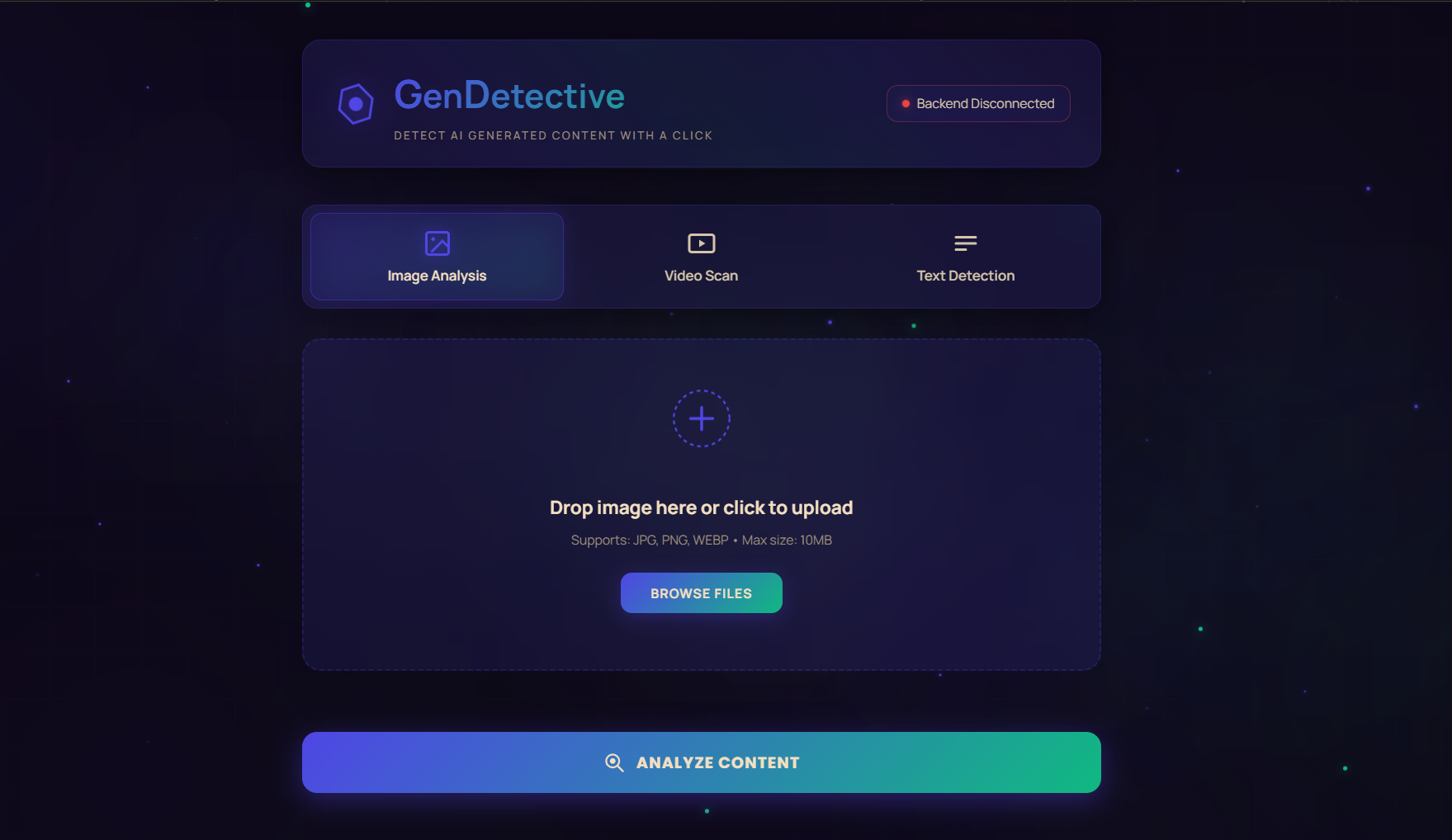
Web Dashboard Extension
Inspiration
The rapid growth of generative AI tools has made it increasingly difficult to distinguish between human-created and AI-generated digital content. Images, videos, and text produced by modern AI models are now widely shared online without disclosure, raising concerns about misinformation, academic integrity, fake news, and digital trust.
This project was inspired by a simple real-world question: “Is the content I am seeing real or AI-generated?”
To address this, we built GenDetective, a multimodal AI-content detection system available as both a Chrome browser extension and a web dashboard.
What it does
GenDetective analyzes images, videos, and text and estimates whether they are AI-generated or human-created.
The system provides:
- Classification (AI-generated, likely AI, likely real, real, inconclusive)
- Confidence score
- Human-readable explanation
- Forensic indicators used in the decision
Users can:
- Upload media through the browser extension
- Use the dashboard interface
- Submit text for analysis
The goal is to make AI detection transparent, explainable, and accessible.
How we built it
GenDetective consists of three main components:
Browser Extension
- HTML
- CSS
- JavaScript
Dashboard Interface
- Image upload and detection
- Video upload and detection
- Text analysis
- Visualization of detection results
FastAPI Backend Technologies used:
- FastAPI
- NumPy
- OpenCV
- Transformers (CLIP)
- Gemini API
- scikit-learn
The system uses an ensemble detection approach combining heuristics, ML models, embeddings, and LLM reasoning.
Challenges we ran into
- Avoiding false positives in compressed media
- Detecting high-quality AI-generated videos
- Handling large video uploads efficiently
- Combining heuristic detection with LLM reasoning
- Maintaining performance inside a browser extension
- Limited API usage constraints
Accomplishments that we're proud of
- Built a working multimodal AI detection system
- Created a Chrome extension connected to a backend
- Built a dashboard interface for detection
- Implemented image, video, and text detection pipelines
- Designed an explainable AI detection workflow
- Integrated CLIP + Gemini + ML models
What we learned
AI-generated content differs from human content in subtle statistical patterns rather than obvious visual artifacts.
- No single feature can reliably detect AI content
- Detection works best by combining multiple weak signals
- Video detection requires temporal analysis
- Browser extensions require performance optimization
What's next for GenDetective: AI Content Detector
- Expand benchmarking datasets
- Improve deepfake video detection accuracy
- Add frame-level voting detection
- Improve motion realism modeling
- Strengthen text detection robustness
- Deploy backend to cloud infrastructure
- Publish the browser extension
- Optimize dashboard UX and performance
Built With
- css
- fastapi
- geminiapi
- git
- github
- html
- javascript
- opencv
- python
- scikit-learn
- scipy
- transformers

Log in or sign up for Devpost to join the conversation.