Inspiration
Women are historically underrepresented in STEM.
What it does
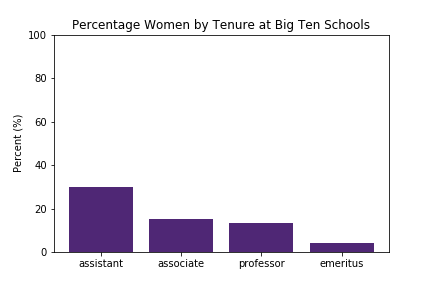
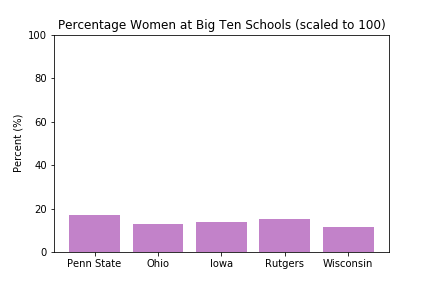
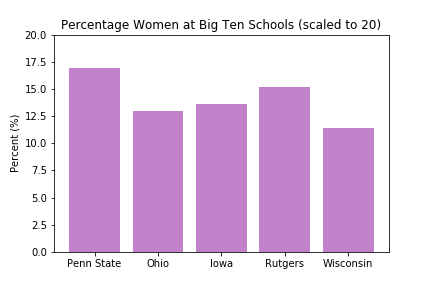
We used a web scraper to search through university websites of Rutgers, Penn, Wisconsin, Iowa, and Ohio to approximate the ratio of female to male physics professors. This allows us to compare the specific topics of physics they specialize in, whether they are a researcher or a theorist, and the status of their professorship (in order to learn whether the ratio of women to men has increased over time). These are visualized with colorful plots!
How we built it
We created dictionaries of female names and male names and we created code on Python to search through the university websites to identify the names of the professors, which is then recognized by the male dictionary or the female dictionary.
Challenges we ran into
The names are not all encompassing. Within the time constraints and the constraints of the project, we did not use an inclusive definition of women. The lists of male and female names were taken from websites on the internet and the profiles of professors listed on the university websites do not definitively inform us of their gender. It was difficult to write code that would correctly identify the name of the professor as well as all of her/his data across all the websites.
Accomplishments that we're proud of
Overcoming code that didn't work and characters on the university websites that are invisible to our eyes. Colorful plots.
What we learned
Women are still underrepresented in STEM but we found that the ratio of men to women decreases from the longest tenure to the Troubleshooting takes a long time.
What's next for Gender Ratios in Professional Physics
We would write this code to be more inclusive. Include where the professors received their education to determine which schools are most inclusive. We would also like to include and compare professors' salaries.


Log in or sign up for Devpost to join the conversation.