-
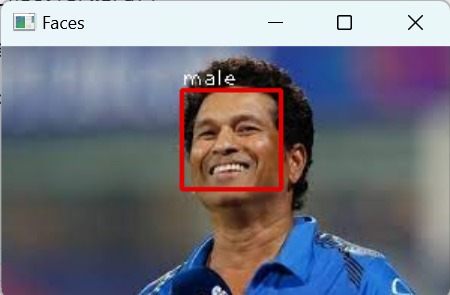
sachin tendulkar
-
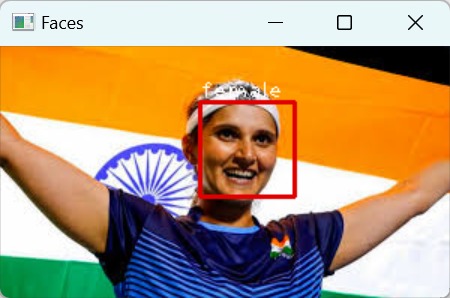
sania mirza
-
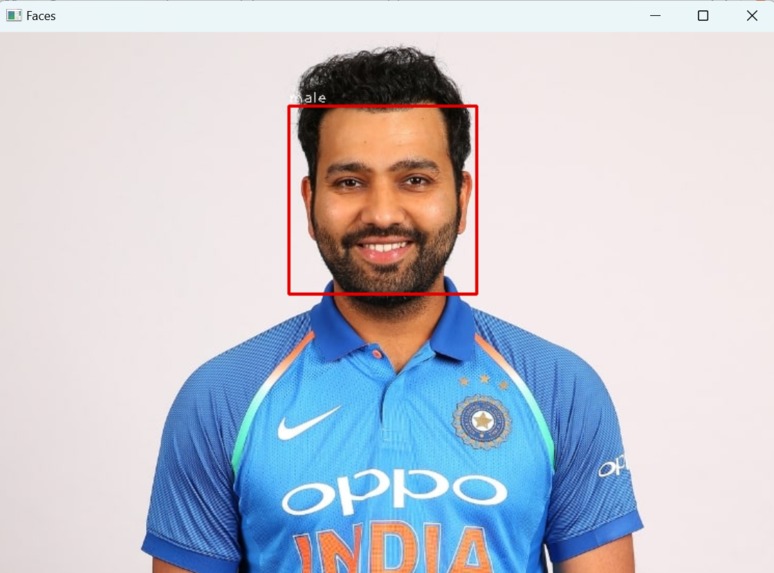
rohit sharma
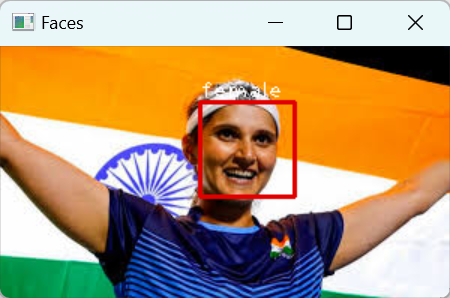
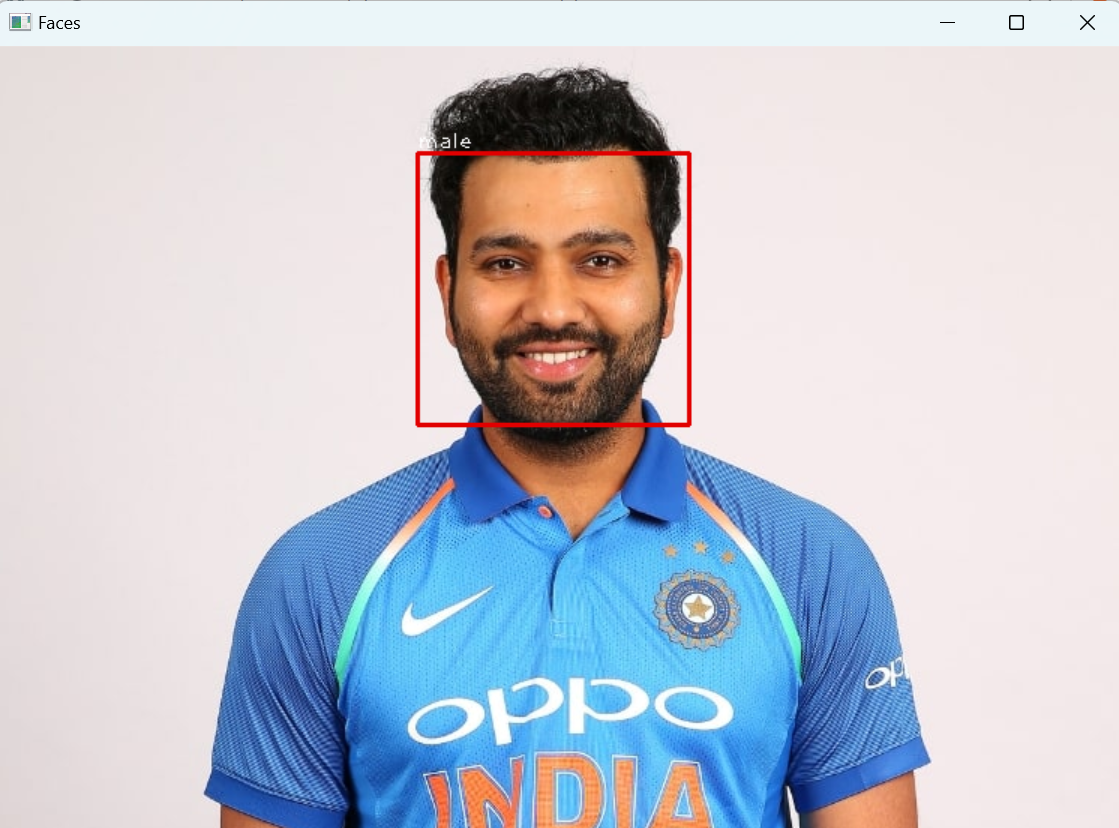
Inspiration: The inspiration for this project stemmed from the increasing importance of understanding demographic information to personalize user experiences and improve business analytics. Gender prediction can offer valuable insights for various applications, such as marketing strategies, user interface customization, and social research. Moreover, the project aimed to explore the capabilities and potential of computer vision technologies, especially OpenCV, in solving real-world problems.
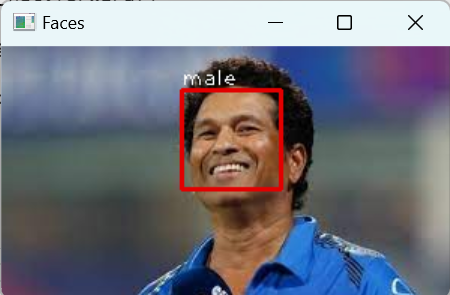
What it does: The Gender Prediction project aims to automatically determine the gender of individuals based on facial images. Utilizing the powerful capabilities of the OpenCV library for computer vision, this project processes images, extracts facial features, and employs a trained machine learning model to predict gender.
How we built it: How I Built the Project:
The project was built using the OpenCV library, leveraging its powerful tools for image processing and analysis. Here’s a step-by-step outline of the development process:
Data Collection : Gathered a diverse dataset of facial images labeled with gender information. Preprocessing : Used OpenCV to preprocess the images, including resizing, normalization, and face detection to focus on relevant features. Feature Extraction : Employed OpenCV techniques to extract features from the detected faces that are critical for gender prediction. Model Training: Selected and trained a machine learning model using the extracted features. Various models were experimented with to find the most accurate one. Evaluation : Tested the model with a separate set of images to evaluate its performance and accuracy. Optimization : Fine-tuned the model parameters and preprocessing steps to enhance prediction accuracy.
Challenges we ran into
Data Quality : Ensuring the dataset was diverse and representative enough to avoid bias in the model was a significant challenge. Feature Extraction : Accurately extracting features that are relevant for gender prediction without being influenced by external factors (e.g., lighting, background) required meticulous tuning. Model Accuracy : Achieving high accuracy was difficult, necessitating multiple iterations of training and validation.
Accomplishments that we're proud of
High Accuracy Rate : One of the accomplishments I am most proud of is achieving a high accuracy rate in gender prediction. Through meticulous preprocessing, feature extraction, and model training, the project consistently delivers reliable predictions.
Real-Time Processing : Successfully optimizing the system for real-time processing is another significant achievement. The model can make quick predictions without noticeable lag, making it practical for real-world applications where speed is crucial.
Diverse Dataset Handling : Effectively handling a diverse dataset and ensuring the model’s accuracy across various demographic groups was a challenging but rewarding accomplishment. This ensures the model is robust and can be used in a wide range of scenarios.
Comprehensive Learning : The project facilitated a comprehensive learning experience, from understanding the fundamentals of computer vision to applying advanced machine learning techniques. This hands-on experience deepened my knowledge and skills in these areas.
Practical Application Potential : Developing a tool with tangible applications in marketing, user experience enhancement, and demographic analysis is an accomplishment that underscores the practical relevance and impact of the project.
What I learned:
Computer Vision : Understanding how computer vision works and how it can be applied to identify and differentiate facial features. Machine Learning : Learning the basics of machine learning models, particularly those used in image recognition and classification tasks. OpenCV : Mastering the functionalities of OpenCV, including image processing, face detection, and feature extraction. Model Training : Comprehending the intricacies of training models, validating their accuracy, and fine-tuning them for better performance.
What's next for Gender Prediction
- Model Improvement Advanced Algorithms : Experiment with more sophisticated machine learning algorithms and deep learning models, such as convolutional neural networks (CNNs), to improve accuracy and robustness. Transfer Learning : Utilize pre-trained models on larger datasets to enhance the model's performance without extensive computational resources.
- Dataset Expansion Diverse and Inclusive Data : Collect a more extensive and diverse dataset to ensure the model is inclusive and performs well across different ages, ethnicities, and lighting conditions. Synthetic Data : Generate synthetic data to augment the existing dataset, enhancing the model's ability to generalize to new, unseen data.
- Feature Enhancement Additional Features : Incorporate additional features like skin tone, hair color, and accessories (e.g., glasses, hats) to refine predictions. Emotion and Expression Analysis : Analyze how different facial expressions and emotions might impact gender prediction accuracy.
- Deployment and Integration Real-World Applications : Develop APIs and integration tools to allow easy deployment of the gender prediction model into various applications, such as websites and mobile apps. Edge Computing : Optimize the model for edge devices to enable on-device gender prediction, enhancing privacy and reducing latency.
Built With
- jupyter
- opencv
- python
- scikit-learn

