-
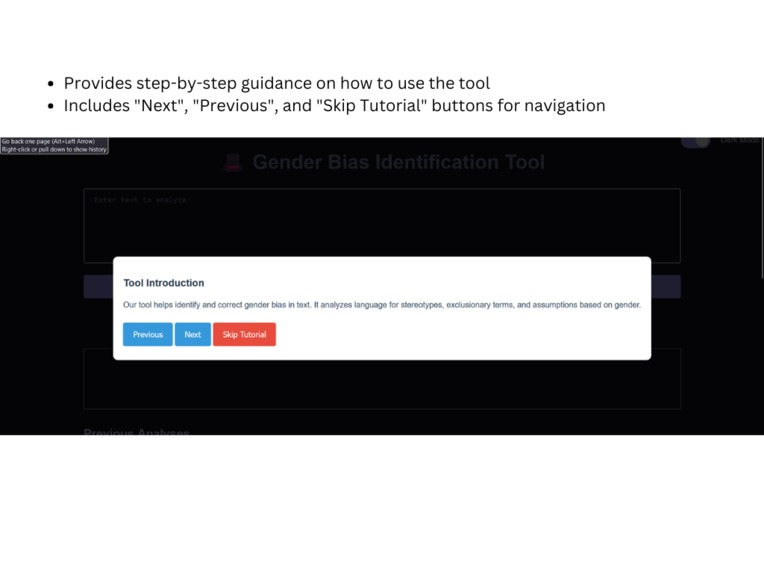
Tutorial Overlay: "Interactive User Guide"
-
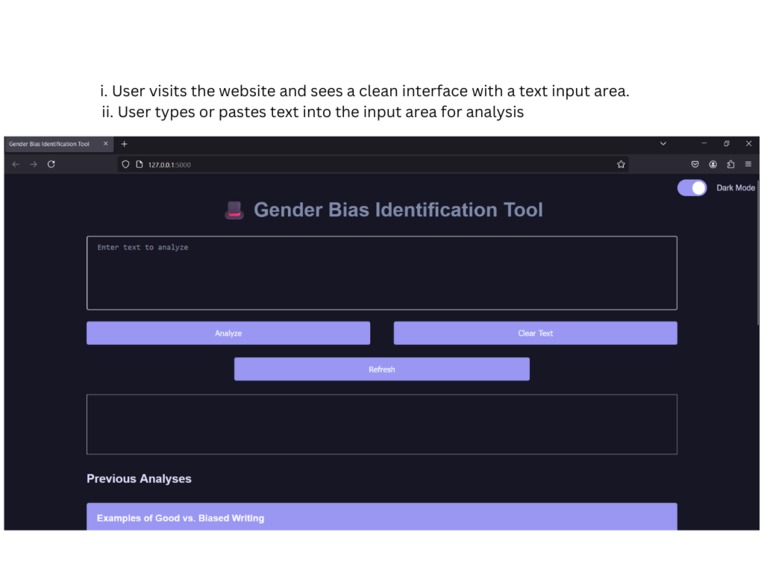
Main Interface: "Gender Bias Analyzer Dashboard"
-
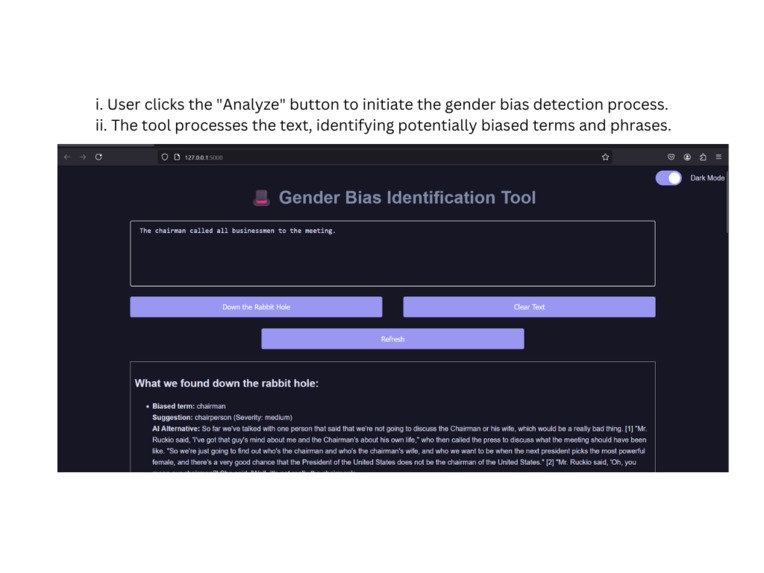
Analysis Results: "Bias Detection Results and Suggestions"
-
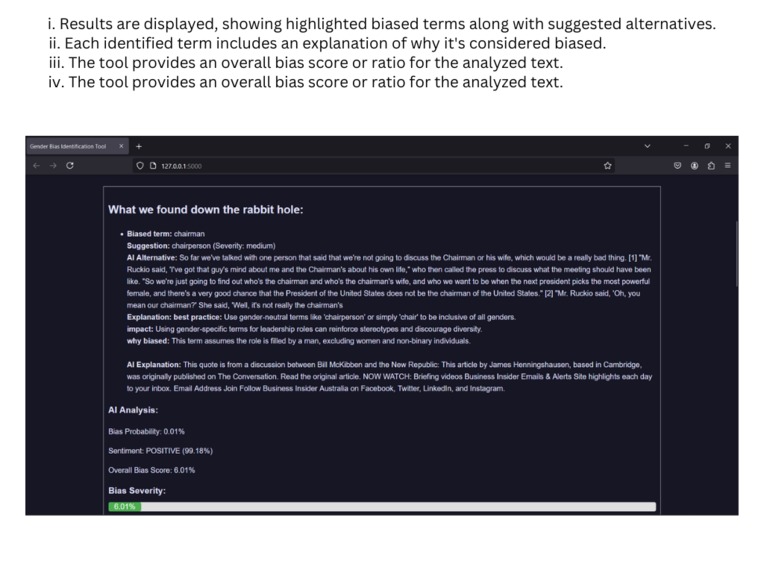
Analysis Results: "Bias Detection Results and Suggestions"
-
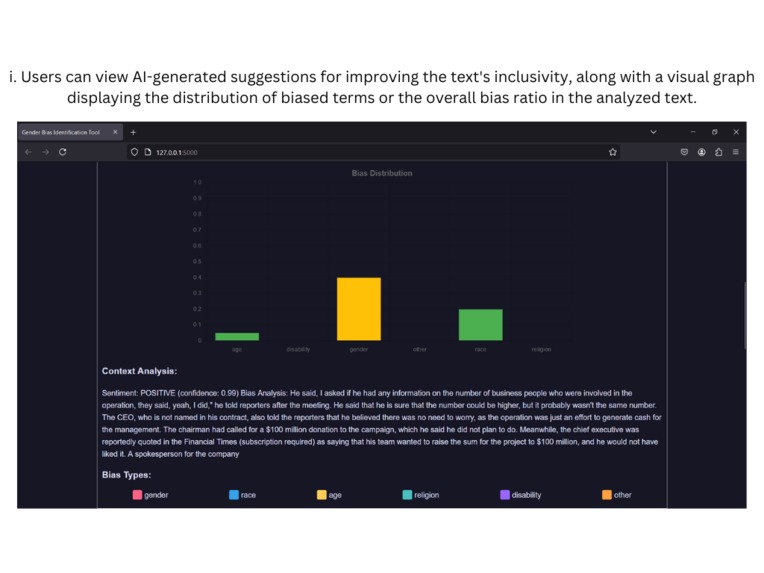
Analysis Results: "Bias Detection Results and Suggestions"
-
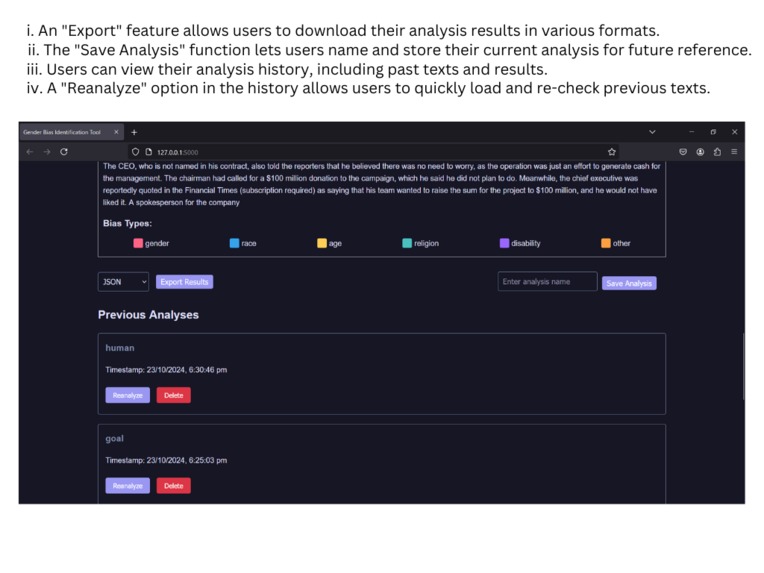
Export Options: "Analysis Export Menu" Save Analysis: "Save and Name Analysis" Analysis History: "Previous Analyses Archive"
-
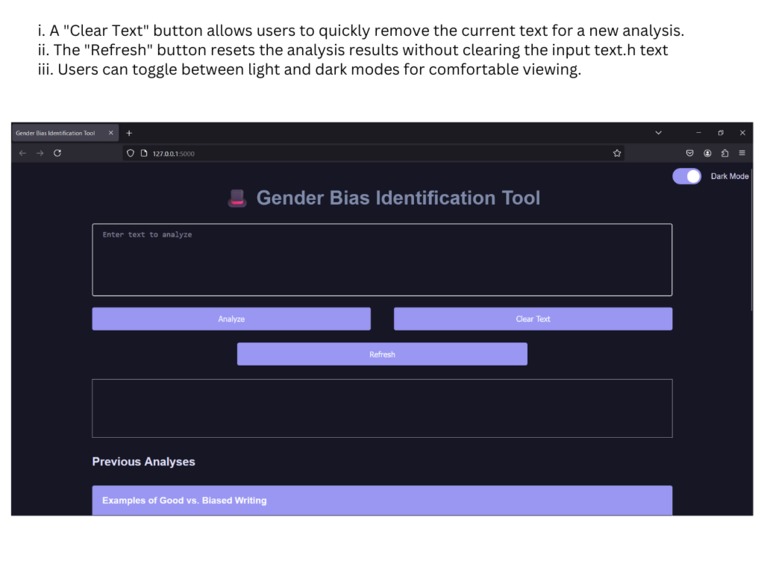
Dark Mode View: "Night Mode Interface"
-
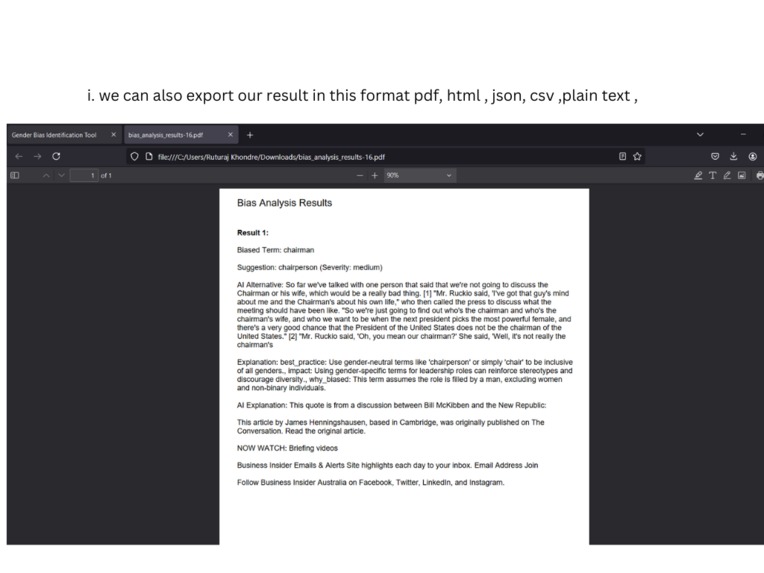
Exporting Results


Inspiration
The persistent issue of gender bias in language inspired us to create this tool. We recognized the need for a solution that could help writers, professionals, and everyday communicators identify and correct gender-biased language, promoting more inclusive communication.
What we learned
Through this project, we gained valuable insights into:
- Natural Language Processing (NLP) techniques
- The complexities of identifying gender bias in language
- Ethical considerations in AI-assisted text analysis
- Integrating rule-based systems with AI models
How we built it
We developed our Gender Bias Identification Tool using a combination of technologies:
- Backend: Python with Flask framework
- AI Integration: Hugging Face Transformers for text generation and classification
- Frontend: HTML, CSS, and JavaScript for a user-friendly interface
- Version Control: Git and GitHub for collaborative development
Our approach combined rule-based detection with AI-powered analysis to provide comprehensive and context-aware suggestions.
Challenges we faced
- Balancing Accuracy and Context: Ensuring our tool could accurately identify bias while understanding context was a significant challenge.
- AI Bias: Mitigating potential biases in the AI models themselves required careful consideration and testing.
- Performance Optimization: Balancing the depth of analysis with response time to ensure a smooth user experience.
- Ethical Considerations: Navigating the ethical implications of AI-assisted language correction and ensuring user privacy.
Despite these challenges, we're proud of creating a tool that can make a real difference in promoting inclusive language.

Log in or sign up for Devpost to join the conversation.