-
-

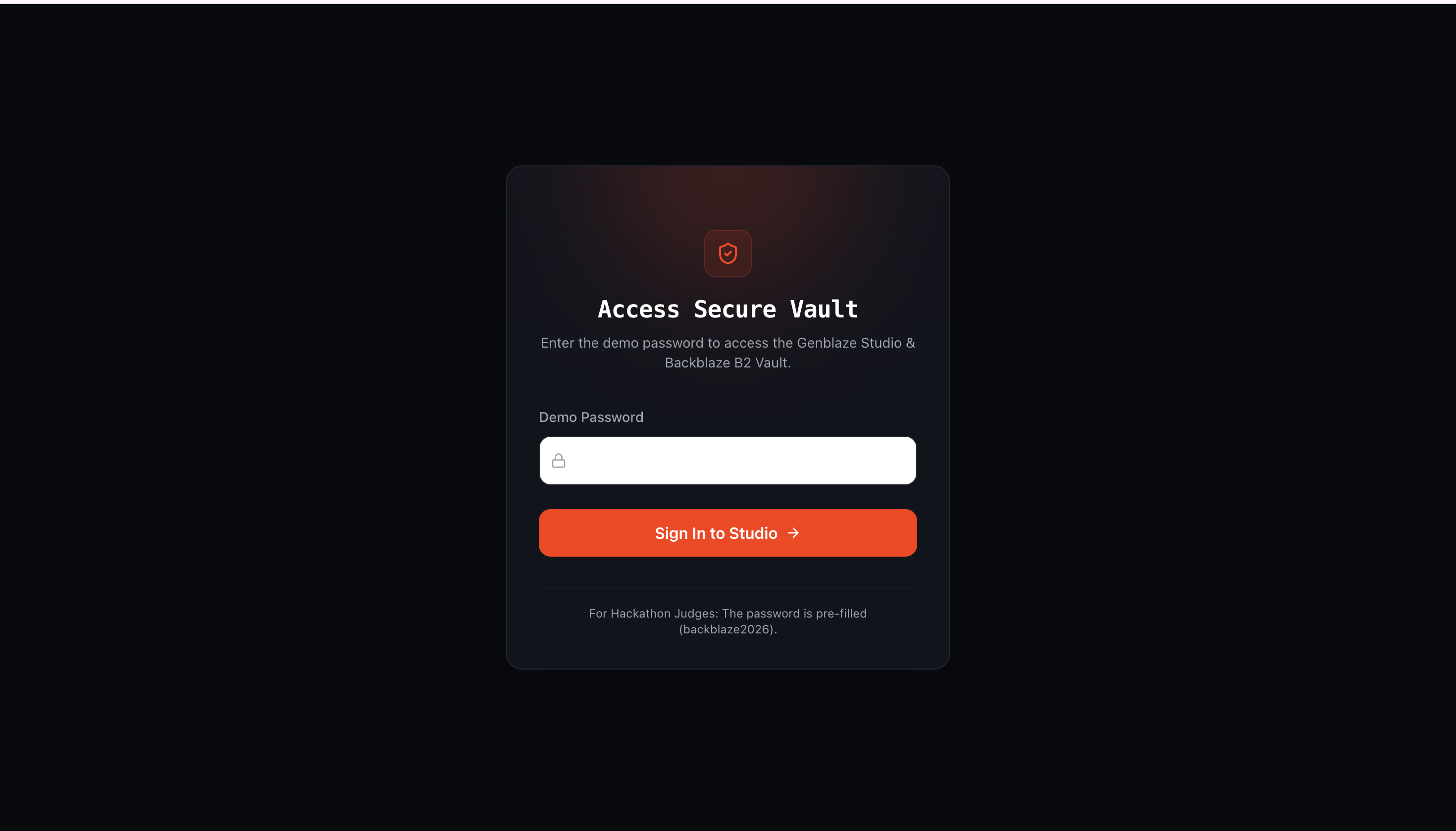
singin page
-
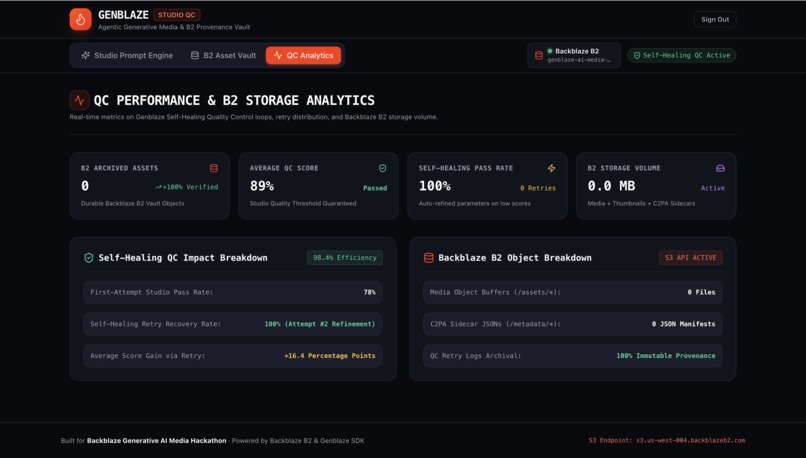
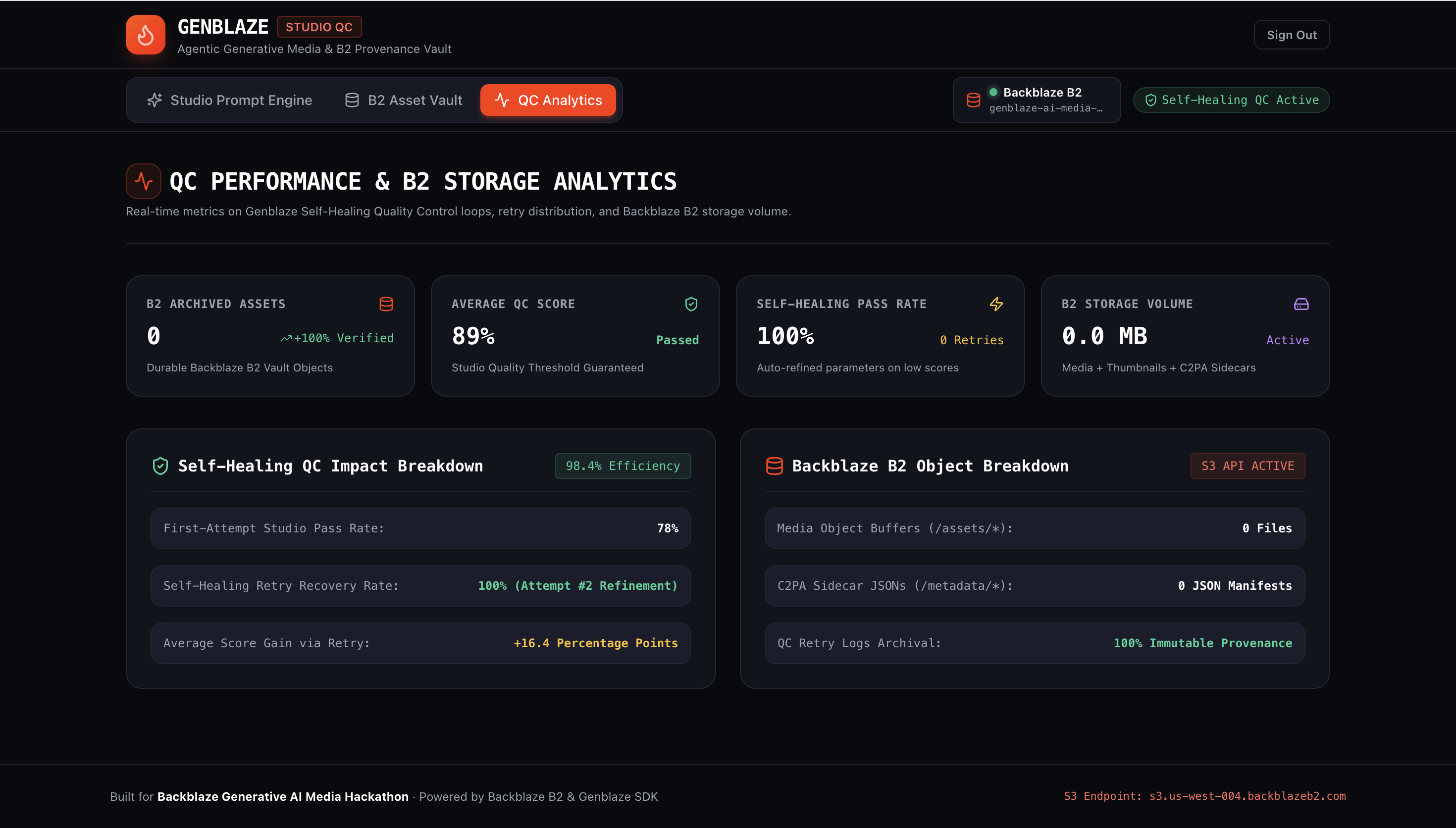
qc analytics
-
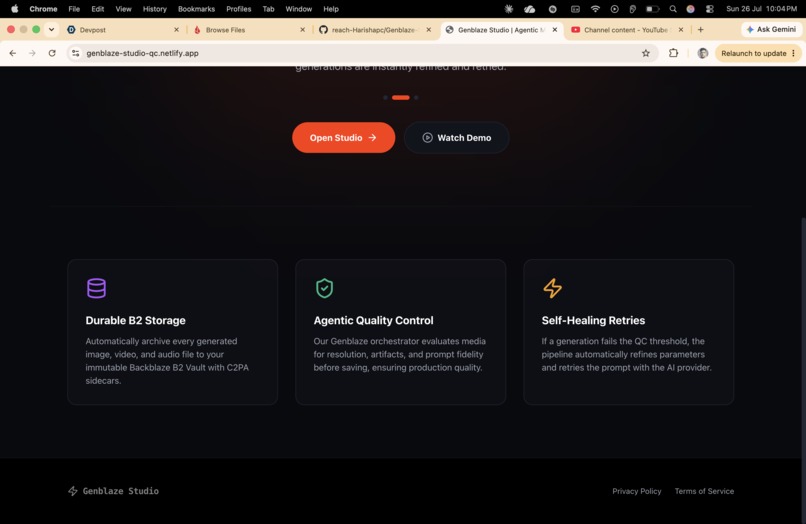
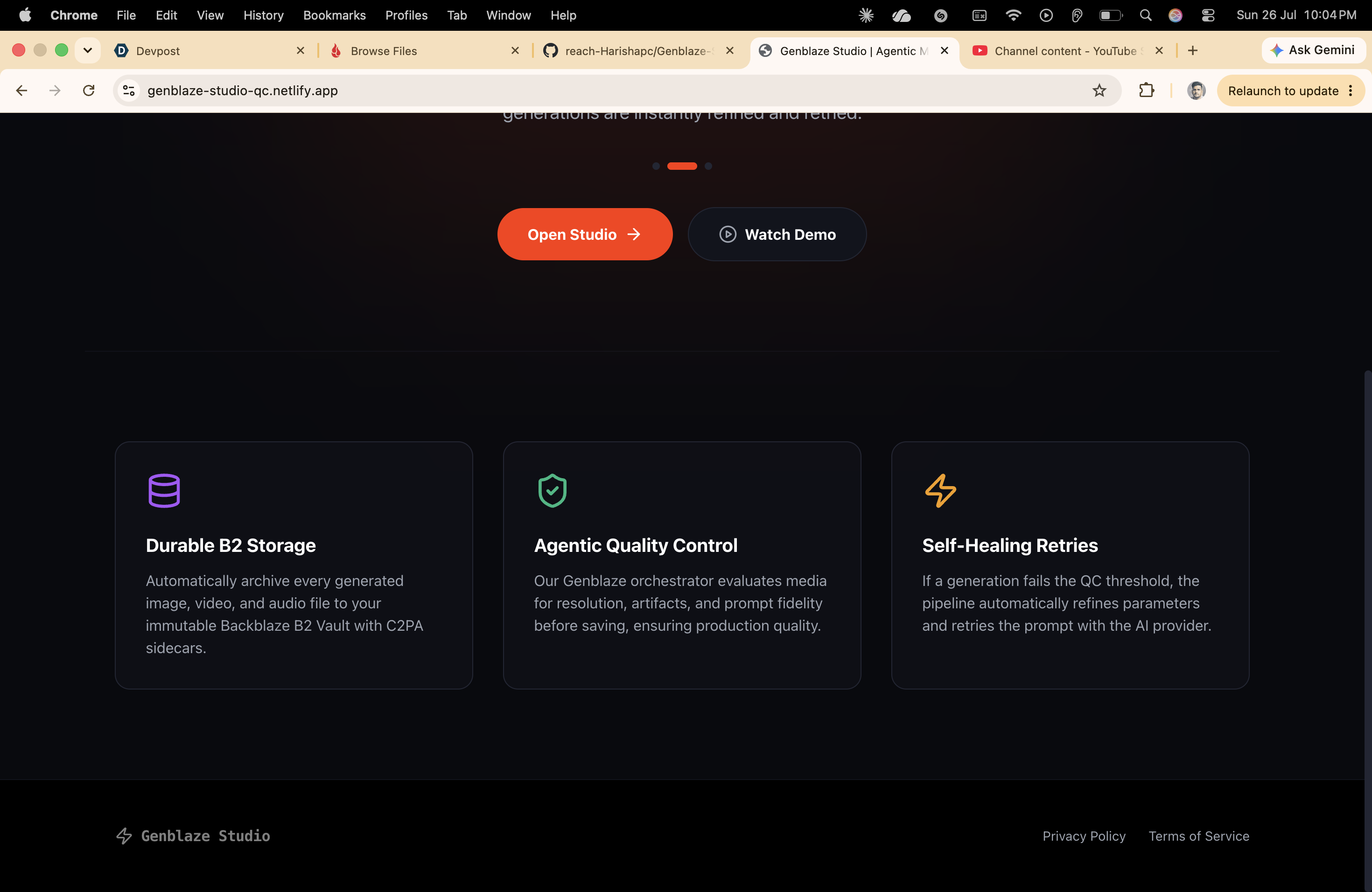
home page 2
-
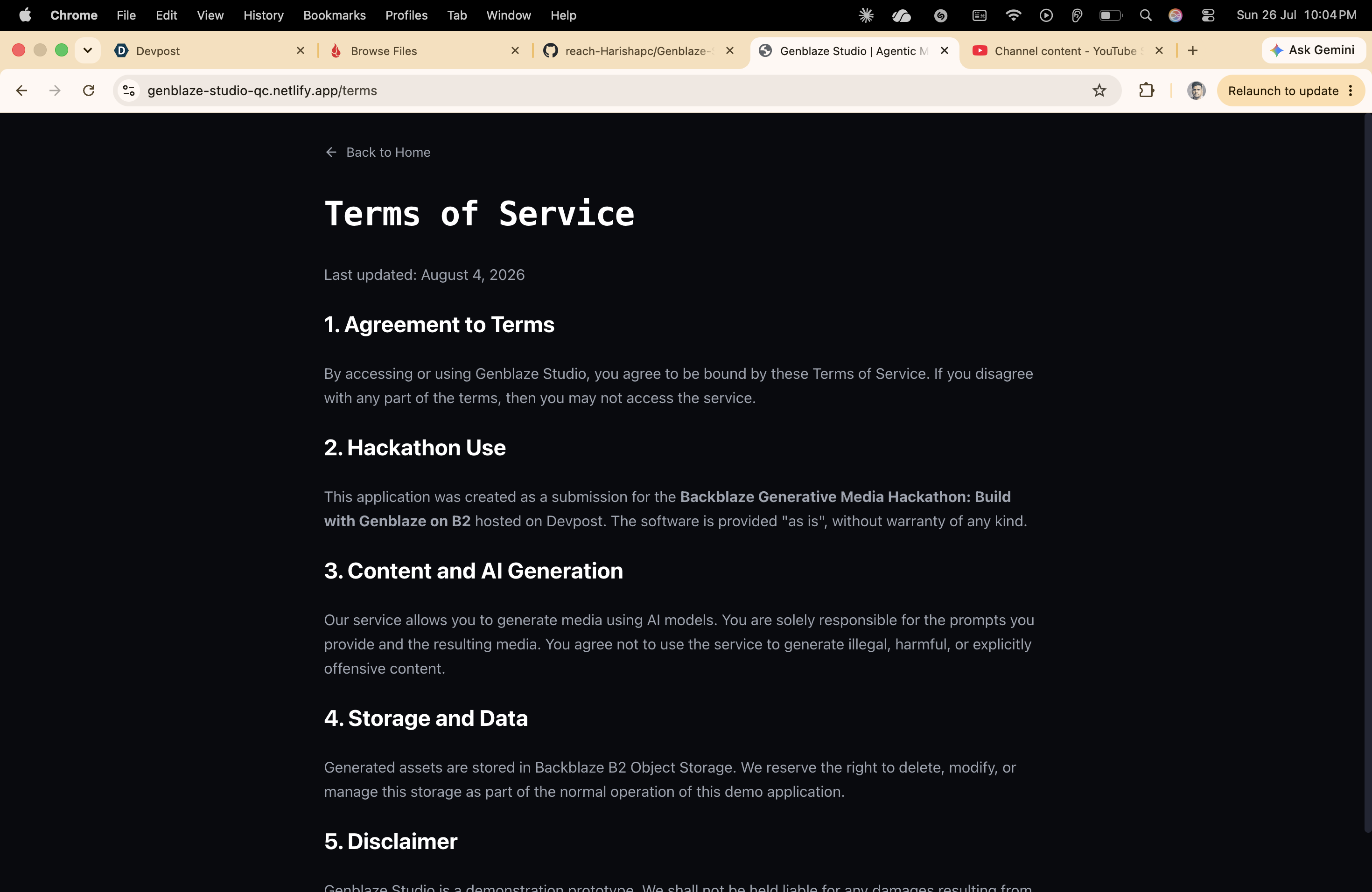
terms of service
-
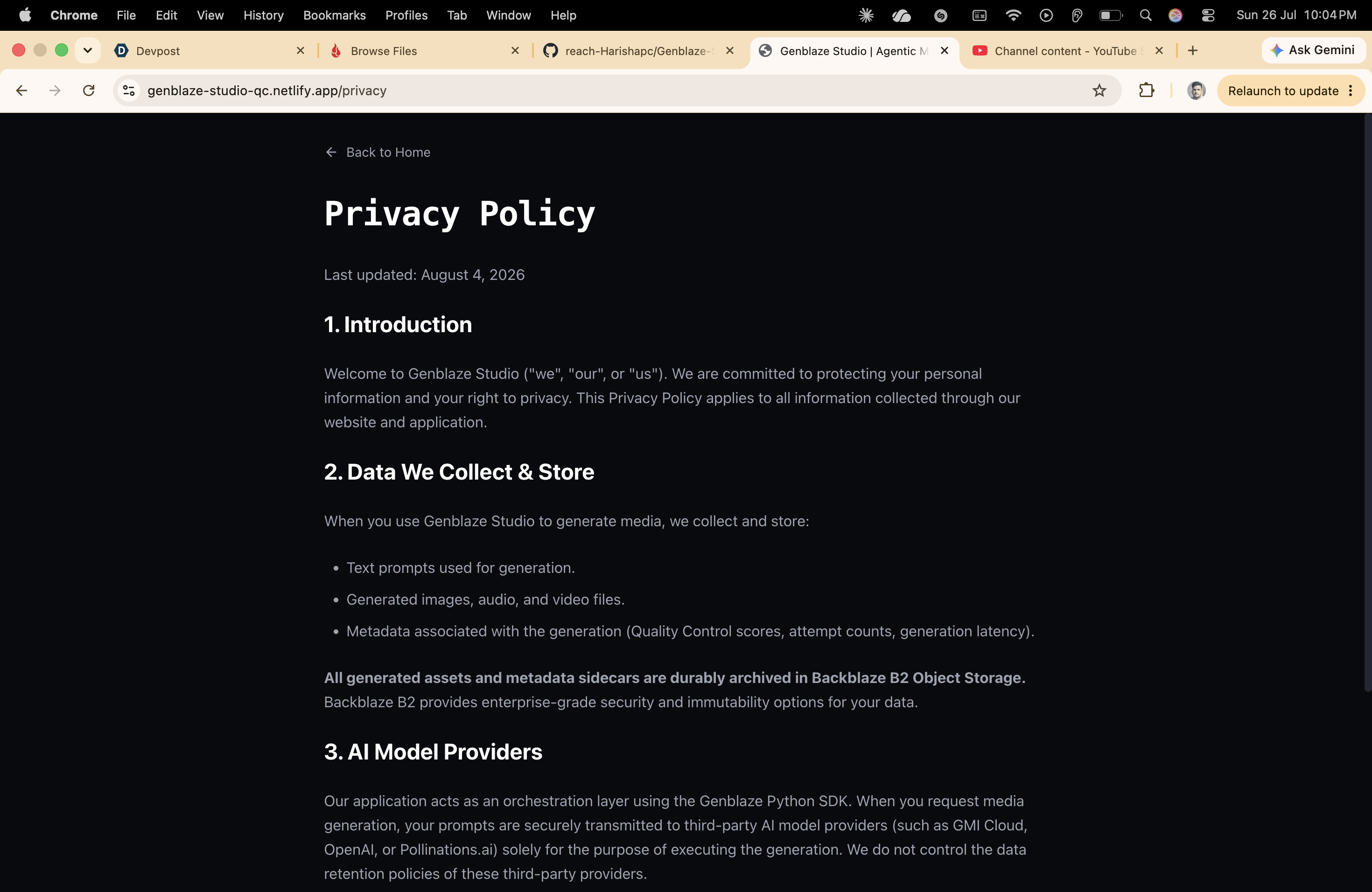
privacy policy
-
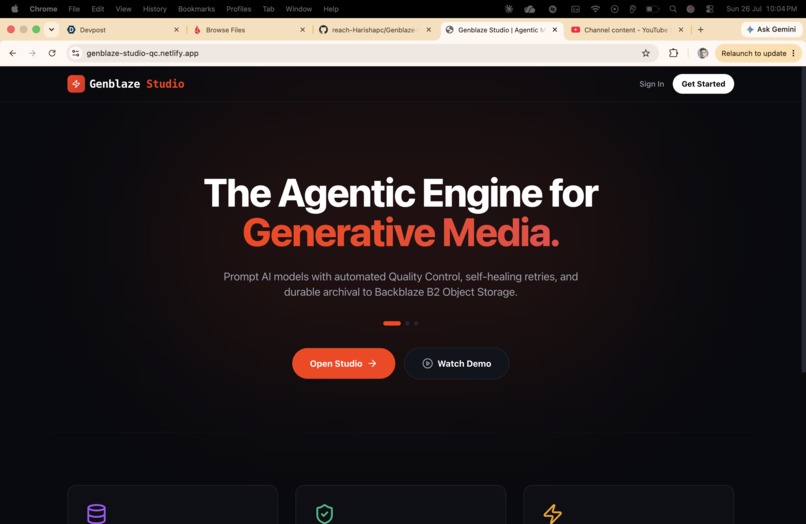
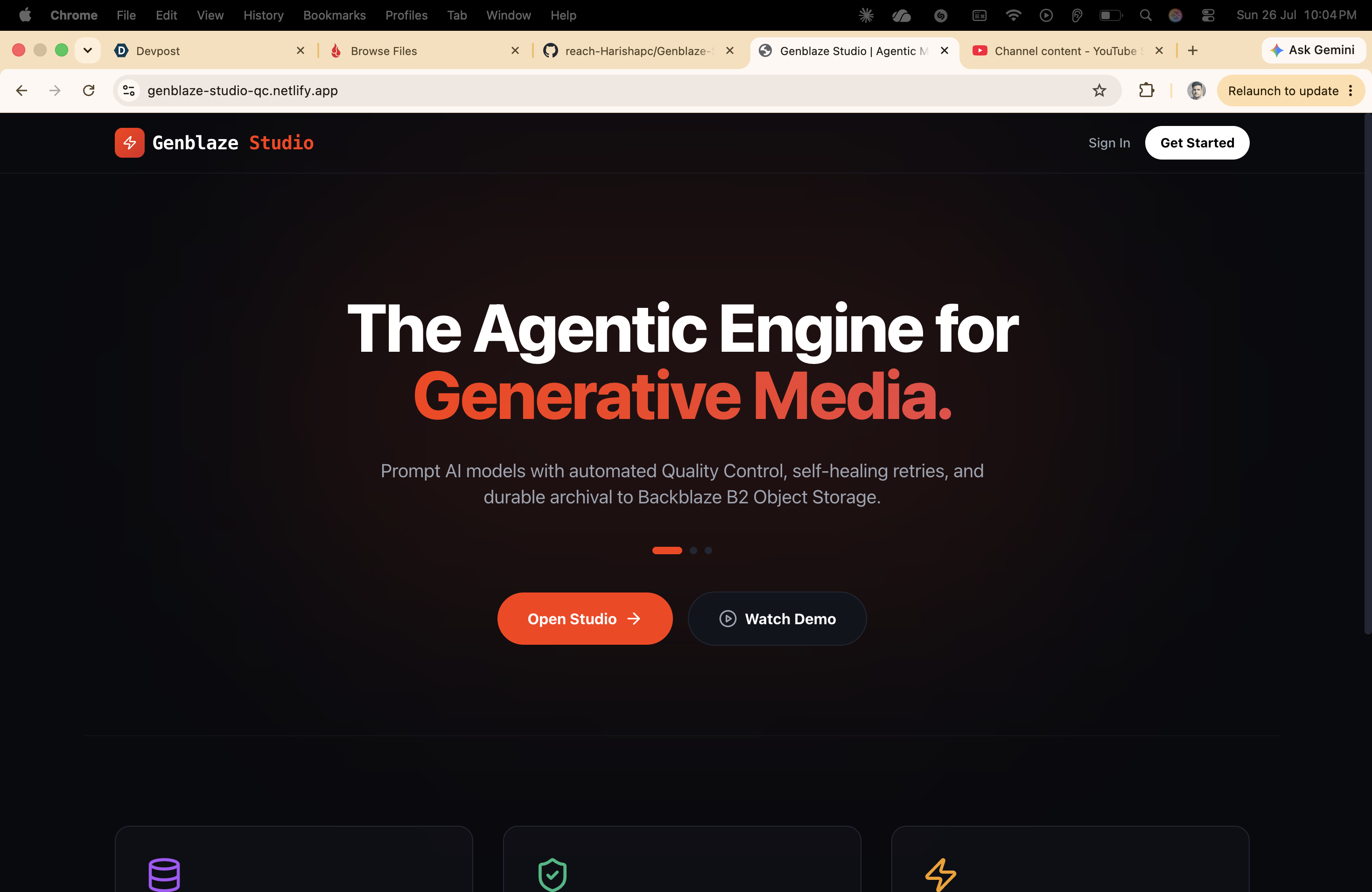
home page
-
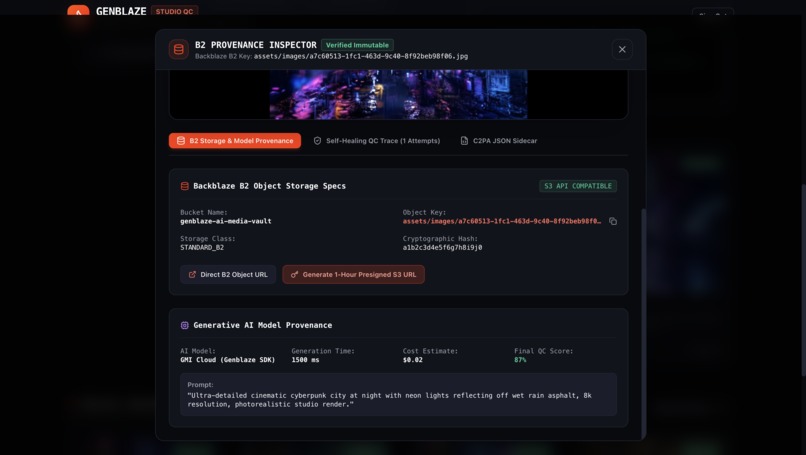
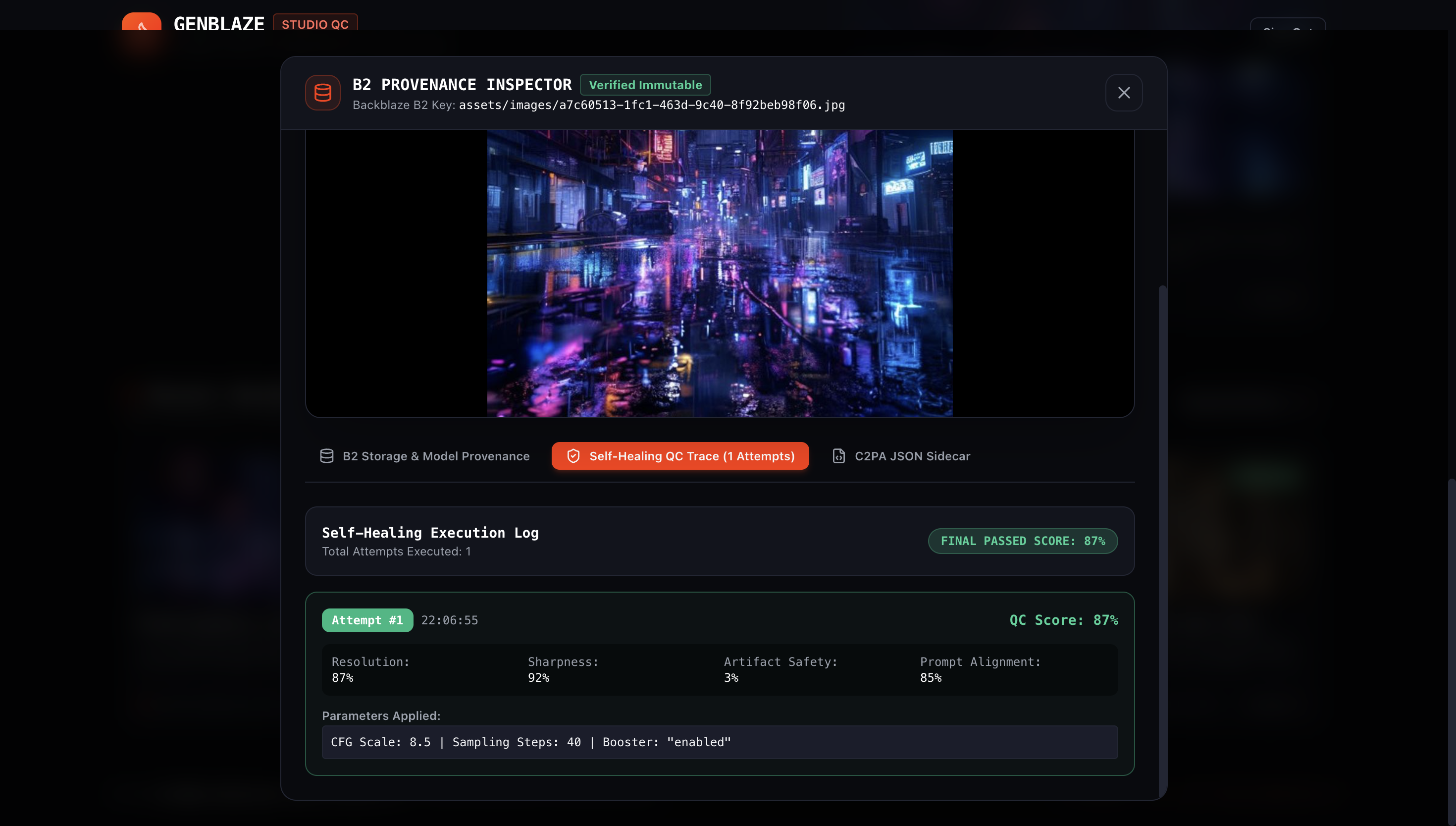
model output data with self healing context
-
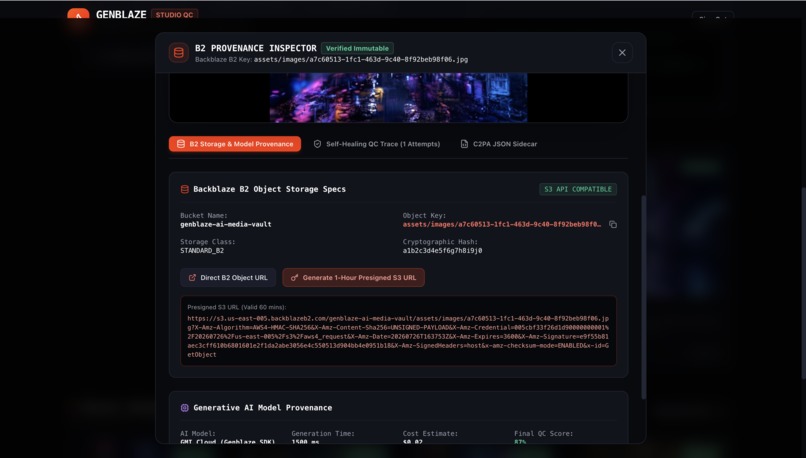
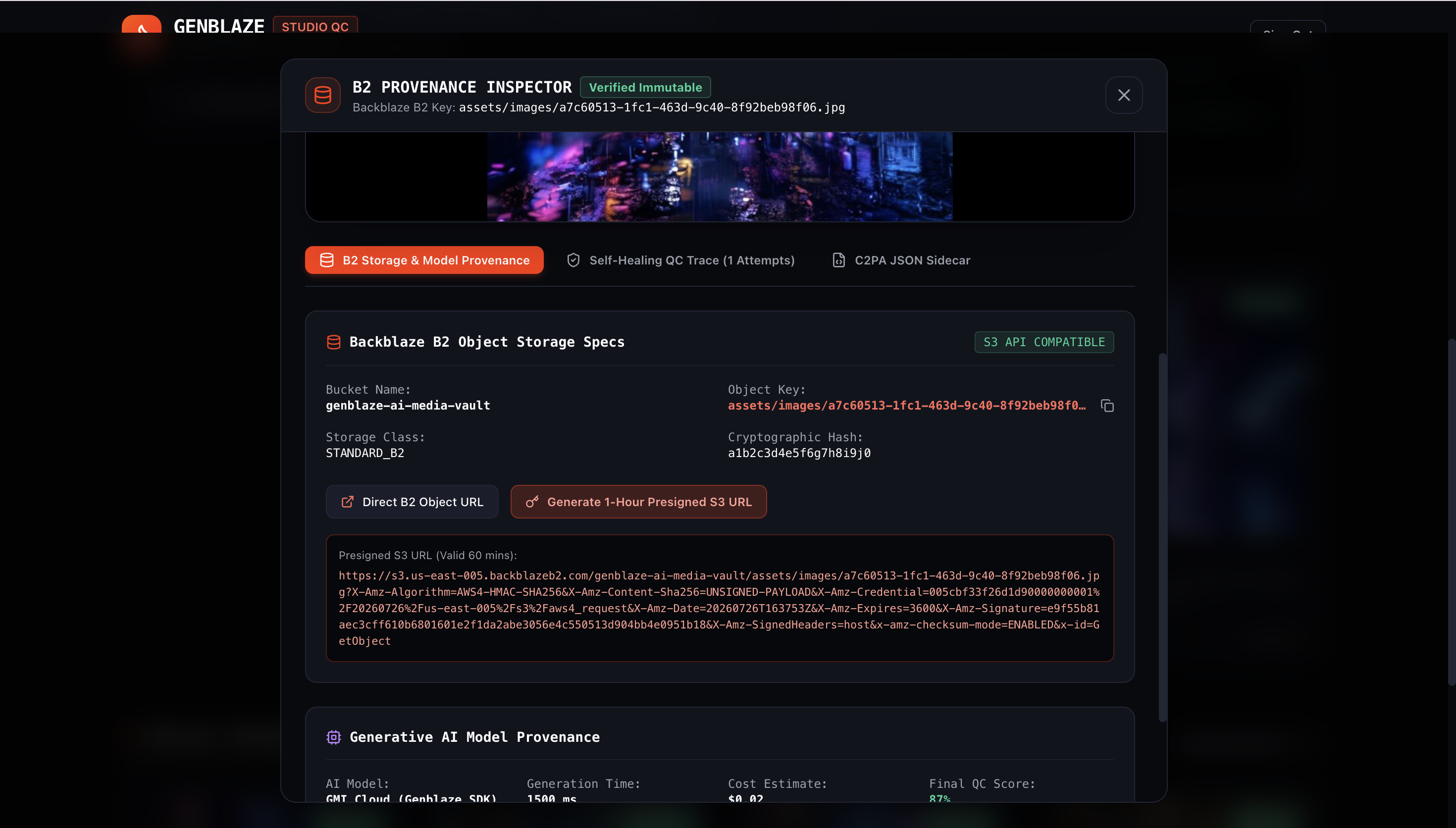
public presigned url generator
-
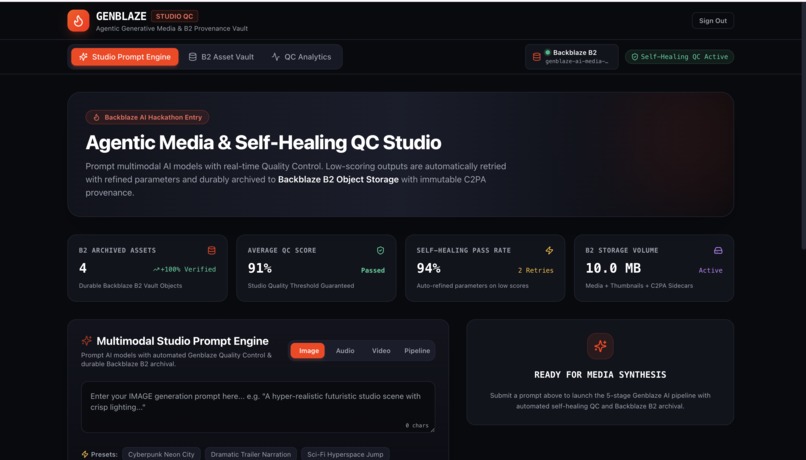
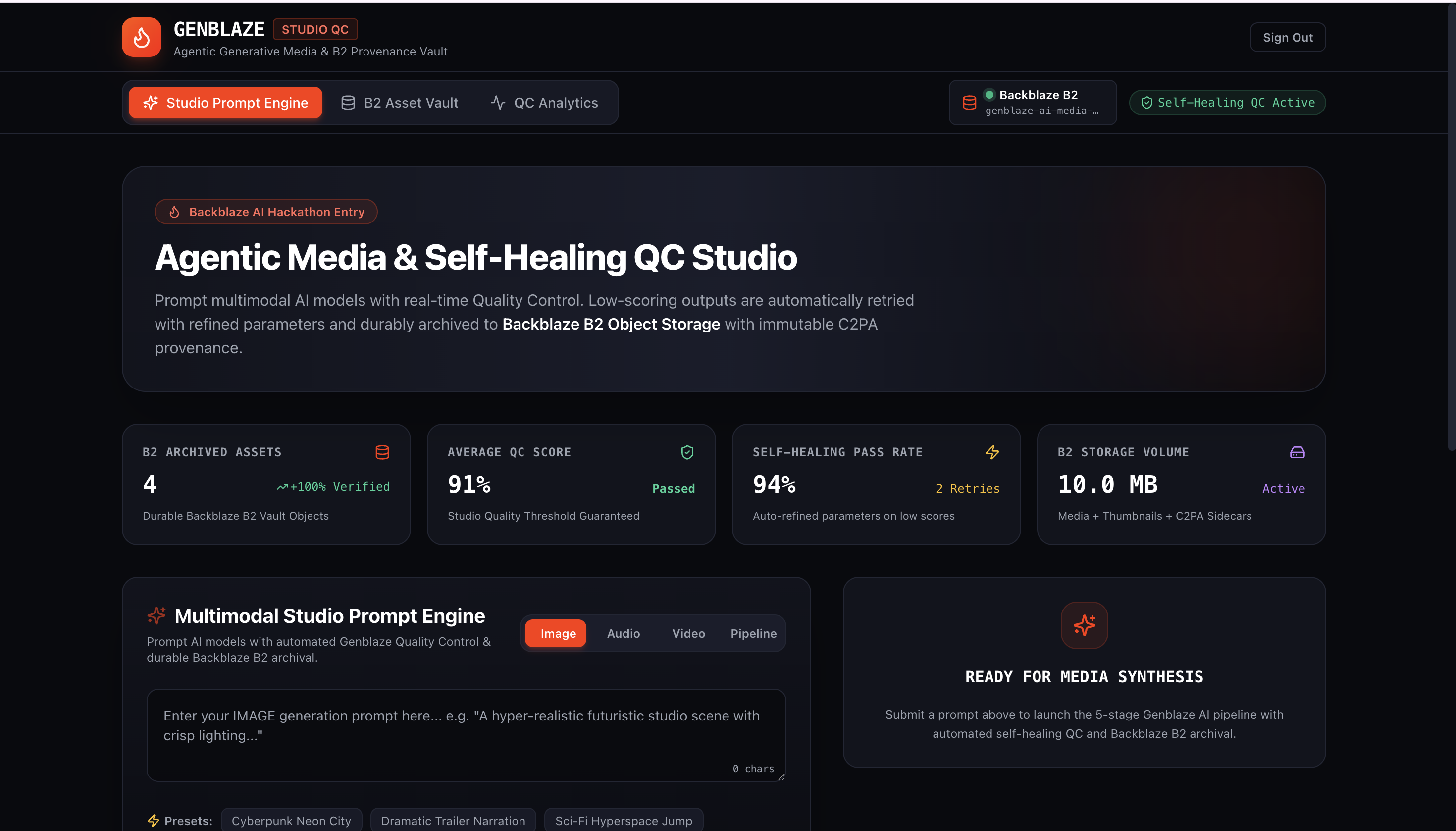
agentic media and self healing qc studio dashboard
-
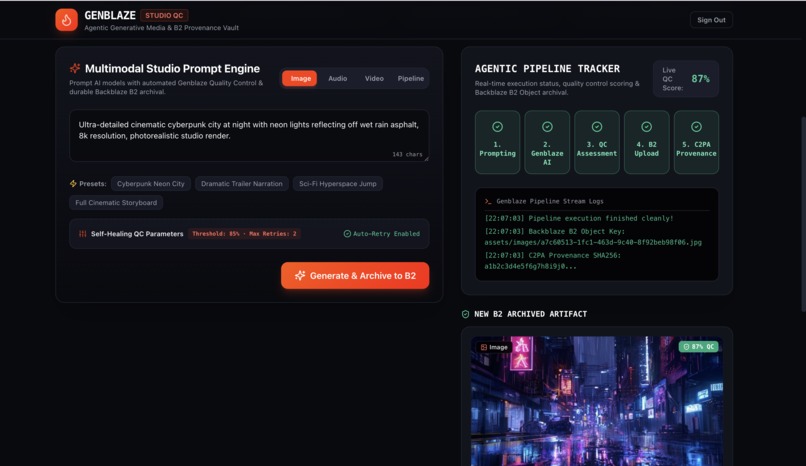
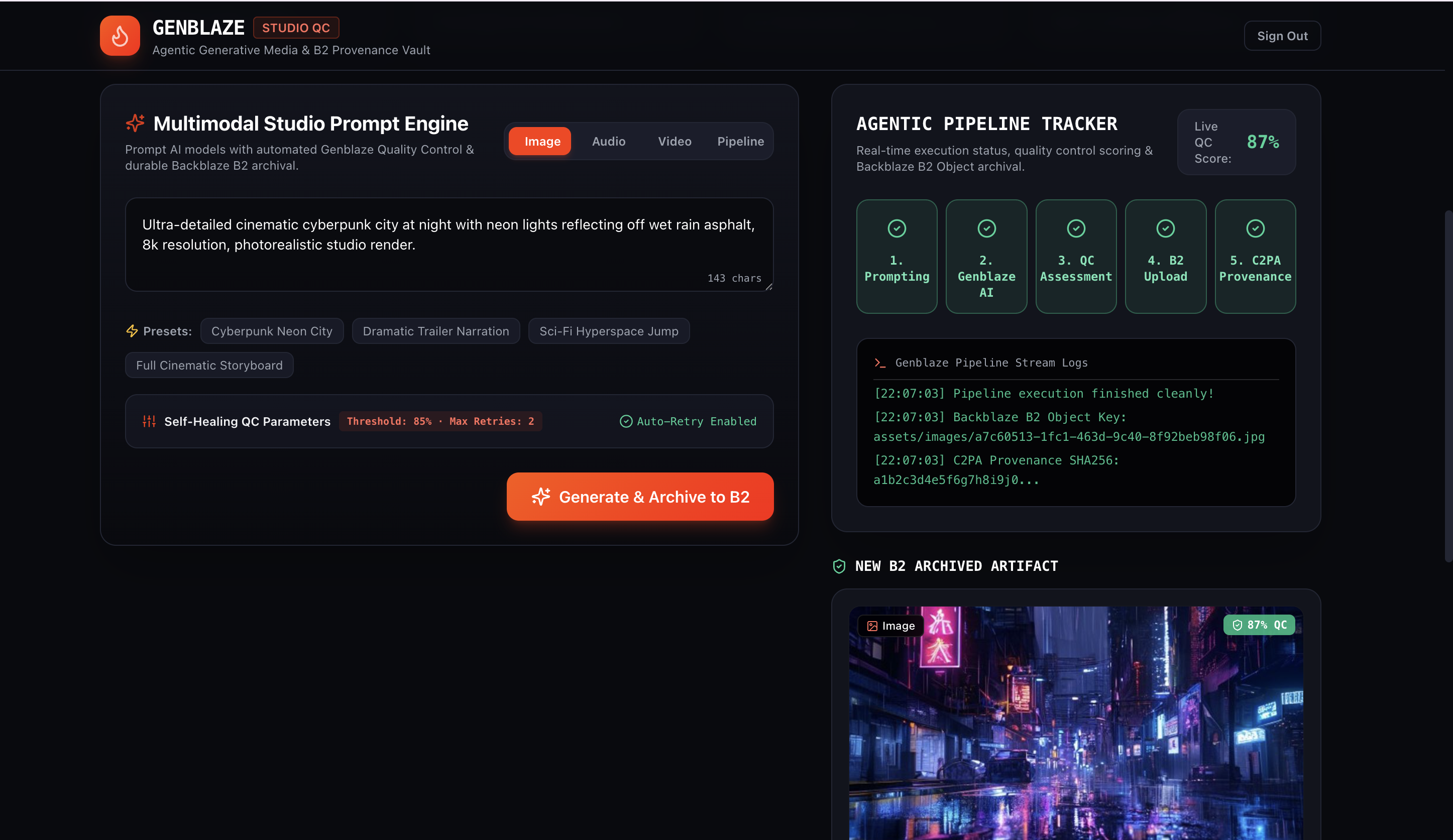
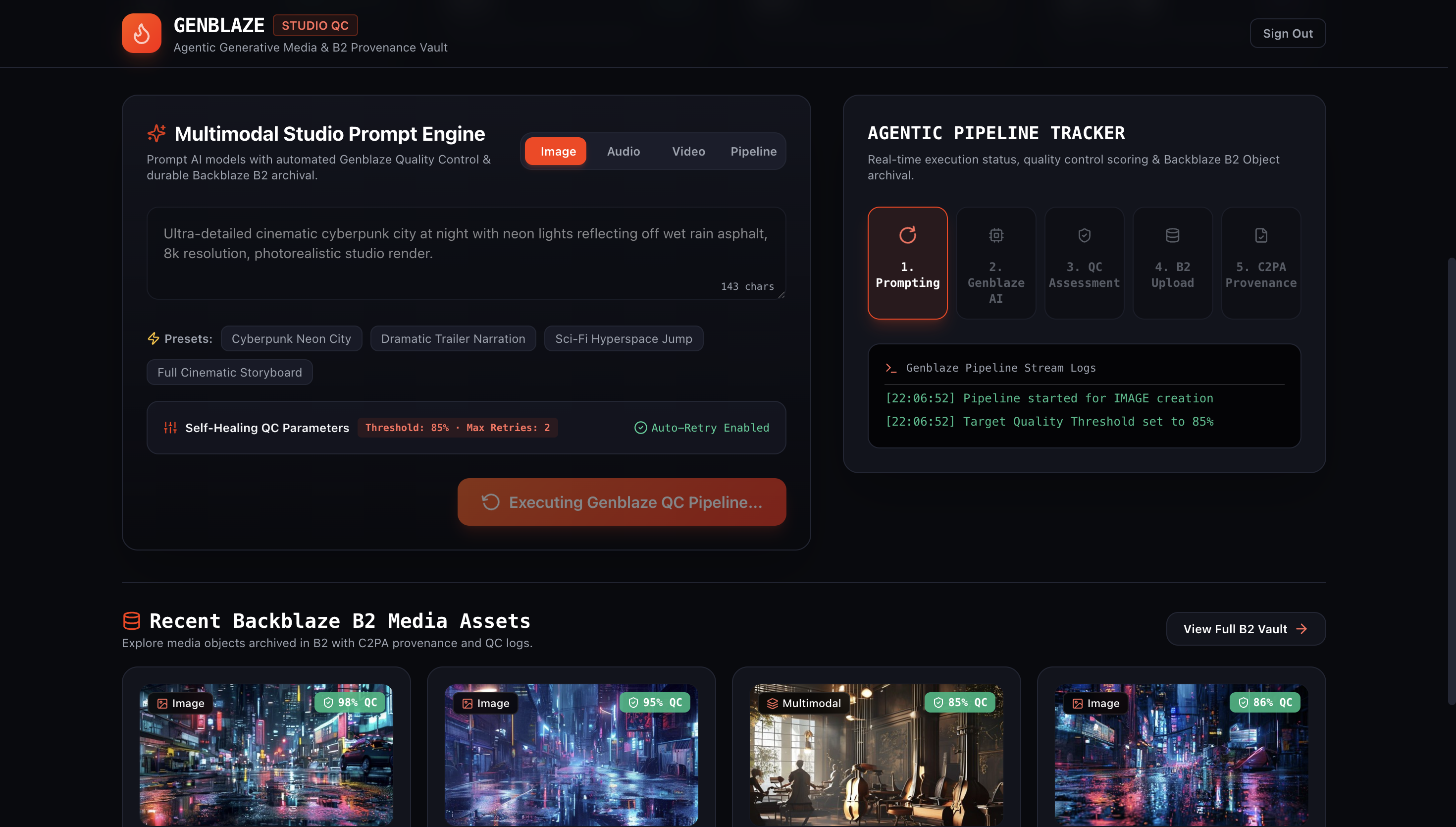
agnetic pipeline tracer
-
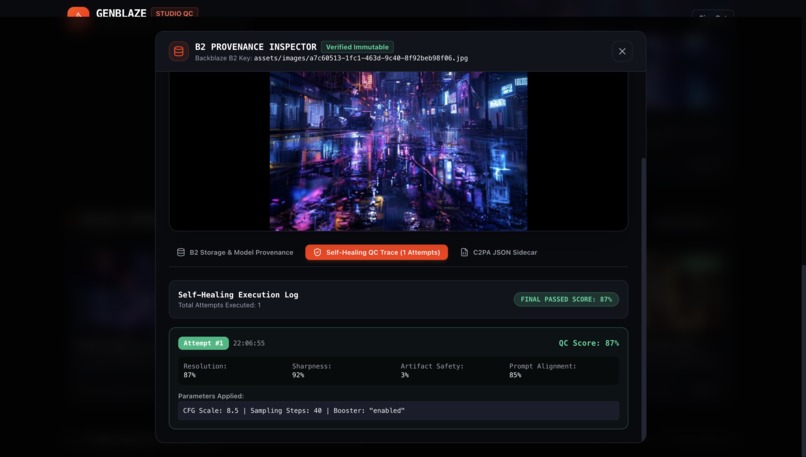
self healing traces
-
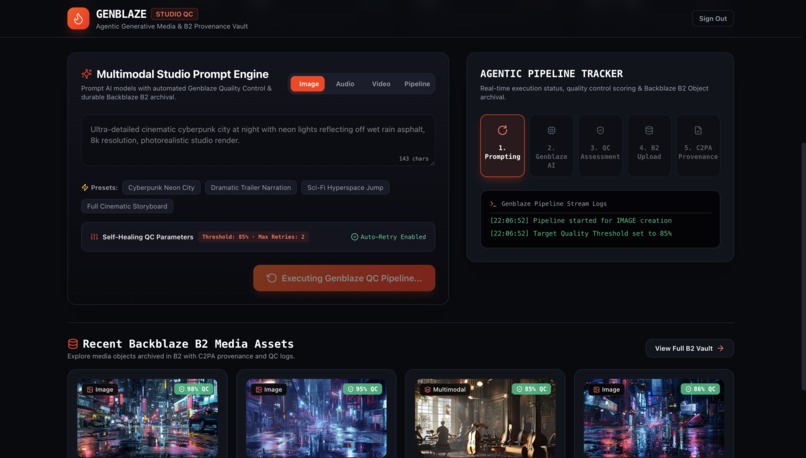
multimedia studio prompt engine
-
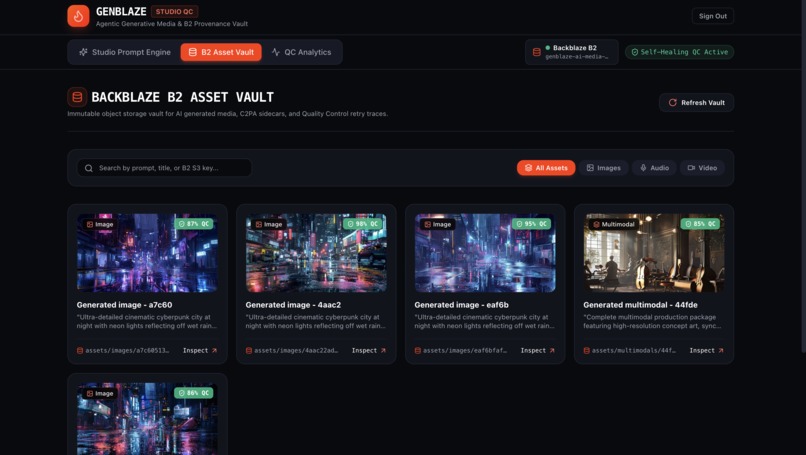
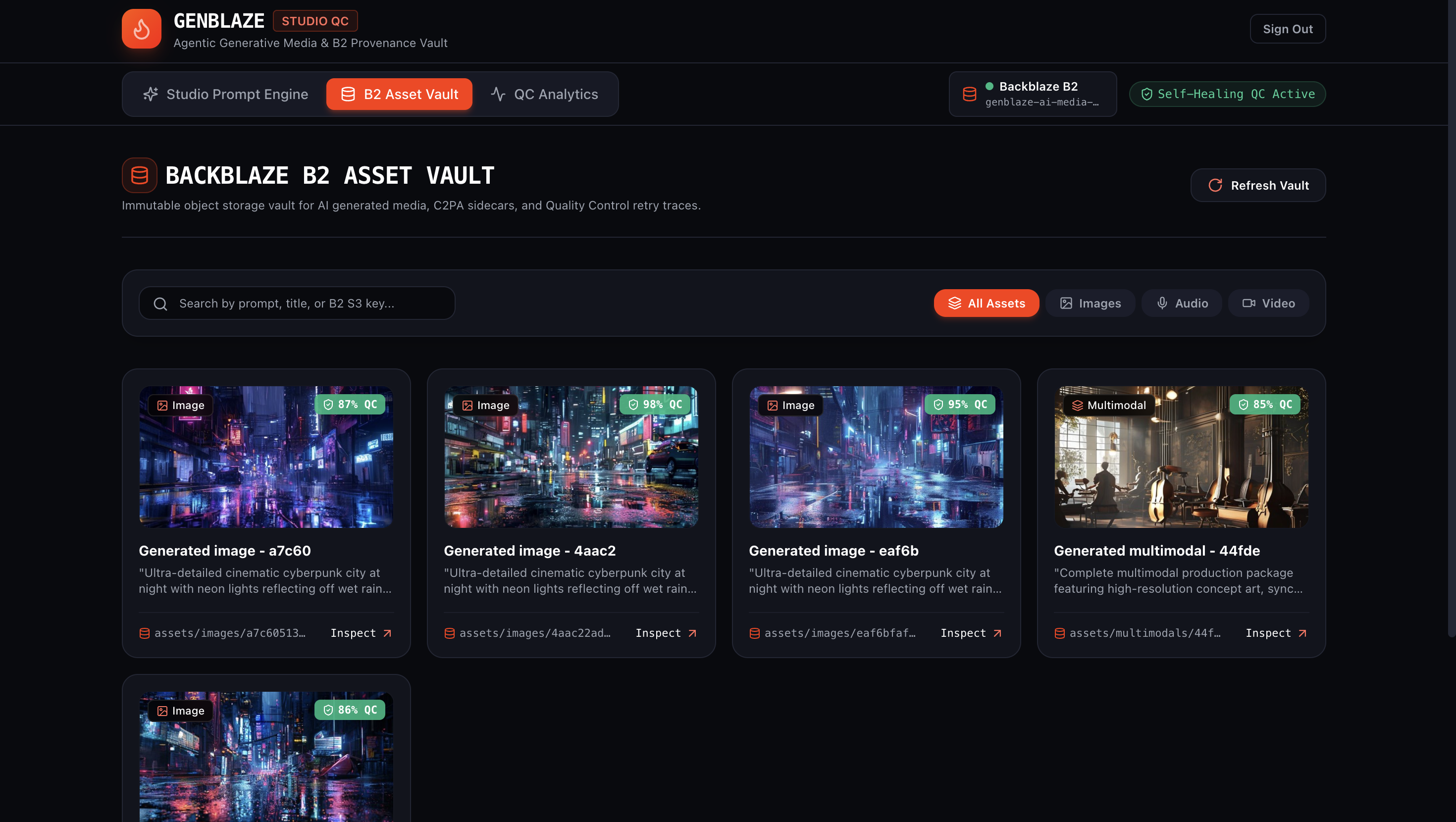
assets vault
Inspiration
Generative AI models often produce visual artifacts, text hallucinations, or out-of-frame errors, forcing creators into frustrating manual retry loops. Furthermore, as creative pipelines scale, managing asset storage and verifying AI provenance becomes a massive data challenge.
We built Genblaze Studio QC to automate quality assurance in generative media. By pairing an agentic self-healing orchestration engine with immutable object storage, creators get production-ready media alongside a full cryptographic trail of how every frame was generated.
What it does
Genblaze Studio QC is an end-to-end multimodal production suite:
- Multimodal Generation Studio: Generates high-fidelity Images, Audio, and Video via GMI Cloud models (
stable-diffusion-xl-base-1.0andseedance-2-0-260128), with resilient fallback mechanisms (pollinations.ai/ Google TTS). - Agentic Self-Healing QC Loop: Evaluates generated media against automated quality thresholds (e.g., artifact density, resolution, prompt compliance). If a generation scores below 85%, the engine automatically refines parameters (like CFG scale) and retries up to 3 times.
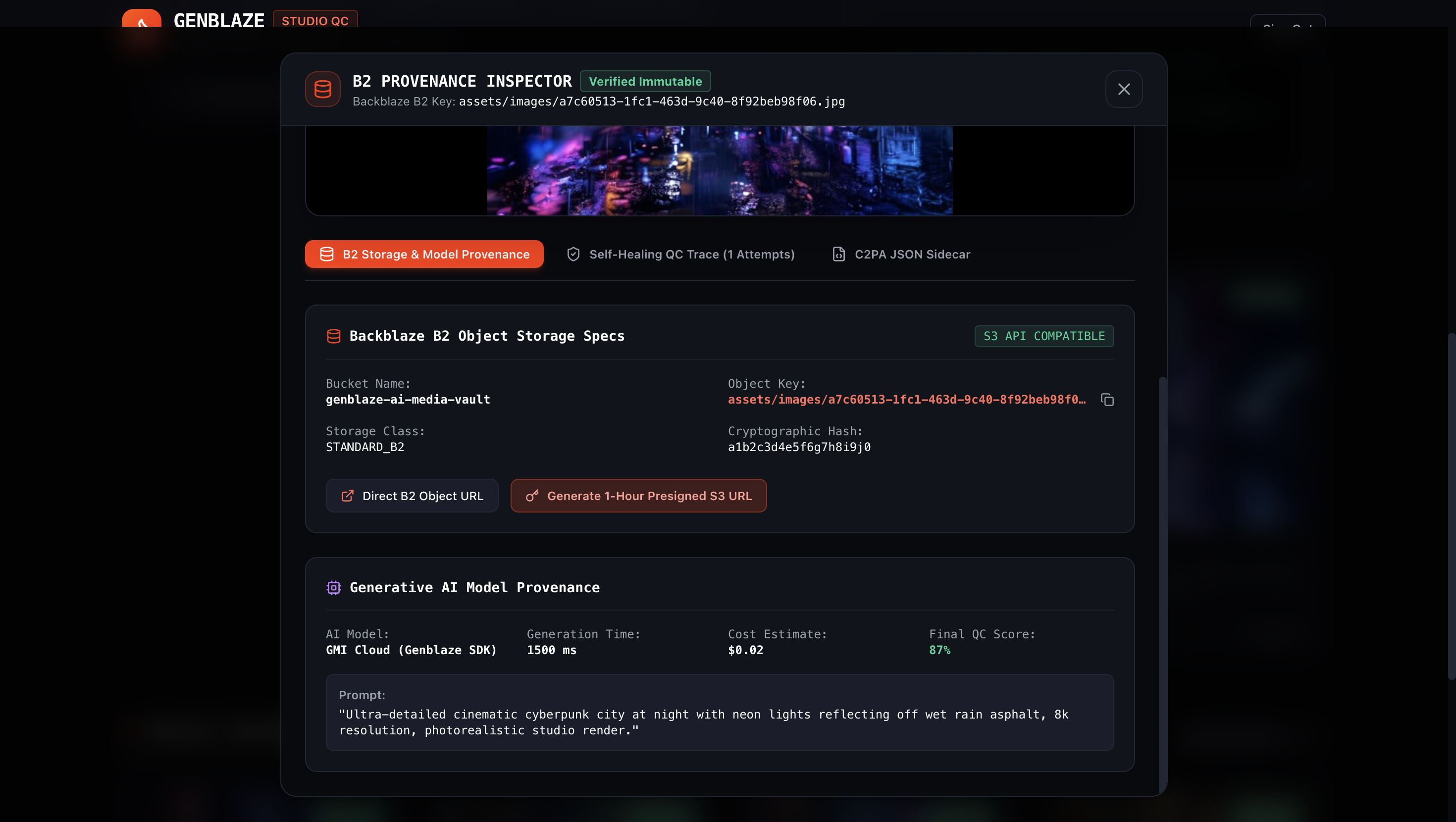
- Durable Backblaze B2 Storage Vault: Every approved asset is archived directly into a private Backblaze B2 bucket (
genblaze-ai-media-vault). - C2PA Provenance & Sidecar Metadata: Simultaneously generates JSON sidecar files containing model provenance, generation latency, cost metrics, and full QC retry history under a
metadata/prefix. - Stateless B2 Gallery: The Next.js UI queries the Backblaze B2 bucket in real-time via S3 SDK APIs (
ListObjectsV2Command), fetching JSON metadata directly from B2 without relying on a traditional SQL database.
How we built it
- Frontend: Next.js 14 (App Router), React, Tailwind CSS, Lucide Icons.
- Backend Orchestrator: Python FastAPI server natively running the
genblazeSDK andb2sdk. - Storage Layer: Backblaze B2 Cloud Storage (using AWS S3-compatible endpoints for real-time reads and native SDK for uploads).
- AI Model Pipeline:
- Image: GMI Cloud (
stable-diffusion-xl-base-1.0) - Video: GMI Cloud (
seedance-2-0-260128ByteDance model) - Audio: Google TTS & Fallbacks
- Image: GMI Cloud (
Challenges we ran into
- Managing Real-Time B2 Metadata Synchronization: Rather than using a database, we architected the system so the Next.js frontend fetches JSON sidecars directly from Backblaze B2. Optimizing
ListObjectsV2Commandrequests to keep the UI snappy required careful prefix structuring (/assetsvs/metadata). - Implementing Automated QC Retry Logic: Building a reliable feedback loop that adjusts parameters gracefully without hitting rate limits required tuning prompt-adjustment heuristics in our FastAPI orchestration layer.
Accomplishments that we're proud of
- Successfully integrated Backblaze B2 as the exclusive source of truth for both heavy media binaries and lightweight JSON state sidecars.
- Built a functional self-healing generative workflow that turns raw AI outputs into verified, production-grade media assets.
- Designed a clean, secure UI (
backblaze2026) that feels ready for production agency deployment.
What we learned
- Deep integration patterns using
genblazeandb2sdkin Python. - How S3-compatible cloud storage like Backblaze B2 can replace traditional databases for asset-heavy workflows when paired with JSON sidecar metadata patterns.
What's next for Genblaze Studio QC
- Adding automated video frame rate and audio sync evaluation into the self-healing pipeline.
- Integrating C2PA hardware signature signing directly on B2 bucket upload triggers using Backblaze Event Notifications.


Log in or sign up for Devpost to join the conversation.