-
-
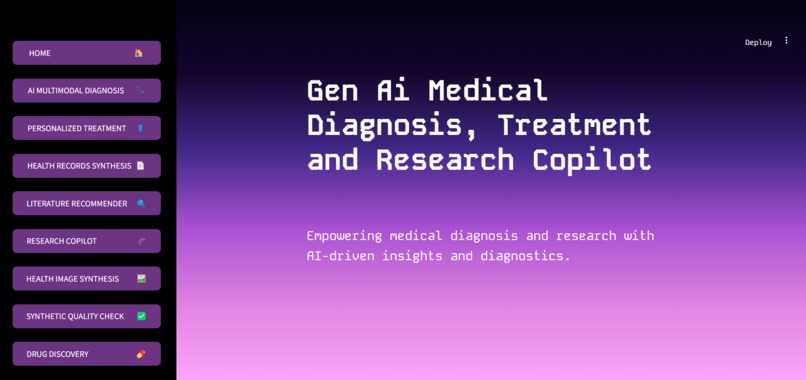
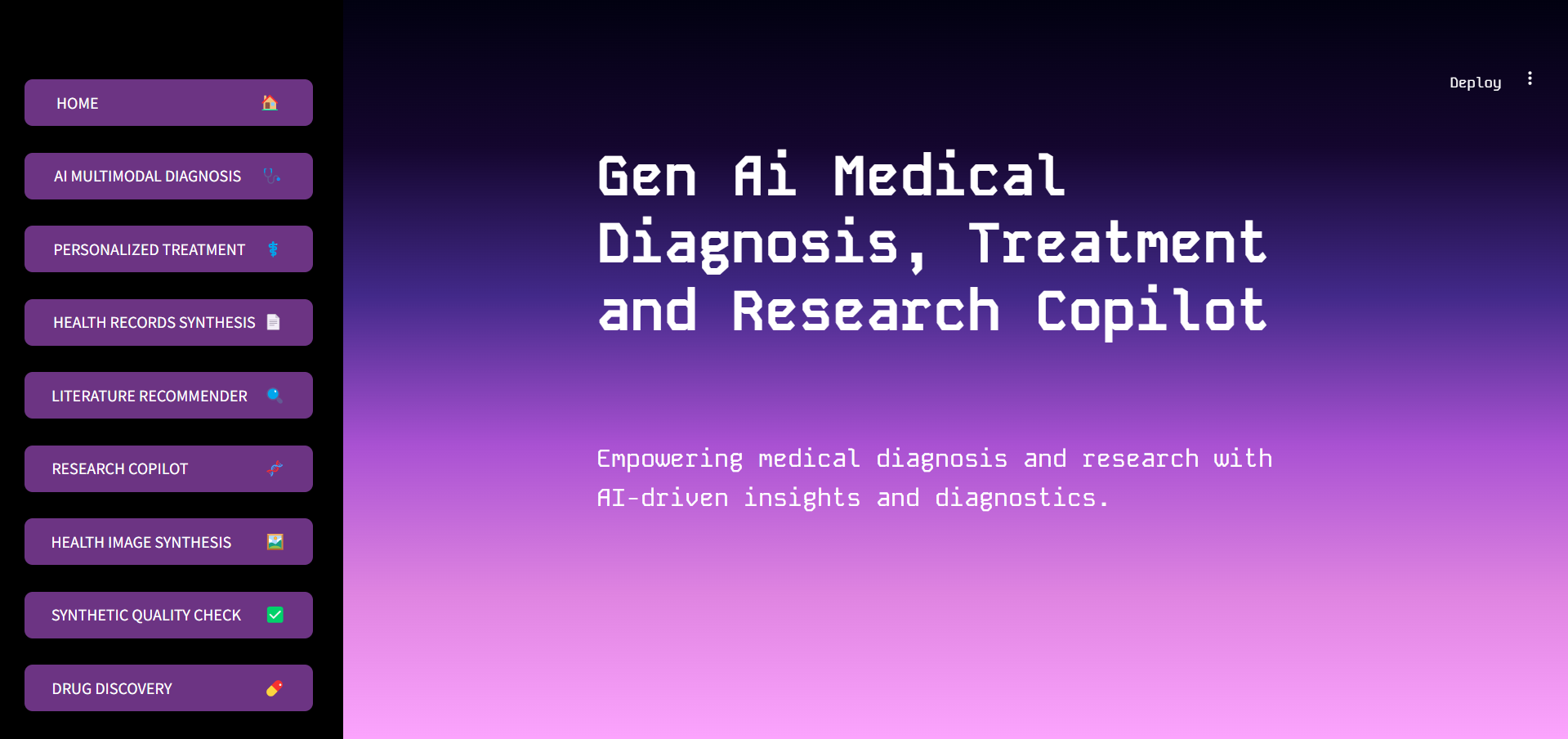
Home page
-
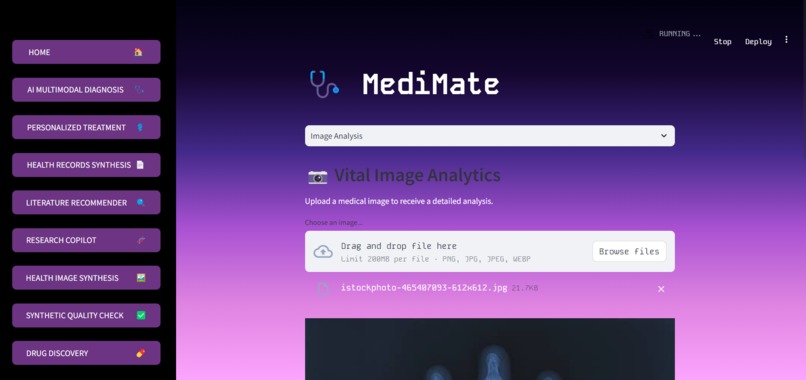
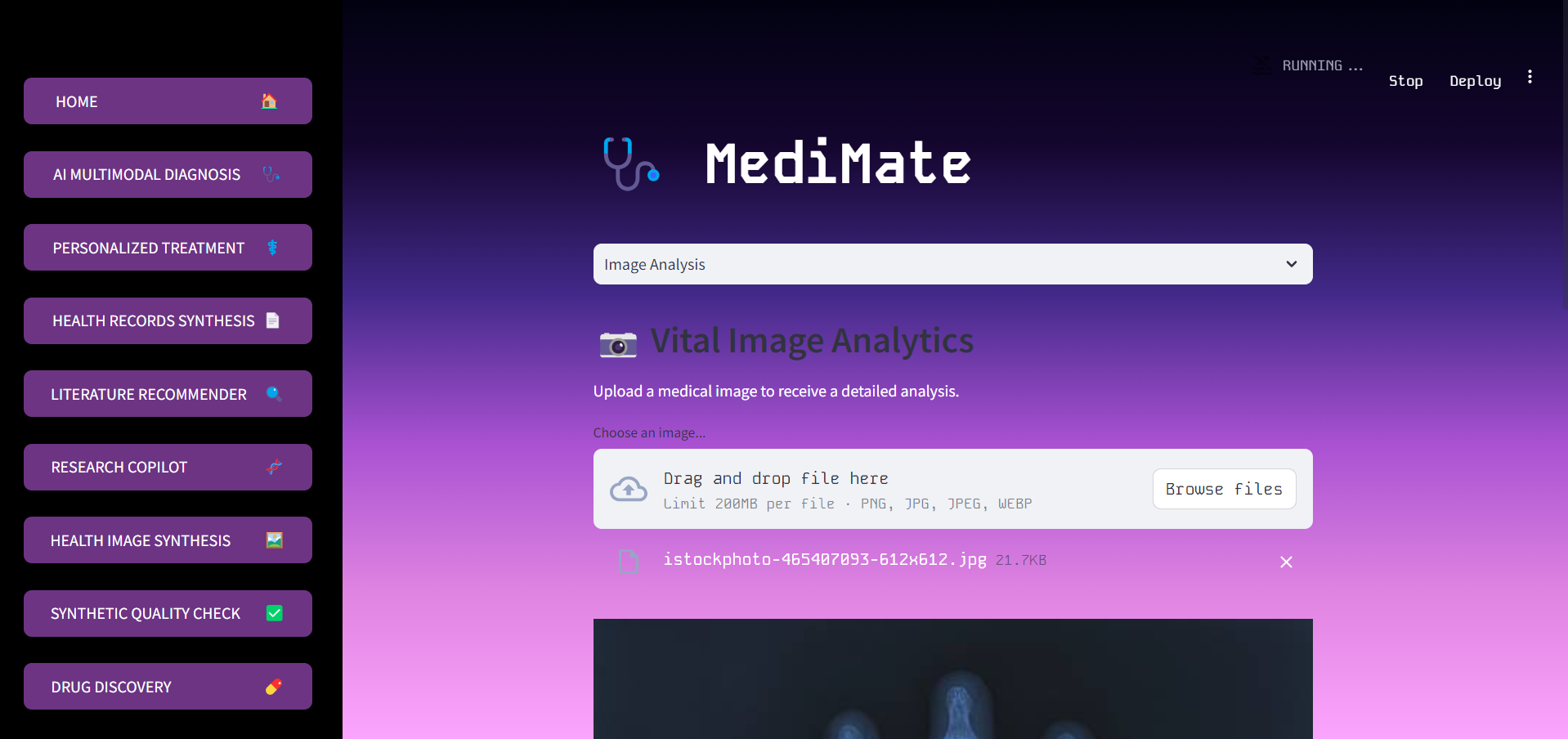
Multimodal AI diagnosis - Chatbot Image based diagnosis
-
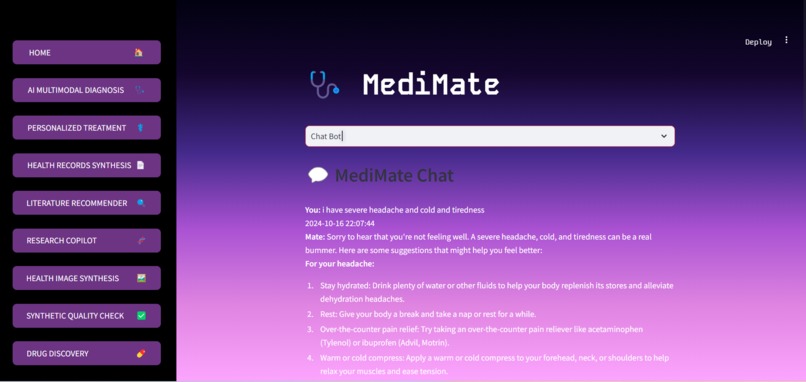
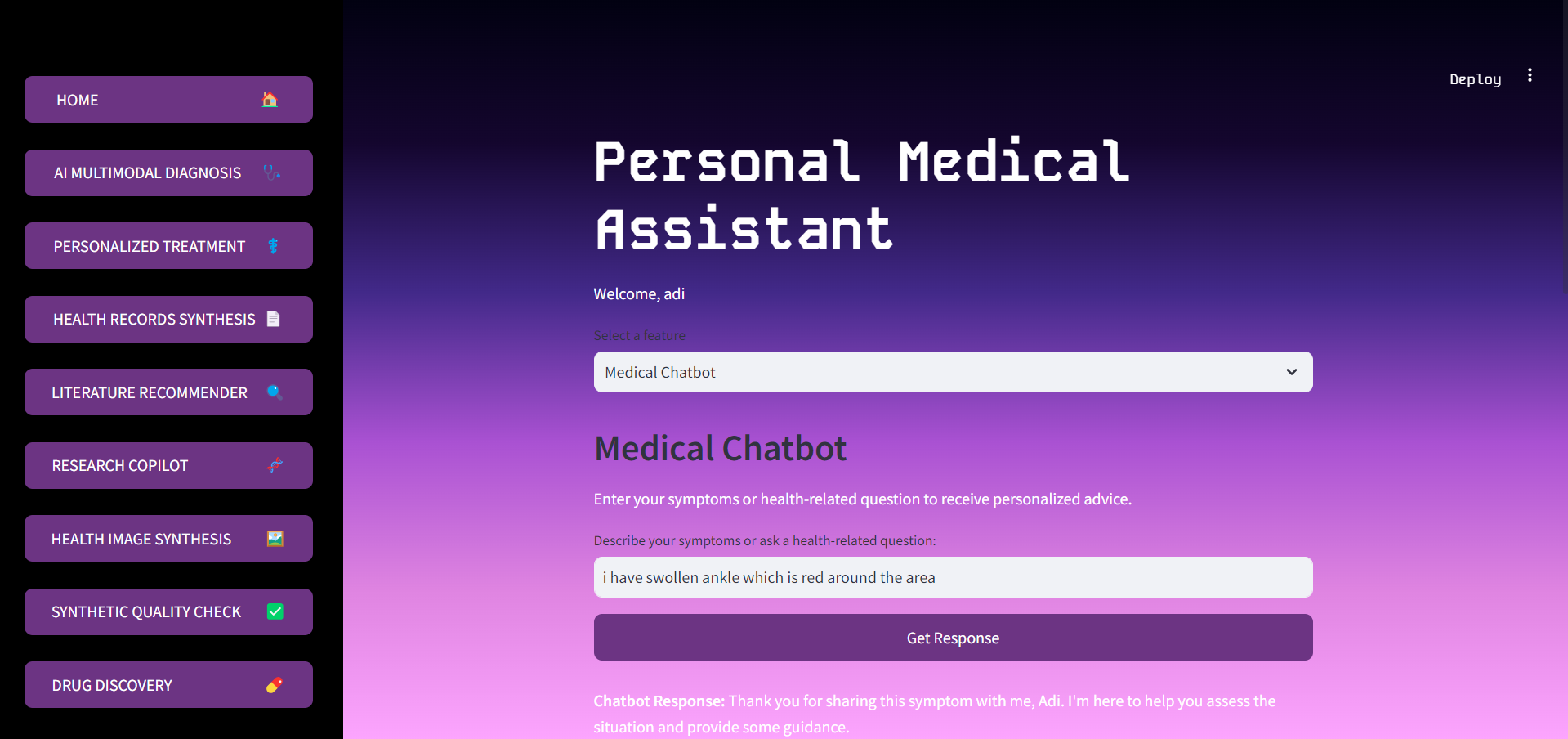
Multimodal AI diagnosis - Chatbot text based diagnosis
-
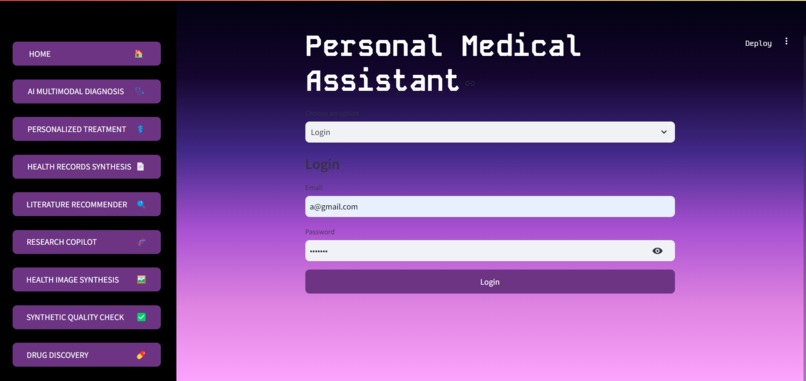
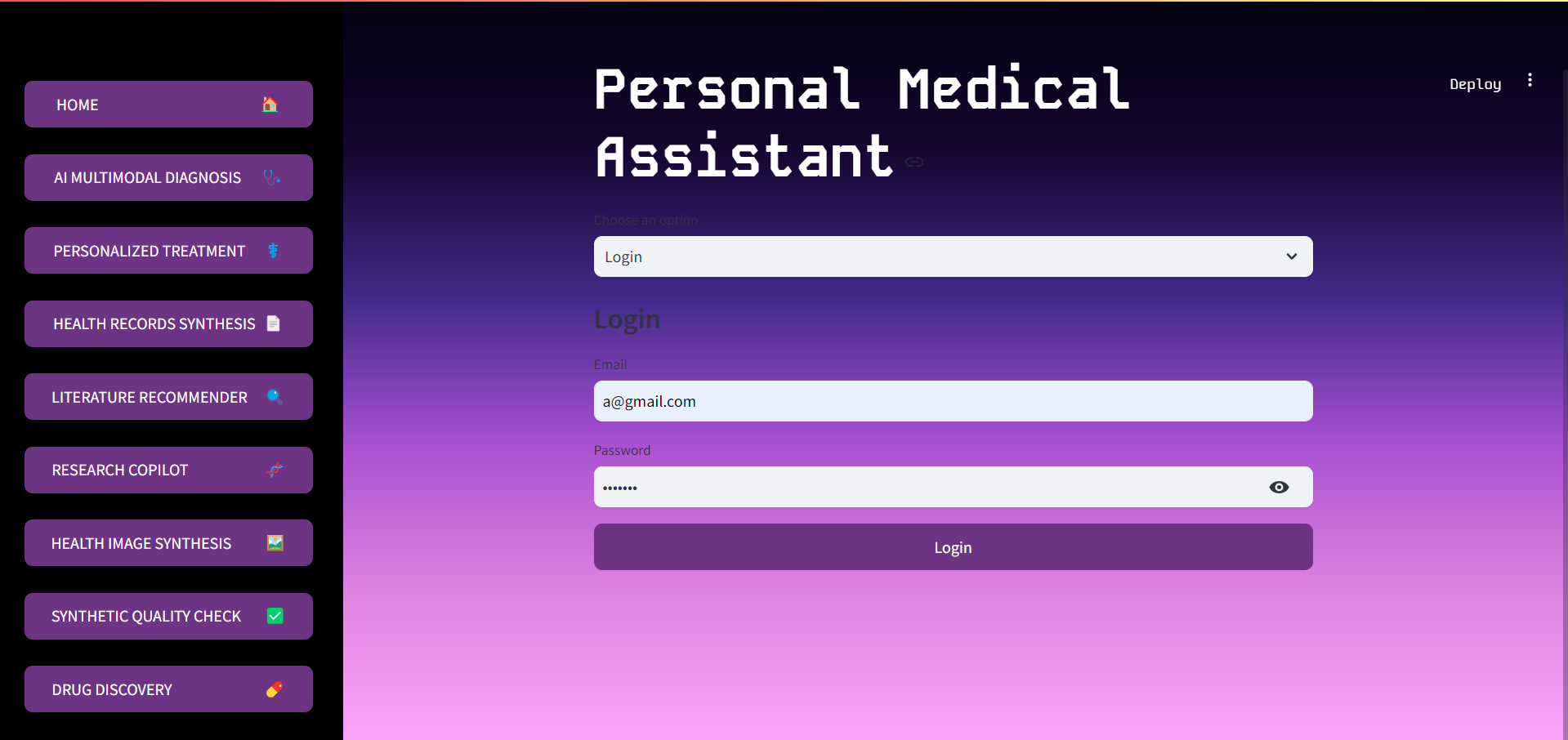
Login page for personalized treatment plans
-
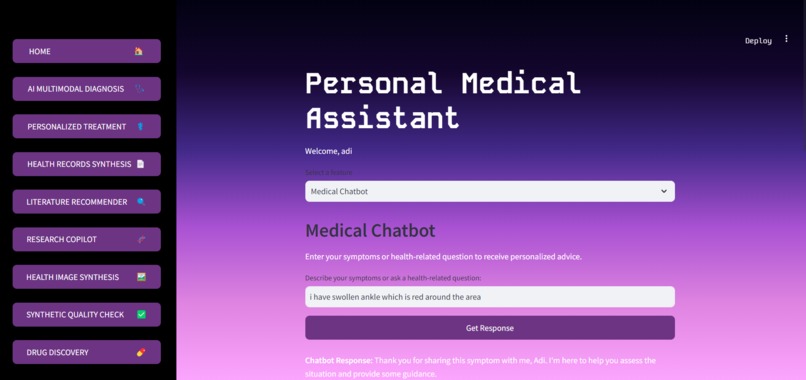
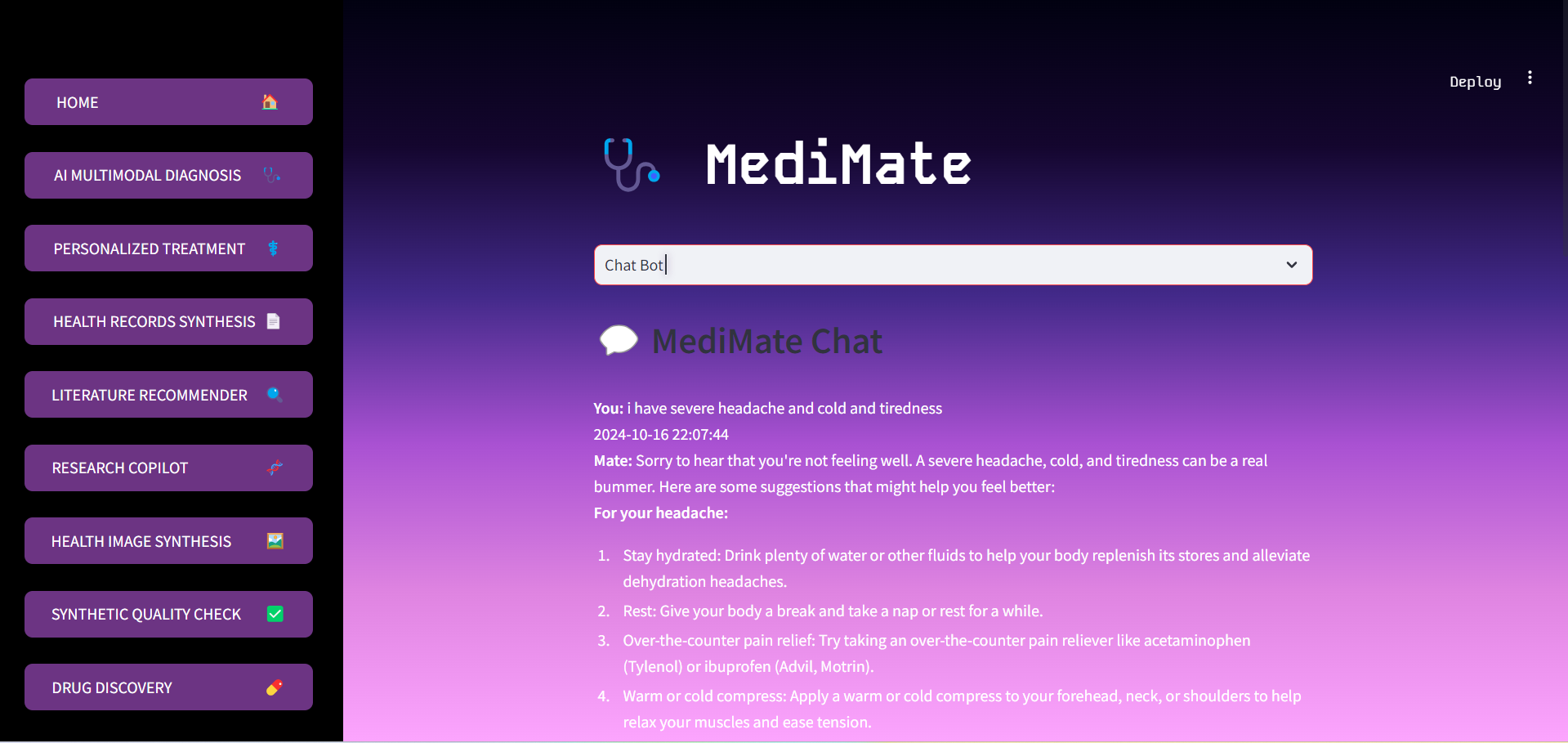
personalized treatment chatbot
-
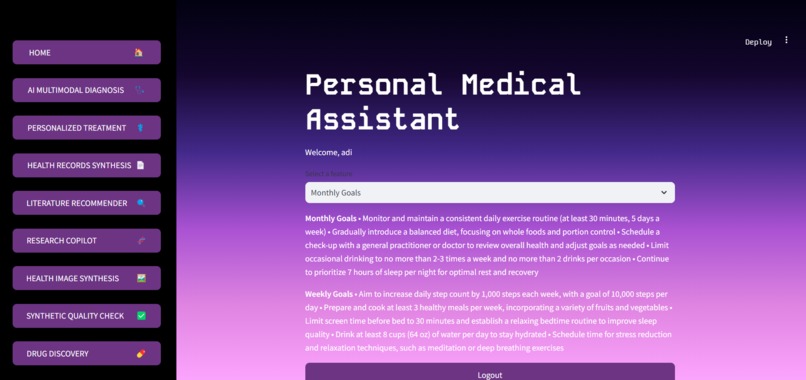
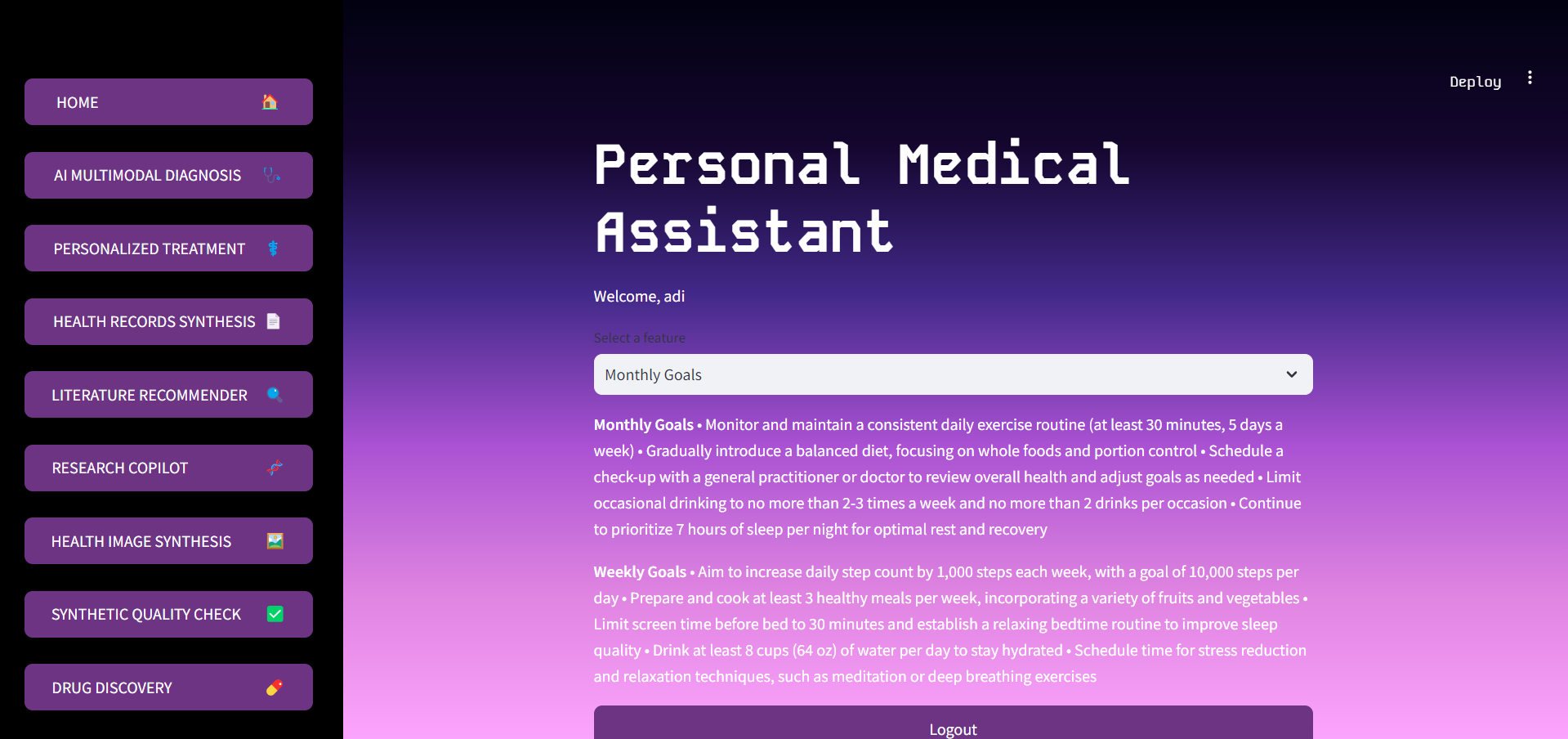
personalized goals and targets
-
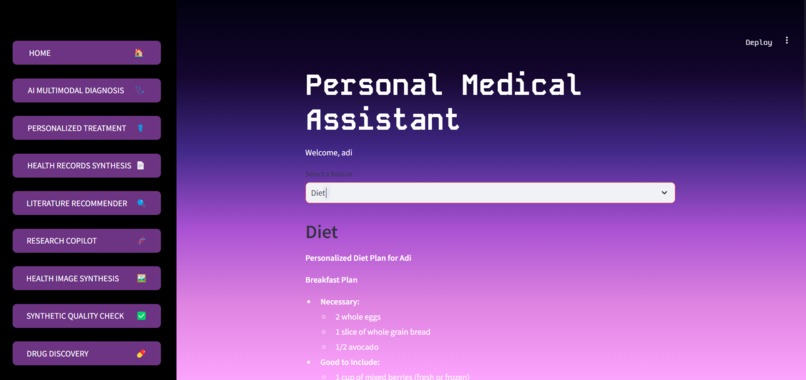
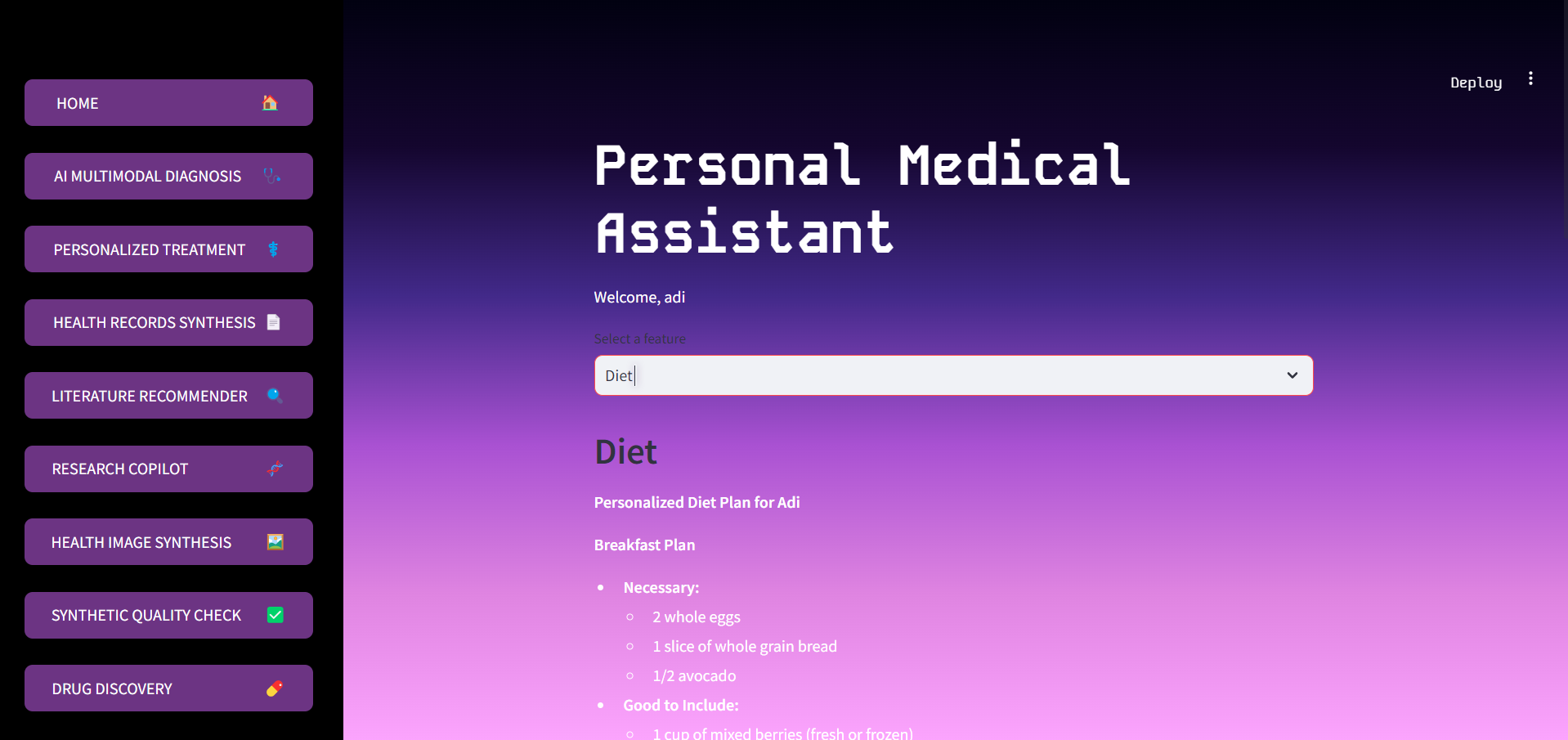
personalized diet plans
-
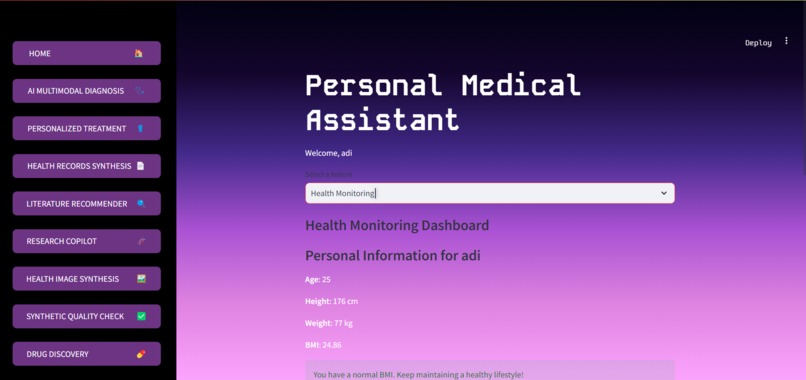
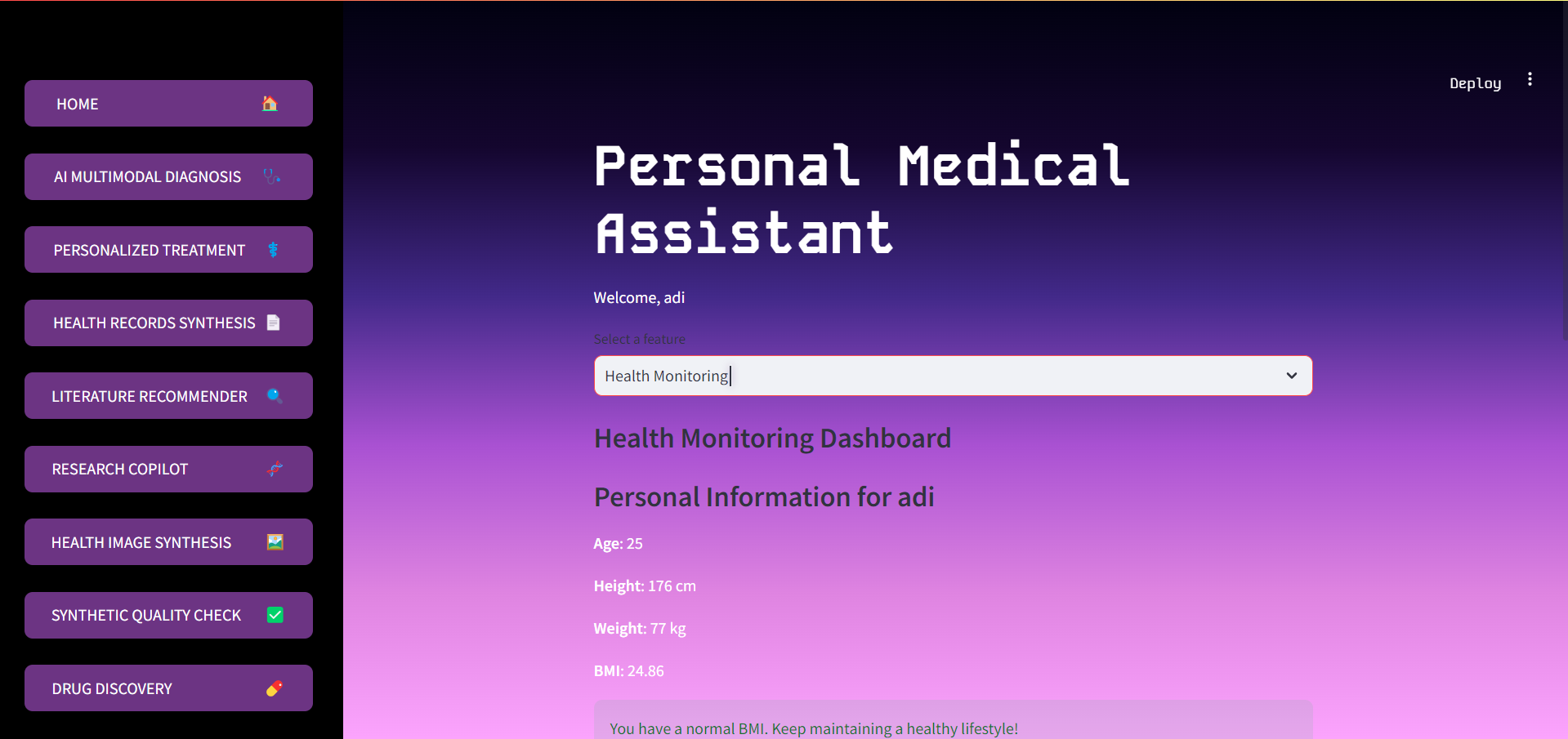
personalized health monitoring dashboard
-
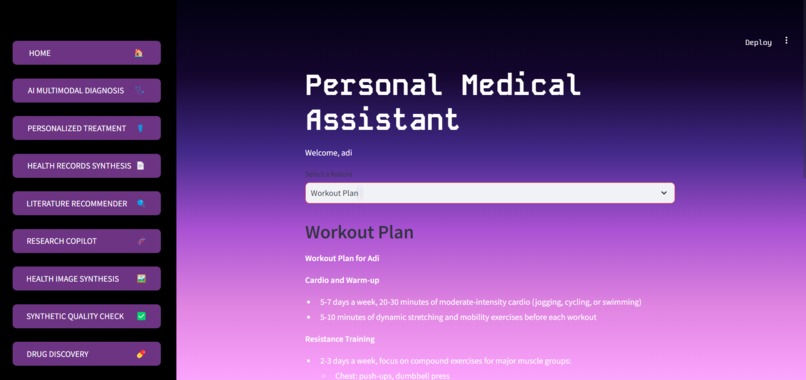
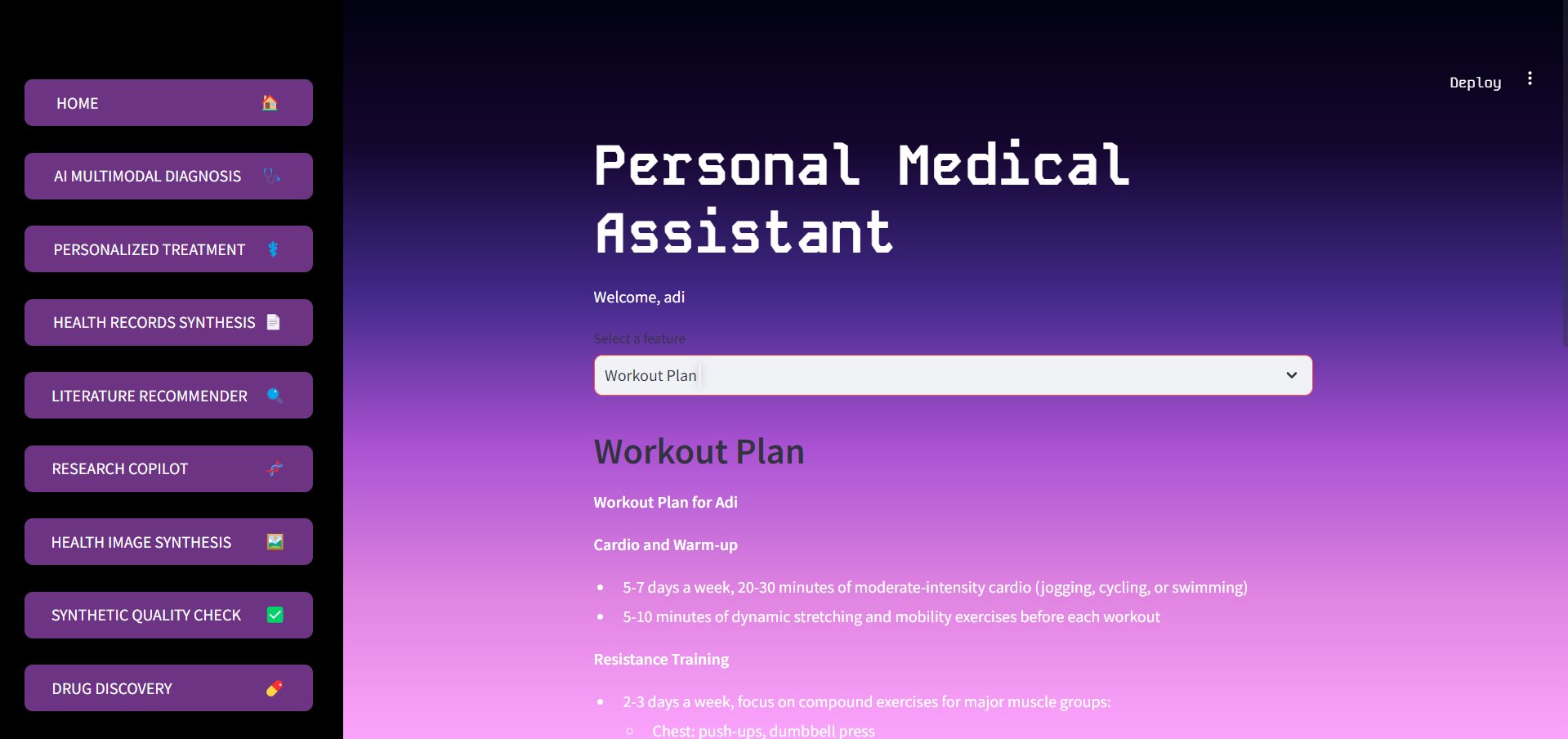
personalized workout plans
-
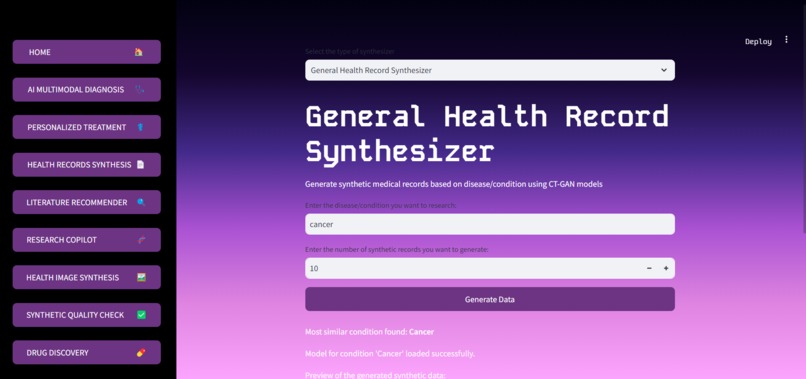
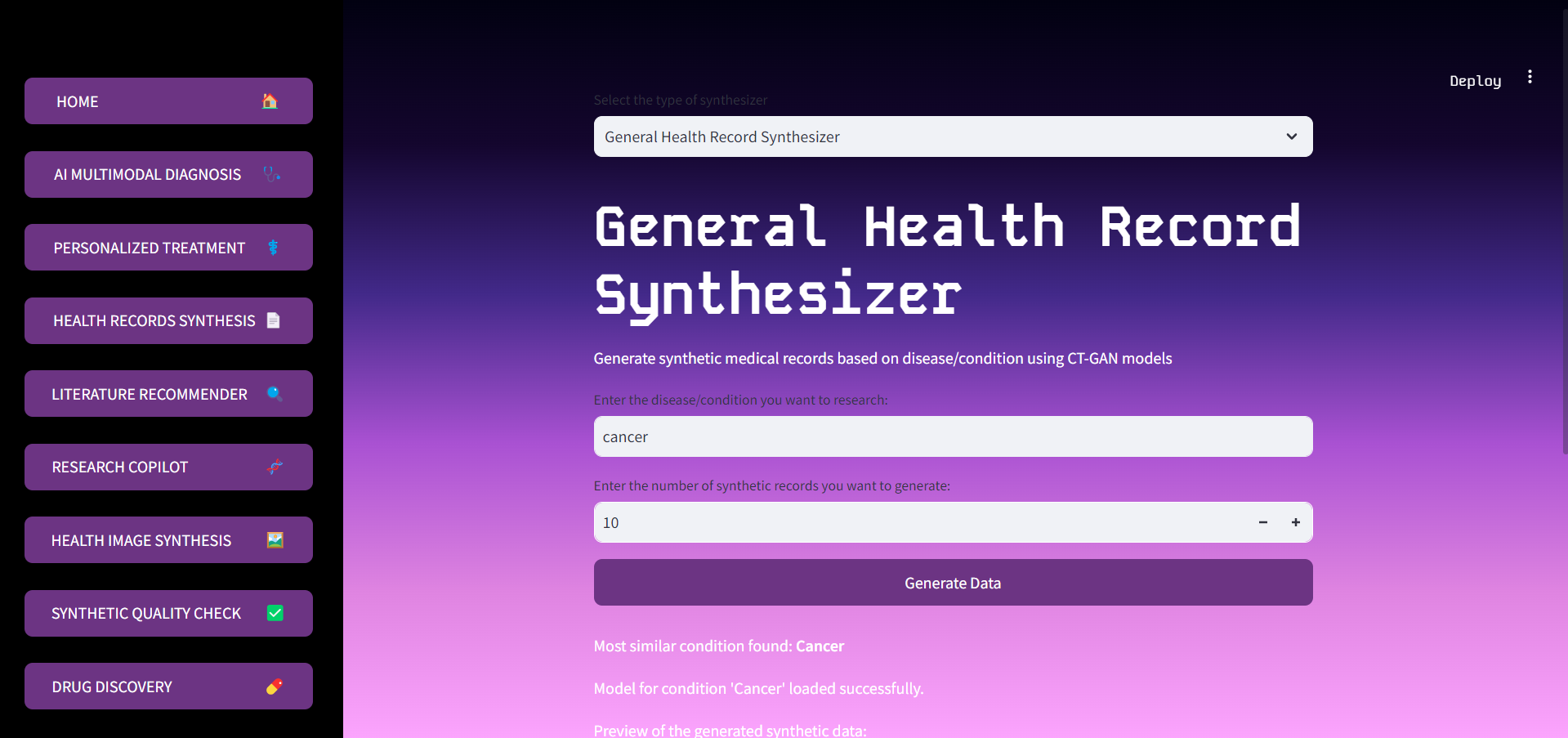
general health record synthesis for research with disease input
-
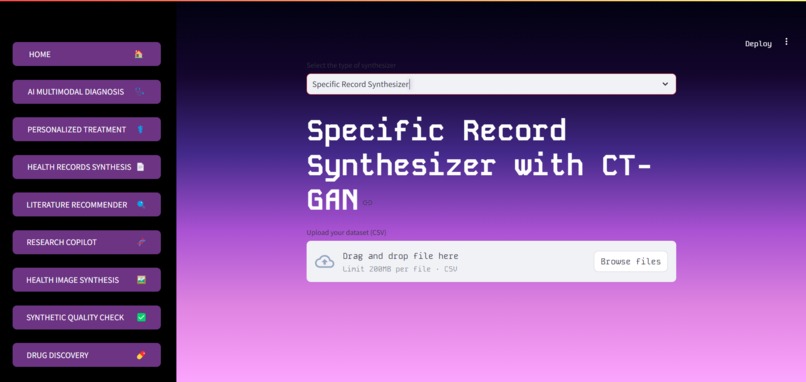
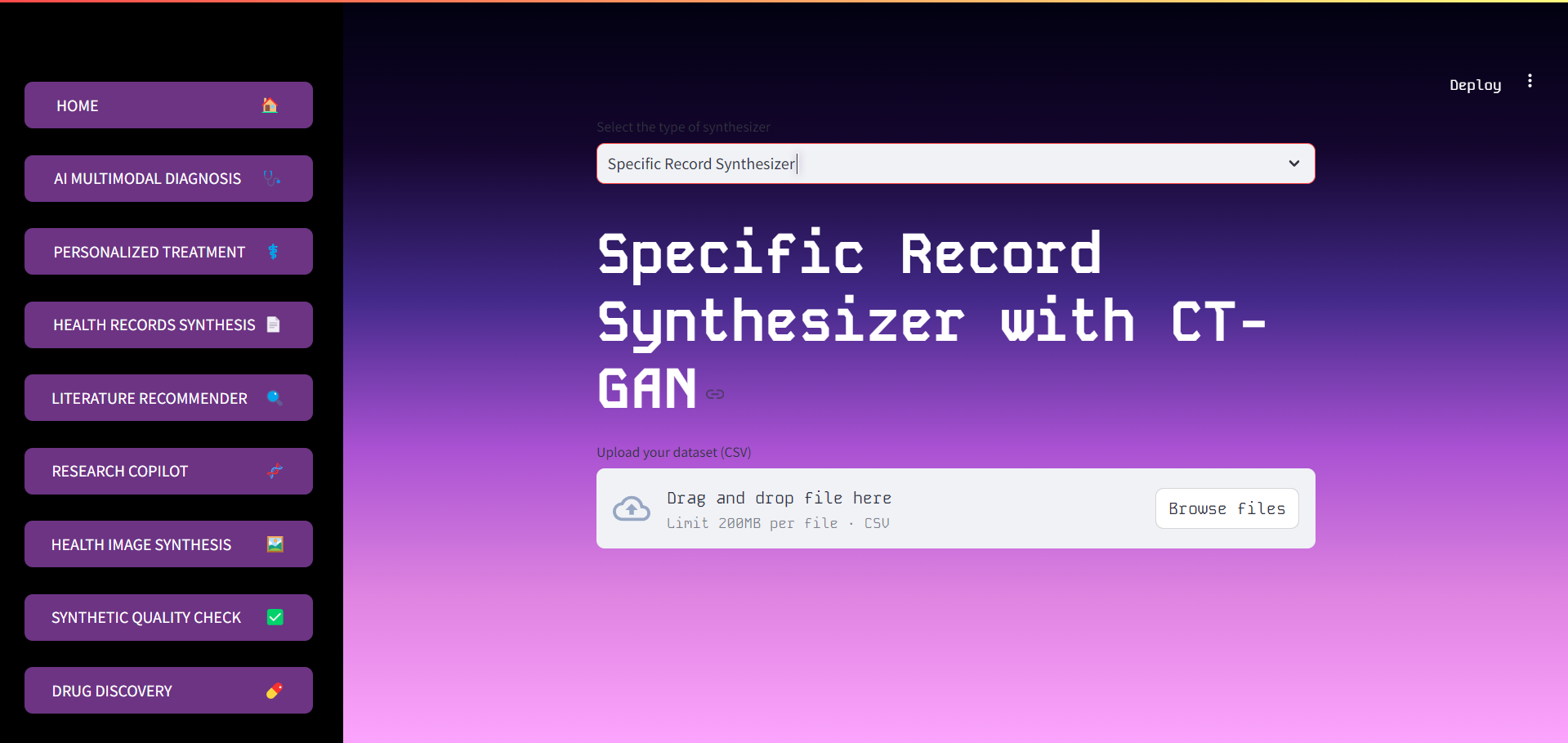
specific health record synthesis for research with dataset input
-
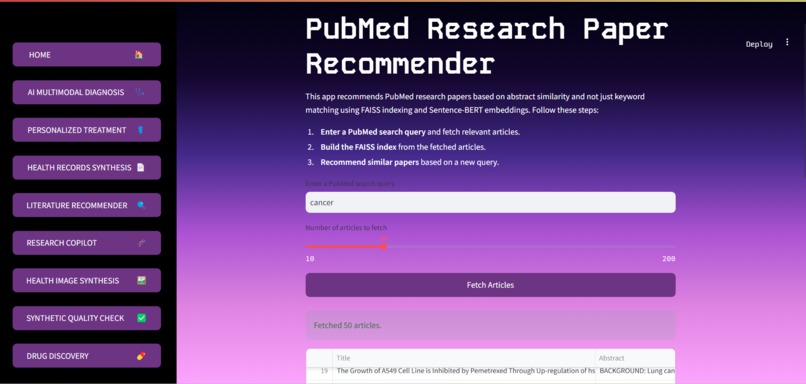
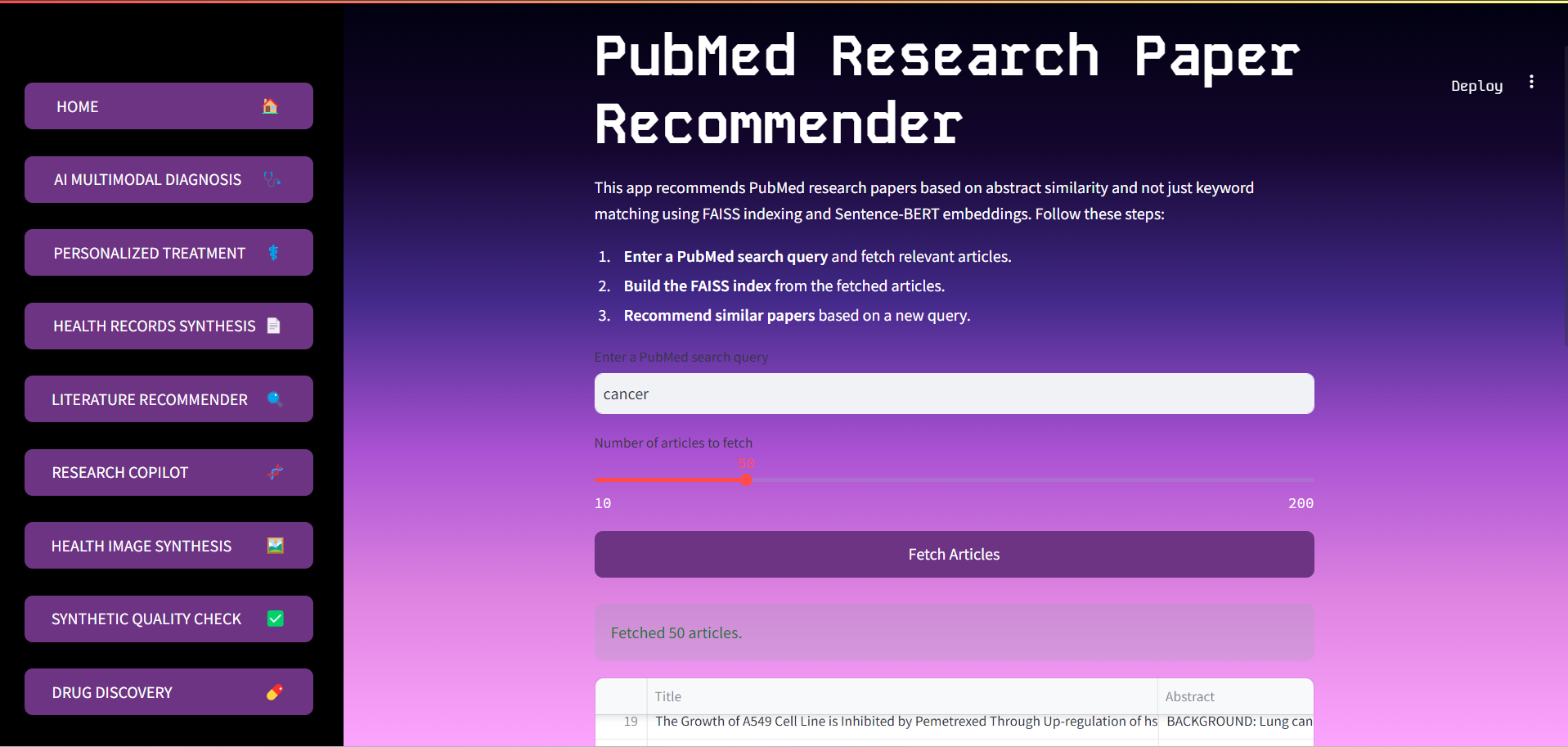
research paper recommender based on research prompts
-
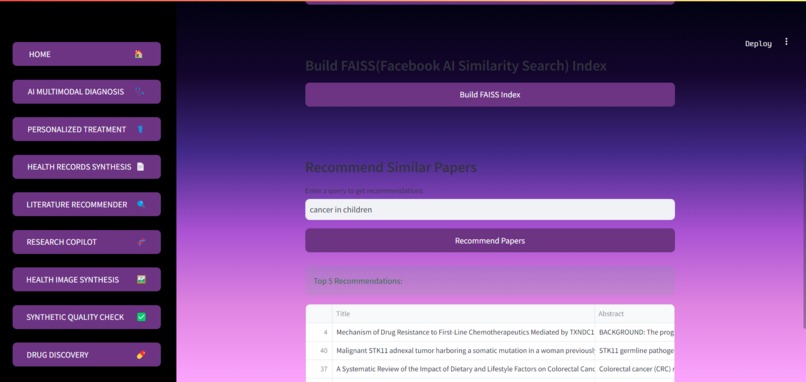
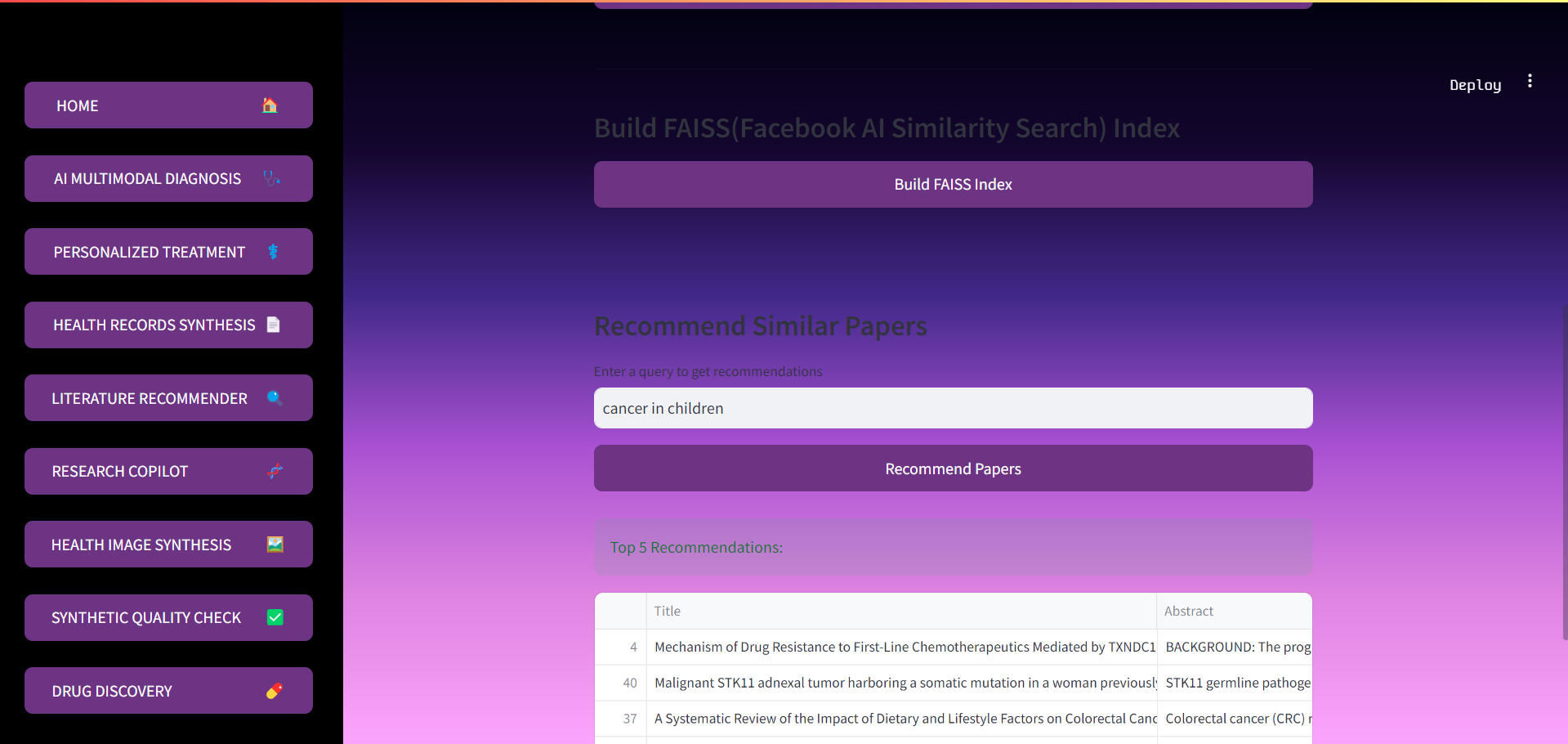
research paper recommender based on research prompts
-
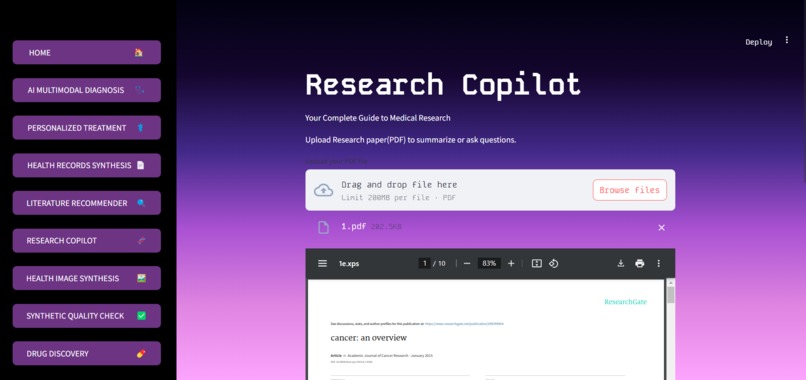
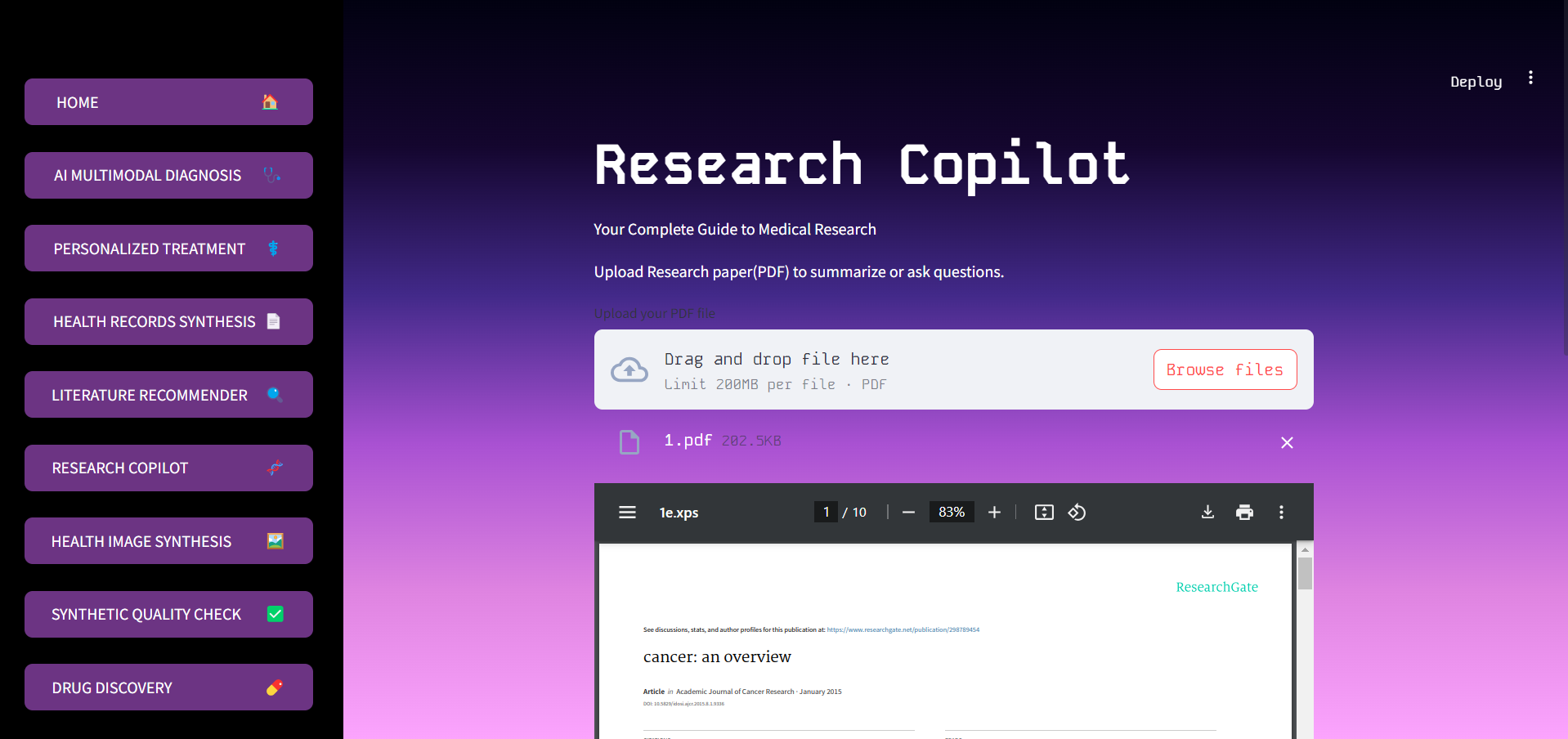
Research copilot
-
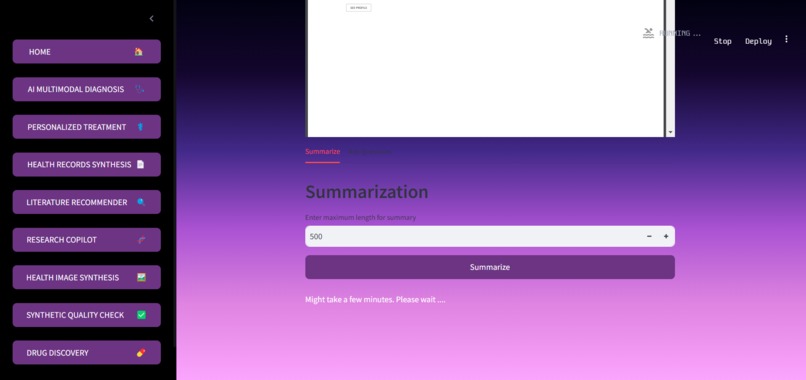
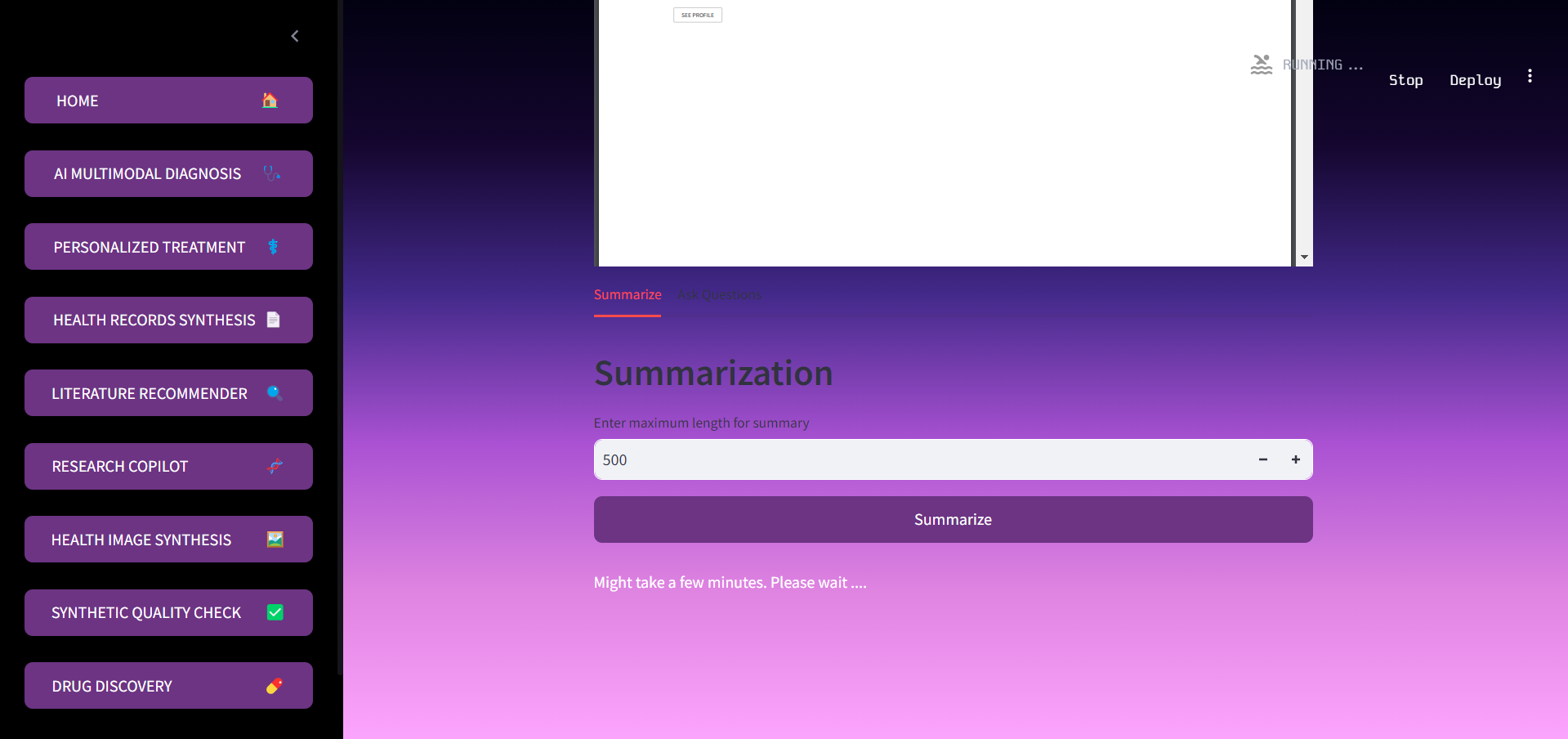
Research copilot - paper summariser
-
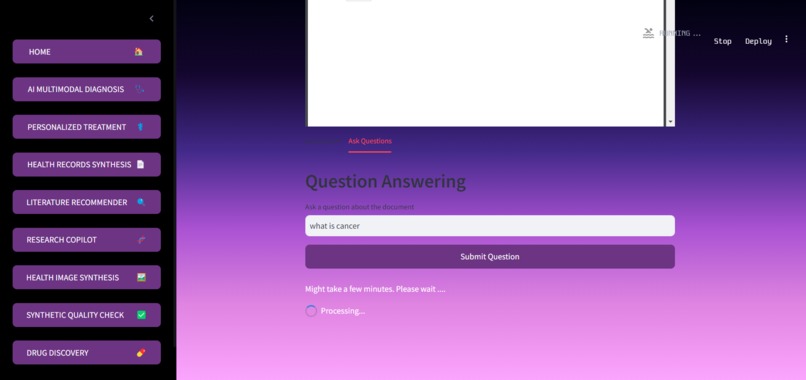
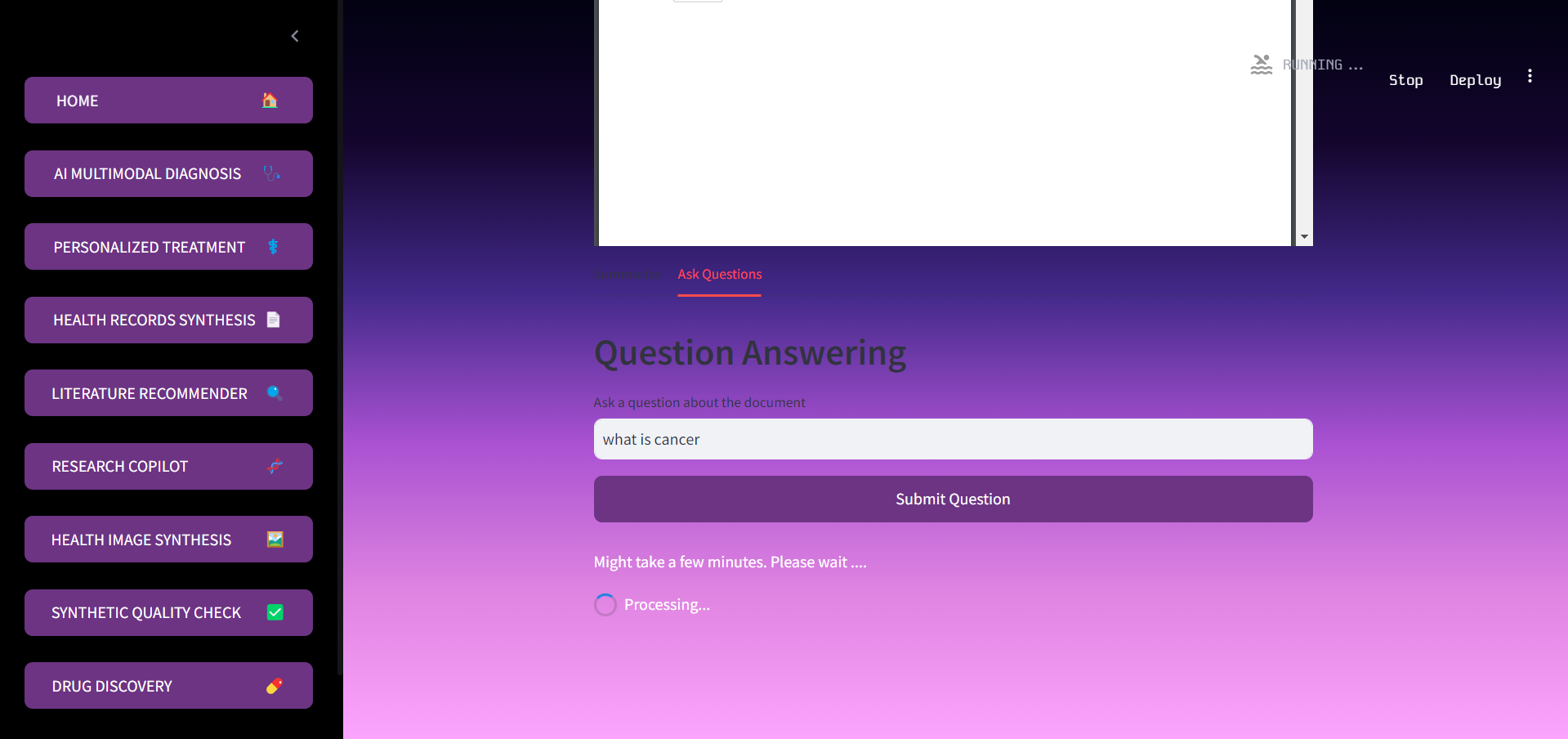
Research copilot - paper based question answering
-
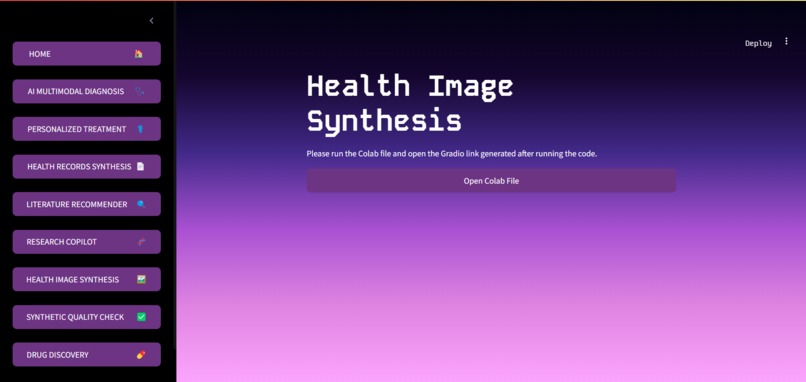
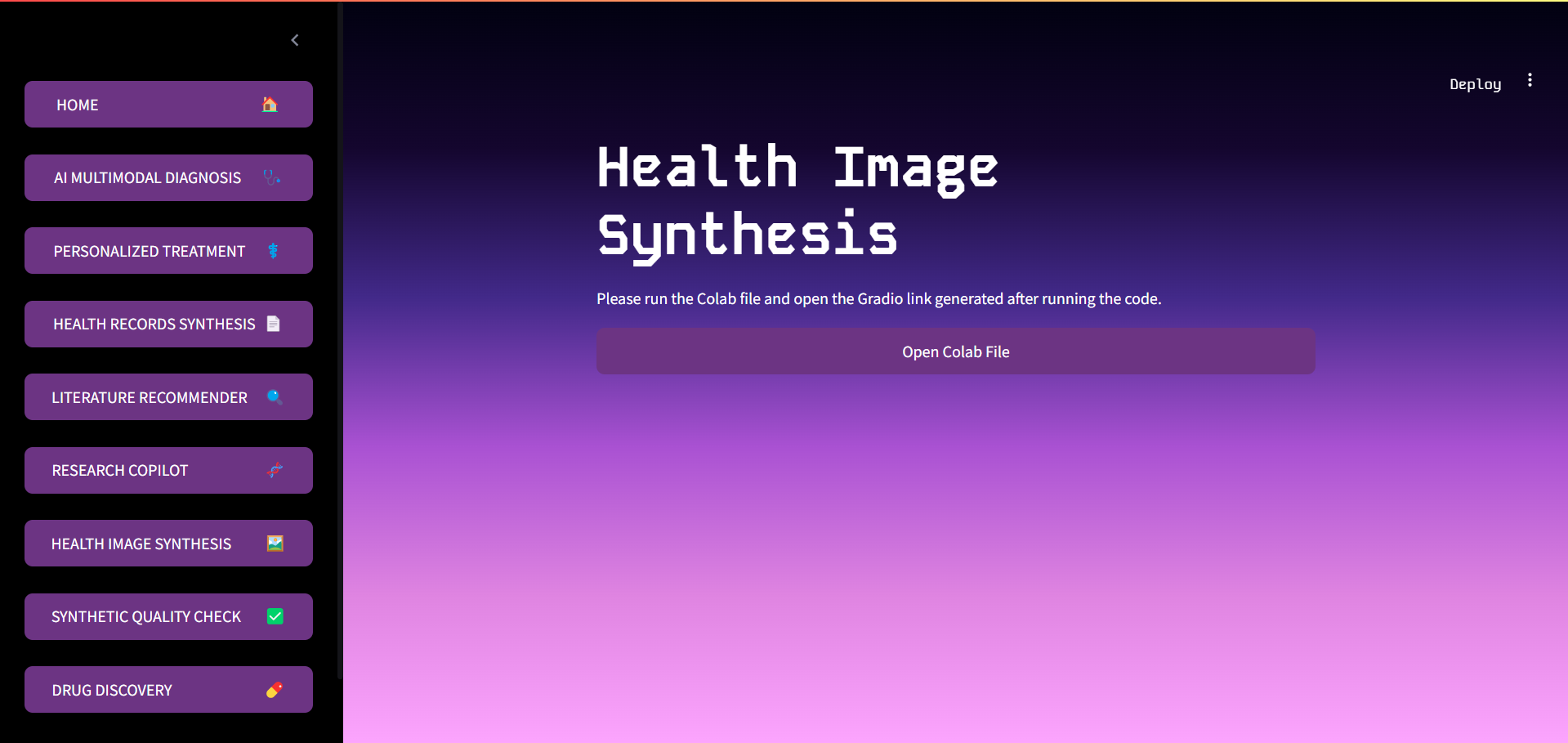
health image synthesis for research
-
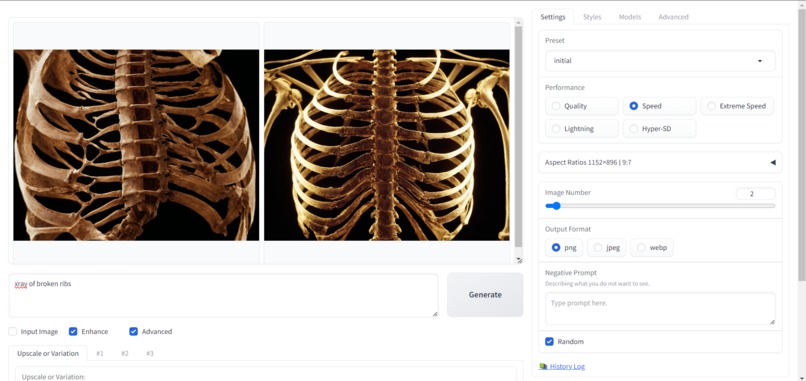
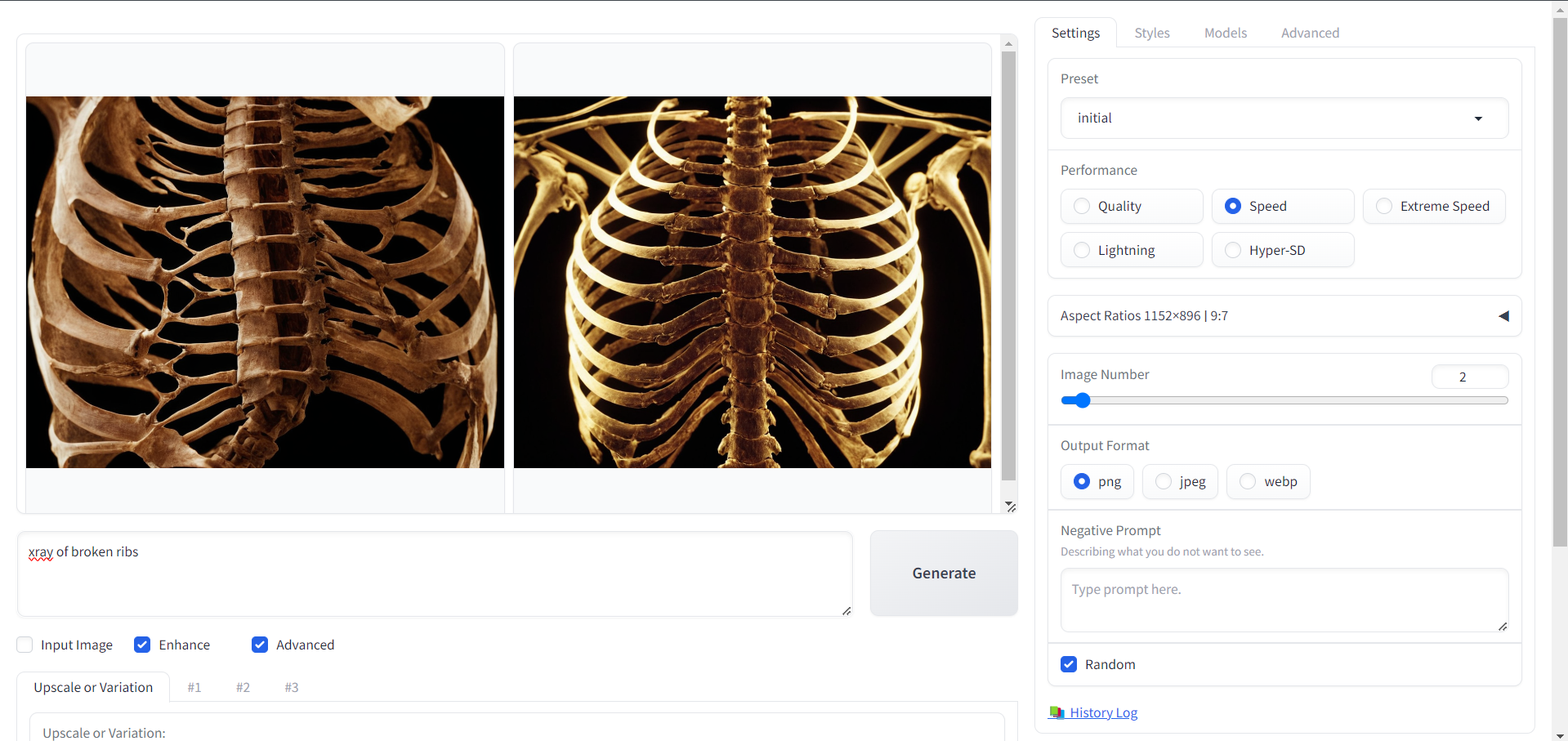
health image synthesis for research
-
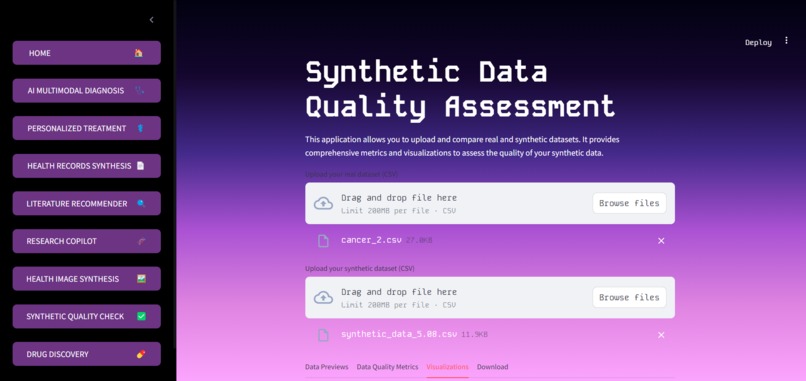
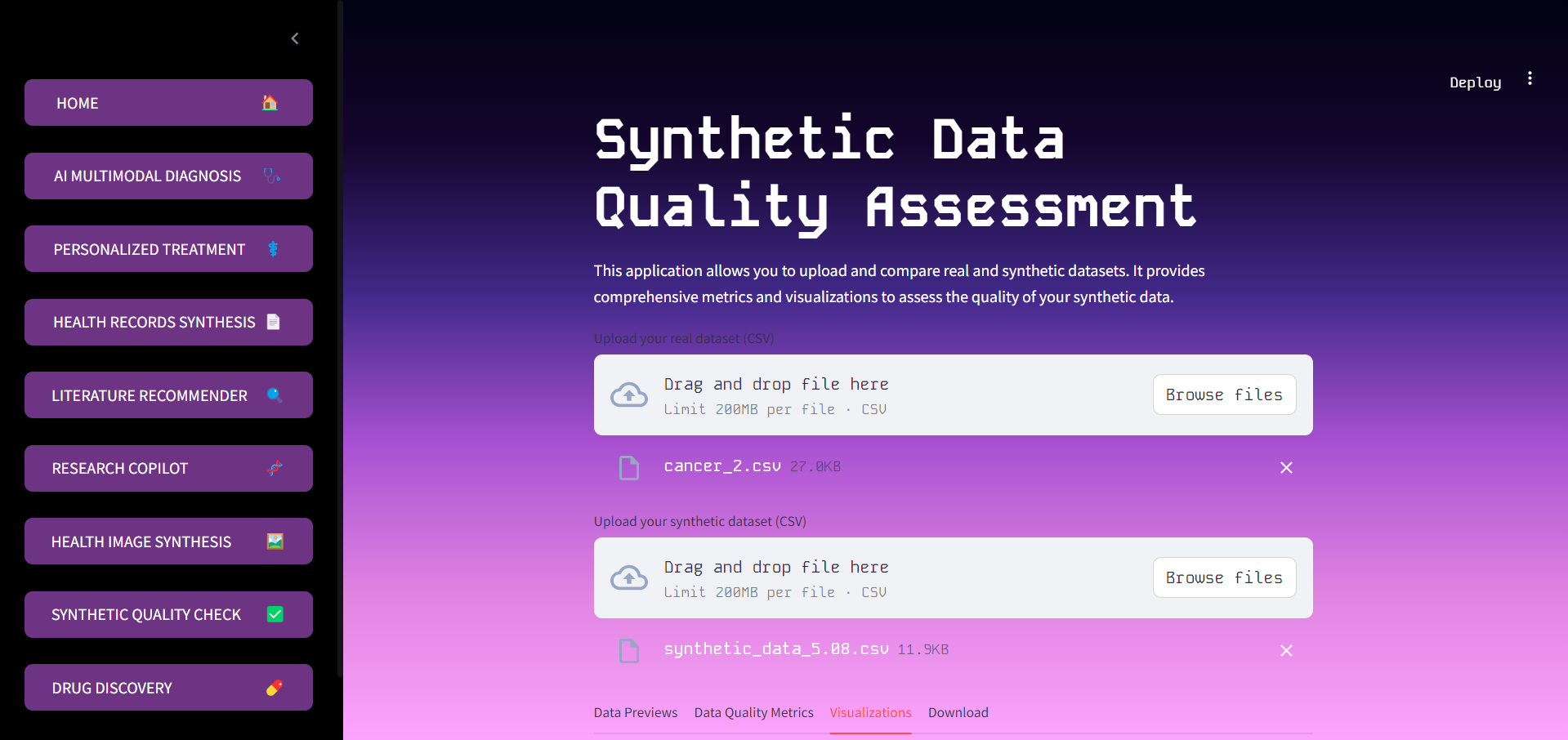
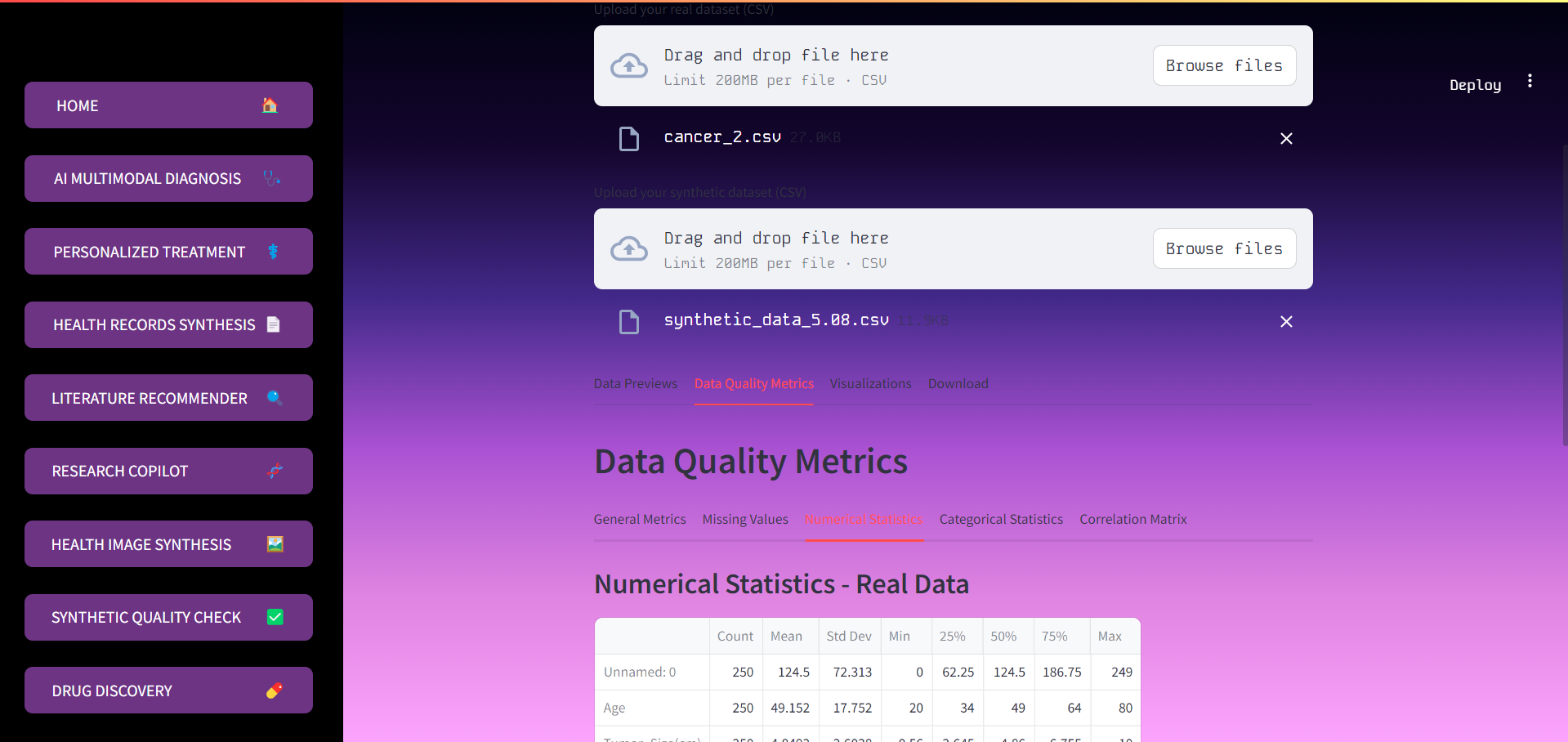
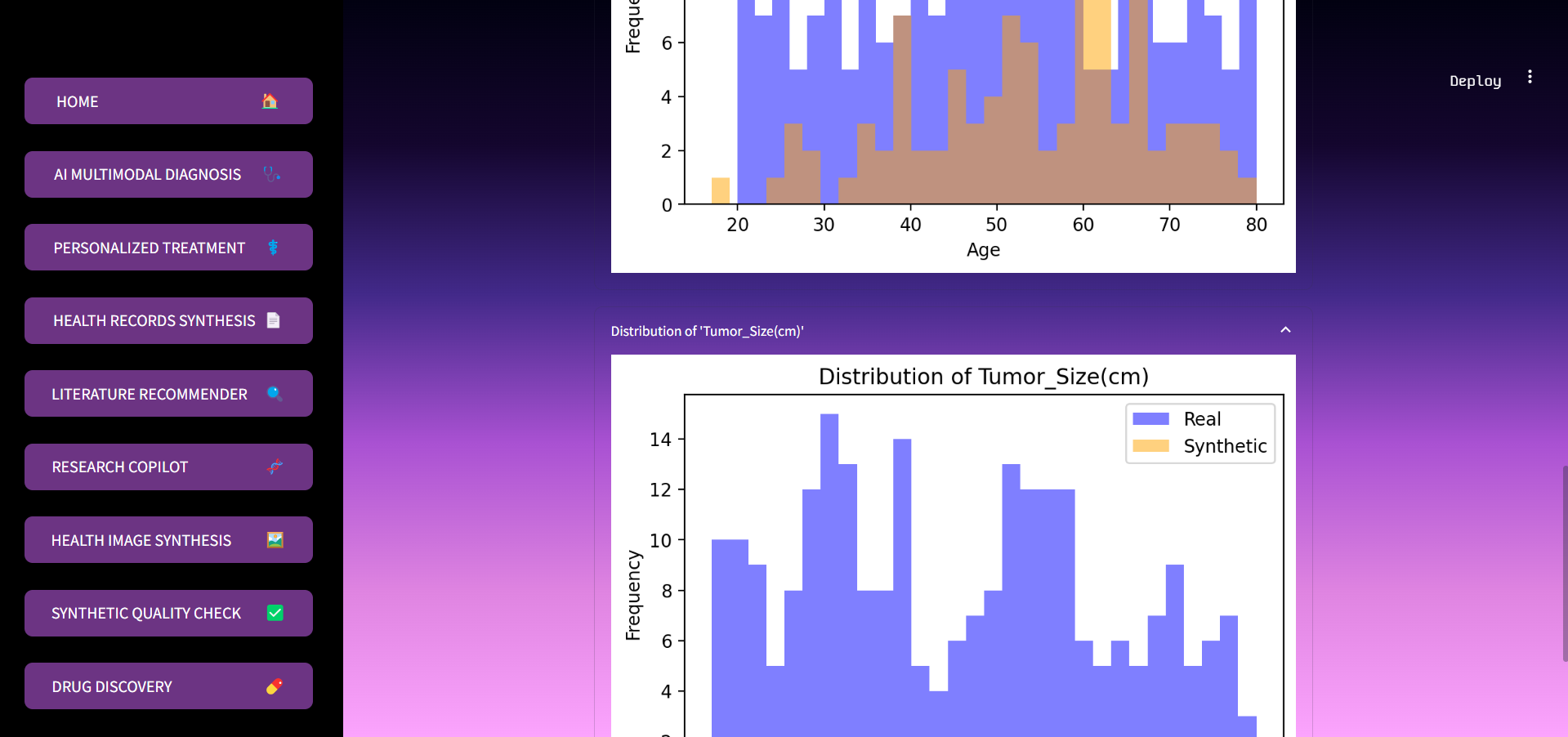
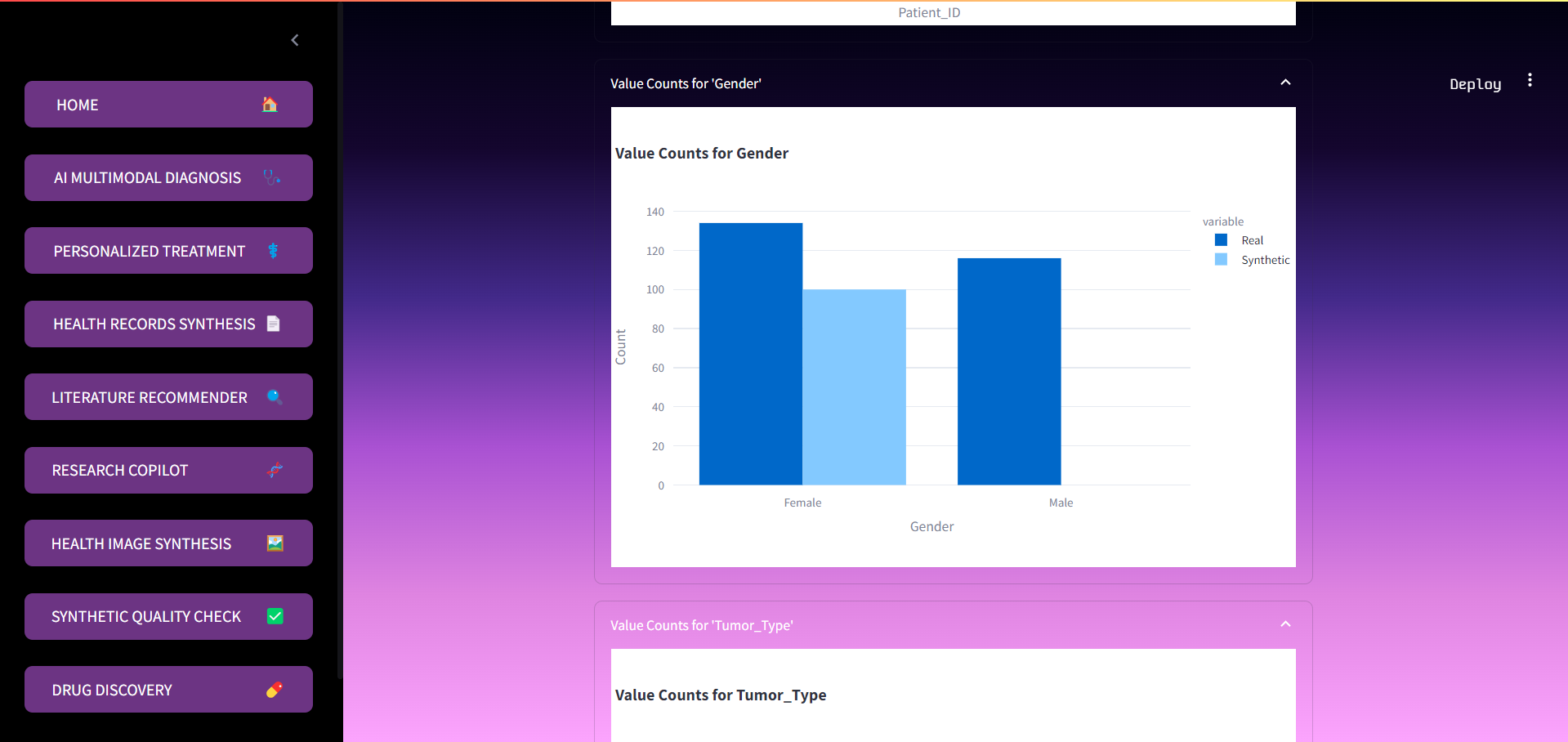
synthetic data quality assessment
-
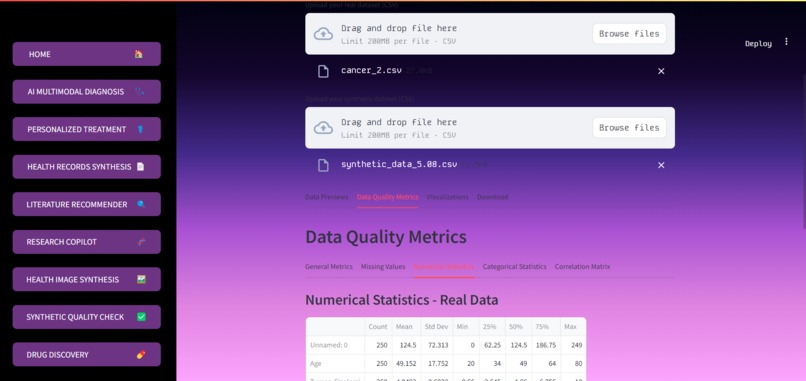
synthetic data quality assessment
-
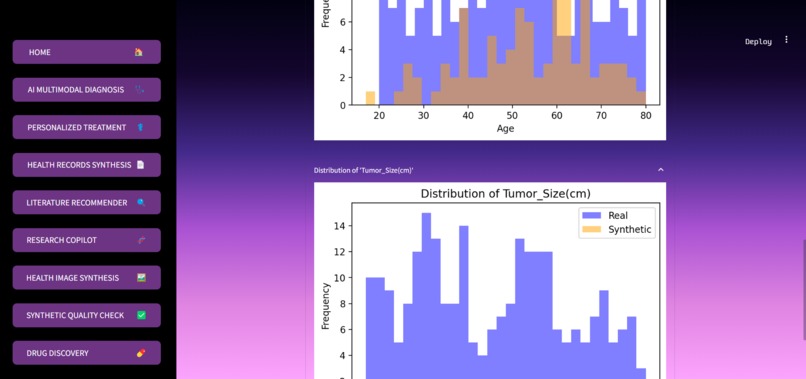
synthetic data quality assessment
-
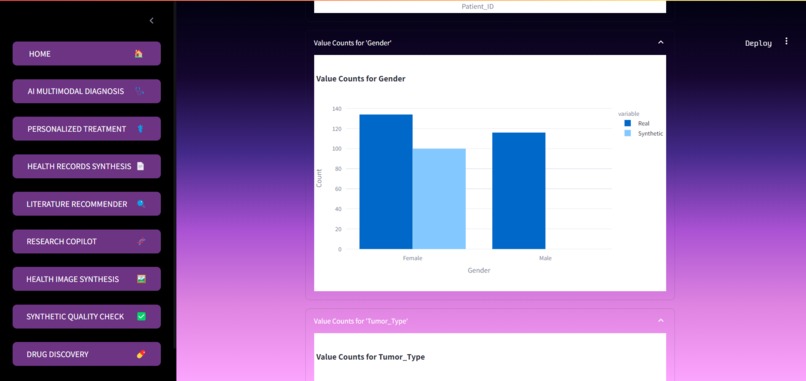
synthetic data quality assessment
-
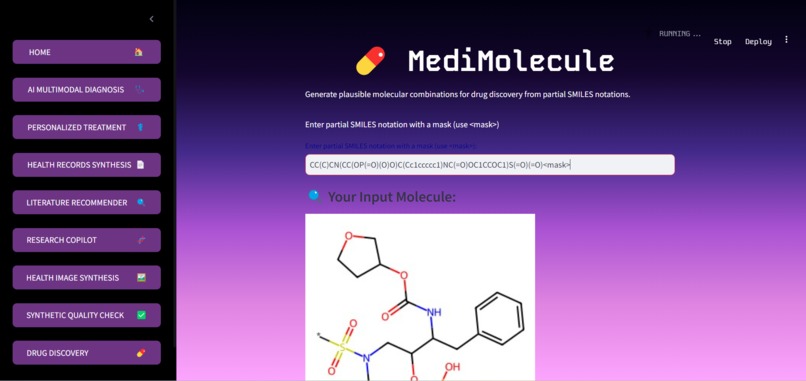
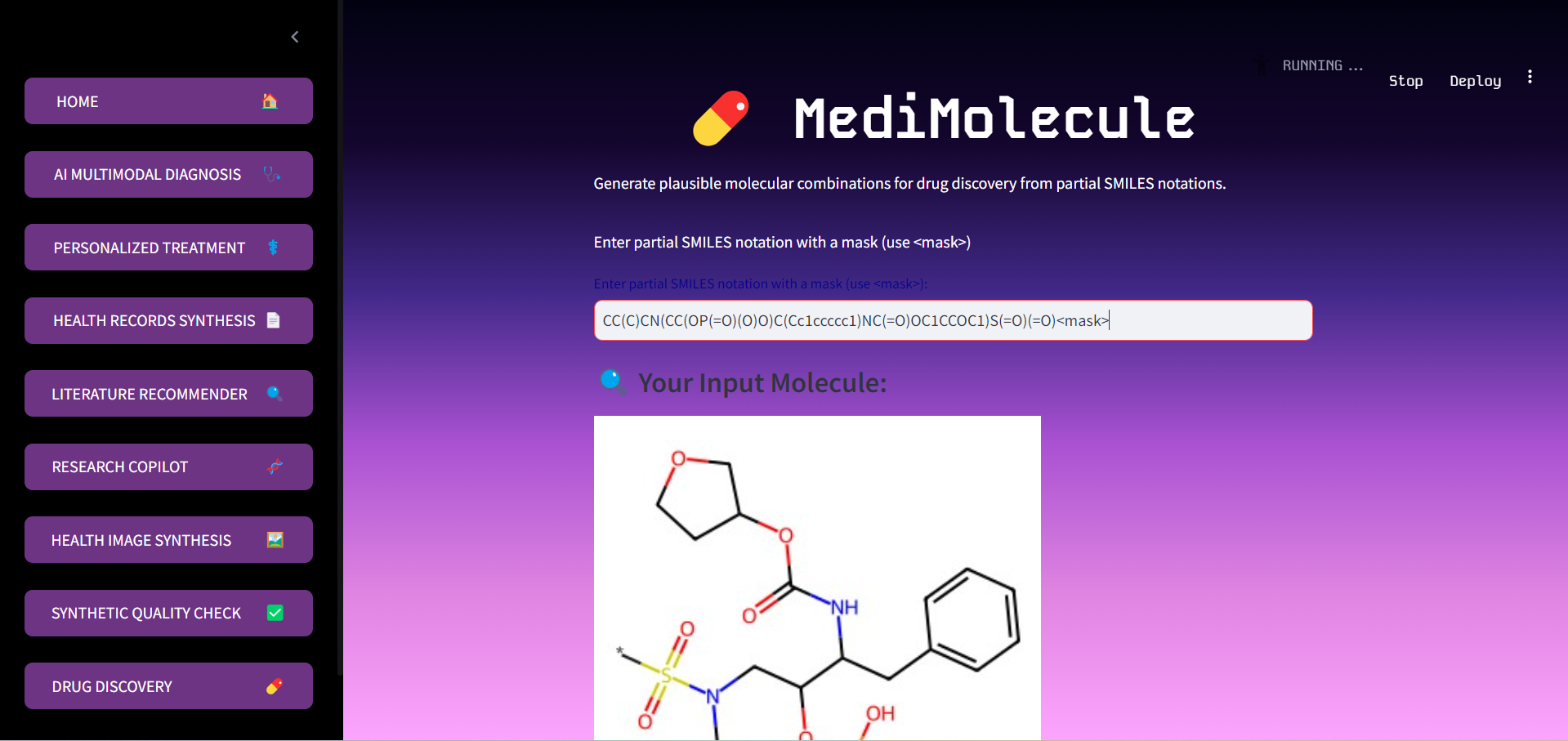
drug discovery and molecular properties tool based on SMILES notation
-
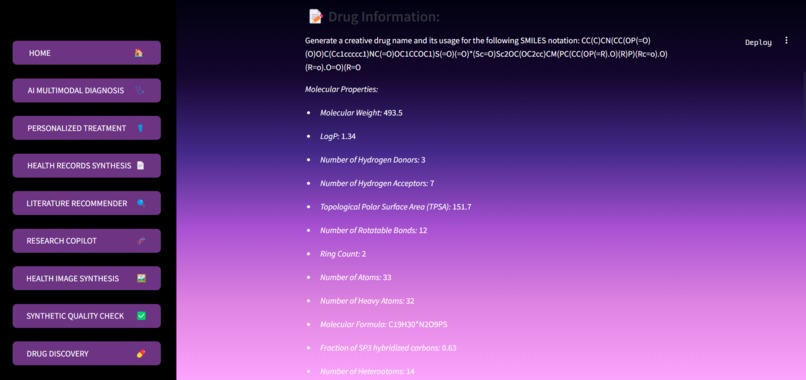
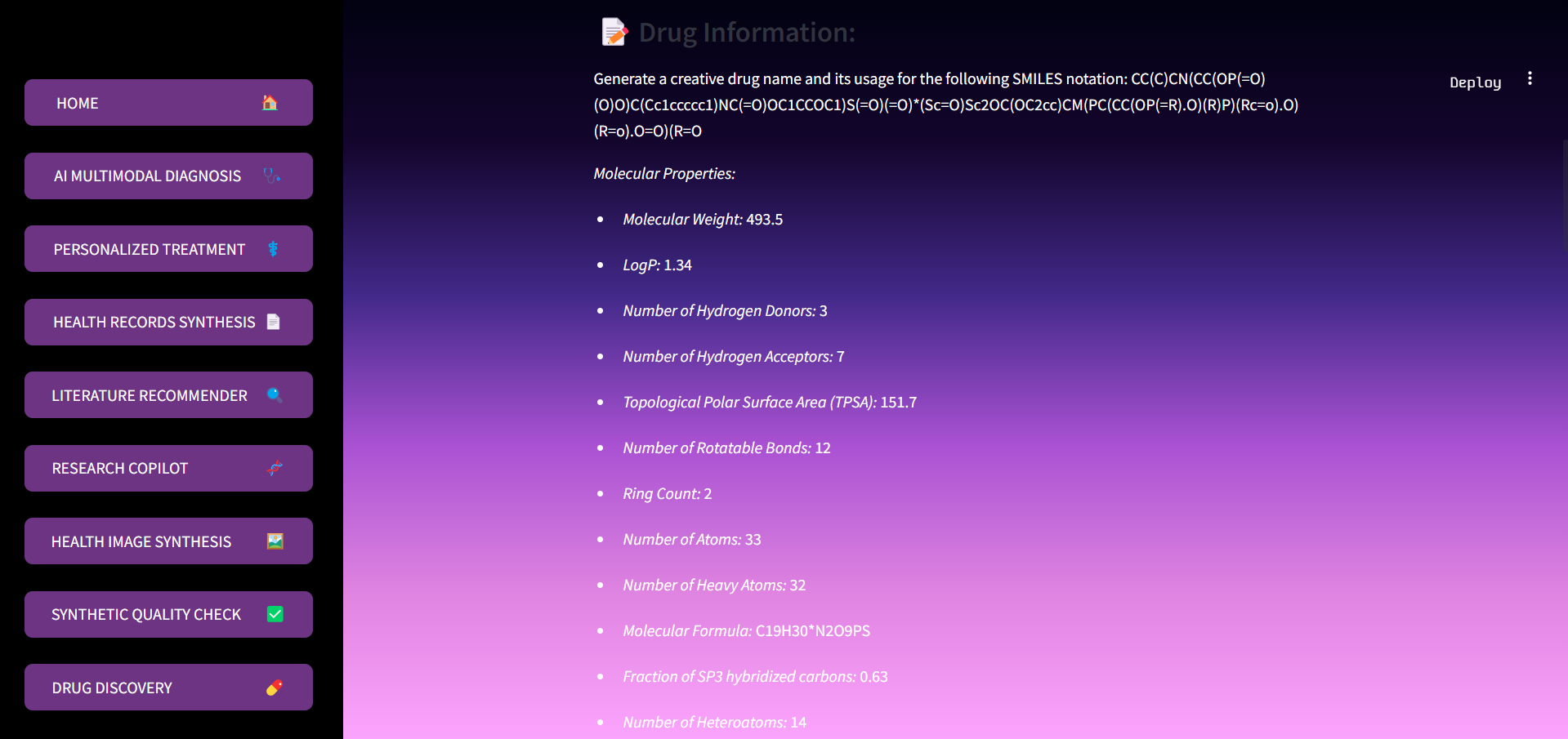
drug discovery and molecular properties tool based on SMILES notation
-
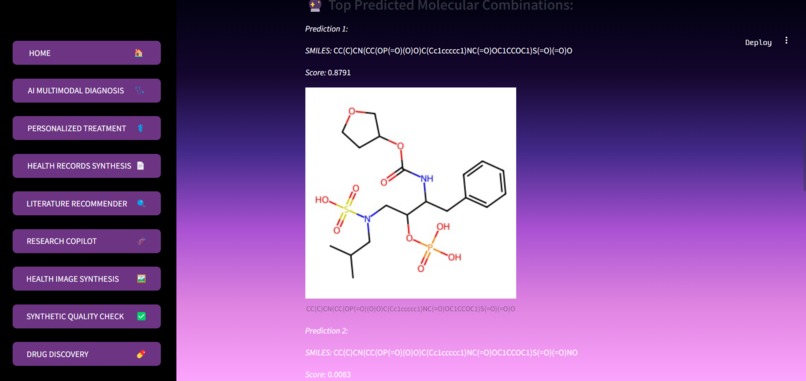
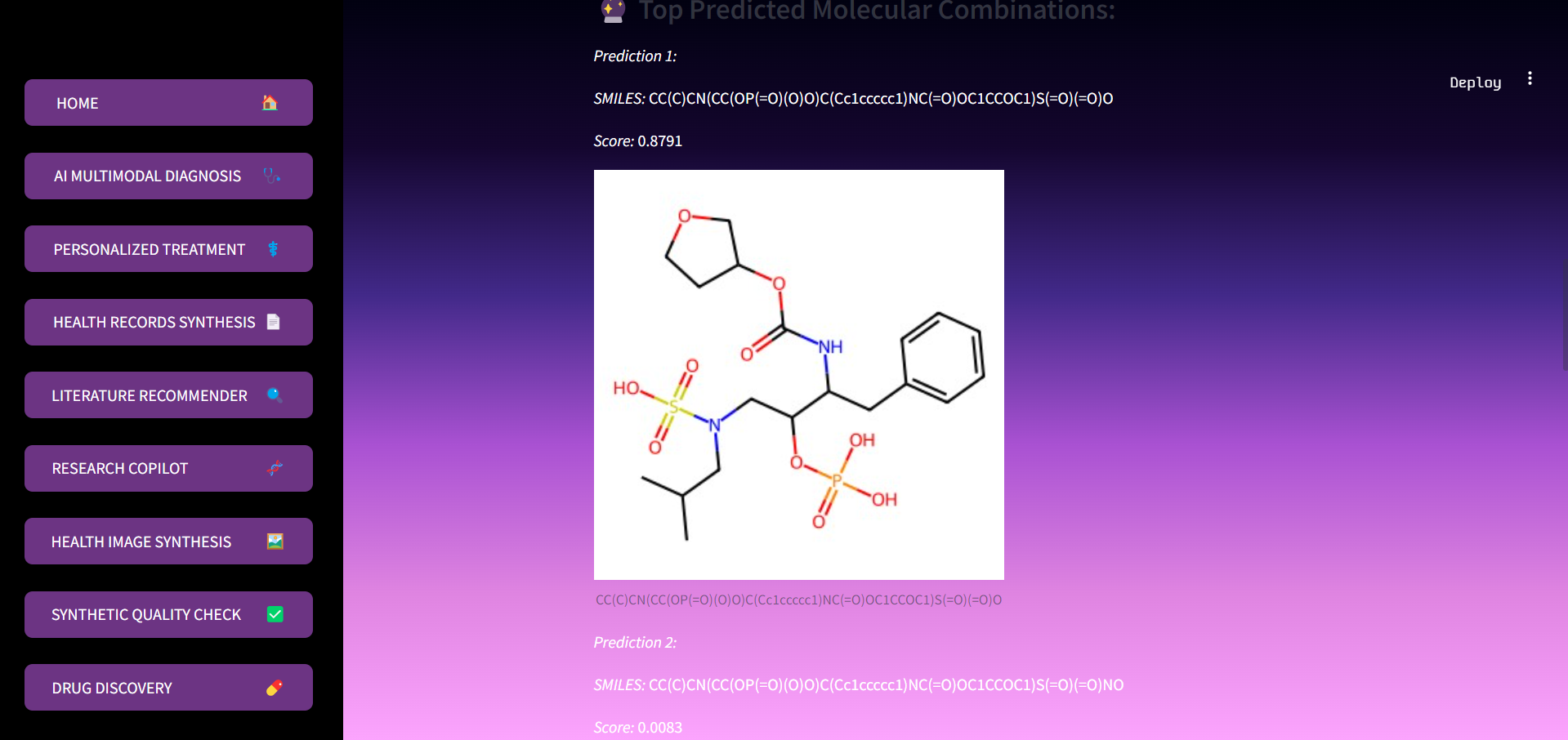
drug discovery and molecular properties tool based on SMILES notation
-
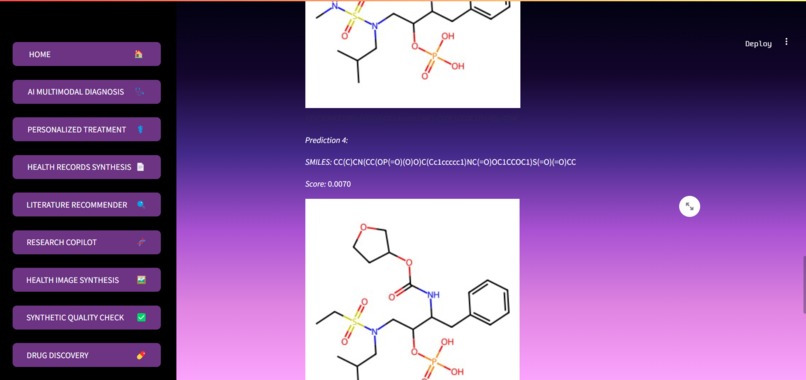
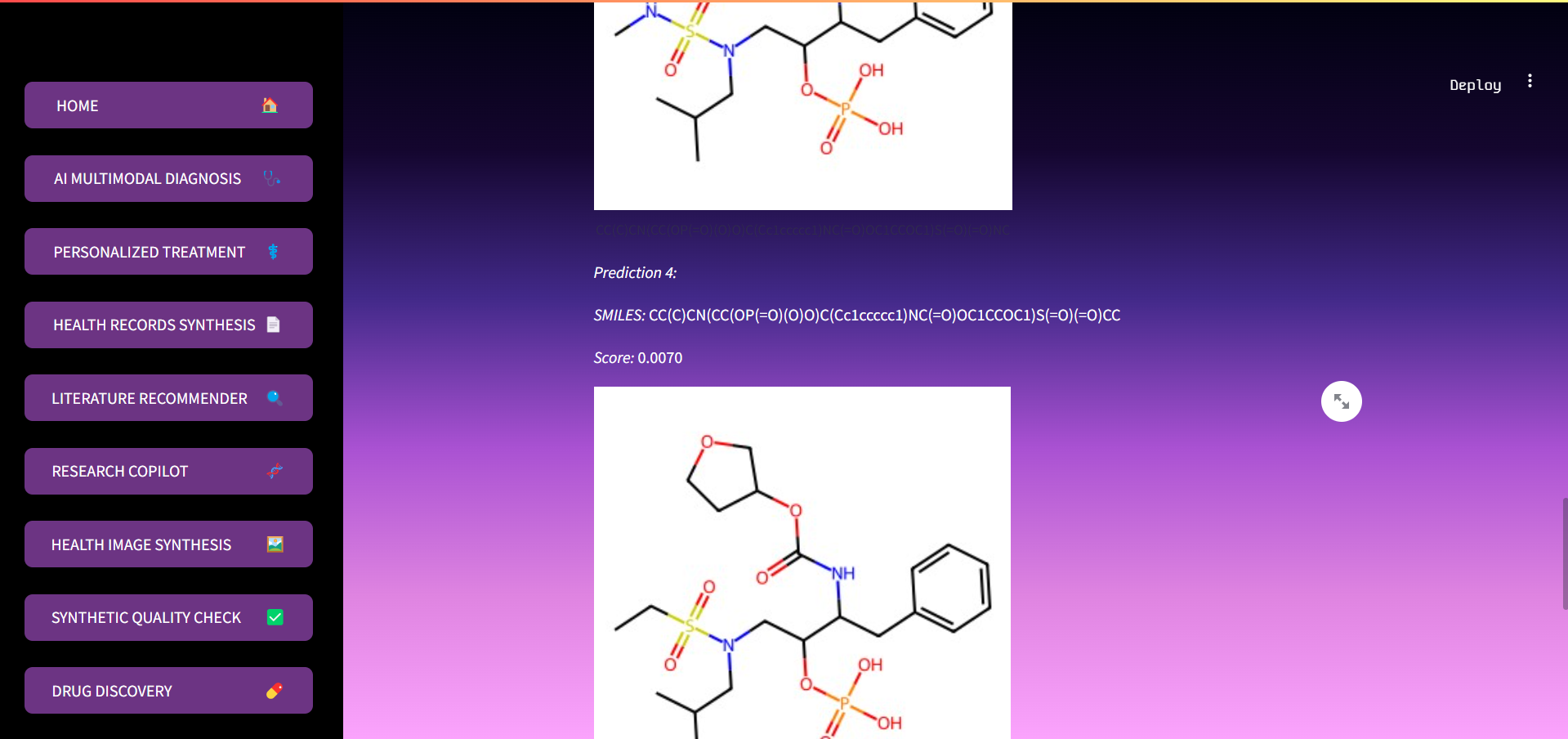
drug discovery and molecular properties tool based on SMILES notation
Track 3: AI Chatbot Assistant Development
Revolutionizing Medical Treatment and Research with AI: Democratizing Healthcare Research and Treatment
Inspiration
The primary inspiration behind this project was to democratize both healthcare research and personal medical treatment. Access to cutting-edge tools and data for research is often limited to large, well-funded institutions, leaving smaller researchers at a disadvantage in utilizing vast amounts of available medical data. On the other hand, individuals seeking personal medical insights and tools face similar barriers in accessing advanced healthcare technologies. By harnessing the power of AI, this platform empowers researchers of all sizes to analyze data faster and generate actionable insights, while also providing individuals with tools and knowledge for personalized healthcare. This ensures that everyone, regardless of their resources, can contribute to healthcare innovation and make informed health decisions.
What we Learned
Throughout the development process, I learned about:
- AI for personalized treatment and diagnosis: I explored the real-world impact of AI-driven tools, understanding how machine learning models can assist in tailoring treatment plans, providing health recommendations, and making real-time diagnostic decisions.
- AI-driven data synthesis: Working with CTGAN models for generating synthetic health records showed me the immense potential of AI to create reliable data for research without risking privacy. It also taught me the nuances of handling categorical data, training models for specific health conditions, and ensuring synthetic data quality.
- Scalability of AI Systems: Building a system capable of processing large-scale medical datasets taught me about the complexities of scaling machine learning pipelines and ensuring efficiency, especially when dealing with sensitive medical data.
How we Built the Project
The project was built using Streamlit, a framework that allowed for rapid development of an intuitive user interface. Below is a breakdown of the core features and the technologies used for each:
Gen AI Multimodal Medical Diagnosis
- Technology used: Google Gemini API, Groq API
- The chatbot is powered by the Google Gemini API for medical image analysis and Groq API for fast, natural language processing and context-aware question answering. It offers personalized treatment recommendations based on patient data, providing detailed medical image analysis, symptom-based advice, and disease predictions through a seamless interface. Users can upload medical images for analysis or engage in a chatbot conversation to receive AI-driven diagnostic insights and next steps.
Gen AI Personalized Treatment Tools
- Technology used: Google Gemini API, Groq API, Firebase
- The AI-driven personalized treatment tool is powered by the Google Gemini API for medical image analysis and the Groq API for natural language processing and context-aware question answering. It offers a comprehensive set of health tools, including: -- Chatbot: Personalized symptom-based advice, disease predictions, and treatment recommendations, driven by real-time patient data and medical history. -- Health Monitoring: Stores general health information. -- Diet Plans: Customized nutrition plans based on user preferences, dietary restrictions, and health goals. -- Workout Plans: Tailored fitness routines designed to meet individual fitness levels and goals. -- Health Goals: Set and monitor specific health objectives, ensuring progress through regular updates and advice. Firebase is used for secure login and user authentication, providing a seamless and secure user experience while managing health records and goals.
AI-Driven Data Synthesis
- Technology used: CTGAN, Levenshtein Distance, Streamlit
- The platform enables the generation of synthetic medical records, utilizing CTGAN models trained on real datasets. Users can choose between a General Health Record Synthesizer and a Specific Record Synthesizer. The General Health Record Synthesizer generates synthetic data based on similar disease conditions identified using Levenshtein distance. The Specific Record Synthesizer allows users to upload their own datasets, selectively remove sensitive information, and generate synthetic data tailored to specific conditions, ensuring privacy and scalability in medical research.
Research Paper Recommender
- Technology used: FAISS (Facebook AI Similarity Search), PubMed datasets, Sentence-BERT embeddings
- This tool assists researchers with literature reviews by integrating FAISS indexing for fast retrieval and similarity-based recommendations from PubMed research papers. By using Sentence-BERT embeddings, abstracts are encoded to find the most relevant articles based on user queries. Key features include: --Search and Fetch: Pulls articles from PubMed based on user-defined queries. --FAISS Indexing: Builds an efficient similarity-based index for fast research paper recommendations. --Personalized Recommendations: Recommends similar research papers based on user-provided queries, offering targeted and contextually relevant insights.
- Technology used: FAISS (Facebook AI Similarity Search), PubMed datasets, Sentence-BERT embeddings
Drug Discovery
- Technology used: Generative models for SMILES sequence completion
- This feature accelerates early-stage drug discovery using masked token prediction to complete SMILES sequences, suggesting plausible chemical structures. It also evaluates key molecular properties to help researchers quickly assess drug viability.
- Technology used: Generative models for SMILES sequence completion
Challenges Faced
Some key challenges included:
- Medical Chatbot Development: Building the AI-powered medical chatbot involved designing an intuitive conversational flow while ensuring the chatbot could understand complex medical terminology. Integrating real-time personalized treatment suggestions based on user-provided symptoms and medical conditions required careful training and tuning of AI models for accuracy and reliability.
- Personalized Treatment Tools: Creating a robust AI system that could analyze individual health data and provide tailored treatment recommendations was a key technical challenge. Ensuring these tools were dynamic and adaptable to different users' health needs involved developing flexible AI pipelines capable of interpreting varying inputs such as lifestyle data, health goals, and medical history.
- Data Complexity: Synthesizing multimodal datasets required careful consideration of consistency across diverse data formats.
- Synthetic Data Quality: Maintaining the privacy of patient data while generating high-quality synthetic medical data posed a challenge, which we overcame using rigorous evaluation methods.
- Scalability: Future scalability will require transitioning to a more robust React and Node.js architecture.
Scope
This platform aims to democratize access to advanced AI tools for all researchers, especially smaller labs with limited resources. By offering features like real-time data synthesis, virtual clinical trials, and personalized treatments, the platform speeds up discoveries and makes cutting-edge healthcare innovation more accessible.
Ethical Considerations
Decentralised, Privacy-Preserving Data Collaboration:Enable institutions to retain sensitive medical data locally while contributing to federated model training, ensuring privacy through secure aggregation and differential privacy techniques. By leveraging diverse datasets from multiple sites, robust synthetic medical data can be generated without sharing raw patient data, safeguarding against reverse engineering and enhancing model accuracy across various medical contexts.
Future Plans
- Virtual Clinical Trials: The platform will integrate virtual trials to simulate drug testing and optimize candidate compounds faster.
- Cross-disciplinary Knowledge Fusion: We plan to bridge insights across genomics, pharmacology, and clinical data, creating opportunities for novel research breakthroughs.
- Scalability: For the final model, we plan to implement the platform with React and Node.js for improved performance and accessibility.
By breaking down barriers and leveraging AI, we aim to accelerate medical breakthroughs and make high-quality research and treatment tools accessible to all.


Log in or sign up for Devpost to join the conversation.