-
-
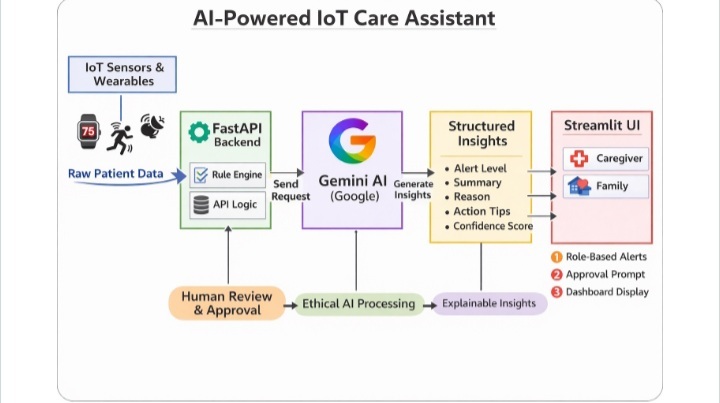
Architecture Diagram
Inspiration
Modern healthcare and elderly care systems generate continuous streams of IoT data such as movement, heart rate, and activity patterns. However, caregivers and families often struggle to quickly understand what these raw signals actually mean.
We wanted to build an AI-powered system that transforms complex sensor data into clear, explainable, and ethical insights that support human decision-making instead of replacing it.
Our inspiration came from the growing need for trustworthy AI in healthcare — especially systems that prioritize transparency, safety, and human oversight.
What it does
Gemini Intelligent Care Assistant is an AI-powered healthcare monitoring platform that analyzes IoT patient data and converts it into meaningful, role-based insights using Gemini AI.
The system detects anomalies such as prolonged inactivity, abnormal heart rate, and unusual behavior patterns. It then generates explainable alerts with summaries, possible causes, risk explanations, confidence levels, and recommended actions.
Different users receive tailored responses:
- Caregivers receive detailed actionable insights
- Family members receive simplified reassuring updates
- Supervisors receive concise decision-focused summaries
The platform also follows ethical AI principles by ensuring human approval before escalation and avoiding direct medical diagnosis.
How we built it
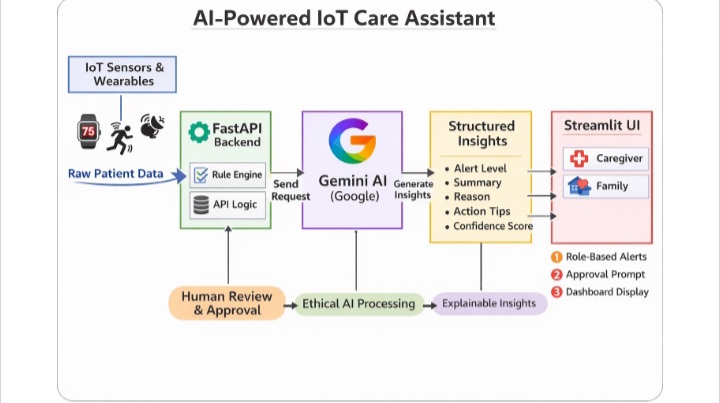
We built the backend using FastAPI and Python to process incoming patient monitoring data and manage AI-generated insights. The frontend was developed using Streamlit to create an interactive and user-friendly healthcare dashboard.
Gemini API was integrated as the AI engine responsible for generating contextual explanations, summaries, and role-based responses from structured IoT data.
The project architecture includes:
- FastAPI backend for APIs and processing
- Streamlit frontend for visualization
- Gemini AI for explainable insight generation
- Structured JSON-based alert handling
- Role-based response logic for caregivers, family members, and supervisors
We also deployed the frontend and backend online to provide a working live demo experience.
Challenges we ran into
Designing AI responses that remain ethical and avoid medical diagnosis Making AI-generated alerts understandable and explainable Creating different response styles for multiple user roles Handling structured JSON outputs reliably from Gemini AI Balancing technical functionality with a clean and intuitive UI Deploying both frontend and backend services successfully
Accomplishments that we're proud of
Building a fully working AI healthcare assistant with live deployment Creating explainable AI outputs instead of black-box responses Implementing role-based insight generation for different users Designing an ethical human-in-the-loop workflow Successfully integrating FastAPI, Streamlit, and Gemini AI together Creating a project with real-world healthcare relevance and social impact
What we learned
How to design AI systems responsibly in sensitive domains like healthcare Practical integration of Gemini API into real-world applications Full-stack AI application development using FastAPI and Streamlit Importance of explainability and transparency in AI systems Deployment and API integration workflows How user experience and presentation significantly improve project impact

Log in or sign up for Devpost to join the conversation.