-
-
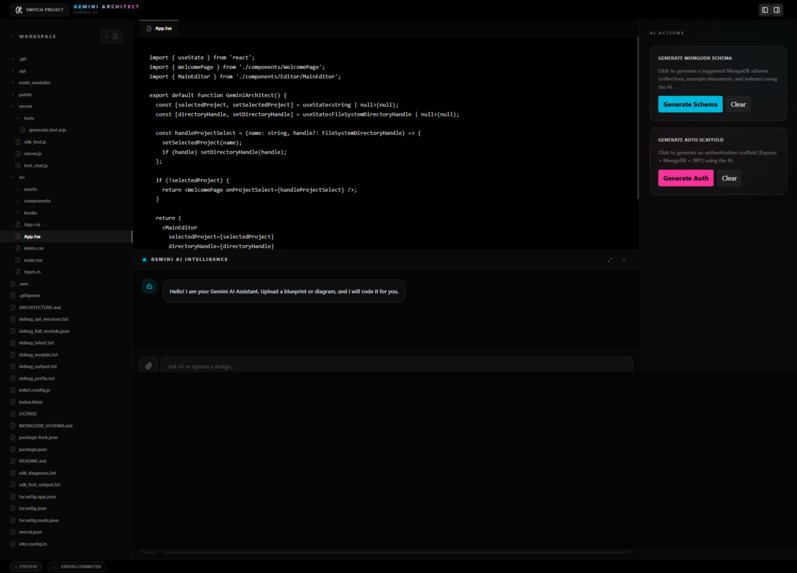
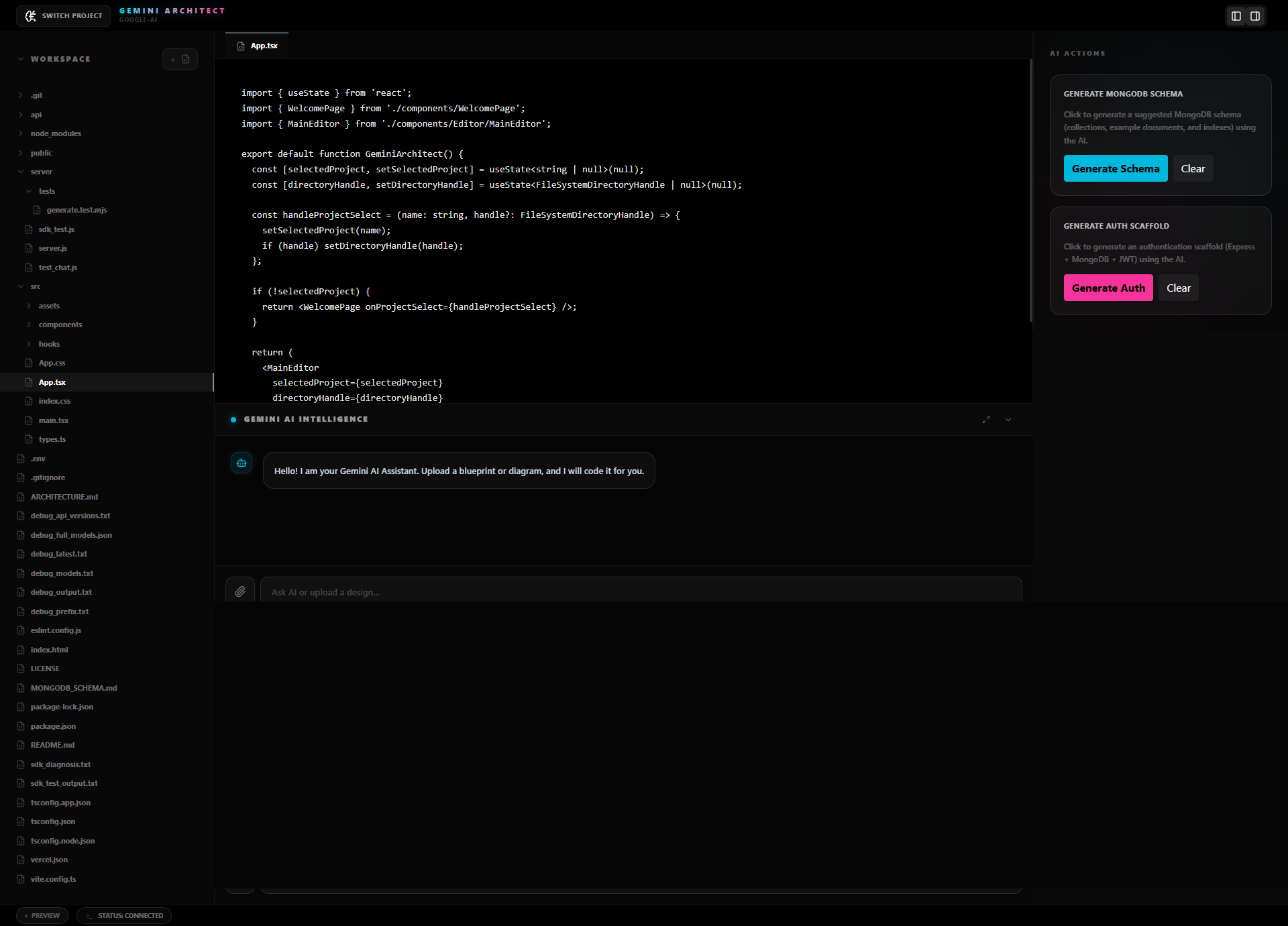
this is the main ui/ux with gemini ai
-
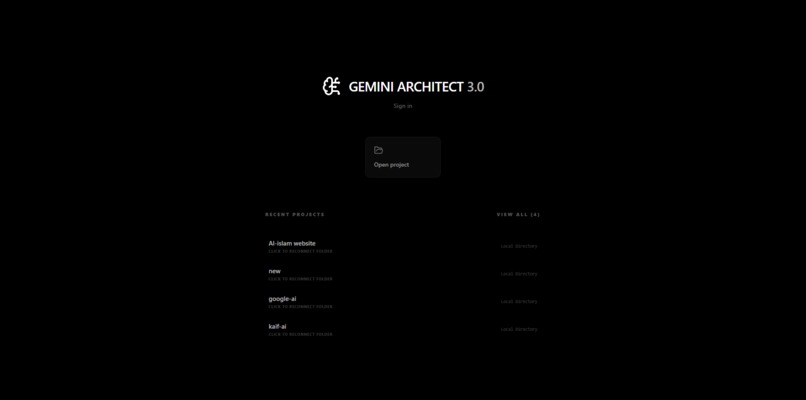
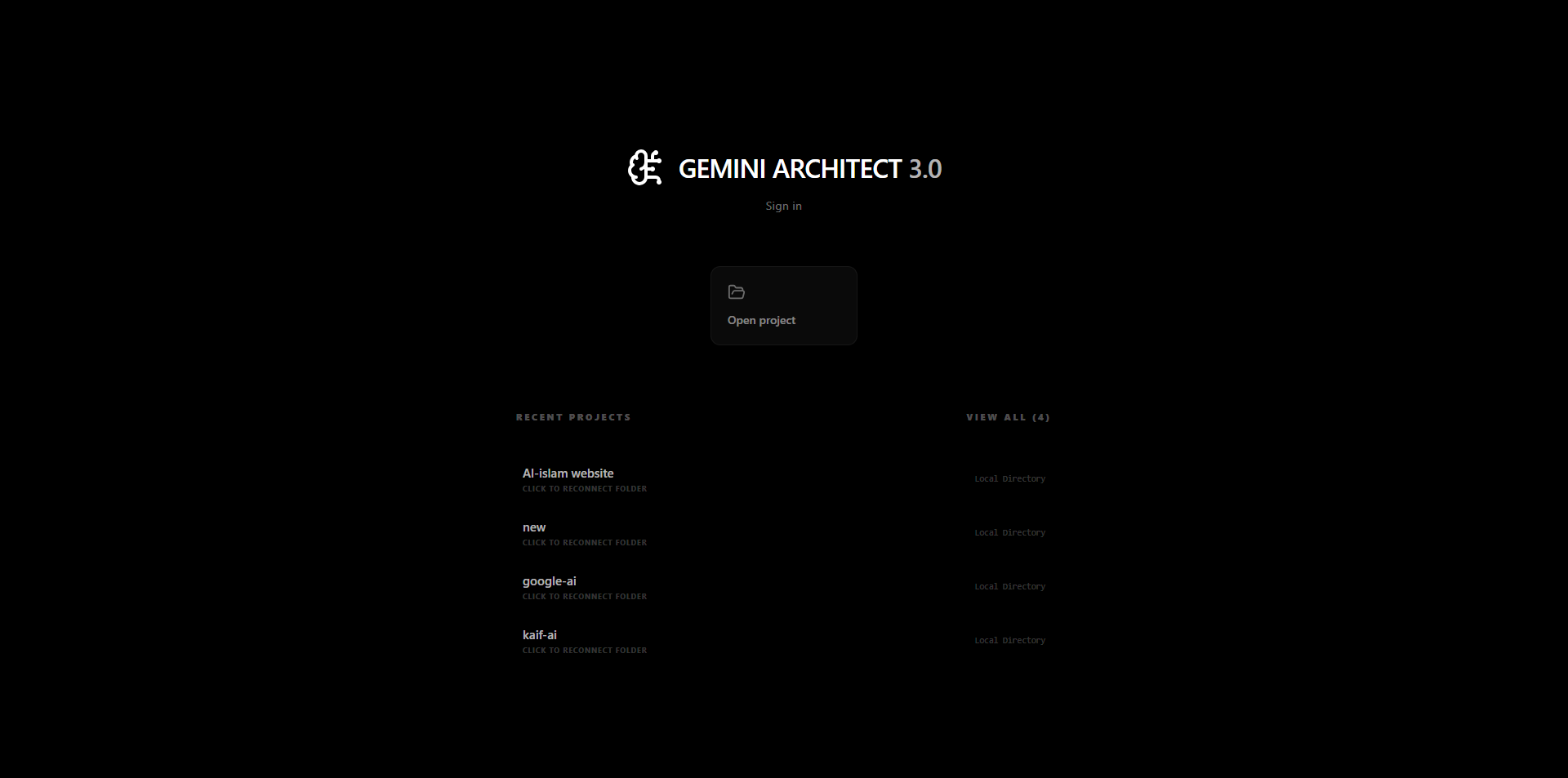
this is to select the folder
Inspiration
As a web developer , I often found myself stuck in the repetitive loop of setting up the "glue code" between my frontends and backends. I realized that while I had great ideas for interfaces, the friction of configuring server logic and API connections slowed down innovation. I wanted to build a tool that didn't just write code, but acted as an "Architect"—understanding the full-stack context and bridging the gap between a visual idea and a working server instantly.
What it does
Gemini Architect 3.0 is an intelligent full-stack agent. It takes a user's project requirements in plain English and autonomously generates the necessary architecture to connect a Vite + React frontend to a robust Node.js backend. It handles the complexity of API route creation, data fetching, and state management, effectively automating the most tedious parts of full-stack development.
How we built it
The project follows a modern, decoupled architecture:
Frontend: We used Vite + React for a lightning-fast, responsive user interface.
Backend: We implemented a custom Node.js/Express server (housed in a dedicated server folder) to handle API orchestration and secure data processing.
AI Engine: The core intelligence is powered by the Gemini 3.0 API. We engineered specific prompts to ensure the AI understands full-stack context, allowing it to generate secure, production-ready code.
Deployment: The entire application is deployed on Vercel, utilizing serverless functions to bridge the backend logic with the static frontend assets. You can view the source code in our GitHub Repository.
Challenges we ran into
The biggest technical hurdle was configuring the deployment pipeline for a hybrid architecture on Vercel. Since we weren't using a standard framework like Next.js for the backend, we had to manually configure the vercel.json rewrites to correctly route API requests from the Vite frontend to our custom server folder. Debugging the communication between the client-side and server-side in a serverless environment taught us valuable lessons about proxy configurations and environment variable management.
Accomplishments that we're proud of
We are incredibly proud of successfully deploying a truly full-stack application. Many hackathon projects are just frontends with mock data, but Gemini Architect 3.0 is a living, breathing application with a real server backbone. Seeing the AI successfully interpret a prompt and generate valid, connecting code across the stack was a huge "aha!" moment for the team.
What we learned
This project deepened our understanding of AI integration patterns. We learned that the quality of AI output relies heavily on how you structure the "context" you feed it—treating the AI not just as a chatbot, but as a system component. We also gained significant experience in DevOps, specifically in adapting traditional Express applications for modern serverless deployment platforms.
What's next for Gemini Architect 3.0
We plan to expand the Architect's capabilities to include Database Schema Generation. Currently, it connects the API layer, but the next version will be able to write your MongoDB or SQL schemas automatically based on your frontend requirements. We also aim to implement a "One-Click Deploy" feature, allowing users to push the generated architecture directly to their own cloud accounts.
Built With
- express.js
- framer-motion
- gemini-api
- lucide-react
- node.js
- react
- tailwind-css
- vercel
- vite


Log in or sign up for Devpost to join the conversation.