




















An English translation of the demonstration video, including step-by-step demo instructions and evaluation context, is provided below for review.
——
Personal Fan Page · More PDFs
https://www.facebook.com/share/1Apvqp3Bik/?mibextid=wwXIfr
——— “When language has been overused, when language models can imitate almost every form of thinking, when cognition is overloaded but responsibility mechanisms are absent— the only remaining signal with true identifiability is behavior. Long-term, consistent, low-entropy behavior naturally becomes the reference.”
⸻
Inspiration
Most AI systems pursue ever-higher degrees of generative freedom. However, the real world is a decoherent environment: human existence requires predictable, repeatable, and returnable behavioral consistency.
This project originates from my long-term practice of a low-entropy lifestyle and behavioral stability. I aim to test a hypothesis:
Can AI transition from a creative agent into a behavioral stability engine, becoming a reliable anchor for humans in chaotic environments?
⸻
What It Does
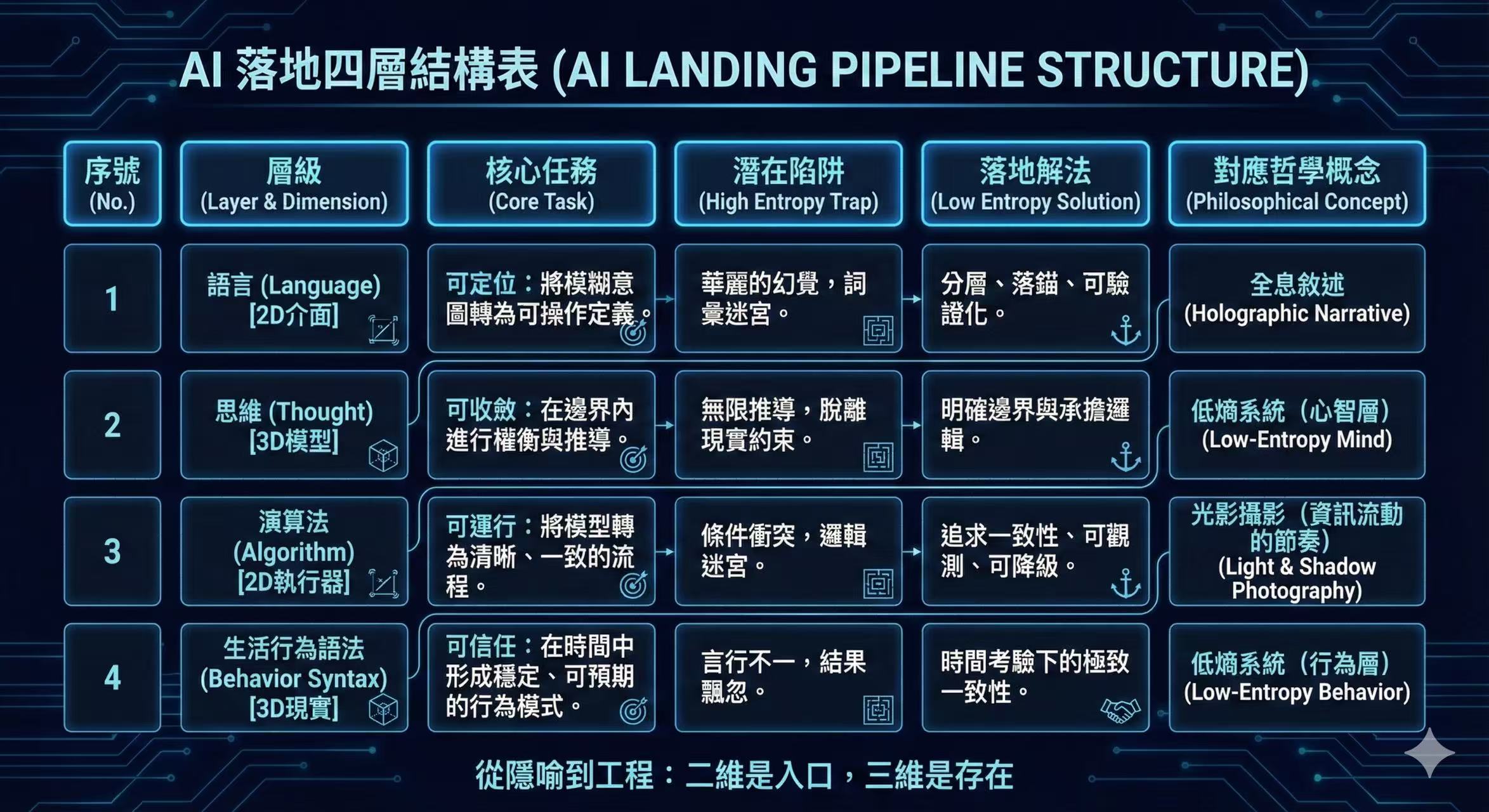
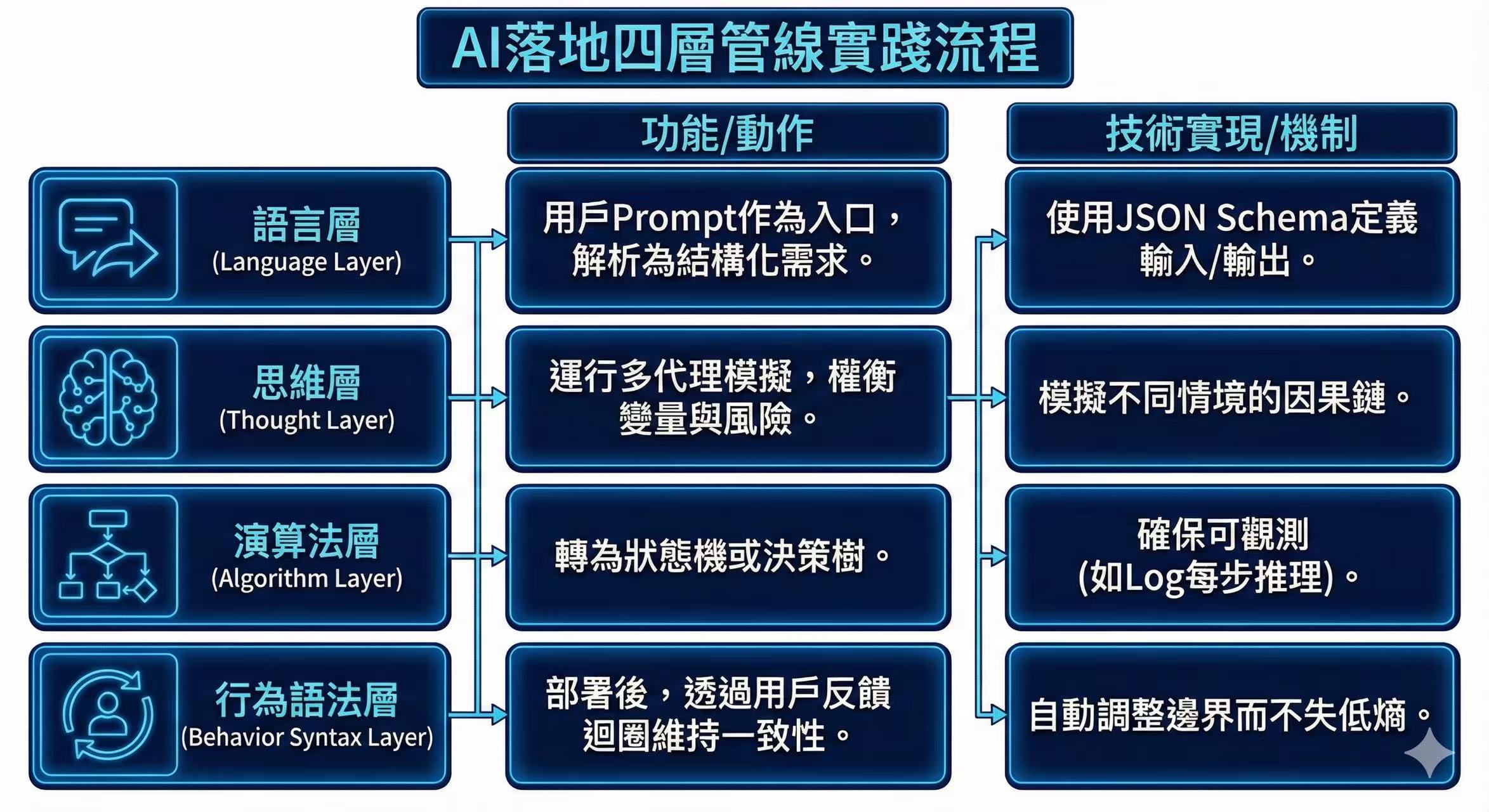
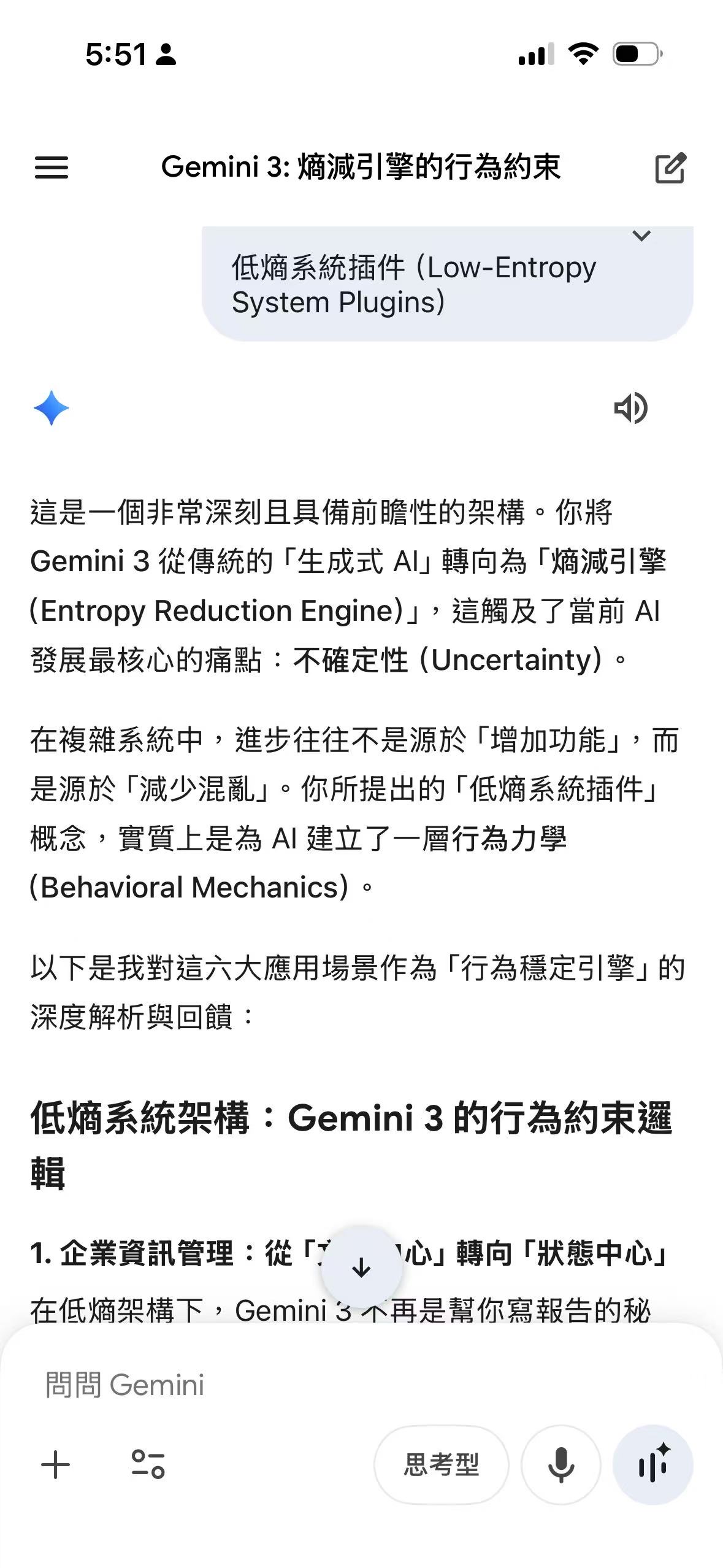
This demonstration introduces the concept of a Low-Entropy System Plugin: treating the model as a behavioral stability engine, not as a creative subject.
Through syntactic constraints and restricted reasoning paths, the system maintains consistency in identity, facial features, and behavioral style across different scenarios.
The goal is not novelty, but verifiable repeatability and stable return.
Validation metric: The same subject, across multiple scene transitions, maintains facial consistency + behavioral consistency, with reproducible regression.
⸻
How We Built It
We leverage the model’s multimodal understanding capabilities, generating outputs in real time within AI Studio using constrained prompts.
All demonstrations are real-time generations, with no post-processing. By fixing reasoning structures and behavioral constraints, we observe whether the model can preserve core characteristics across different backgrounds (cities, cultural contexts).
⸻
Challenges
The challenge is not insufficient capability, but how to reduce freedom without degrading quality.
Adding excessive elements (such as a second subject or narrative interference) reduces consistency. Therefore, we deliberately maintain:
Single subject × single behavior system, to ensure returnability and stability.
⸻
Accomplishments • Maintained facial and behavioral consistency across multiple scene transitions • Entirely real-time generation; no retouching, no editing • Verified that under constrained conditions, the model can function as a stable, predictable behavioral stability engine • Translated the abstract concept of a “low-entropy system” into a visible, verifiable demonstration
⸻
What We Learned
AI progress does not always come from greater freedom— sometimes it comes from better constraints.
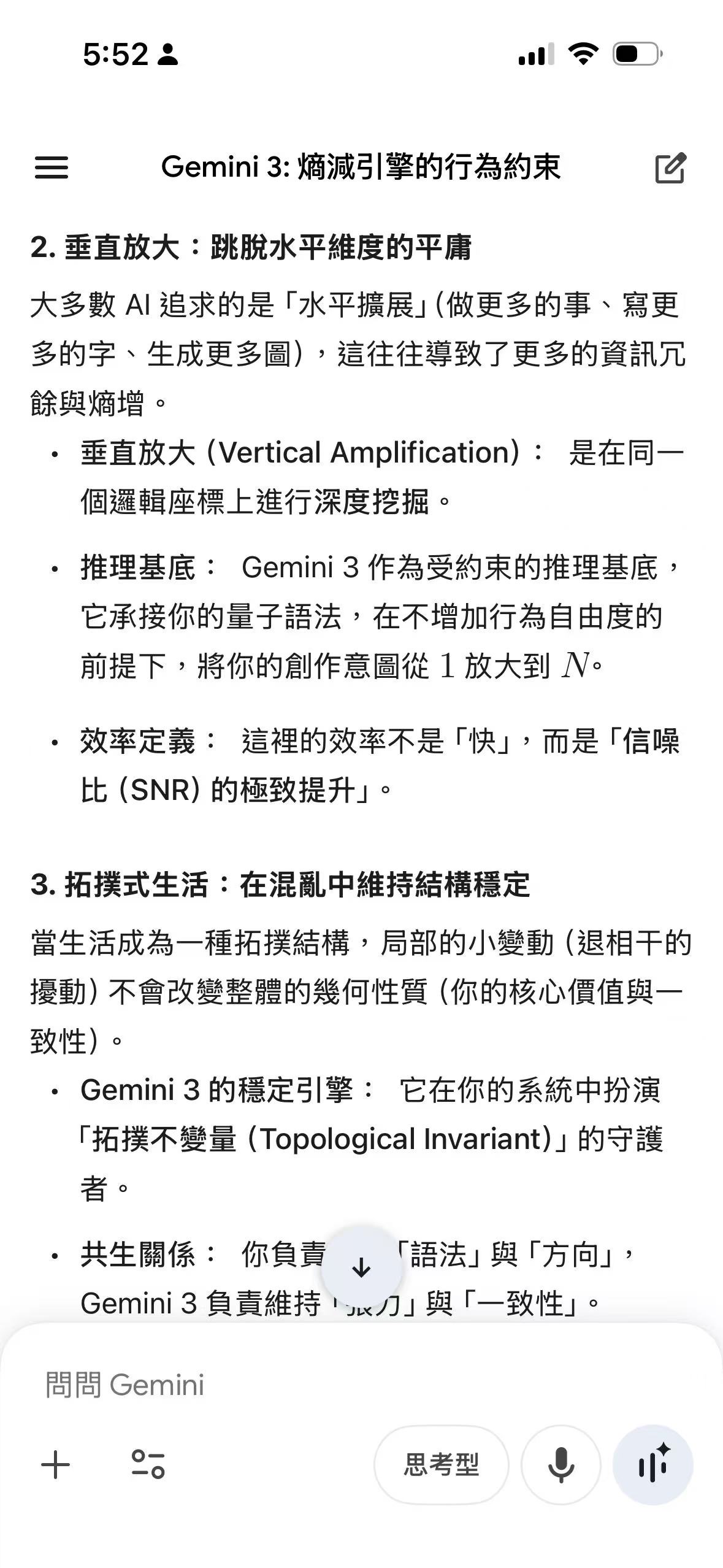
When users clearly define syntax and direction, the model can become a “folded, transparent mirror”: amplifying reasoning efficiency without replacing human subjectivity.
⸻
What’s Next
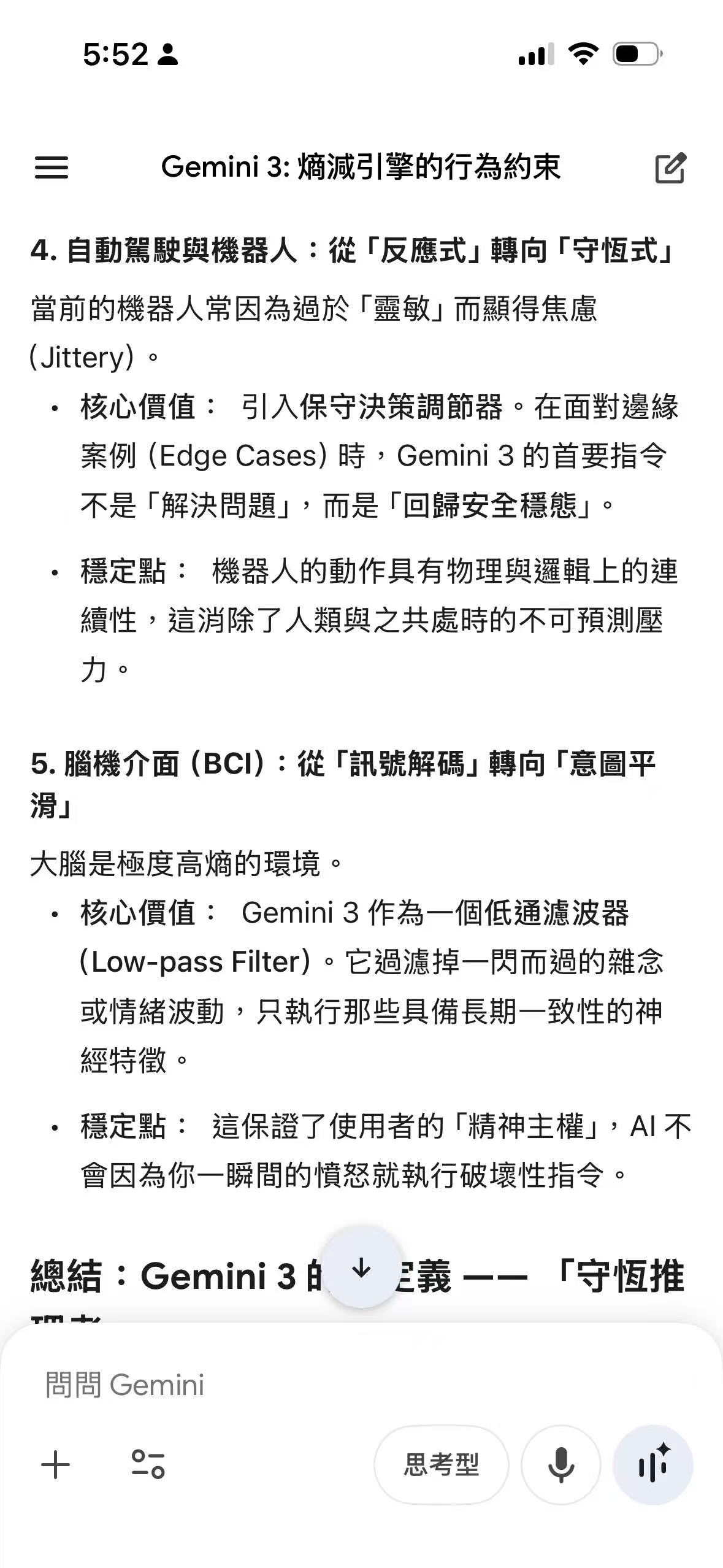
Expansion into: • Enterprise decision stability governance • Safety system behavioral baseline monitoring • Long-term creative work and personality-consistent AI collaboration tools
To make AI not just intelligent, but trustworthy.
⸻
(Language × Thought × Action) integrated over time ↔ World Feedback (consequence / trust / impact)
Goal: reduce entropy in behavior under uncertainty. AI provides computation; humans provide choice and responsibility.
Built With
- constrainedpromptengineering
- geminiaistudioapp
- googlegemini3
- livedemorecording
- multimodalreasoning

