Inspiration
Indonesia faces recurring hydrometeorological disasters such as floods, landslides, and forest fires. We were inspired by a simple problem: during a disaster, information can be just as critical as physical aid.
People on the ground often see what is happening first, but their observations can be delayed, fragmented, or difficult for authorities to verify. We wanted to bridge that gap by turning citizens' smartphones into a network of field observations and connecting them directly to a structured emergency response workflow.
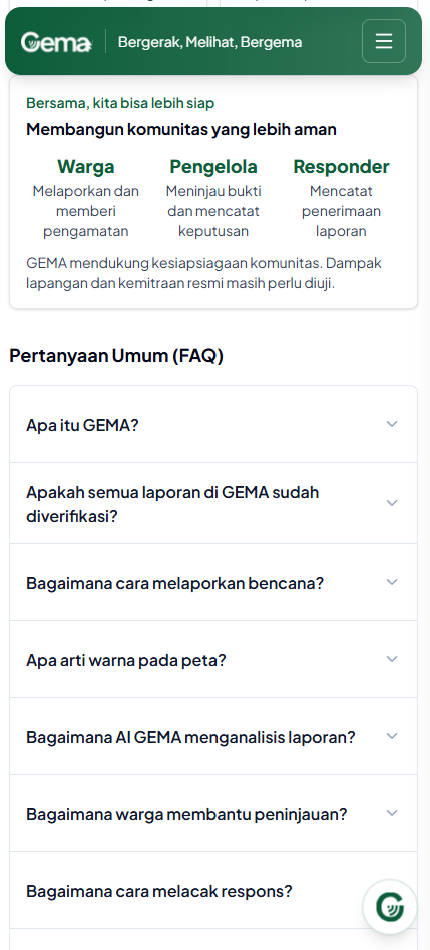
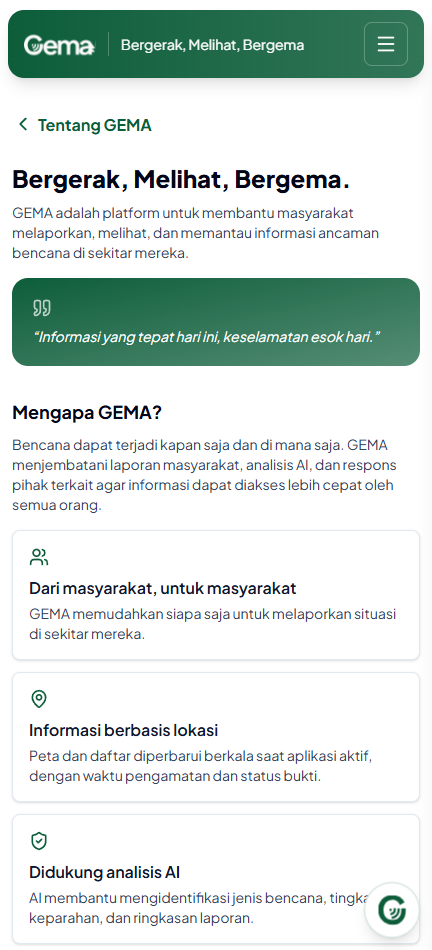
That idea became GEMA (Gerakan Evaluasi dan Monitoring Ancaman) — a platform designed to connect reporting, AI analysis, community verification, geospatial information, and emergency response in one system.
What it does
GEMA transforms a citizen's disaster report into actionable information.
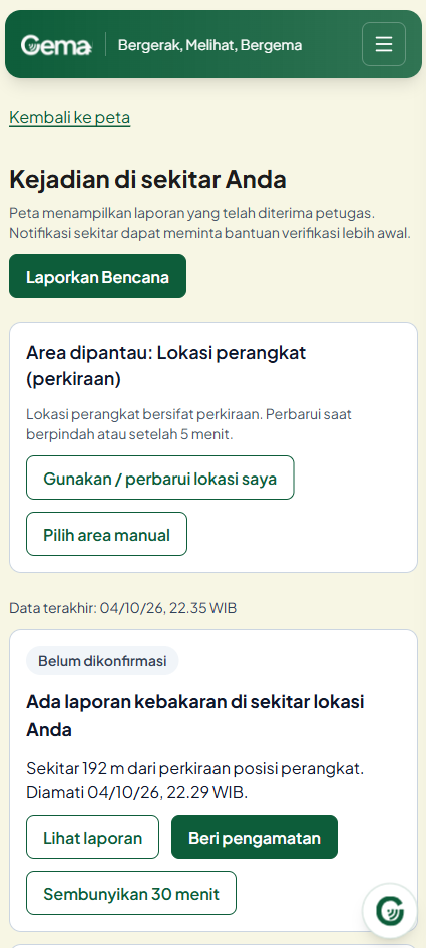
A citizen can capture a photo directly through the application, while the system automatically records its location and timestamp. The report can also be stored locally when the network is unavailable and synchronized once connectivity returns through our offline-first approach.
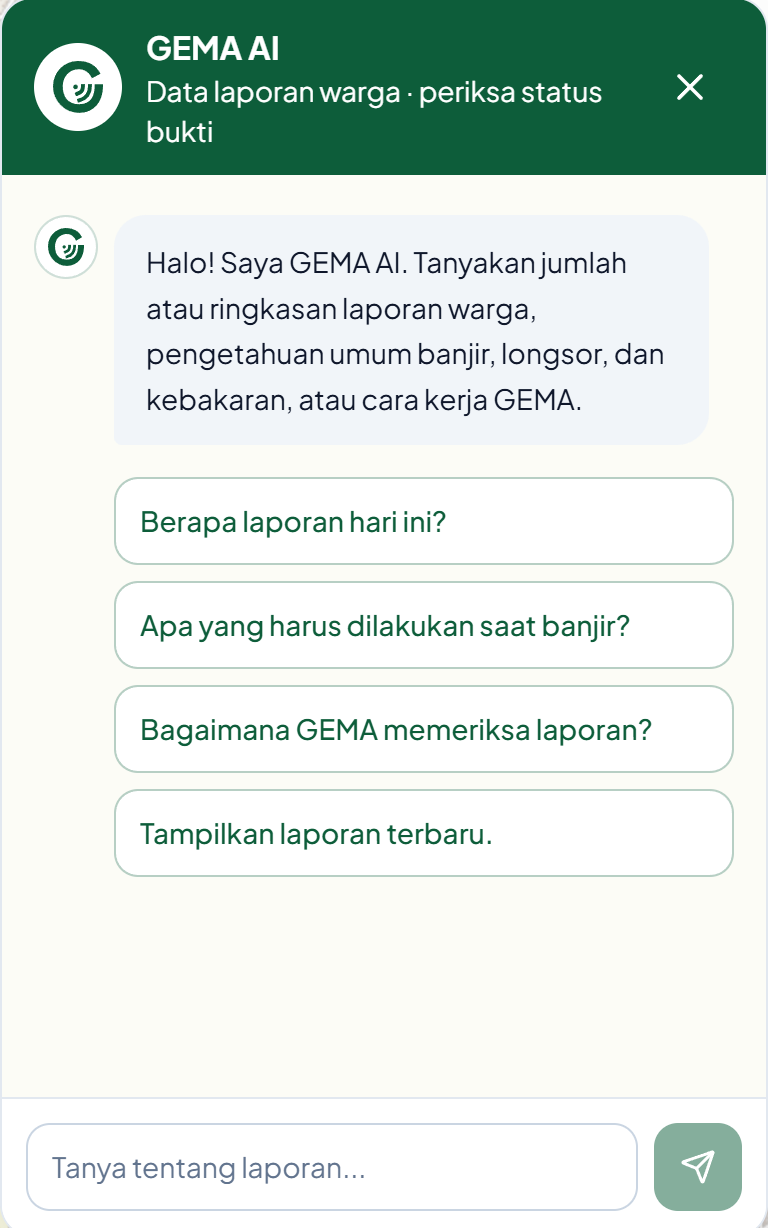
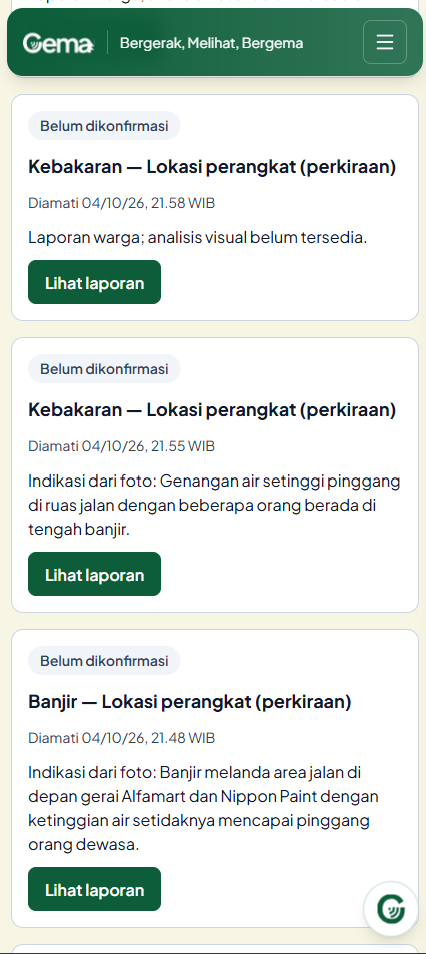
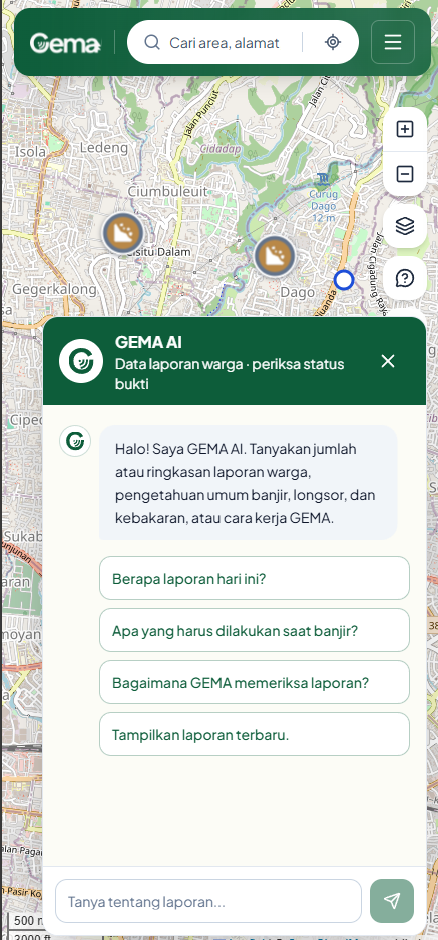
Once received, AI analyzes the visual evidence to identify the potential disaster type, estimate its severity, and provide a confidence score. Reports can then be supported through community validation and human-in-the-loop verification.
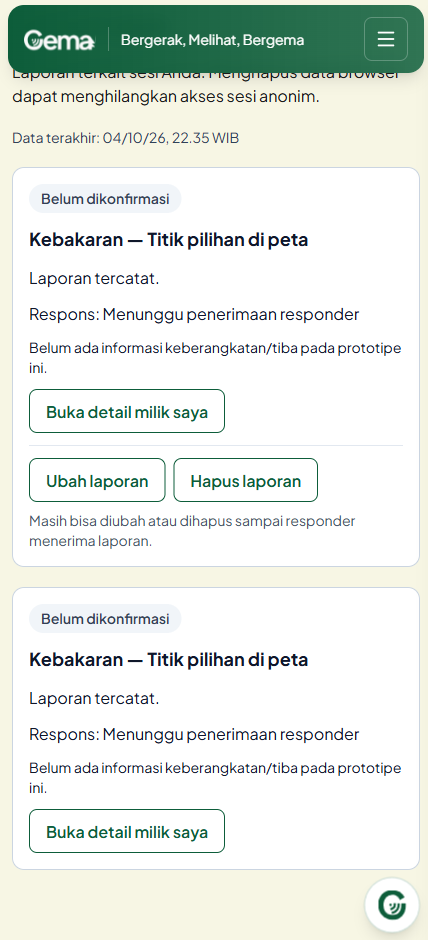
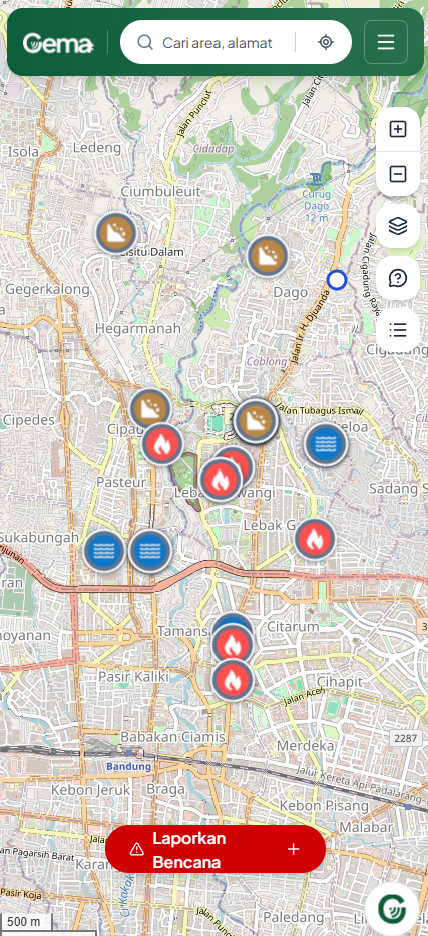
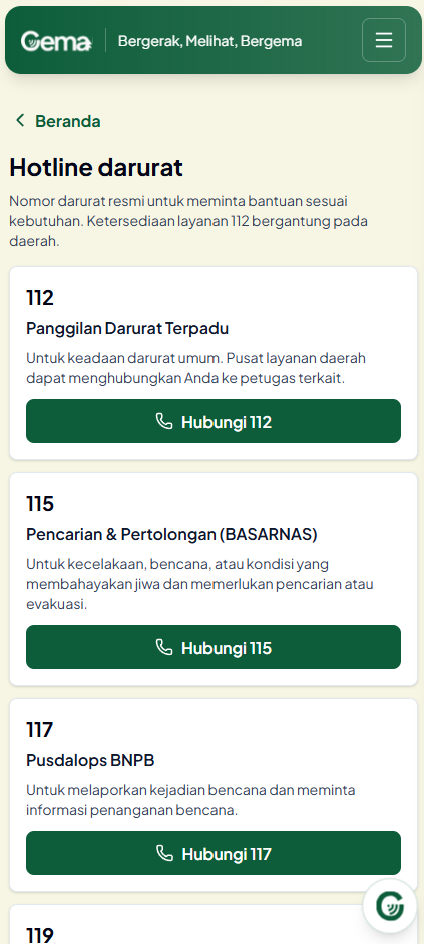
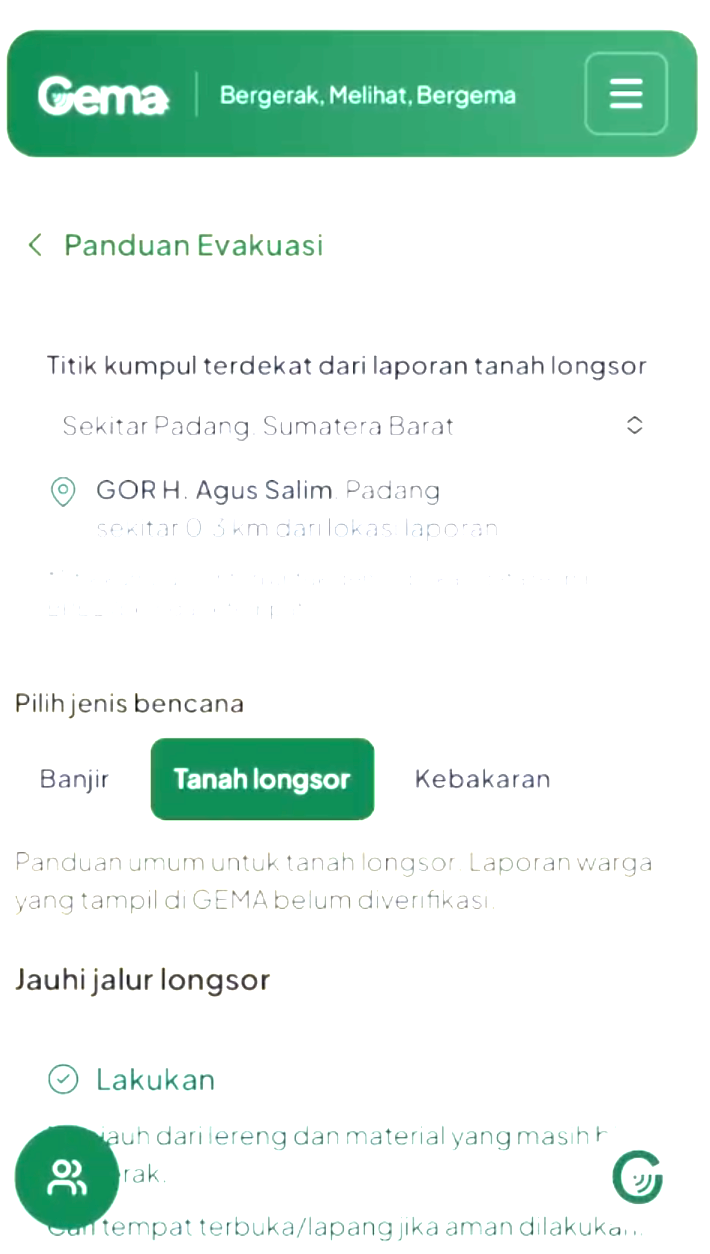
Validated information is visualized geographically and can trigger automated escalation to relevant authorities. GEMA can also send geotargeted warnings to people in affected areas and provide a Response Tracker so citizens can follow what happens to their reports.
Our goal is simple: turn scattered observations into coordinated action.
How we built it
We designed GEMA as an end-to-end system rather than just a reporting interface.
The frontend is built with Next.js, while FastAPI handles our backend and API layer. Supabase is used for database and storage, while OpenStreetMap and Leaflet support our geospatial visualization.
For disaster analysis, we integrated an AI service to classify disaster types and estimate severity. We also implemented community validation and human-in-the-loop mechanisms to provide additional layers of verification.
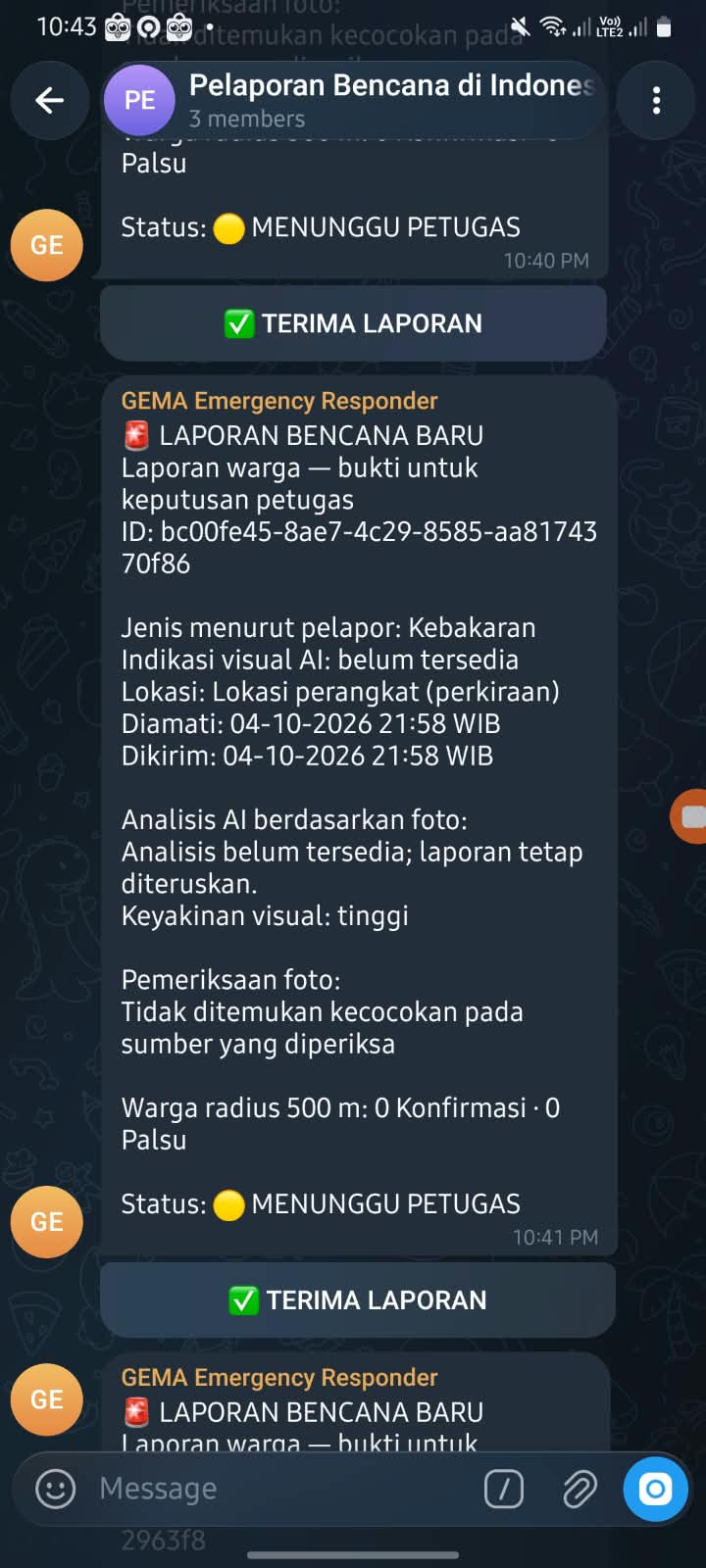
One of the most interesting parts of the system was our integration with the Telegram Bot API. We connected system events to Telegram so validated reports could trigger notifications and operational workflows for the response side.
The overall architecture follows:
Capture → Analyze → Verify → Escalate → Warn → Track
Challenges we ran into
Our biggest challenge was actually a combination of team and technical constraints.
During the hackathon, our Product Designer, Amerta, was diagnosed with typhus, which affected our team's workflow. At the same time, we realized halfway through the development process that we had not properly checked the required proposal format.
By that point, we had already been writing the proposal in our own style — essentially going freestyle — so we had to restructure and adapt the proposal while continuing to build the product.
On the technical side, integrating multiple services was another major challenge. Configuring the DevOps workflow, Telegram Bot API, AI service, database, and multi-platform triggers required a lot of debugging. Getting one component to work was easy; making all of them communicate reliably was much harder.
We had to constantly prioritize what mattered most, fix what was blocking the system, and keep moving forward despite the constraints.
Accomplishments that we're proud of
We are proud that GEMA evolved from an initial concept into a coherent end-to-end disaster response system.
Instead of stopping at citizen reporting, we managed to connect:
- Visual disaster reporting
- AI-based analysis
- Offline-first data persistence
- Community validation
- Human-in-the-loop verification
- Geospatial visualization
- Automated escalation
- Geotargeted warnings
- Response tracking
We are especially proud of successfully integrating Telegram as part of the operational workflow and making different services communicate through system-triggered events.
And after all the late nights, redesigns, debugging, and proposal formatting chaos...
GEMA is looking pretty handsome now. 😎
What we learned
This project taught us that building a real product is much more complicated than building individual features.
We learned a lot about DevOps, API integration, asynchronous workflows, database coordination, and multi-platform triggers. The Telegram integration in particular taught us how much work can happen behind a seemingly simple notification.
We also learned how important it is to design the system architecture early. When multiple services depend on each other, small changes in one component can affect the entire workflow.
Beyond the technical side, we learned how to adapt as a team. With an unexpected health issue, changing requirements, and limited hackathon time, we had to communicate better, prioritize ruthlessly, and accept that not everything needs to be perfect to move forward.
Most importantly, we learned how to turn a broad social problem into a system that can actually be explained, designed, and built.
What's next for GEMA
GEMA is currently a prototype, but we see several directions for its future development.
First, we want to conduct real-world pilot testing in disaster-prone areas to evaluate reporting latency, AI accuracy, community validation, and system reliability under real connectivity constraints.
We also want to improve the AI model with larger and more diverse disaster datasets, integrate external environmental data such as weather information, and develop predictive capabilities so GEMA can move beyond responding to disasters toward anticipating potential risks.
On the infrastructure side, we want to strengthen the offline-first architecture, improve scalability, and develop deeper integrations with disaster management institutions.
Ultimately, we want GEMA to become more than a reporting platform — a resilient information layer connecting communities, technology, and emergency responders before, during, and after disasters.
Built With
- ai
- computervision
- disaster
- emergency
- geospatial

Log in or sign up for Devpost to join the conversation.