-
-

Geko App home screen.
-
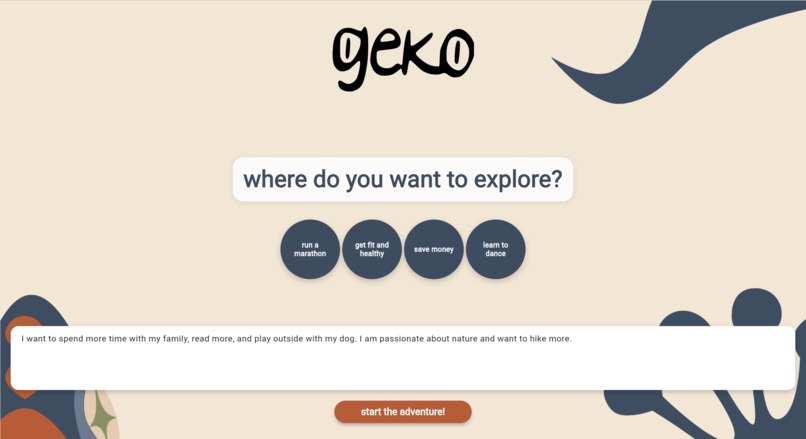
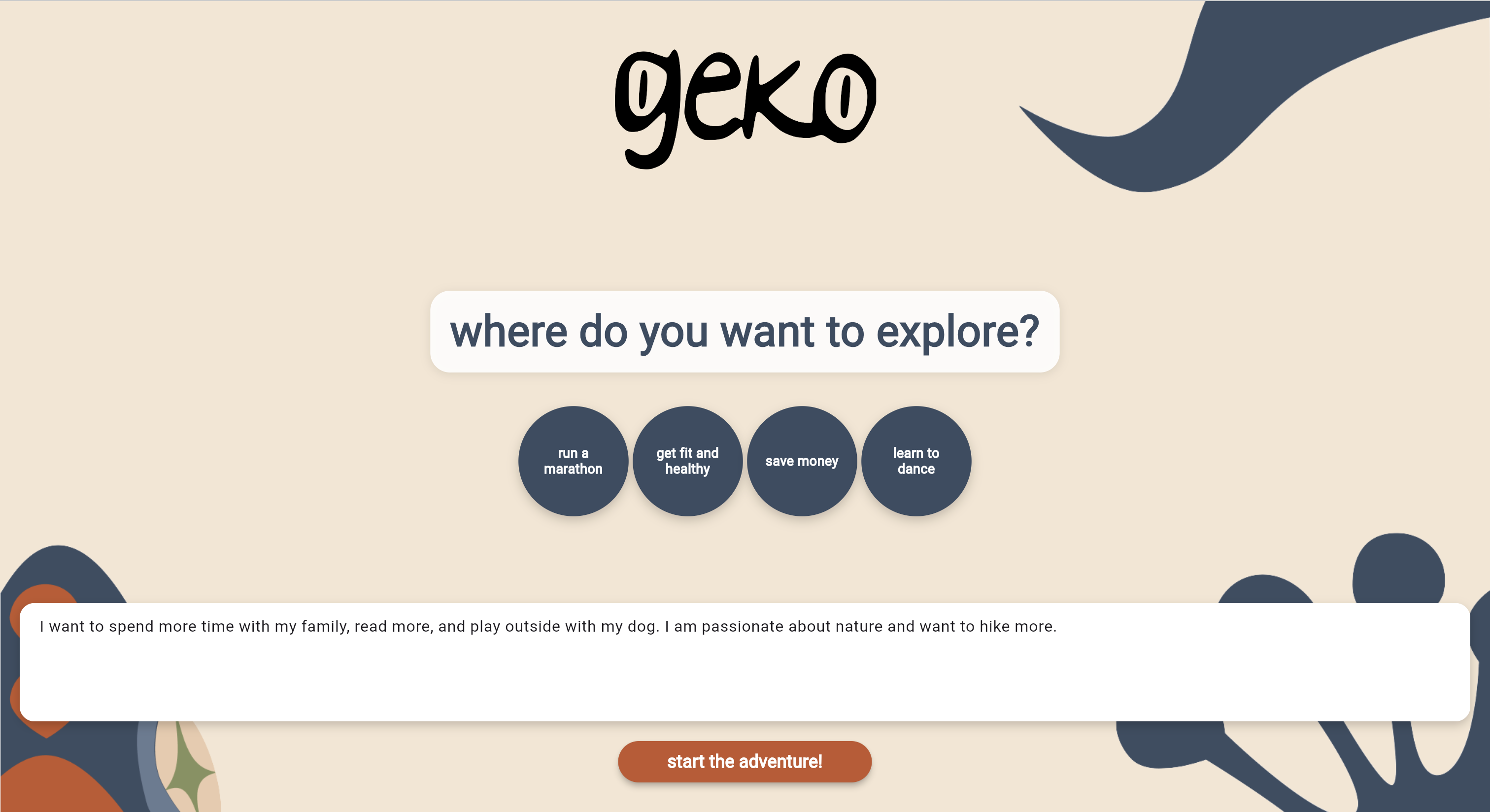
Geko Website intro screen.
-
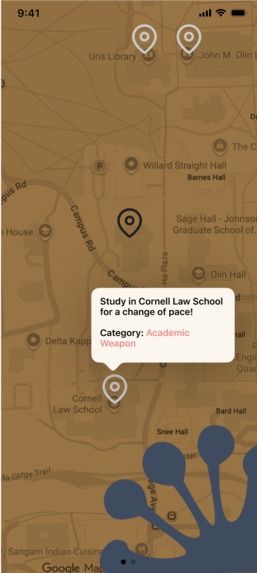
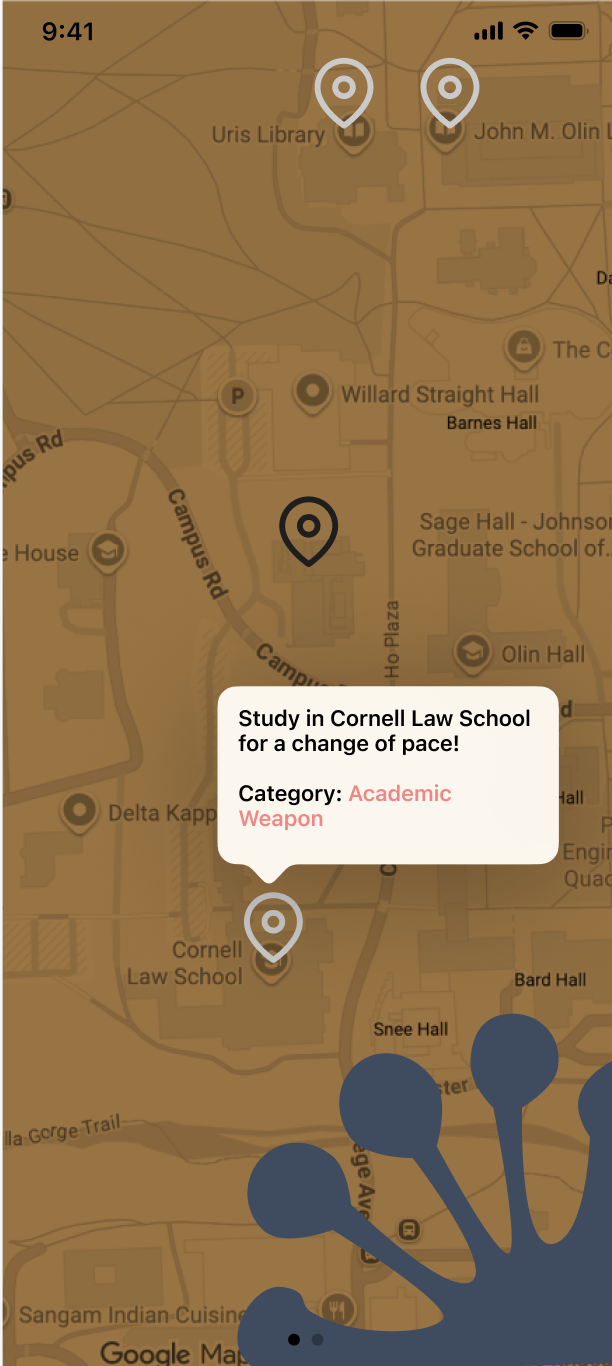
Activity recommendation in the Geko App map.
-
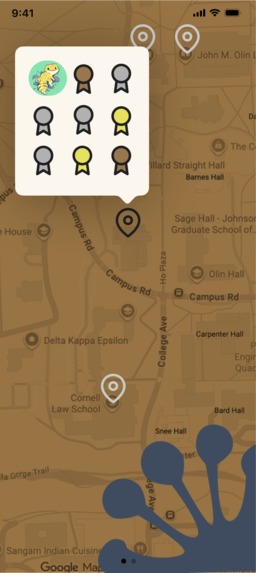
Geko App profile and badge view.
-
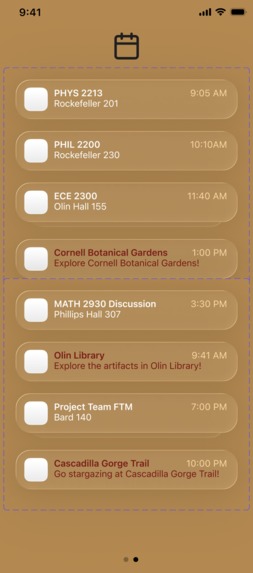
Calendar suggestions in the Geko App.
-
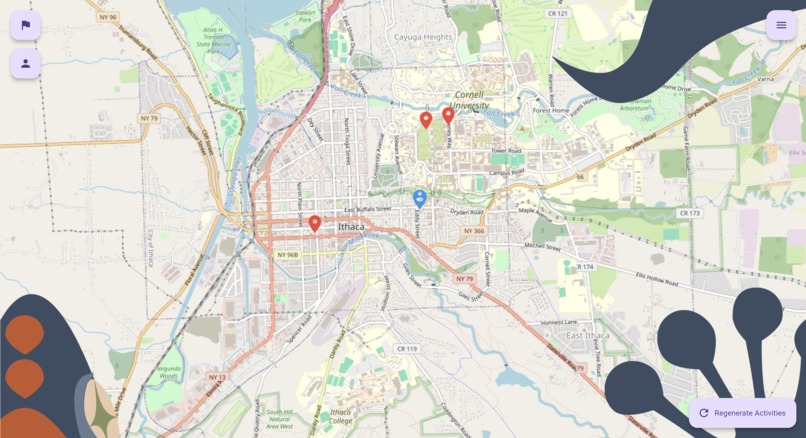
Geko Website map screen.


Behind Geko
When faced with the theme “Entertainment”, we struggled to find a technology-based idea that did not perpetuate time spent on a screen. We felt that entertainment would be most beneficial if it helped people separate their happiness and time from their technology. We also wanted to offer an alternative to passive screen-based entertainment, such as social media scrolling. This inspired us to create Geko, a platform that helps you make the most of life's opportunities by encouraging spontaneity. Referencing your schedule and current location, Geko will make a suggestion to fill a time gap, help you explore a new city, or try a new activity. This offers an alternative to passive doomscrolling and helps a person engage with their surroundings in the real world. Not only that, Geko makes suggestions for activities based on your life goals and interests. The user is first prompted to enter their desires in a free-flowing textbox, which is then interpreted and parsed into five main life goals by Gemini. This allows for personalized and engaging suggestions that a person will actually enjoy doing, proposed when they actually have time to do it. Geko promotes anything from visiting the Rockefeller Christmas Tree if you have a meeting in Rockefeller Center in December to reading your book for a thirty-minute free period between classes.
Our Process
Implementing this project was done in stages, and we split functionalities across our four-person team. We began by developing a rudimentary skeleton of the full data processing pipeline, from free-flowing ideas to five life goals to a list of activities. We then implemented the introductory screen, which prompts for life goals, and the map screen, which displays the locations of the suggested activities with descriptions. Google Calendar functionality was implemented in parallel and connected to the map screen. We also added a profile and badge-based motivation system that encourages people to try different types of activities to “level up” in categories. A key challenge we faced was learning how to best utilize Gemini for the best recommendations. We crafted specific prompts to call the API that maximized the specificity and range of the life goal summary and activities for the user. We also faced a challenge with getting accurate address data for the suggested activities, as the Google Map APIs do not integrate with Flutter. This was resolved by using Nominatim. We built our project using Flutter for easy frontend implementation across operating systems and devices. Our backend decision-making uses the Gemini API, Google APIs for location sourcing, and Nominatim for map and location data. Everything was developed for the web on Mac and Windows, but the functionality is in place for other devices.
Design for a Purpose
The most significant learning from this process for us was how to design for a purpose. We want people to be able to seek entertainment where they are and engage with the world around them. We want people to explore niche activities both in their hometown and in a new place. We want people to have a focused way to fulfill their goals. Geko was the result of multiple iterations on how to achieve these goals. We considered everything from a book-buddy app to an interactive storytelling game, but in the end, we believe Geko has the best appeal, as it is a technology that encourages users to leave technology behind.
Built With
- flutter
- google-generative-language-api
- google-geolocation-api
- google-maps-javascript-api
- google-maps-sdk-for-android
- google-maps-sdk-for-ios
- nominatim


Log in or sign up for Devpost to join the conversation.